Dolphin Tour in Tamarin, Mauritius - Swim with Dolphins and Morning Trips
Swim with wild dolphins in Tamarin Bay at first light, when the pods rest in calm shallows and the bay is still quiet. Book a speedboat trip that gets you straight to the morning gathering spots, with snorkeling gear and life vests included, and be back ashore before lunch.
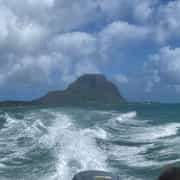
Dolphin trips out of Tamarin split into two kinds. A short speedboat run puts you in the water with the pods for a couple of hours, then brings you back. A full-day boat adds swimming at Crystal Rock and lunch on Île aux Bénitiers. The deciding question is how much of your day you want to give the sea.
LegalitySwimming with dolphins is legal in Mauritius only through licensed operators with a certified skipper.
In the waterNo more than three swimmers may enter the sea at once from a boat, and you sign a liability disclaimer before swimming.
BehaviourTouching, feeding, or circling dolphins is prohibited, and boats approach from the side at a set distance.
TimingPods return to Tamarin Bay at dawn between 6 am and 7:30 am, so the earliest boats see the calmest water and the biggest groups.
SightingsDolphins are wild animals, so no tour can guarantee them, though crews keep searching and can move to another spot.
SwimmingYou jump into deep open water and swim hard to keep pace, so weak swimmers should watch from the deck instead.
Getting thereThe drive from Grand Baie to Tamarin Public Beach takes about 71 minutes, so a dawn departure means leaving around 5:15 am.
SeasonDolphins stay in Tamarin Bay year round, with the calmest sea from November to April.
BookingOne private dolphin tour requires booking two days ahead, and the catamaran needs dietary requests made in advance.
SeasicknessEat a solid breakfast and bring your own remedy, because open-ocean swells outside the reef can trigger motion sickness.
importantShared dolphin speedboat tours launching from Tamarin Public Beach are not suitable for pregnant women, wheelchair users, or babies under 1 year old.
If any of these apply to your group, pick a different activity for that day, or ask the tour operator about a private option that can take your situation into account before you book.
Tamarin Bay dolphin tour options compared
dolphins rest in tamarin bay from 6 am to 8 am
Best full day
6.5 hours·English, French
4.3(1,360)
Tamarin: Dolphin Snorkel, Crystal Rock, Ile aux Benitiers Lunch
One 6.5-hour trip packs dolphin swimming, a Crystal Rock snorkel stop and a beach BBQ on Ile aux Benitiers, all from Tamarin.
Free cancellationSpeedboat trip to dolphin pointDolphin watch and dolphin Snorkeling
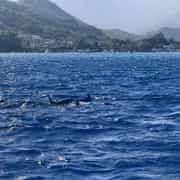
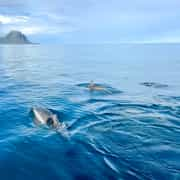
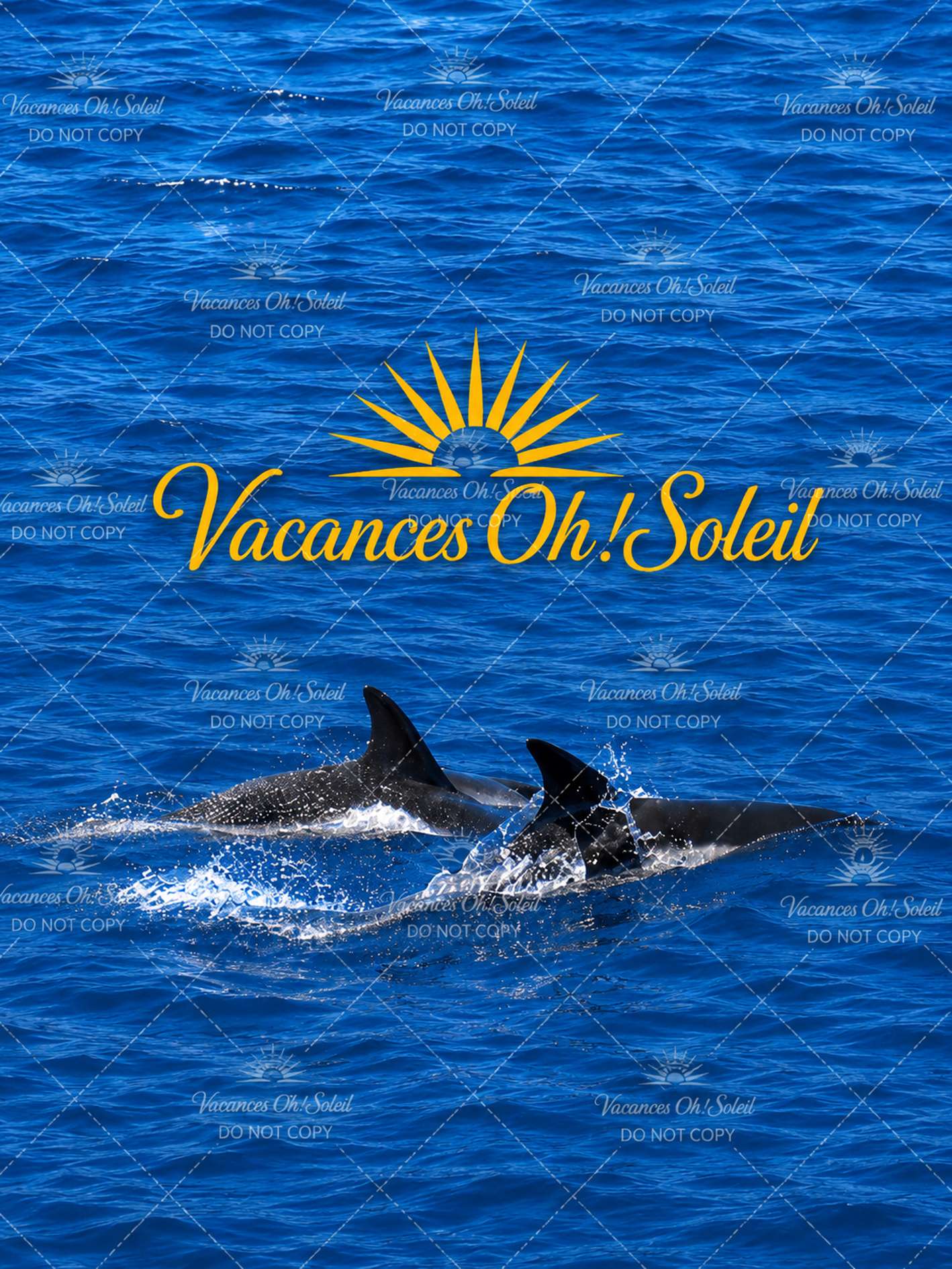
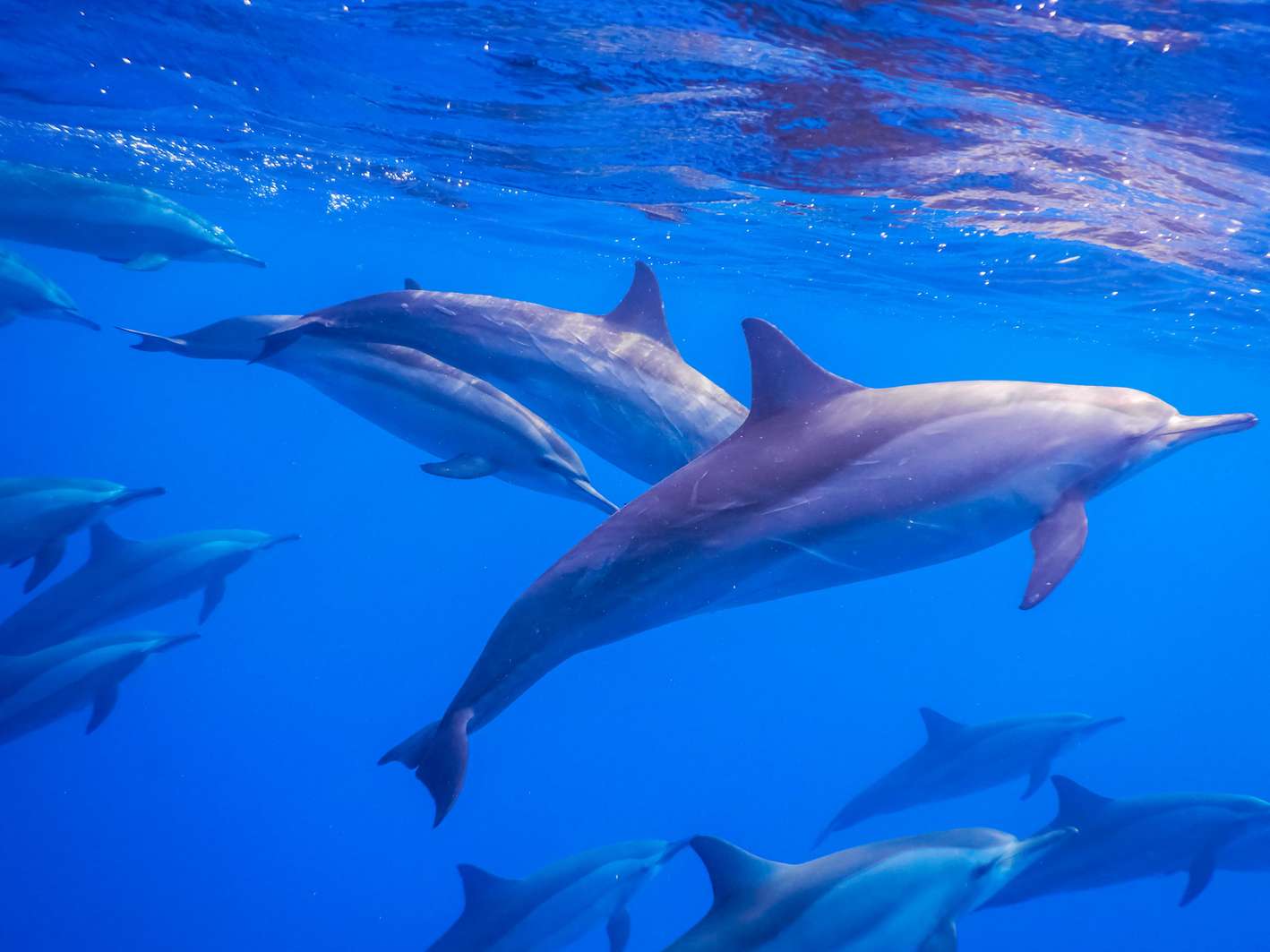
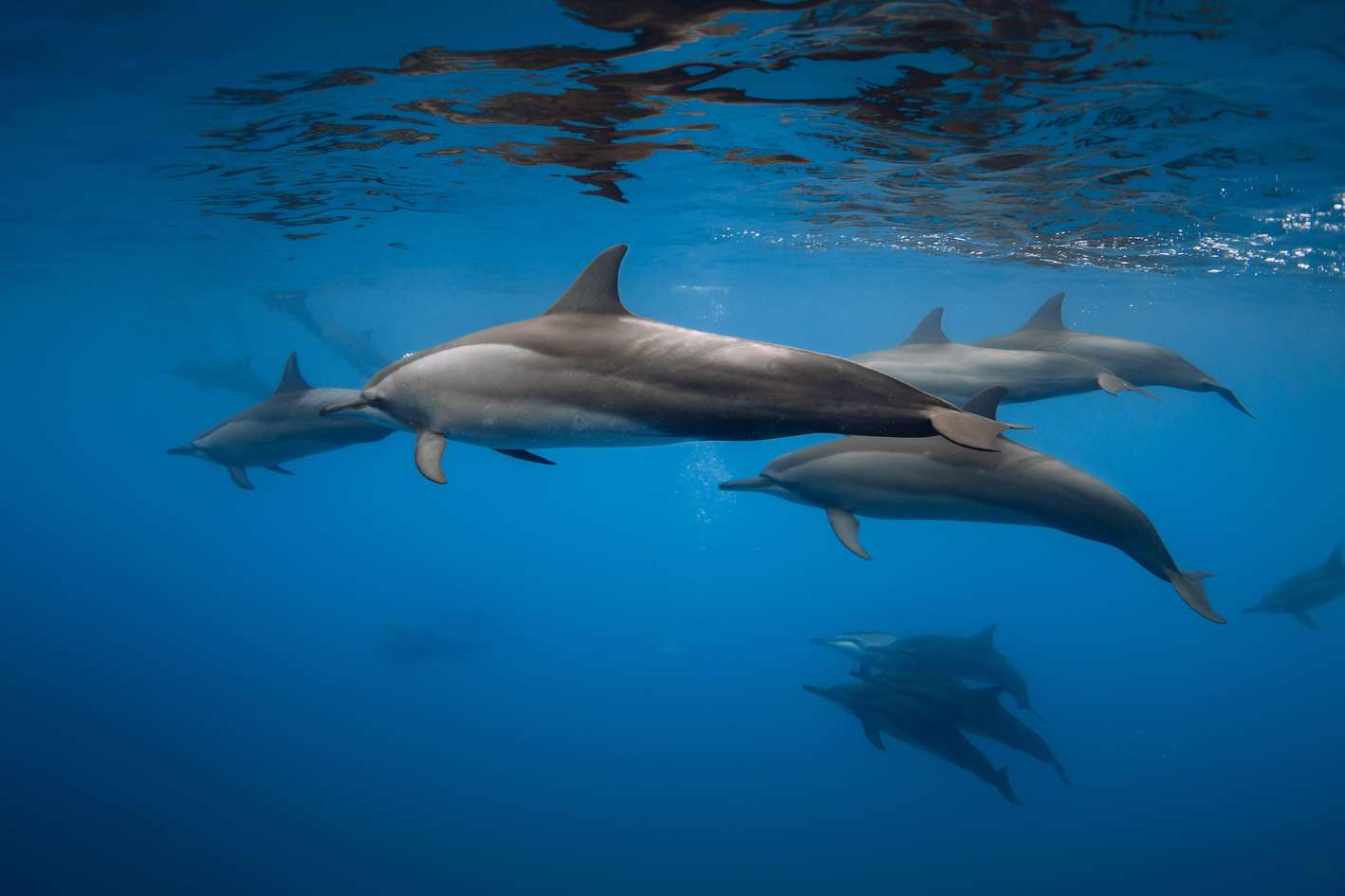
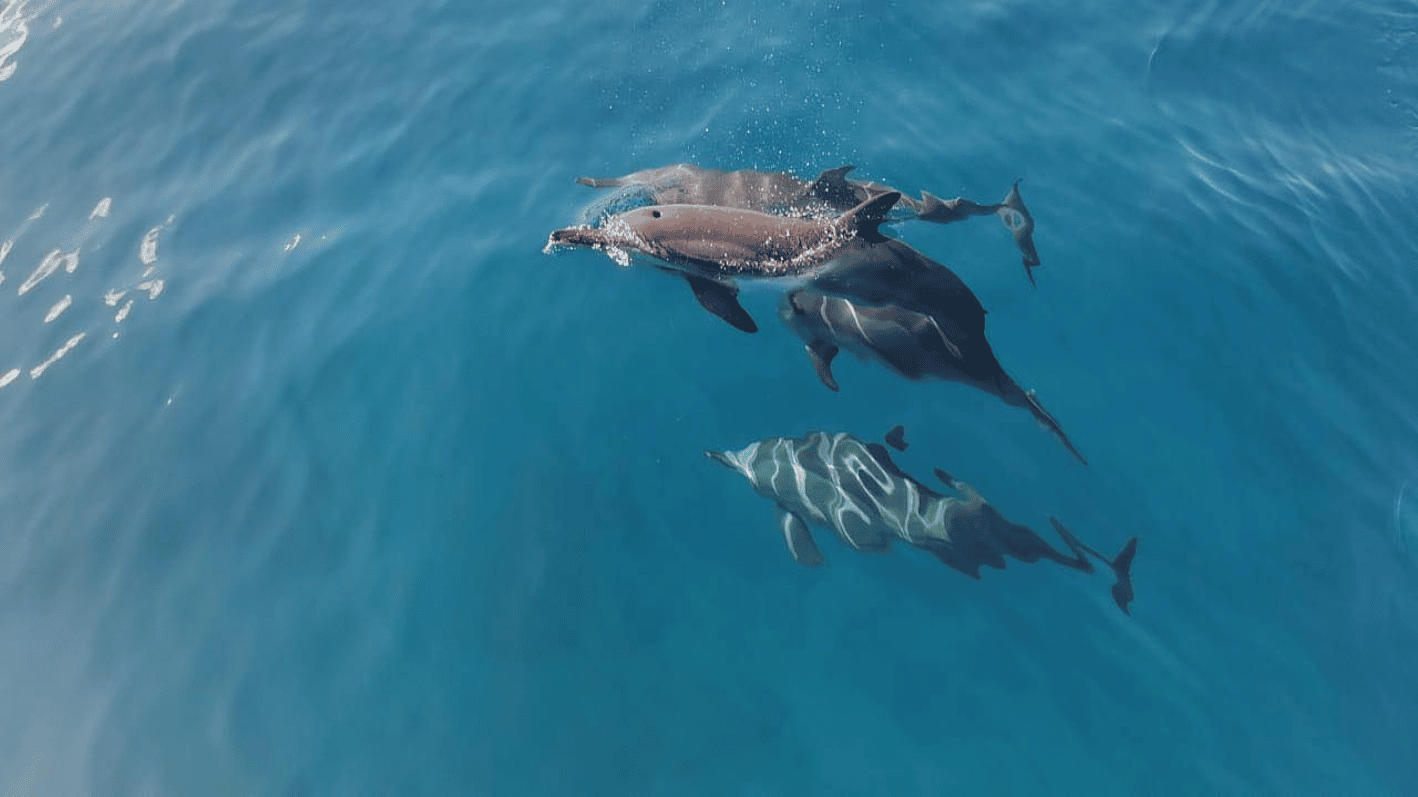
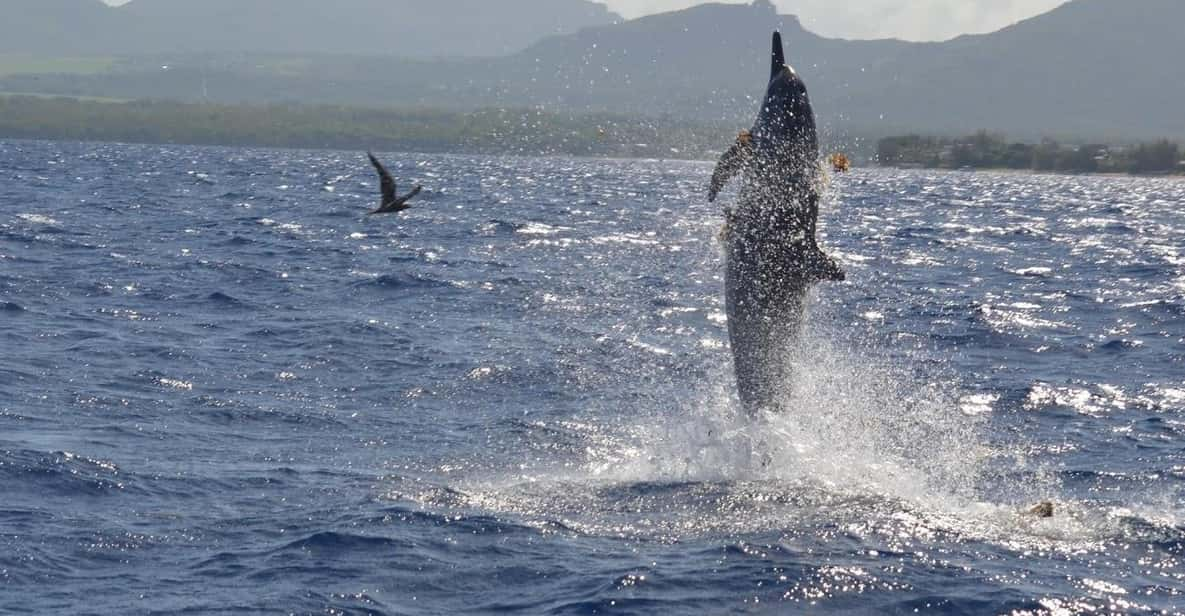
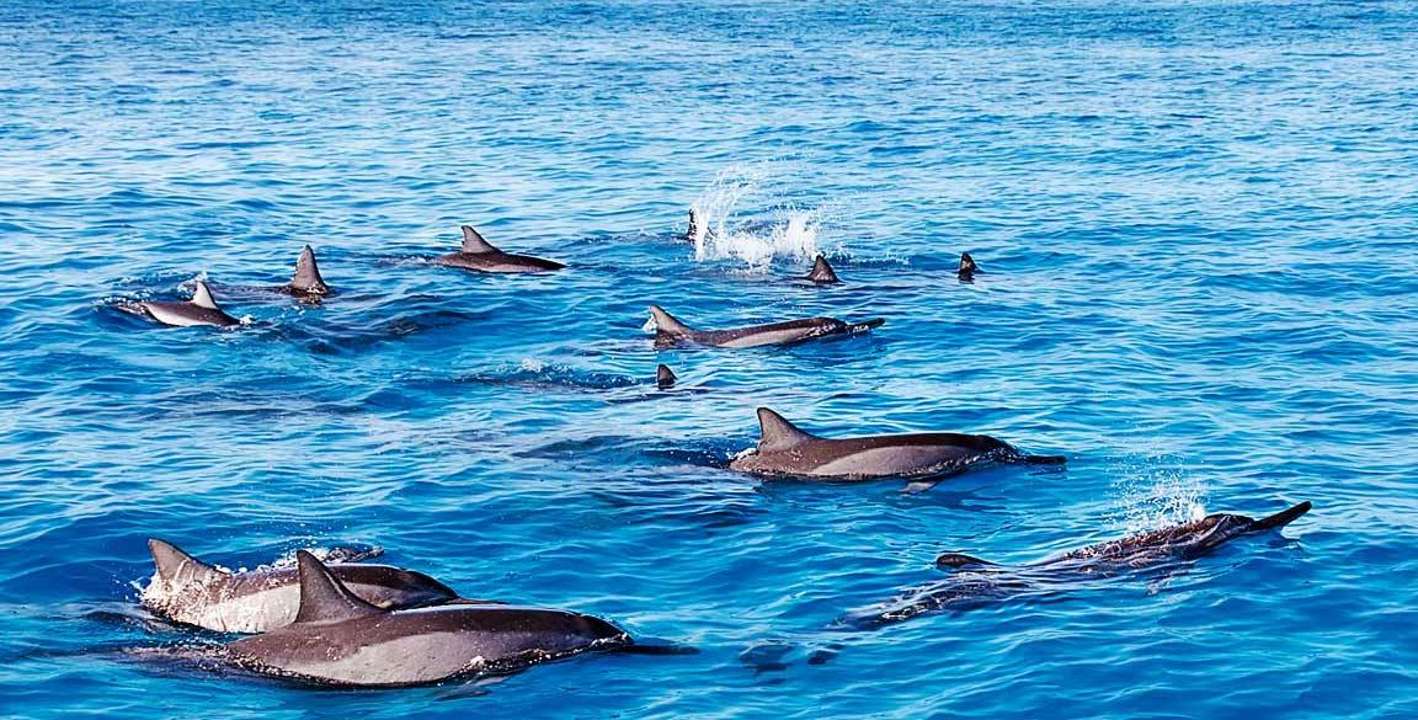
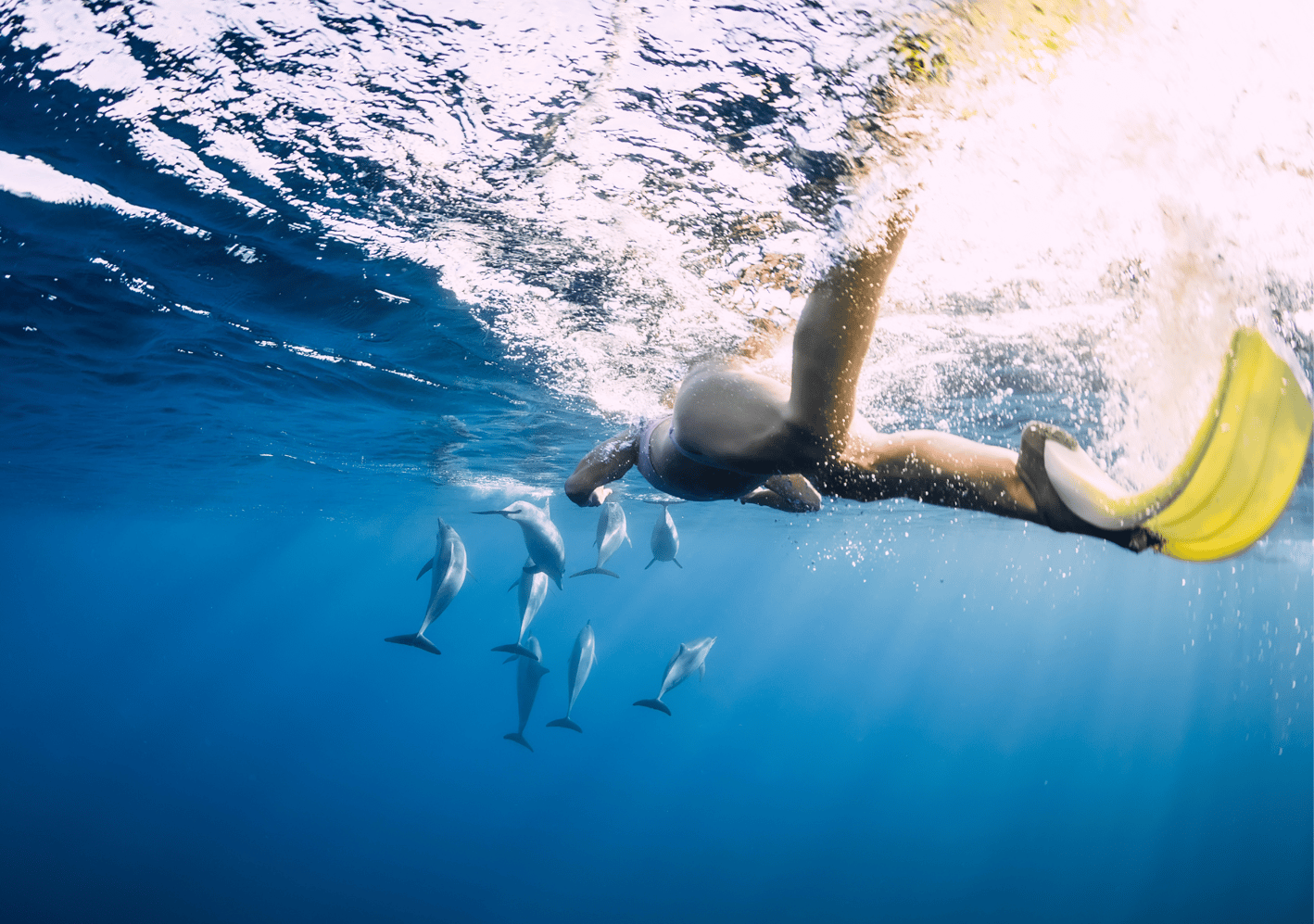
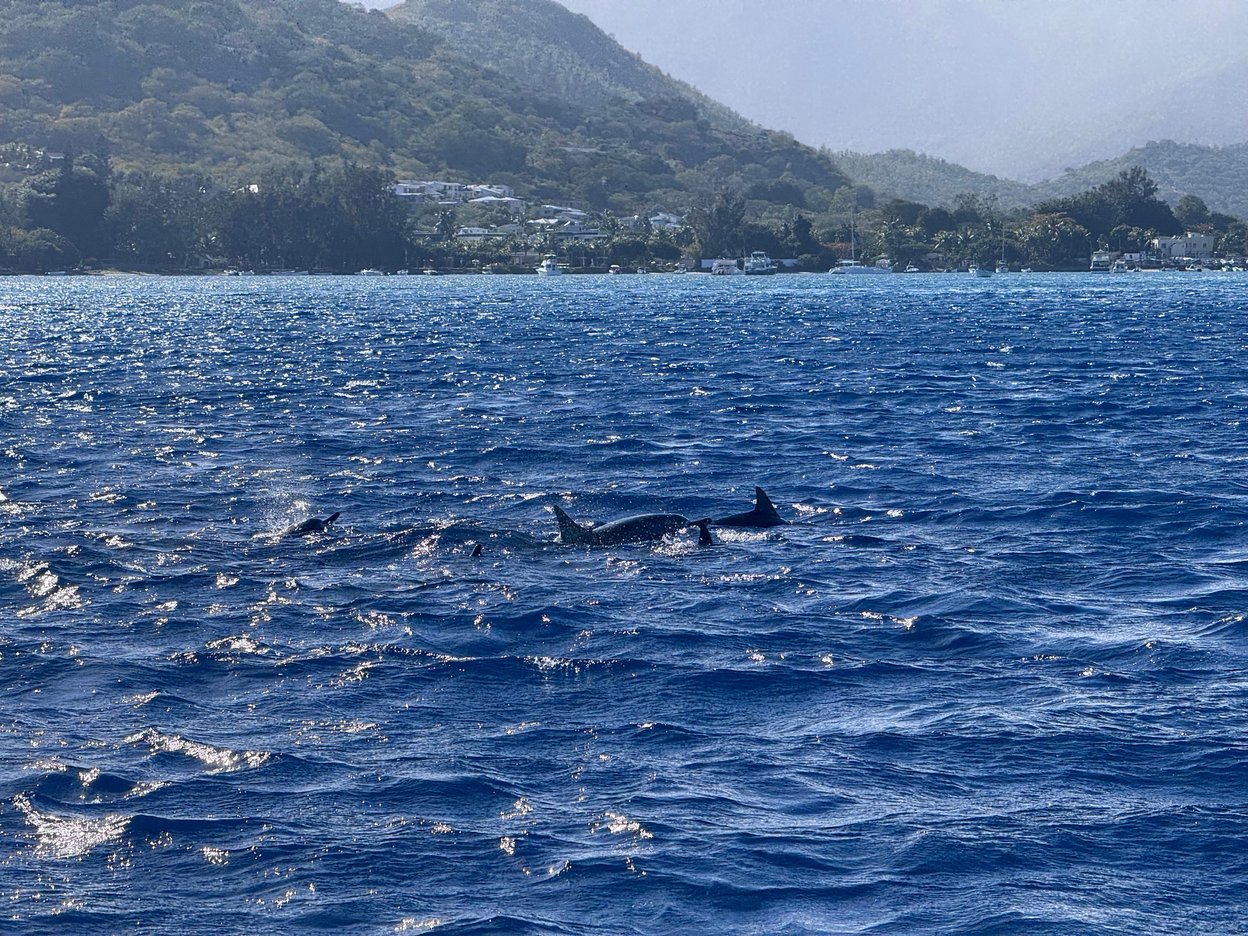
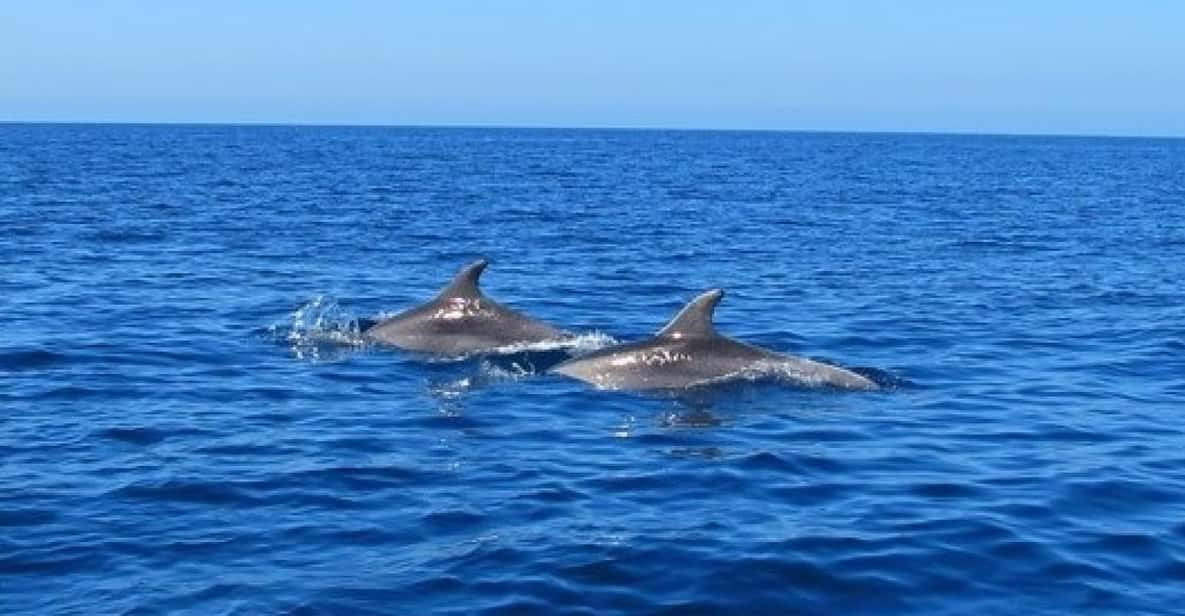
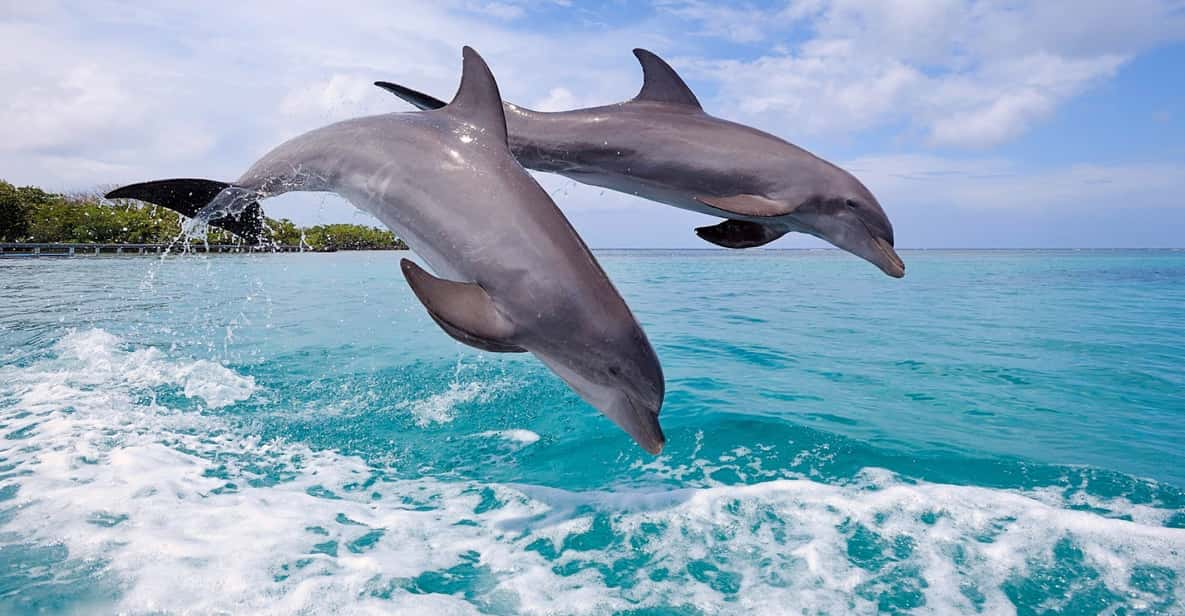
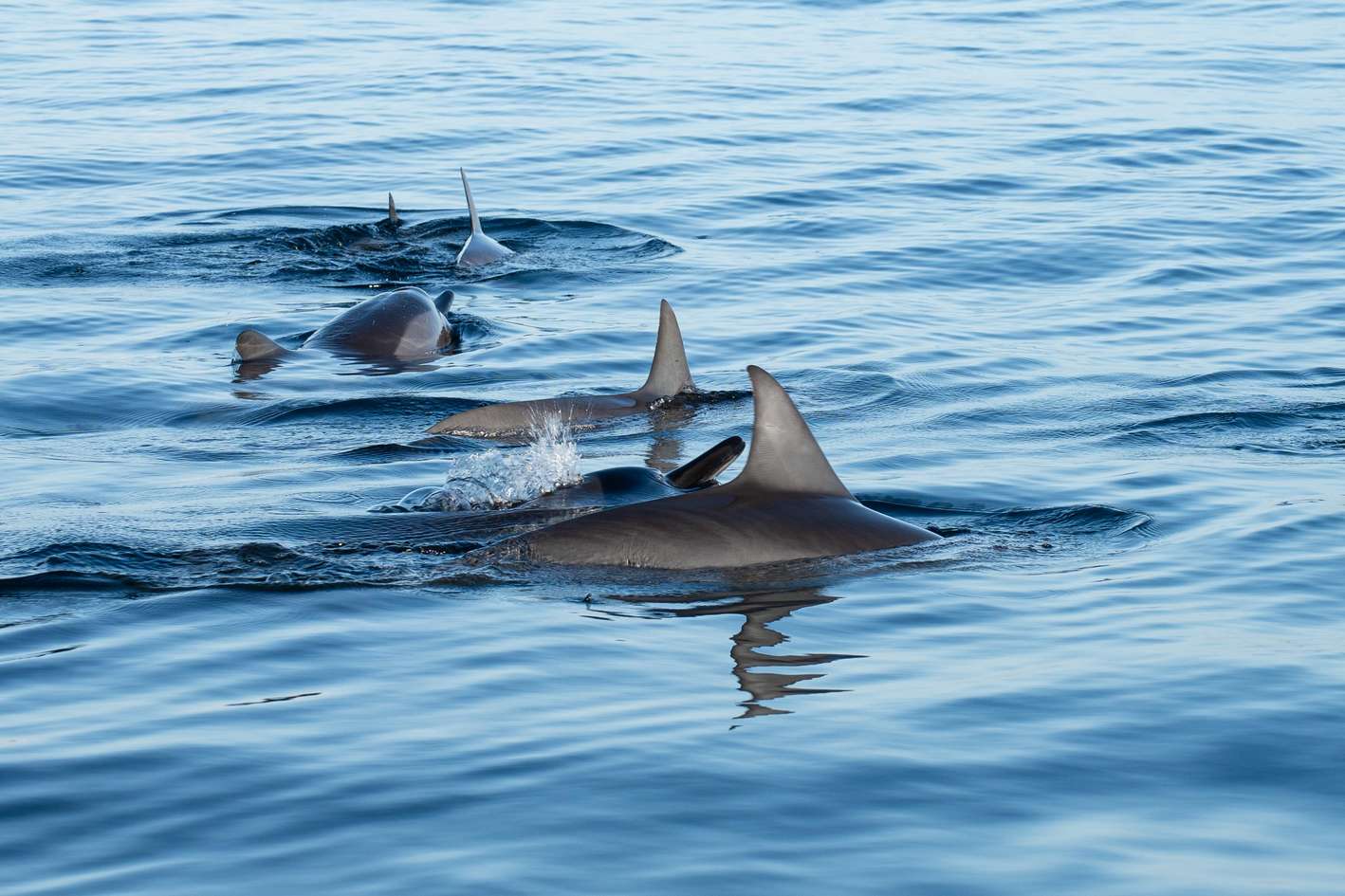
The dolphins come first. Spinner pods gather in Tamarin Bay after dawn, sometimes twenty to forty animals resting in the calm shallows, and a speedboat from the beach puts you next to them before the bay fills up.
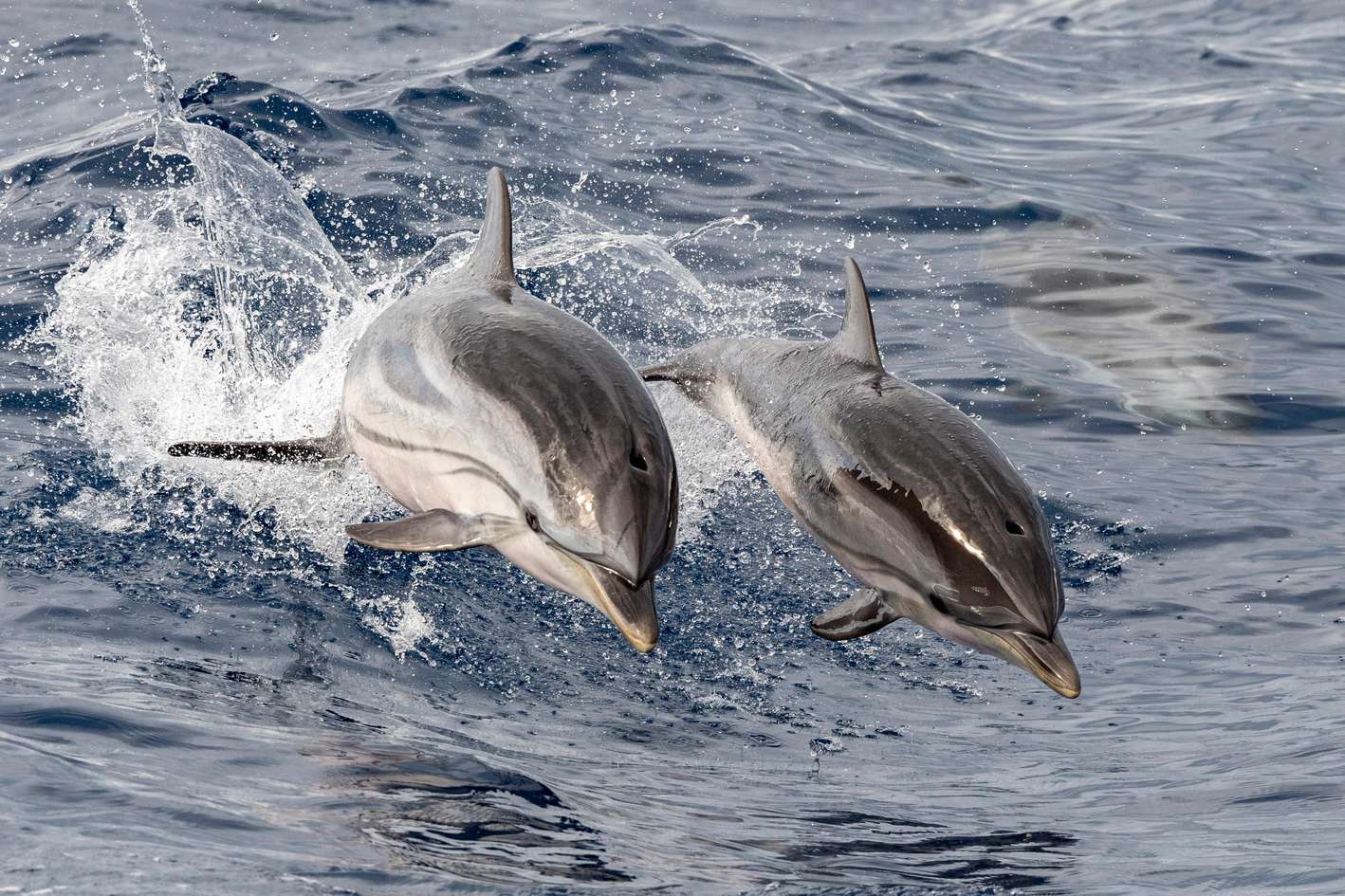
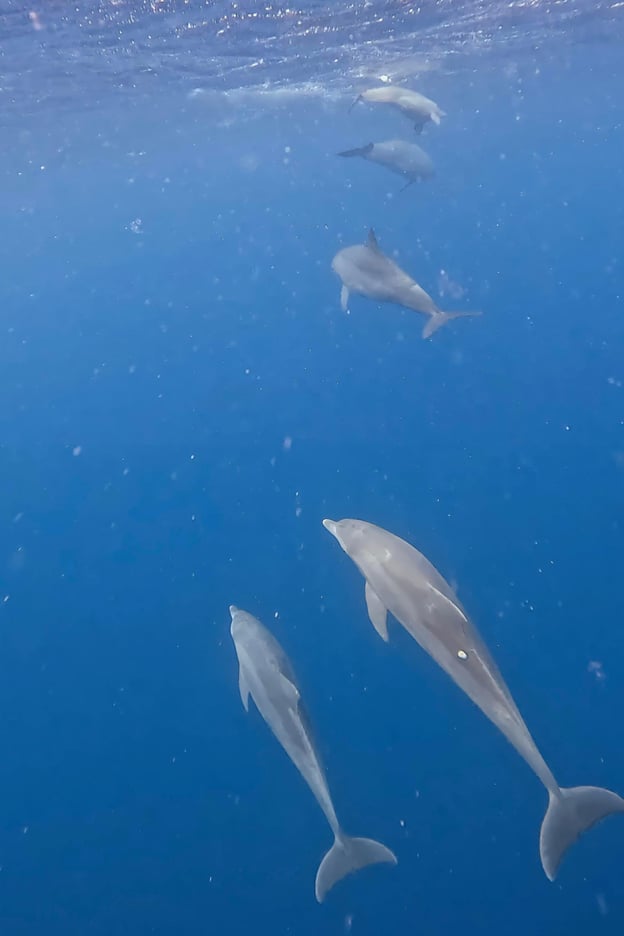
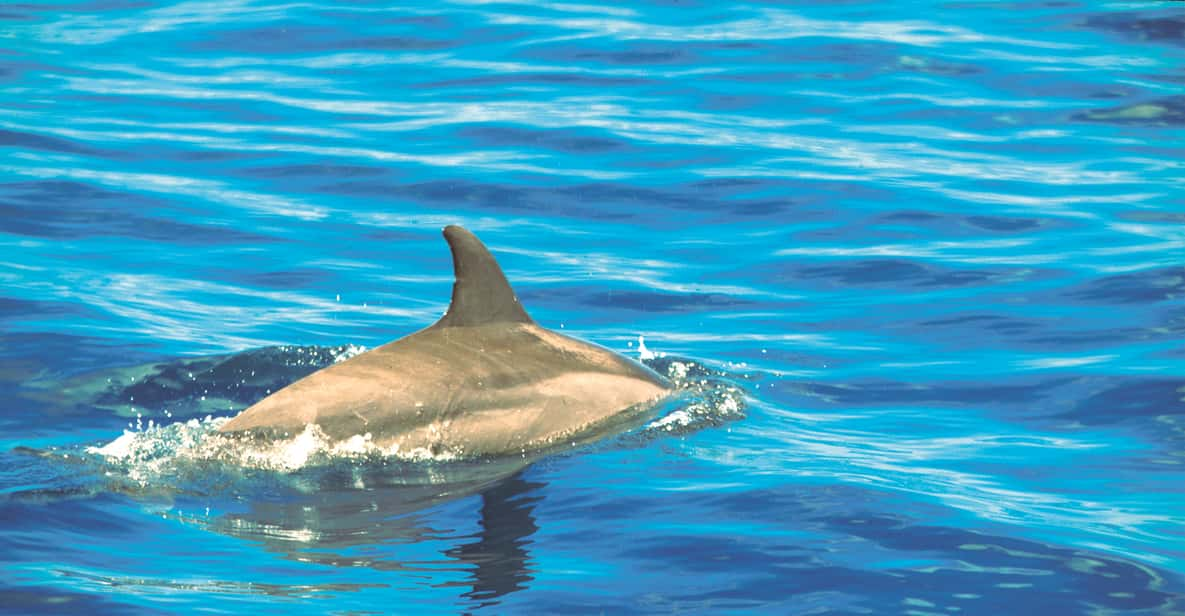
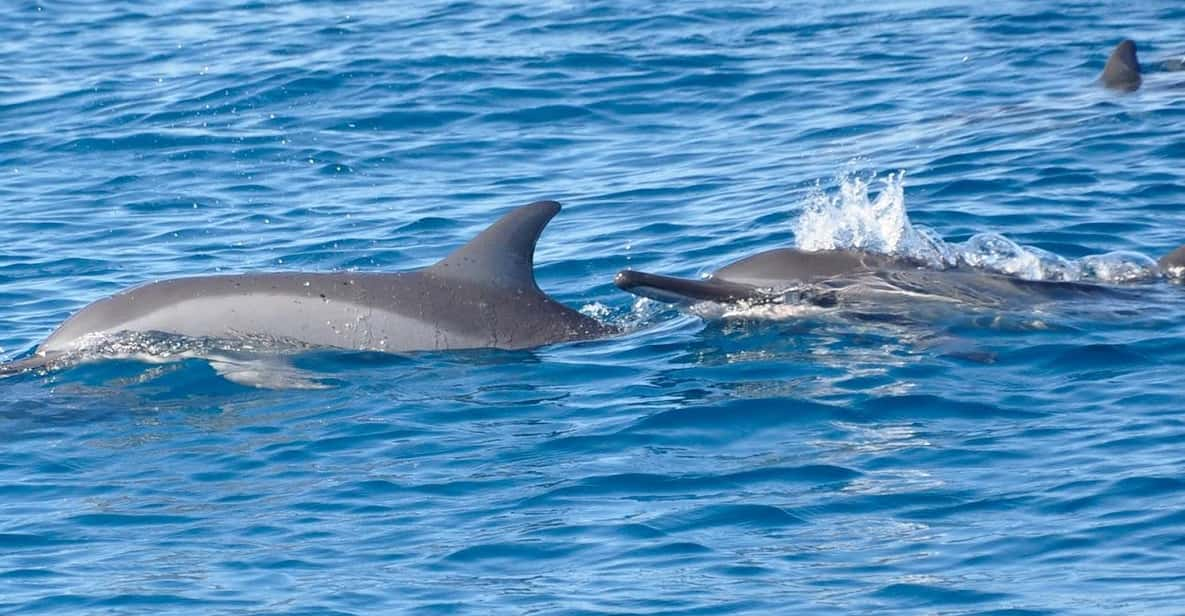
Bottlenose dolphins travel in smaller groups and behave differently: calmer, bolder, sometimes lingering a few meters from snorkelers while spinners sweep past.
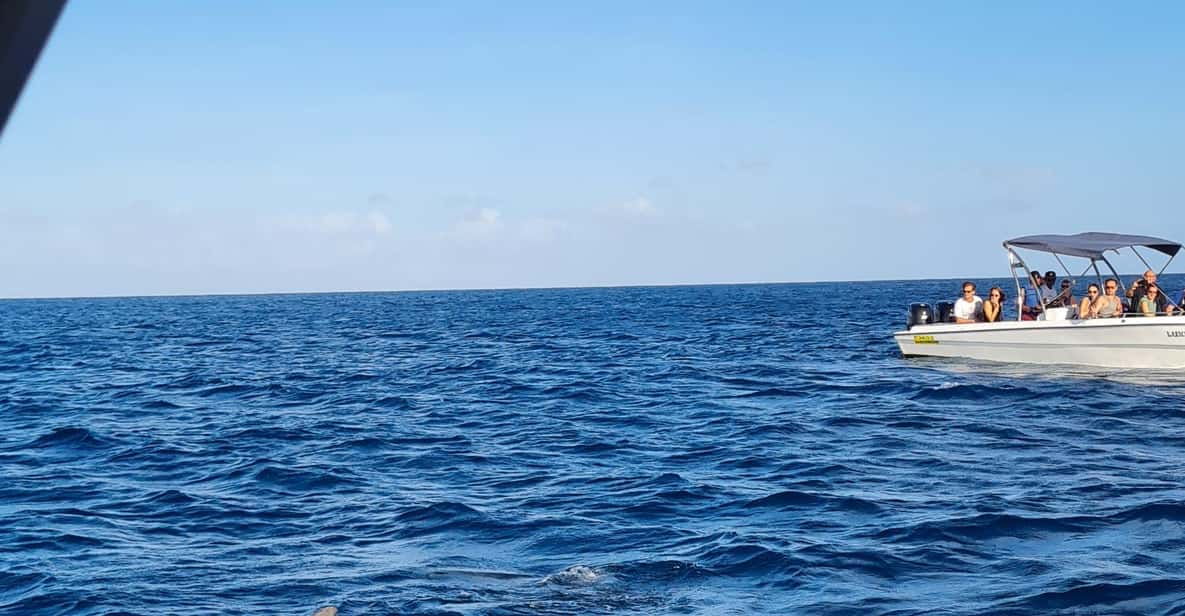
The tour runs about 135 minutes, from a beach briefing to a speedboat ride out to where the pods rest. Snorkeling equipment and life vests are on board, and a captain-guide reads the animals' routes and tells you when to slip in.
Most of the time is spent in the water or on the boat watching; the moments below follow the morning in order.
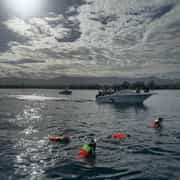
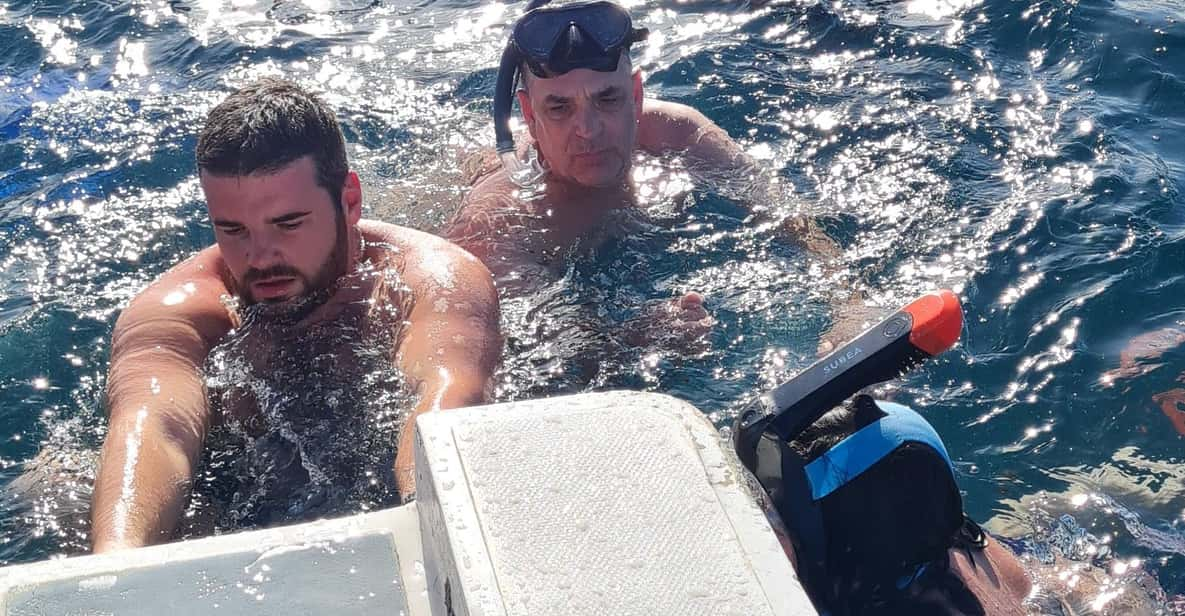
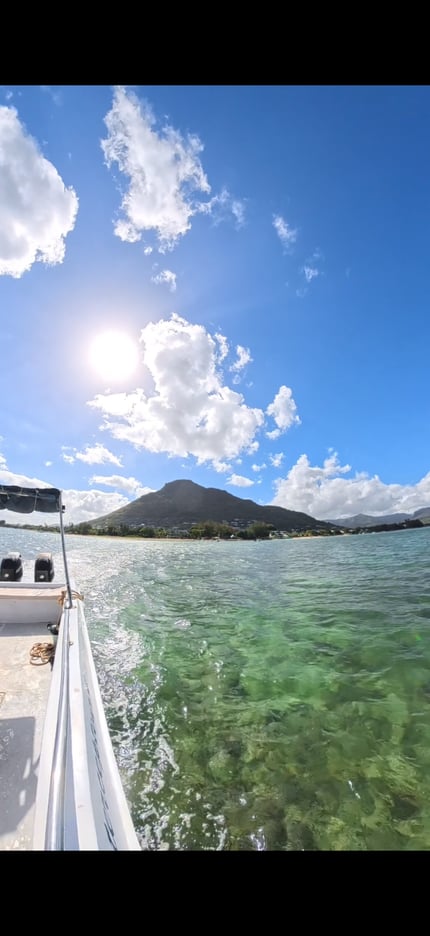
Stop 1Briefing on the beach· about 10 minThe crew meets you at the meeting point on the beach and walks you through how the swim works, then fits you with snorkeling gear.Stop 2Speedboat out to the pods· about 15 minThe speedboat runs straight out of the bay to the open water where spinner and bottlenose dolphins rest after night feeding, with mountain views along the coast.Stop 3Watching the pod from the boat· about 15 minYou watch the dolphins play around the boat first, and the captain-guide spots where they are heading before anyone enters the water.Stop 4Swimming alongside the dolphins· about 40 minYou drop into deep water and swim with fins and a mask to keep pace with the passing pod. The crew keeps to the animals' pace, no chasing or circling.Stop 5Repositioning and a second try· about 35 minDolphins keep moving, so you may climb back on board, ride to a new spot, and enter the water again. The boat repeats this loop until the pod moves on.
Choose the date and check the departure time. The best window is 6:30 am to 7:30 am, when the sea is glassy and the pods are still in the bay. Later departures meet the crowds.
Pro tipThe 6:30 am start also gives you the best light for underwater photos, since the sun is high enough to light the water.
RecommendedBook the earliest slot you can. Boat traffic in Tamarin Bay builds between 8 am and 9:30 am.
2. Choose the option that fits you
Compare the shared speedboat trips, the private dolphin and whale tour, and the full-day options with lunch on Benitier Island. Pick your group size and how long you want on the water.
Common mistakeFirst-timers book the longest trip without checking what it includes. A 2.5-hour swim trip and a 7-hour day with lunch are very different days.
ImportantIf you are pregnant, epileptic, or have a mobility impairment, some speedboat trips are not suitable for you, so read the restrictions before booking.
3. Book and pay online
Pay through the booking page and you will receive a confirmation with your meeting point and the operator's contact details. Most tours allow free cancellation up to 24 hours in advance for a full refund.
Pro tipThe confirmation lets you cancel free up to 24 hours before, so you can book early and stay flexible if the weather turns.
ImportantCheck the operator's policy on rescheduling or refunds if dolphins are absent. They are free-ranging animals, so no sighting can be guaranteed.
4. Sort out your transfer
Most of these tours do not include hotel pickup, so you get to the meeting point yourself. From Grand Baie or Belle Mare, the drive to Tamarin Public Beach takes about 71 to 73 minutes, and buses run too late for a dawn departure.
ImportantPublic buses need multiple transfers and do not arrive before 6:30 am, so use a rental car or a pre-arranged private taxi.
RecommendedLeave your hotel between 5 am and 5:45 am to reach the beach before boarding.
5. Meet the crew on the beach
Skippers meet passengers on Tamarin Public Beach, in front of Veranda Hotel Tamarin or by the Chez Francoise food stall, and on La Preneuse beach near the Martello Tower. Bring your swimwear, towel and sunscreen, and have a solid breakfast before you board.
Common mistakeBoarding on an empty stomach. Moving slowly through open swells on an empty stomach triggers motion sickness, so eat and hydrate first.
RecommendedBring your own mask and snorkel for a snug fit, since the provided gear on day boats can be basic and leaky.
What to know before you book a dolphin swim in Tamarin
bring your own fins, most boats have none
Can stop the dayGood to knowGood news
01
ChoosingWhat it is, who it suits, when to go
5
Timing
Resident pods of 20 to 40 spinner and bottlenose dolphins rest in the bay between 6:00 and 8 am, with flat water and little boat traffic. After 8:30 am, boats crowd the same pods and the animals move offshore.
Swimming
You drop into deep open water and swim hard to keep up, because the dolphins move briskly. Each encounter lasts one to five minutes, and you jump in and out of the boat several times as the pods travel. Fins are essential.
SwimmersCan stop the day
Mauritian law allows no more than three swimmers, including the life-saver, in the water at once from a boat. Non-swimmers can stay on the deck and watch the pods instead of entering the water.
Water temperature
From June to September the open ocean off Tamarin sits at 23 to 25 degrees at 6:30 am, with air closer to 18 to 20 degrees. A rash vest keeps you warm during repeated dips.
What costs extra
The short speedboat trips do not include hotel pickup, and the La Preneuse tour asks you to bring your own snorkeling gear. The full-day private tours add lunch on Benitier Island and a Crystal Rock stop.
02
BookingHow far ahead, and what happens if plans change
2
Health limitsCan stop the day
Pregnant women, wheelchair users, and people with epilepsy, back problems or other pre-existing conditions are excluded from these speedboat trips. One tour operator also asks that bookings be made two days in advance.
Cancellation
These tours can be cancelled up to 24 hours in advance for a full refund, so you can book early and keep your plans flexible.
03
Before you goPapers, health, what to bring
3
Gear
Boats provide basic masks and snorkels, but fins are missing on most of them and shared masks often fog or leak. Bring your own fitted mask, snorkel and fins, plus a towel and swimwear worn under your clothes.
Seasickness
The trip moves outside the reef into open swells that can trigger severe motion sickness, so eat a solid breakfast before boarding and bring your own remedy. A bad case can cut the trip short.
What to bring
Pack a towel, sunscreen, swimwear, a camera, and a light windbreaker for the open-water ride. Cash for local souvenir vendors and beach stalls at island stops is worth carrying in rupees.
04
On the dayWhere to be, when, and how you get there
1
Meeting point
The short speedboat tours meet you on the beach, and the La Preneuse trip starts at 7:30 am from La Preneuse Beach, occasionally Tamarin. The crew gives a briefing at the meeting point before you board.
05
During the tourWhat is expected of you
1
Encounter rules
Touching dolphins or chasing them is forbidden. You enter quietly and swim alongside the pod rather than cutting in front, and the boats keep a set distance from the animals.
Swimming with the pods - your dolphin tour from Tamarin, Mauritius
pods resident year-round, dawn is best
Tamarin Bay holds resident pods of spinner and bottlenose dolphins, and the best hour of the morning decides the whole encounter. Timing, the boat, your fitness and the rules all decide how the morning goes.
Tamarin· 20.33° S, 57.38° E
If you only remember three things
1
Book a 6:00 to 7:30 am departure, because pods return to the bay to rest and boat traffic peaks between 8:00 and 9:30 am.
2
A speedboat gets you close to the pods fast; a catamaran is more comfortable but often drops swimmers hundreds of metres away from the animals.
3
Everyone on board a commercial boat outside the lagoon wears a personal flotation device, so no swimming experience is optional.
Why wild dolphins gather in Tamarin Bay
Spinner and bottlenose dolphins live in Tamarin Bay year-round. There is no migration, no off-season and no month when the pods are gone. The animals hunt offshore at night, then return to the sheltered shallows at dawn to rest and socialize, which is why a dolphin tour in Tamarin works any month of the year.
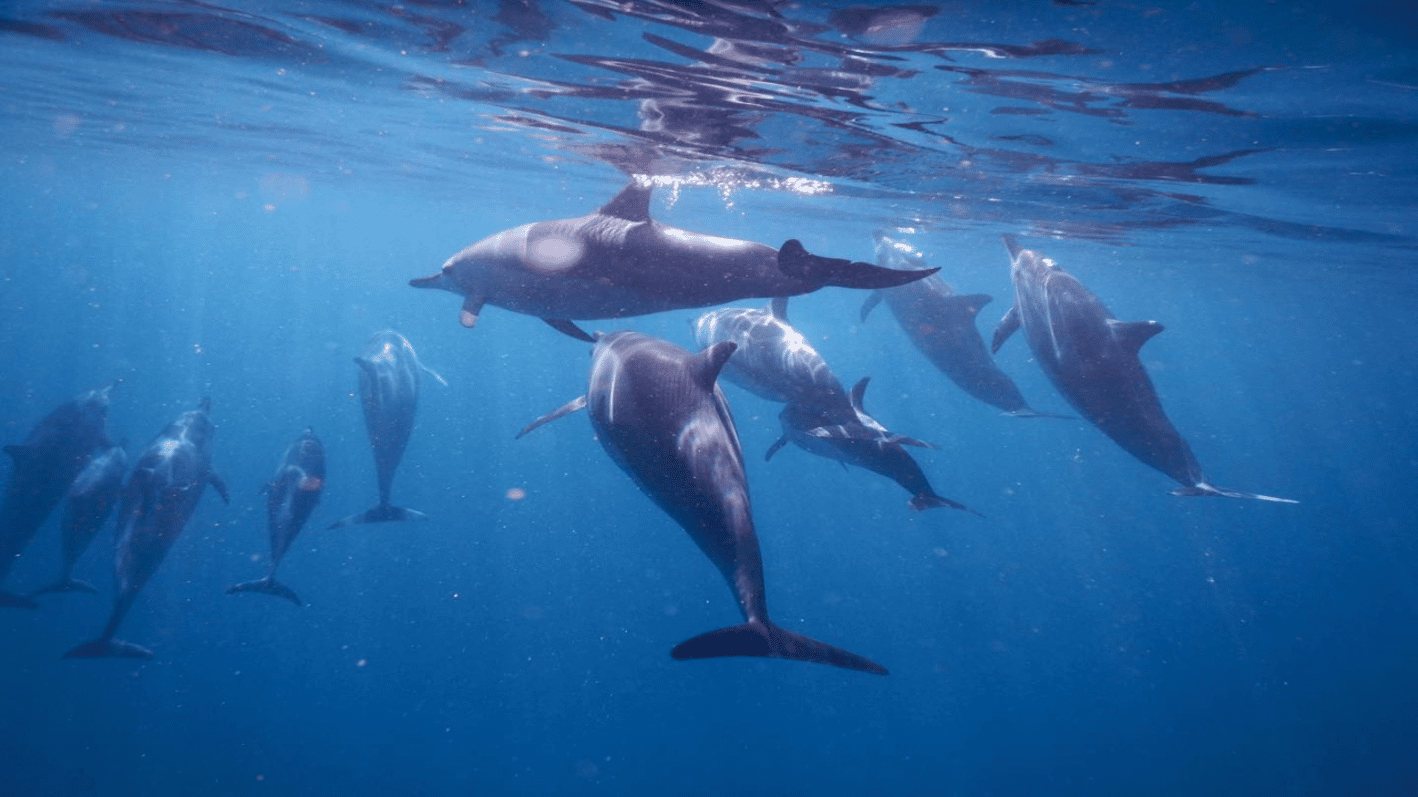
The pods that gather in the calm shallows between 6:00 and 8 am typically number 20 to 40 spinner dolphins, with bottlenose dolphins in smaller groups.
Spinner dolphins travel in larger pods and pass by rapidly, sometimes getting disturbed from their morning rest. Bottlenose dolphins are calmer and bolder, and at times they linger only a few metres from snorkelers in the water.
The bay is not a protected lagoon. There is no outer reef here, so ocean swells and surf reach the shore, and currents form where the river mouth meets the sea. That open water is what draws the dolphins, and it also turns the swim into a genuine open-ocean effort.
The beach itself is a characterful surf village spot, good for walking, a shaded picnic or watching the sunset, and the village has cafes, restaurants and small shops for a meal before or after the boat.
Tour for this
Dolphin Watching with Hotel Pickup (Mauritius)4.7★ (237) · 2 - 6 hours · Hotel pickup · Free cancellation
Timing is the single biggest factor in how the morning goes. The pods return to Tamarin Bay at dawn between 6:00 and 7:30 am, when the water is calmest and boat numbers are lowest.
By 8:30 am and into mid-morning, powerboats, catamarans and speedboats converge into heavy flotillas that crowd single pods, and the dolphins disperse offshore toward deeper water.
The early morning slot also has the light working for you. The 7:00 to 8:30 am window offers flat water and rising sunlight for underwater photography, while a dawn departure means glassy seas but low underwater illumination.
Booking a mid-morning or late departure often leads to congested waters where multiple boats crowd the bay and chase the pods. Regulars say the difference between a 6:30 am launch and a 9 am one is the difference between a quiet encounter and sharing a bay with a dozen boats.
If you are staying on the west coast, aim for a departure around sunrise from Tamarin Bay, Black River or Flic en Flac.
One practical point: winter mornings from June to September bring air temperatures around 18 to 20 degrees and water at 23 to 25 degrees, so a light wetsuit or rash guard earns its place in the bag.
Speedboat or catamaran for your Tamarin dolphin swim
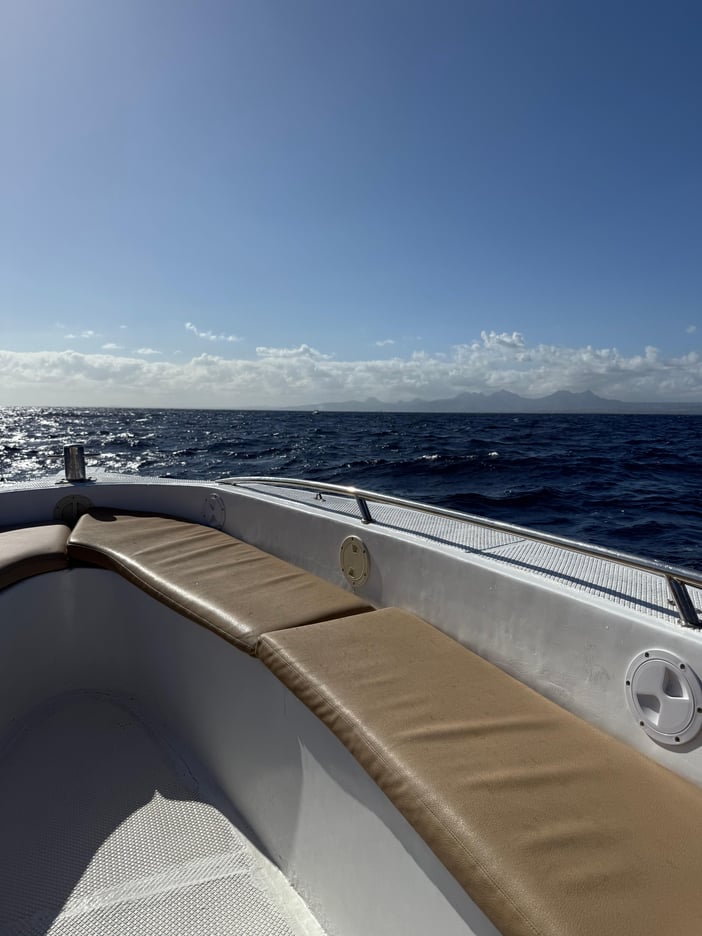
The boat you choose shapes the encounter. A speedboat gets you to the pods fast and lets you reach beaches and snorkeling areas before catamaran crowds arrive, which is why the closest in-water encounters usually happen from a small boat.
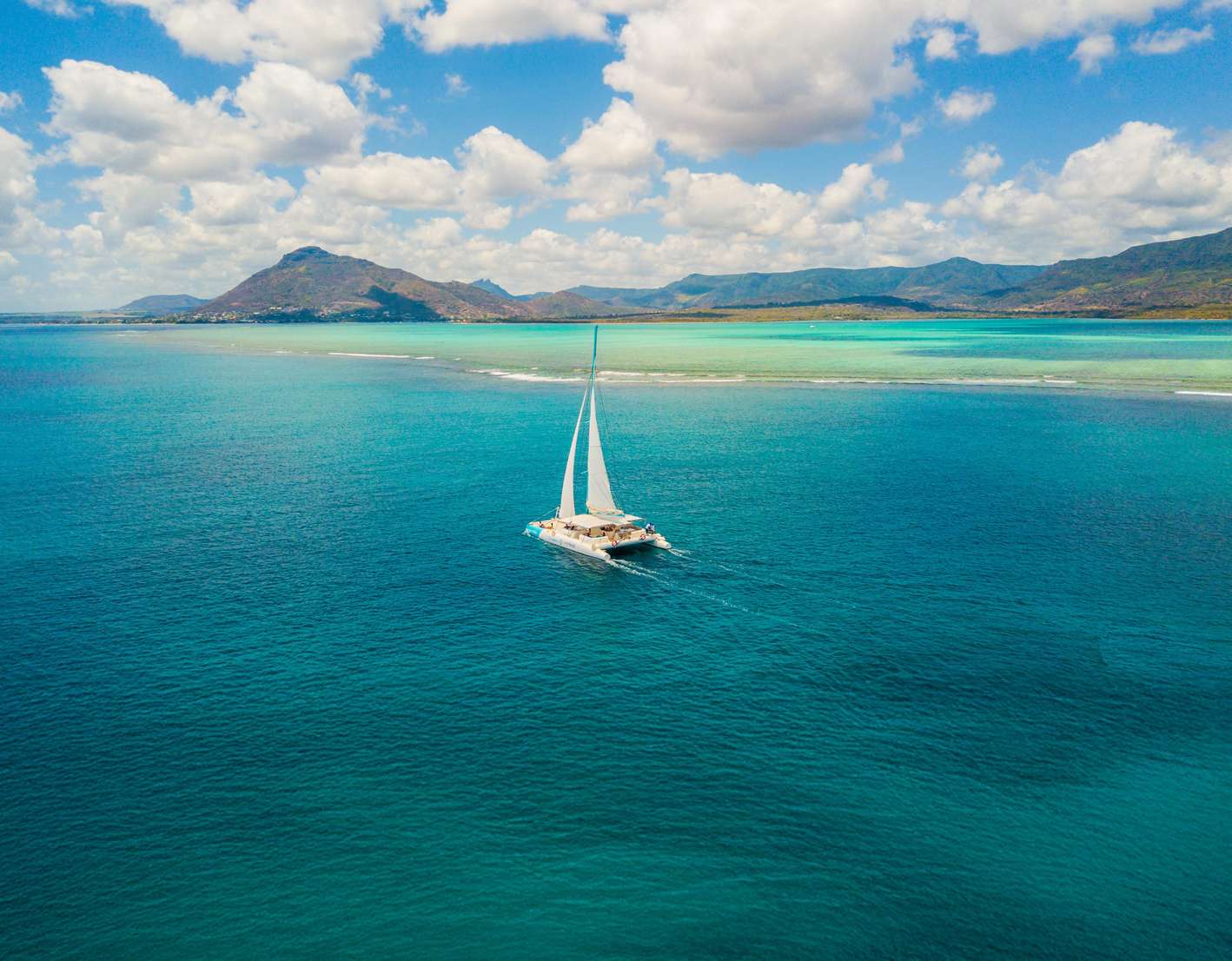
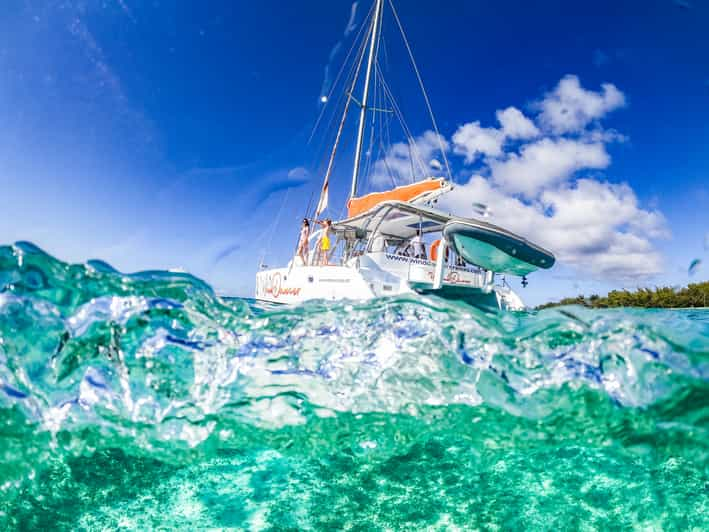
A catamaran's twin hull gives a wider, more stable platform that resists rolling, with sundecks, shaded lounge spaces and room for relaxed lounging on deck trampolines, but catamaran cruises often drop swimmers several hundred metres away from the pods, so close encounters are less reliable.
Glass-bottom boats are the slowest option, built around a viewing well in the floor with open bench seating and tight legroom on smaller vessels, and they suit non-swimmers and children watching from the boat.
Some travelers prefer the calm option: observing wild dolphins from the deck of a sailing boat or catamaran lets you watch them without entering the fray of swimming boats.
Engineless vessels such as sailboats allow for peaceful, non-disruptive encounters where dolphins voluntarily approach without being startled by propeller noise. Booking an exclusive private charter boat ensures your family or group gets dedicated swimming time and personal space without competing with crowds on shared boats.
The swim itself is a two-hour affair, but the same boat can carry the day much further. Pairing an early morning dolphin excursion with a barbecue lunch stop at Île aux Bénitiers extends the trip into a complete full-day coastal experience, and it is the version most travelers end up preferring.
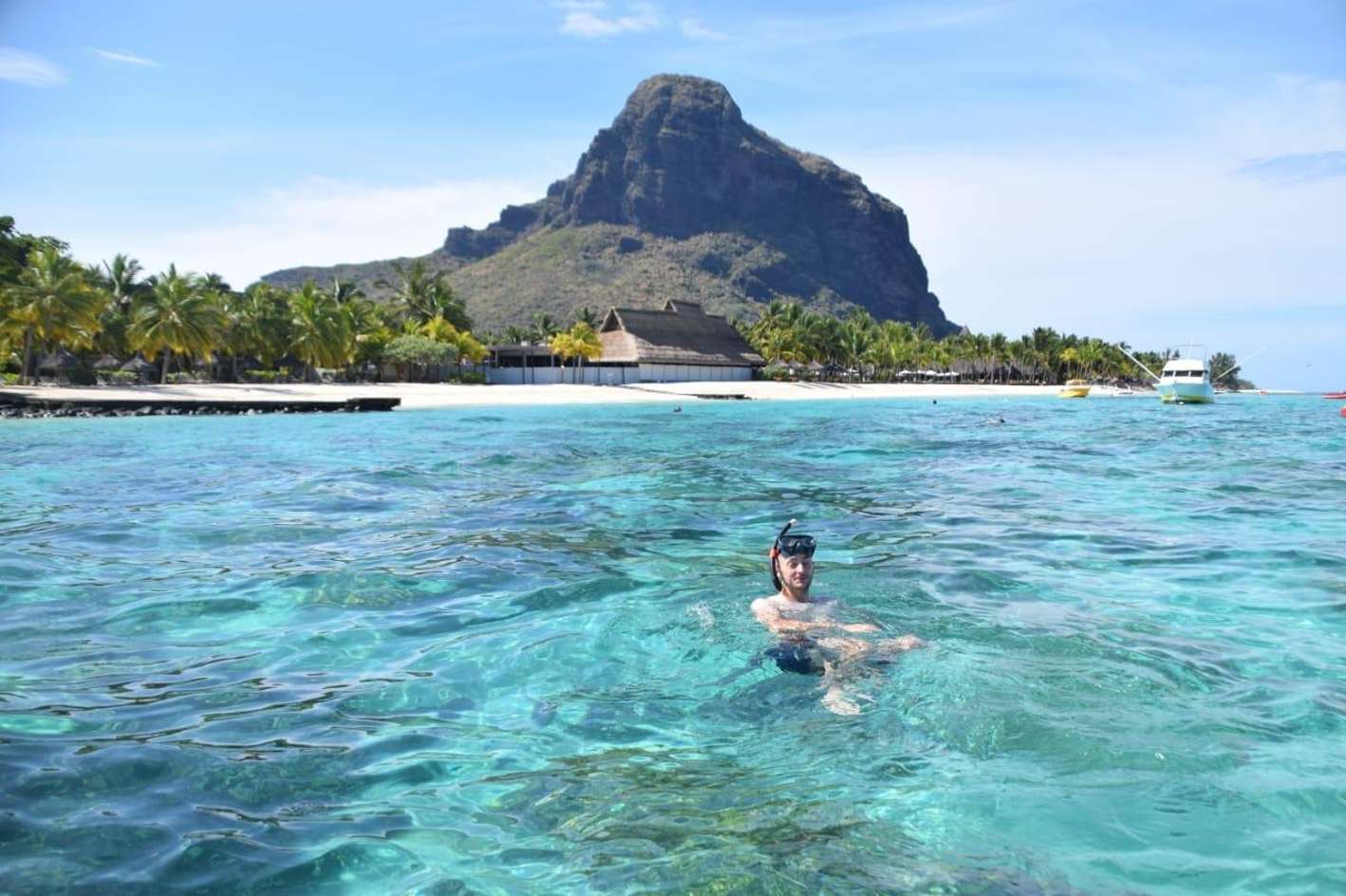
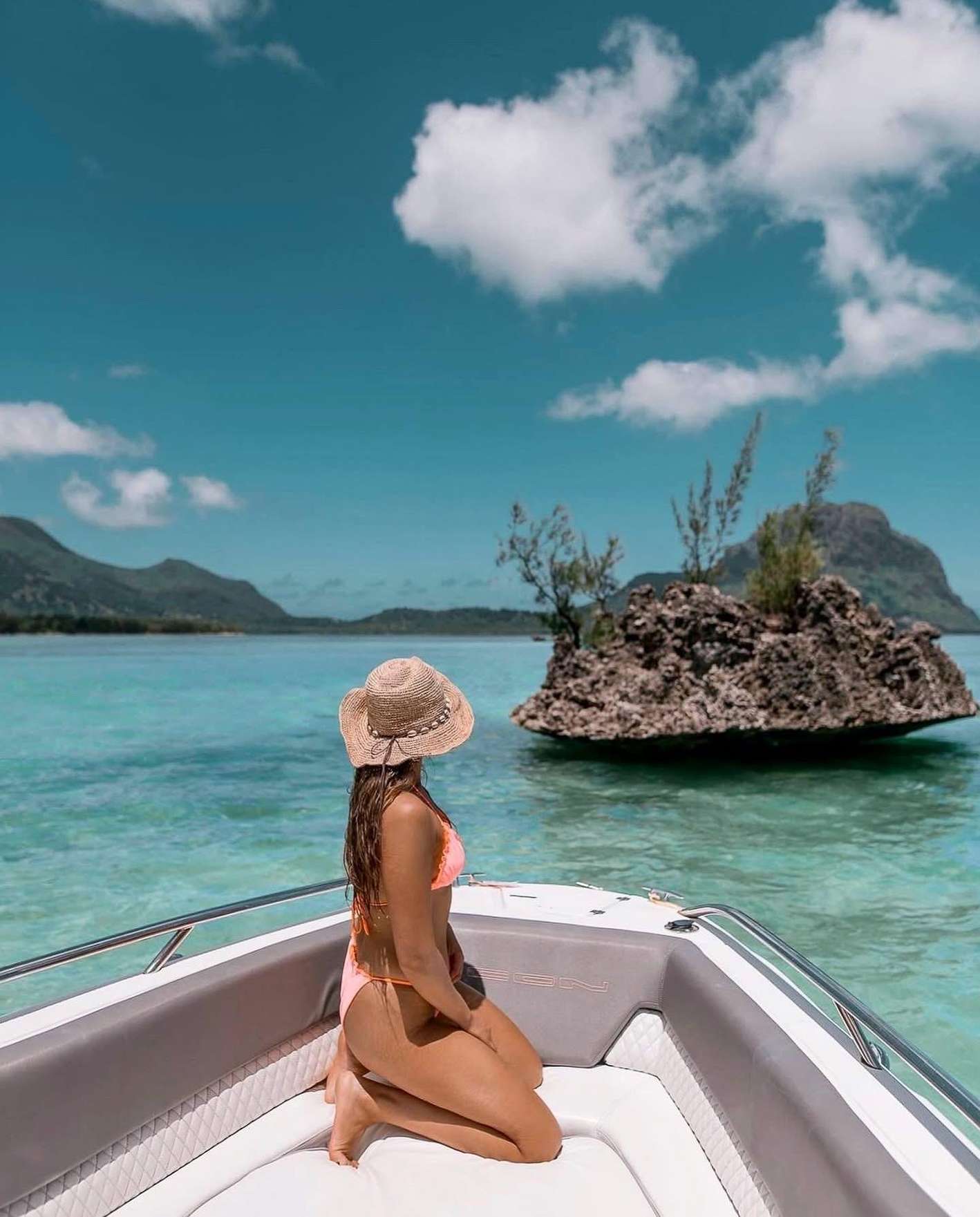
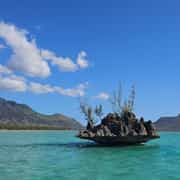
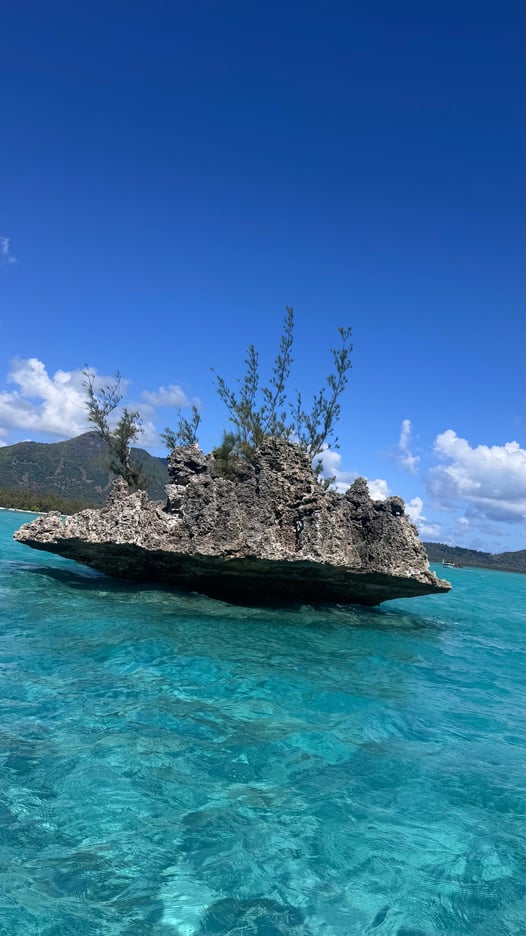
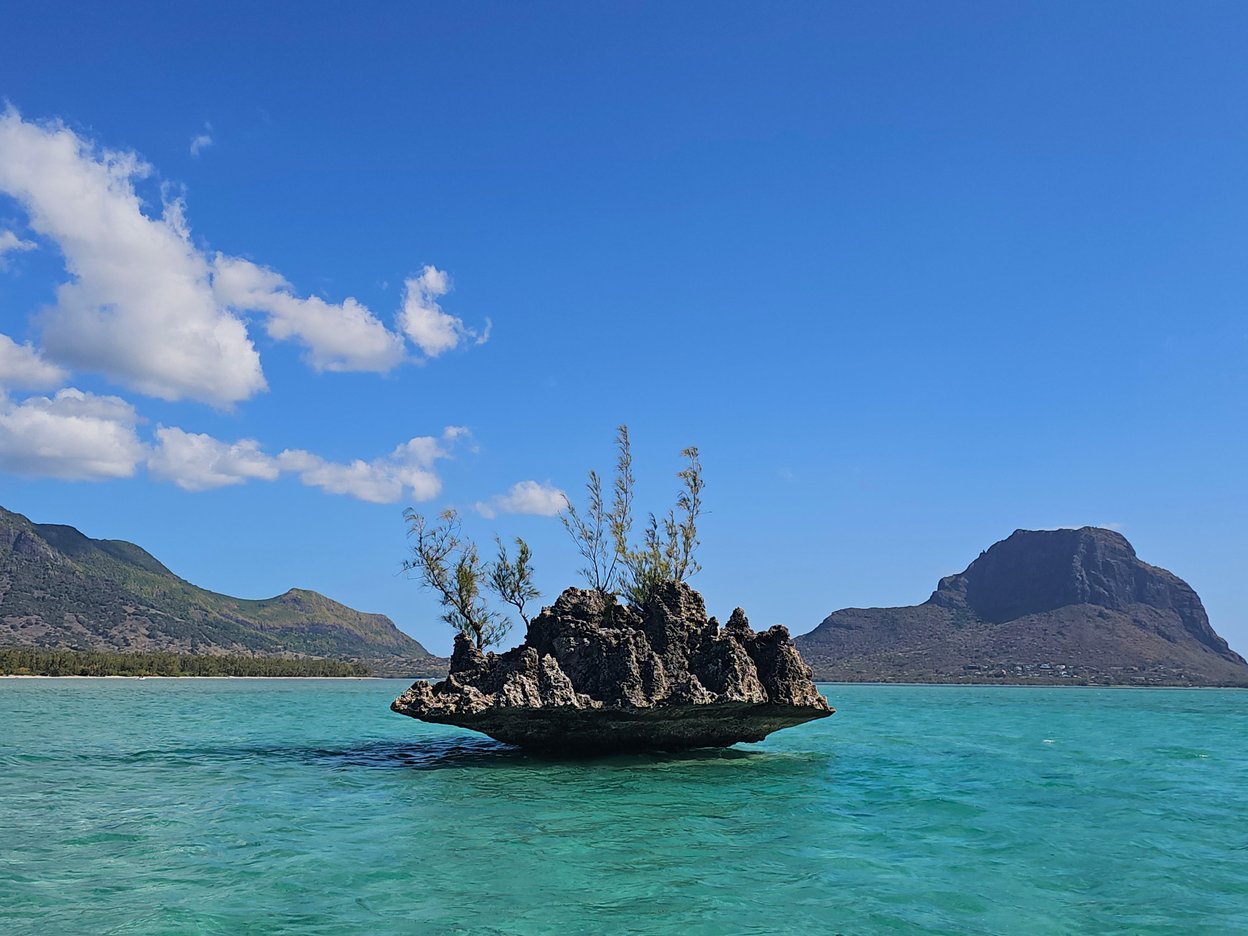
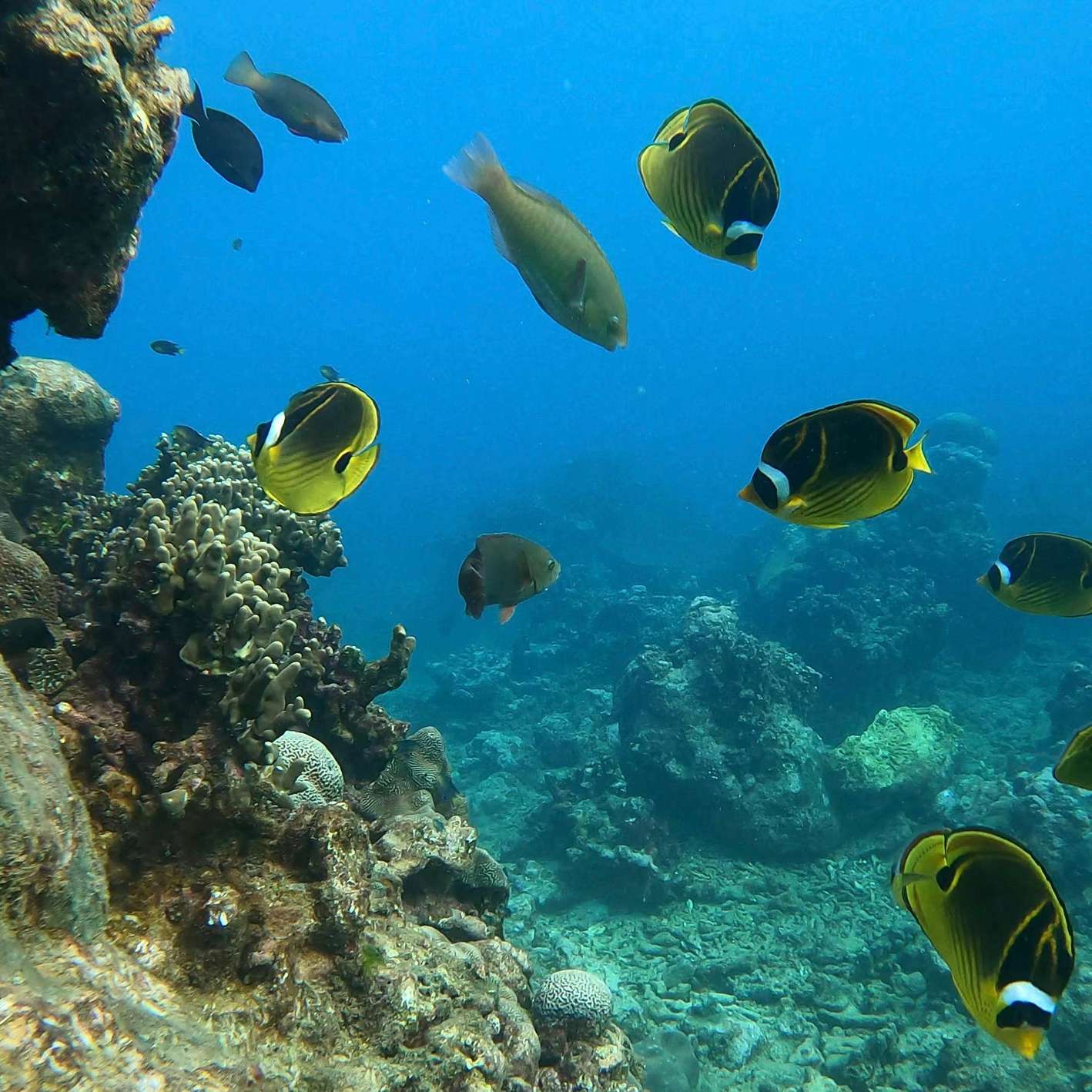
Dolphin swimming takes place in deep open water outside the lagoon reef, but the rest of the day is calm and shallow. Crystal Rock rises out of shallow turquoise water in the lagoon, and snorkeling near it provides calmer, shallower conditions than open-sea swimming.
In front of the rock, a field of compact round coral blocks sits dome next to dome on the sandy seabed, and the weathered grey rock itself looks like a giant mushroom standing on a narrow stem.
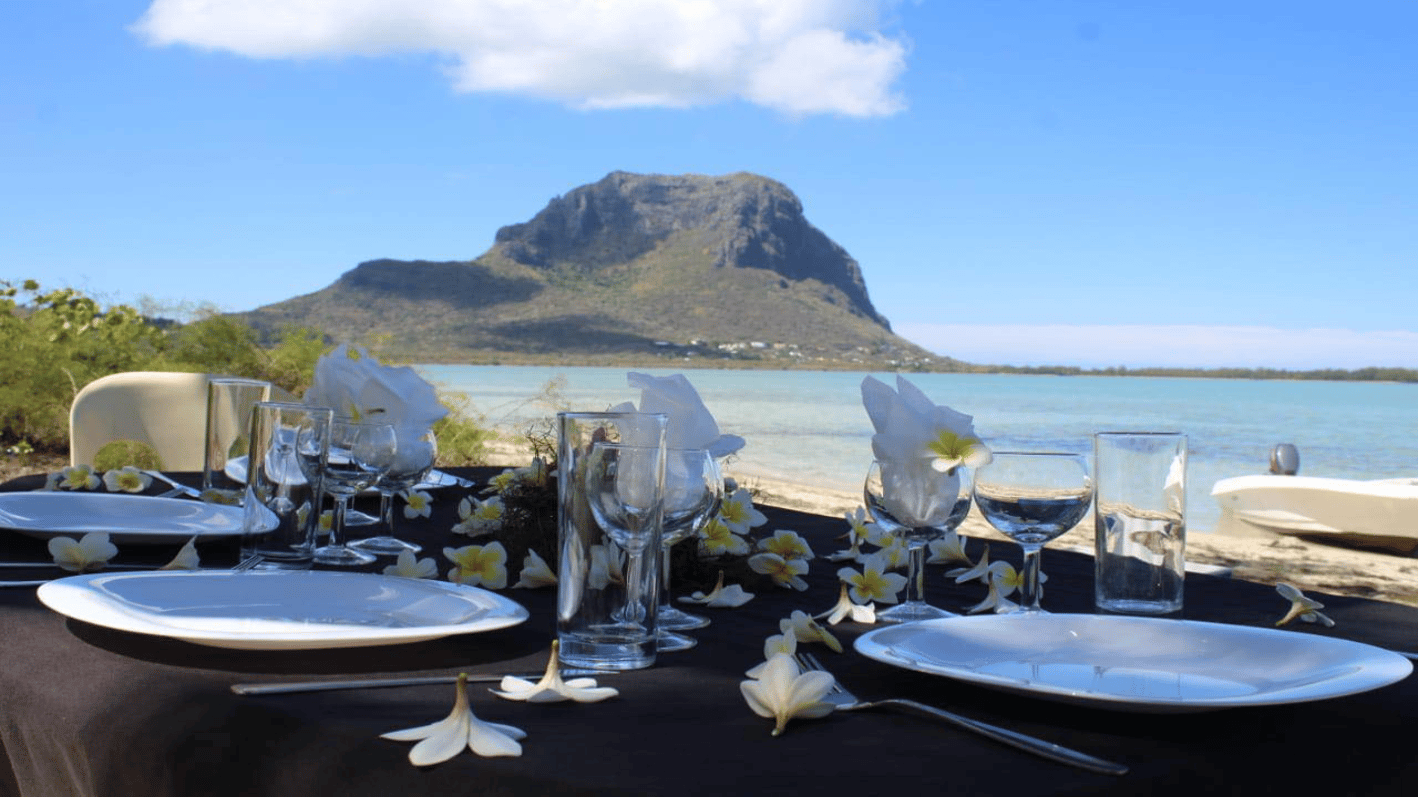
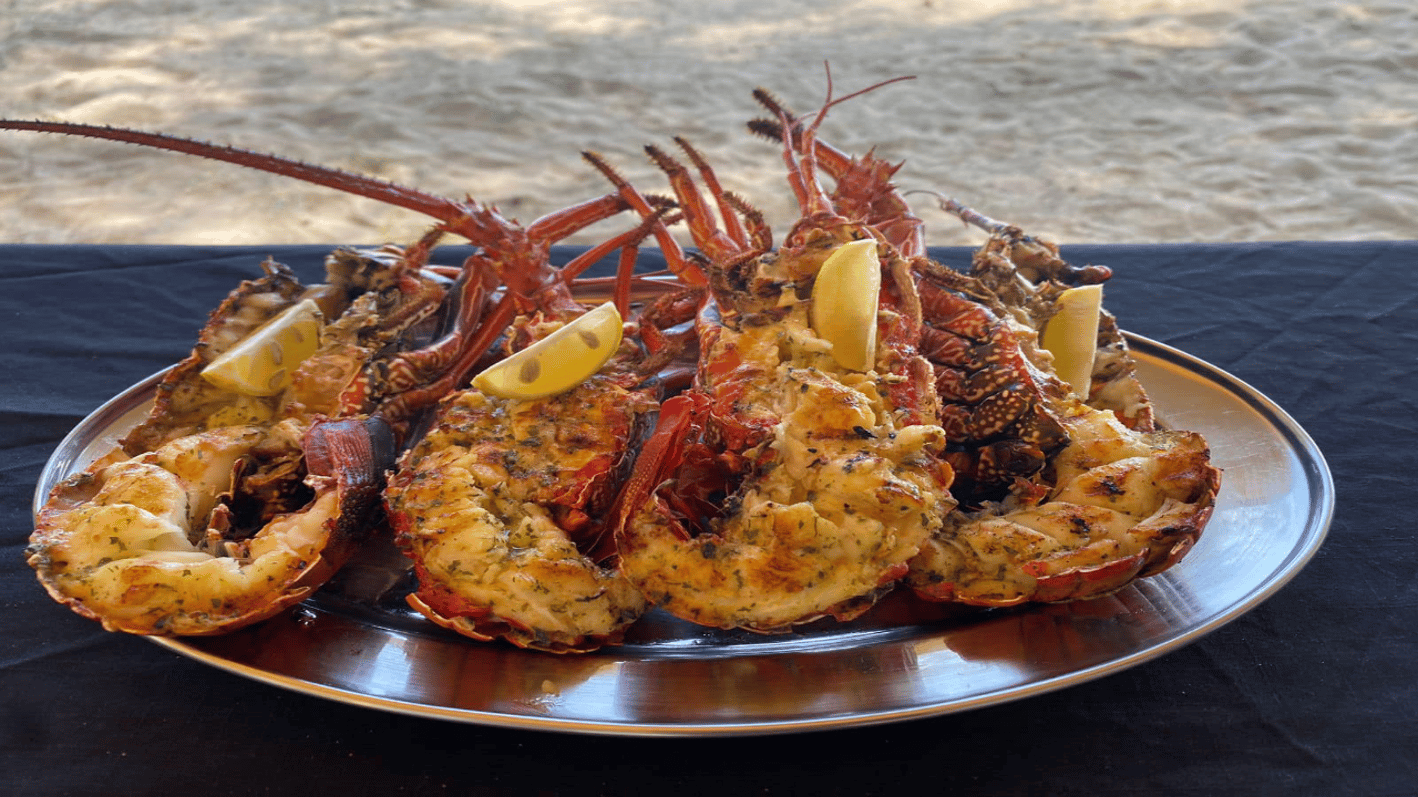
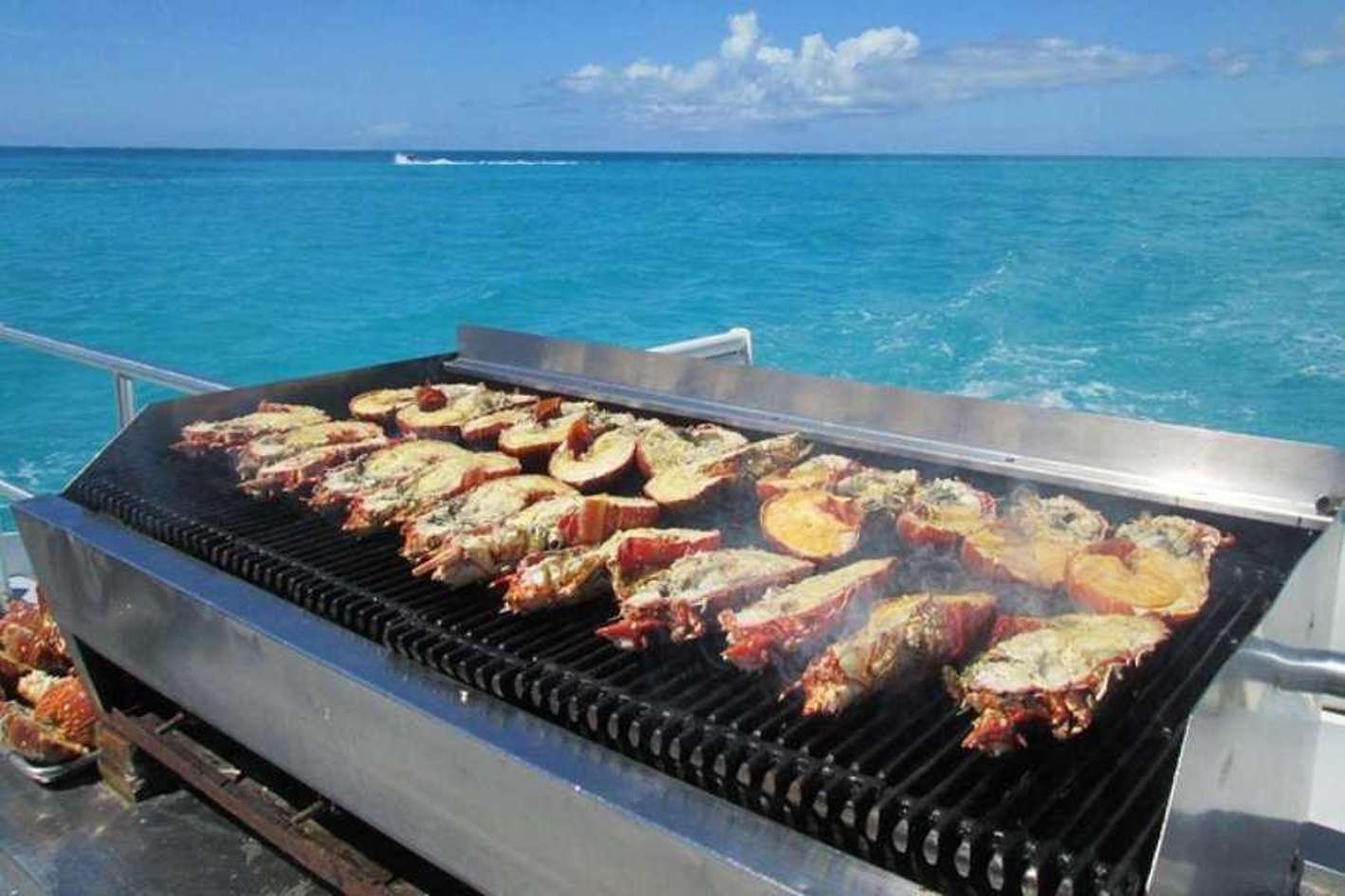
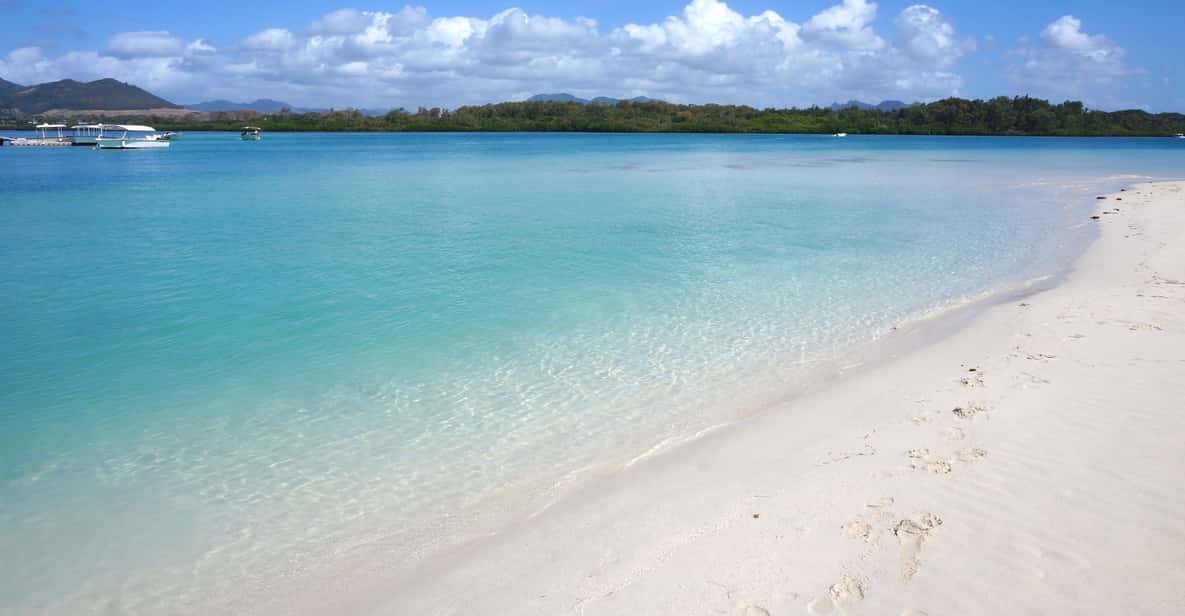
Île aux Bénitiers adds quiet beaches with shallow, calm waters for unwinding, and a barbecue lunch served on the island turns the morning into a full west-coast day.
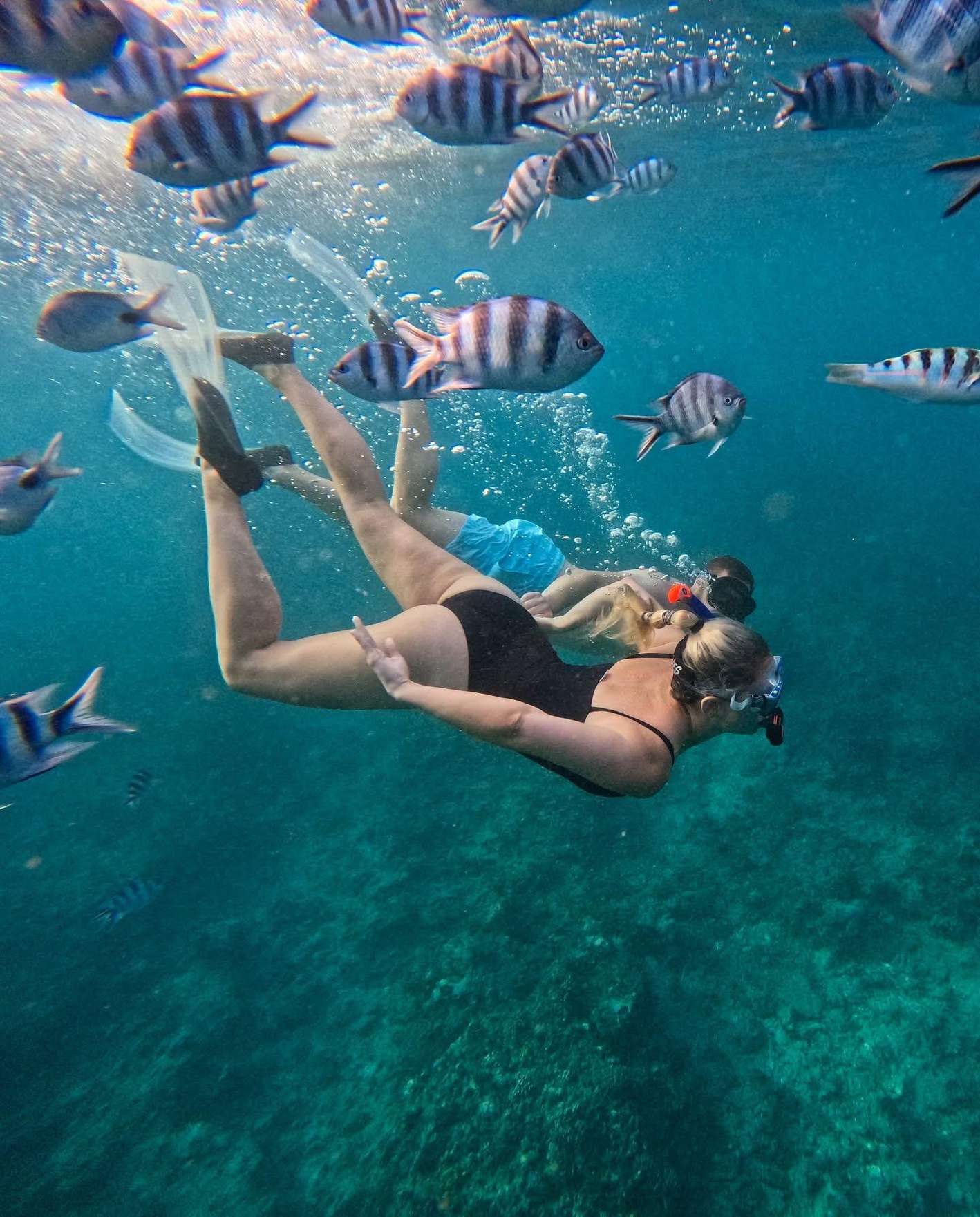
Wild dolphins move briskly in deep open water, so the early swim is the energetic part: you drop in swiftly and swim hard to keep pace, and using fins, a well-fitting mask and a snorkel is essential to keep up with the animals passing below the surface.
After that, the shallow lagoon stops and the beach lunch feel easy.
If you want the whole package in one go, a private boat for your group with a barbecue lunch and drinks on board is the way to do it, and dedicated swimming time without competing with crowds is worth the extra cost.
Tour for this
Tamarin: Dolphins, Crystal Rock, Benitiers Island, Lunch4.0★ (35) · 7 - 7.5 hours · Hotel pickup · Free cancellation
Getting to Tamarin Public Beach for your dolphin tour
A dawn departure means leaving your resort between 5 am and 5:45 am, because buses simply do not run early enough. The early morning drive takes approximately 71 minutes (59 km) from Grand Baie via the M2 motorway, and 73 minutes (52 km) from the east coast across the central plateau, without traffic.
Getting to Tamarin Public Beach for early departures
In practice, the choice is a rental car, a pre-booked taxi or an organized tour pickup, and any of the three works. The crossing from Grand Baie or Belle Mare is entirely doable, but it is worth the five minutes to book ahead.
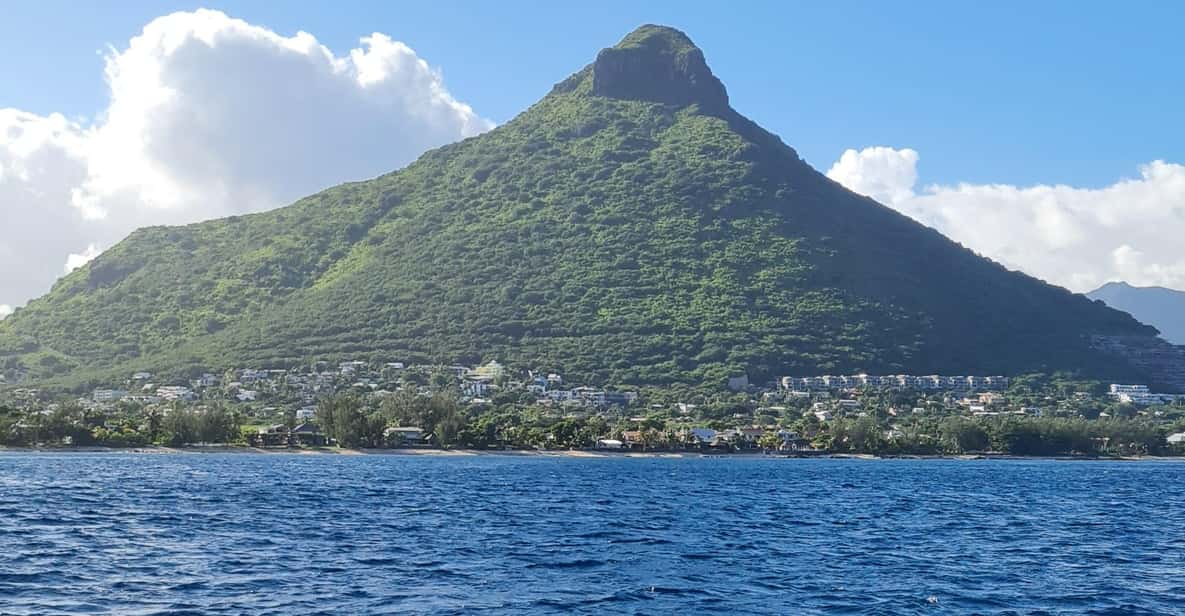
Tamarin Bay sits on the west coast between Flic en Flac and the Le Morne peninsula, so early morning taxi transfers and operator-arranged hotel pickups are straightforward from other coasts.
Larger catamarans and some speedboats depart from the nearby jetty at Black River, so check which launch point your tour uses before the morning. If you drive yourself, the meeting point is Tamarin Public Beach, and the bay has free parking behind the sand, plus toilets and showers on site.
The village itself has cafes, restaurants and small shops, so a coffee before the boat or a proper meal after the swim is easy. Street food, parking, toilets and showers are all available on site at Tamarin Bay.
Tour for this
West Coast: Swim and Snorkel with Dolphins on Speedboat Tour4.4★ (265) · 135 minutes · Free cancellation
Be honest with yourself here. Swimming with dolphins off Tamarin requires good cardiovascular fitness, open-water swimming ability and the capacity to snorkel and tread water for extended periods.
Participants must be confident swimming distances of 200 to 500 metres and comfortable in open lagoon currents. Entering the water requires dropping quickly into deep ocean water and swimming fast to keep up with passing pods.
Expect an energetic, athletic swim that asks real effort from your arms and legs. Deep water with limited vertical bottom visibility far from shore can be hazardous for weak swimmers, and guests who are uncomfortable entering deep open water repeatedly to swim with moving wild dolphins should consider staying onboard or choosing another activity.
Non-swimmers can join dolphin tours and view from the boat without entering the water.
The gear makes the difference. A snug, well-fitting mask, snorkel and flippers are essential, because keeping up with dolphins without fins is extremely difficult.
A rash guard or UV top protects you from the sun and adds warmth during the cooler austral winter mornings, and a dry bag protects your phone and electronics from spray on open decks.
What first-timers don't know
Communal boat masks leak and fog, and fins are often missing entirely
bring your own if the fit matters to you
Eat a solid breakfast before boarding
the best seasickness defense on slow open-water crossings
Seasickness that forces the boat home burns your paid charter time
pack remedies and medication before boarding
High concentrations of moving speedboats and abrupt drop-ins make entering the open water hazardous for weak swimmers and young children. Young children and toddlers should not attempt the open-water dolphin swim.
Driving yourself
Rent a car for the driveCompare cars from the rental companies in one search, then pick yours.
The anxieties first. Dangerous shark attacks are practically non-existent outside the reef around Tamarin, where only harmless reef sharks occasionally appear.
Sightings of great white sharks are rare, and blacktip and whitetip reef sharks seen on outer reef slopes are generally not aggressive toward humans. The fringing reef creates shallow lagoons that large shark species do not typically enter.
That settled, Tamarin Bay has a real open-water character. The Beach Authority classifies it as a hazardous bathing area, and the reef is open, so when a swell is running, waves and rip currents can be significant.
Currents also form where the river mouth and reef opening meet the sea. Seeing dolphins or porpoises in the water does not mean sharks are absent, and swimmers should not enter the water if local maritime authorities or boat crews issue a shark warning.
Lifejackets are compulsory on boats and in the water on Black River dolphin speedboat tours, and under Mauritian law everyone on board a commercial pleasure craft navigating outside the lagoon must wear a personal flotation device, such as a SOLAS lifejacket, a self-rescue bracelet or an inflatable belt pack.
The fact that can stop the visit
Tamarin is a classified hazardous bathing area when a shark warning is issued or a heavy swell is running, swimmers do not enter the water Pregnant women, babies under 1 year and people with back problems offshore speedboats do not accept them Non-swimmers can join the boat and watch from the deck without entering the water
The reef at Tamarin is open, so respect the crew's calls on when to enter and when to stay on board.
Tour for this
La Preneuse: Dolphin Swimming and Snorkeling Speedboat Trip4.3★ (132) · 2.5 hours · Free cancellation
The encounter is legal in Mauritius under strict conditions, and the rules tell you what a respectful crew looks like. Commercial dolphin watching and swimming with dolphins requires a tourist enterprise licence, a certified skipper, an official Tourism Authority label and an approved propeller guard.
Boats providing swimming with dolphins must display the Alpha flag and carry at least one life-saver in an approved personal floating device, a first aid kit and an oxygen kit.
Before entering the sea, swimmers sign a liability disclaimer and receive a briefing on calm, silent swimming techniques. No more than three swimmers, including the life-saver, are permitted to enter the water simultaneously from a pleasure craft.
Skippers must maintain a set distance from the pod and avoid encircling or cutting off dolphins that are resting or feeding.
Operating a pleasure craft within a 50-metre radius of the closest dolphin is prohibited, and the regulated buffer zone extends from 50 to 150 metres.
Boats must approach from the side, follow a parallel course, operate at no-wake speed in the regulated zone and keep the engine in neutral when standing still. Driving through or amidst a pod, circling, approaching from behind or head-on, touching, feeding or making noise to attract the animals is prohibited.
A traveler's note
Great family day. The private boat was really worth it. We saw whales, our hosts did everything for us, and we swam with dolphins under gorgeous sun. Only small note: no drinks as described.
The rules that apply to you: touch nothing, chase nothing, enter quietly and swim alongside the pod. Regulars recommend choosing crews that approach the pods gently, and they steer clear of motorized boats that block the travel path of pods or coordinate with other vessels to trap animals in the bay.
Two things can derail the morning, and both are worth knowing before you pay. Weather comes first. Passing tropical depressions and storms bring elevated wind and ocean swells that legally require operators to suspend boat tours under cyclone warnings, and skippers cancel departures when rough water makes the crossing unsafe.
February and March fall within the peak tropical cyclone window and are the wettest months of the year, averaging 127 to 135 mm of rainfall across 21 to 22 wet days with only 7 to 9 dry days per month.
Sea and weather conditions for boat tours in Tamarin and Black River
December: calm sea on 75% of days. The calmest sea conditions of the year arrive with waves averaging 1.3 metres, though afternoon rain showers begin to increase.
HighestFeb to Mar, Nov to Dec63 to 75% of days
In betweenJan, Apr, Sep to Oct51 to 62% of days
LowestMay to Aug39 to 45% of days
Darker months: higher, from 39 to 75% of days
Tap a month to read it.
May: waves up to 1.7 m on an average day. Winter trade winds begin to build and calm-water days decrease to under 40%, although rainfall remains low.
HighestMay to Sep1.6 to 1.7 m
In betweenJan, Apr, Oct1.5 m
LowestFeb to Mar, Nov to Dec1.3 to 1.4 m
Darker months: higher, from 1.3 to 1.7 m
Tap a month to read it.
May: 2.8 windy days. Winter trade winds begin to build and calm-water days decrease to under 40%, although rainfall remains low.
HighestFeb, Apr to Jul2 to 2.8 days
In betweenJan, Aug1.6 days
LowestMar, Sep to Dec0 to 0.8 days
Darker months: higher, from 0 to 2.8 days
Tap a month to read it.
July: 26.6 dry days. The month is exceptionally dry, but winter trade winds and higher swells keep the sea rough outside sheltered areas.
HighestMay to Oct21.2 to 26.6 days
LowestNov to Apr8.8 to 14.4 days
Darker months: higher, from 8.8 to 26.6 days
Tap a month to read it.
January: 191 mm of rain. Sea conditions are calm on most days, but frequent summer downpours and cyclone risks can lead to sudden morning cancellations.
HighestJan191 mm
In betweenFeb to Mar, Dec119 to 130 mm
LowestApr to Nov17 to 70 mm
Darker months: higher, from 17 to 191 mm
Tap a month to read it.
The second is the dolphins themselves. They are resident in the bay year-round, but sightings depend on time of day: pods return to Tamarin Bay at dawn between 6:00 and 7:30 am to rest and socialize after hunting offshore, then move into deeper water later.
Wild sightings can never be guaranteed, which is why the departure time matters more than the season.
Always check your tour operator's or hotel's policy on rescheduling or refunds in case dolphins are absent or weather cancels the boat trip. Ask about that policy before you pay.
The calm months for Tamarin are November through April, when the sea is calm on 59% to 75% of days and water temperatures reach 26.5 to 28.3 degrees, while May to September bring calm days on 39% to 51% of days.
The morning swim is the anchor, and the west coast fills the rest of the day. Reef snorkeling near Crystal Rock provides calmer, shallower waters frequently combined with morning dolphin trips along the southwest coast, and swimming and snorkeling stops at L'Harmonie or La Preneuse are paired with west coast dolphin cruises.
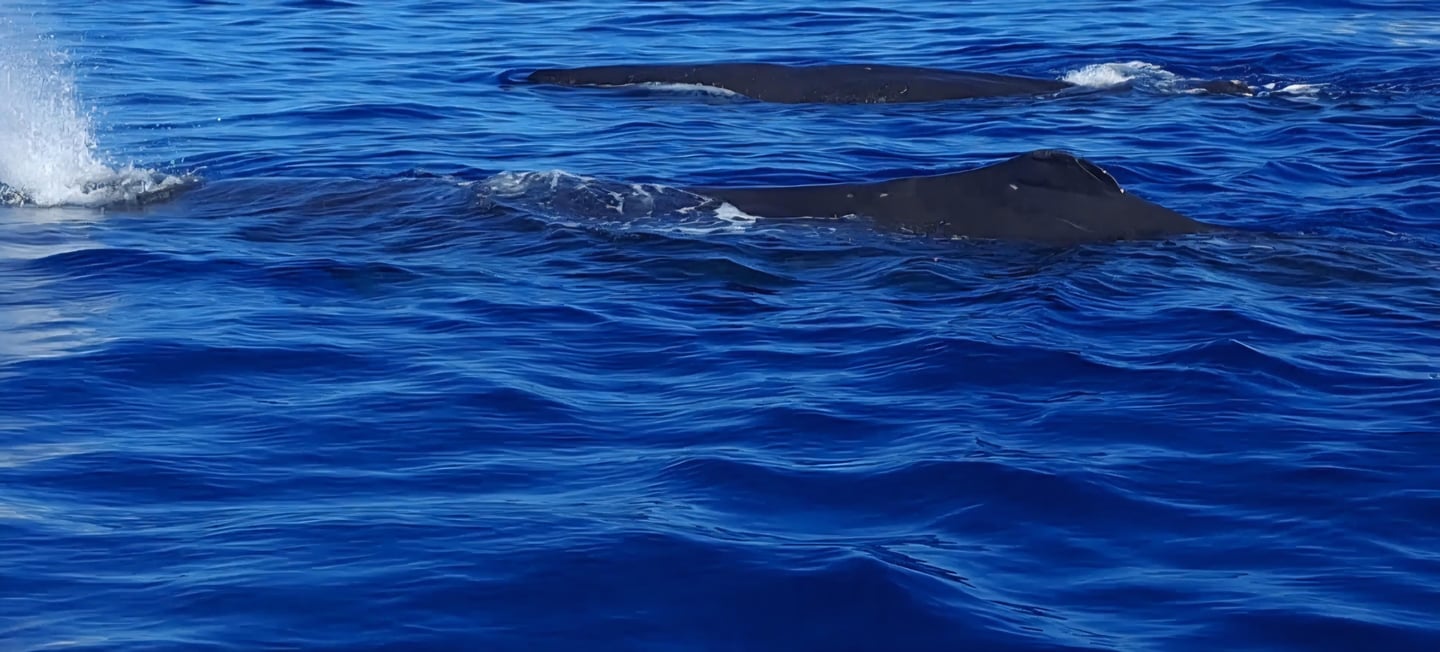
Whales add a second act. Seasonal whale watching from Tamarin runs from July to October, and west coast excursions out of Tamarin, Flic en Flac and Black River often cross paths with seasonal whales as well as dolphins.
Whale watching in Mauritius is commonly combined with dolphin swimming on a full-day tour, and Mauritian regulations prohibit approaching whales within 100 metres and swimming with them.
Tamarin itself is worth the time on shore. The village is a characterful surf spot where you can walk the beach at golden hour, watch the coast turn golden at sunset, or eat breakfast overlooking the bay.
Le Dix-Neuf restaurant overlooks Tamarin Bay, opens at 7 am and serves breakfast, with reservations needed at least 24 hours ahead. La Madrague at Tamarina overlooks the bay and serves a breakfast buffet from 7:30 am to 10 am, and the main bar there opens daily at 7:30 am.
The beach itself is well suited for walking, surfing, a shaded picnic or watching the sunset, with the soft morning light making it photogenic.
If you want flat turquoise water and effortless swimming, a sheltered lagoon beach elsewhere on the island is the better fit, and Tamarin remains the place for its scenery, waves and ambiance.
One note on the bay: Tamarin has a concentration of dolphin-watching boats because dolphins are most often spotted there, including boats arriving from regions such as Le Morne, and departures directly from Tamarin are the most frequented on the west coast.
The list is short and the items earn their place. Wear swimwear underneath your clothes before boarding, because changing on an open deck is awkward. Pack a UV rash guard, reef-safe high-SPF sunscreen, a wide-brim hat with a chin strap and polarized sunglasses with a retainer strap.
For open-water sea spray, wind and sudden showers on exposed boat decks, bring a light waterproof jacket or windbreaker, a towel, a change of dry clothes and a roll-top dry bag to safeguard phones and electronics.
Private charters in Mauritius provide snorkeling masks, fins and life jackets, but passengers must bring their own towels, high-SPF reef-safe sunscreen, sunglasses, a sun hat or cap, and swimwear worn underneath clothing.
Water shoes are worth packing too. Wear sturdy water shoes when exploring Mauritian lagoons to prevent cuts from sharp, submerged volcanic rocks, and the shallows hold sea urchins and stonefish that hide on the seabed.
A light wetsuit or rash guard is recommended for sun protection and for warmth during the cooler austral winter mornings, when water off Tamarin drops to 23 to 25 degrees.
Cash in Mauritian rupees is required for local souvenir vendors and beach stalls at island stops, so bring some. A dry bag or waterproof cover protects electronics from ocean spray and rain on open decks, and the morning light on the water is worth capturing with a phone that survives it.
For the underwater photography, the 7:00 to 8:30 am window offers flat water and rising sunlight, which is the best compromise for underwater shots.
Pods rest in the bay through the morning, so a calm camera comes before a fast lens. And since communal boat masks leak and fins go missing, bring your own mask and fins if the encounter matters to you.
A dolphin tour in Tamarin is a genuine open-ocean swim with resident pods, and it works best as a 6:00 to 7:30 am speedboat departure followed by a shallow lagoon stop at Crystal Rock and a barbecue lunch on Île aux Bénitiers.
Choose a speedboat if you are fit and want close encounters, a catamaran if shade and comfort matter more, and a private charter if you want dedicated swimming time.
Book November through April for the calmest sea, confirm the no-dolphin policy before paying, and bring your own mask and fins.
Go ifYou are a confident swimmer, comfortable in 200 to 500 metre open-water distances and currents.You can book a dawn departure and reach Tamarin Public Beach by 6:30 am.You want a full day, with the dolphin swim, Crystal Rock snorkeling and a barbecue lunch on Île aux Bénitiers.
Skip ifYou are pregnant, have serious back problems or mobility impairments, since offshore speedboats do not accept these travelers.You are traveling with babies under 1 year or toddlers who should not attempt the open-water dolphin swim.You would rather stay on the boat and watch, since a glass-bottom boat or a sailing catamaran deck suits you better.
Our pick to book
West Coast: Swim and Snorkel with Dolphins on Speedboat Tour4.4★ (265) · 135 minutes · Free cancellation
The questions travelers ask before booking a dolphin tour in Tamarin Bay, answered plainly.
Is it legal to swim with dolphins in Tamarin?
Yes, when you go with a licensed operator. The boat must carry a certified skipper, a life-saver, and a first aid kit, and you sign a liability disclaimer before entering the water.
How many people can swim with the dolphins at once?
Mauritian law allows no more than three swimmers, including a life-saver, in the water at any time from a boat. Crews drop swimmers in small groups while the rest wait their turn.
What time of day gives the best dolphin encounter in Tamarin?
Go between 6 am and 7:30 am. Pods return to the bay at dawn to rest after hunting offshore, and by 8:30 am the bay fills with boats and the dolphins disperse offshore.
Do I need to be a strong swimmer?
It helps a lot. Dolphins move briskly in deep open water, so you drop in and swim hard to keep pace. Fins are essential. If you are not confident, stay on the boat and watch from the deck.
What is the difference between spinner and bottlenose dolphins?
Spinners travel in larger pods and pass by fast or get easily disturbed from their rest. Bottlenose dolphins move in smaller groups, stay calmer, and often linger a few meters from swimmers.
What happens if we see no dolphins?
Sightings cannot be guaranteed because the dolphins are free-ranging wild animals. Ask about the operator's rescheduling or refund policy before you book.
Is it safe from sharks?
Dangerous shark attacks are practically non-existent outside the reef around Tamarin, where only harmless reef sharks occasionally appear. The bigger hazard is the bay itself, since currents form where the river mouth meets the sea.
Is swimming with dolphins in Tamarin ethical?
It can be, when crews hold back, keep a respectful distance, and drop only small buddy pairs into the water. Rules prohibit touching, feeding, chasing, or circling the pods, and skippers must keep a set buffer around them.
What is the best time of year for a dolphin tour in Tamarin?
Dolphins are resident year-round, so there is no off-season. November to April brings the calmest sea and warmest water at 26.5°C to 28.3°C, while May to September cools to around 23.3°C to 25.1°C with rougher days.
Can I see whales on a dolphin tour from Tamarin?
Seasonal whale watching from Tamarin runs from July to October, and some west coast trips combine both. Note that swimming with whales is prohibited by law, so you watch them from the boat.
Can I get seasick on a speedboat out of Tamarin?
The open ocean swells can be rough, and lingering slowly on a rolling boat makes it worse. Eat a solid breakfast, stay hydrated, and bring your own remedy before boarding.
How do I reach Tamarin for a 6:30 am departure?
You need a rental car, a pre-arranged taxi, or an organized pickup leaving around 5 am to 5:45 am. The drive takes about 71 minutes from Grand Baie, and public buses do not run early enough.