
7 hours·English, French
5.0(5)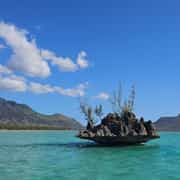
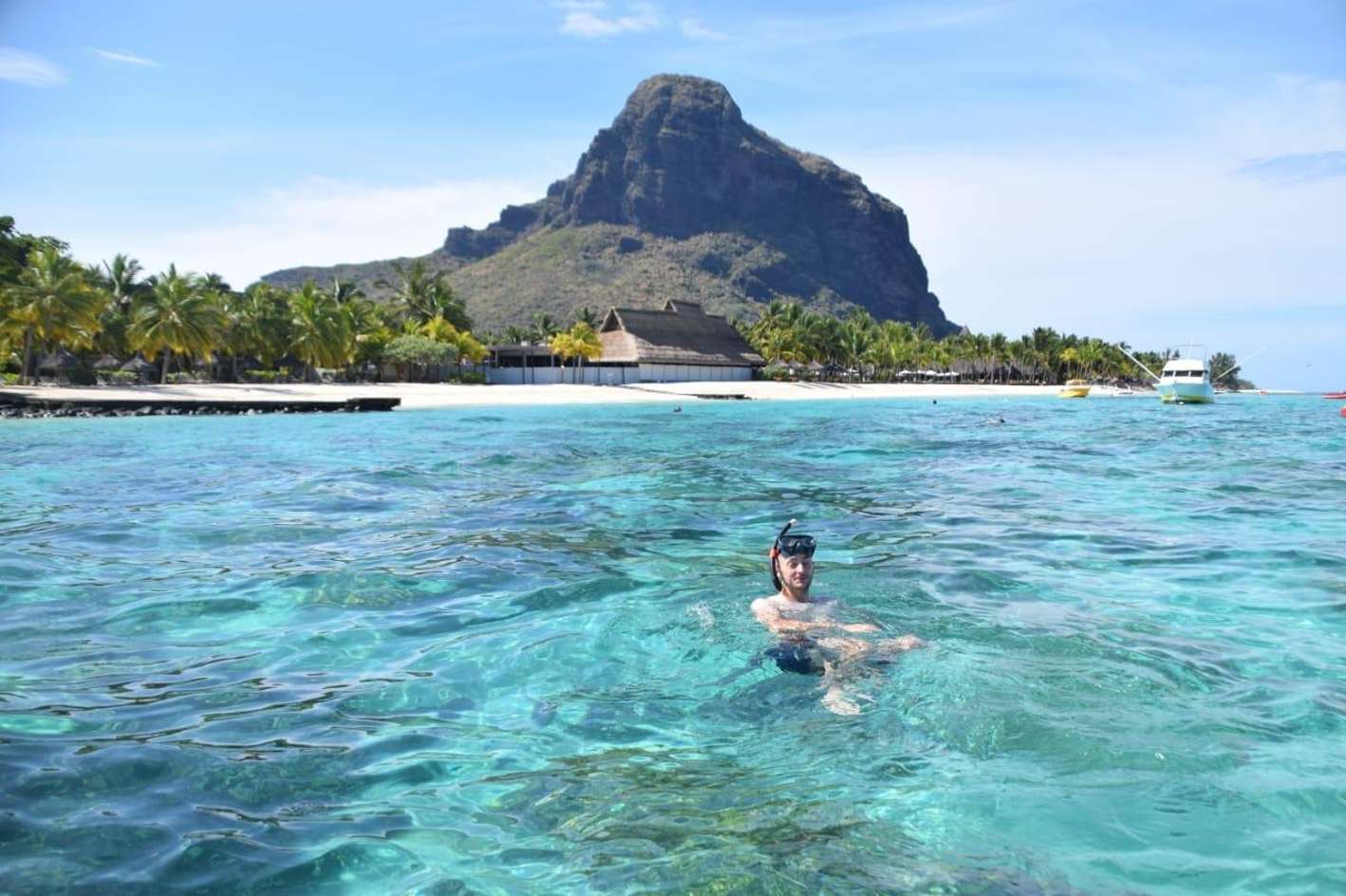
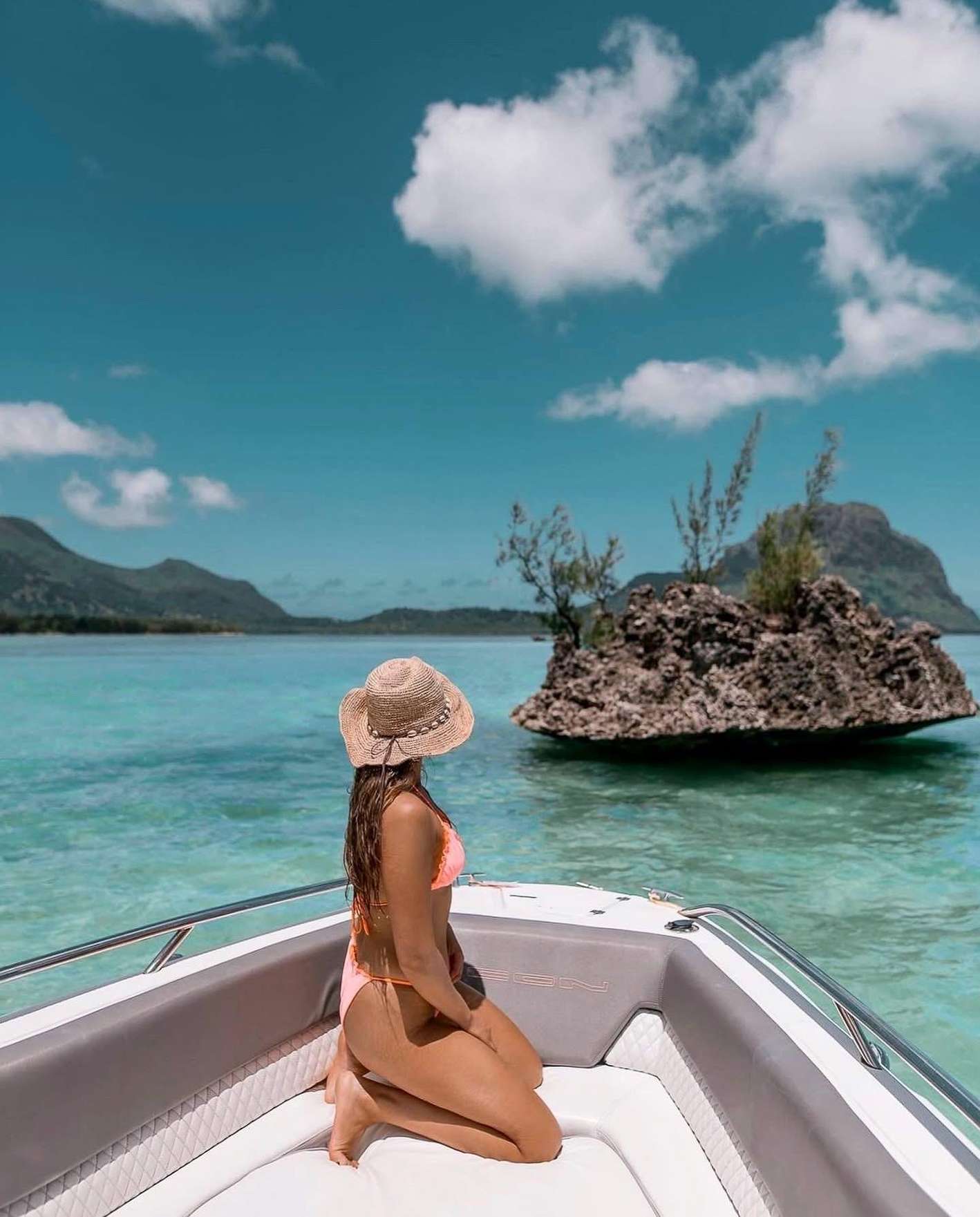
Private Île aux Bénitiers Boat: Dolphin Snorkeling & Lobster
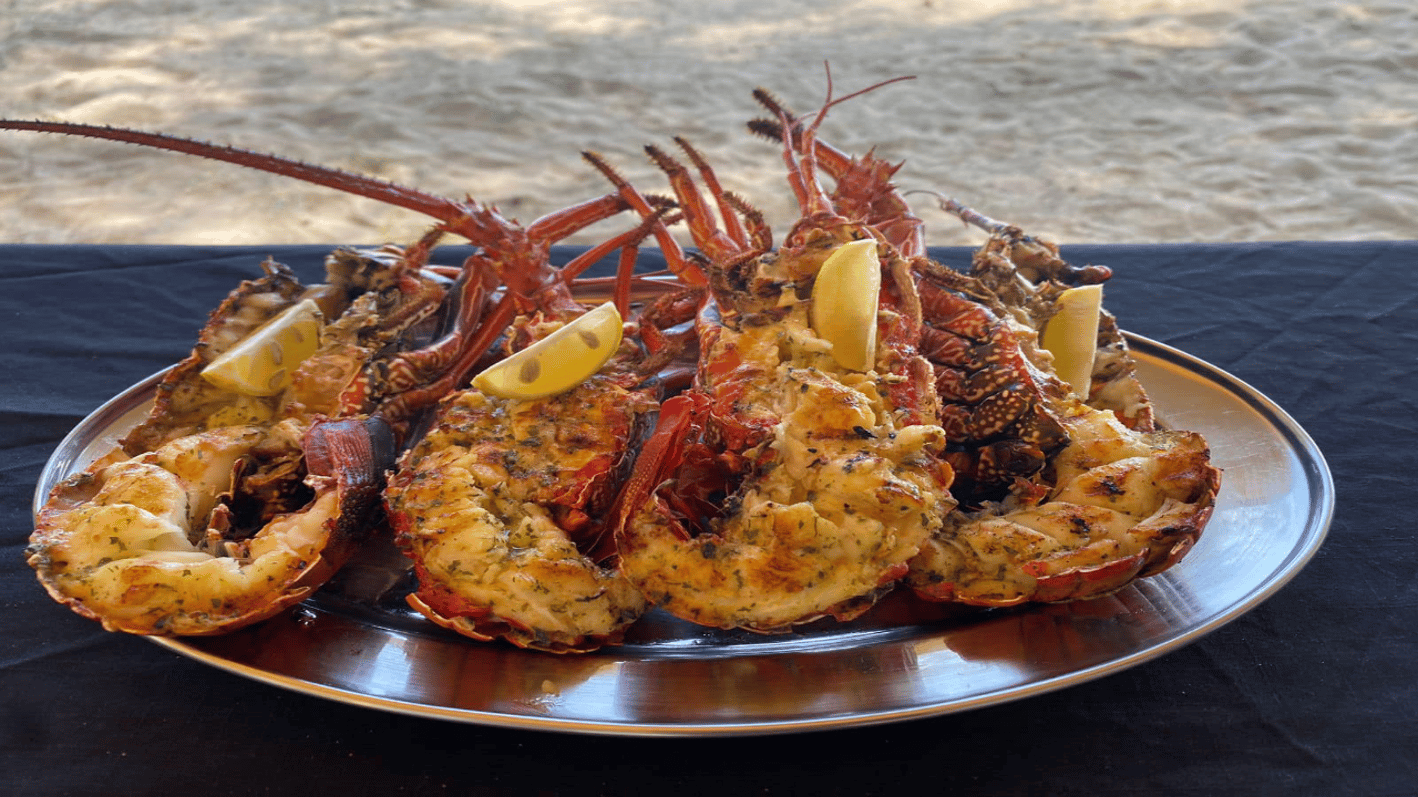
Free cancellationBBQ Lunch with LobsterBottled water upon arrival
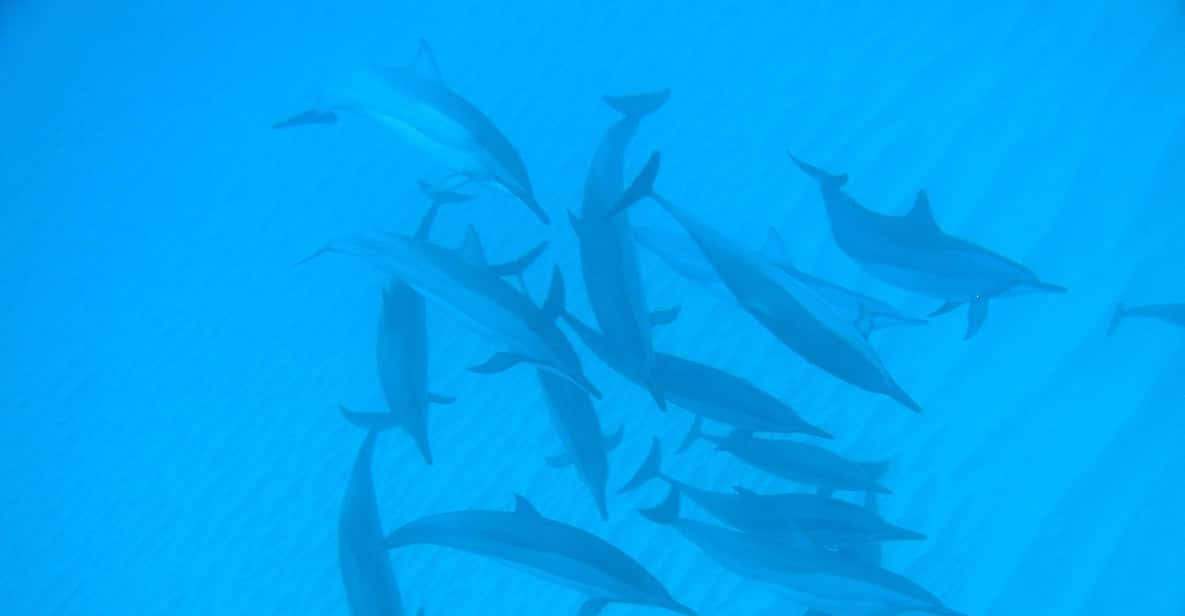
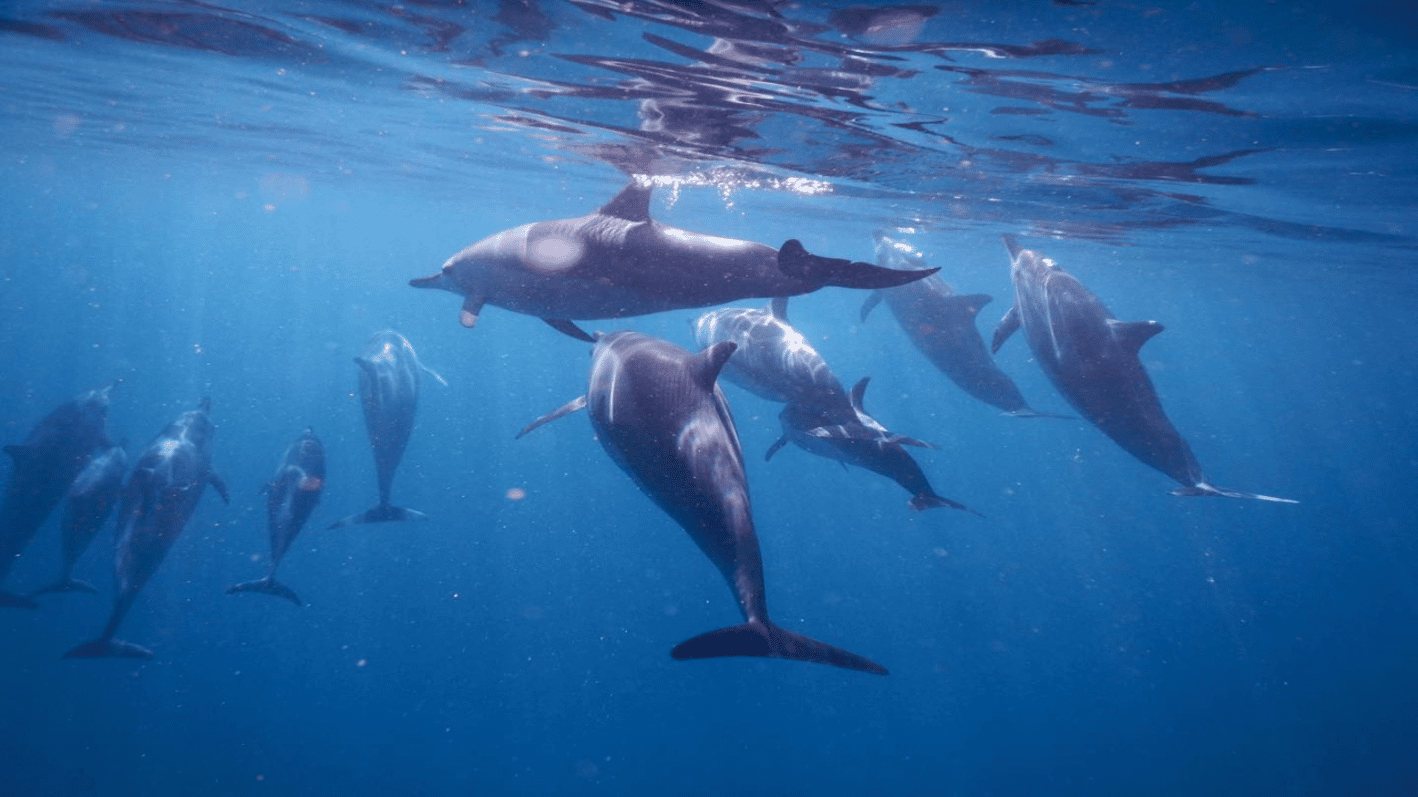
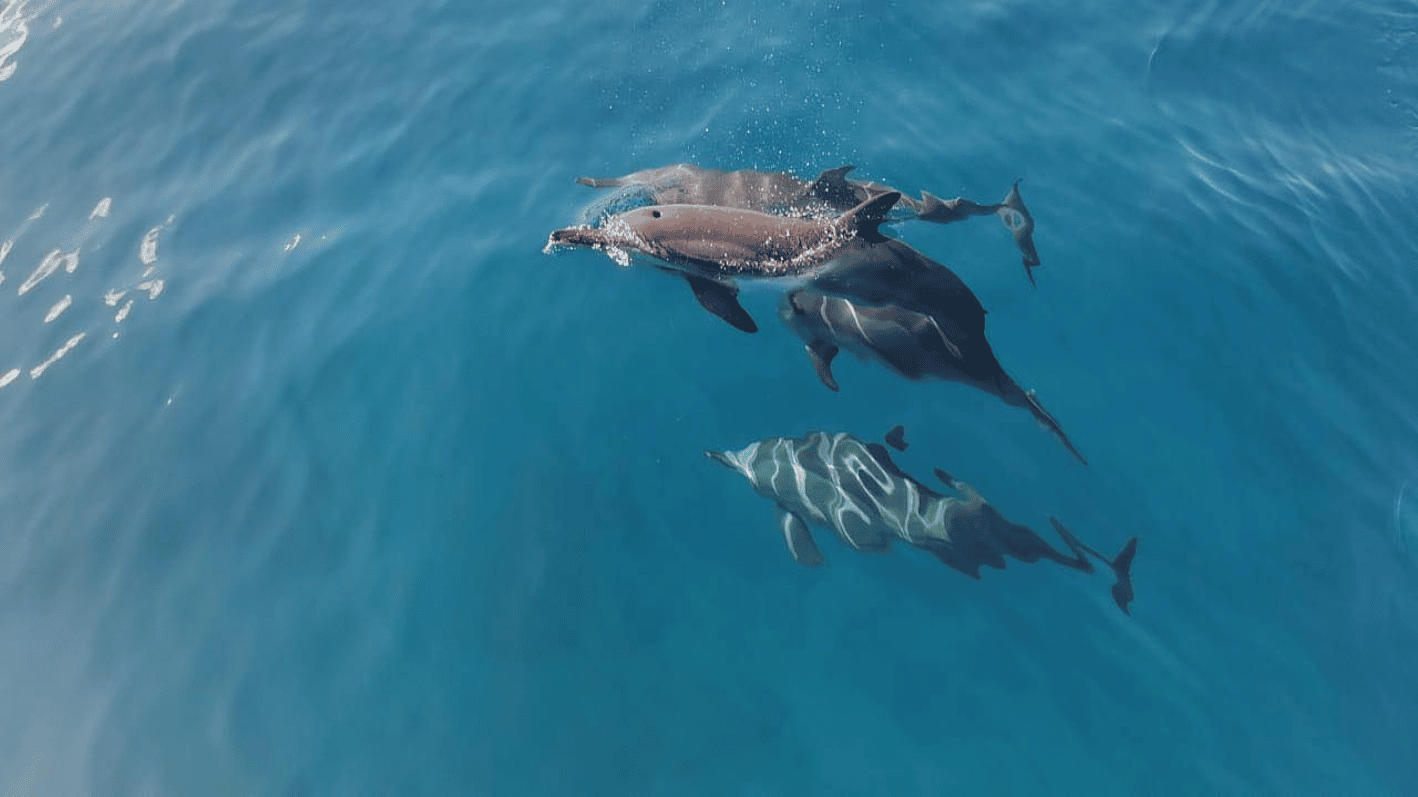
Slip into deep blue water beside a wild pod, guided by a licensed skipper who knows their route. Book an early speedboat from the west coast, gear up with masks and long fins, and drop in small groups at first light, before the crowds and in line with the rules that keep the animals safe.
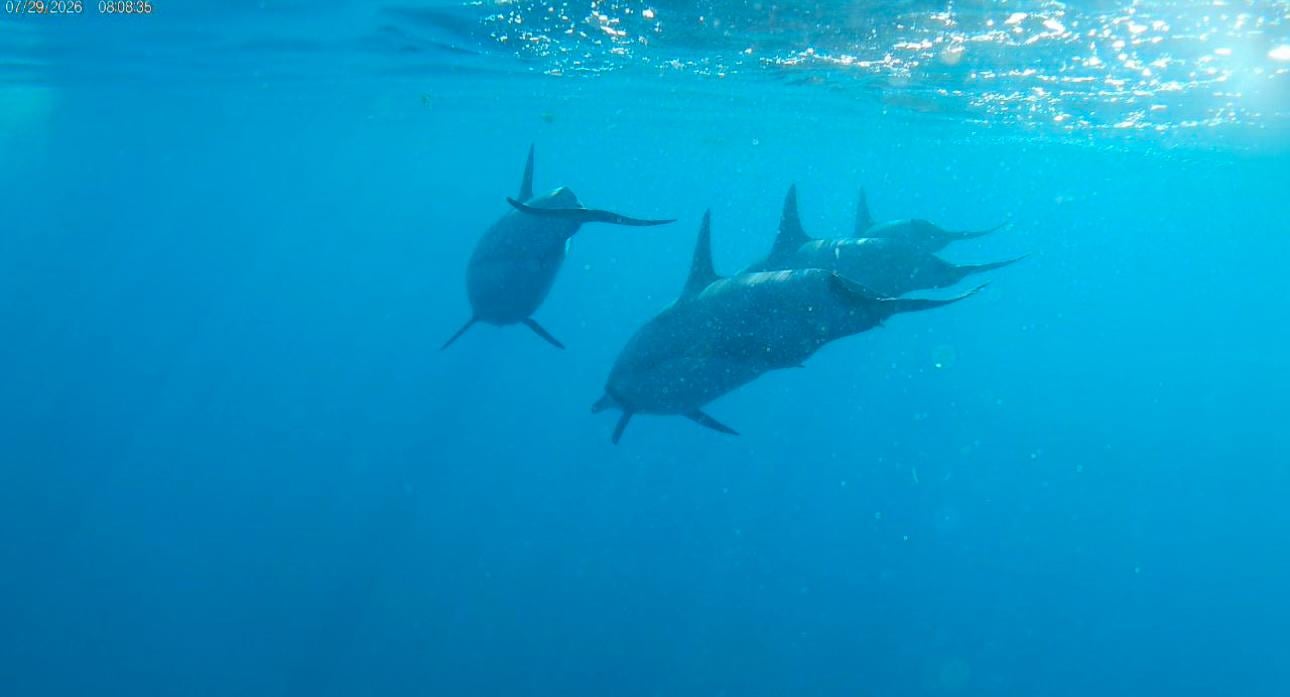
"Our captain knew exactly where the dolphins were. When wind made the sea rough, he wisely moved us elsewhere, keeping us safe."
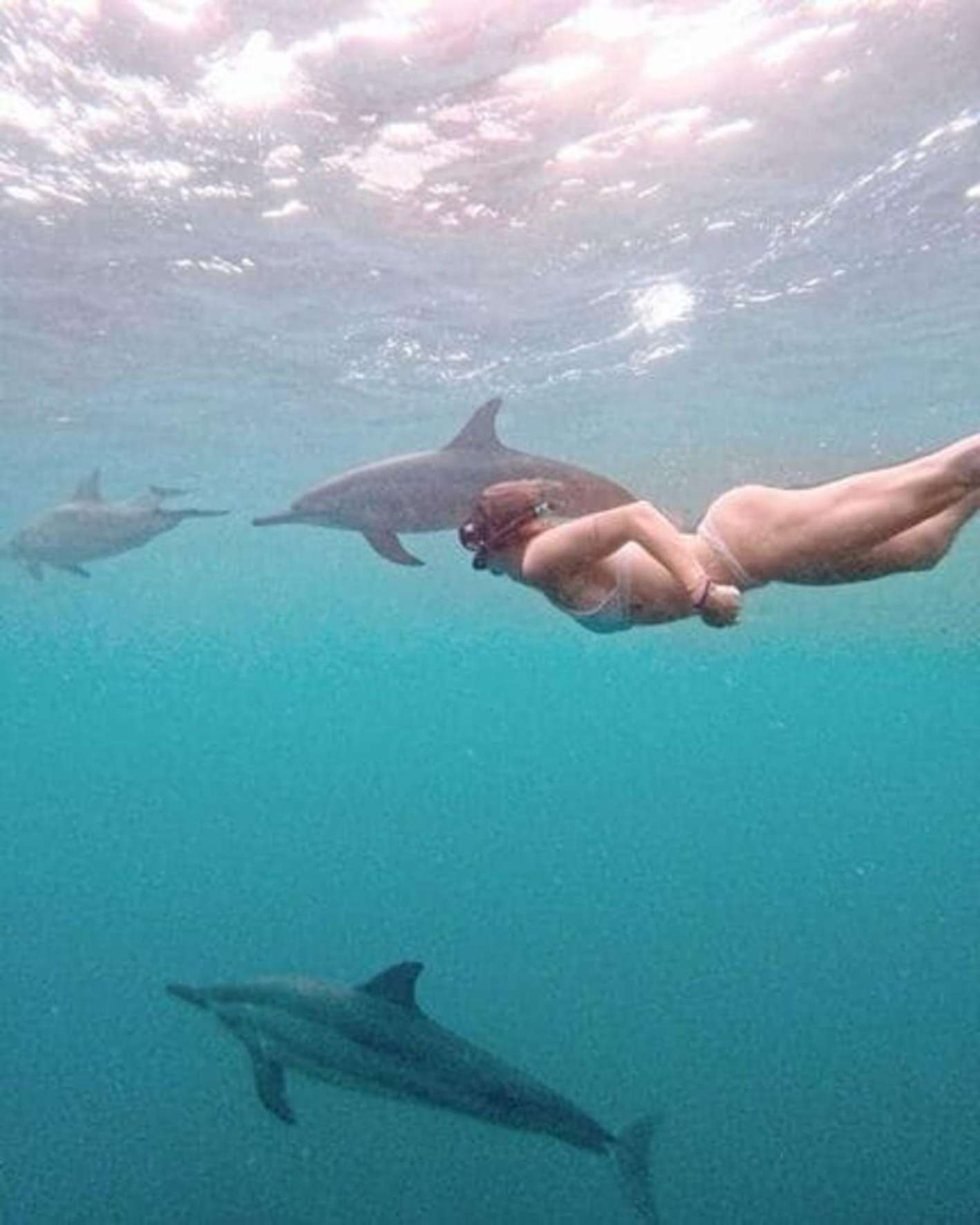
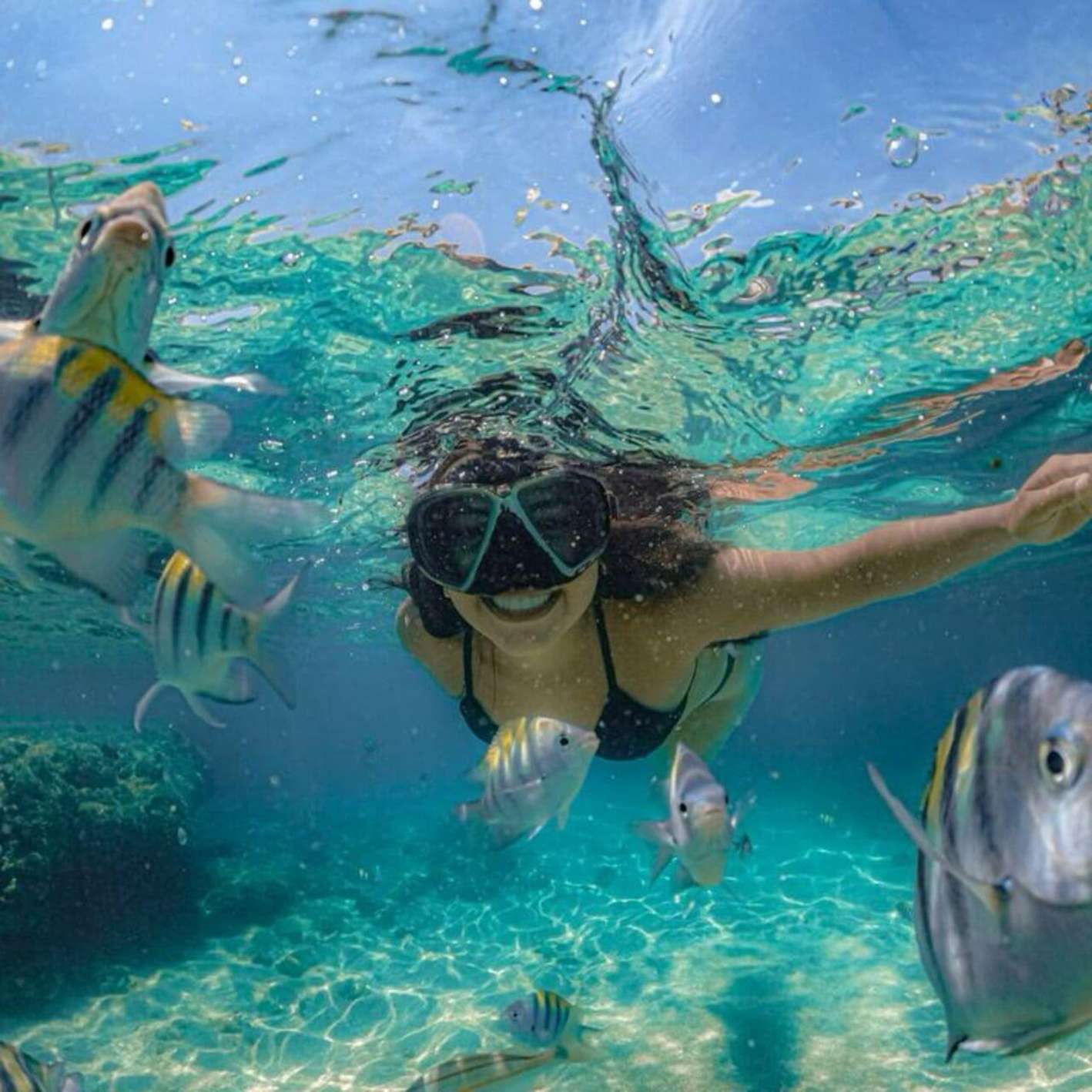


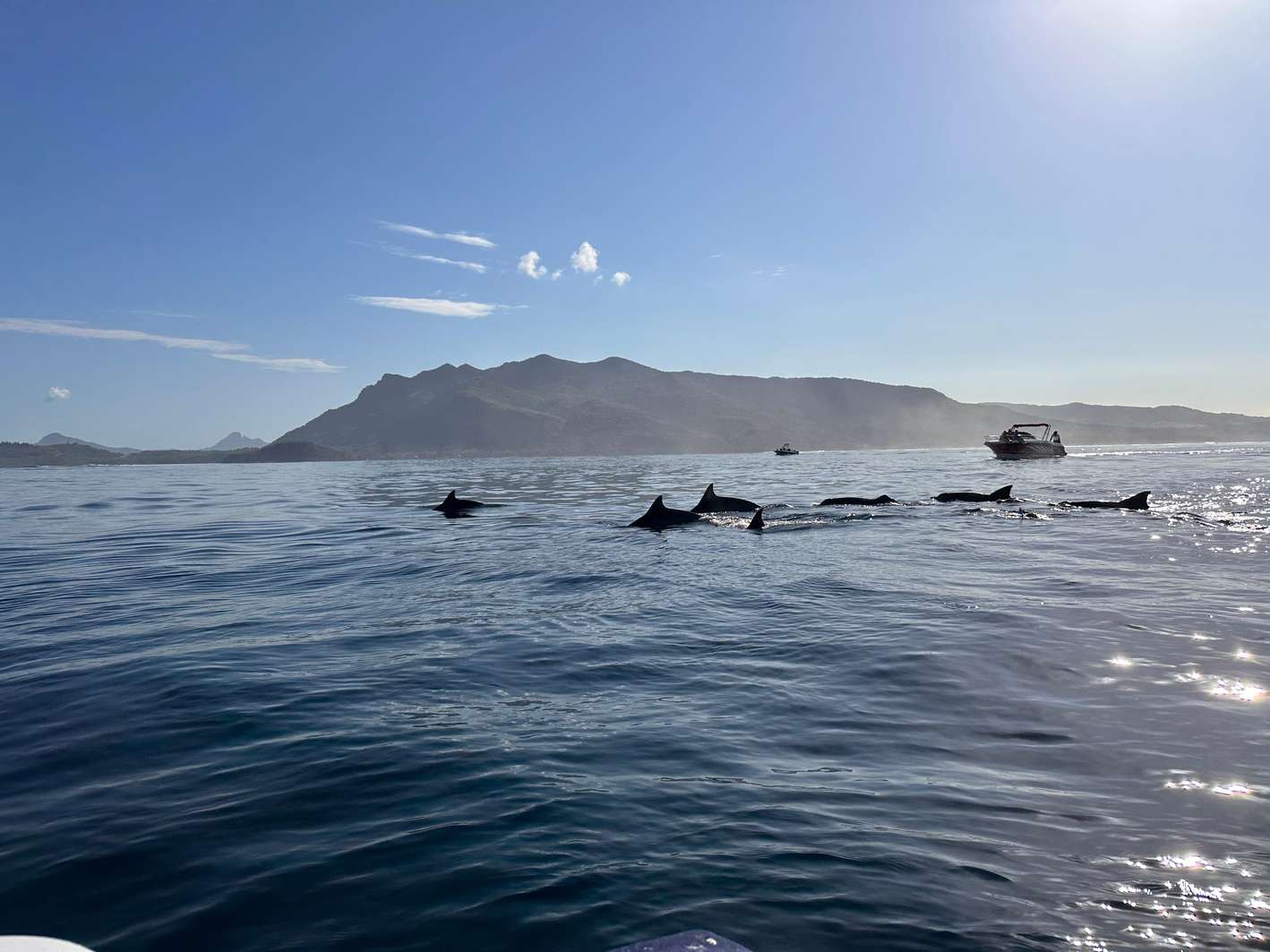
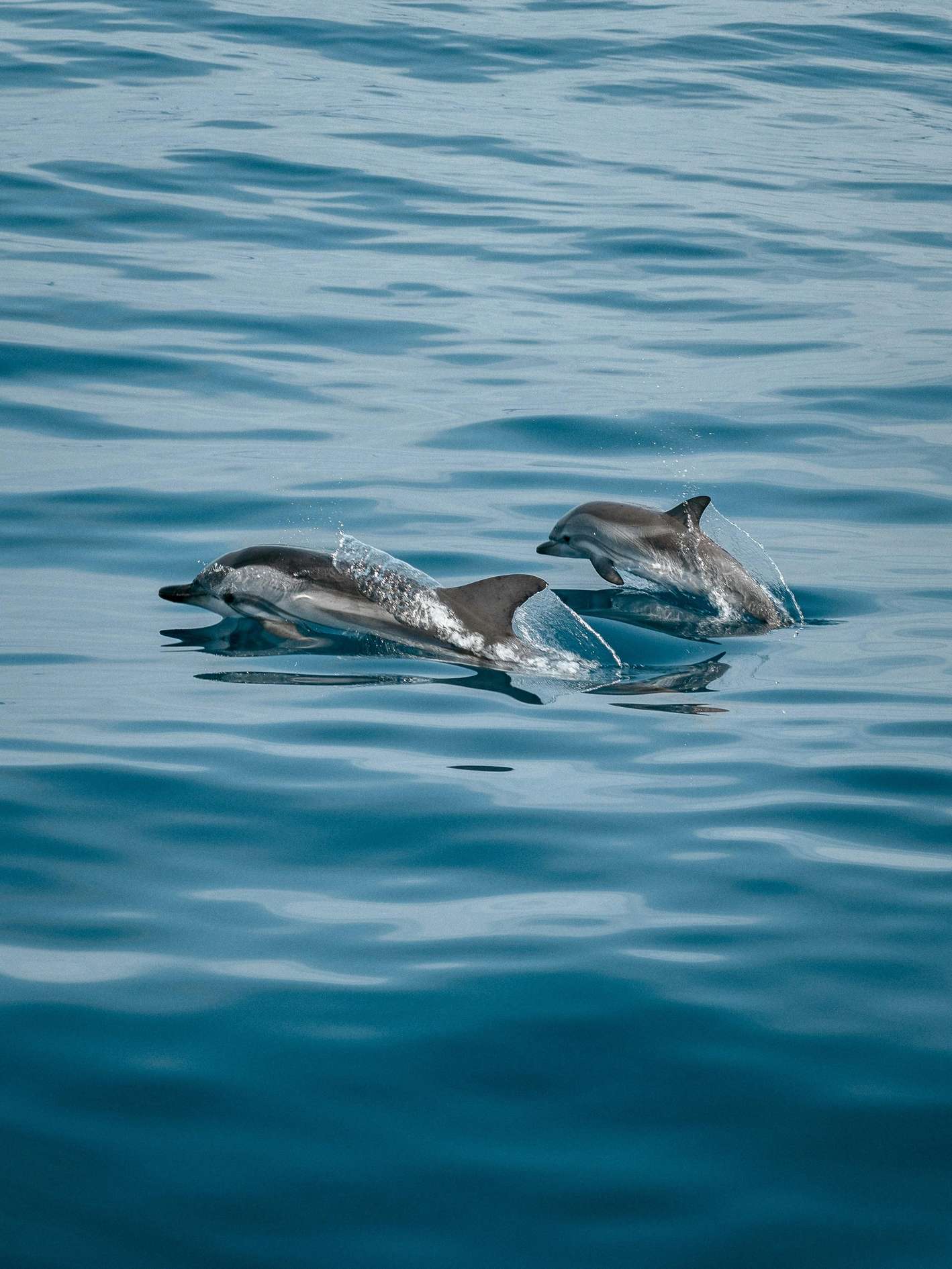
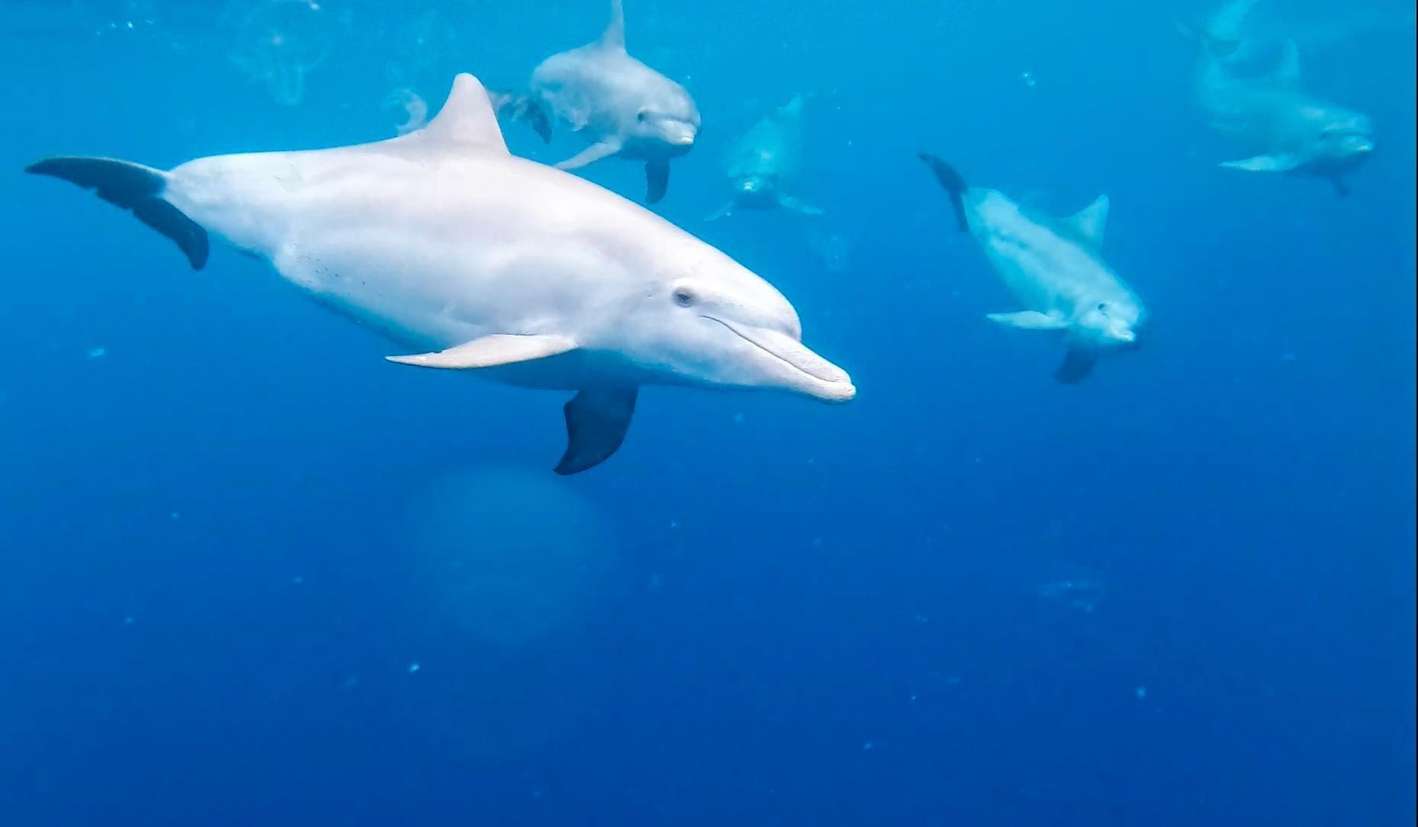
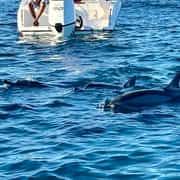
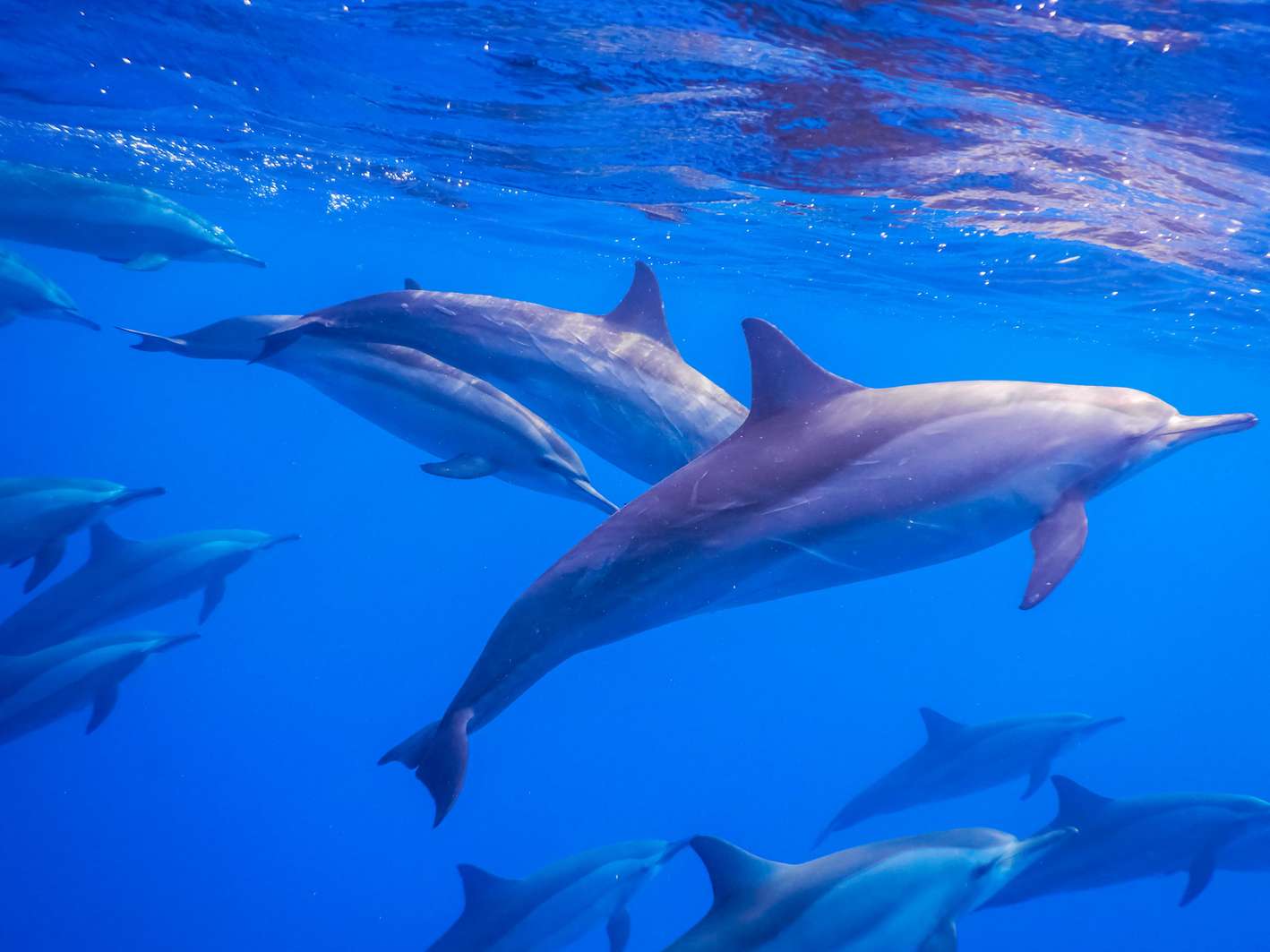
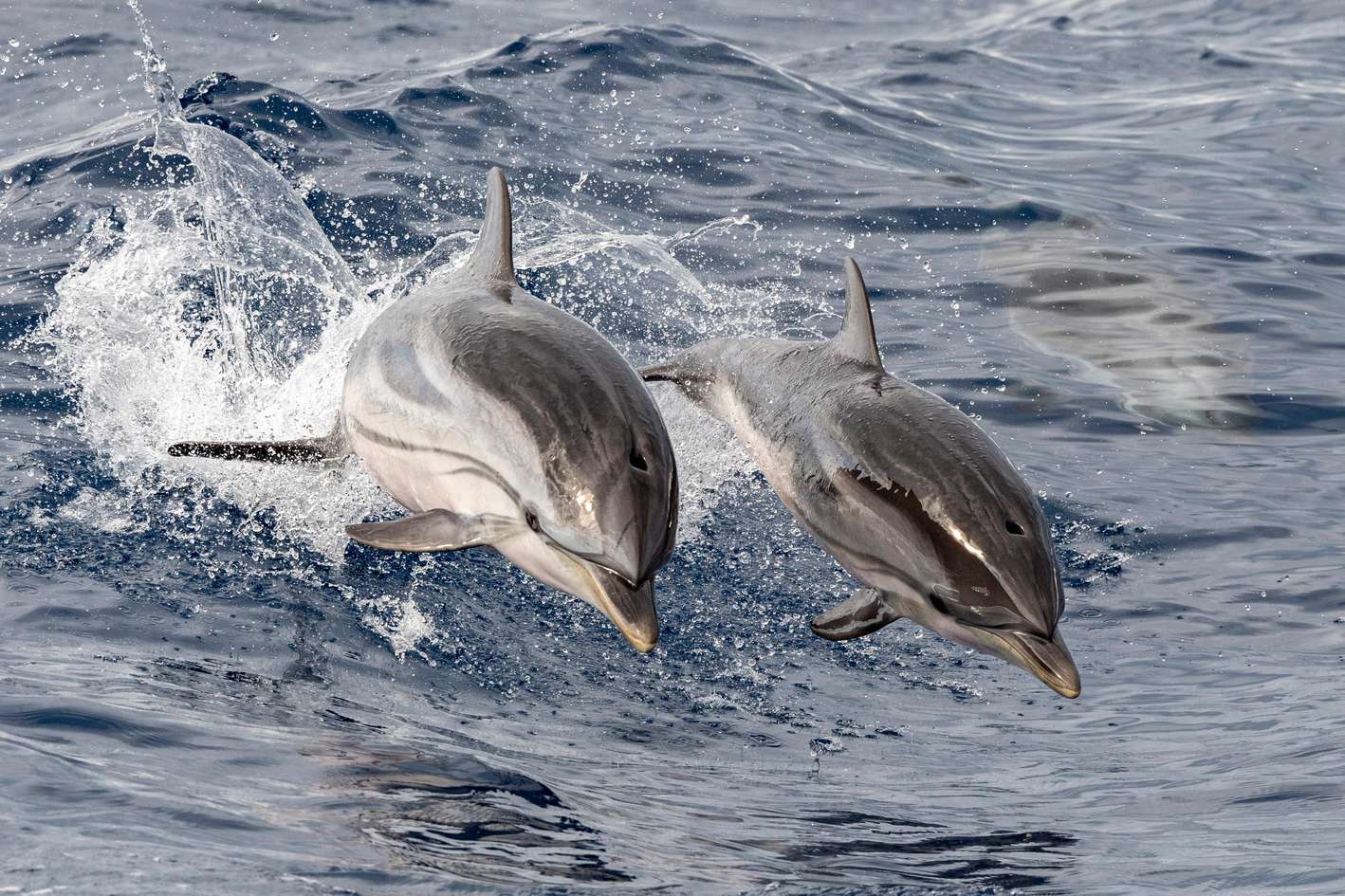
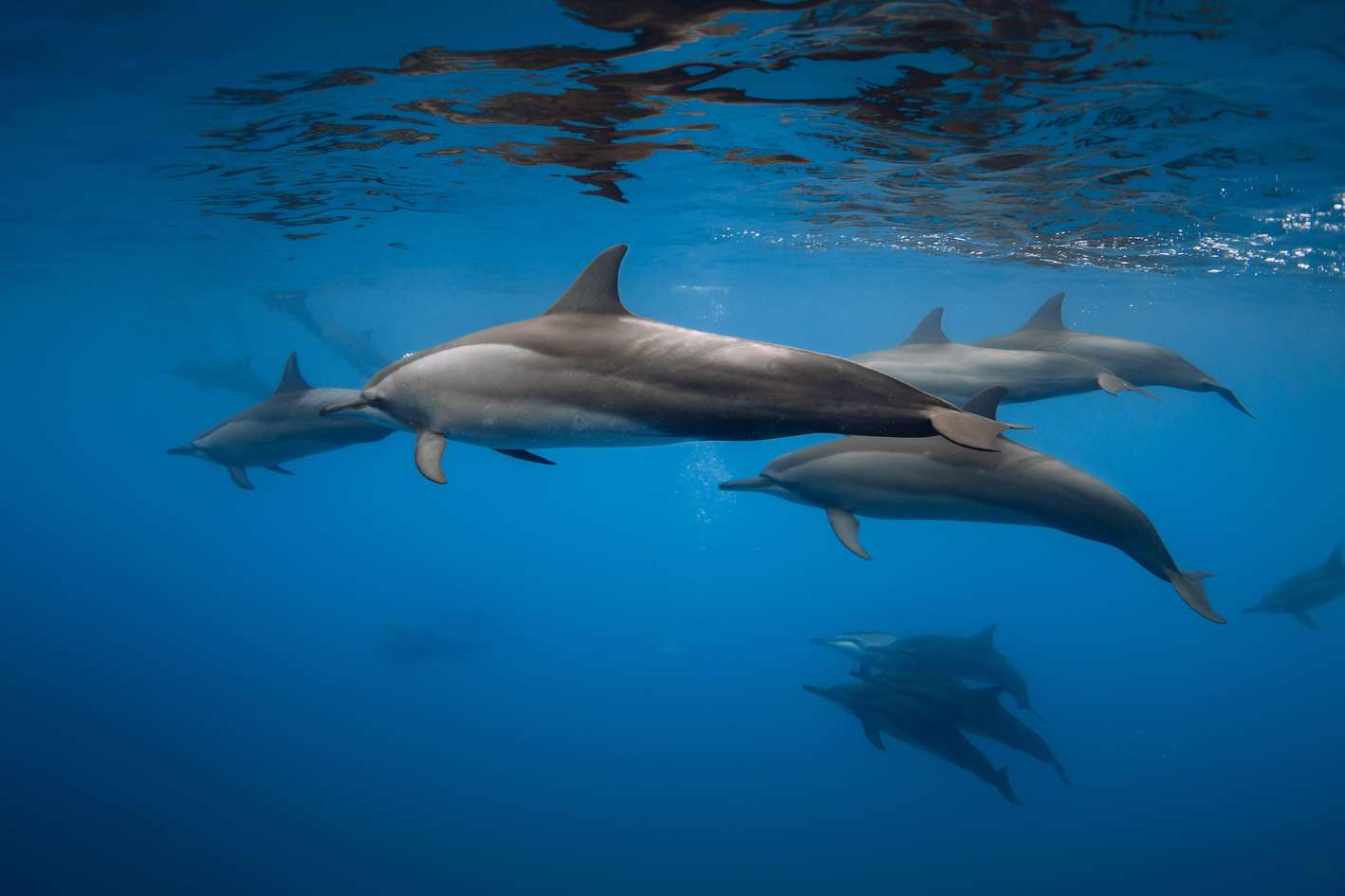
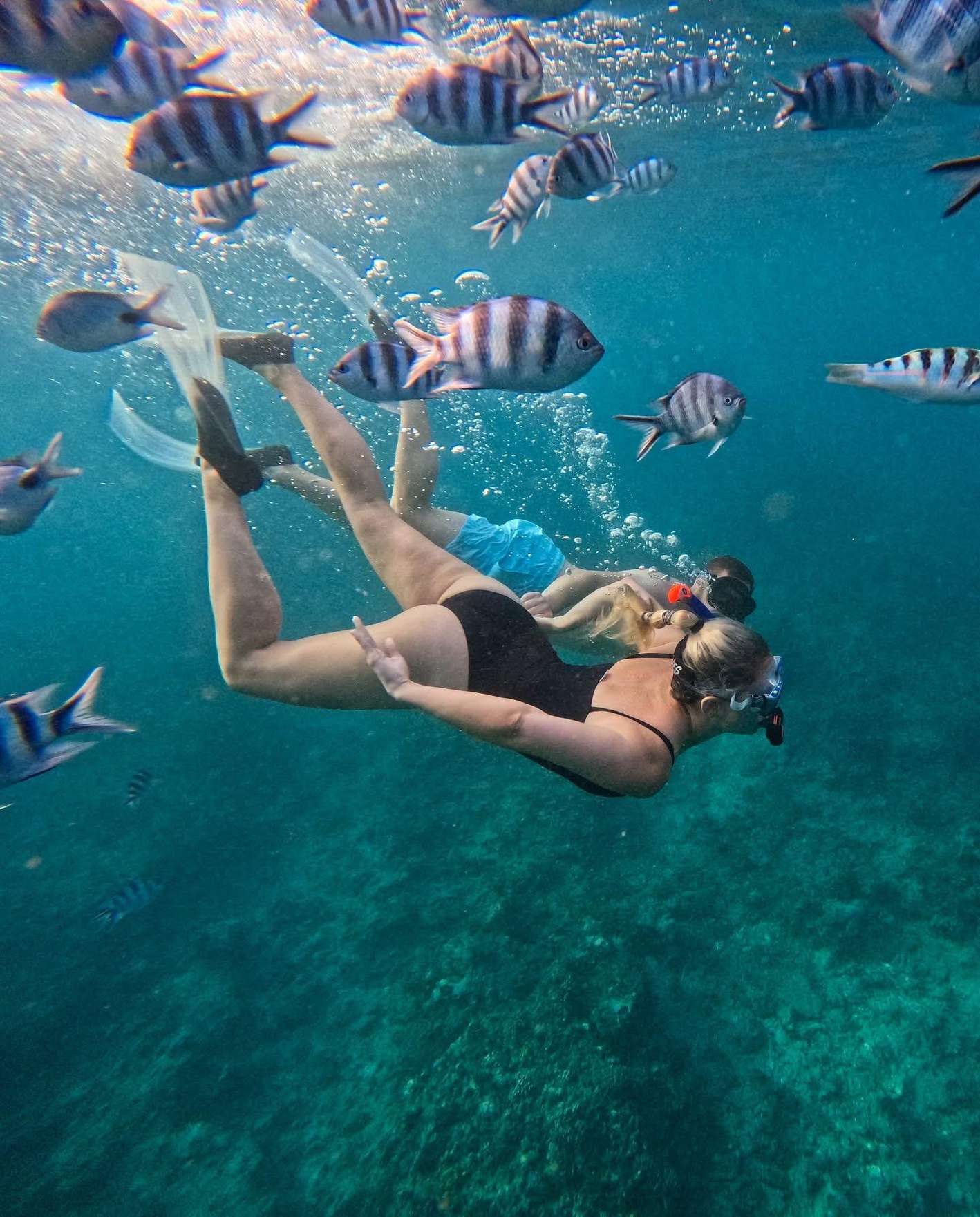
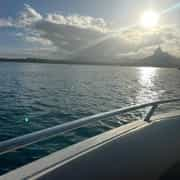
swimmers go in two at a time, max three in the water
The pods rest in Tamarin Bay by seven in the morning, and the law gives you exactly three hours to swim with them. What separates a swim you will talk about for years from a crowded scrum is the boat you pick and the hour you set.
Paid dolphin swims run legally only from 6:00 to 9 am, through licensed operators with a certified skipper and an Alpha flag on the boat.
No more than three swimmers, including a life-saver, may be in the water at once, and you go in as buddy pairs on the skipper's signal.
A focused speedboat from Tamarin or Black River reaches the pods fastest; a catamaran drops swimmers hundreds of metres away and sells lounging, not swimming.
You must be a confident open-water swimmer, comfortable in deep ocean, and able to swim 200 to 500 metres; pregnant travellers and people with back problems are excluded.
February and March bring the cyclone window, and swell warnings above four metres suspend trips outright, so book with a flexible date in mind.
Book an early morning departure with free cancellation up to 24 hours ahead, so a rough-sea day costs you nothing and you can simply move your swim to a calmer morning.
The shortest route starts in the bay itself. Tamarin Bay is where the pods come to rest after a night of feeding offshore, and boats leaving from Tamarin or Black River reach them without any cruising at all.
A focused trip runs about two and a half hours and buys you maximum water time, which is the whole point if the swim itself is what you came for.
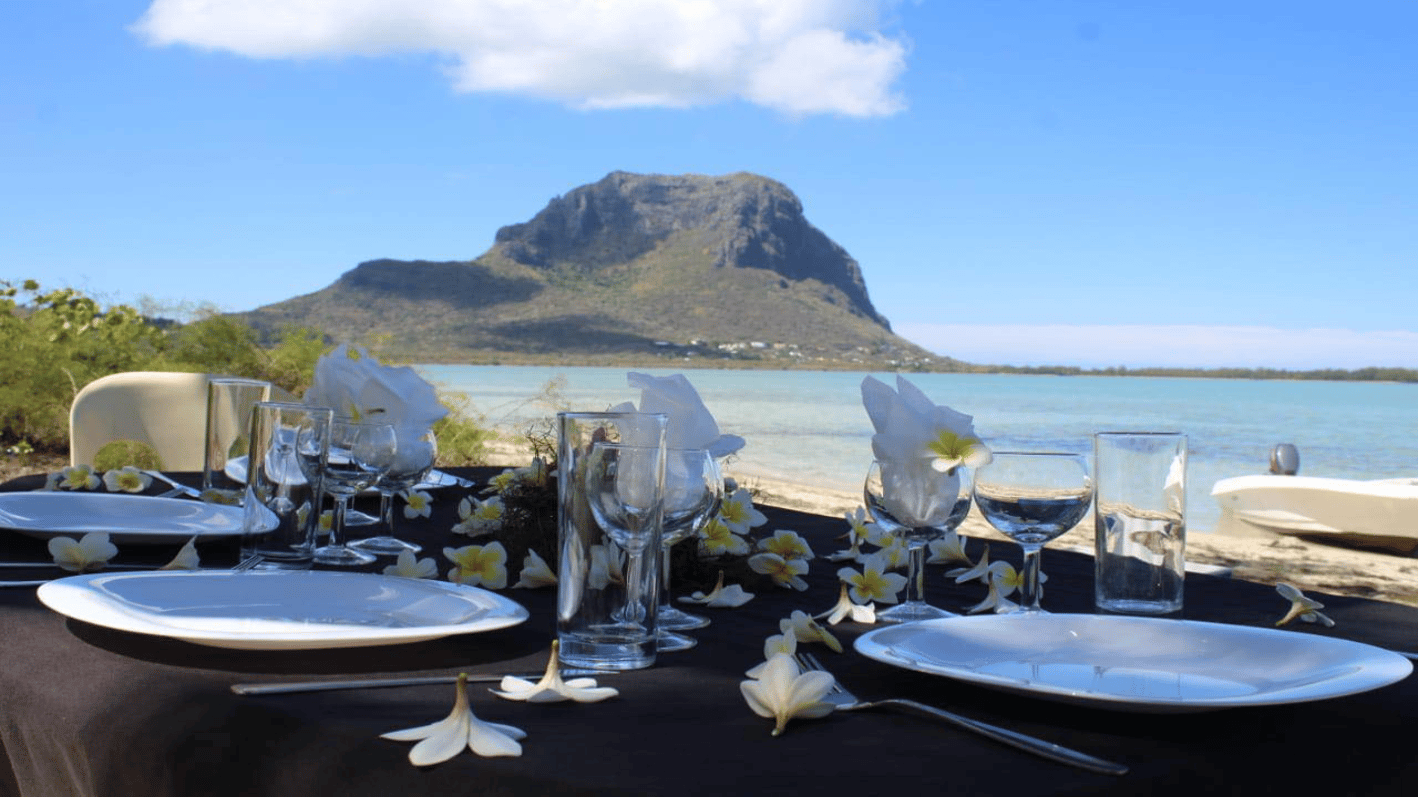
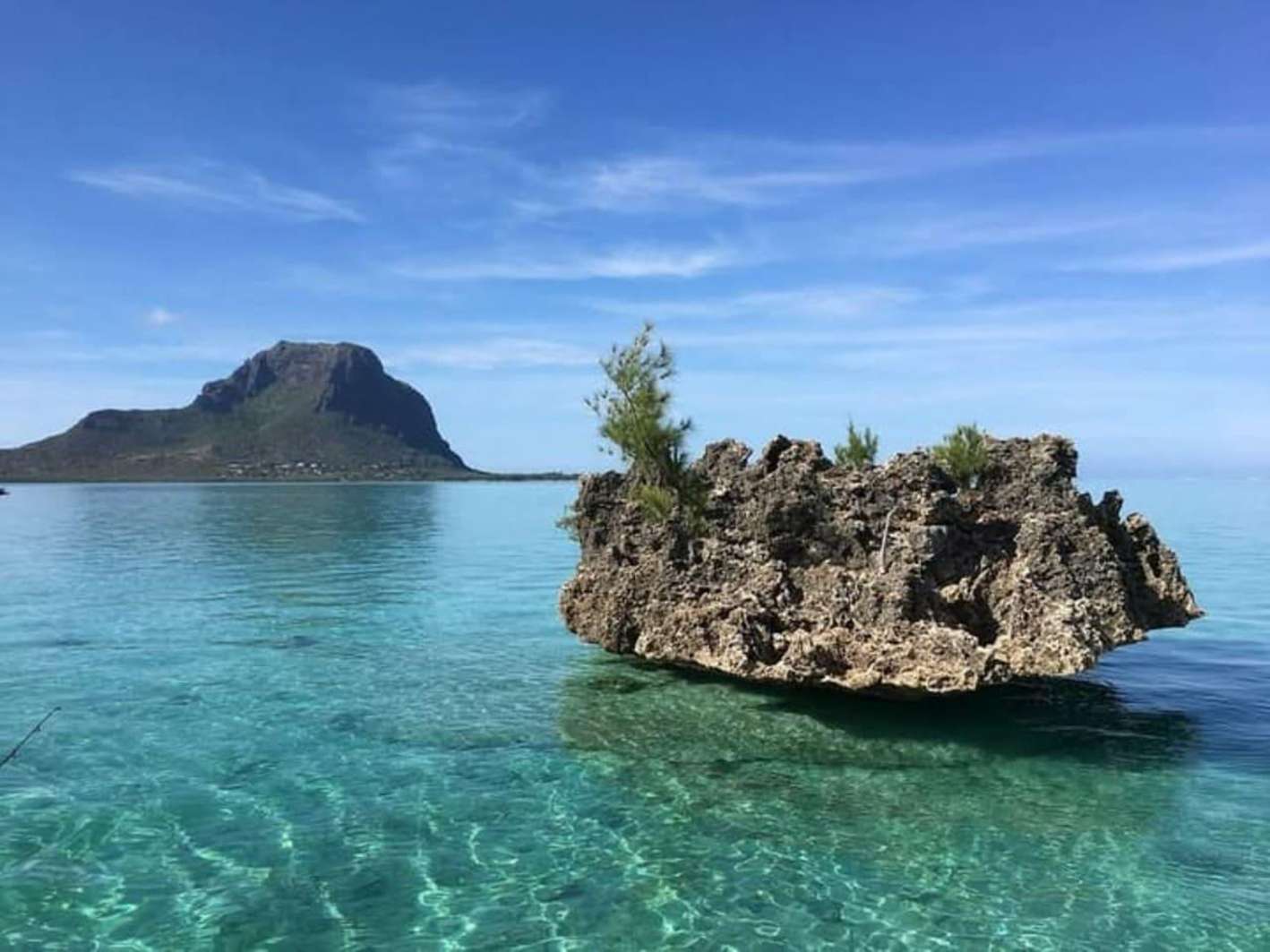
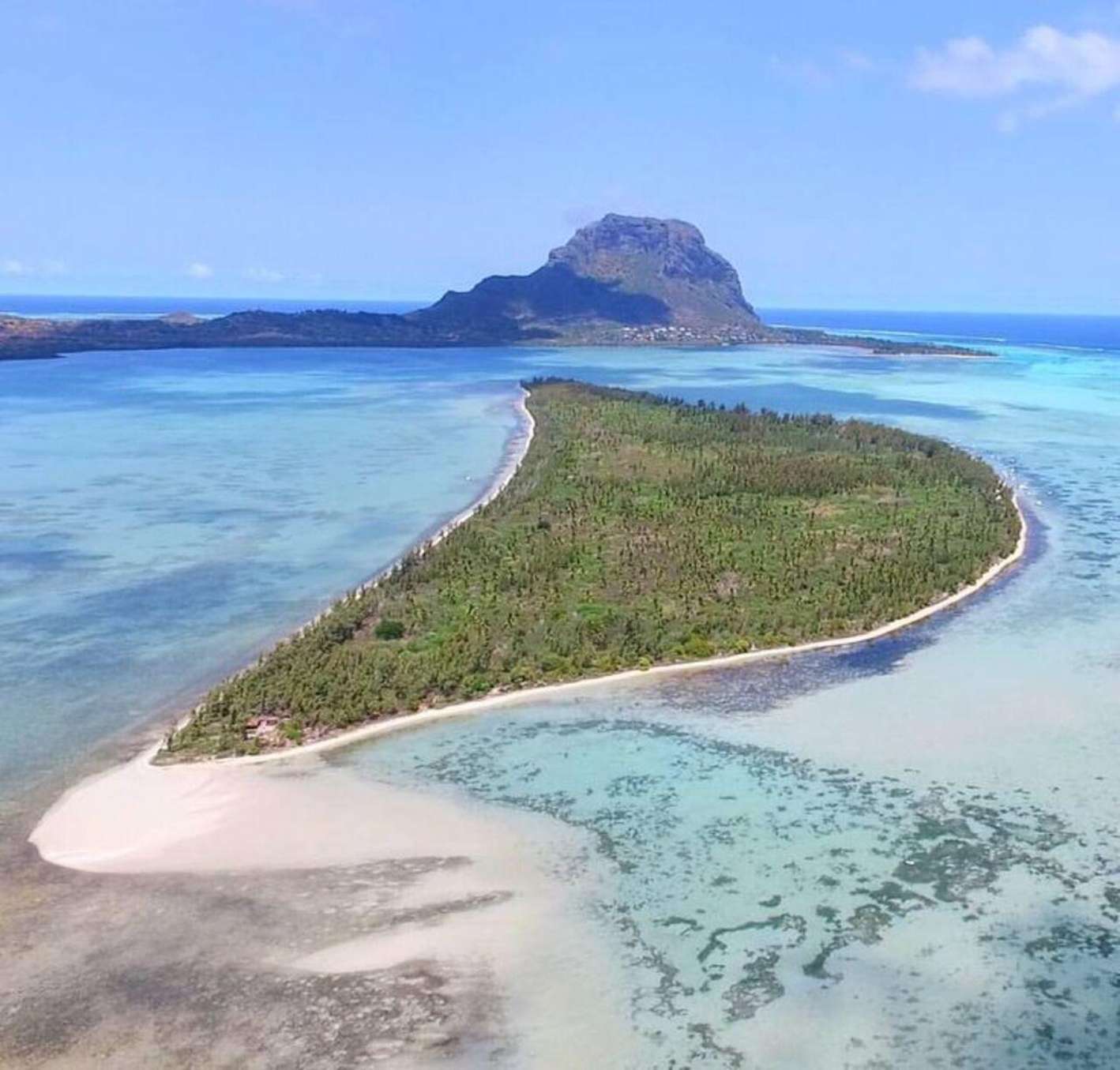
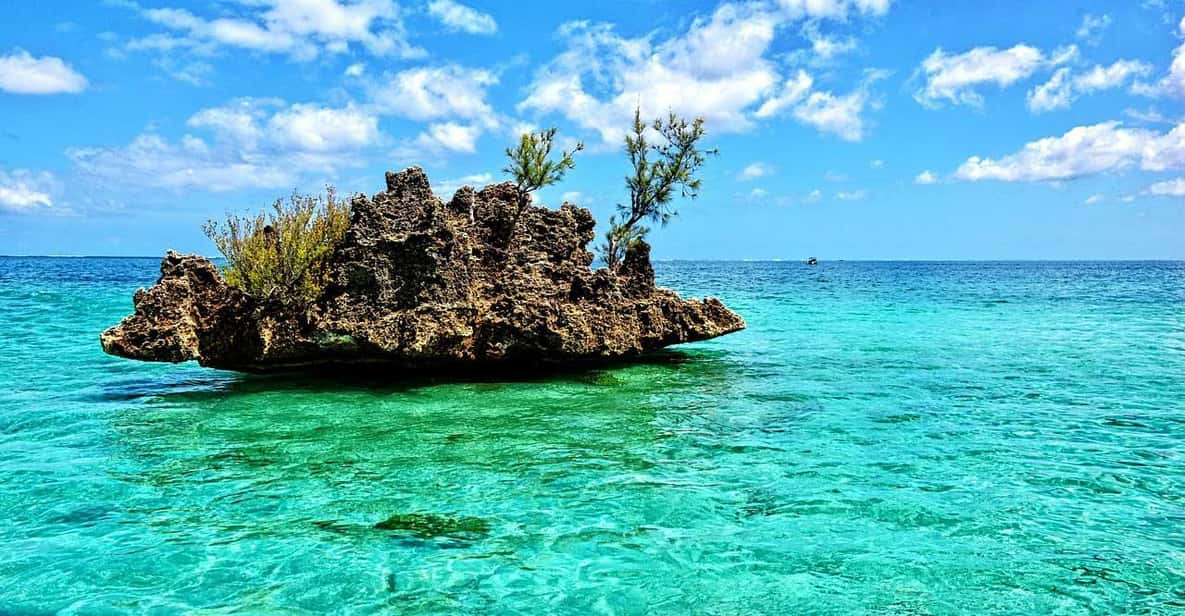
The full-day six-and-a-half-hour versions add a stop at Crystal Rock and a beach barbecue on Ile aux Benitiers, so the morning swim becomes a whole west coast day.
The Tamarin dolphin tours cover this route in detail, including the morning rest patterns of the resident pods. Either version puts you in deep open water, so fins matter and you should be a confident swimmer. Non-swimmers ride along and watch from the deck, which is genuinely a good view rather than a consolation prize.
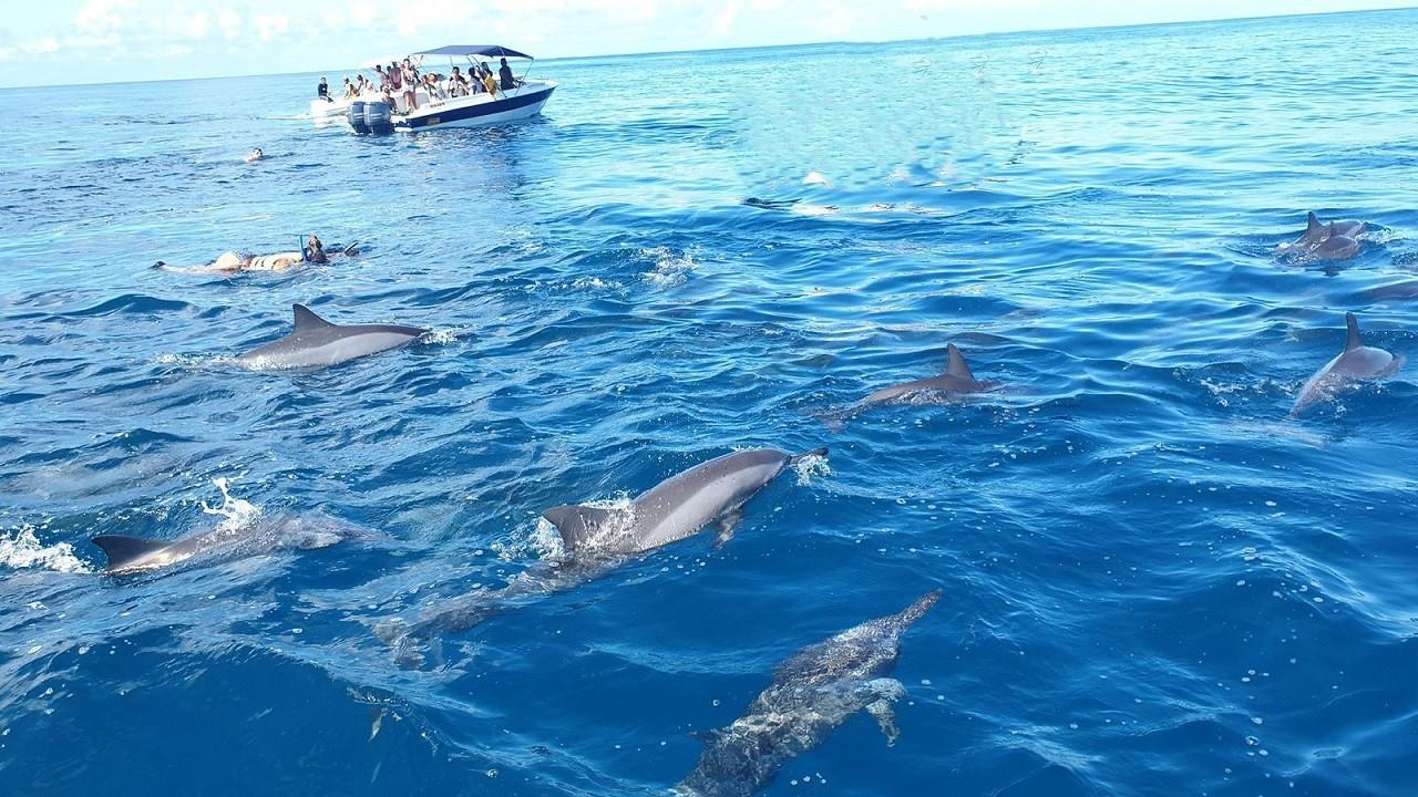
The sea floor past Tamarin and Black River falls away fast. Within roughly five to nine kilometres of shore it reaches between one and two thousand metres, and that deep water holds sperm whales all year, with humpbacks passing in season. That proximity is what makes a two-species morning practical rather than a gimmick.
One rule shapes these charters: swimming with whales is illegal in Mauritius, so whales are watched from the boat while the dolphin swim happens in the water.
Expect a long day, often seven hours or more with an island lunch, on a private speedboat. The dolphin and whale watching tours break down the format and the cost of going private.
Pregnant travellers and people with back problems are not suited to the open-ocean crossings. The swells out there are real, and the boats move quickly.
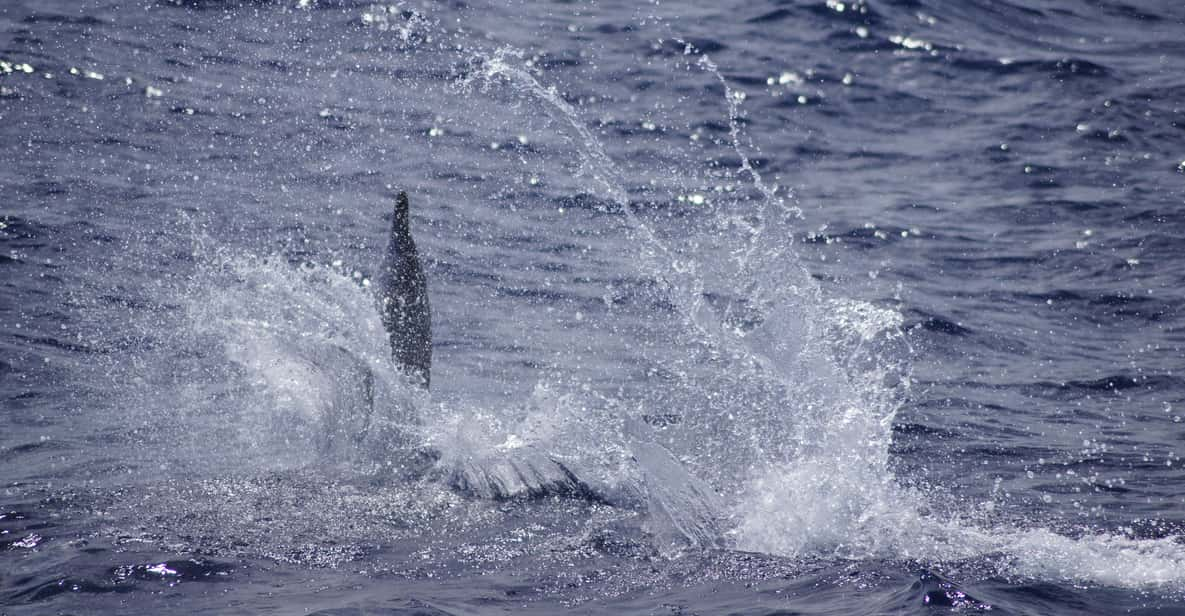
Six in the morning on the sheltered west coast is near windless, and the water lies flat. A private sunrise boat leaves Flic en Flac around 6:30 with a maximum of four passengers, so there is no queue for your turn in the water and no engine noise but yours.
Timing is the whole point here, and the law sets the clock in two steps. Paid dolphin swimming is restricted to the hours from six to nine in the morning, while watching from the boat stays permitted until ten.
Every hour you gain by waking early is an hour of actual swimming, not just viewing. By 8:30 the congestion builds around the pods, which is exactly what you miss by being out at first light. The sunrise dolphin tours cover the private-boat format and what a four-passenger morning feels like.
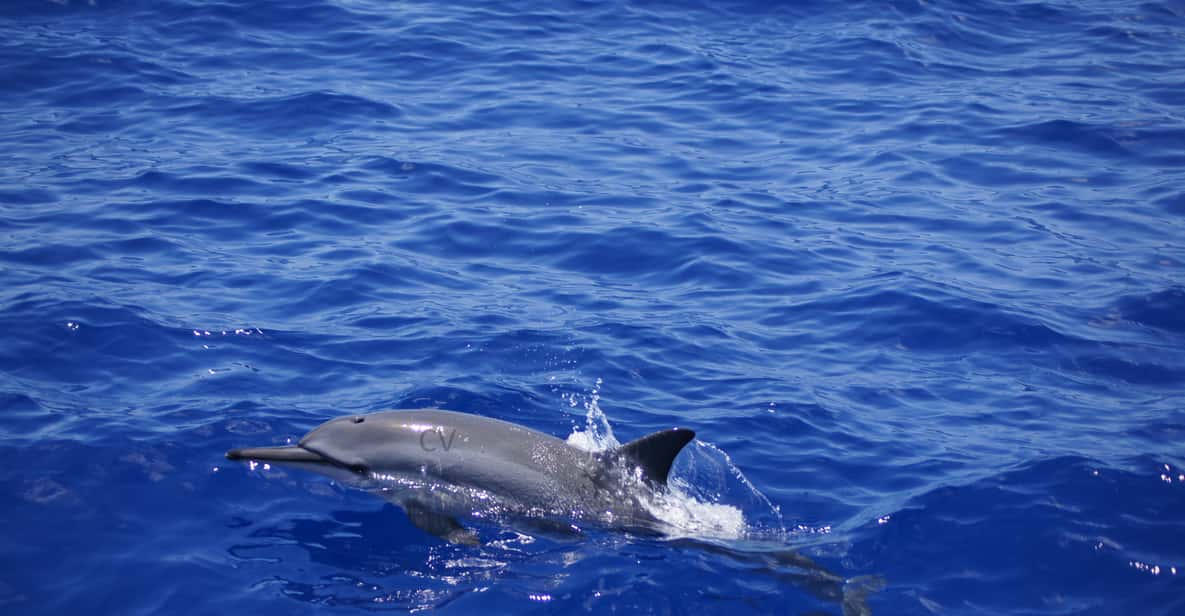
The legality question has a clean answer. Swimming with wild dolphins is legal in Mauritius, but only through an operator holding a dedicated dolphin and whale watching licence with swimming endorsement from the Tourism Authority.
A compliant boat carries a certified skipper, an authorization label, a propeller guard, liability insurance, a first aid kit, an oxygen kit and a visible life-saver.
The in-water rules are just as fixed. Swimmers sign a liability disclaimer and get a briefing on calm, silent swimming before anyone enters. No more than three swimmers, including the life-saver, may be in the water at once.
It is illegal for a boat to come within 50 metres of a dolphin, to encircle a pod or cut off its path, and nobody may touch, feed or make noise to attract the animals.
You can spot a compliant boat before you book: ask about the licence, the Alpha flag and the drop size. Operators who answer easily are the ones running by the book.
Touching any wild dolphin is prohibited by law, and crews will stop you
Feeding dolphins or throwing food near them is illegal, and it changes how the animals behave around boats
Paid swimming requires a Tourism Authority licence, a certified skipper and an official label; the grey boats exist
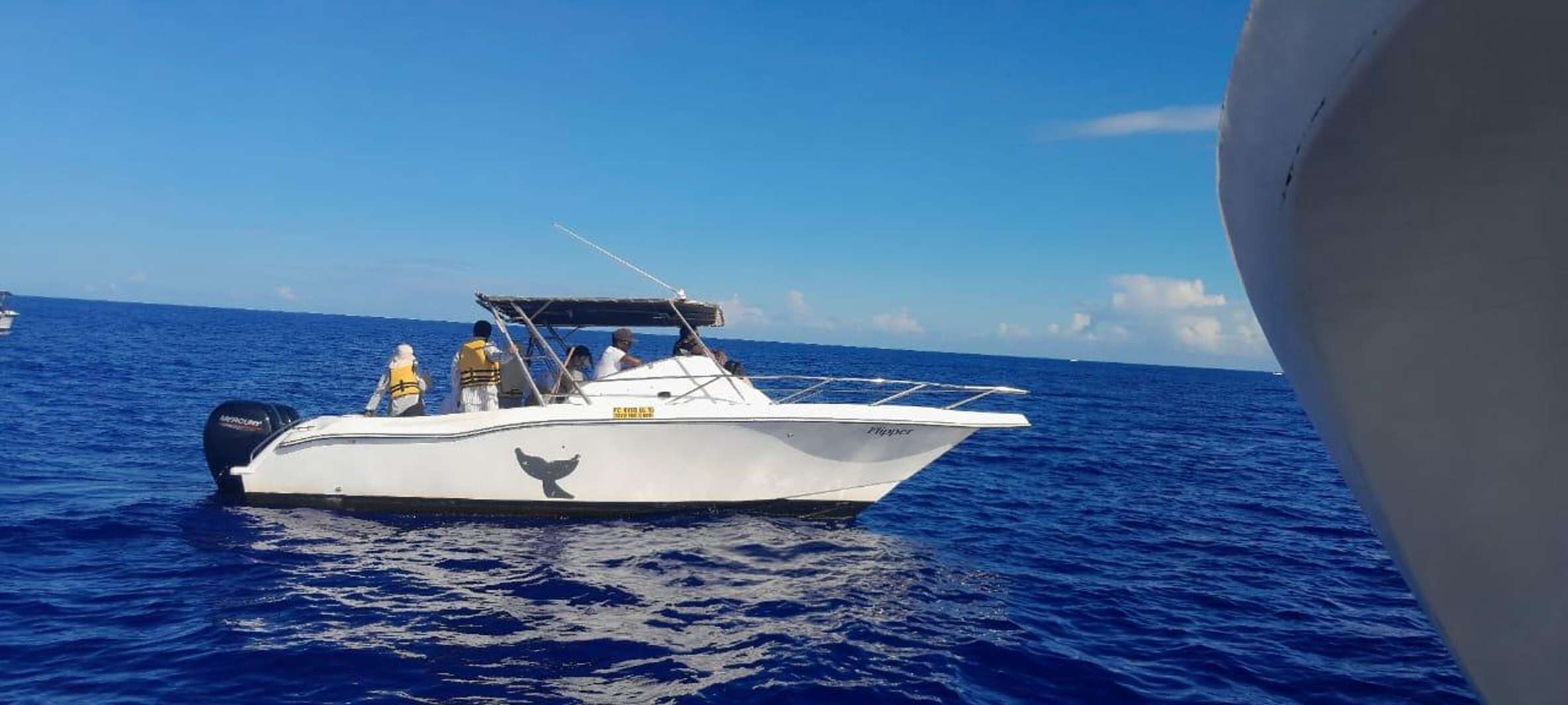
The morning has a rhythm, and knowing it takes the nerves out. Before anyone gets wet, you sign the disclaimer and hear the briefing on calm, silent swimming. Then the skipper reads the pod's line and positions the boat ahead of it, engines in neutral, approaching from the side.
On the signal, buddy pairs slide in quickly and quietly, two at a time. You tread water, fins on, and the pod glides past beneath you. Then back aboard, the boat repositions, and you drop again.
The encounter is a series of short drops, not one long swim: each lasts from 15 seconds to a few minutes, spread over a 60-to-90-minute window. The pods move fast, so the boat does the chasing and you do the watching.
Guides anticipate the dolphins' route and call the timing for you. People who have done it say the trick is trusting the crew and jumping on command rather than hesitating at the rail.
The crew checks your mask and fins fit
Engine goes to neutral when the boat stops
A life-saver is in the water with you
Each drop lasts 15 seconds to a few minutes
Most encounters run 60 to 90 minutes

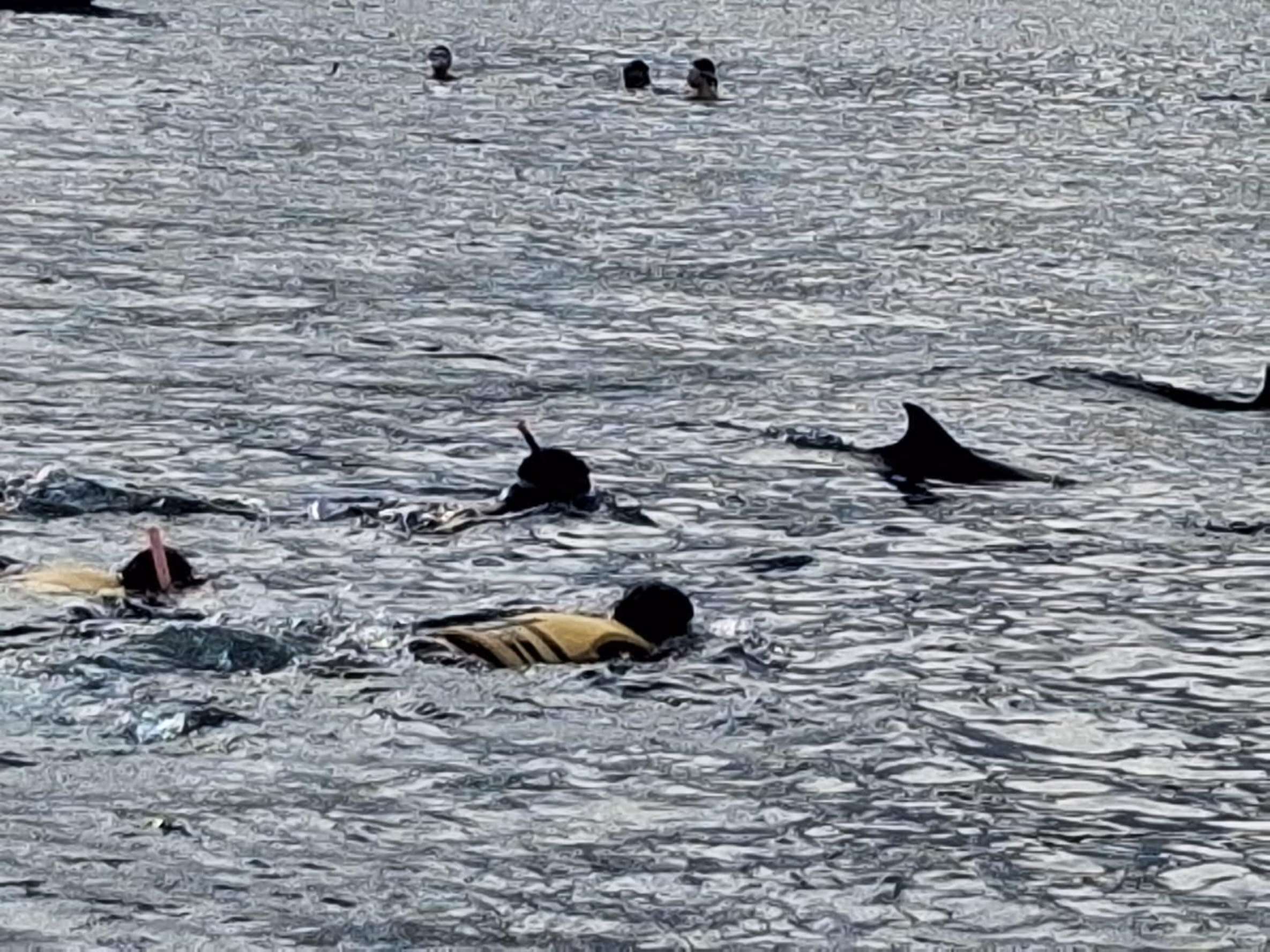
The encounter is not cruel when the animals are free to leave. Dolphins in Tamarin Bay are wild and unconfined, and a well-run boat lets them approach on their own terms. Harm happens when many boats crowd a bay, chase pods, encircle them and repeatedly drop swimmers on top of resting mothers and calves.
The difference shows in small things you can see from the deck. Good boats run at no-wake speed near the animals, keep engines in neutral when stopped, approach from the side on a parallel course, and drop only a couple of swimmers at a time.
Crews that talk about the animals' welfare before the ride, rather than the photos afterwards, are the ones worth your money.
The quiet boat is the one that keeps finding them. Pods under pressure simply leave the bay, so the operators who hold back end up with more water time, not less.
Crews teach calm, silent swimming because noise and splashing stress the pod and end encounters early
When a dozen vessels converge on one bay, the scrum stresses the animals and thins your own water time
Animals that keep their distance and dive repeatedly are telling the bay it is too crowded
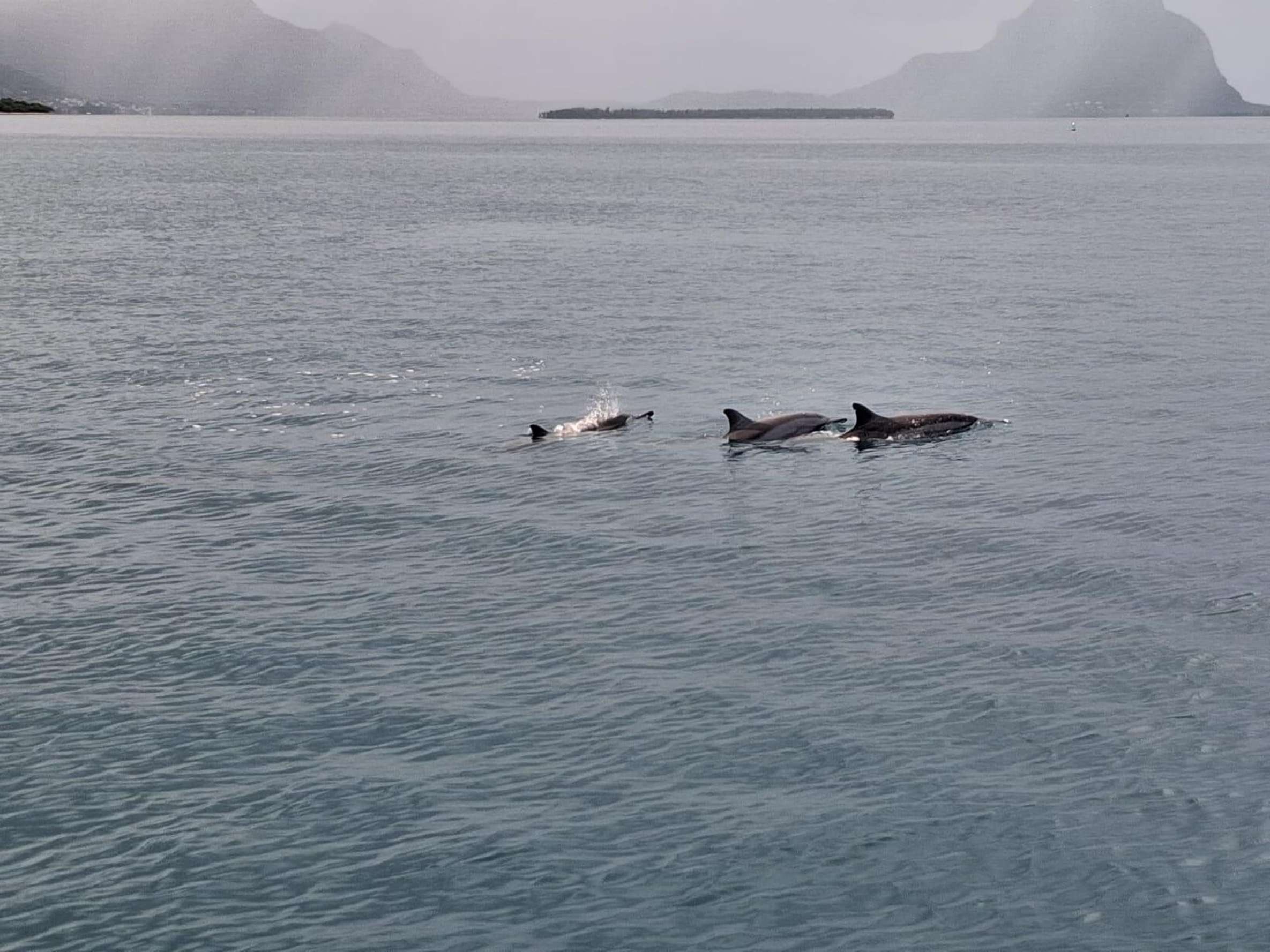
The map and the clock tell one story together. Dolphin boats run almost exclusively from the west coast, between Tamarin, Black River and Flic en Flac, where the central mountains shelter the water from the southeast trades.
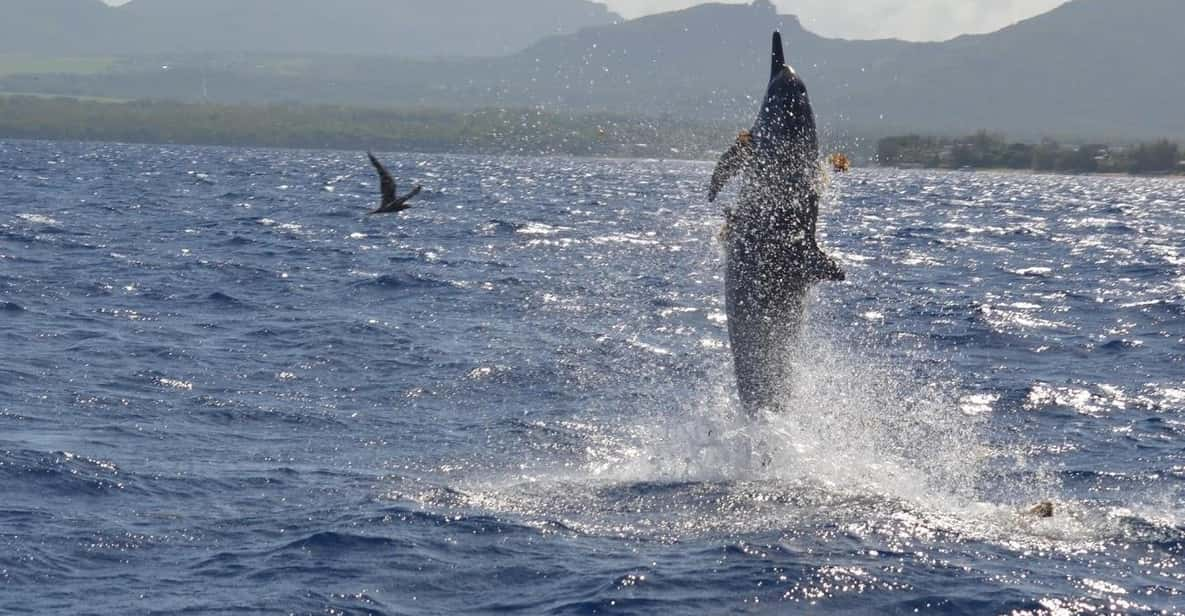
Spinner and bottlenose dolphins return to these bays after feeding offshore at night, resting in the shallows through the morning.
The dawn window from 6:00 to 7:30 is when the water is calmest, the boats are fewest and the pods are active.
Visibility on a calm morning at Tamarin runs 15 to 25 metres in depths of 5 to 15 metres, so you watch the animals glide beneath you in blue water, not grey. Commercial traffic peaks between 8:00 and 9:30, and by then the pods are settling into rest.
The alarm hurts; the payoff is glassy water and an empty bay. On overcast days with little boat traffic, people who go often say the pods linger and feed later into the morning, which buys you a slower start.
Calmest water, minimal boat traffic, and active pods returning to the bay.
Speedboat and catamaran fleets arrive while animals settle into resting patterns.
Vessels cluster around remaining pods or animals move offshore into deep water.


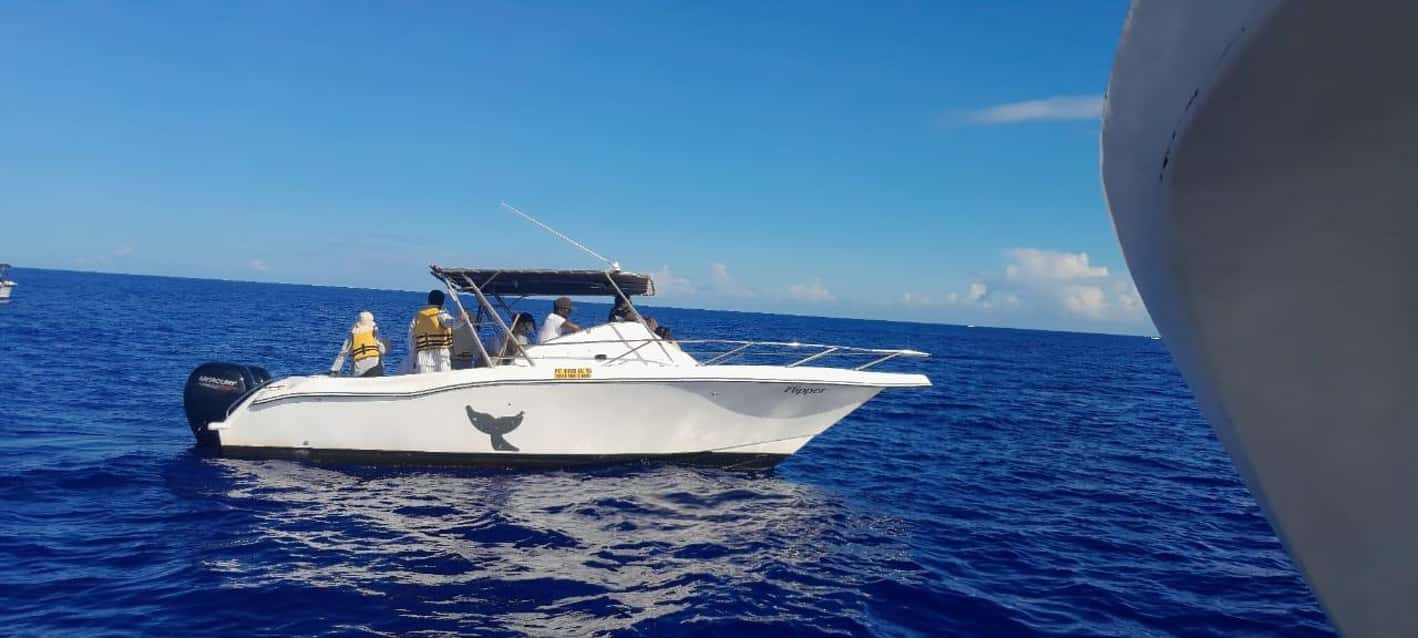
The format you pick decides the encounter you get. A speedboat runs fast, positions close to the pod's line and puts swimmers in the water early, while a sailing catamaran moves slowly and often drops its passengers several hundred metres away, which lowers the odds of a close pass.
Catamarans are built for something else entirely: deck lounging, an open bar and a beach barbecue. If that is your day, take it, and watch the dolphins' leaping and bow-riding from the deck.
But if the swim is the reason you are up at dawn, the Black River Swim with Dolphins Speedboat Tour runs 2.5 hours with guide, gear and drinks included, and its whole design is getting you into the water, not onto a sun lounger.
The Tamarin full-day speedboat versions split the difference, pairing the morning swim with Crystal Rock and lunch on Ile aux Benitiers. Regulations allow commercial dolphin watching and swimming between 6 am and noon, so every format shares the same morning window; the boat decides how much of it you spend wet.
| Focused speedboat | Full-day speedboat with lunch | Sailing catamaran | |
|---|---|---|---|
| Time to the pods | Minutes, from Tamarin or Black River | Same early start, then continues on | Slower, often from further along the coast |
| Distance of the drop | Close to the pod's line | Close on the first stop | Often several hundred metres away |
| Swimmers per drop | Small buddy pairs | Small buddy pairs | Larger groups, lower success rate |
| The rest of the day | Back ashore by mid-morning | Crystal Rock and a beach barbecue | Lounging, open bar, island beach |
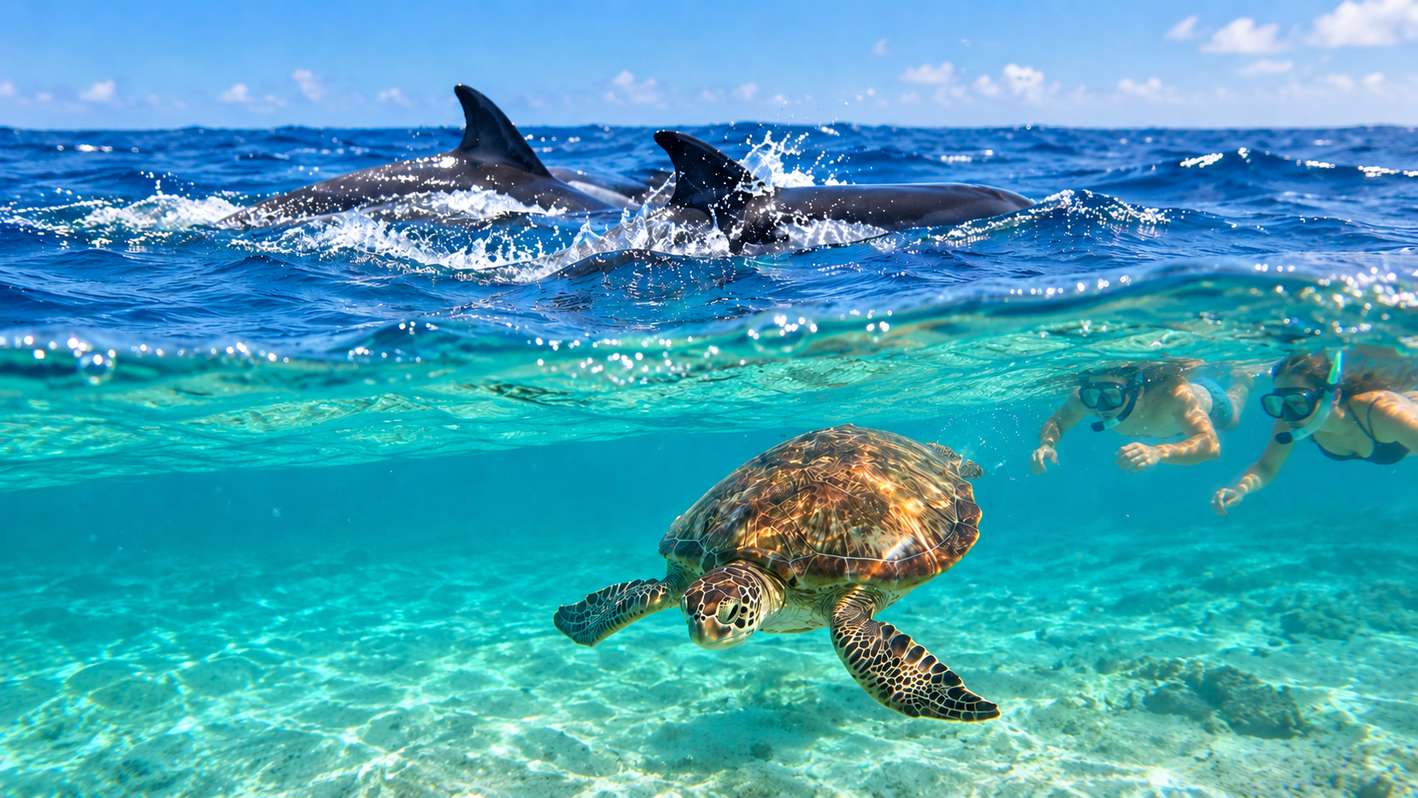
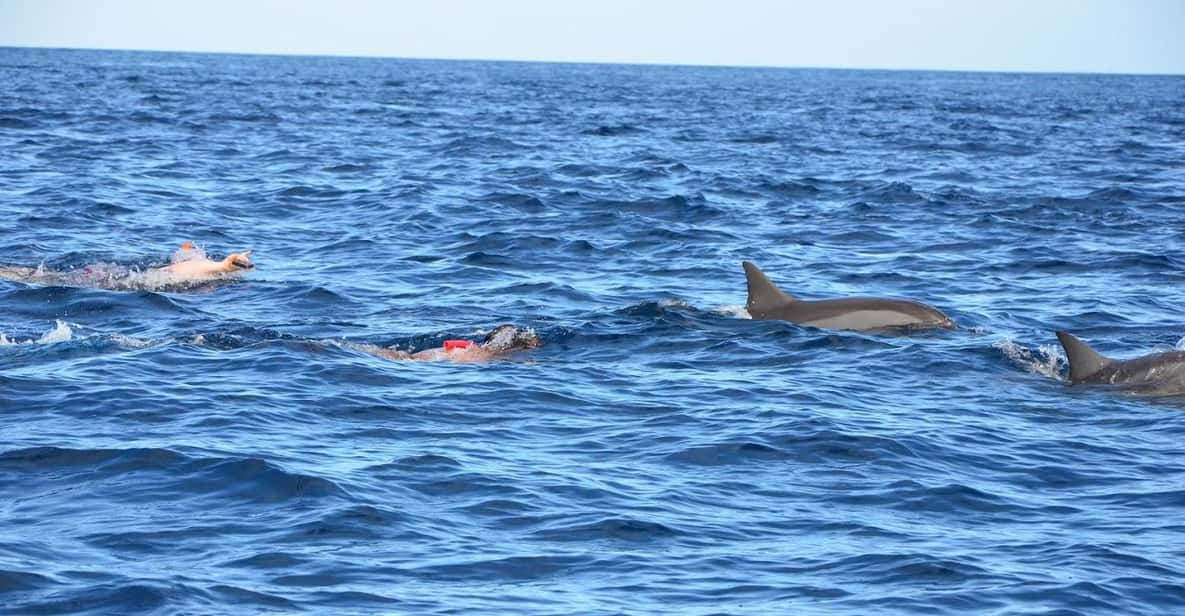
This is an athletic swim, and it pays to say so plainly. Wild dolphin encounters happen in deep open ocean outside the reef, and they ask you to jump quickly into deep water and swim hard to keep pace with fast-moving animals.
People who do it recommend being comfortable swimming 200 to 500 metres and familiar with a mask and fins. One crew reserves the right to keep anyone out of the water if they look unsure, which is a kindness, not an insult.
The hard exclusions are set by the operators: pregnant women, people with back problems or mobility impairments, and on some boats non-swimmers and children under two or three. Lifejackets are compulsory on the boats and in the water, and everyone aboard a craft outside the lagoon wears a flotation device by law.
Non-swimmers and young children still get a real encounter from the deck. Watching a pod rest and leap in the early light is most of the experience, without the deep-water entry.
Pregnant women, and people with back problems or mobility impairments, are excluded from these offshore speedboat trips Choose a lagoon-based boat day instead; there is no workaround on the water
Fins are the gear that decide the day. Wild dolphins move quickly across open water in depths of 15 to 25 metres, and long-blade fins move noticeably more water with each stroke, roughly a quarter more propulsion, which is the difference between keeping pace and watching the pod shrink into the blue.
Bring a mask with a tight silicone seal and a dry-top snorkel, so chop and wake stay out of the tube while you float face-down in the swell.
A UV rash guard handles the tropical sun and the long surface floats; water shoes or booties save your feet on deck and stop open-heel fins rubbing. The tours supply snorkeling equipment and lifejackets, but people who go often say a mask that fits your own face beats a shared one every time.
The water itself is friendly. Dangerous shark encounters are practically non-existent off Tamarin, where only harmless reef sharks occasionally appear. In the austral winter from June to September the ocean at dawn sits around 23 to 25 degrees, cool enough that a light wetsuit top earns its place in the bag.

Two forces close the water. The first is the calendar: February and March sit in the peak cyclone window and are the wettest months of the year, so storms and tropical depressions legally force operators to suspend boat tours.
The second is the wind: from May through August the winter trades roughen the open sea outside the reef, cutting calm days to about half in June and August.
The hard line is set by the authorities. When swell warnings are issued for waves of four metres or higher, excursions outside the lagoon stop automatically, and the same goes for tropical storms and cyclones. There is no operator who sails through it.
The good news is that flexible operators reschedule without fuss, and travelers report crews shifting routes or moving dates when the weather turns.
Book with a spare morning in your itinerary rather than hoping the sea will cooperate on your one free day. The quieter months for crowds, per the pattern through the year, tend to be early in the year outside the storm weeks.
May: 4 out of 5 for how busy it gets.
Tap a month to read it.
| If this happens | What happens then |
|---|---|
| Swell warning of four metres or higher is issued | Excursions outside the lagoon are suspended automatically until conditions ease |
| A cyclone warning is in force | Operators must suspend tours; you rebook to a later date |
| Rough or adverse sea conditions on the day | The crew cancels for safety and reschedules you, or you take a refund under the booking terms |
| You miss the dawn start | You lose the swim window, since paid swims end at 9 am; watching from a boat remains possible later |
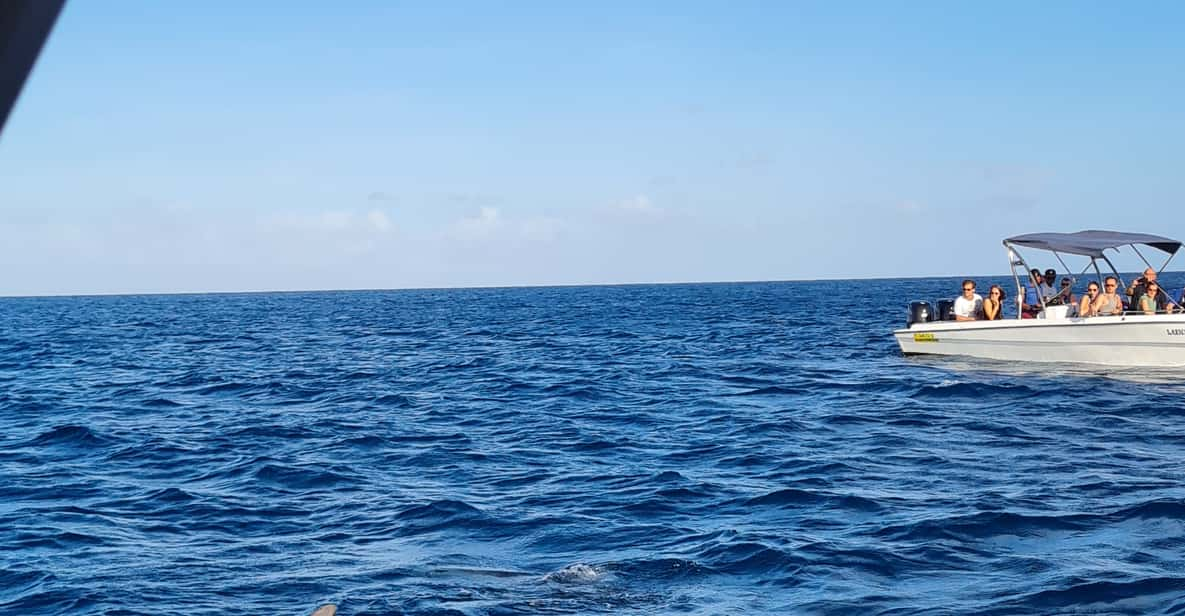
You are back on dry land by mid-morning with a full day ahead, and the southwest packs it easily.
Le Morne Brabant rises at the tip of the peninsula, La Preneuse keeps a natural, unhurried beach, and Black River Gorges National Park holds the island's wildest forest walks, all within a short drive of the launch points.
One thing to file correctly: the famous underwater waterfall off Le Morne is an aerial illusion, created by sand and silt sliding off the shallow shelf into a deep canyon, and it only reads as a waterfall from a helicopter or seaplane.
From the surface you will see nothing of the kind, because the effect depends on looking straight down from the air.
More important, do not paddle or swim toward the reef opening there on your own. Outgoing tide and breaking surf generate strong seaward rip currents, and even strong swimmers get carried out.
Enjoy the waterfall from the air or leave it to the postcards, and spend your remaining hours on the calm side of the lagoon instead.
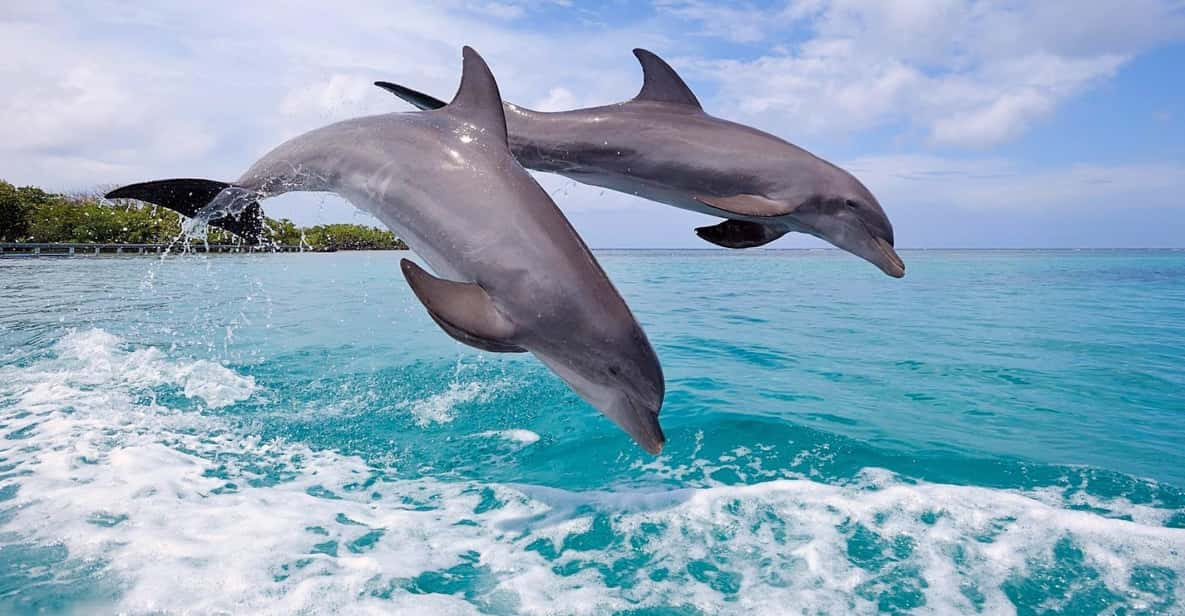
Swimming with wild dolphins in Mauritius is legal, regulated and, on a calm dawn with a good crew, one of the finest mornings the island sells.
The rules are strict for a reason, and the operators who follow them are the ones who keep finding the pods. Set the alarm, book the early speedboat, and be honest with yourself about the swim.
Morning speedboat trips from Tamarin and La Preneuse put you in the water with resident pods with no long cruise first.
Read the guide
Private full-day charters combine a dolphin swim with whale watching out over deep water and a barbecue lunch on Benitiers.
Read the guide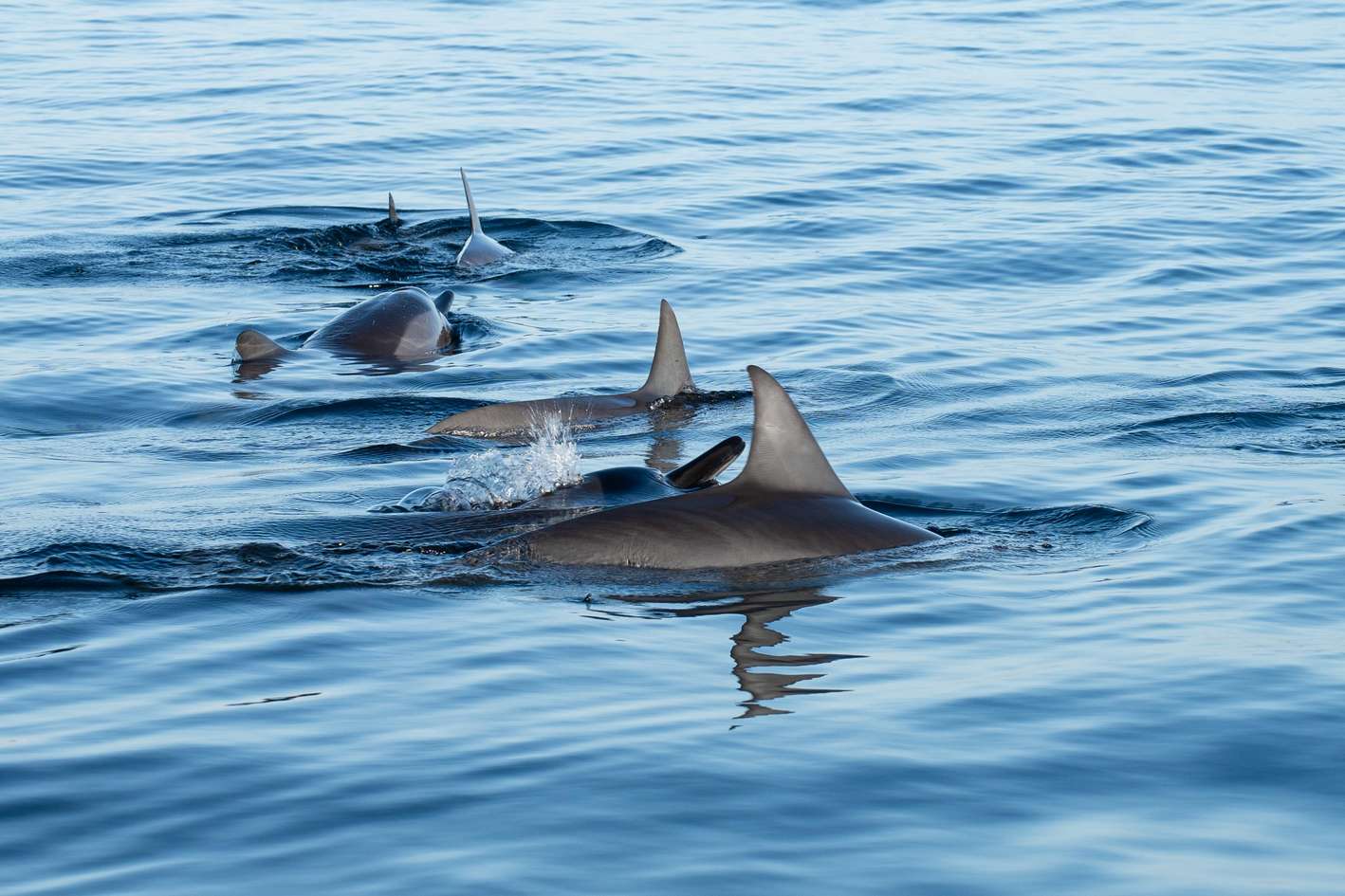
A private sunrise departure from Flic en Flac carries at most four swimmers onto calm water ahead of the daily boat rush.
Read the guideThe same wild pods off the west coast support three different ways to spend your morning, and each one suits a different traveller.
The shortest route to the pods, straight from the bay where they rest
Tamarin Bay is where the pods come to rest. Between six and eight in the morning, resident groups of twenty to forty spinner and bottlenose dolphins hold in the calm shallows after a night of feeding offshore, and boats leaving from Tamarin or Black River reach them without any cruising.
Depart from Flic en Flac or Le Morne instead and you spend that early window getting there.
The focused trips run short, around two and a half hours, and skip the extras. If you want the swim plus Crystal Rock and a beach barbecue on Ile aux Benitiers, pick one of the full-day six-and-a-half-hour versions.
Either way you are swimming in deep open water, so fins matter and you should be a confident swimmer. Non-swimmers ride along and watch from the deck.
7 hours · ★ 5.0 (5)Private Île aux Bénitiers Boat: Dolphin Snorkeling & LobsterFrom $738 /group 4 hours · ★ 4.4 (35)Dolphins & Whales: Private Snorkeling TourFrom $528 /group 135 minutes · ★ 4.4 (265)West Coast: Swim and Snorkel with Dolphins on Speedboat TourFrom $43 2.5 hours · ★ 4.3 (132)La Preneuse: Dolphin Swimming and Snorkeling Speedboat TripFrom $38 Dolphins in the morning, whales in the deep water just past the reef
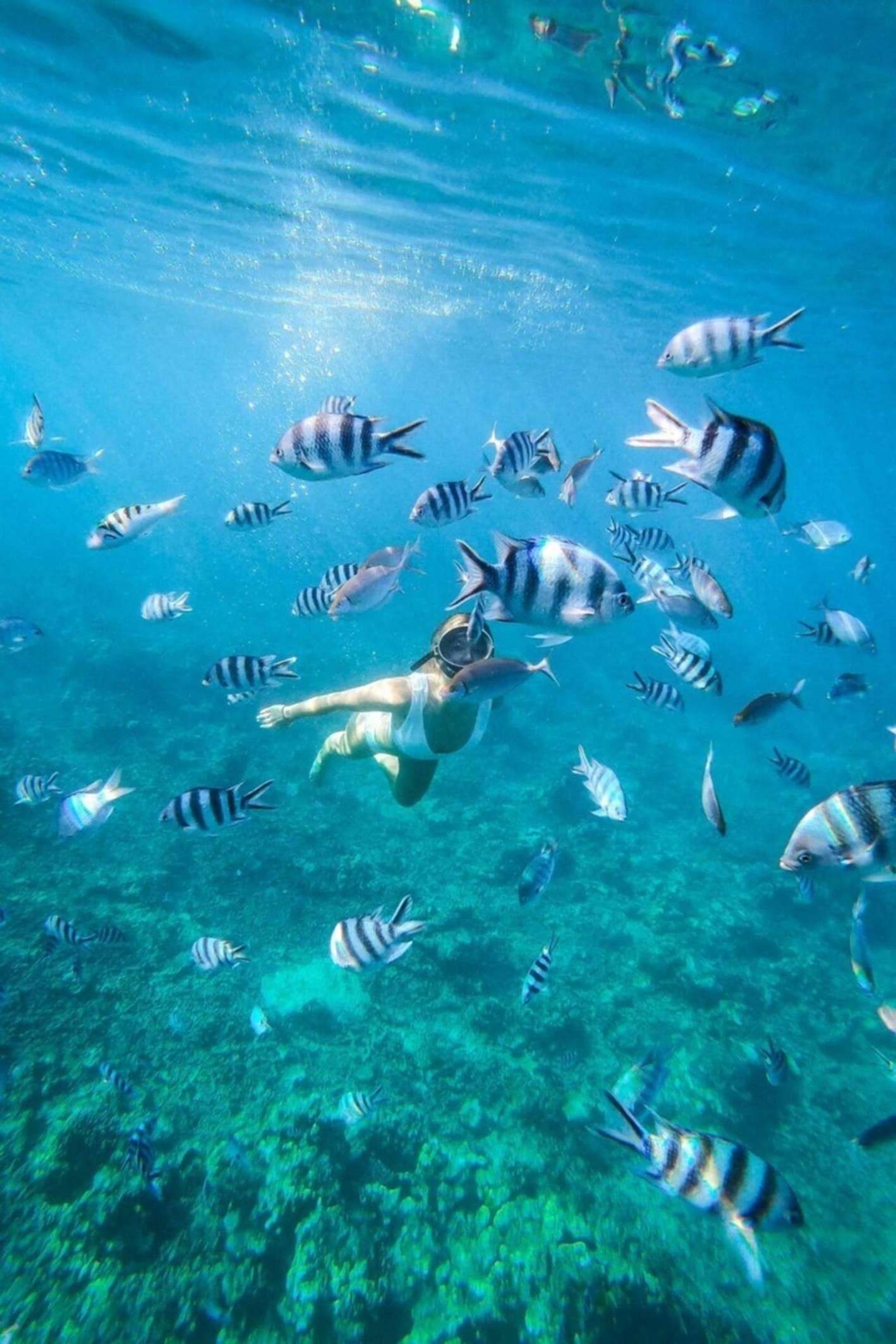
The sea floor past Tamarin and Black River falls away fast. Within roughly five to nine kilometres of shore it reaches between one and two thousand metres, and those deep waters hold sperm whales all year, with humpbacks passing in season. That proximity is what makes a two-species morning practical rather than a gimmick.
One rule shapes these charters: swimming with whales is illegal in Mauritius, so whales are watched from the boat while the dolphin swim happens in the water.
Expect a long day, often seven hours or more with an island lunch, on a private speedboat. Pregnant travellers and people with back problems are not suited to the open-ocean crossings.
7 hours · ★ 5.0 (1)Mauritius: Private Whale Watching & Bénitiers BBQFrom $1,025 /group 4 hours · ★ 4.4 (35)Dolphins & Whales: Private Snorkeling TourFrom $528 /group 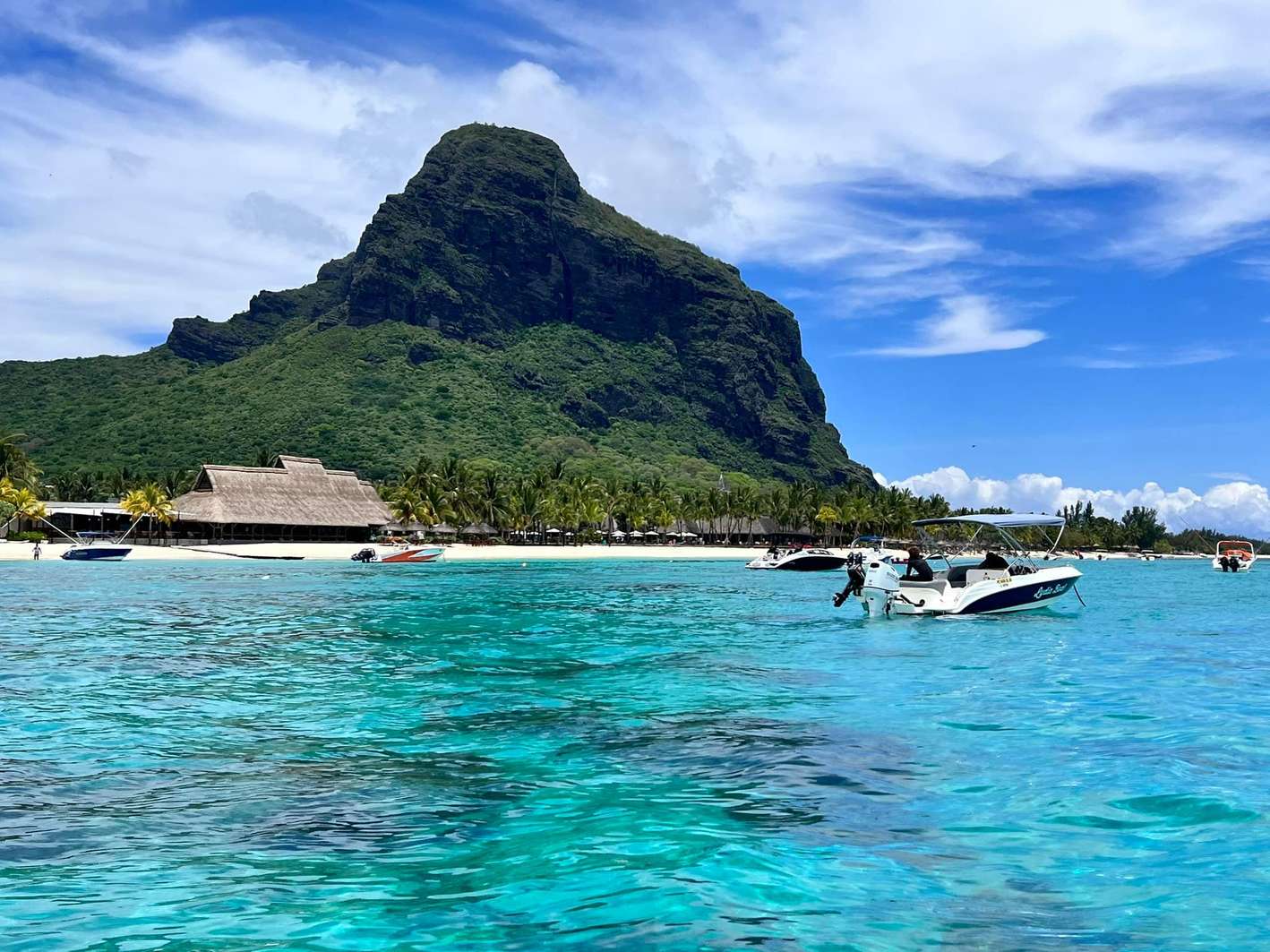 9 hoursPrivate Boat Whales & Dolphins Encounter BBQ on Benitier IslandFrom $490
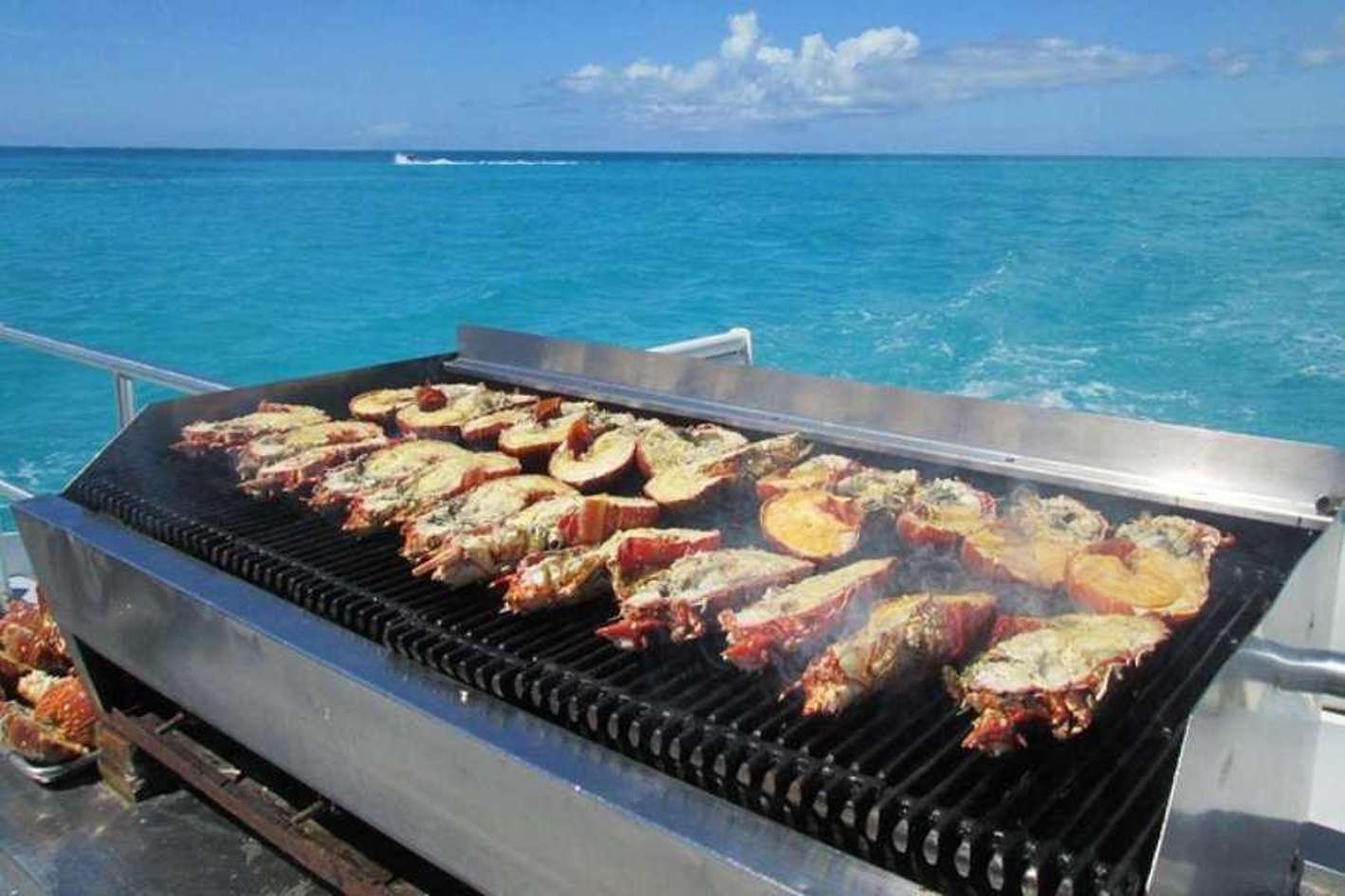 6 hoursMauritius: Whale Watching Trip with Snorkeling & LunchFrom $900 /group
Glassy water and four passengers, out before the flotillas wake up
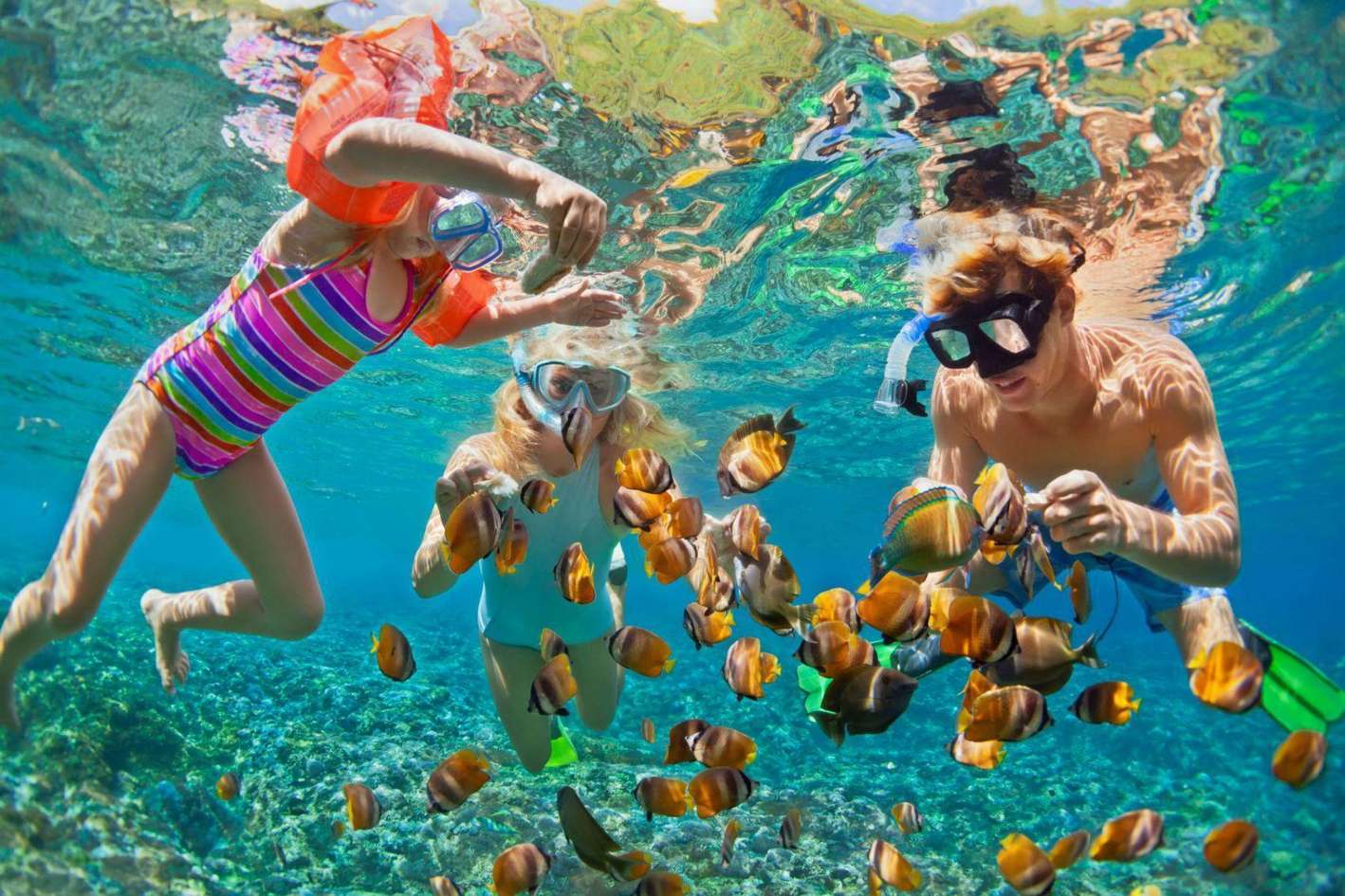
At six in the morning the sheltered west coast is near windless and the water lies flat. A private sunrise boat leaves Flic en Flac around 6:30 with a maximum of four passengers, so there is no queue for your turn in the water and no engine noise but yours.
Timing is the whole point here, and the law sets the clock in two steps. Paid dolphin swimming is restricted to the hours from six to nine in the morning, while watching from the boat stays permitted until ten.
So every hour you gain by waking early is an hour of actual swimming, not just viewing. By 8:30 the congestion builds around the pods, which is exactly what you miss by being out at first light.
2 hours · ★ 4.7 (28)Flic en Flac: Private Sunrise Dolphin Watching Boat TourFrom $309 /group 2 - 6 hours · ★ 4.7 (237)Dolphin Watching with Hotel Pickup (Mauritius)From $61 /group 2.5 hours · ★ 4.3 (132)La Preneuse: Dolphin Swimming and Snorkeling Speedboat TripFrom $38 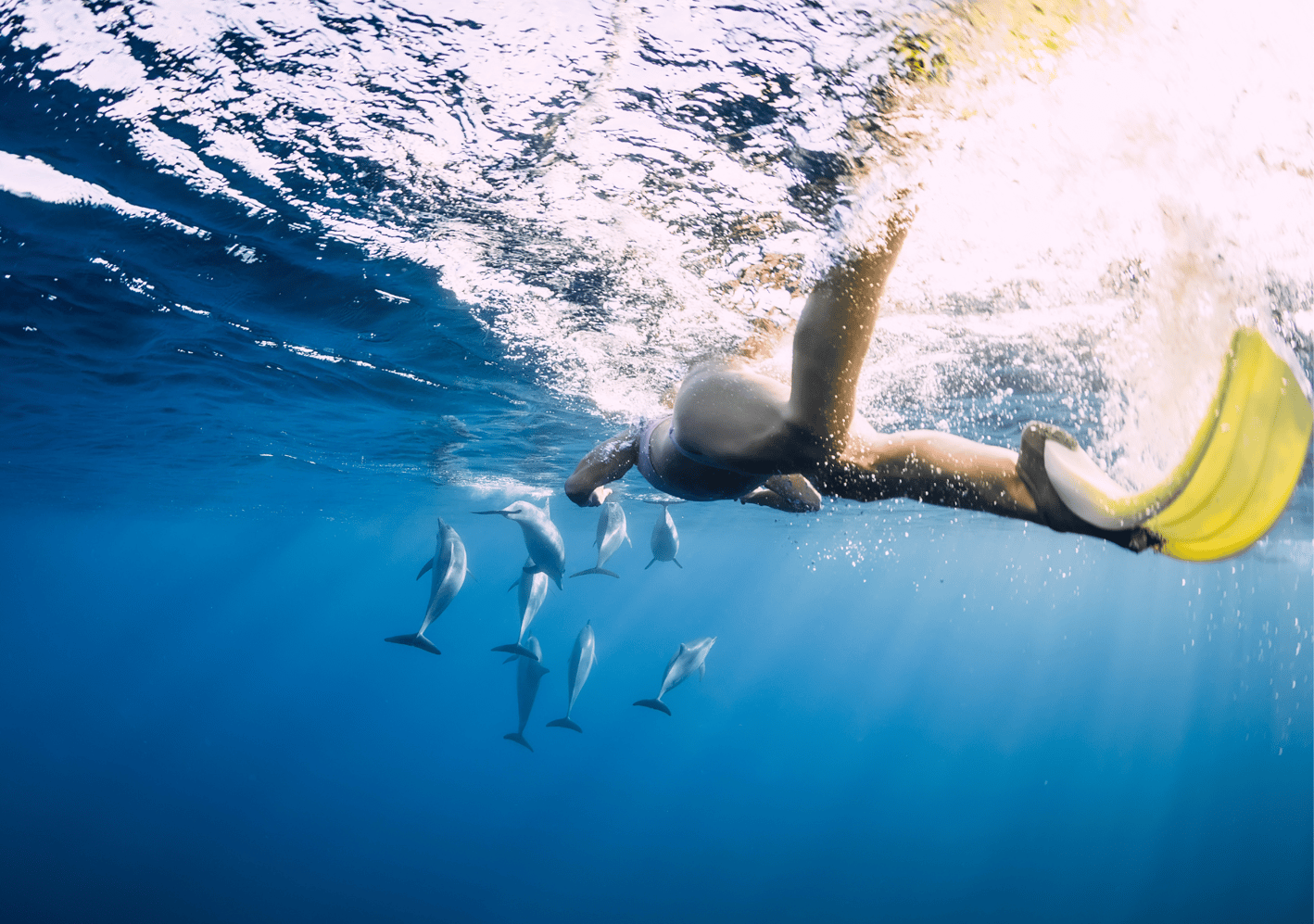 7 - 7.5 hours · ★ 4.0 (35)Tamarin: Dolphins, Crystal Rock, Benitiers Island, LunchFrom $66
no more than 3 swimmers in the water
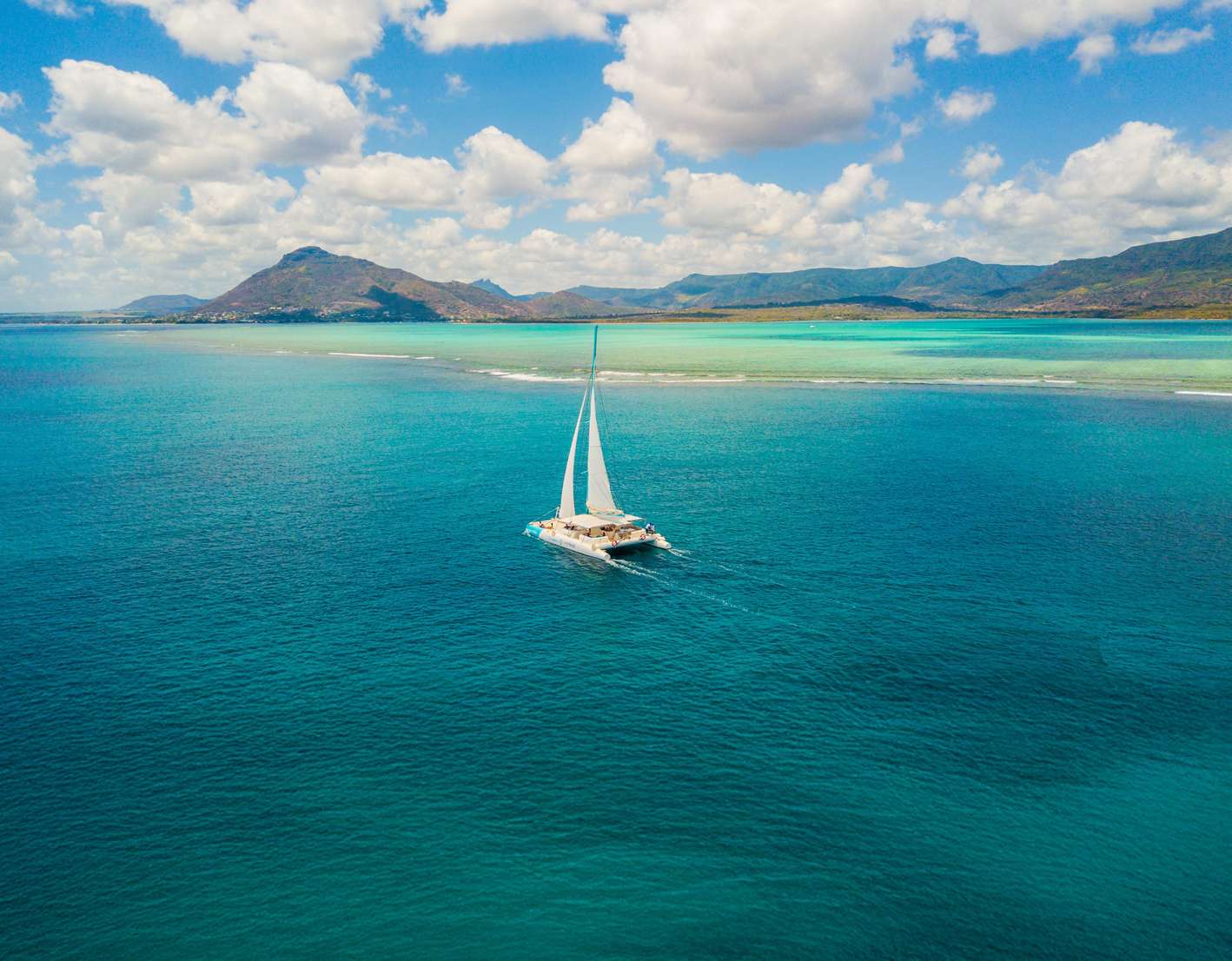
A plain guide to watching dolphins ethically from the boat, with the rules crews must follow.
Launch times, meeting points and the morning rhythm of the pods at Tamarin Bay, laid out trip by trip.
How a day that adds whales to the dolphins works, from the open-water crossing to the Bénitiers lunch stop.
Why the first boats of the morning find the calmest water and the pods before the crowd arrives.
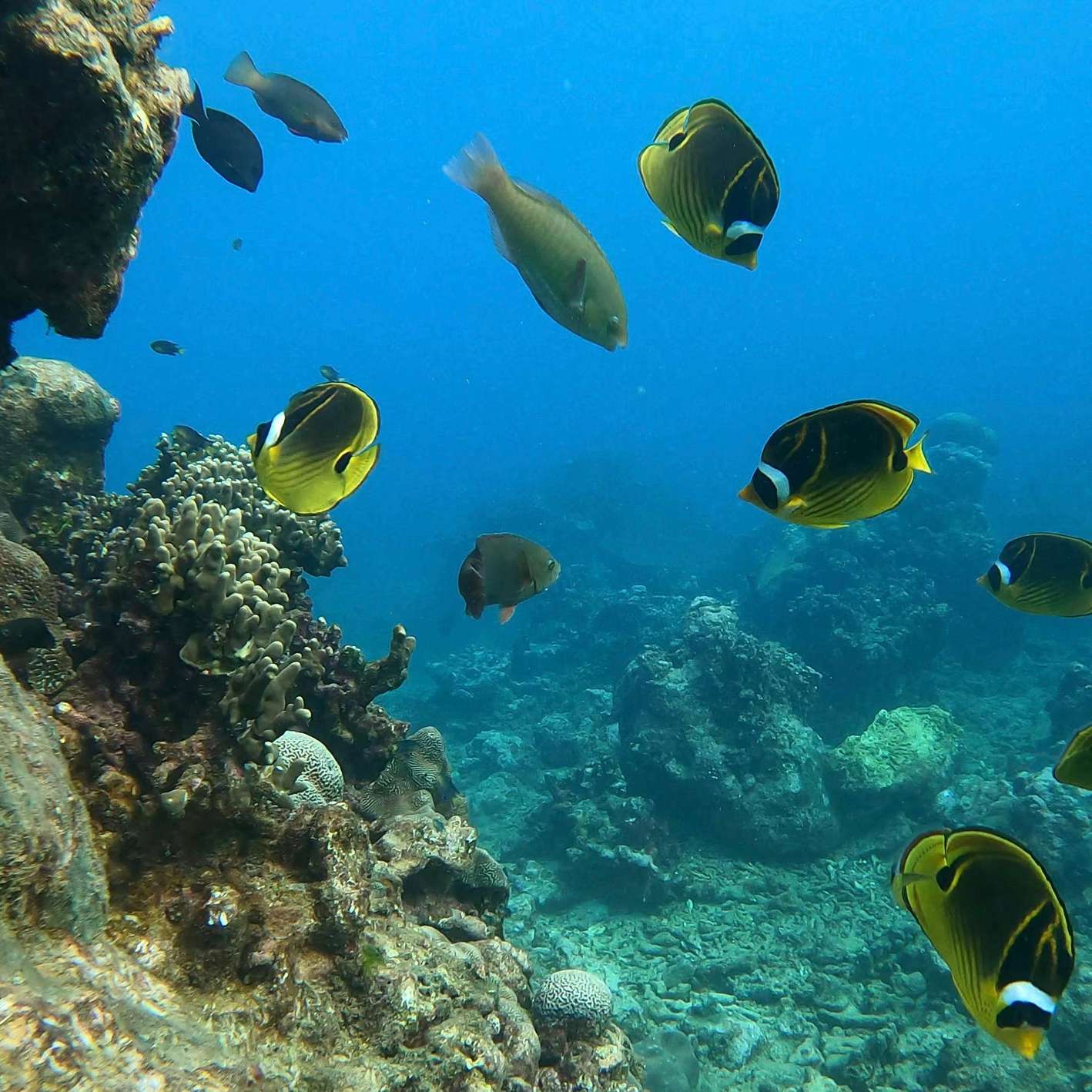
What a private charter gives you over a shared boat, and how the day is built around your group.
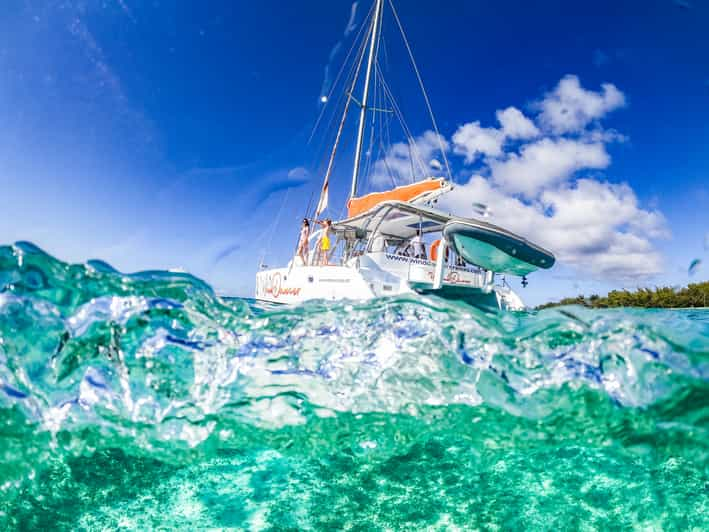
A relaxed reef day by sailing catamaran, with lunch and lagoon stops, when dolphins are not the goal.

Full-day catamaran routes by coast, with what each island day actually looks like on the water.
swimmers go in two at a time, max three in the water
The questions travelers ask before booking an in-water encounter, answered straight.
 Grande Riviere Noire2026
Yes. Swimming with wild dolphins is legal in Mauritius when you go with a licensed operator. The government regulates the activity, and every commercial boat must hold a Tourism Authority licence, carry a certified skipper and display an authorization label.
No more than three swimmers, including a life-saver, may be in the water at once. You sign a liability disclaimer and get a briefing on calm, silent swimming before entering. Touching, feeding or making noise to attract a dolphin is prohibited, and boats must stay outside a 50-metre prohibited zone around the animals.
Licensed boats follow the animals at a reasonable distance instead of chasing or encircling them, and they drop only small buddy pairs into the water. If a crew positions the boat ahead of the pod's travel line and waits for the dolphins to come past, you have found a good one.
Almost all in-water tours launch from the west coast, between Tamarin, Black River and Flic en Flac. Wild spinner and bottlenose pods gather in these sheltered bays every morning before moving offshore.
Between 6 am and 7:30 am, departing around sunrise. That window has the calmest water and the fewest boats; commercial traffic peaks between 8 am and 9:30 am. Paid dolphin swims are legally restricted to the 6 am to 9 am hours anyway.
Think short drops rather than one long swim. You slip into the water on the skipper's signal, watch the pod glide past for anywhere from 15 seconds to a few minutes, then climb back aboard to reposition. Over a 60- to 90-minute window you do this several times.
Dolphins swim fast, so you jump into deep open water and move hard to keep them in view. You should be comfortable swimming a few hundred metres and confident in open water. Weak swimmers are better off watching from the deck, which is a perfectly good way to spend the morning.
Long-blade fins matter most, because they give you 25 to 30 percent more propulsion per stroke and help you keep pace with the pod.
Bring a mask with a snug silicone seal, a dry-top snorkel, a UV rash guard and water shoes for the deck. Tour boats supply masks and snorkels, but a well-fitting mask of your own is worth packing.
The swim happens in deep water where currents can run and the bottom is far below, which is exactly why the law requires a propeller guard, a life-saver, a first aid kit and an oxygen kit on every licensed boat.
Life jackets are compulsory on the boats and in the water. Dangerous shark encounters outside the reef around Tamarin are practically unknown.
Non-swimmers can join a dolphin tour and watch comfortably from the deck. Families with young children can do the same, though young children should not attempt the open-water drops. Some boats also list pregnancy and mobility limits, so read the tour notes before booking.
The odds are strongly in your favor. One Black River speedboat tour puts the chance of sighting dolphins at about 90 percent, and the pods return to the west coast bays reliably every morning during the season.
Speedboats get you out early and fast, ahead of the fleet, and hold position close to the pod's line. Catamarans move slowly and often drop swimmers several hundred metres from the animals, so close encounters come less often. For an in-water swim, the early speedboat is the tool for the job.
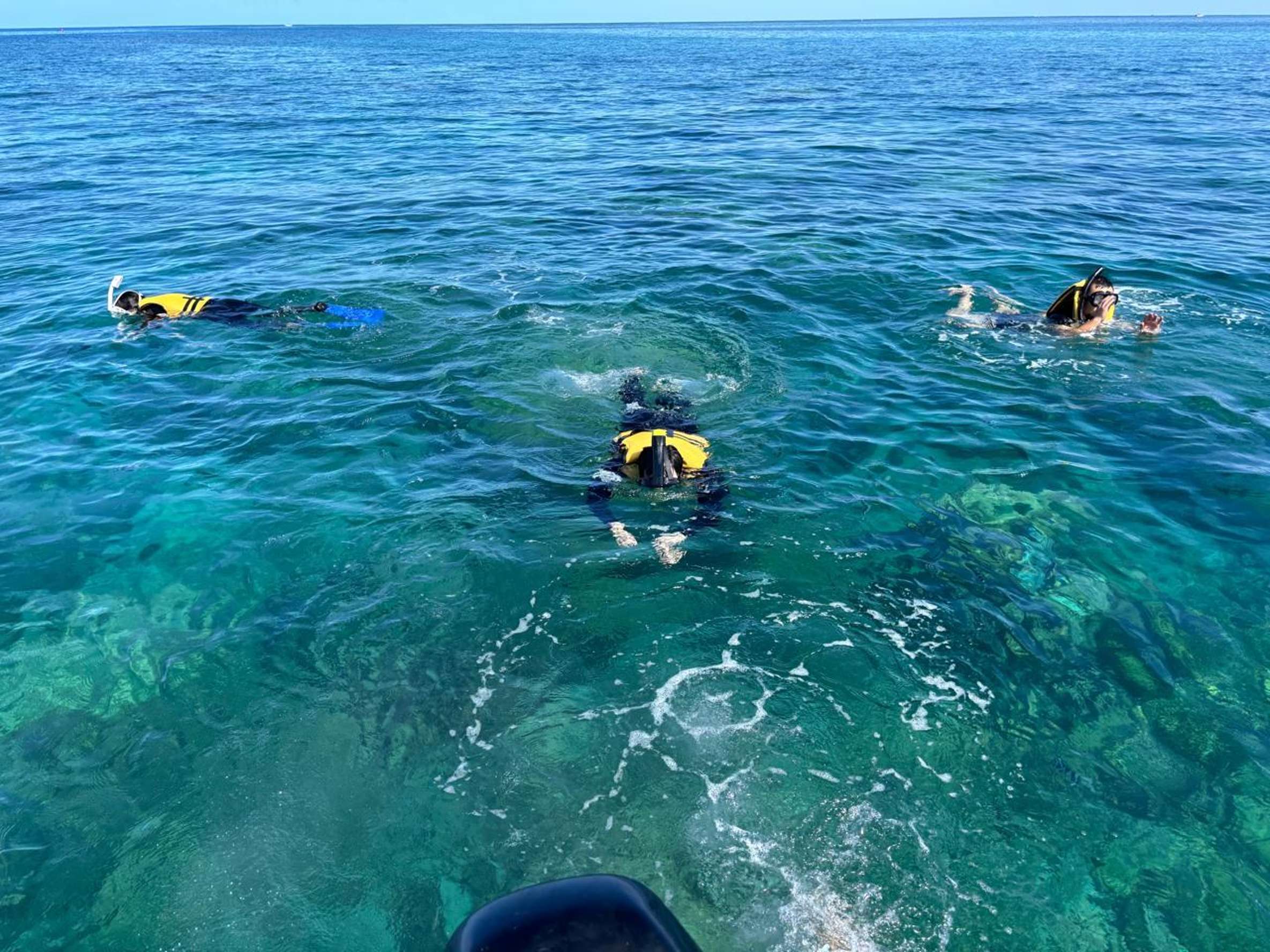
enter the water two at a time, on the skipper's signal
A 2.5-hour speedboat trip puts you in the water with spinner and bottlenose dolphins, with gear and lifejackets included. Cancel up to 24 hours ahead for free.