
8 hours·English, French
5.0(2)
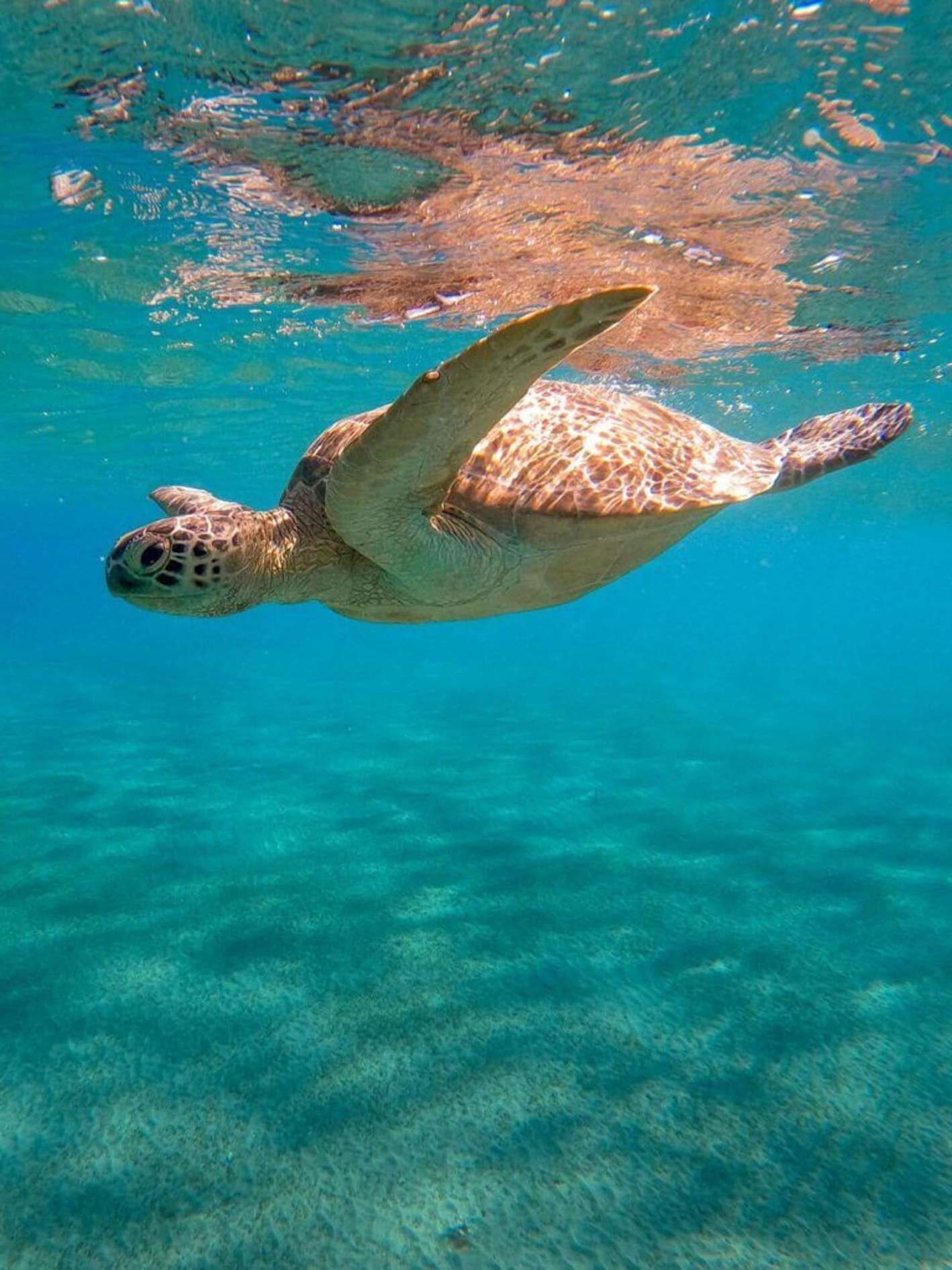
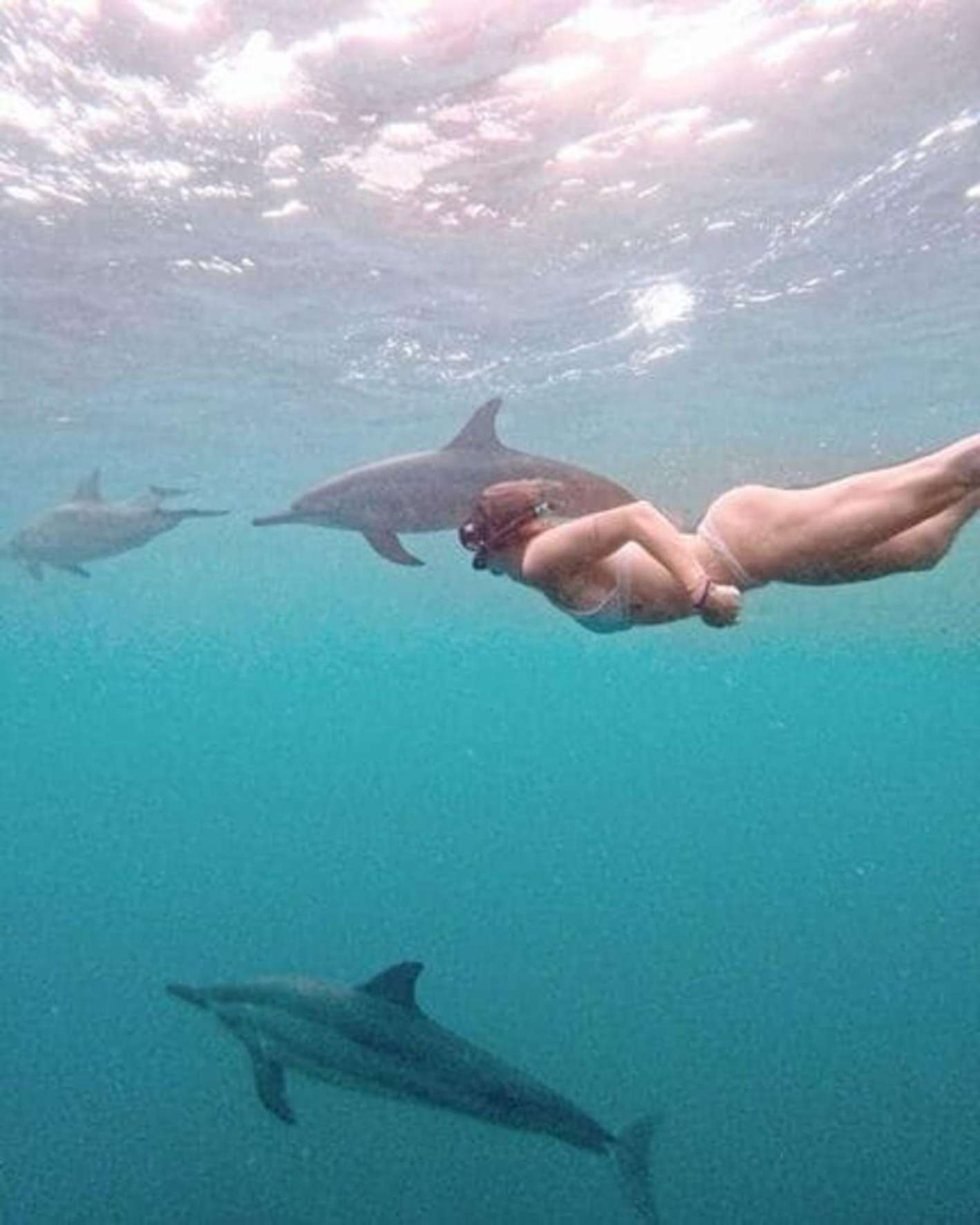
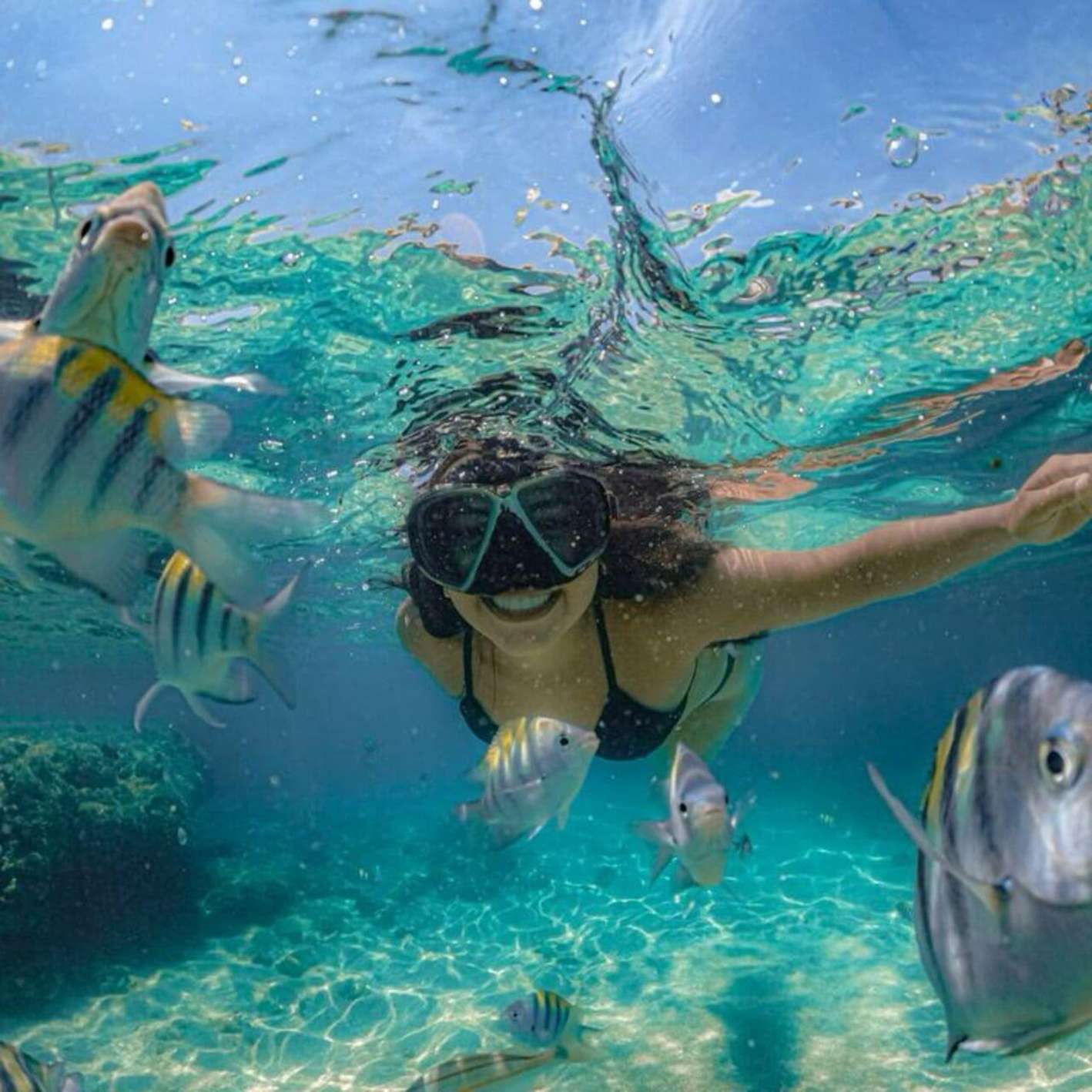
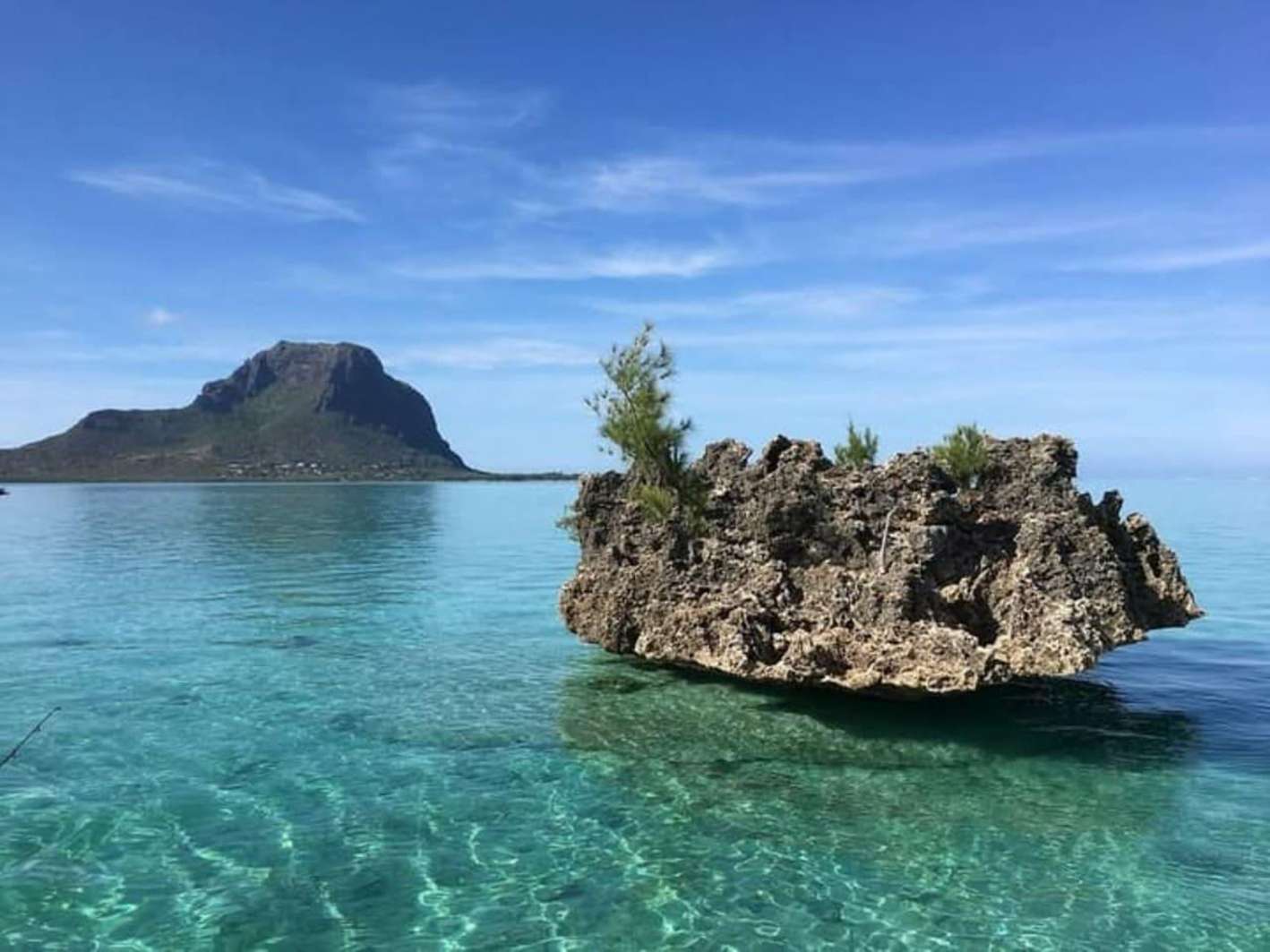
Private Dolphins, Sea Turtles & Île aux Bénitiers Tour
Free cancellationPrivate speedboat trip with experienced skipperDolphin watching and swimming opportunity
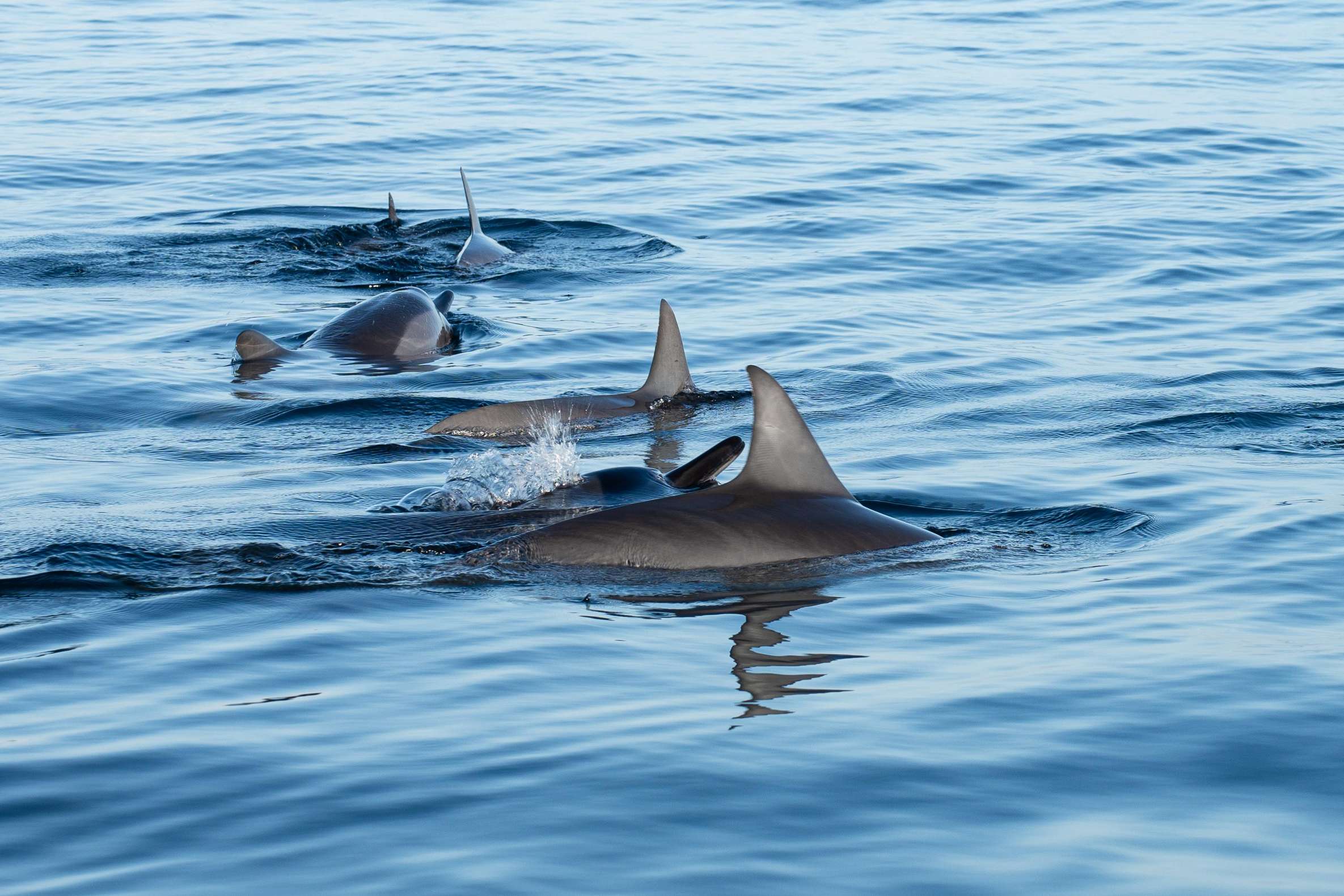
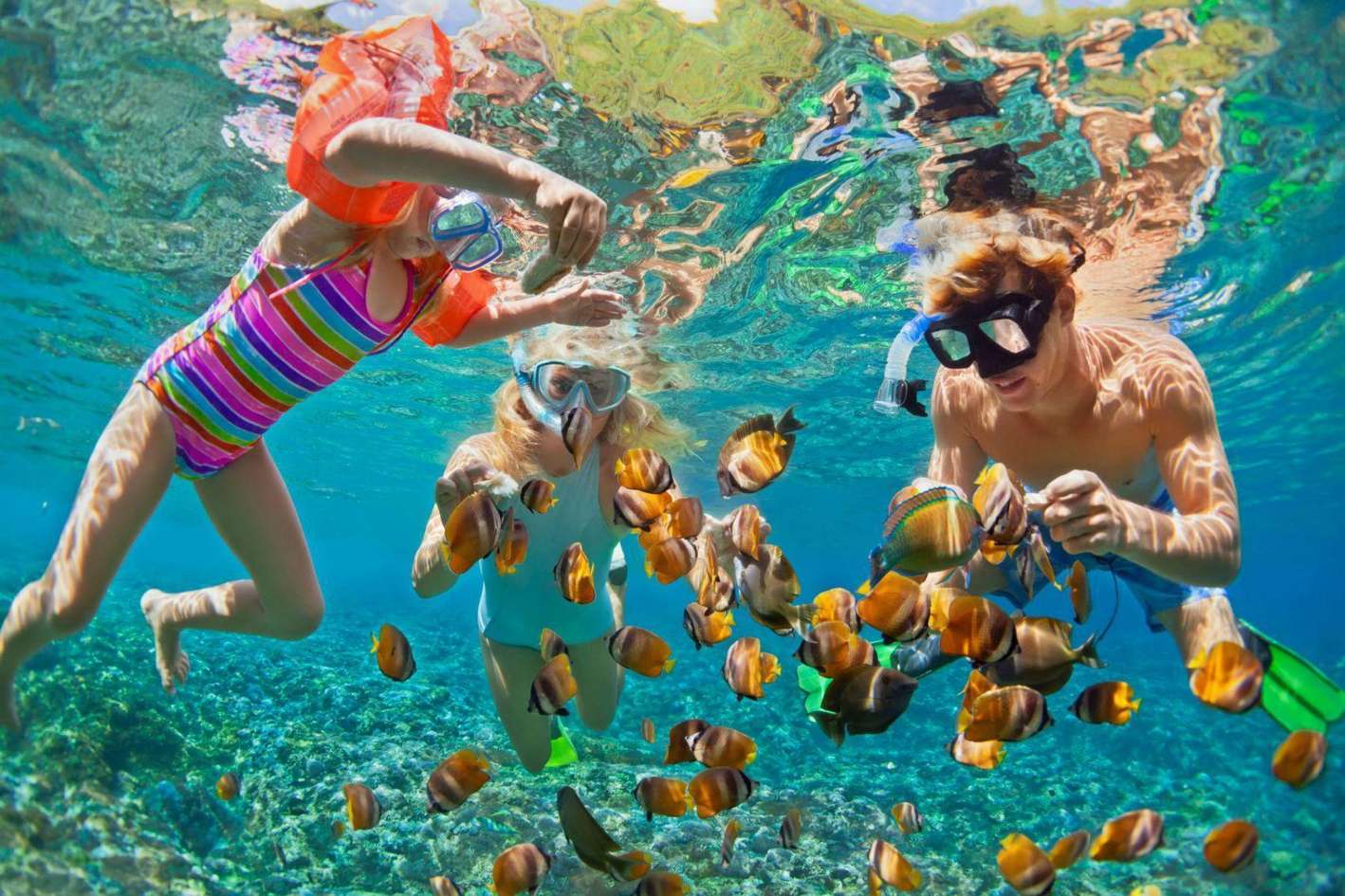
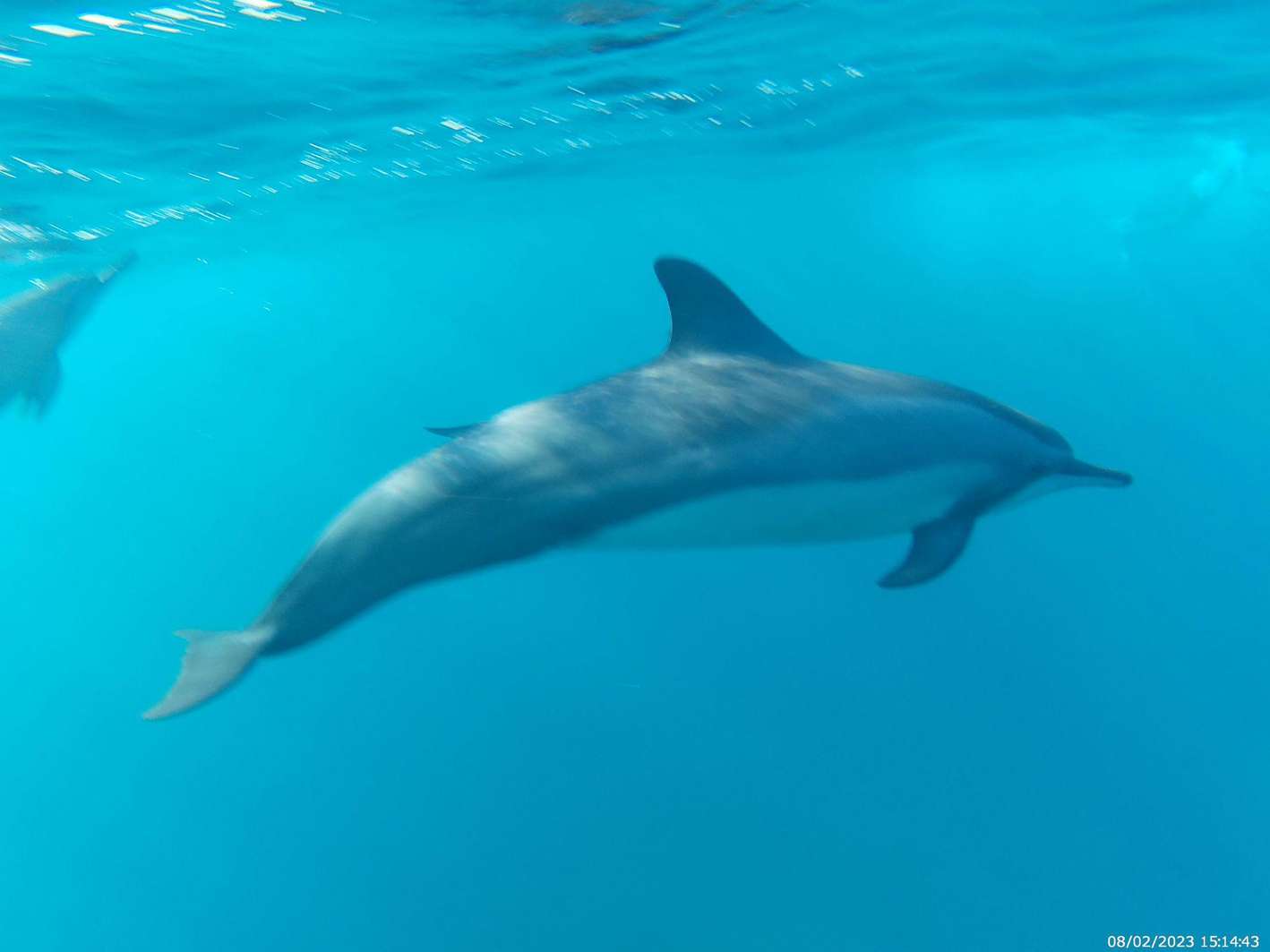
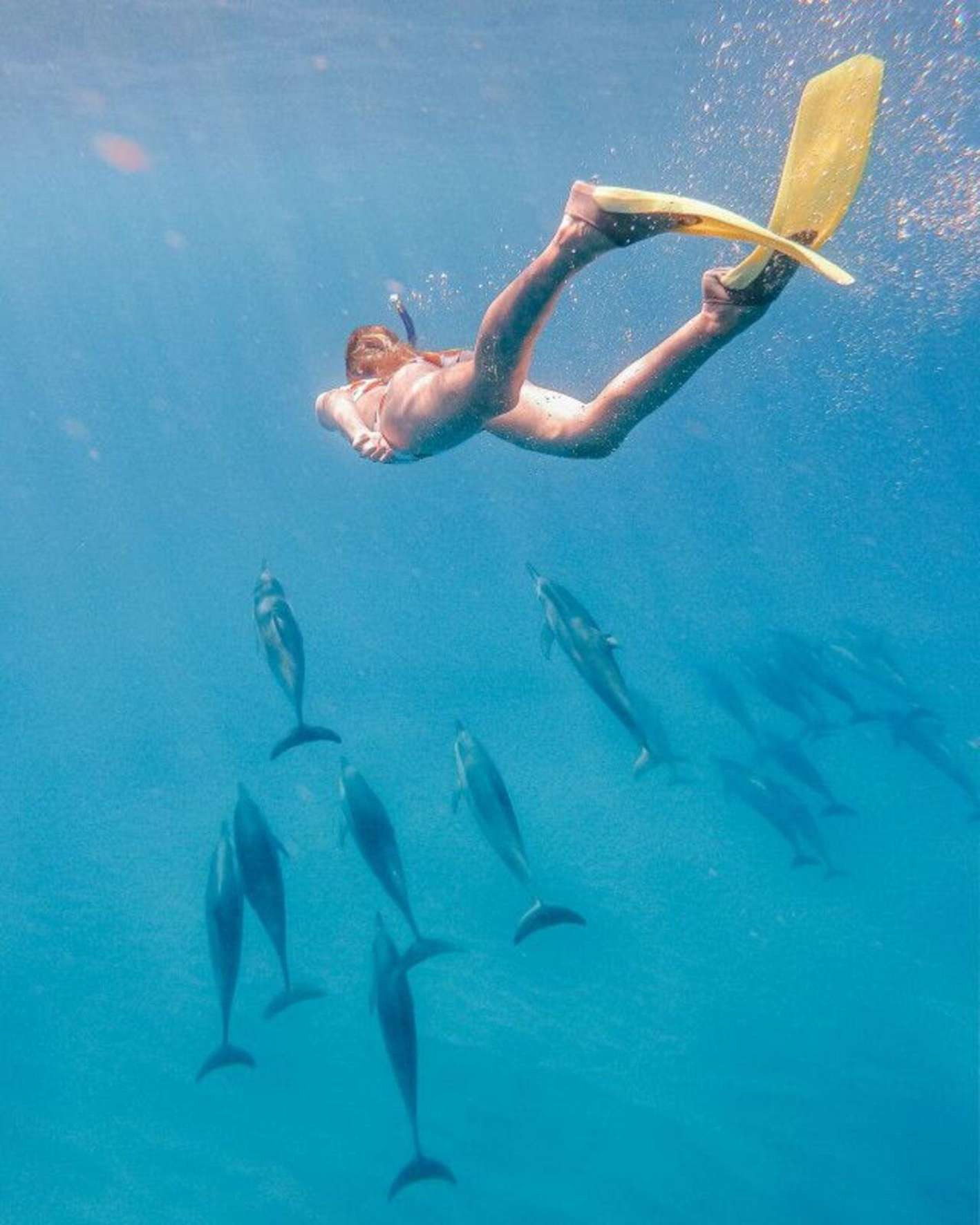
Swim straight off the sand into a calm, reef-sheltered lagoon, then join a private sunrise dolphin tour that leaves right from Flic en Flac beach. Masks, fins, and life jackets are on board, so all you bring is a towel and the early morning willingness.
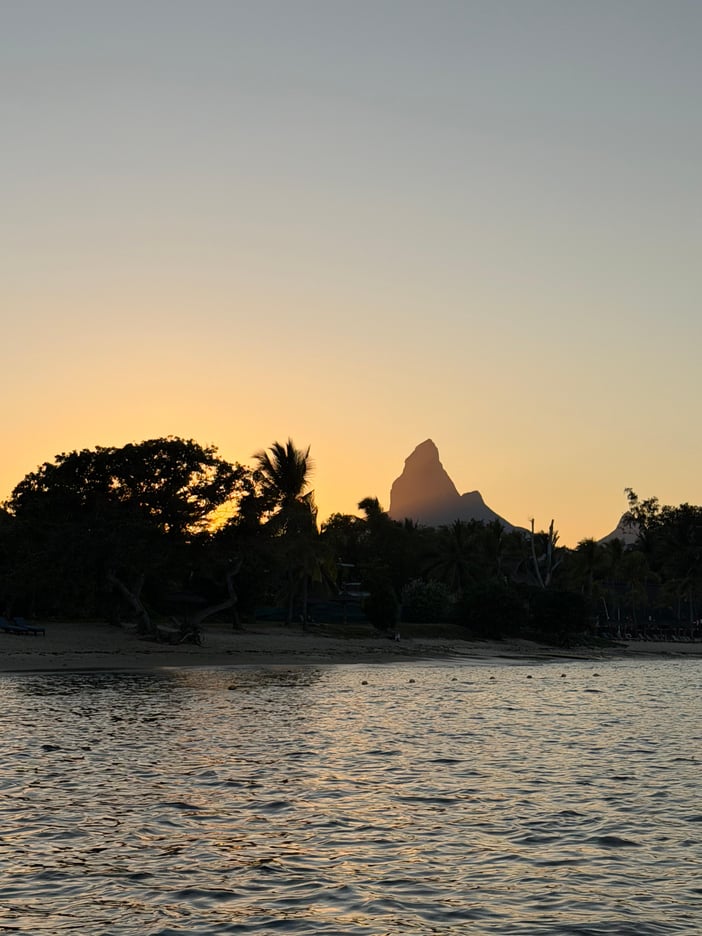
"Guide waited at 6:30 am as agreed; watched a beautiful coastal sunrise, then saw and swam with dolphins within 20-30 minutes. Friendly, respectful of the dolphins, safety always first. Highly recommend this private tour!"

West, north, east or south: the trade winds decide which coast stays flat and clear, and this guide walks through each one.
Read the guide
Dense coral colonies and sea turtles sit about 100 metres off the public beach, and short boat trips run out all day.
Read the guide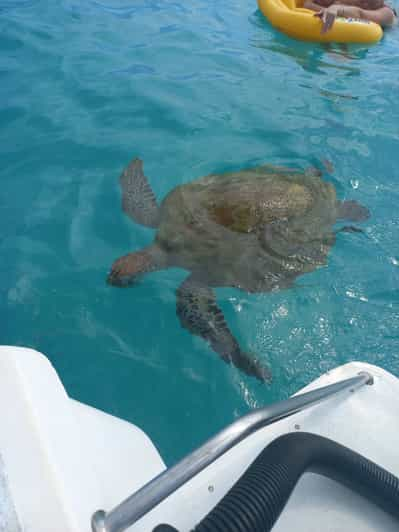
Coral heads begin 200 to 300 metres out, and the outer reef shelf holds the best turtle chances.
Read the guide
Calm inside the lagoon, but the reef pass at One Eye runs hard on an outgoing tide.
Read the guide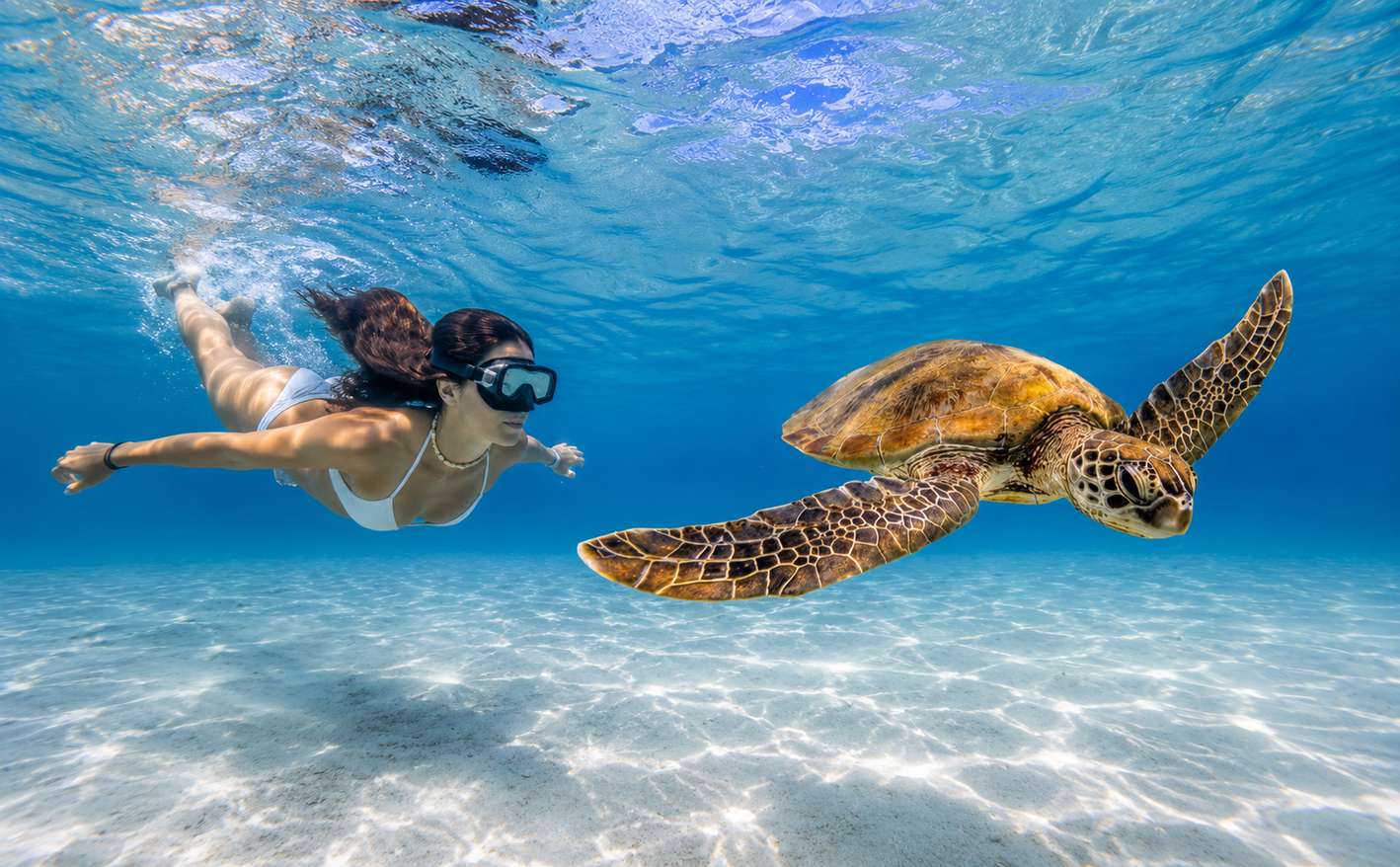
Swim in the buoyed zone first, then fin out east along the rocks for the fish and turtles.
Read the guide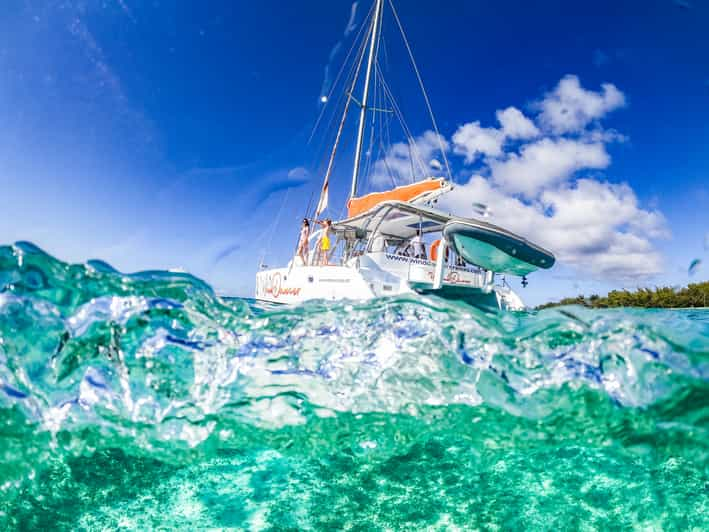
The bay itself is a harbour; the good reef water starts past Coin de Mire.
Read the guide
Swim with dolphins outside the reef, in a bay open to ocean swells.
Read the guide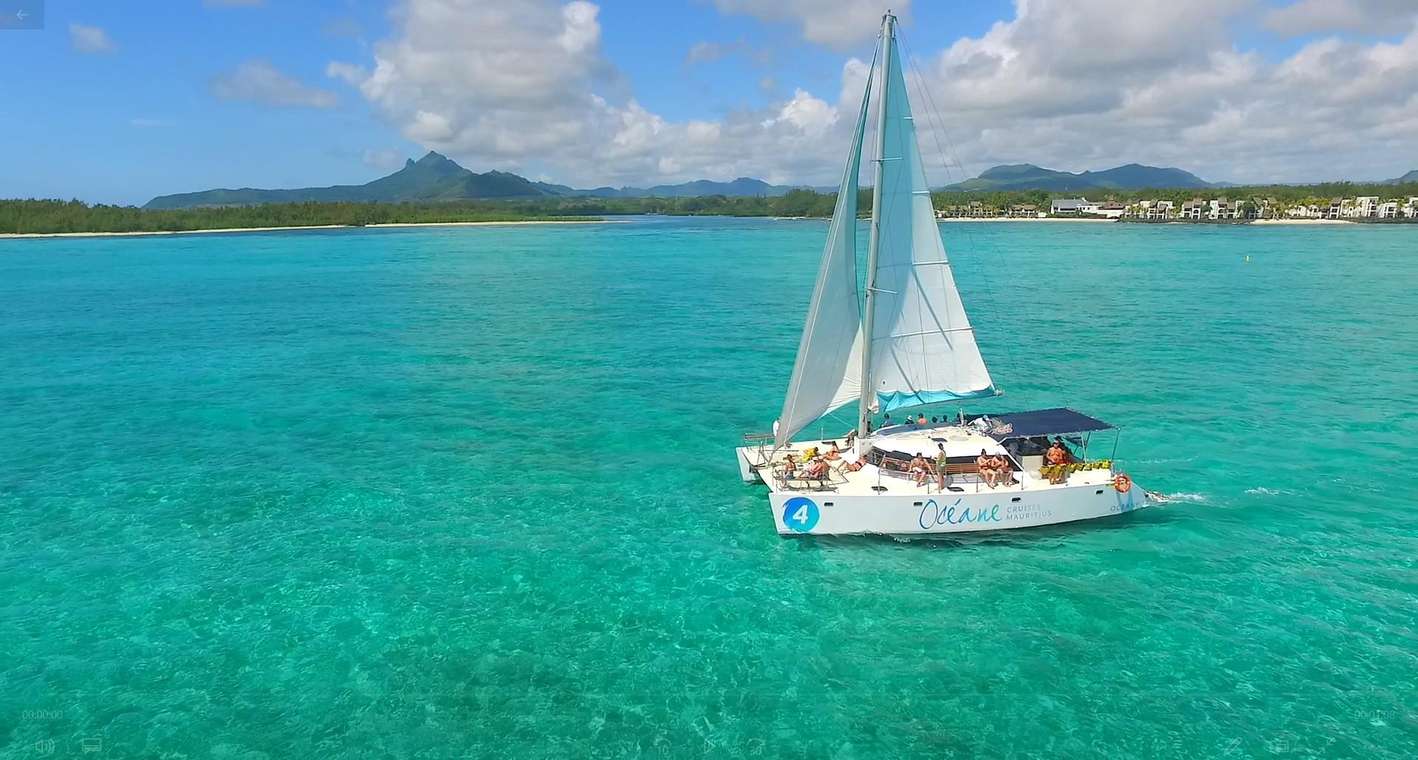
Calm water inside, winter chop outside, and the pass currents deserve respect.
Read the guide
Beautiful calm summer water; June to August brings wind and murky shallows.
Read the guide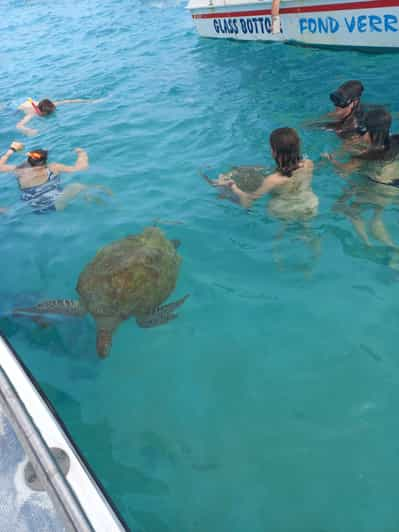
Calm water for beginners, rocky patches underfoot, and traffic lanes you must stay out of.
Read the guide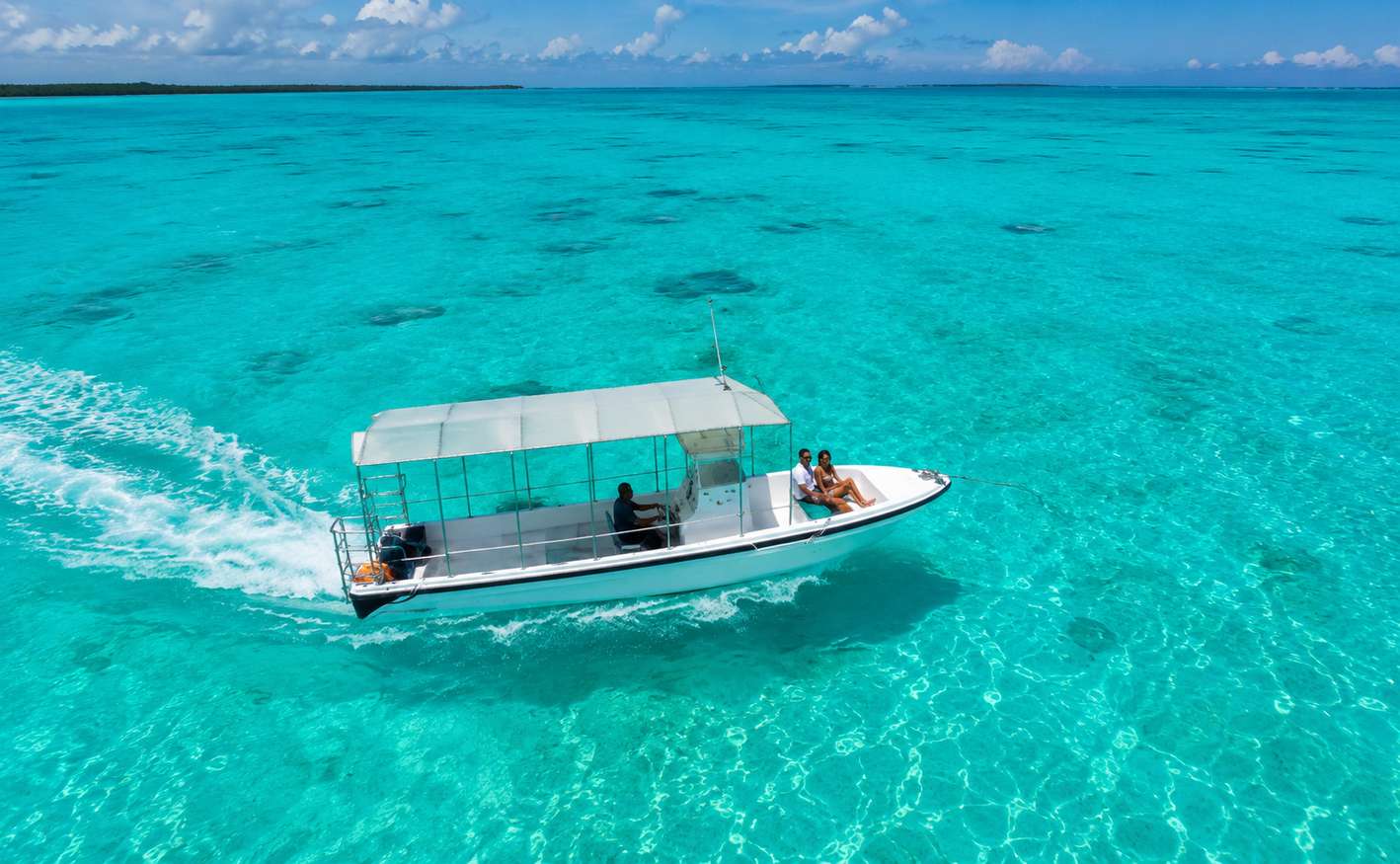
Reef starts a few strokes from the sand, and turtles appear occasionally, so go expecting patience.
Read the guide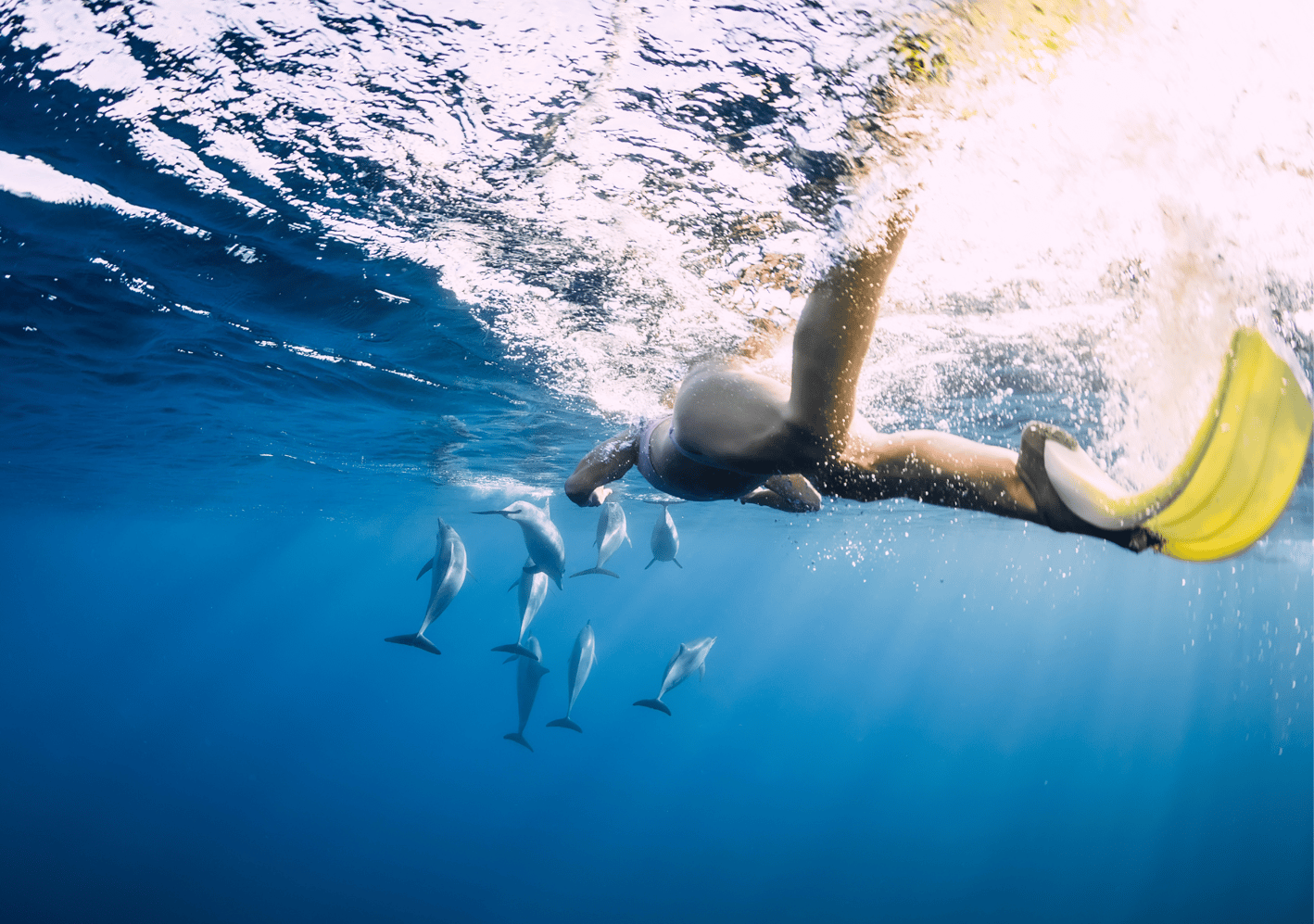
Calm inside the barrier reef, but strong channel currents mean staying away from the passes.
Read the guideSeaplane flights over Le Morne show it; from sea level it reads as sand and current.
Read the guideTurtles gather in specific lagoons, and touching or chasing them is illegal.
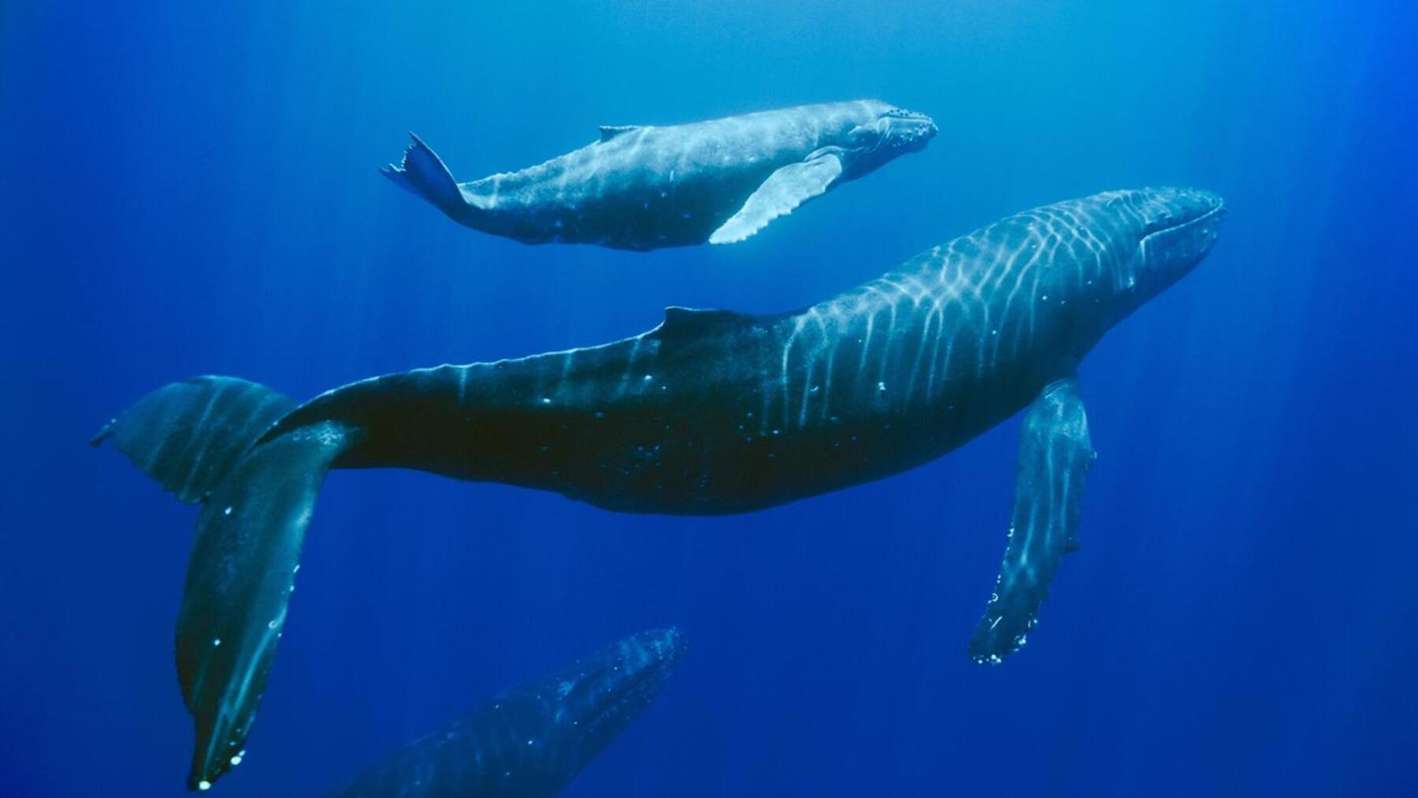
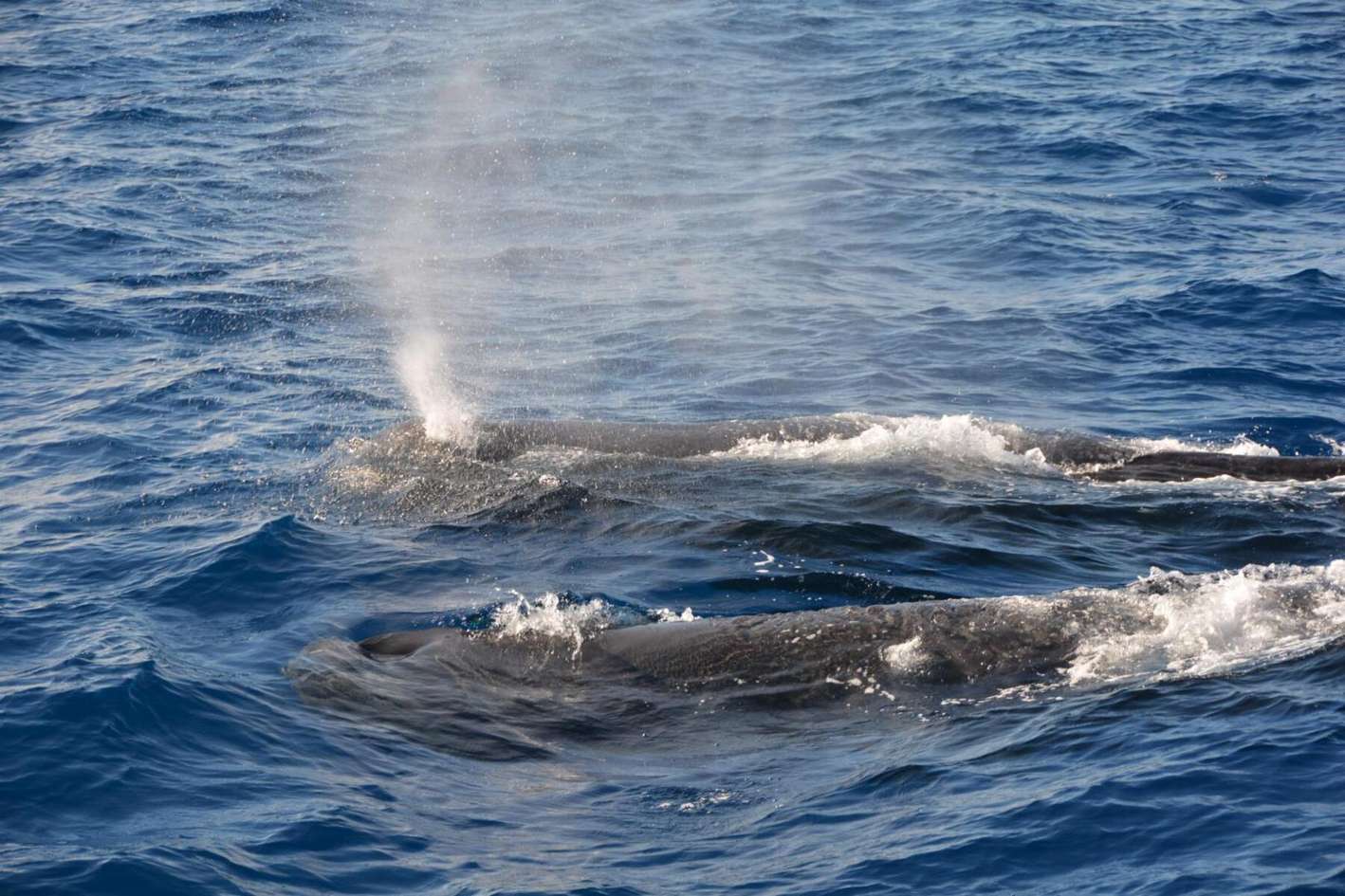
Read the guideSperm whales stay year-round; humpbacks pass between June and October.
Read the guide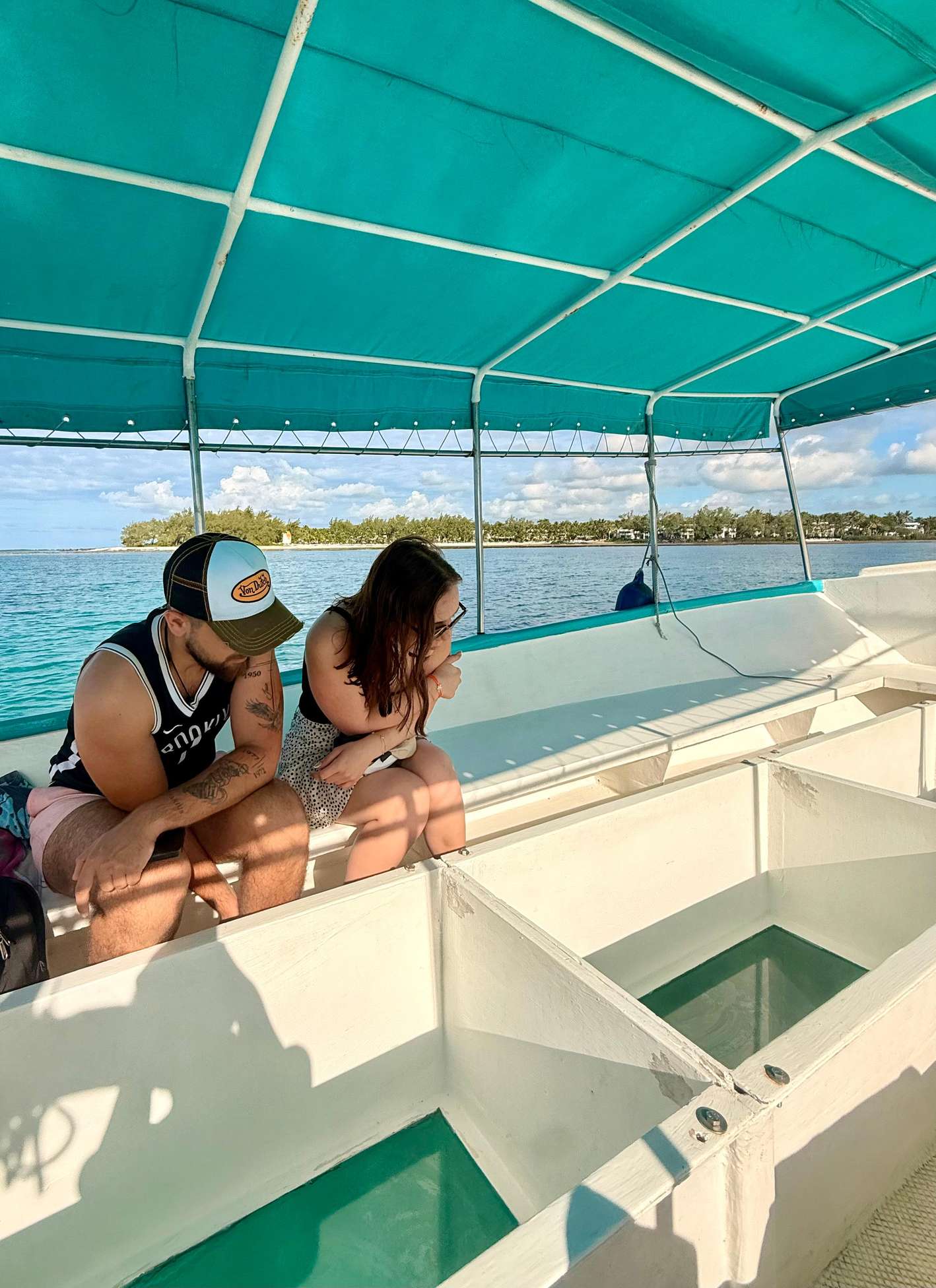
October and November combine warm water, calm seas and the year's clearest lagoons.
Read the guide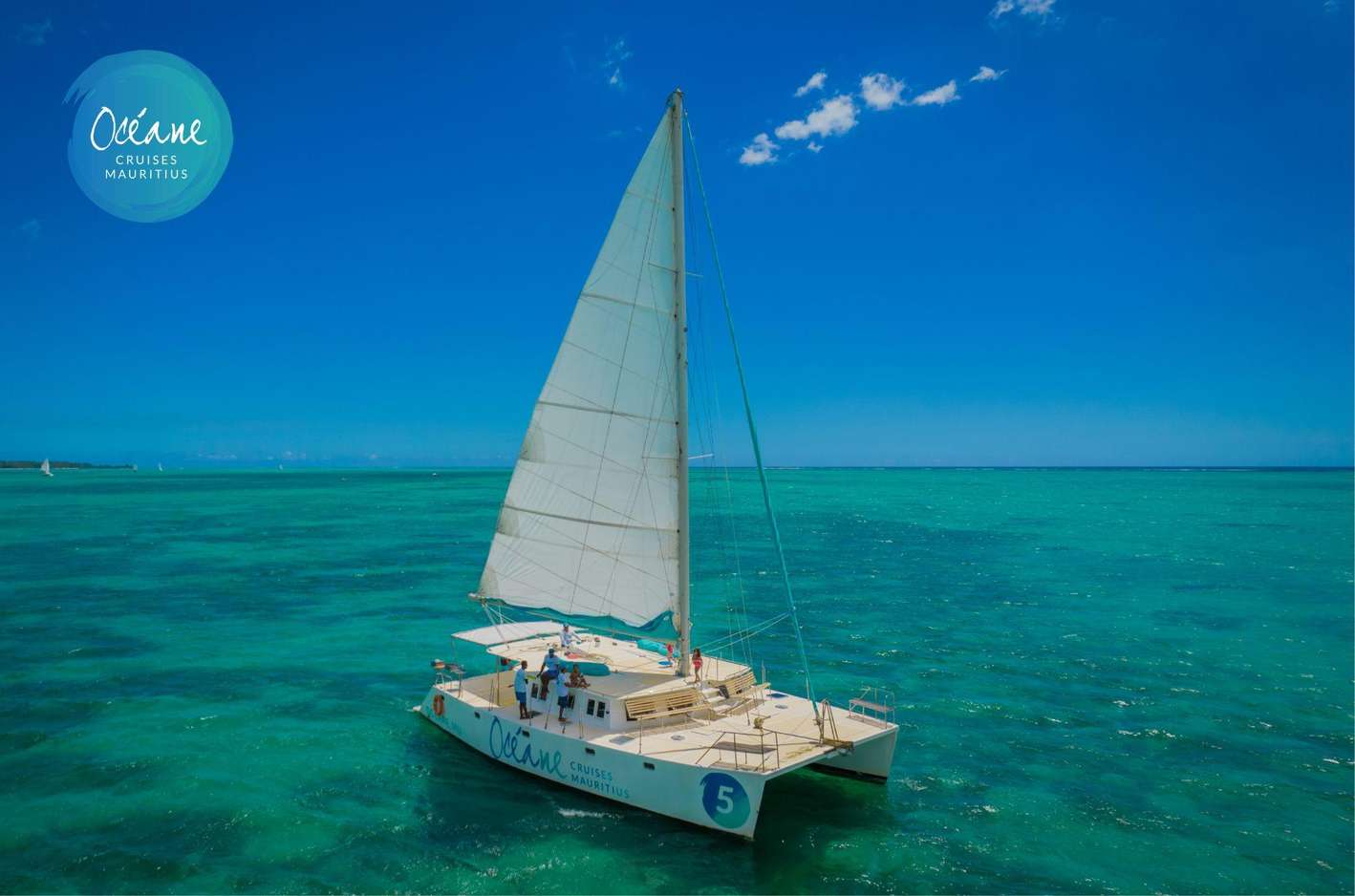
Twin hulls keep the ride smooth, and the east lagoon stays flat even in the windy months.
Read the guide
Faster than the catamarans and bumpier in the trades; shared boats carry up to about 17 guests.
Read the guide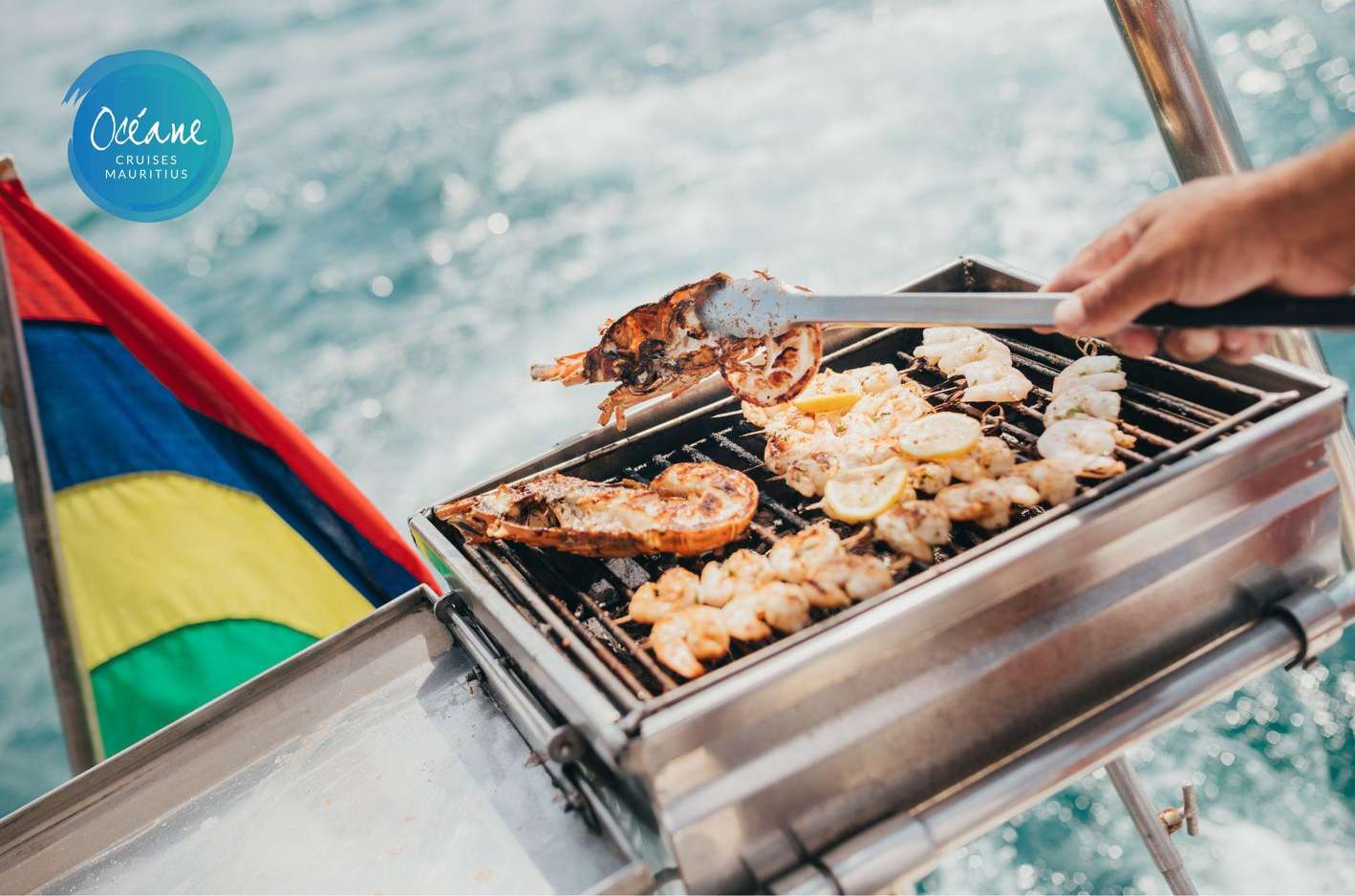
Charter a catamaran or speedboat and slip the midday crowds that pack the island.
Read the guideEvery page covers one place or one kind of day on the water. Flic en Flac belongs with the calm west and north-west lagoons; the east coast pages ask for summer and early starts.
Compares every side of the island so you pick the right base
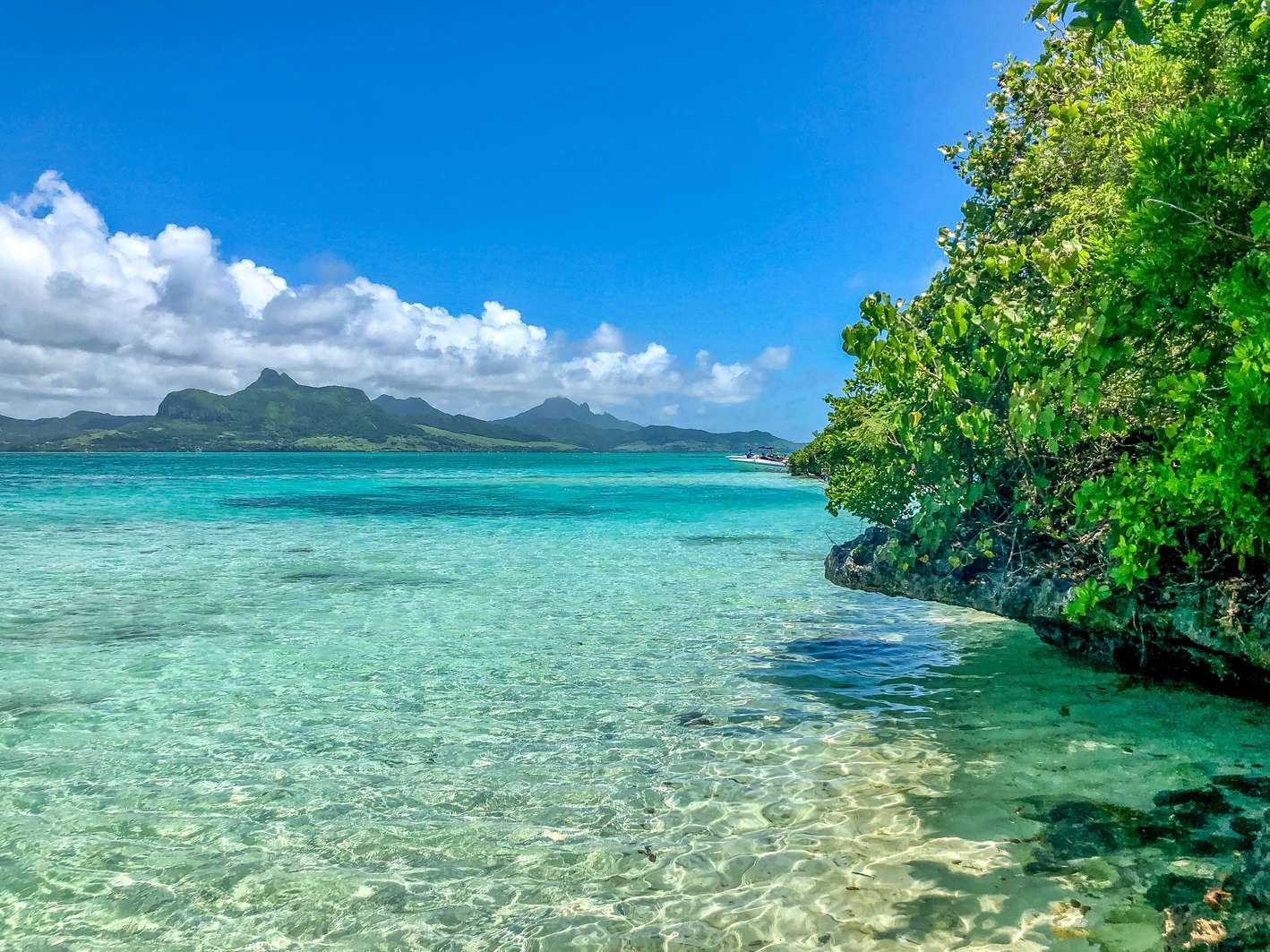
Coral wraps the whole island, but the trade winds split it in two. From May to September the east coast around Trou d'Eau Douce sees calm-sea days fall to almost nothing, while the west, tucked behind the central mountains, stays flat.
The north-west lagoons at Trou aux Biches and Balaclava hold the best inshore coral, and Blue Bay in the southeast holds the densest protected coral garden on the island. The guide walks each stretch with its conditions, reef health and fish life.
Read it before you book a hotel if snorkeling shapes your stay. It settles one question in particular: which side of the island deserves your mornings.
3 hours · ★ 5.0 (4)Blue Bay: Lagoon, Snorkeling, and Creole LunchFrom $87 7 hours · ★ 4.8 (869)Ile aux Cerfs Catamaran Cruise with BBQ Lunch & SnorkelingFrom $68 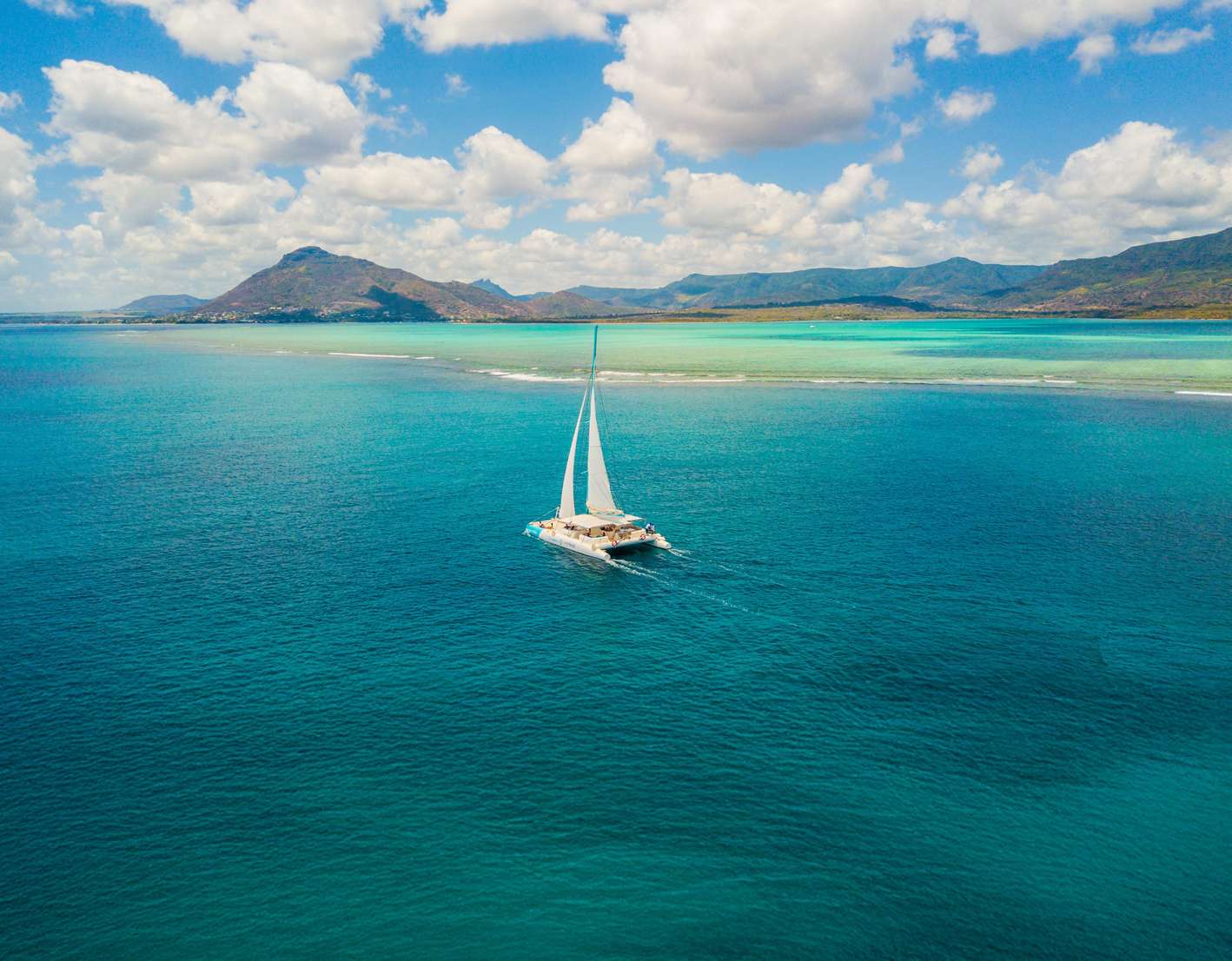 6 hours · ★ 4.7 (363)Mauritius: Catamaran Cruise - Dolphin Watching, BBQ & DrinksFrom $87 2 hours · ★ 4.7 (39)Mauritius: Snorkeling with turtles Le Transporteur speedboatFrom $375 /group
The island's biggest protected coral garden, seen from a glass-bottom boat
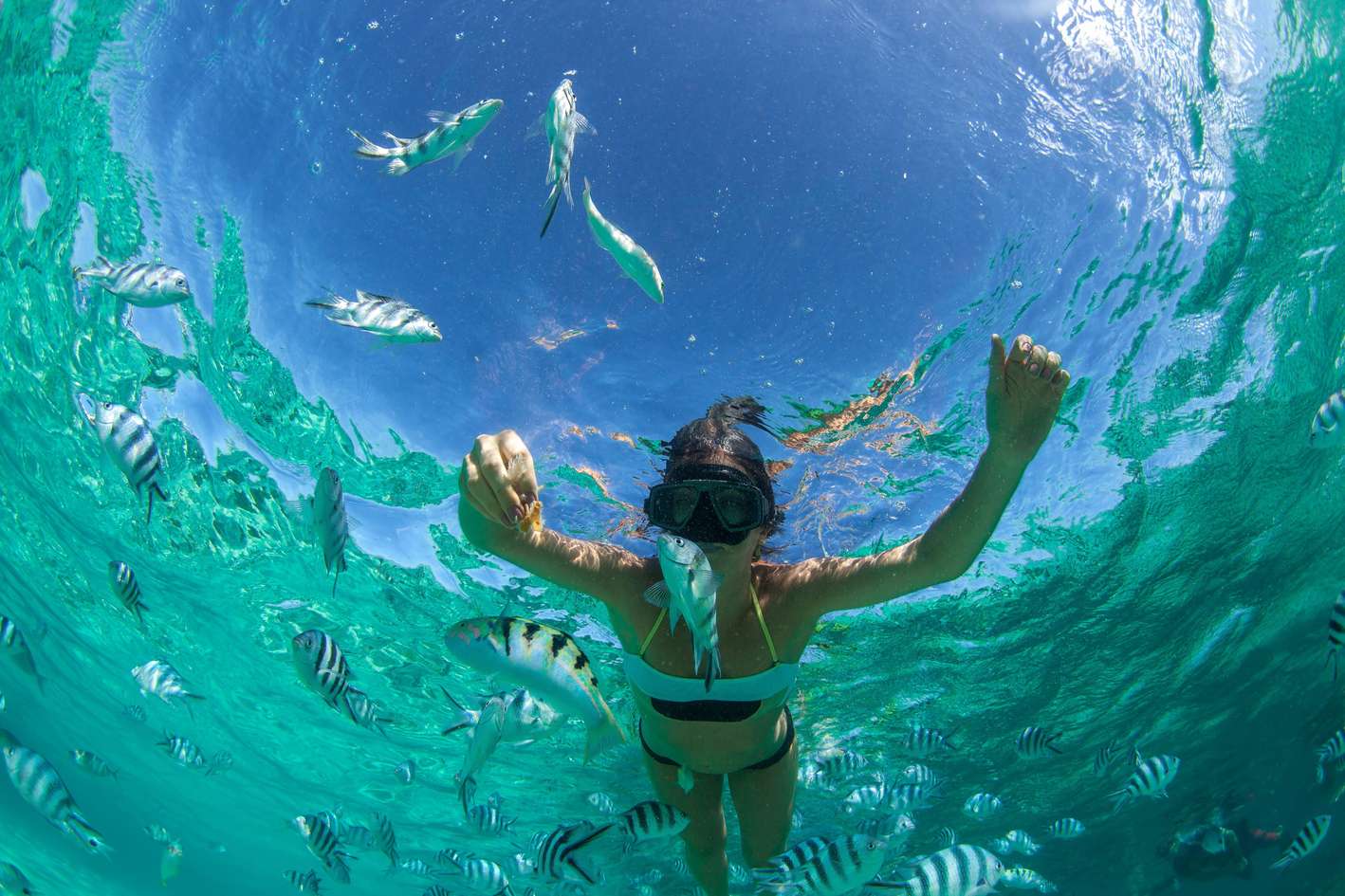
The park begins about 100 metres from the public beach and holds the densest coral on the island, with table colonies up to 16 metres across.
A one-hour glass-bottom trip gives roughly 15 minutes of viewing and 45 of snorkeling; the two-hour version covers two spots. Children and non-swimmers can watch the reef dry from the glass floor.
The rules bite here. Stay in the buoyed swimming zone, keep off the coral and leave the turtles alone; touching coral draws fines. Blue Bay sits in the far southeast, a long drive from Flic en Flac, so treat it as its own morning by rental car or bus line 46.
3 hours · ★ 5.0 (4)Blue Bay: Lagoon, Snorkeling, and Creole LunchFrom $87 2 hours · ★ 4.6 (17)Blue Bay Marine Park: Guided Snorkeling with Video Souvenirs and SnackFrom $58 4 hours · ★ 4.5 (306)Blue Bay: Half-Day Snorkeling Trip with Creole Picnic LunchFrom $67 1 hour · ★ 4.4 (155)Blue Bay Marine Park - 1-hour Snorkeling ExcursionFrom $28 Calm water, living coral heads and green turtles close to shore
The lagoon sits calm on 80 to 98 percent of days all year, and green turtles graze on seagrass in the shallow water. Sandy shallows right off the beach hold little life; the living coral heads begin about 200 to 300 metres out.
Walk straight in and paddle out, or take a short speedboat from Grand Baie to the turtle grounds and the outer reef. Bring a dive flag if you swim outside the buoyed areas, because boats cross this lagoon all day. Calm water, warm shallows and easy access make it the first pick for families.
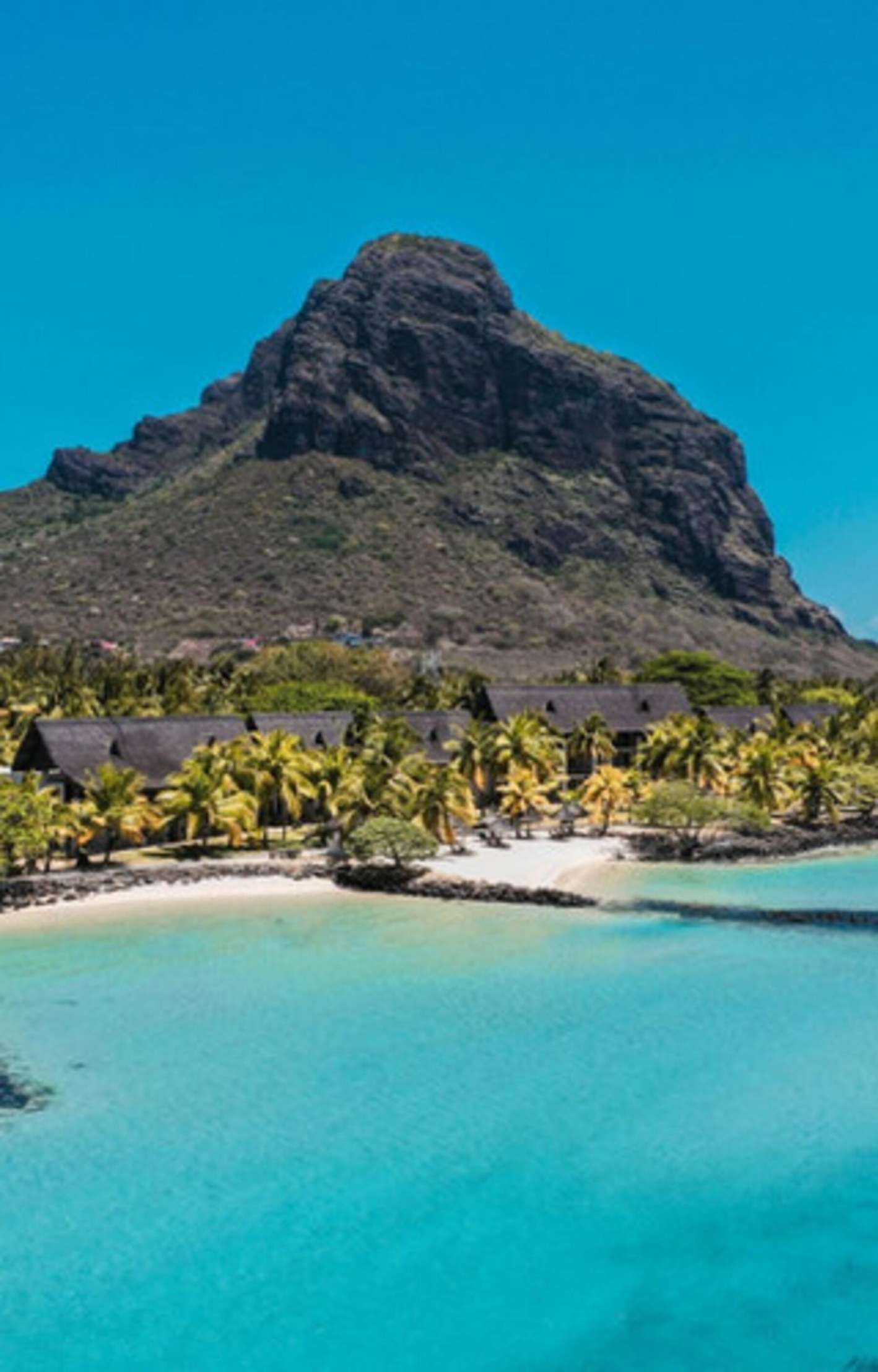
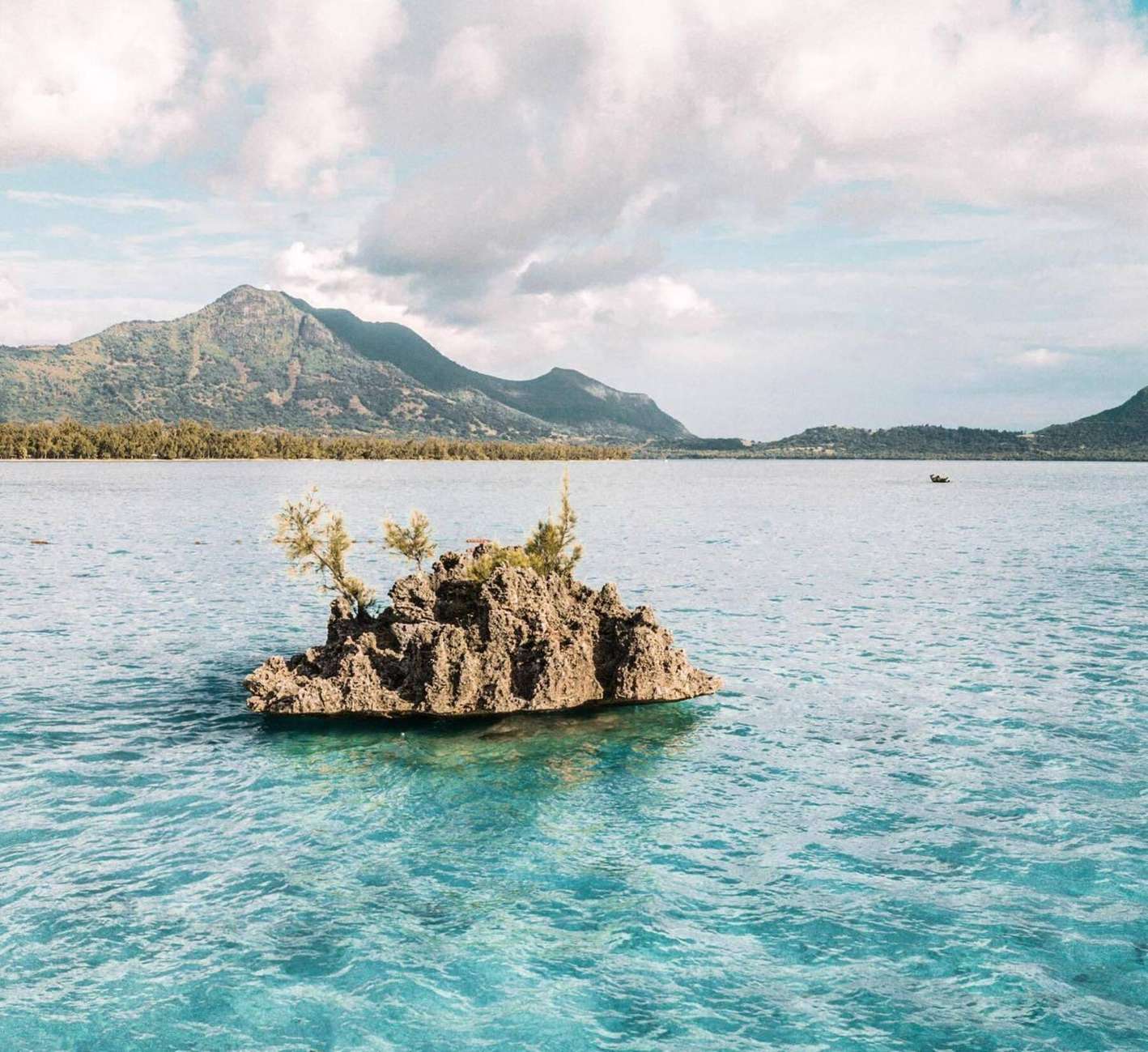
Shallow turquoise lagoon under the peak, with Crystal Rock and strong pass currents
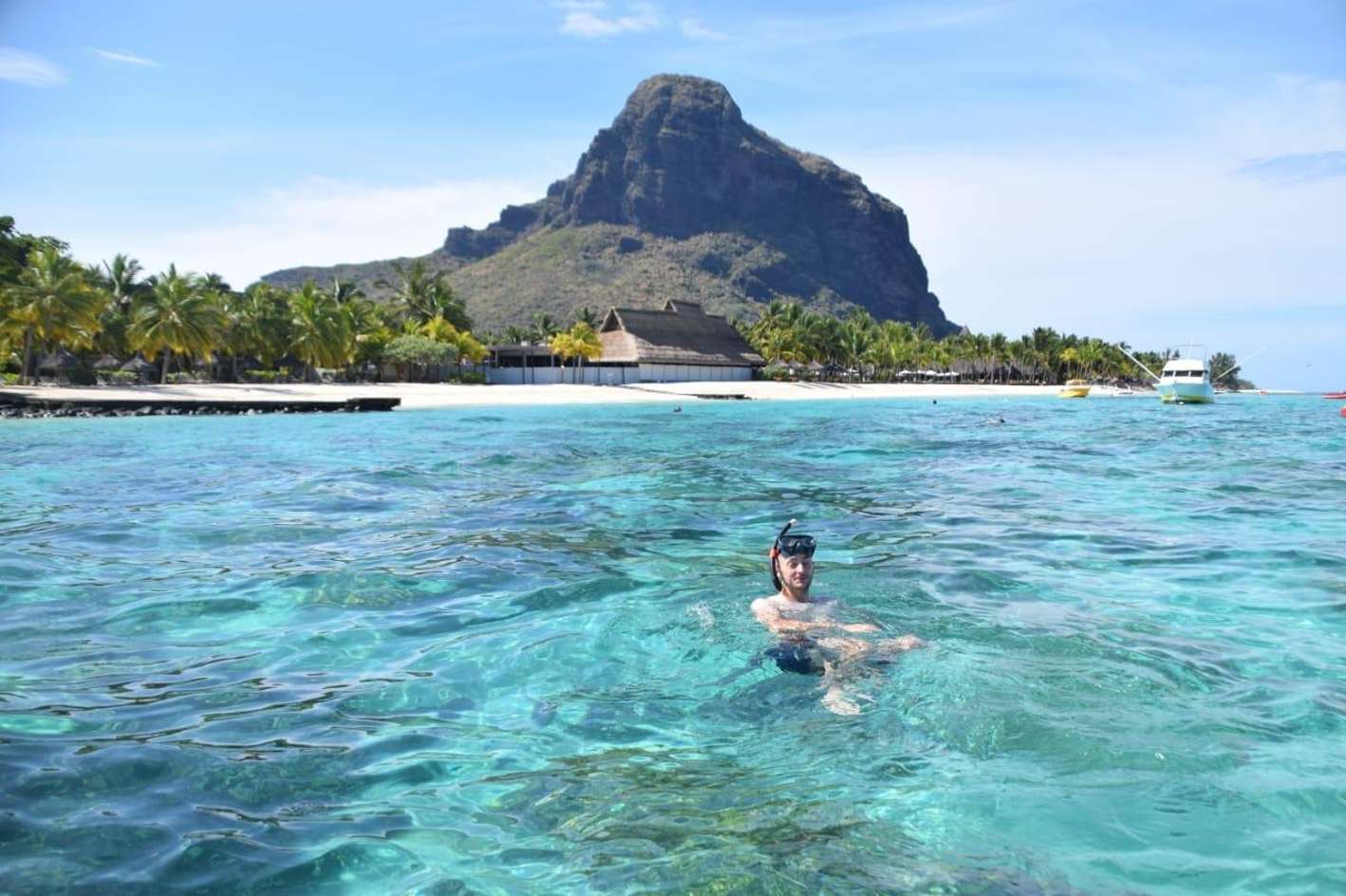
The lagoon under the peak stays calm and shallow, and La Prairie Beach gives waist-deep water with the mountain filling your view. Reef passes are the hazard: on an outgoing tide, the One Eye pass runs a current too strong to paddle against.
Boats are the way to reach the outer spots. Crystal Rock sits in the lagoon with hip-deep water around it and a field of coral blocks nearby. Watch the pass from the boat, swim the sheltered side of the peninsula, and let a skipper do the driving.
7 hours · ★ 5.0 (5)Private Île aux Bénitiers Boat: Dolphin Snorkeling & LobsterFrom $738 /group 7 hours · ★ 5.0 (1)Mauritius: Private Whale Watching & Bénitiers BBQFrom $1,025 /group  2 hours · ★ 4.9 (151)Mauritius Le Morne: Wild Dolphin Watching & SwimmingFrom $331 /group
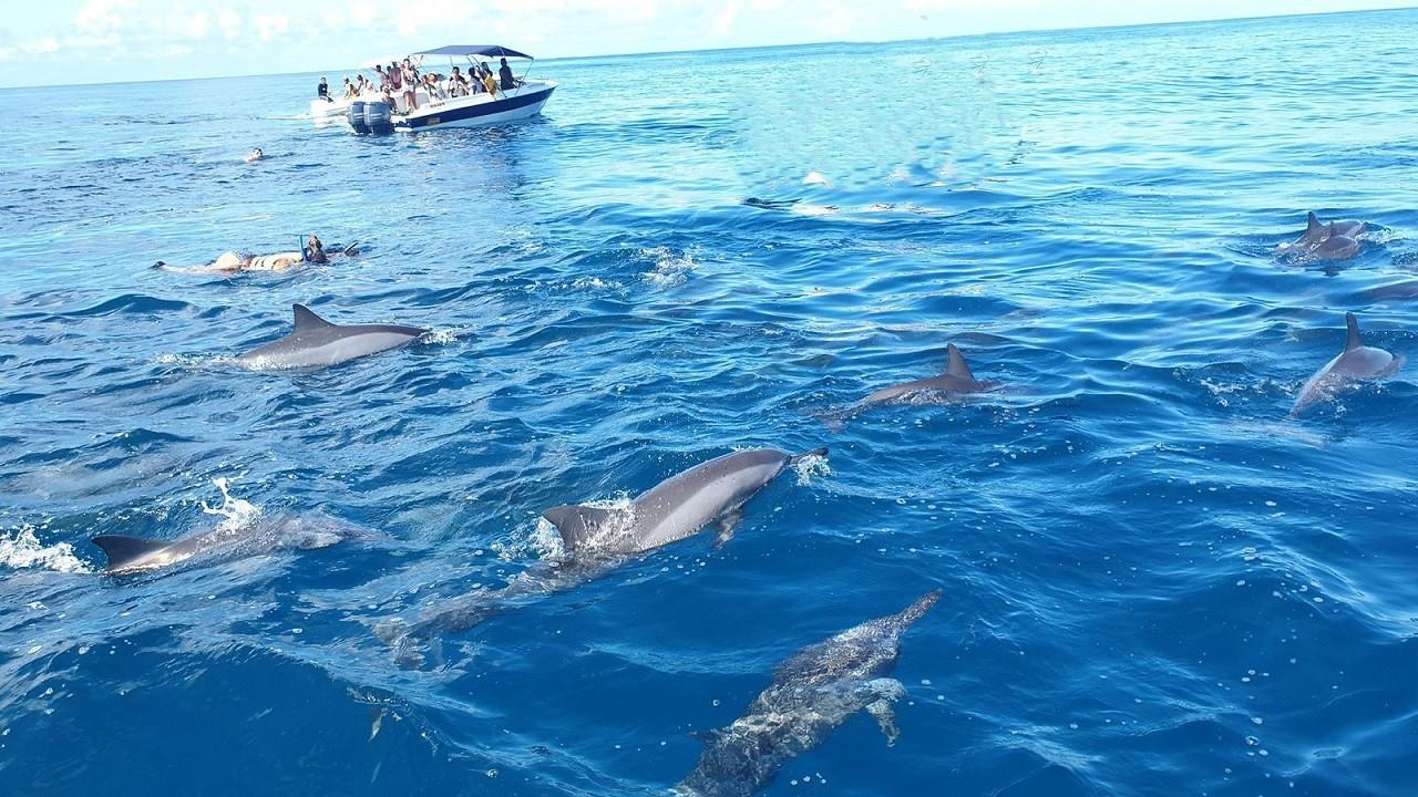 6.5 hours · ★ 4.3 (318)Black River: Swim with Dolphins Speed Boat Tour with lunchFrom $69
Small cove where coral gathers on the rocky edges and turtles feed near the shore
The middle of the cove is sand; coral and fish gather along the rocky edges, so swim in the buoyed zone first and then fin east along the rocks. Sea turtles of both green and hawksbill kinds feed close in, in water 50 to 100 metres from shore.
Boats and jet skis enter through marked channels outside the swimming boundary, so stay within the buoys. The main reef feeding grounds sit 300 to 350 metres out toward the barrier, a manageable swim for confident snorkelers in calm water.
The launch pad for the northern islands, catamarans and speedboats off its public beach
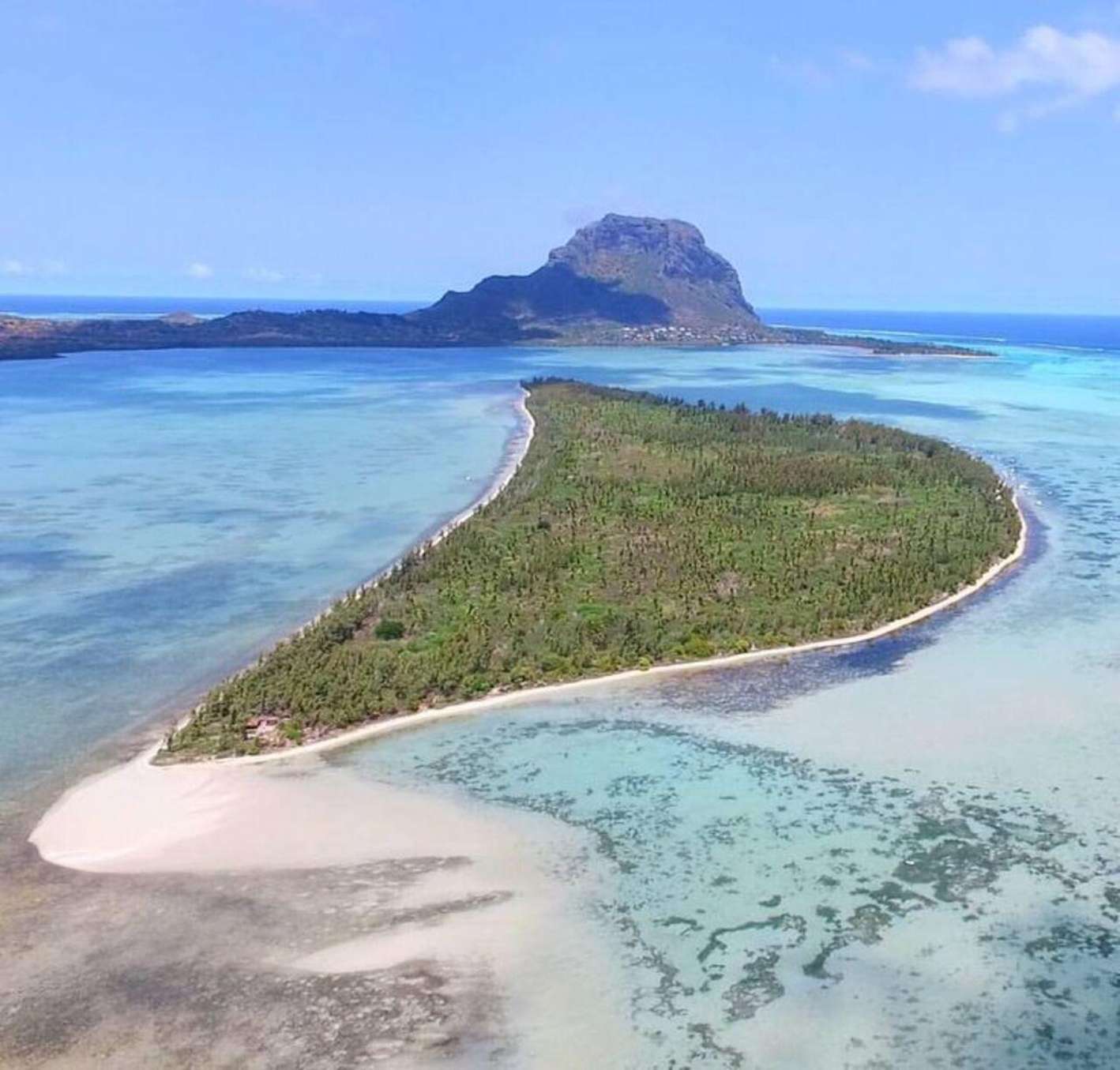
The town's bay is a busy launch pad, with moorings and day boats where you might hope to swim. The good water starts past the bay: catamarans and speedboats leave the public beach for Coin de Mire, Flat Island and Gabriel Island, where coral grows clean in open water.
Pick Grand Baie when you want the widest choice of departures and a lively base in the evening. Bring your own mask if fit matters, since shared onboard gear is often older and sized loosely.
Wild spinner and bottlenose dolphins just offshore, with an open reef and morning crowds
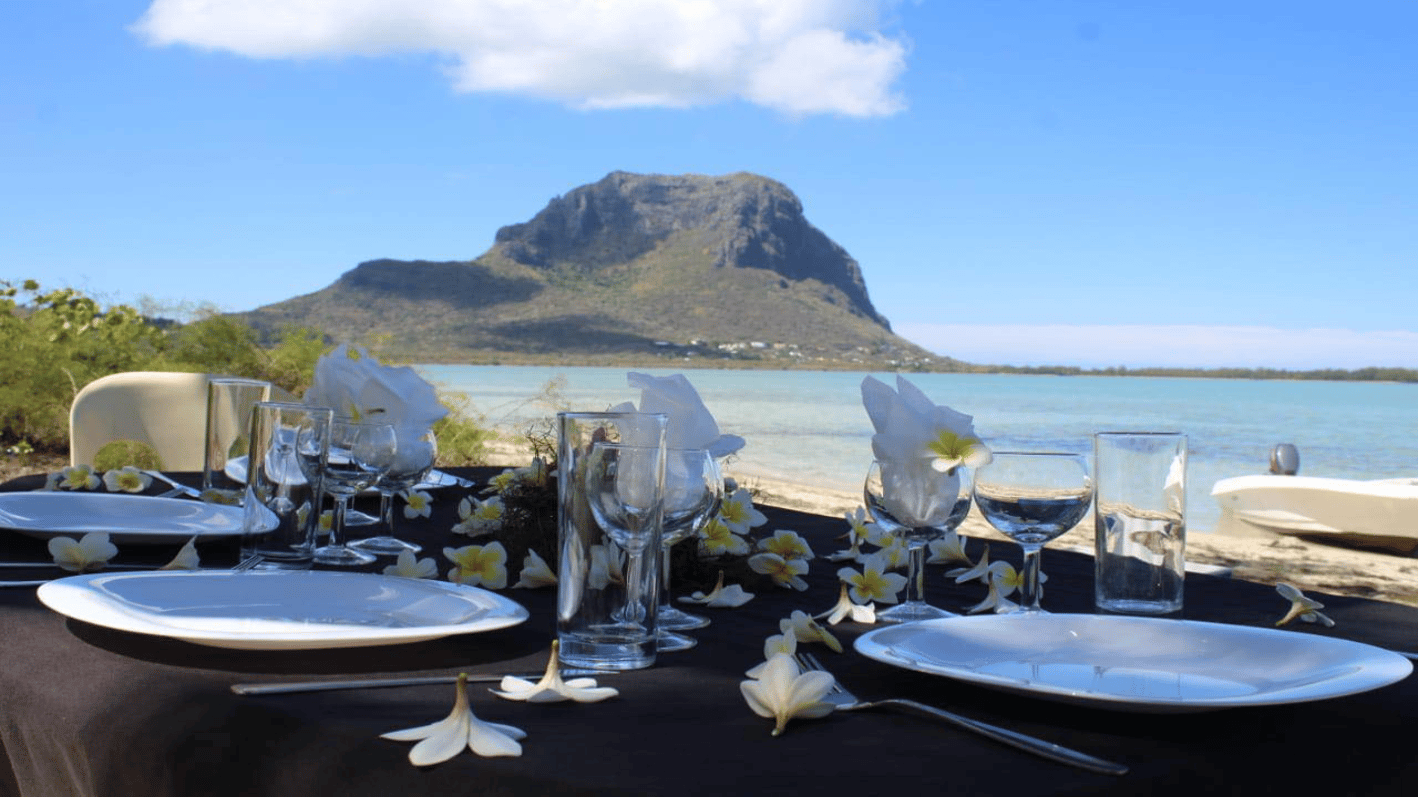
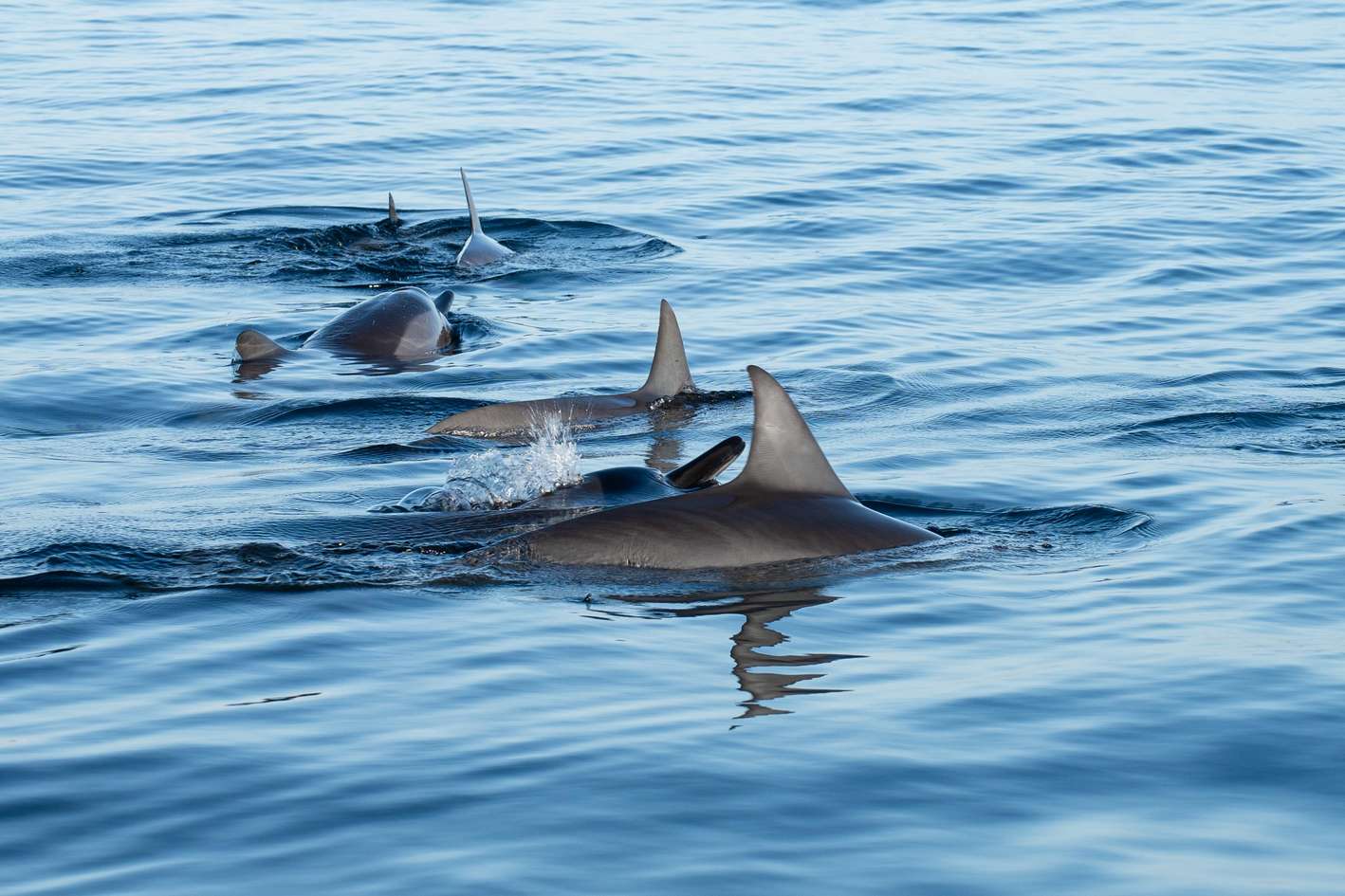
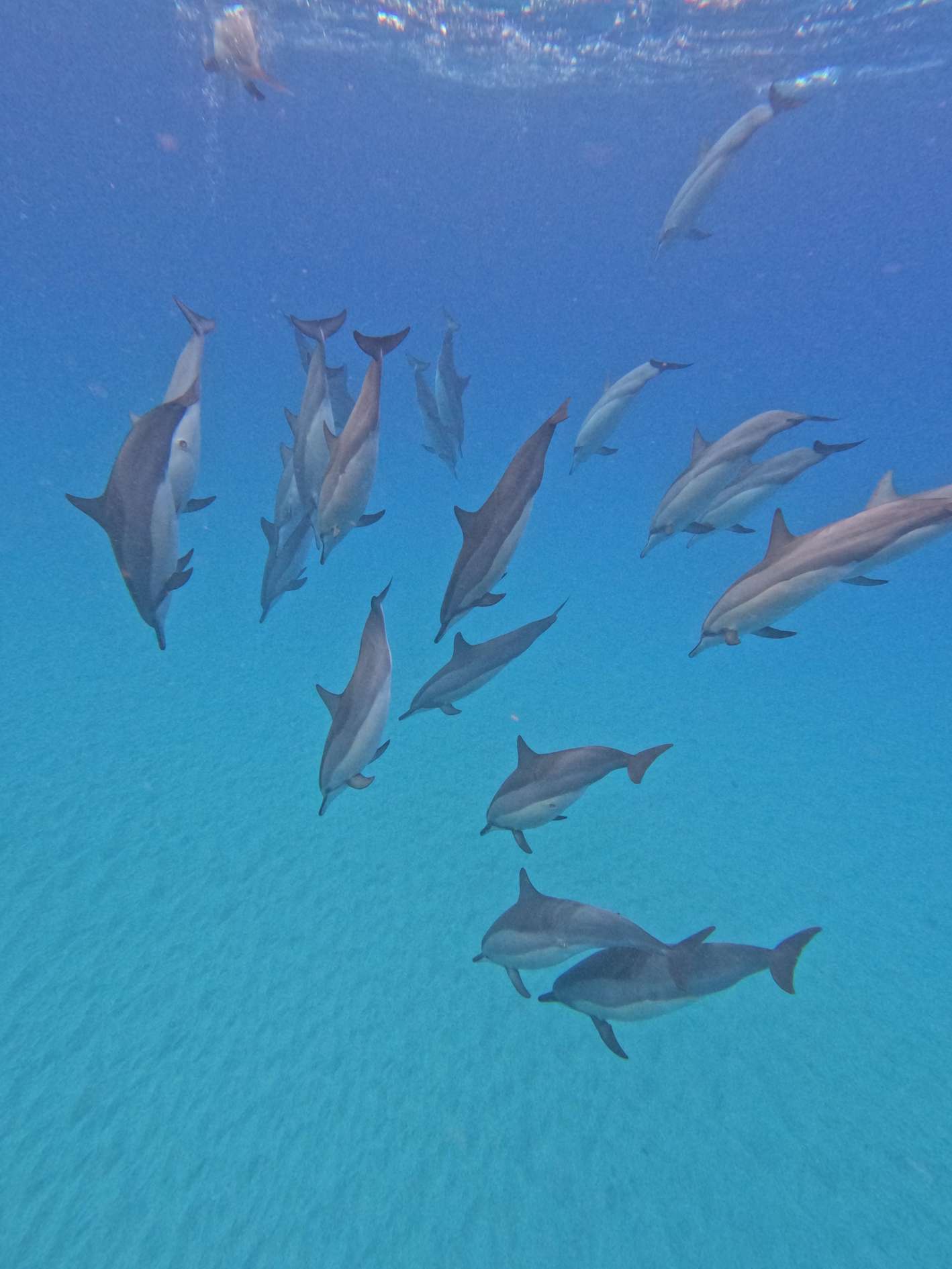
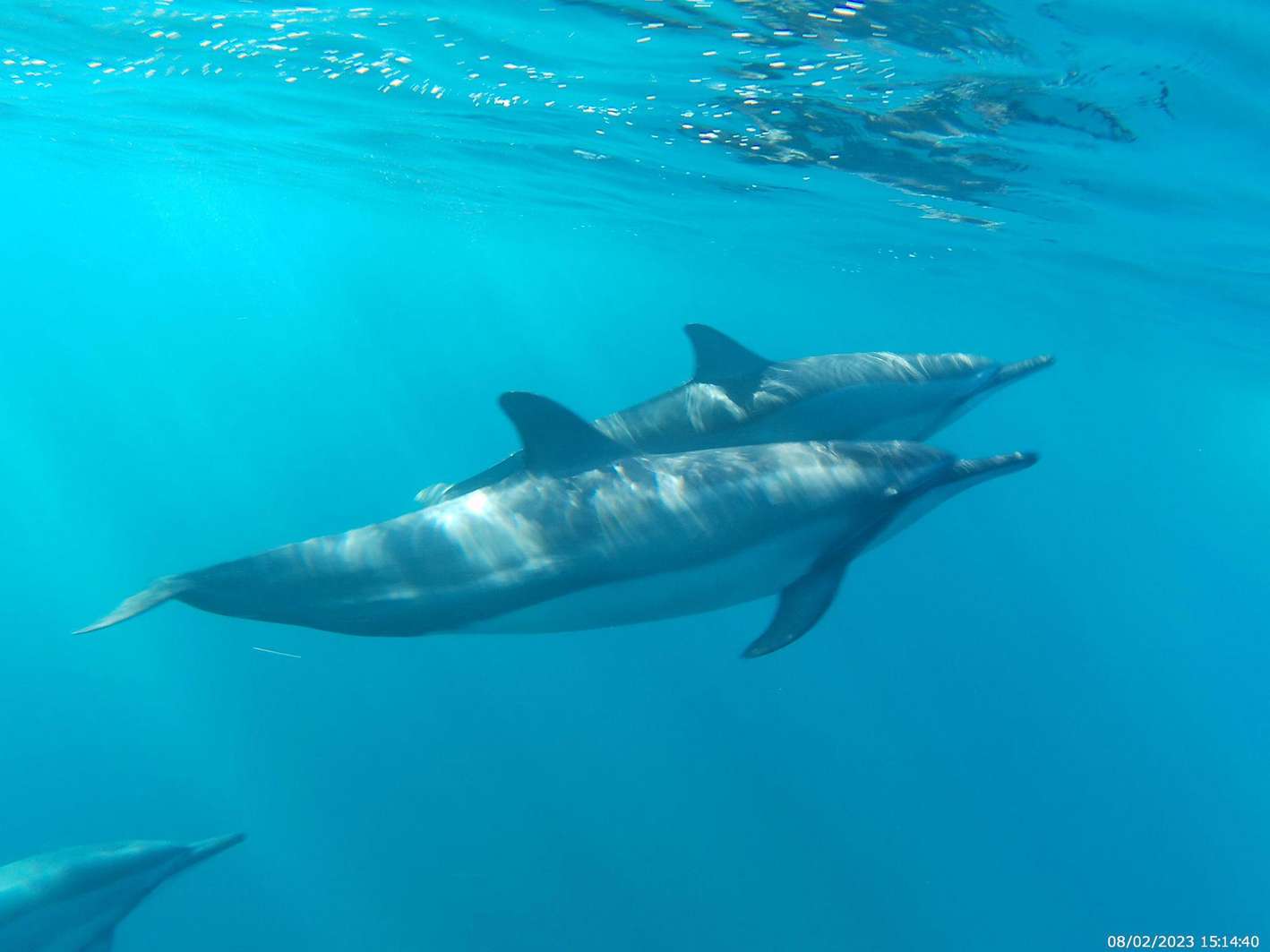
Wild spinner and bottlenose dolphins rest and feed in the bay each morning, and boats go out to swim with them outside the reef. The bay itself is open to ocean swell, and the Beach Authority lists it as hazardous for bathing.
Go early. Pods gather between 6 and 7:30 am, and by 8 am the dolphin grounds crowd with 15 to 20 boats. Swimming with dolphins is an athletic business: you jump into deep water and keep pace with fast animals, so fins and some fitness count.
7 hours · ★ 5.0 (5)Private Île aux Bénitiers Boat: Dolphin Snorkeling & LobsterFrom $738 /group 6 hours · ★ 4.7 (363)Mauritius: Catamaran Cruise - Dolphin Watching, BBQ & DrinksFrom $87 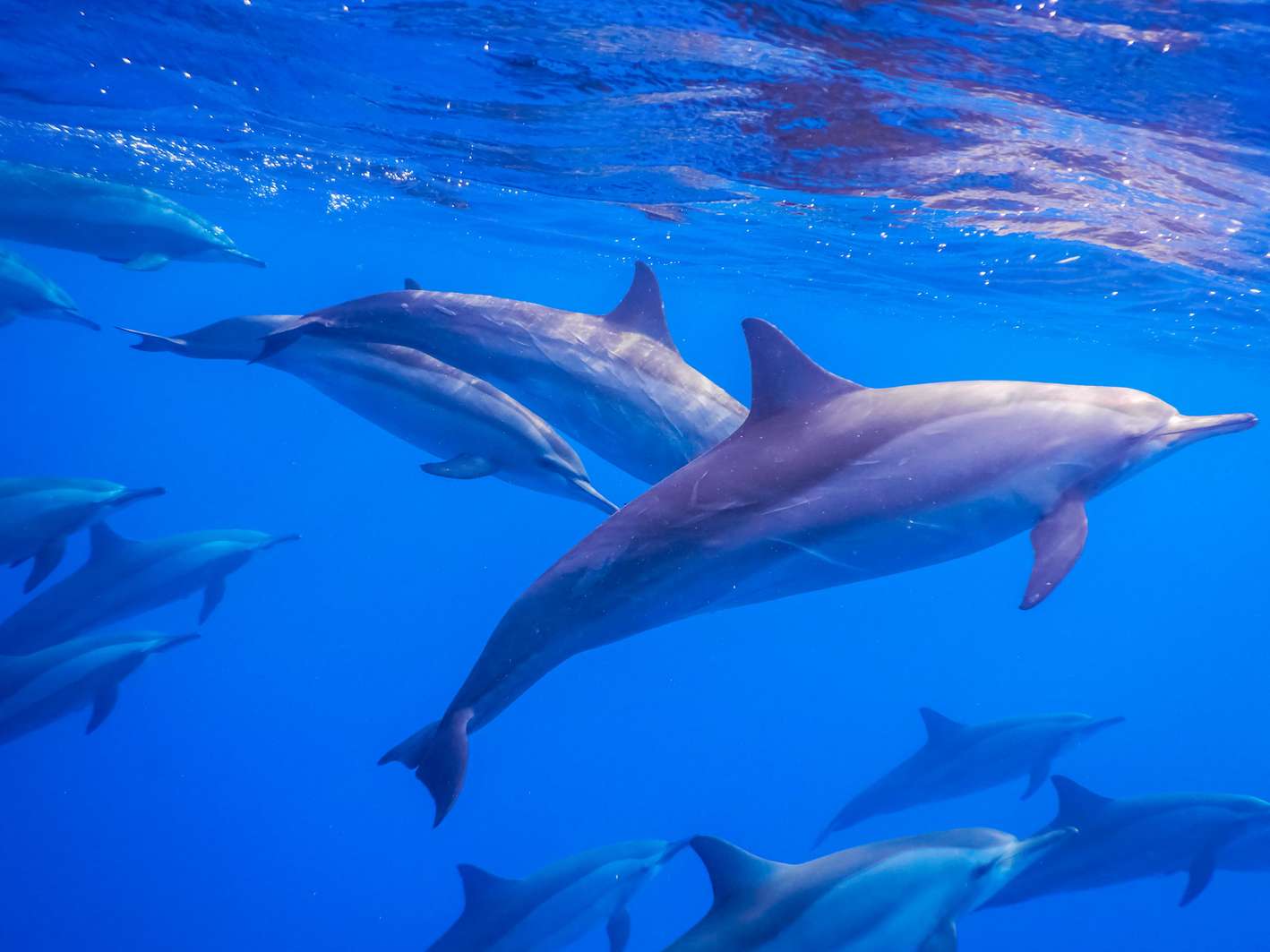 2 - 6 hours · ★ 4.7 (237)Dolphin Watching with Hotel Pickup (Mauritius)From $61 /group
 4 hours · ★ 4.4 (35)Dolphins & Whales: Private Snorkeling TourFrom $528 /group
A long reef-protected lagoon with coral 500 metres out and a strong reef pass
A long reef-protected lagoon, flat and clear most of the year, with coral patches 500 metres out and a reef pass that carries a strong outward current. Guides and fishermen run short boat trips out to the reef, and swimming to it from the sand is a poor idea.
Winter is the problem. From June to September the southeast trades chop the lagoon and stir the sediment, and boats cancel open-reef stops. Come in summer, or take the early boat before the wind builds.
A wide shallow lagoon where calm days drop to almost none in the winter trade winds
The lagoon runs barely 250 metres to the barrier reef, calm and beginner-friendly in summer, with small fish around the seagrass and rocky points. Moorish idols, butterflyfish and dusky farmerfish appear across the shallows.
June to August is the month to avoid. Trade winds push peak waves past 2 metres and calm-sea days drop to almost none, leaving the lagoon choppy and murky. Sea urchins sit in the shallow entry, so wear water shoes.
A sheltered marine park lagoon where coral is recovering and green turtles graze on seagrass
The bay faces north, out of the trade winds, and the reef-protected lagoon stays calm all year. Coral in the marine park is recovering, with Acropora and Porites recorded across the reef, and fish families from butterflyfish to parrotfish.
Walk in from the resort beaches and mind the rocky volcanic patches underfoot. Swim only in designated zones, because traffic lanes inside the park are closed to swimmers. Green turtles graze in the seagrass, though sightings come occasionally, and boats must lower speed where turtles are spotted.
Walk-in snorkeling where green turtles occasionally graze, inside a sheltered bay
The name draws you in and the bay partly earns it. Reef begins a few strokes from the sand, and green turtles occasionally graze on the seagrass over the deeper sandy patches. The lagoon is sheltered, calm and shallow, ideal for children and new snorkelers.
Turtle sightings come occasionally, and the reef is still recovering from past bleaching. Stay out of boat channels, wear a bright vest for visibility, and let the calm water carry you slowly across the coral heads.
Fewer boats and quieter southern reefs, with a shallow lagoon at low tide
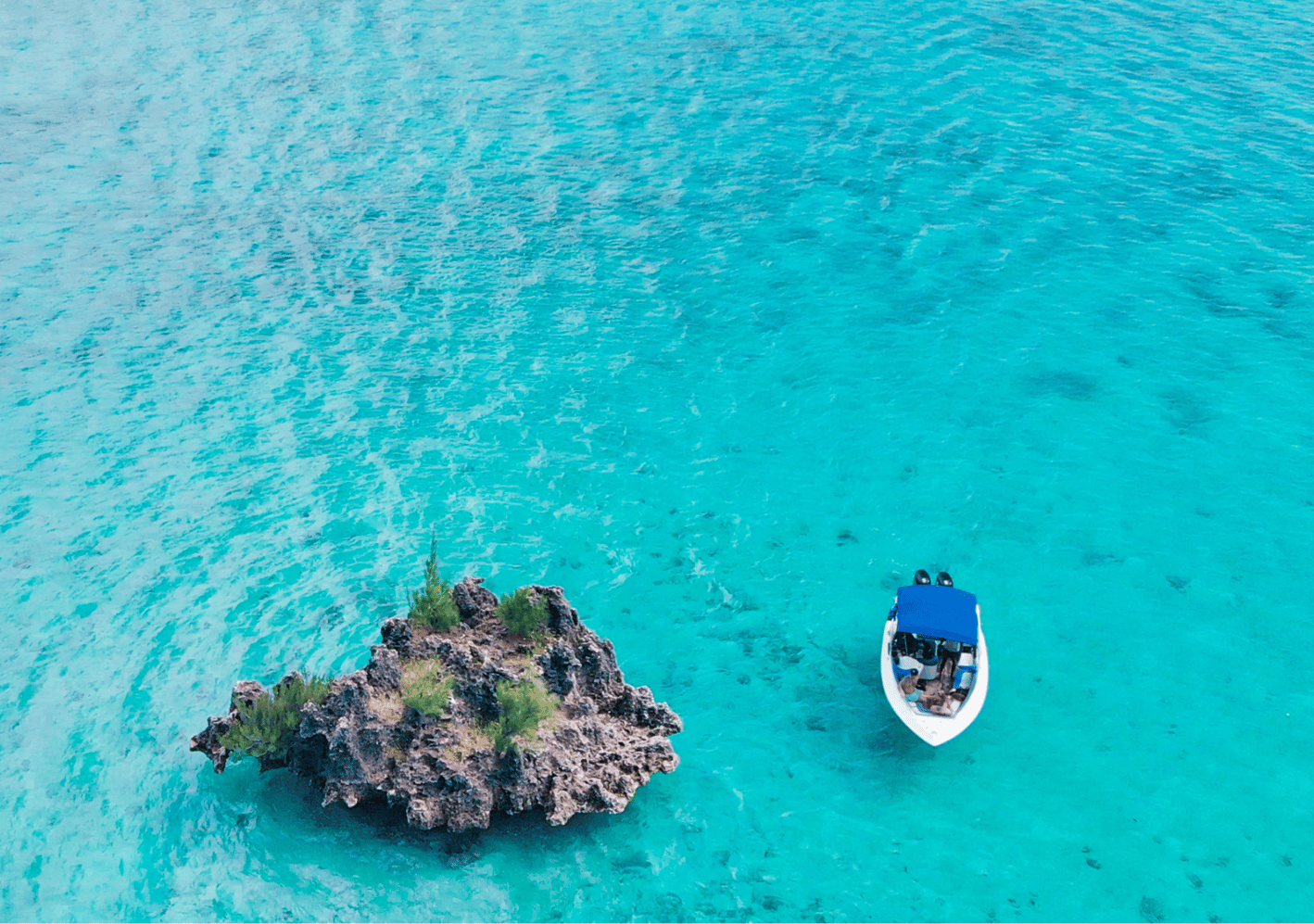
Fewer boats run this stretch of southern coast, and the reefs see fewer snorkelers than the north. Snorkel around the rocks and coral patches in the sand on calm days, and mind the low tide, when the lagoon shrinks and coral heads rise close to the surface.
The passes and channels carry very strong currents, so stay in the yellow swimming zones and never head for the reef on your own. Trips to Crystal Rock and Le Morne depart from Tamarin and Black River, 20 to 40 minutes north by road.
The famous waterfall is an optical illusion you can only see from the air
The famous waterfall is an optical illusion: sand washing off a shallow shelf into a deep canyon, readable only from the air. Seaplanes and helicopters fly the route over Le Morne, and from the surface you see none of it.
The sea below the illusion is the reason to stay out. Outgoing tide and breaking surf push strong rip currents through the reef opening, and paddling out there is the mistake to avoid. Take the flight for the view, then snorkel the calm Le Morne lagoon with a boat.
Where green and hawksbill turtles feed, and the law on getting close to them
Green and hawksbill turtles gather at specific lagoons around the island, from Turtle Bay in the northwest to Blue Bay in the southeast, where they feed on seagrass in shallow, calm water. The page lists the spots with the best odds and the boat trips that reach the outer feeding grounds.
The law is firm. Under the Fisheries Act 2023 it is illegal to swim with, chase, touch or feed a wild sea turtle anywhere in Mauritius, and fines run into millions of rupees. Watch from a distance and let them graze.
8 hours · ★ 5.0 (2)Private Dolphins, Sea Turtles & Île aux Bénitiers TourFrom $850 /group 2 hours · ★ 4.7 (39)Mauritius: Snorkeling with turtles Le Transporteur speedboatFrom $375 /group 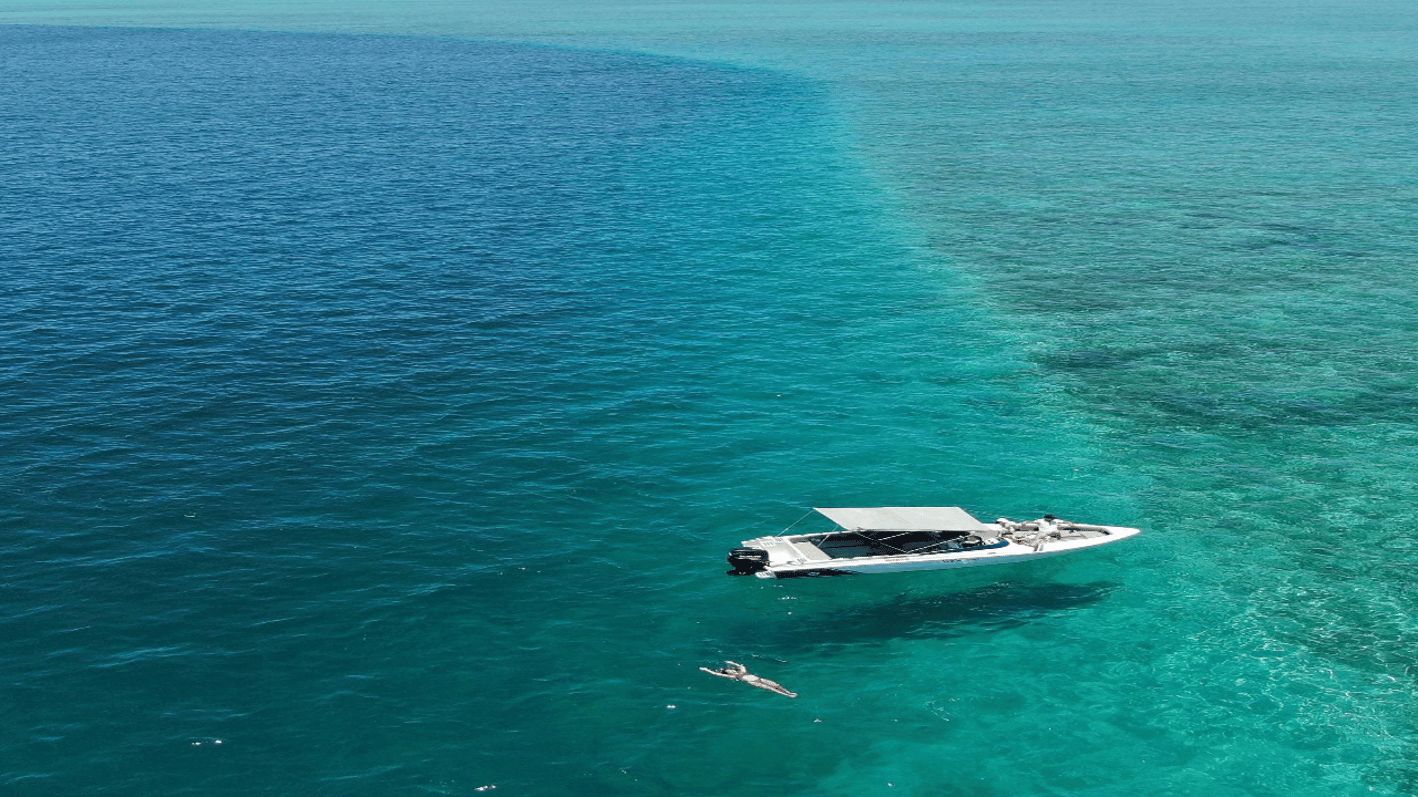 9 hours · ★ 4.3 (188)5 Islands Speedboat with Snorkeling, Sea Turtles, Lunch & DrinksFrom $95 1.5 hours · ★ 4.2 (314)Mauritius: Sea Turtle Adventure and Coral Reef DiscoveryFrom $44
Resident sperm whales in deep water off the west coast, watched from the boat only
Steep drop-offs close to the west coast hold a resident sperm whale population, visible year-round, while humpbacks pass between June and October. All encounters happen from the boat: Mauritian law bans swimming with whales and requires a 100-metre buffer.
Calm seas matter more here than anywhere, since you search open water for hours. Private speedboats out of Flic en Flac and Le Morne combine whale watching with dolphin swims, snorkeling and a beach barbecue on Île aux Bénitiers.
Month-by-month water temperatures, visibility and wind so you time your stay
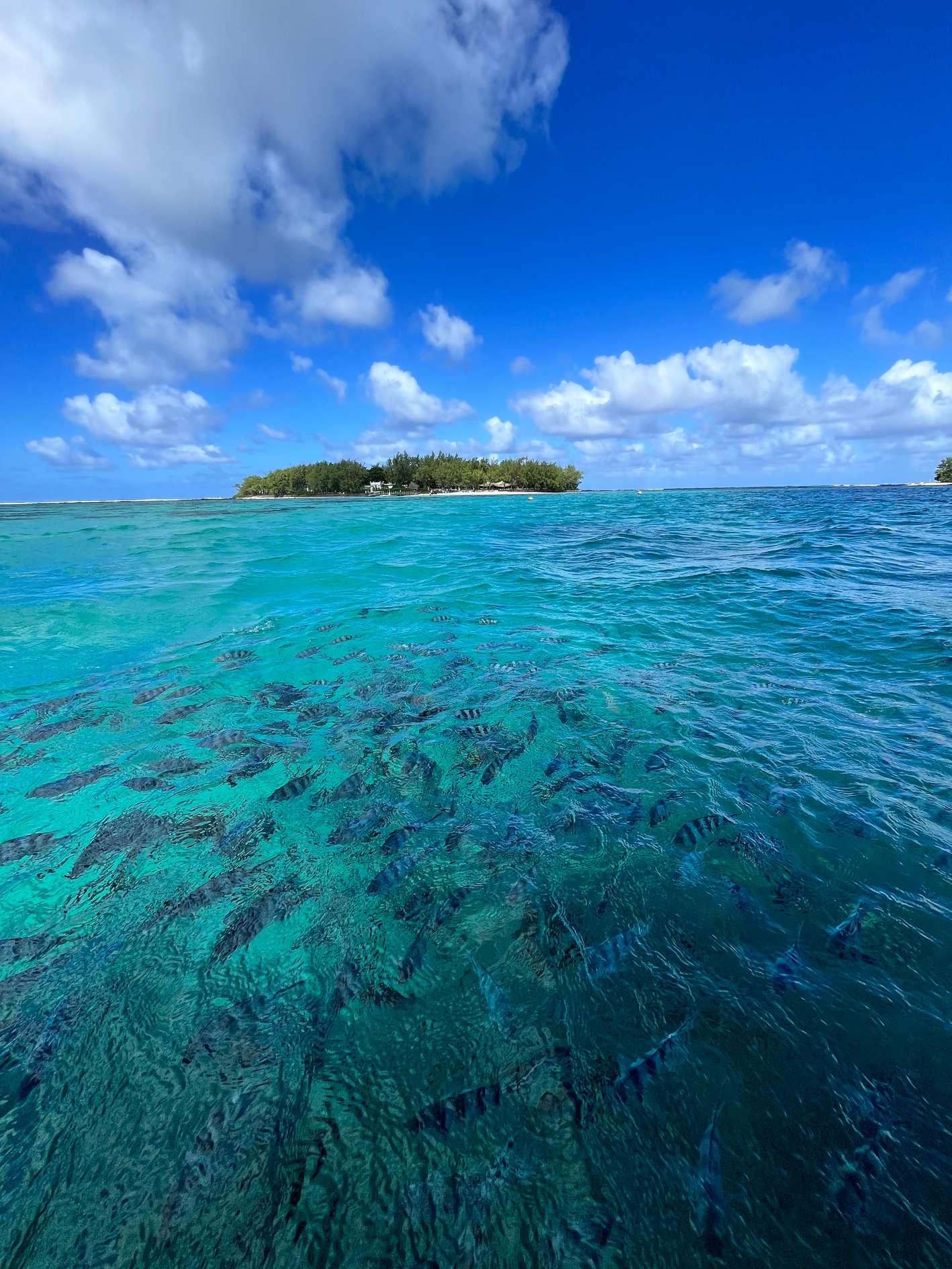
October and November give the year's best mix: water near 26 to 28 degrees, calm seas on most days and lagoon clarity of 20 to 30 metres. Winter from June to August drops the water to about 23 degrees and the trade winds roughen the east.
Cyclone season runs January to March, the wettest stretch, when passing storms suspend boat trips for a day or two. The month-by-month guide tells you what to expect from each coast in every month.
Sailing day to Île aux Cerfs with barbecue lunch, snorkeling and a waterfall detour
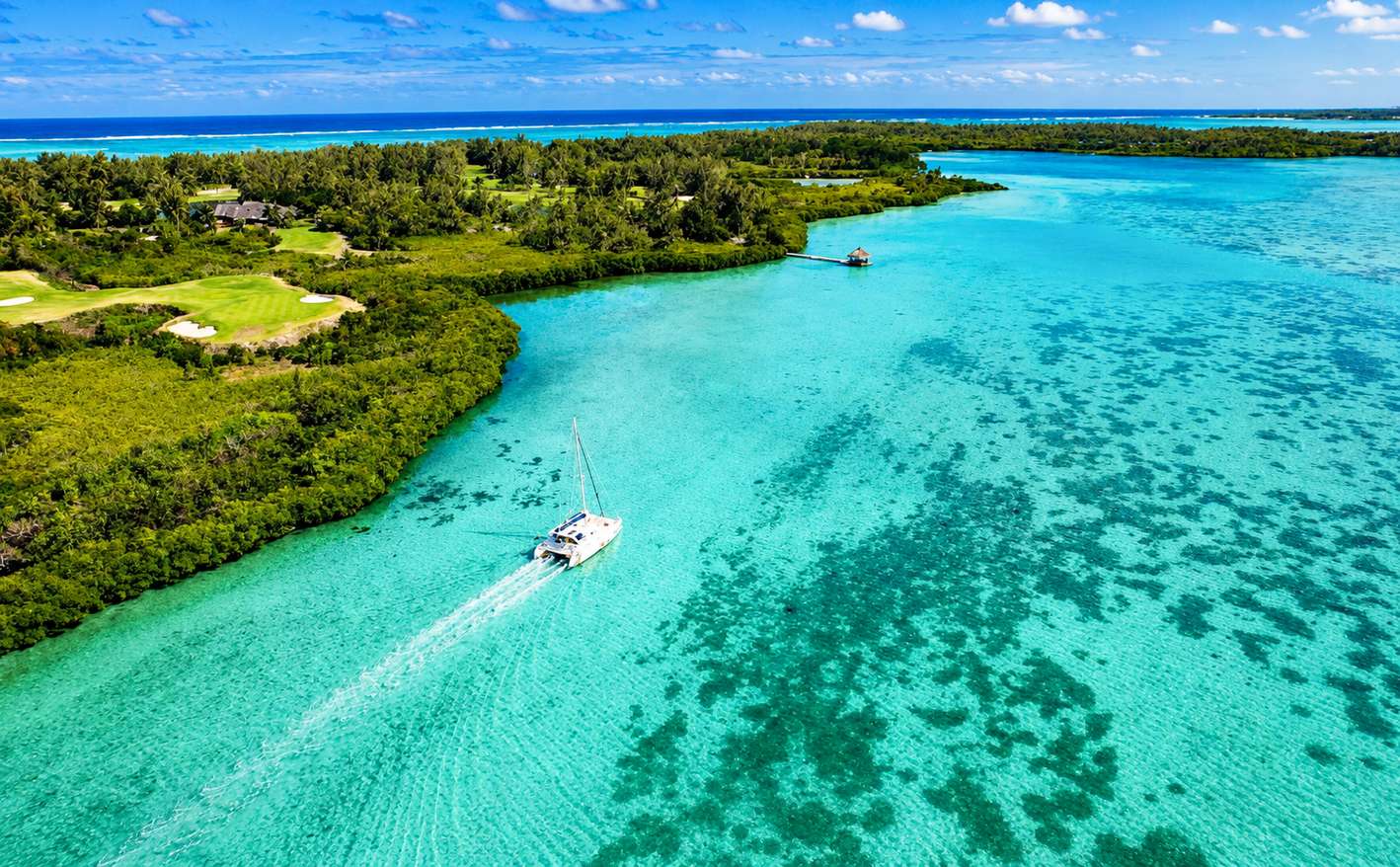
East coast sailing days end at Île aux Cerfs with a barbecue lunch, a lagoon snorkel stop and a detour up the Grand River South East falls. Twin hulls keep the ride steady, and the wide lagoon stays flat even in the windy months.
Shared catamarans carry 30 or so guests, and the island's beaches fill between 11 am and 3:30 pm, so the day runs on a fixed rhythm. Free time on the sand comes to an hour or so in the afternoon.
6 hours · ★ 5.0 (11)Île aux Cerfs: Private Catamaran Cruise with Gourmet LunchFrom $1,133 /group 7 hours · ★ 4.8 (869)Ile aux Cerfs Catamaran Cruise with BBQ Lunch & SnorkelingFrom $68  7 - 8 hours · ★ 4.7 (453)Mauritius: Ile aux Cerfs Catamaran, Waterfall & BBQ LunchFrom $62
 7 hours · ★ 4.6 (104)Mauritius: Ile aux Cerfs Catamaran Cruise, Waterfalls & BBQFrom $84
Cross to the island in 10 to 20 minutes and bank extra beach time
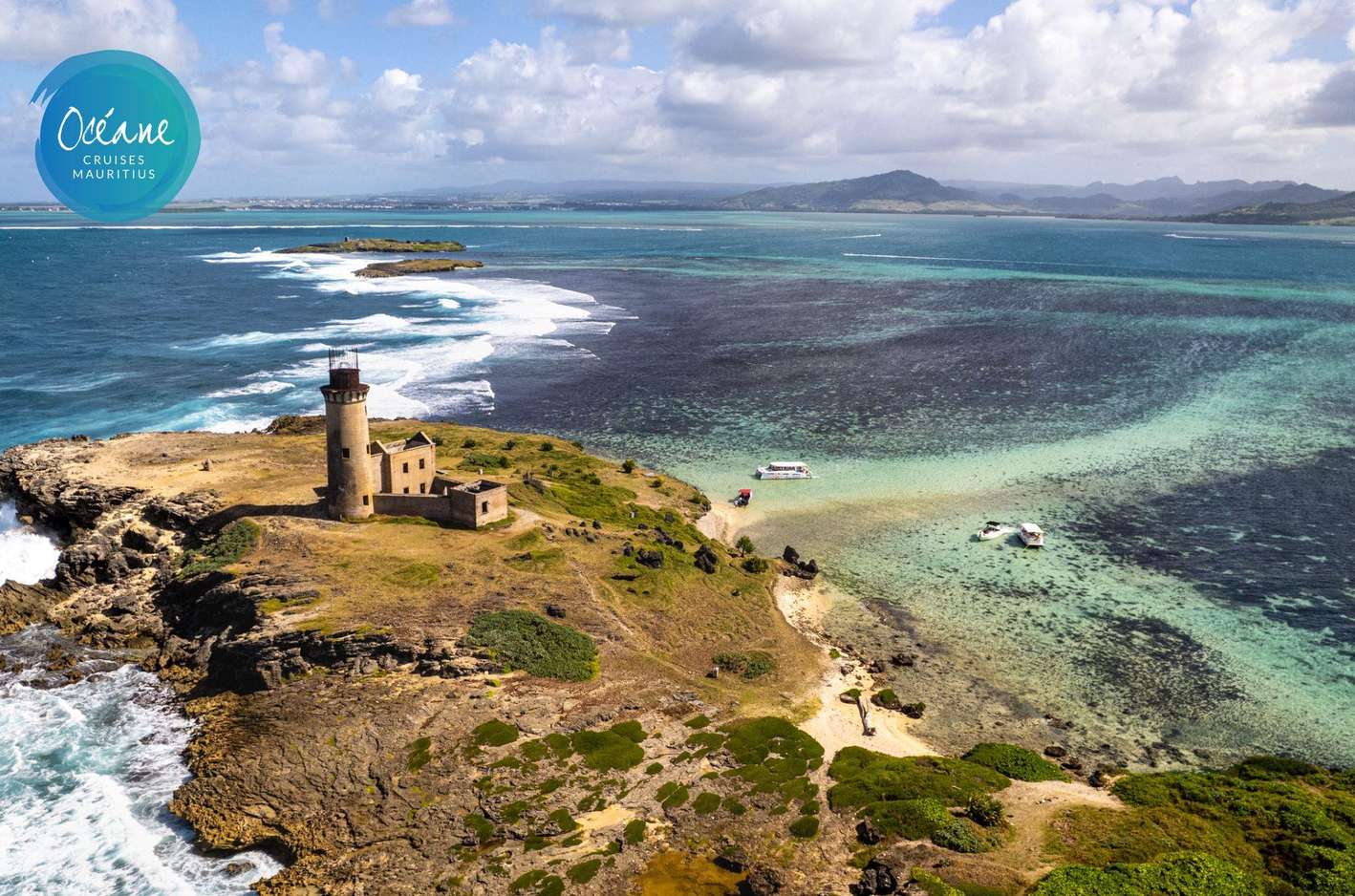
A speedboat crosses to Île aux Cerfs in 10 to 20 minutes, against the catamaran's 45 to 60, which banks you an extra half hour on the sand. Shared boats carry up to about 17 guests.
The same speed gets you up the Grand River South East to the waterfall basin, a stretch too shallow for big catamarans. The crossing bumps in the trade-wind season from late June to early September, and east coast island runs are unsuitable for pregnant travelers.
6 hours · ★ 5.0 (3)Private Island-Hopping Cruise: 5 Islands, Waterfall & LunchFrom $738 /group 6 - 7 hours · ★ 4.7 (1,451)Trou d'Eau Douce: 5-Island Adventure with BBQ & SnorkelingFrom $95 9 hours · ★ 4.3 (188)5 Islands Speedboat with Snorkeling, Sea Turtles, Lunch & DrinksFrom $95  7 hours · ★ 4.3 (237)Mauritius: 5 Islands Speedboat Lagoon Experience with BBQFrom $74
Your own boat, your own timetable, and the beach before the ferries arrive
Your own catamaran or speedboat with a skipper who bends the timetable to your group. Public ferries and shared boats pack the main beaches from 10:30 am to mid-afternoon; a private charter slips in early and holds quiet reef water while the crowds lunch.
Charters also reach sandbanks and shallow channels the big vessels give a miss, and smaller speedboats run right up to the waterfall's spray. Book early in your stay so weather has room to move.
la passe channel runs 1-2 km offshore, keep out
Flic en Flac holds one of the calmest, safest lagoons in Mauritius, a long shallow stretch behind the barrier reef. How much of it rewards a snorkel, where to get in and when the water is clearest is what this guide works through.
The lagoon at Flic en Flac is among the calmest and safest in Mauritius, swimmable at most tides.
Coral opposite the Shivala Hindu temple and in front of the Villa Caroline beats the central beach by a wide margin.
Green and hawksbill turtles graze about 50 metres from the sand, no boat required.
Get in before 9 am; that is when the water is calmest and the visibility is at its best.
Dolphins pass offshore in open water, and boats board right on Flic en Flac beach, no pre-dawn taxi needed.
Snorkel inside the lagoon, away from the marked boat channels and the pass, and carry a diving flag or buoy if you swim outside the designated swimming areas.
The first thing to know is that the water does the selling on its own. Flic en Flac sits on the sheltered west coast, tucked behind the central mountains, and its lagoon stays reliably flat on days when the east coast is being hammered by trade winds.
The barrier reef keeps it shallow, clear and calm, and unlike some shallow lagoons on the island it holds water at most tides. For families and nervous swimmers, this is one of the safest places to swim in Mauritius.
The coral tells a more complicated story. Inshore reef here has been partly degraded by coastal development and runoff, and coral diversity is lower than at Trou aux Biches. Snorkelers who expect Maldives-grade gardens everywhere will come away disappointed; the fish life stays active, but no Mauritian lagoon matches the Red Sea for reef density.
What that leaves is a beach that rewards a plan: the right stretch of sand, the right hour of the morning, and a boat for the good stuff beyond the reef.
A few assumptions travel here with every suitcase.
Coral around Mauritius is heavily bleached in places and fish diversity is real but thinner than the Red Sea or Maldives.
Flic en Flac keeps enough water to swim at most tides, unlike shallower lagoons that drain at spring lows.
The central public beach has the poorest coral; the healthier heads sit opposite the Shivala temple and in front of the Villa Caroline.
The last of those matters most on the ground. The central beach is the poorest snorkeling on this coast, and the fish gather a short walk away in front of the temple and the Villa Caroline.
Walk past the central public beach, where the coral is the thinnest on this stretch of coast, and head for two spots. The first is directly opposite the Shivala Hindu temple, where coral and marine life start without any boat at all.
The second is in front of the Villa Caroline, whose shoreline holds healthier coral heads than anywhere else on the public beach.
Distance matters here, and it is the thing first-timers misjudge. The lagoon runs about 300 metres from the sand to the barrier reef. Scattered coral clumps with fish around them begin only a few dozen metres out, but the denser, better-preserved coral lies roughly 200 metres offshore, inside that wide lagoon.
Swimming to the good patches is a longer paddle than it looks from the sand, so pace yourself.
Whitetail dascyllus and butterflyfish gather on scattered clumps before you reach the richer coral.
Most visitors give up over empty sand long before the dense patches begin.
So lay your towel near the temple or the Villa Caroline, fin out steadily past the first clumps, and keep going. The 200-metre mark is where the good coral begins, and the paddle itself is easy; the lagoon is flat and shallow the whole way.
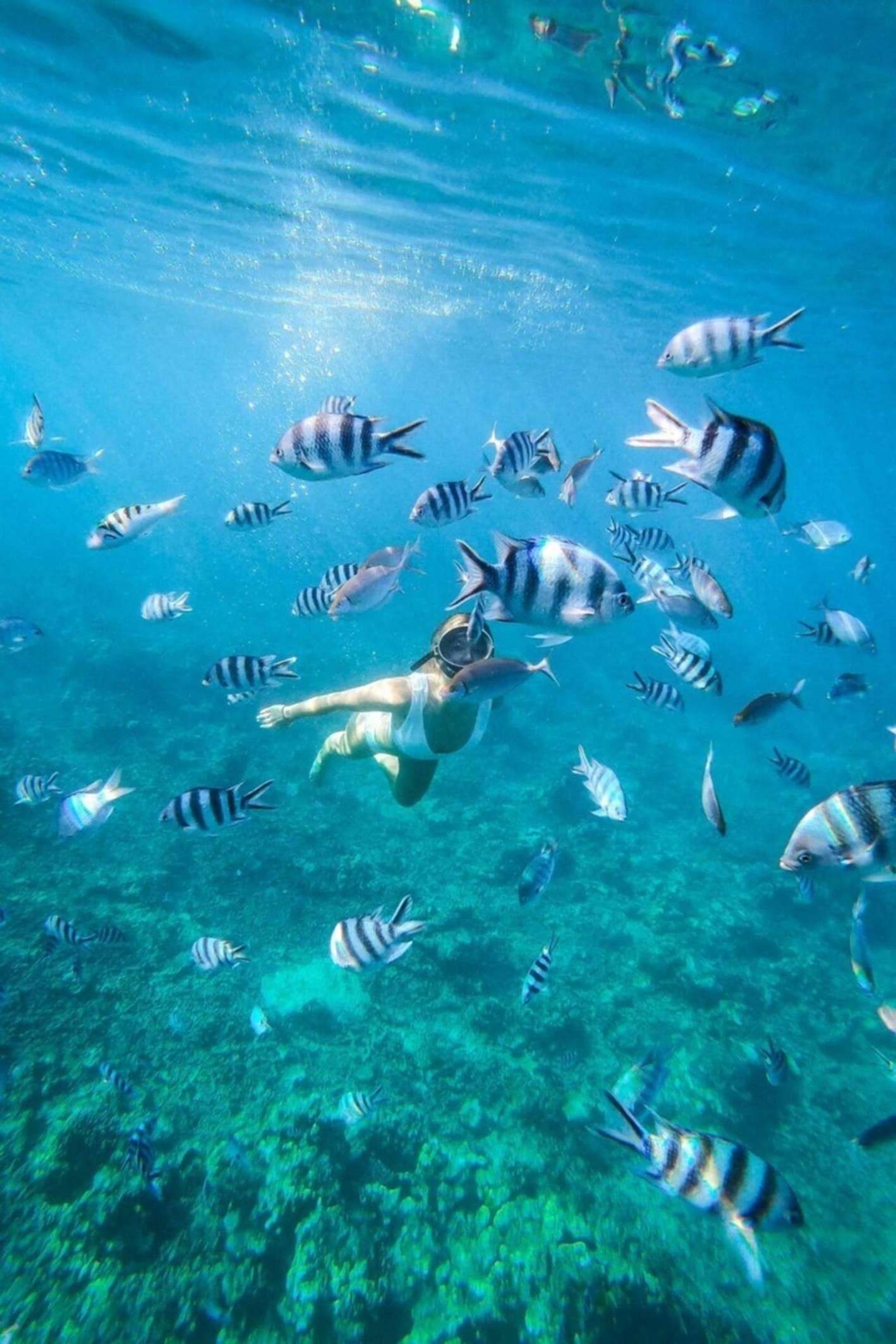
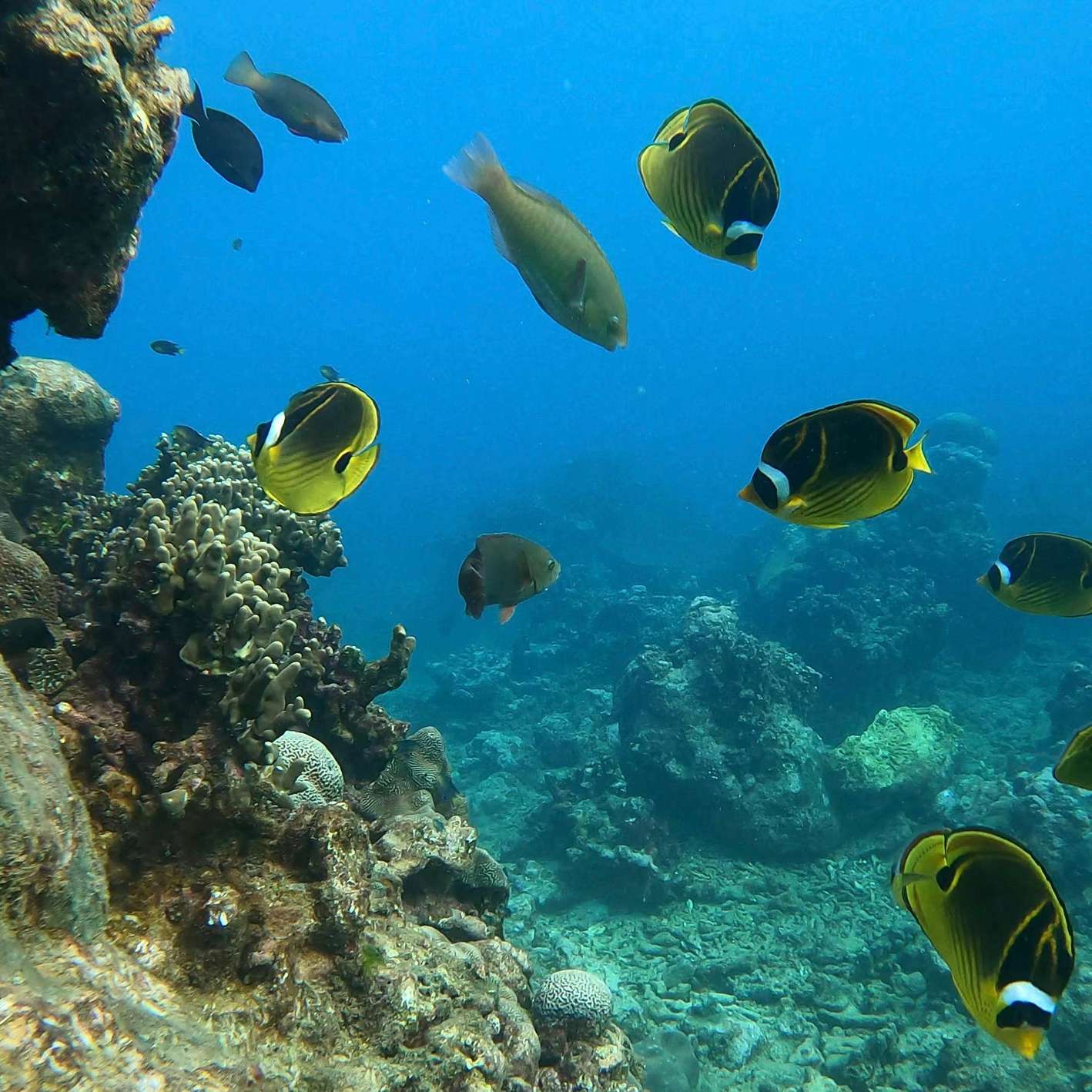
The signature sight is a cloud of green chromis, hundreds of them, hanging over the branching corals that dominate this lagoon. Acropora muricata and Acropora intermedia form the main structure, with Porites, Pavona and Pocillopora filling in around them.
The scattered clumps close to shore attract their own regulars: whitetail dascyllus, Moorish idols, and butterflyfish in racoon, vagabond and threadfin varieties. Swim out to the richer coral about 200 metres in and the patches improve, including fine Acropora you can reach without a boat.
Turtles are the surprise. Green and hawksbill turtles graze as close as fifty metres from the beach, and you walk straight in to find them. Feeding, touching or chasing them is against the law, so watch only.
Be honest with yourself about the coral's condition: inshore reef here is partially degraded, and the healthiest coral gardens on the island live elsewhere.
For living coral heads and turtle feeding grounds reached straight from a quieter beach, Trou aux Biches is the better stretch of coast.
For the densest protected coral on the island, seen from a glass-bottom boat, Blue Bay Marine Park is worth its own morning. Flic en Flac delivers calm water, clear visibility and easy access; its coral diversity sits behind Trou aux Biches and Blue Bay.
The lagoon has a daily rhythm and it rewards early risers. Between 6 am and 9 am the water is at its calmest and clearest, before the wind rises and the day's swimmers and boats stir up the shallow sand. By late morning, breezes put chop on the surface and sediment clouds the view.
Calmest lagoon water and peak underwater visibility before winds rise.
Breezes increase surface chop and crowds stir shallow lagoon sand.
Winds often ease but fading sunlight and sunset crowds reduce snorkeling clarity.
An earlier alarm buys clearer water and an emptier lagoon. A late-afternoon swim works when the wind eases, but the fading light does the view no favours.
The year has its own shape. October, November and April bring the calmest seas overall, with most days settled.
From May to September the southeast trade winds tear up the east and south coasts, dropping calm days there to almost nothing in June and August, but the mountains shelter this west coast and keep it at its clearest for turtle snorkeling, especially in the morning.
November: 5 out of 5 for how busy it gets.
Tap a month to read it.
That is why some of the island's worst boating months are this beach's best ones. While the east coast lagoons sit choppy and grey through the winter trades, the water in front of Flic en Flac stays clear, and the turtles graze on through it.
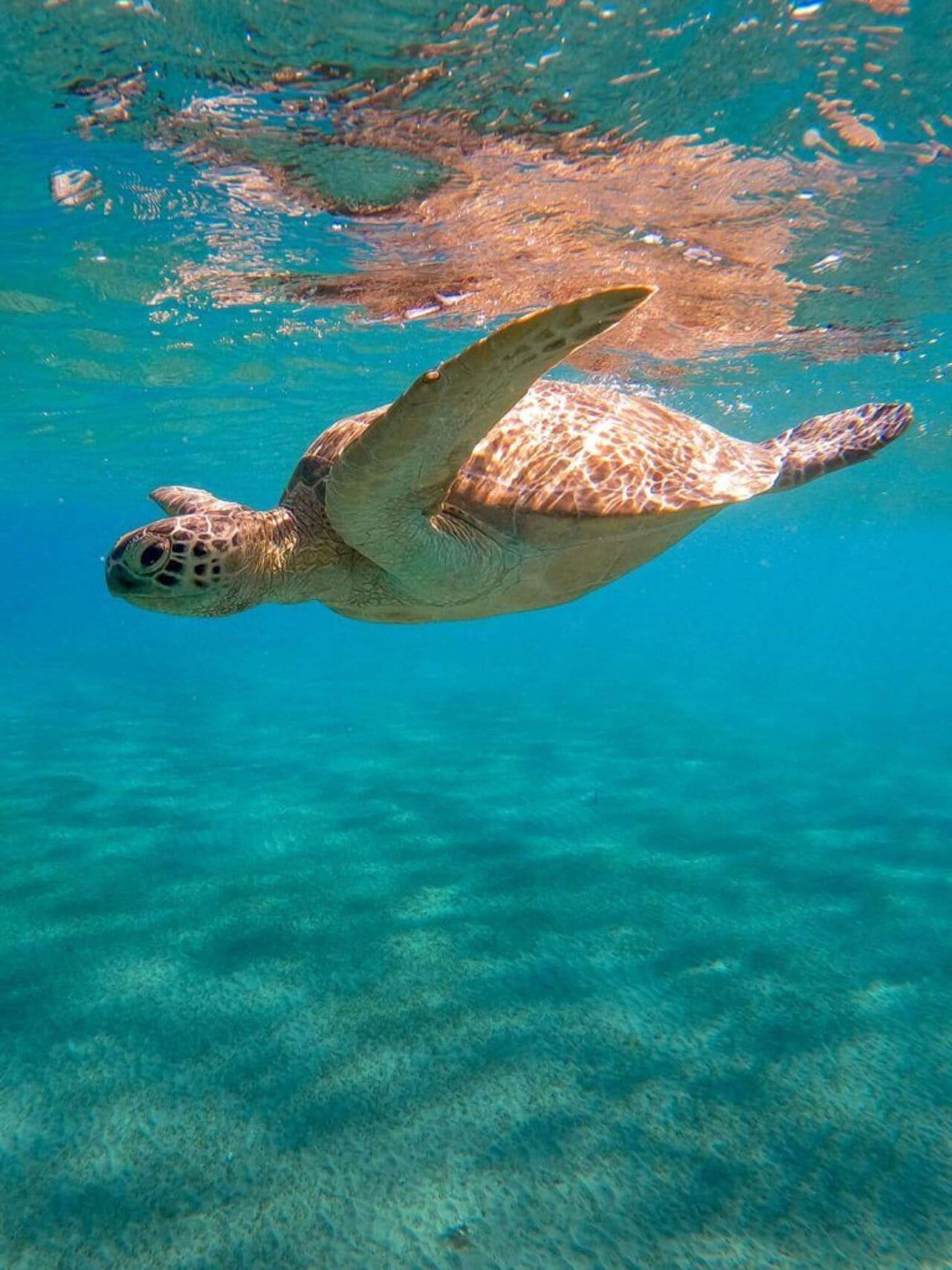
Three things deserve your attention, and two of them are under your feet. The shallows hide venomous stonefish camouflaged on sand and coral, plus sea urchins with brittle spines that snap off in skin. Water shoes are not officially required here, but everyone who snorkels this coast wears them over the broken coral rubble.
Second, boats. The lagoon at Flic en Flac carries real traffic, so swimming zones are marked by lines of yellow buoys and motor craft must keep outside them. If you swim beyond the buoys, carry a diving flag or divers-down buoy so skippers can see you.
The third is the only serious danger, and it sits well offshore. La Passe Flic en Flac, the channel through the barrier reef roughly one to two kilometres out, runs strong currents through it.
Stay clear of it and of any boat channel, and never try to cross the outer reef from the beach; breaking surf and urchins make it a poor idea. Everything dangerous here is avoidable with footwear, a flag and one rule about where you swim.
Half the answer is no. Turtles graze fifty metres from the sand, the coral clumps begin a short swim out, and the better Acropora sits about 200 metres offshore, all reachable from the beach. If lagoon snorkeling is your whole plan, your feet and a pair of fins will do.
The other half is yes. The healthiest coral on this coast and the dolphins both live beyond the barrier reef, and swimming out to it from the beach is neither realistic nor safe; the channel currents and boat traffic make that a firm no.
A boat here is simply the way to reach the outer reef and the open water where the wildlife lives.
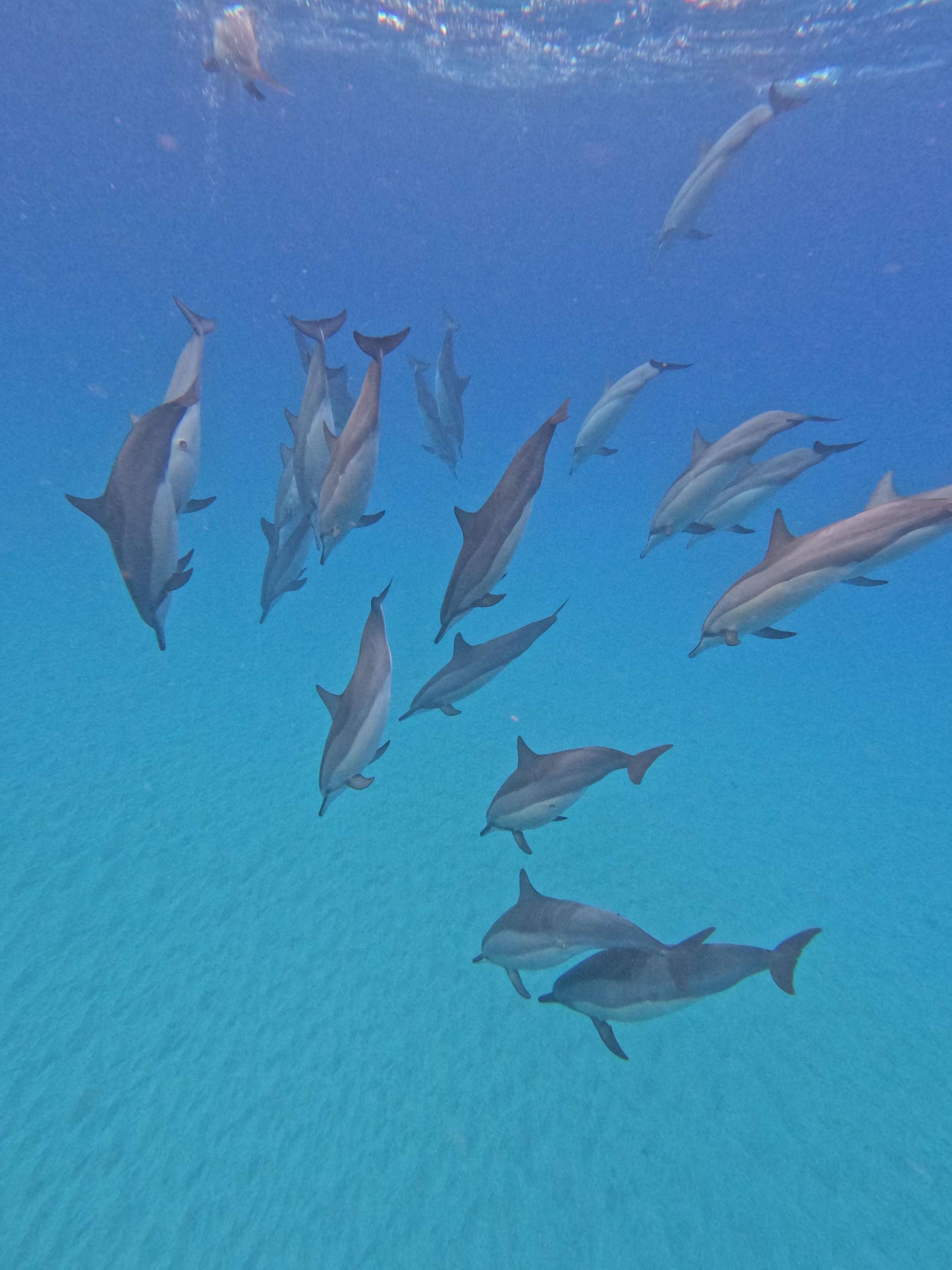
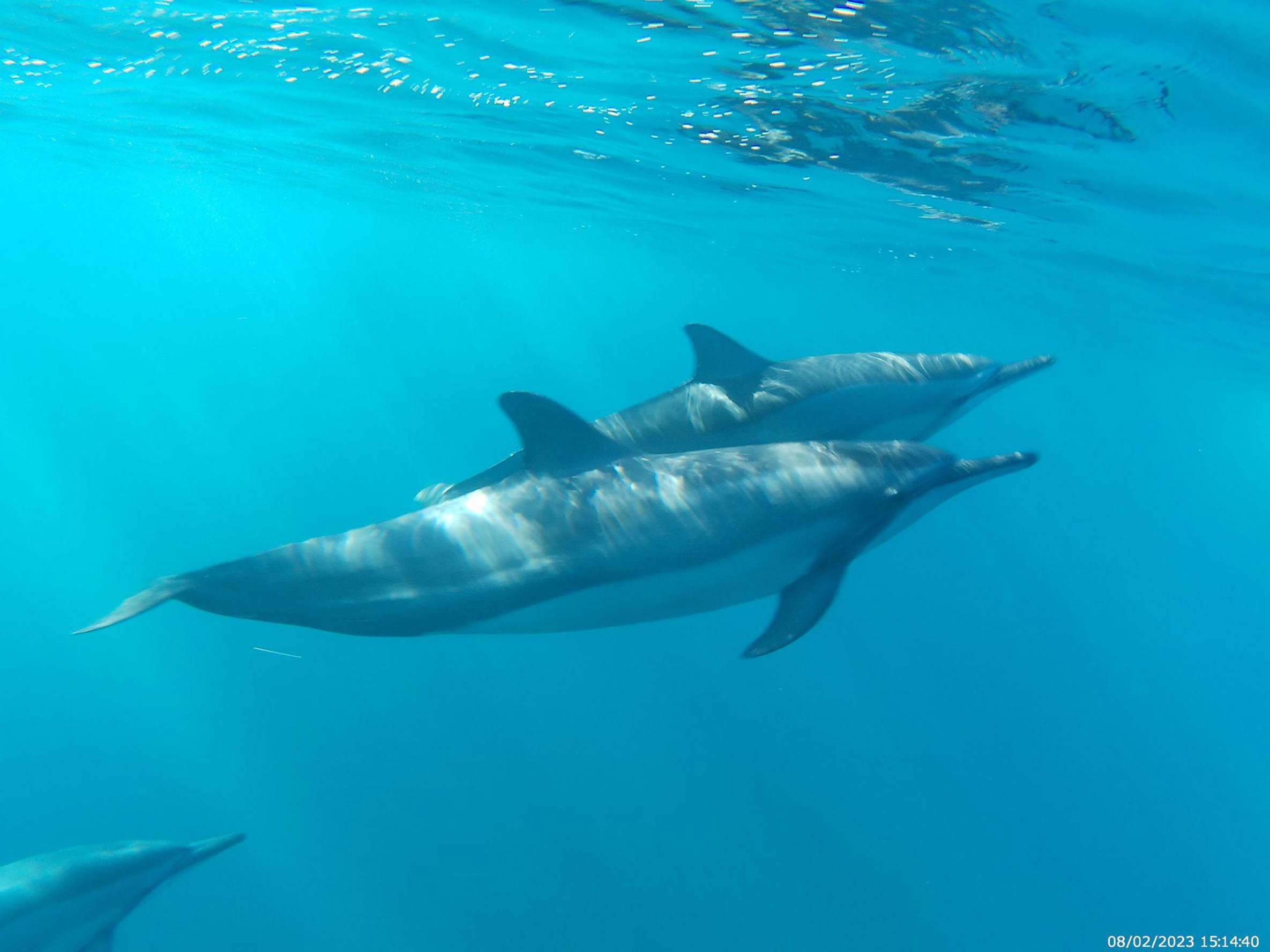
Dolphins complicate the picture nicely. Resident pods pass the bay during their morning feeding routine, and they are usually seen offshore, out beyond the barrier, rather than inside the lagoon. To meet them in the water you need a licensed boat and an early start.
This is the part that saves you a pre-dawn taxi across the island. Tours board on Flic en Flac public beach behind the temple and the football ground, where the crew meets you on the sand. Private sunrise departures leave from Wolmar public beach, the stretch between the Hilton and the Sugar Beach.
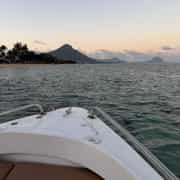
A sunrise dolphin and snorkeling trip is the classic from here: a private speedboat for at most four guests, out at first light for the dolphins, then a snorkeling stop behind the reef before the crowds and the chop arrive. Masks, fins and life jackets come with the boat.
Alternate spots apply at low tide.
Boats are wet and slippery, so step carefully.
Back on the beach by mid-morning.
Board with the grip you would use on a wet jetty; hulls get slippery. Then it is first light, the open sea, and a reef stop on the way home while everyone else is still ordering coffee.
- alternate launch spot when tide is low
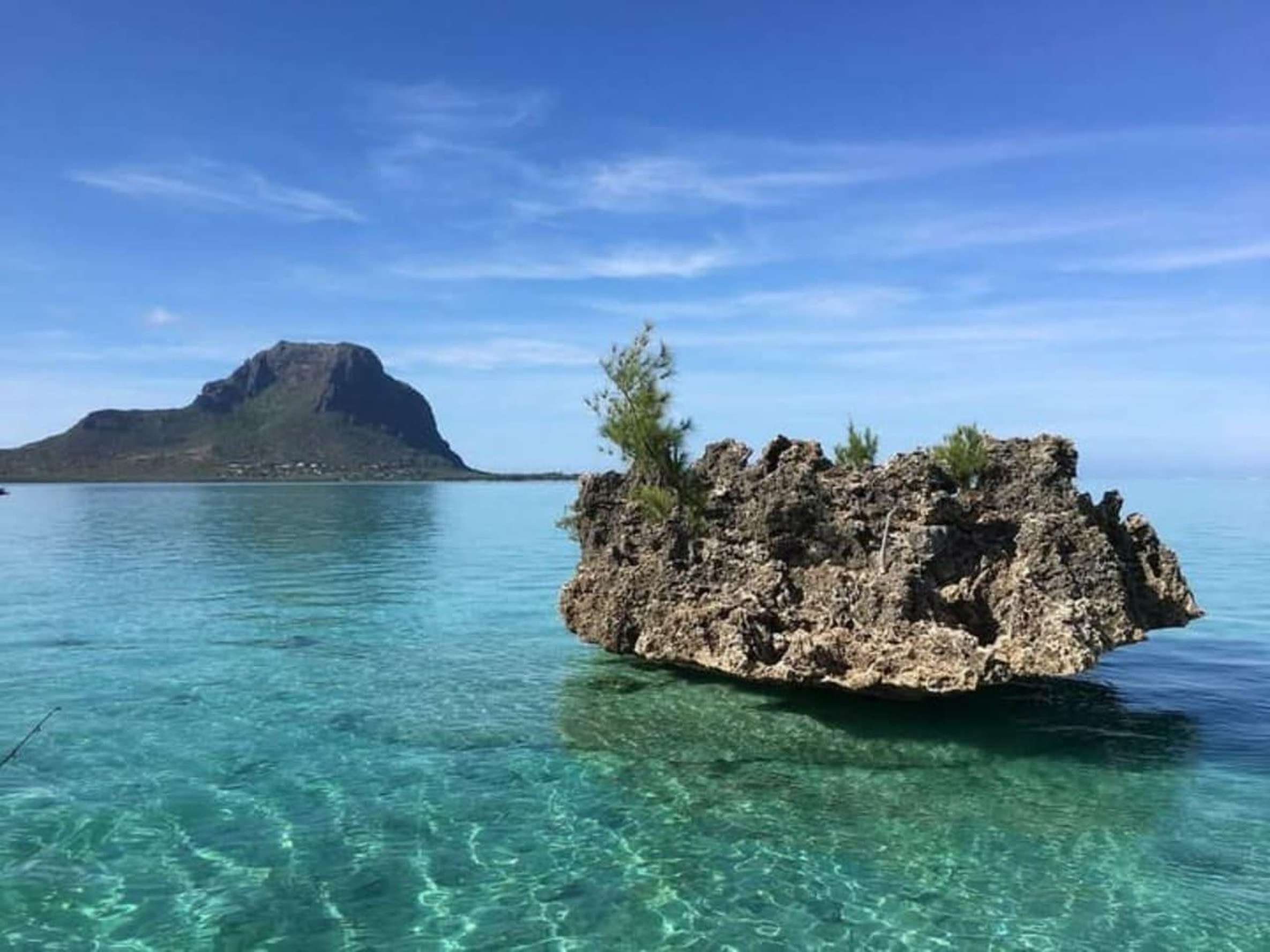
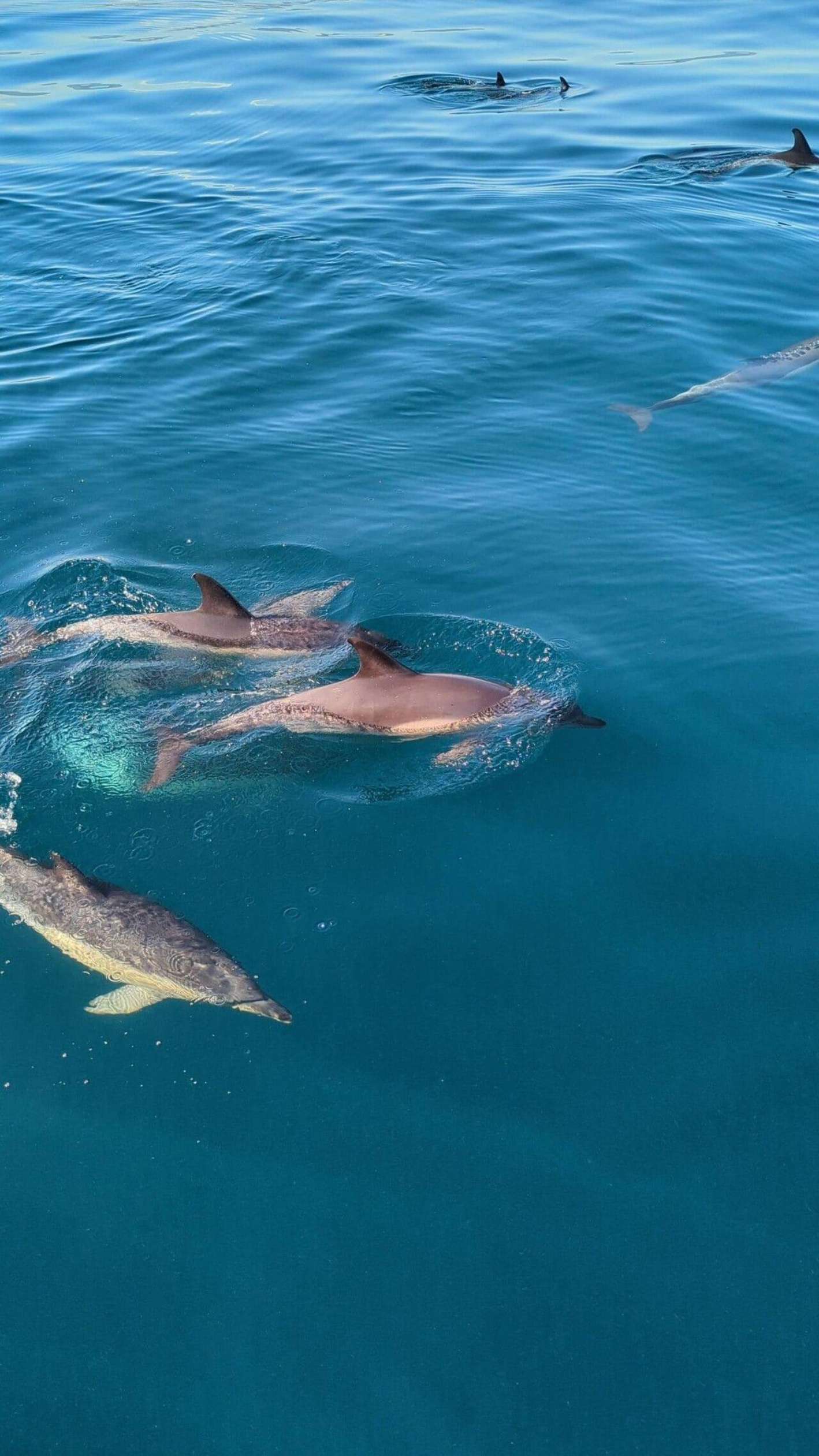
Wild dolphins gather in the western bays each morning to feed and rest, and the window for meeting them runs from about 6 am to 7:30 am.
By 8 am the encounter areas off Tamarin and Flic en Flac fill with 15 to 20 boats, up to 30 at peak, so the difference between a quiet encounter and a crowd is roughly one hour of sleep.
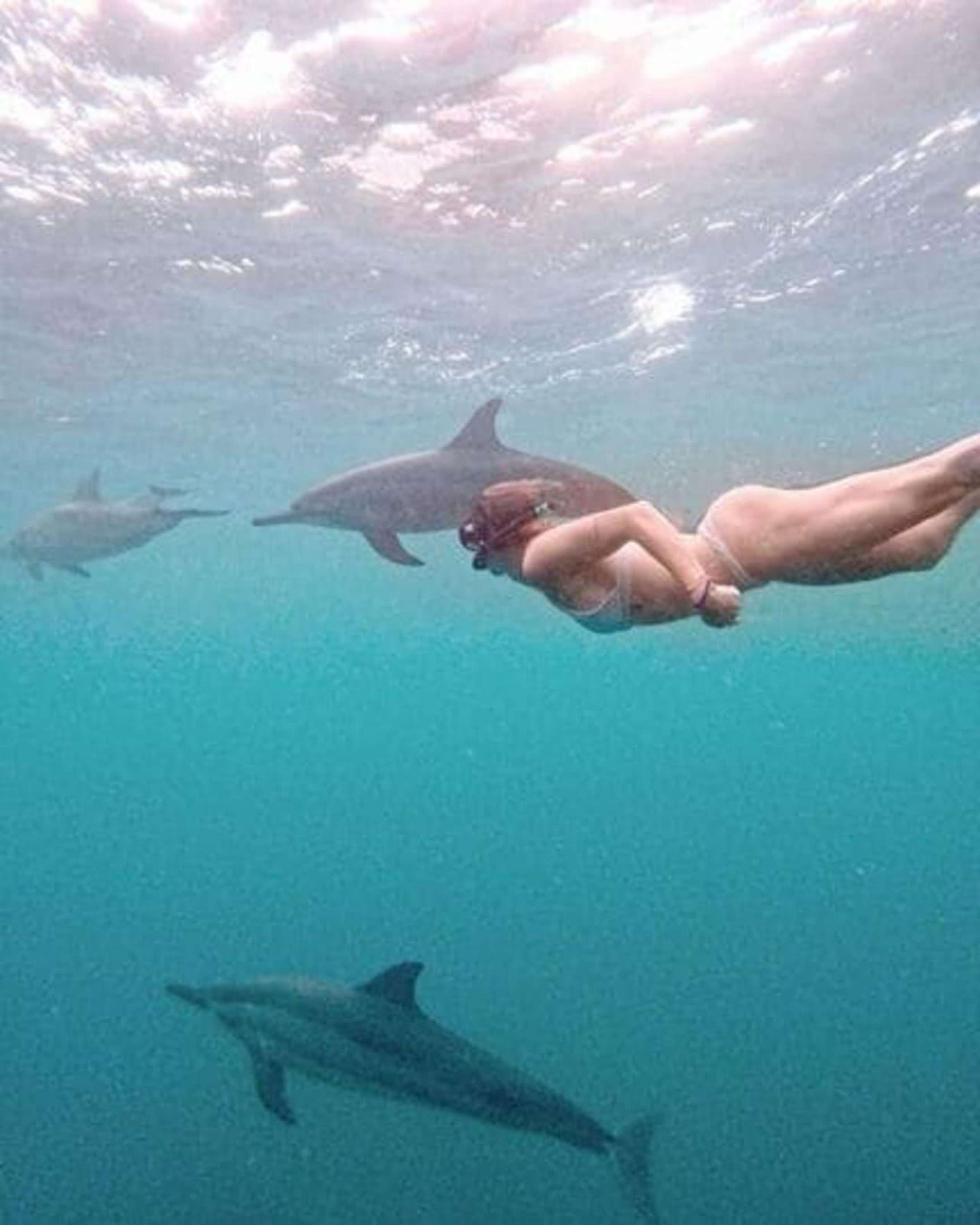
Know what the swim demands. This is deep open water outside the reef, and you drop in and swim quickly to keep pace with fast-moving animals. Fins are essential and some fitness helps. Non-swimmers can still join and watch from the boat, but young children and pregnant travelers should sit the open-water swim out.
The law is strict and it works in the animals' favour. Skippers must hold a Tourism Authority certificate, boats must carry a life-saver, first aid kit and oxygen kit, swimmers sign a disclaimer and get briefed, and no more than three swimmers enter the water at once. Touching, chasing or circling the pod is prohibited.
| Check | Why it matters | Our pick |
|---|---|---|
| Licensed operator and certified skipper | Dolphin swimming is government-licensed; a proper boat shows the Tourism Authority label | This page's private sunrise trip runs with a licensed local crew. |
| Safety kit on board | Swimming trips must carry a life-saver, first aid and oxygen kit | The boat carries all required safety equipment. |
| Small swim groups | The water rule allows three swimmers at a time, life-saver included | The boat seats four guests, so the crew rotates who swims; not everyone drops in together. |
| Early departure | Pods pass before 7:30 am and boat traffic builds from 8 am | The sunrise slot starts around 6:30 am |
Three swimmers at a time is the legal cap in the water, while four is the boat's full guest count; the two numbers count different things, and on a full boat the crew takes turns.
For a two-hour private morning with dolphins and a snorkeling stop, the Mauritius: Private Dolphin Watching and Snorkeling Tour fits this brief exactly.
- 3 swimmers max in the water at once
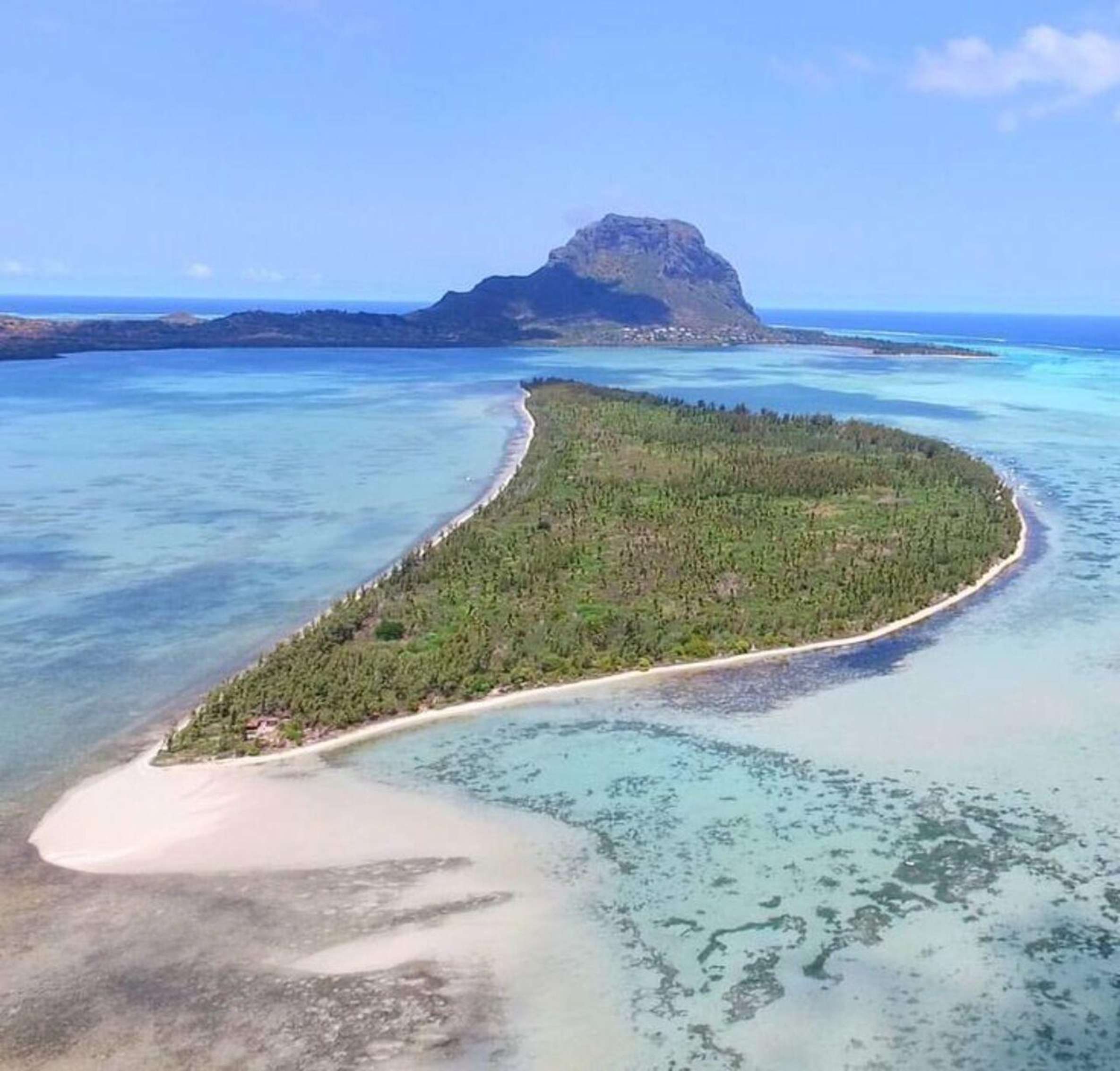
Two boats suit two moods, and knowing the difference fills your remaining days well. A speedboat moves fast, so you reach beaches and snorkeling spots before the crowds, with less room to lounge.
A catamaran is the opposite: twin hulls give it a steadier, smoother ride, shaded deck space and trampolines, and the day is built around stops to swim and a barbecue on board. Speedboats stop more and sit less; catamarans lounge more and arrive slower.
One famous sight deserves a clear word. The underwater waterfall off Le Morne is an optical illusion that only reads from the air, sand and silt sliding off a shallow shelf into deep water, seen from a helicopter or seaplane.
From sea level, and certainly through a mask, you will see none of it, because lateral visibility runs a few metres. Do not swim or paddle near that reef opening either; outgoing tide and surf generate strong rip currents there.
What a mask will reward, from this beach, is a morning with turtles over the lagoon coral and a boat out to the dolphin grounds at first light. That combination, sand and speedboat, is what this stretch of coast does best.
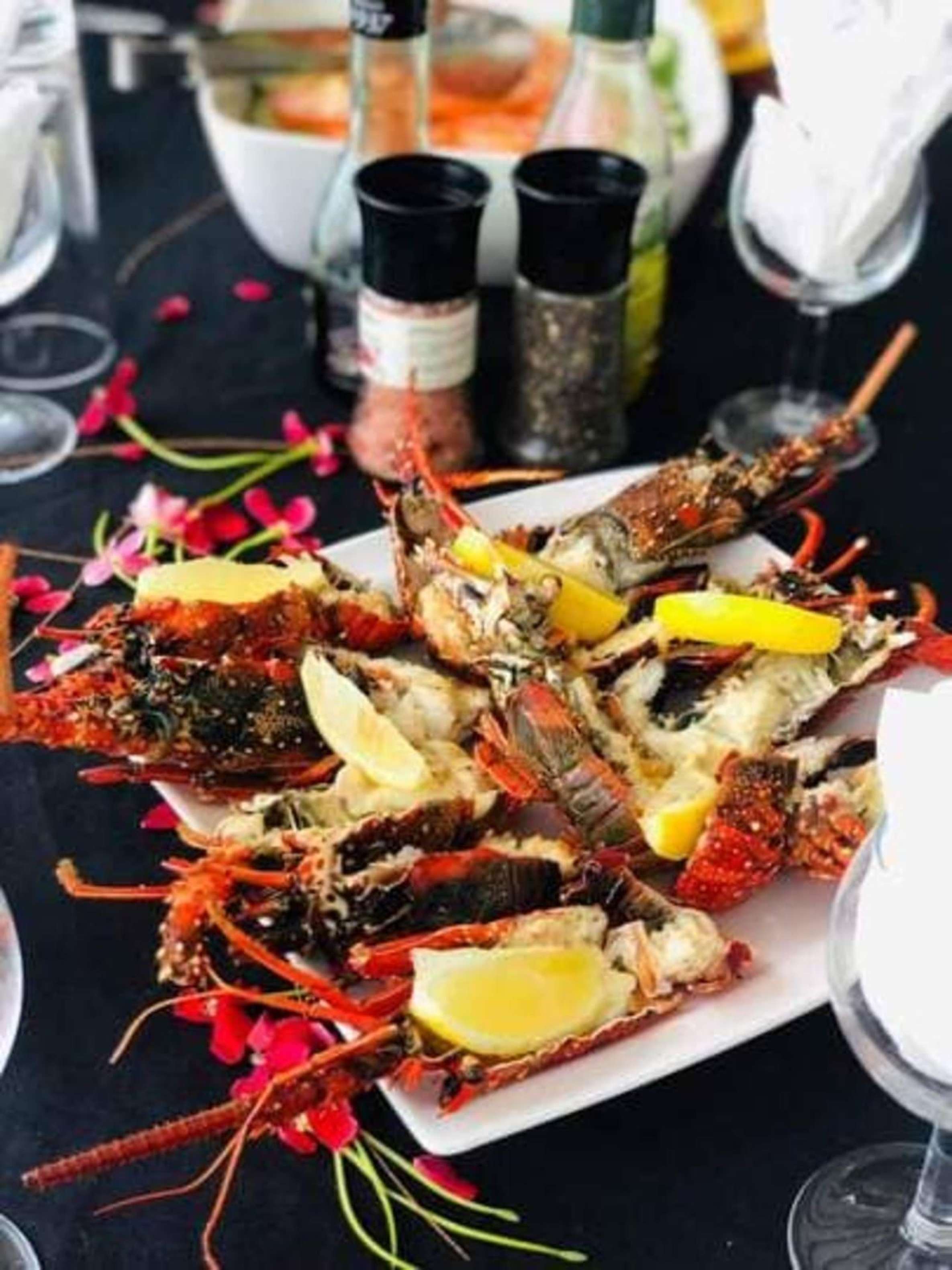
Flic en Flac rewards an early, well-aimed morning: the temple or Villa Caroline entry, fins on before 9 am, turtles fifty metres out, and one sunrise boat for the reef and dolphins beyond it. Skip it only if coral spectacle is the whole point of your trip.
dolphins pass offshore, not off the sand
The dolphins you glimpse offshore from Flic en Flac get a full page: where pods gather and the rules that keep encounters fair.

Ready to swim with the pod? This page explains how encounters run and what fit and confidence the open water asks of you.
The pods off Flic en Flac drift down the coast, and Tamarin is their best-known haunt. See what a morning trip there looks like.
Want whales alongside dolphins? This page covers combined tours on the west coast and the boat-only rule around whales.
The private sunrise tour from Wolmar shows why early departures win. This page compares dawn trips across the island.
If a boat to yourself appeals, this page walks through private charters and what you should bring that boats do not supply.
For a slower day on the water, catamaran snorkeling is covered here: shared sailing, deck space, and reef stops.

Not sure which coast to sail from? This page sorts full-day catamaran routes, lunch stops, and island landings.
coral's healthiest in front of villa caroline
Short answers on the lagoon, the coral, the turtles and the boats that leave straight from the beach.
Flic en Flac2026Yes. Coral clumps and reef fish begin only a few dozen meters from the sand, and denser coral formations with fine Acropora lie about 200 meters out in the lagoon.
Two spots work well without a boat. The water in front of the Villa Caroline Hotel holds healthier coral heads than the central public beach, and swimming out opposite the Shivala Hindu temple brings you to coral and marine life too.
The west coast sits away from the south-easterly trade winds, so the lagoon stays reliably flat when the east side is windy. Flic en Flac has one of the calmest lagoons on the island, and you can swim here at most tides.
No. Green and hawksbill turtles turn up in shallow lagoon water about fifty meters off the beach, so you can find them by wading in from the sand.
A few dozen meters gets you scattered coral clumps and reef fish. The better-preserved formations sit roughly 200 meters out in the 300-meter-wide lagoon, an easy swim for anyone confident in the water.
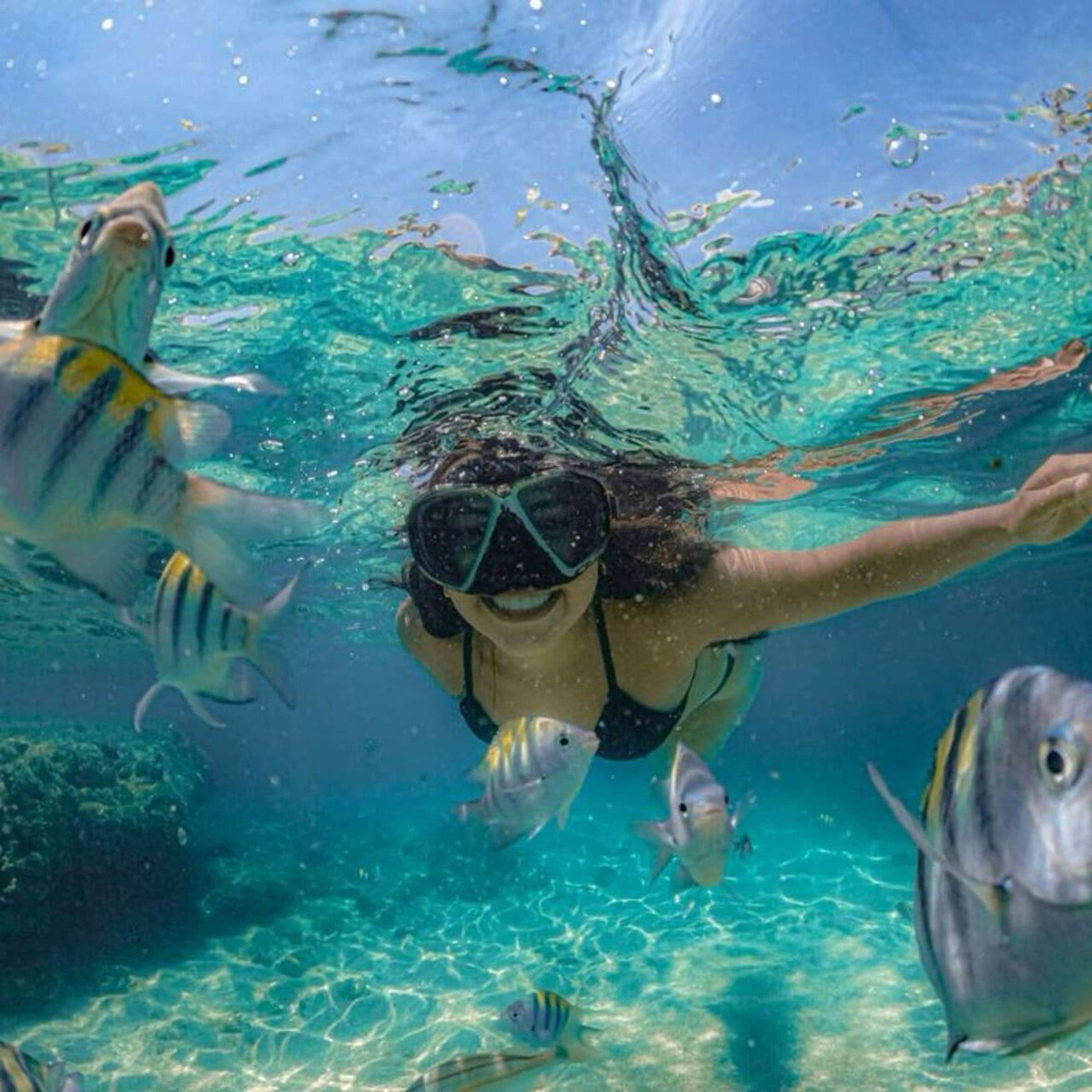
The shallow coral clumps attract whitetail dascyllus, Moorish idols, and racoon, vagabond and threadfin butterflyfish. Large schools of green chromis hover around the branching corals.
They are not required, but strongly advised. Broken coral rubble, sea urchins and stonefish hide in the shallows, and reef booties keep the walk-in painless.
La Passe, the channel through the barrier reef about 1 to 2 kilometers offshore, can run strong, and so can the boat channels. Stay clear of both and you will find nothing that worries you.
Yes. A private sunrise dolphin tour departs from Wolmar public beach, between the Hilton and Sugar Beach hotels, and speedboat tours board on the public beach behind the temple and football playground. No taxi transfer needed.
Resident pods feed in the bay most mornings, though they usually show up offshore rather than right off the beach. Local speedboat trips take you out to them, and an early start around 6:30 am means light traffic before the crowds build.
Licensed operators keep a respectful distance from the pods and drop only a few swimmers at a time. Touching the animals is forbidden, and responsible crews hold back rather than chase.
Craft must stay under 5 knots between the high water mark and the reef, so traffic moves slowly. Swim outside the marked areas with a diving flag or buoy, and stay out of the boat channels.
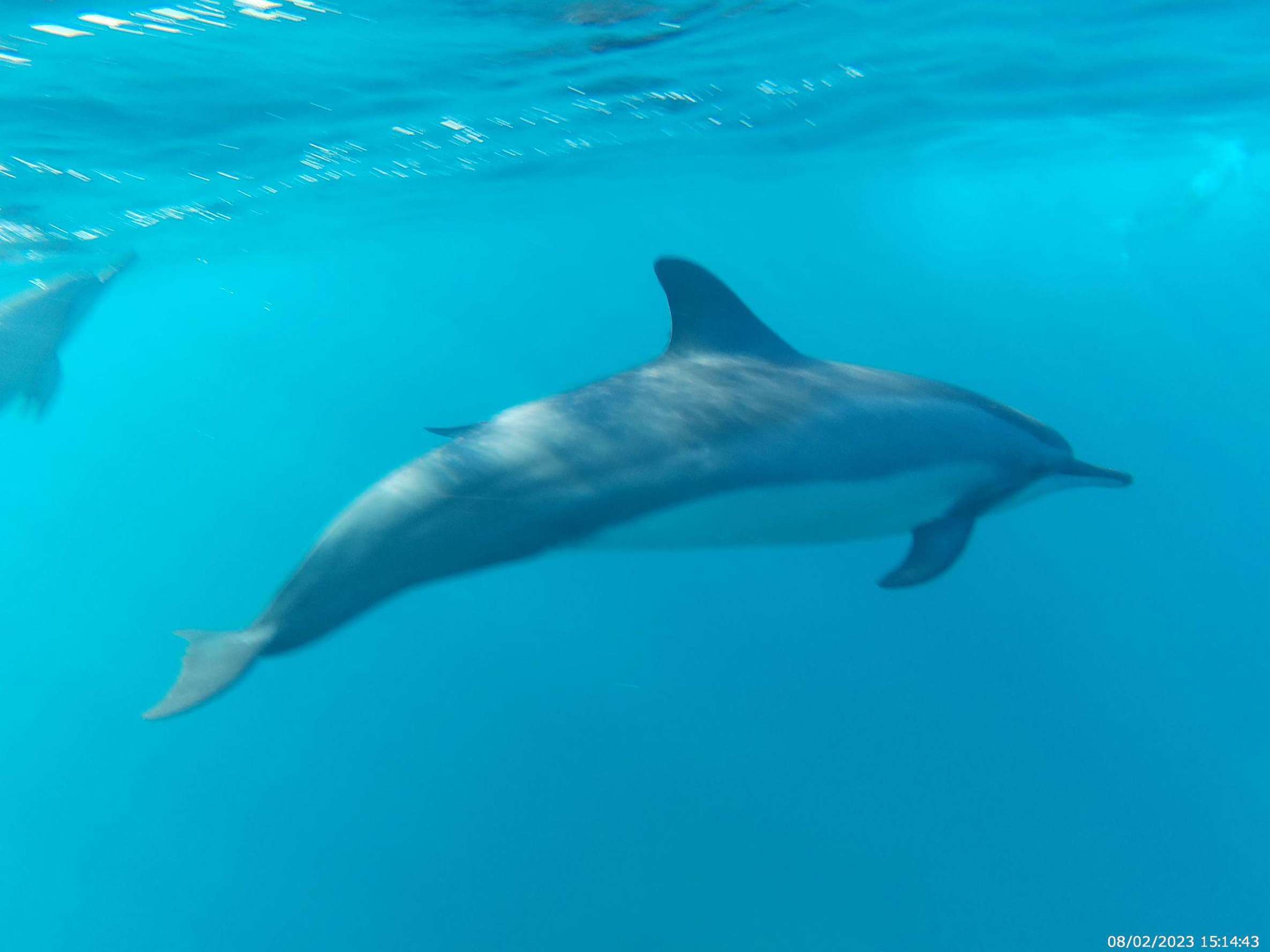
only 4 guests, so book early
Set off at 6:30 am from Wolmar beach by private speedboat for a calm two-hour dolphin and reef swim, with free cancellation up to 24 hours before.
