
7 hours·English, French
5.0(5)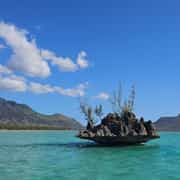
Private Île aux Bénitiers Boat: Dolphin Snorkeling & Lobster
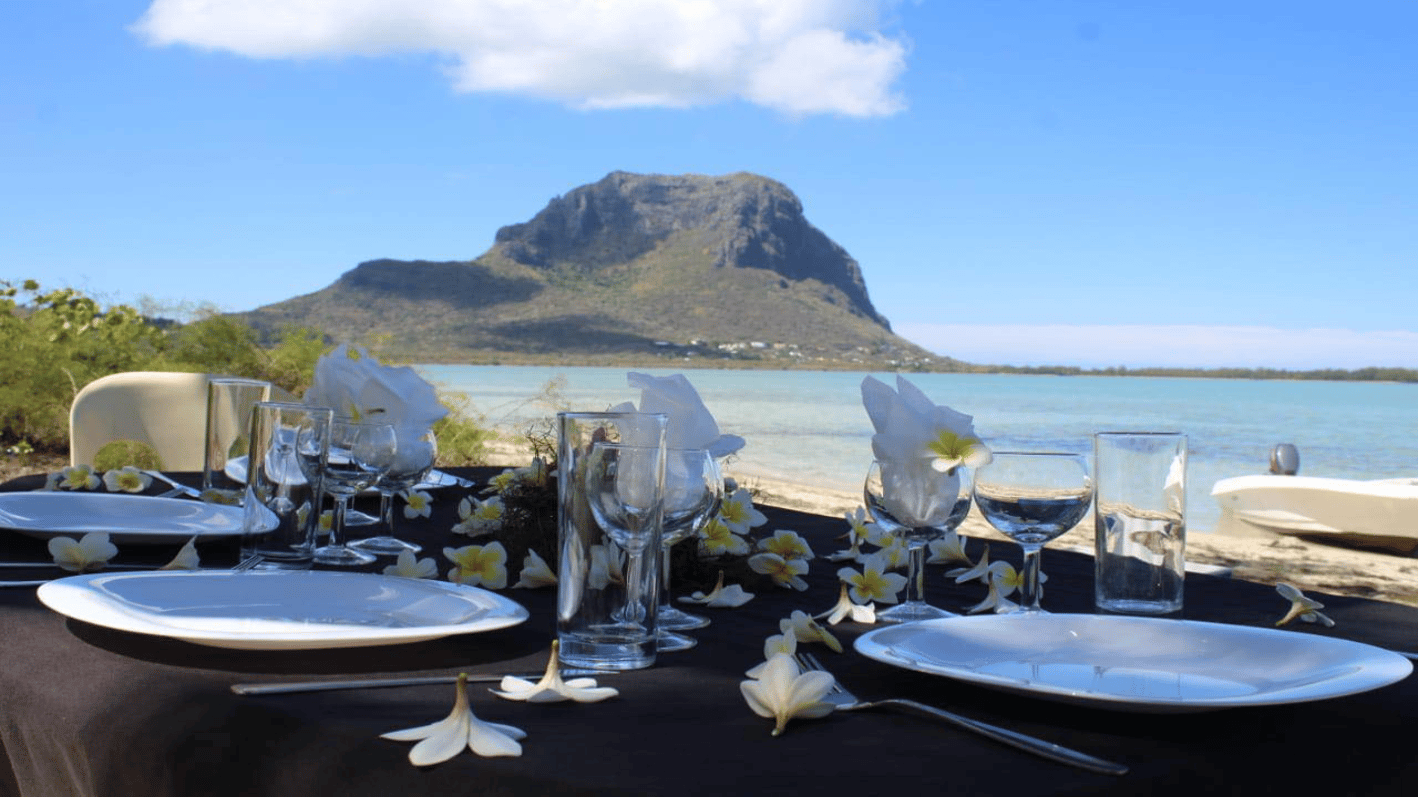
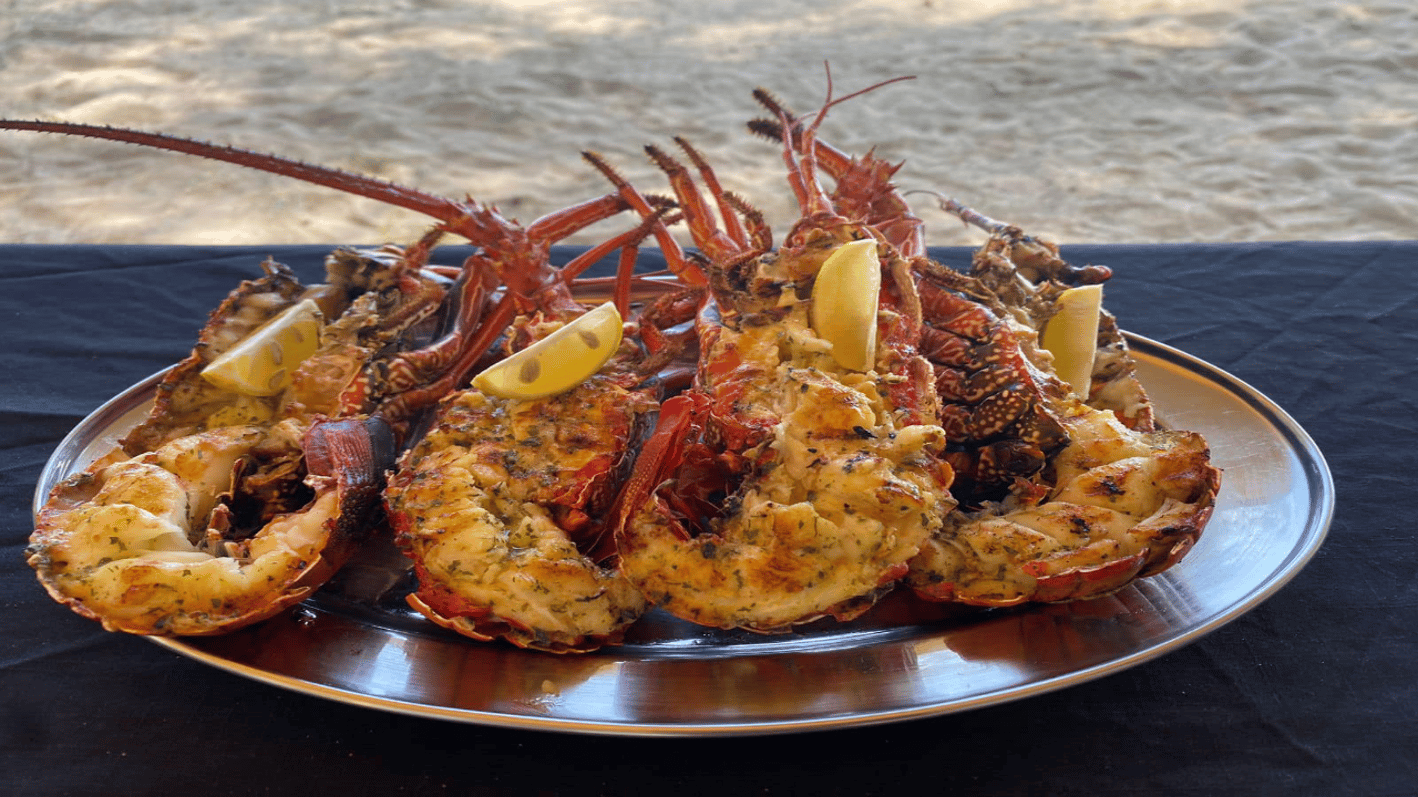
Free cancellationBBQ Lunch with LobsterBottled water upon arrival
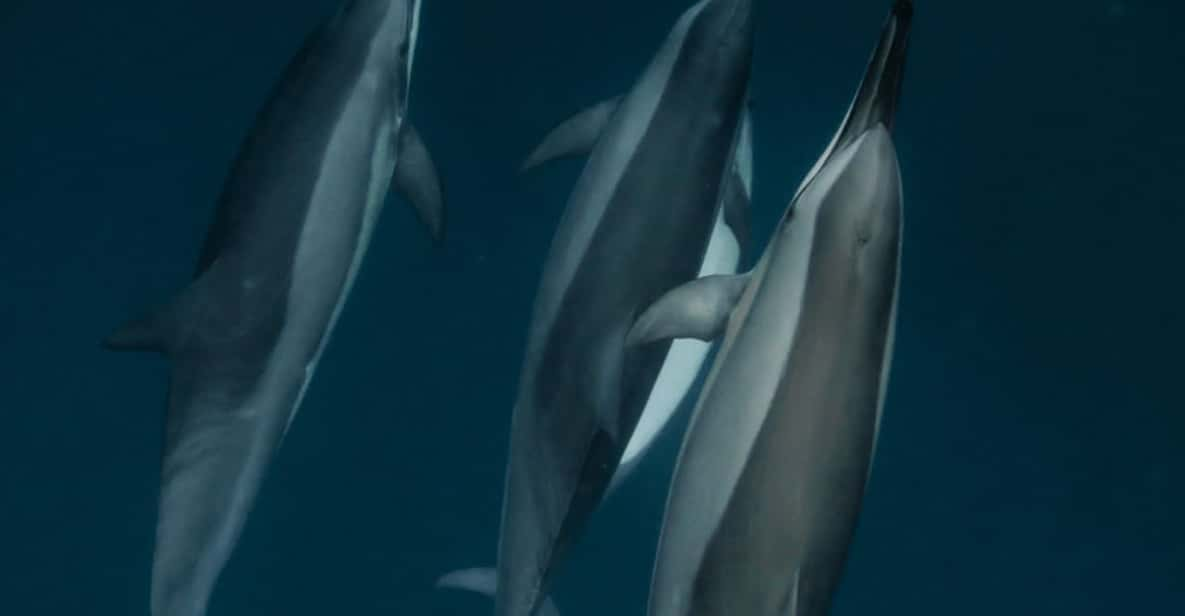
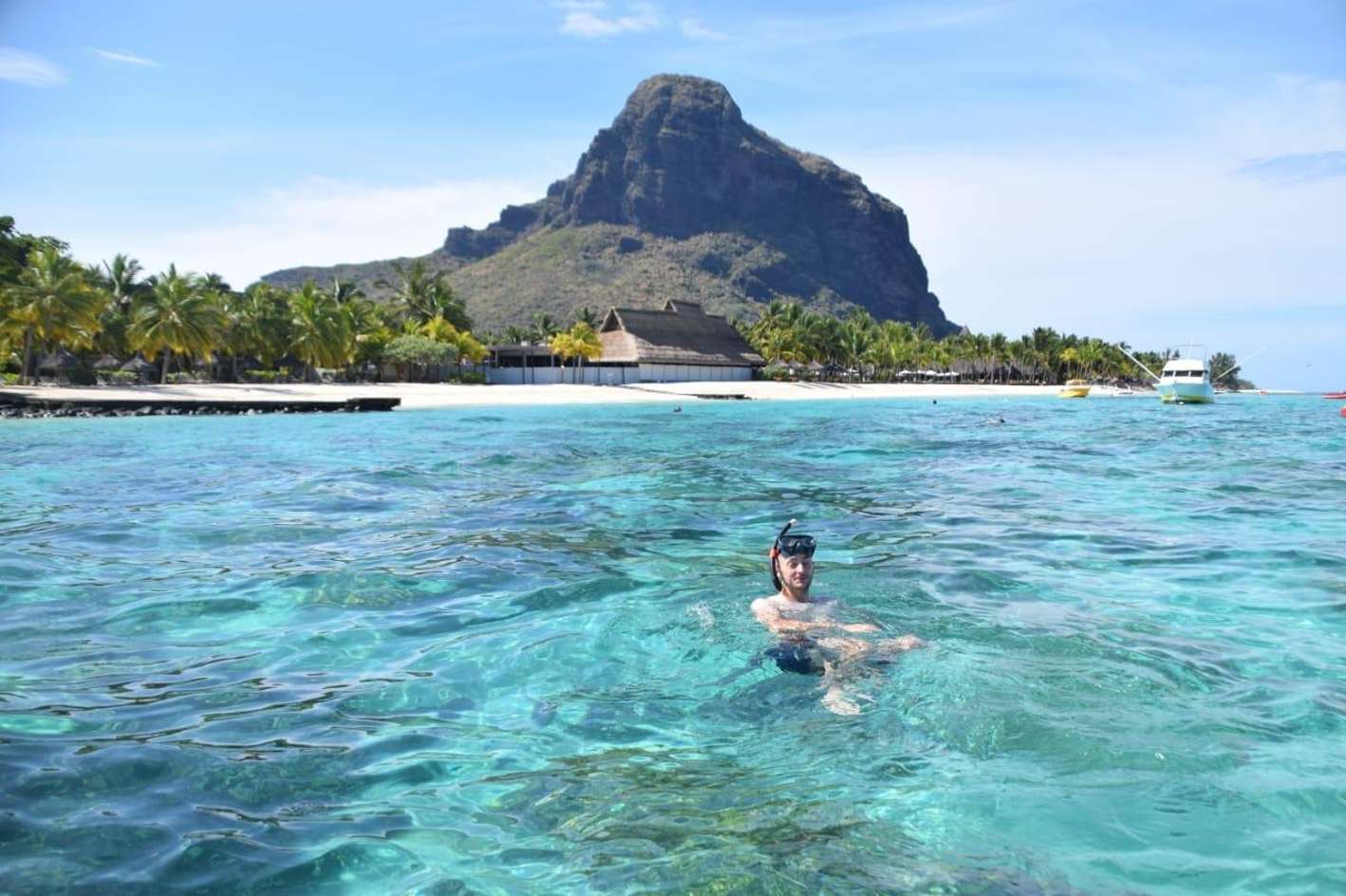
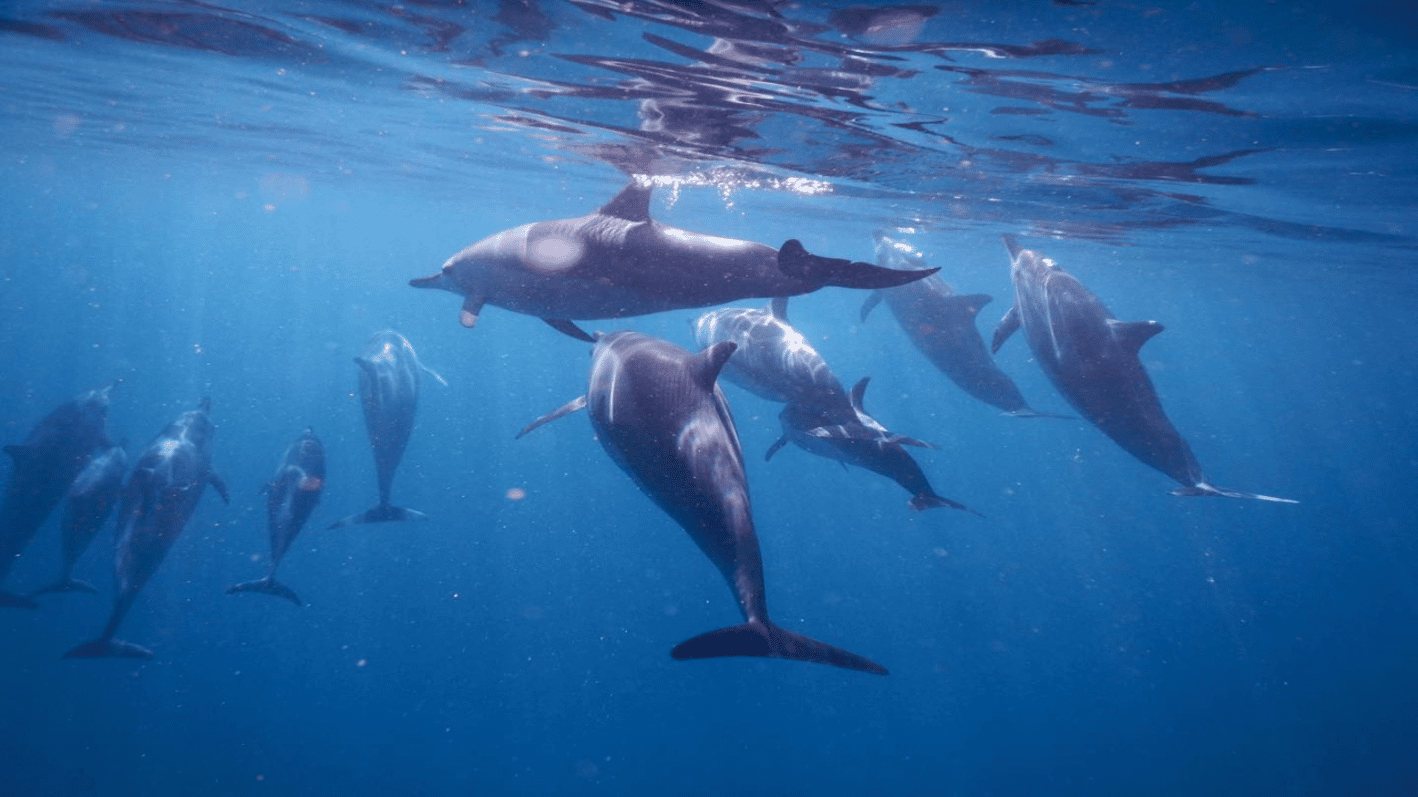
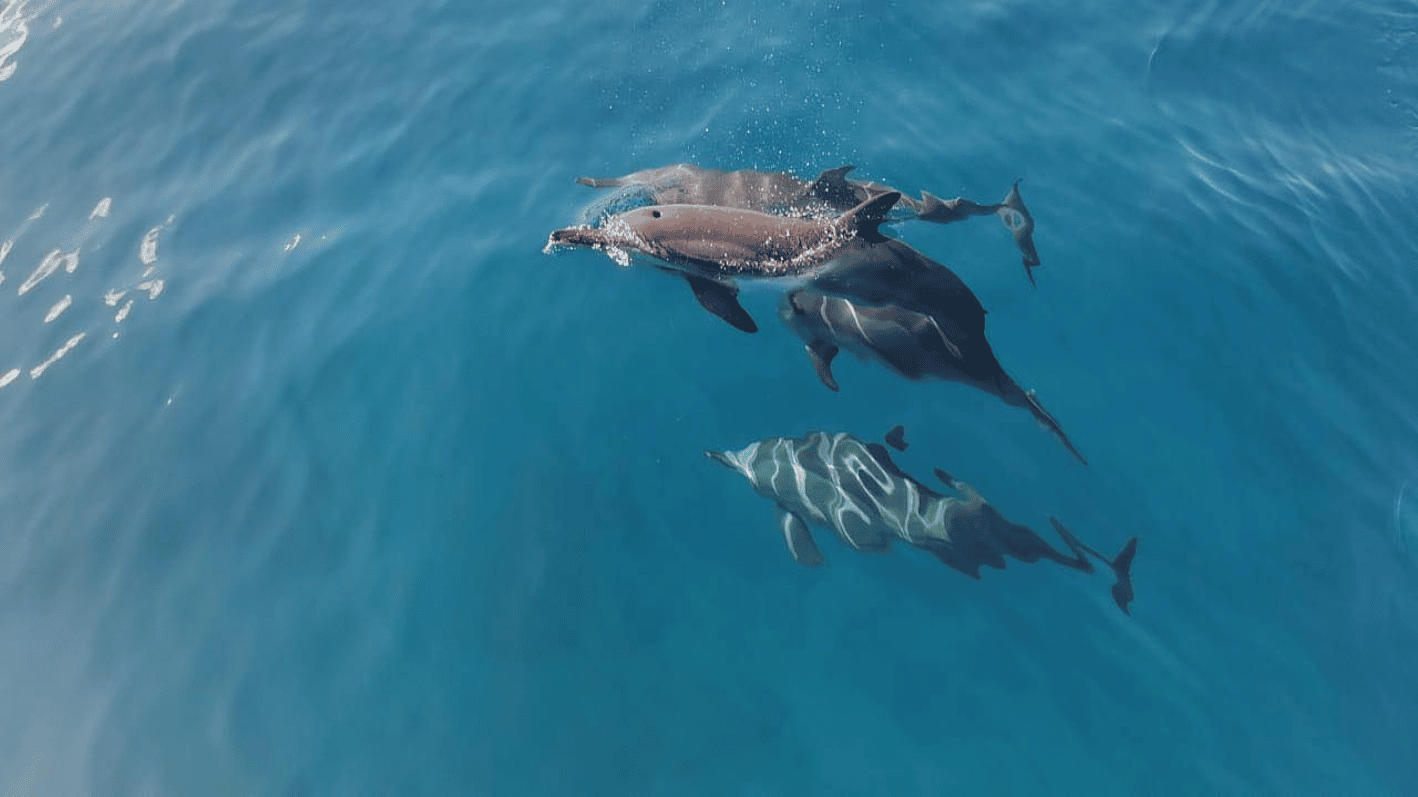
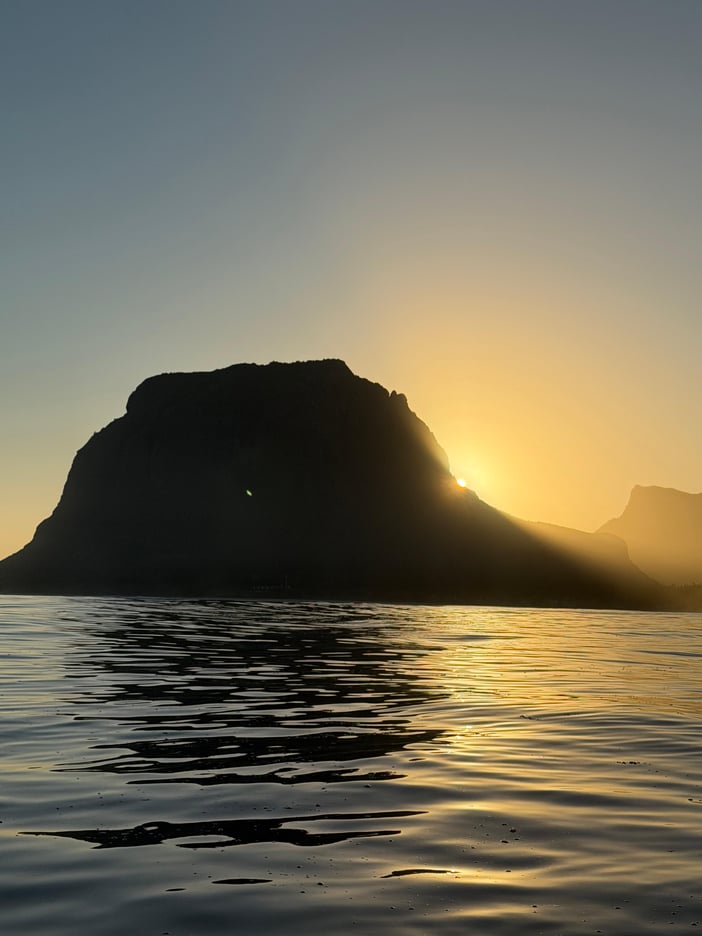
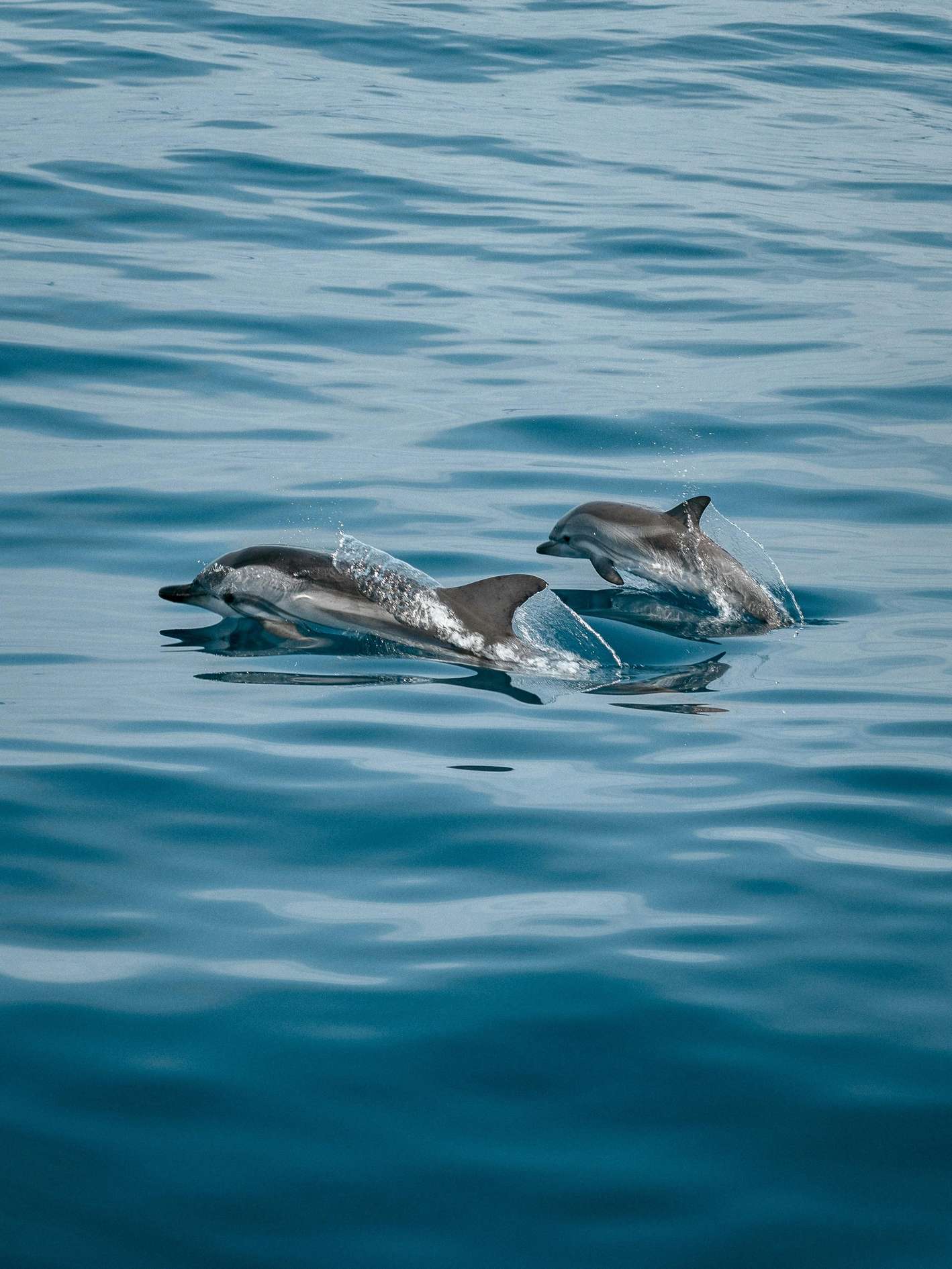
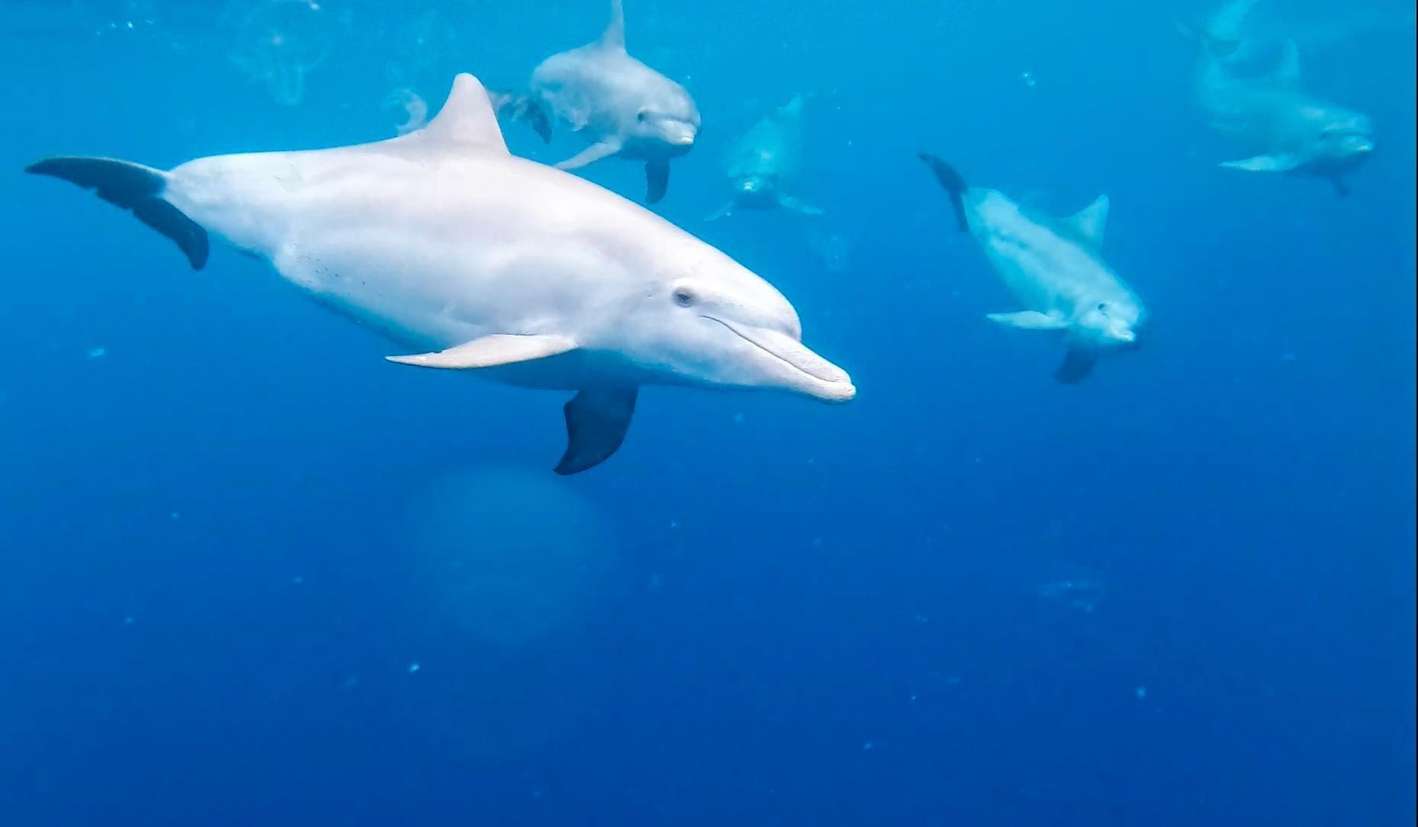
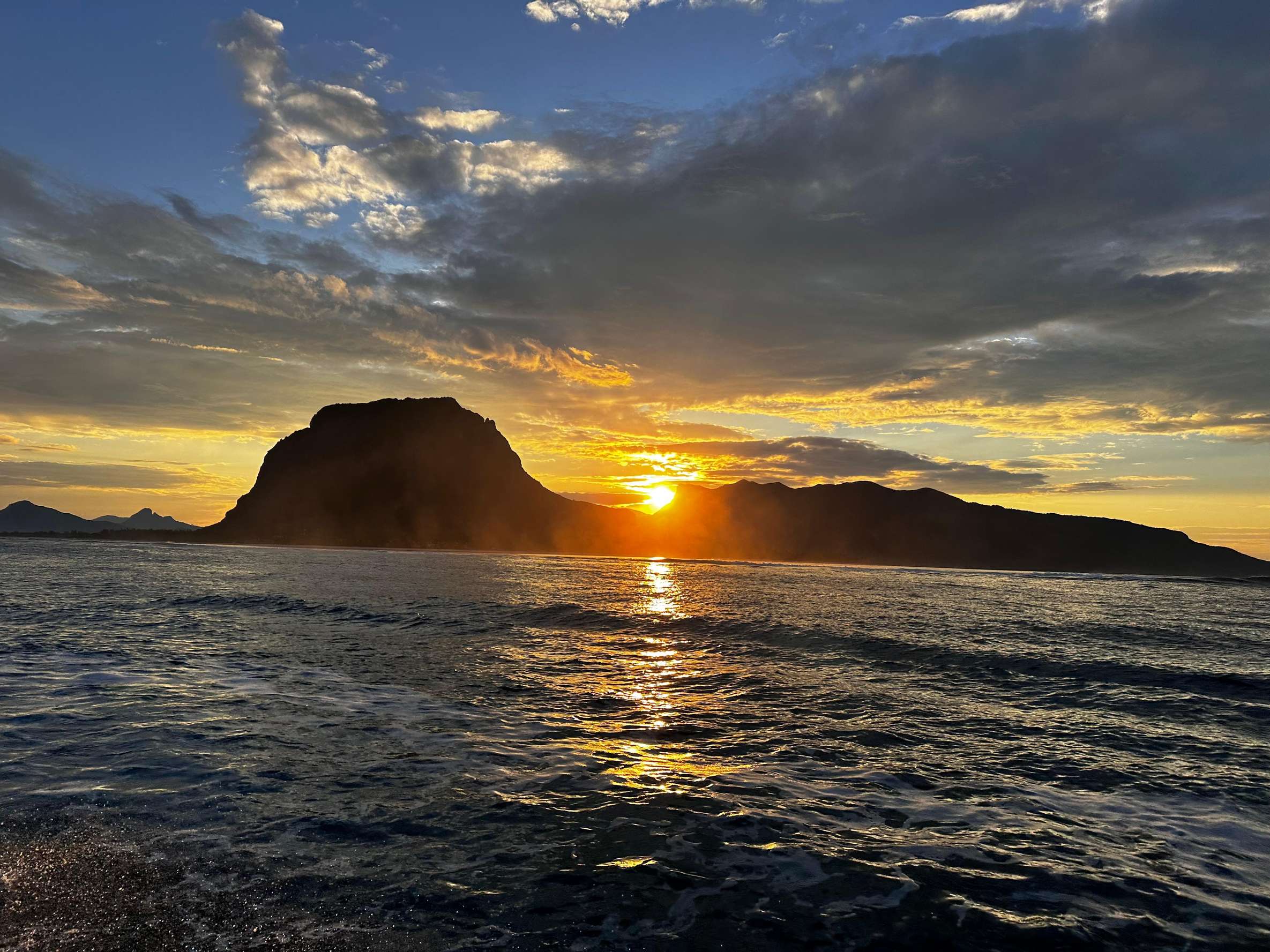
Snorkel the lagoon under Le Morne Brabant, swim out to Crystal Rock and meet wild dolphins at first light. Book an early speedboat or catamaran from the southwest coast, and reach the reef while the water is calm and the day boats are still far behind you.
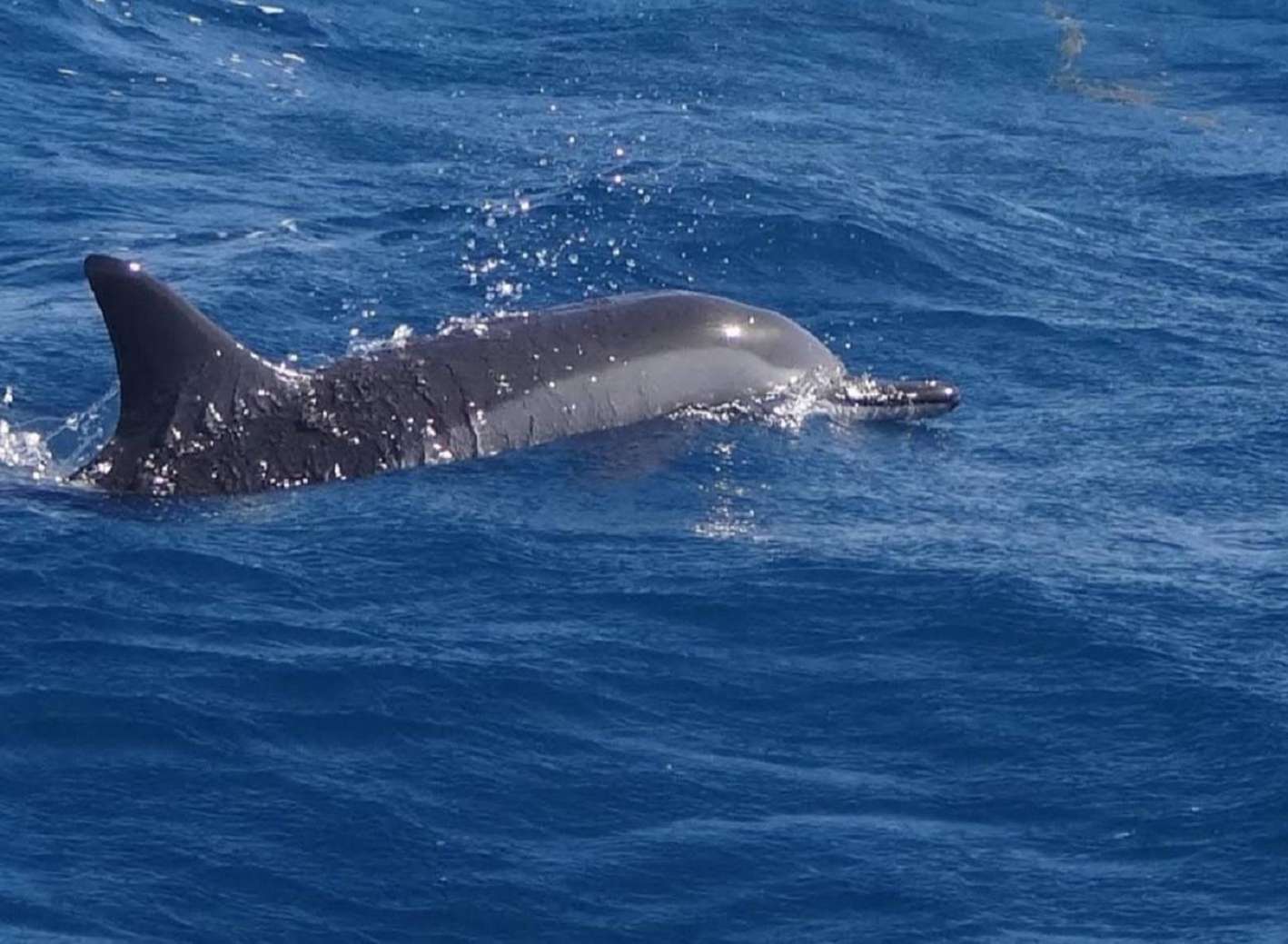
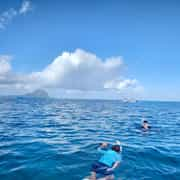
"Everything went great: Ben called ahead with directions. We searched long for dolphins and swam in open ocean near them. Then snorkeling with beautiful fish, coral reefs, paradise-clear water."



Trade winds and reef shape mean one side of Mauritius snorkels far better than another in the same week.
Read the guide
A state-protected reserve with brain corals six to seven metres across, a short ride from Mahébourg.
Read the guide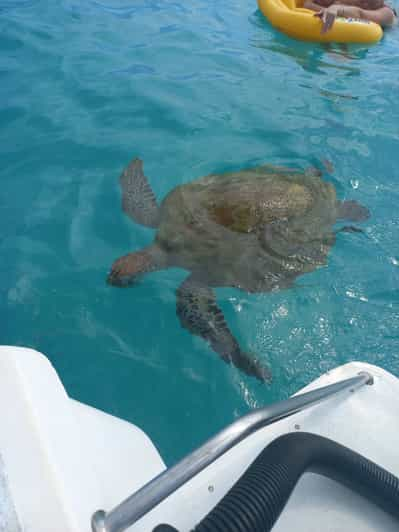
A calm northwest lagoon where the good coral and the green turtles live 200 to 300 metres offshore.
Read the guide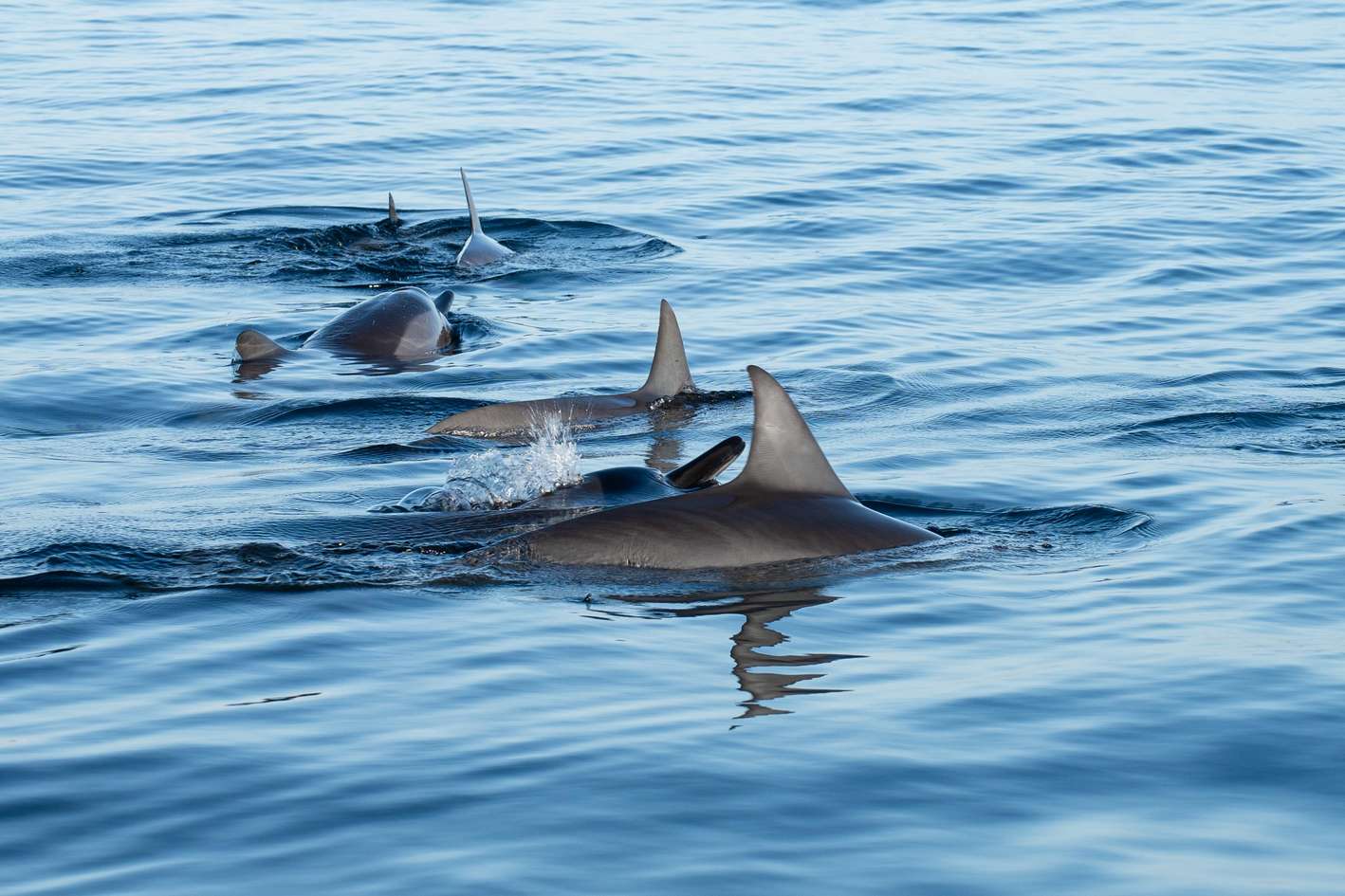
A swimming-pool-flat west coast lagoon where coral starts a few dozen metres from the sand.
Read the guide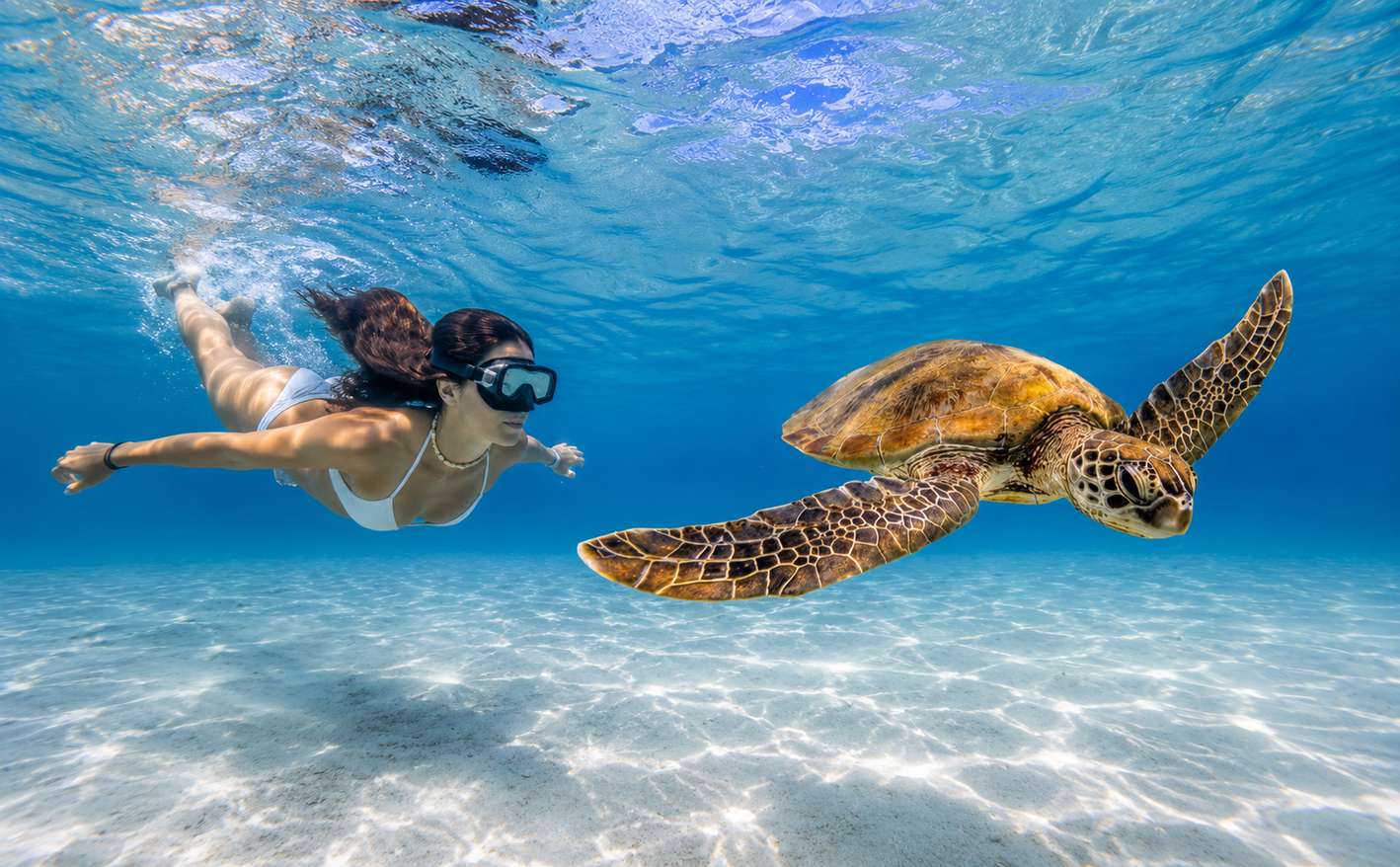
Green and hawksbill turtles pass within 50 to 100 metres of the sand in this sheltered cove.
Read the guide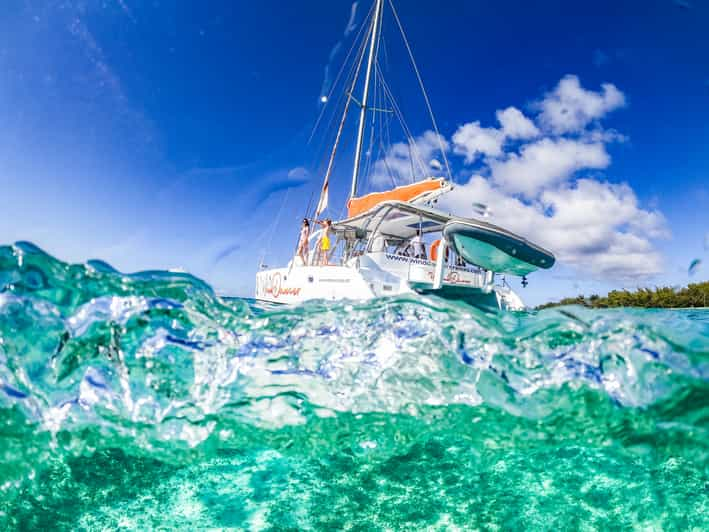
Catamarans and speedboats leave this beach daily for Coin de Mire, Flat Island and Gabriel Island.
Read the guide
Swim with spinner dolphins outside the reef at first light, then snorkel the outer coral gardens.
Read the guide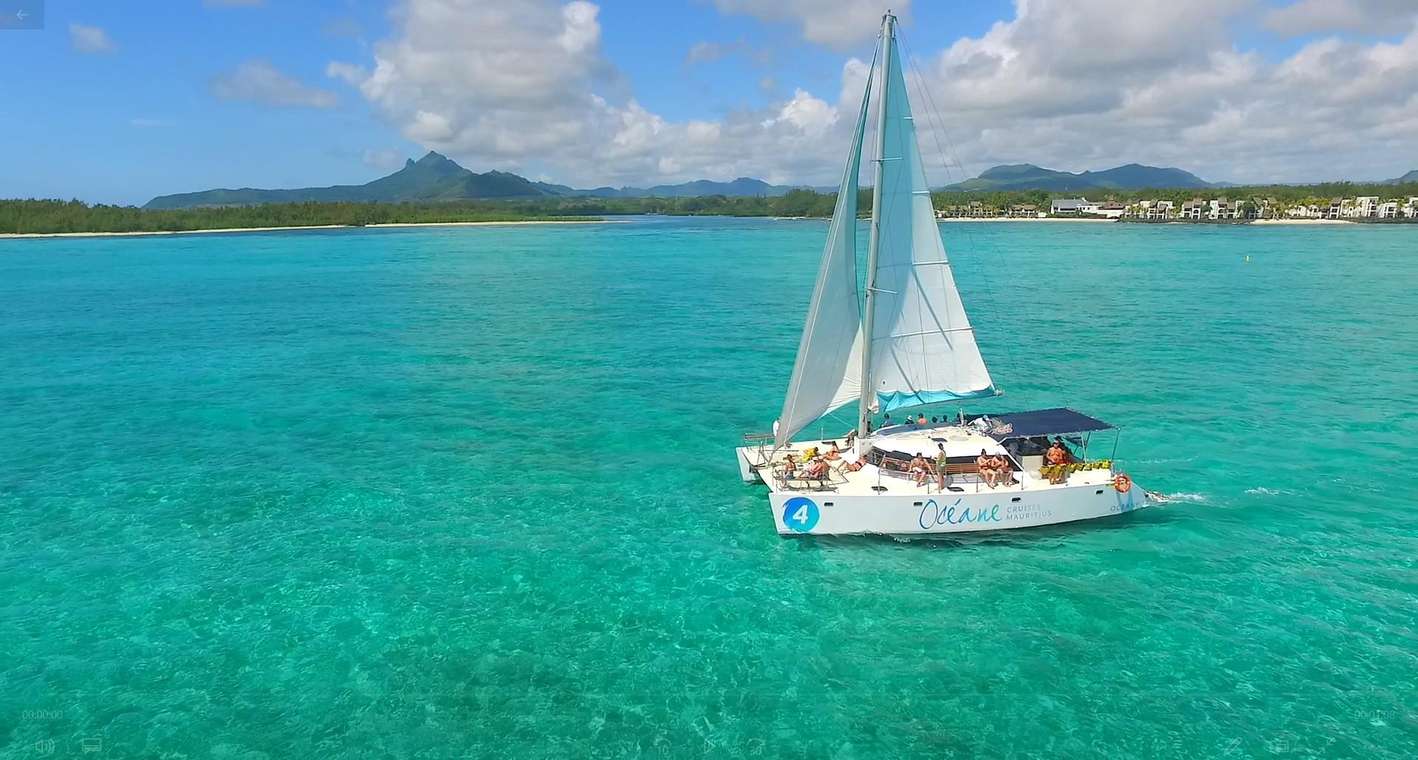
Beautiful east coast water where the reef pass pulls hard and boats do the reaching for you.
Read the guide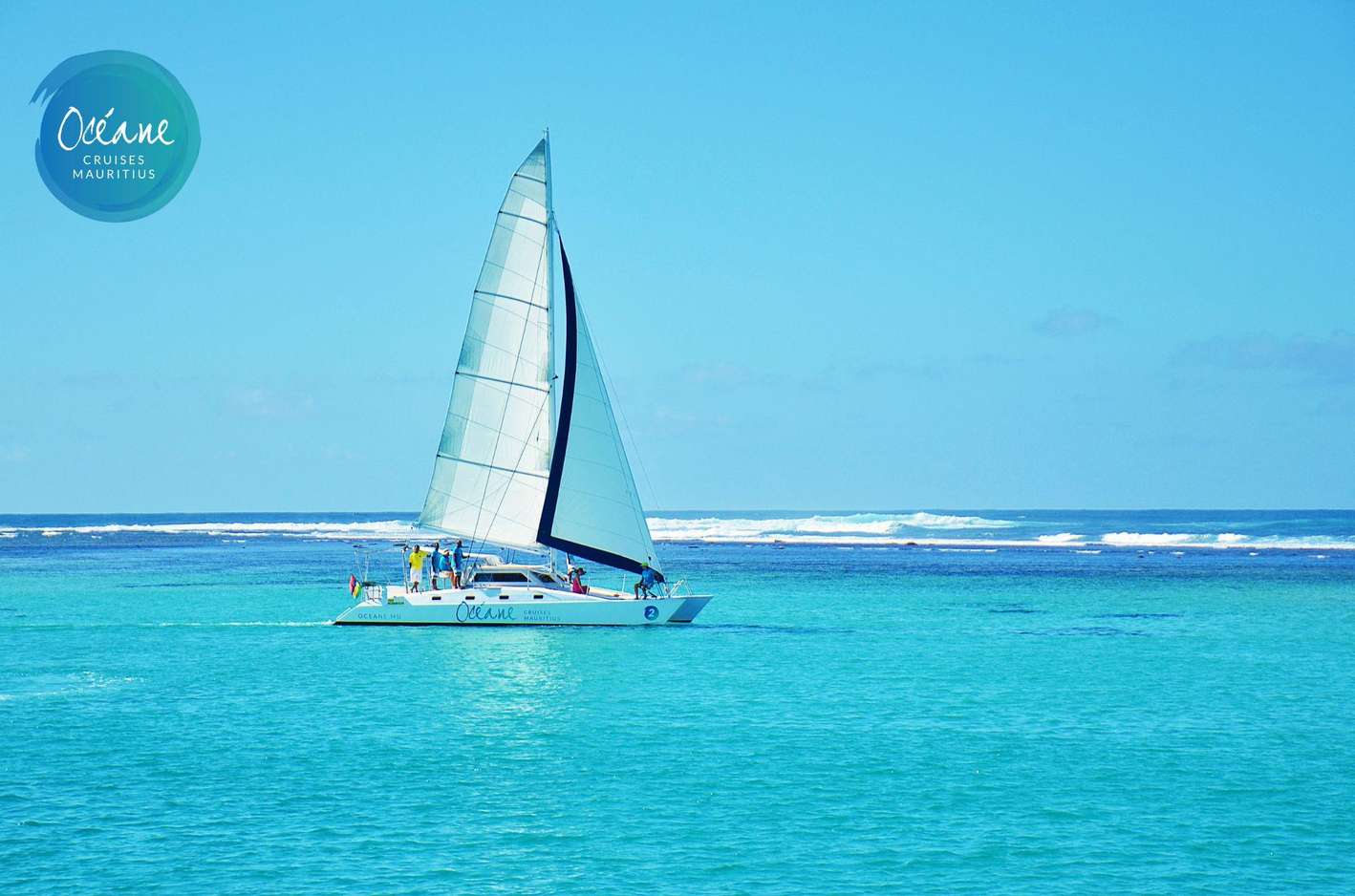
A 250-metre-wide lagoon of sandy shallows and small fish, best entered early in the morning.
Read the guide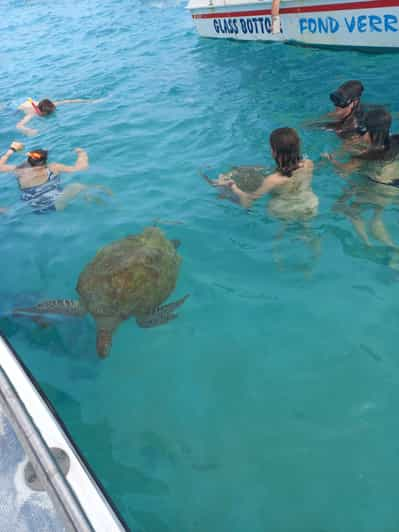
A sheltered marine park lagoon with calm water year-round and a long coral species list.
Read the guide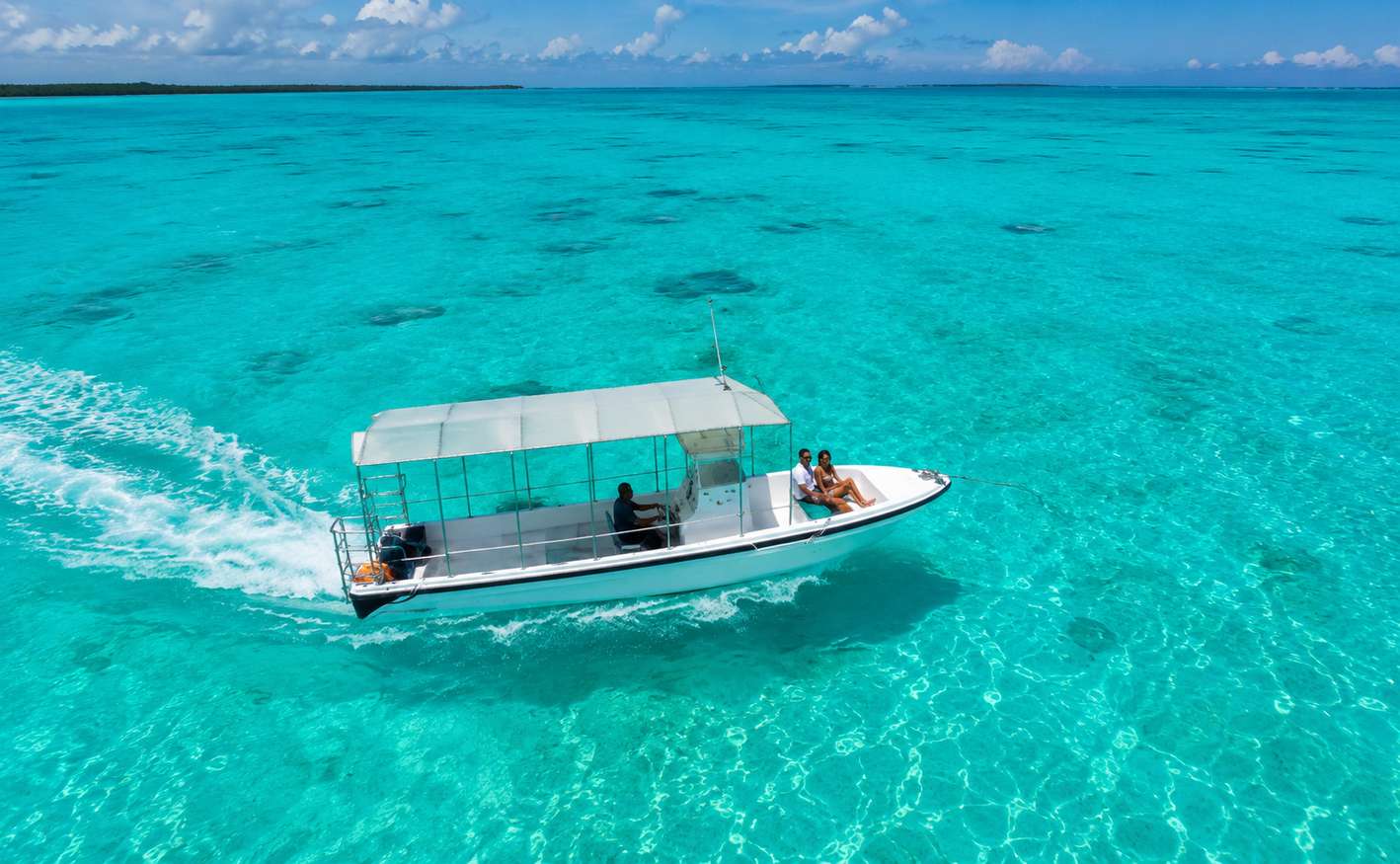
Walk-in reef access and green turtles in a northwest bay that boats rarely trouble.
Read the guide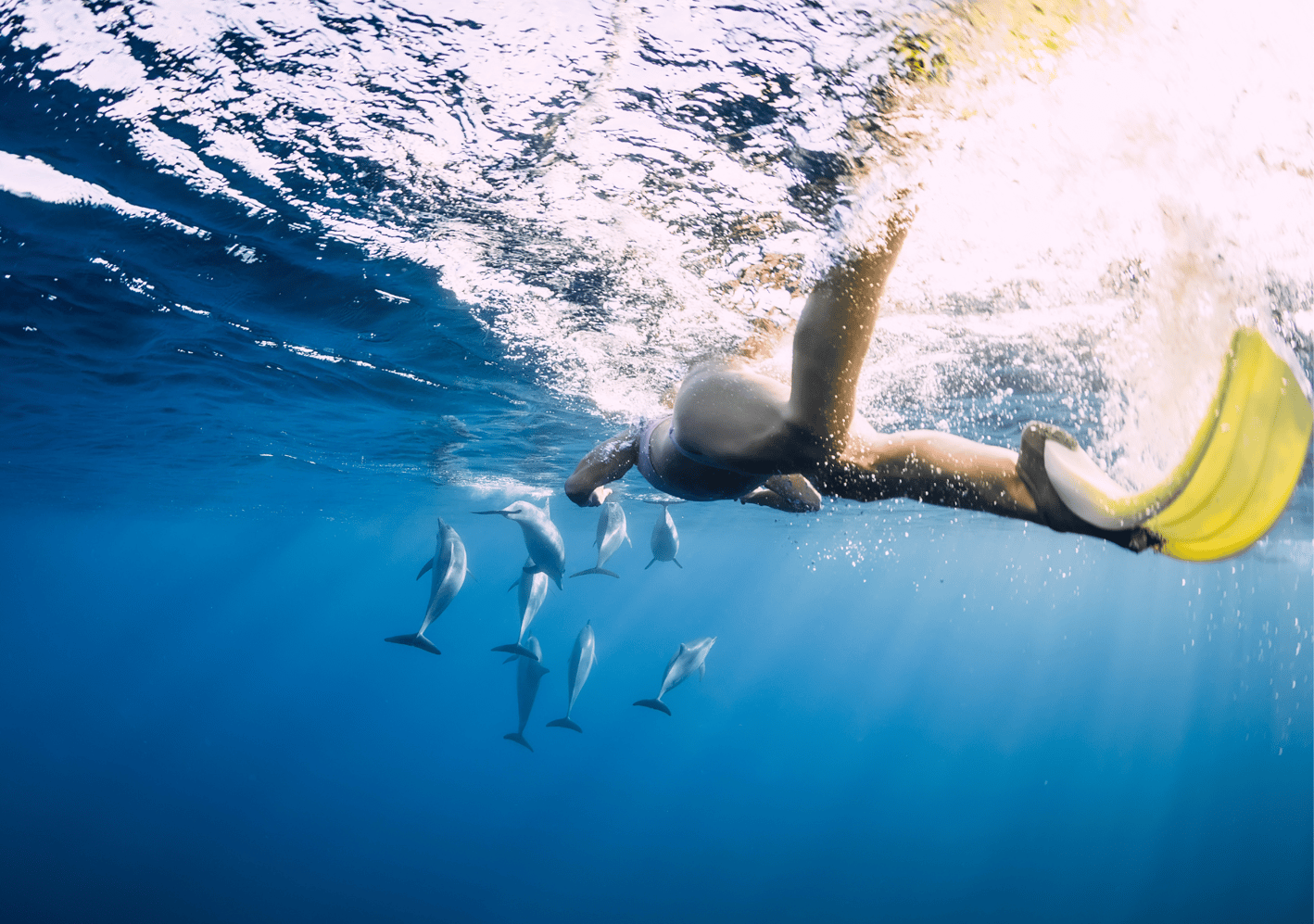
A calm south coast lagoon with rocky coral patches in the sand and strong currents in the channels.
Read the guideThe underwater waterfall is sand sliding into a canyon, visible only from a plane or helicopter.
Read the guide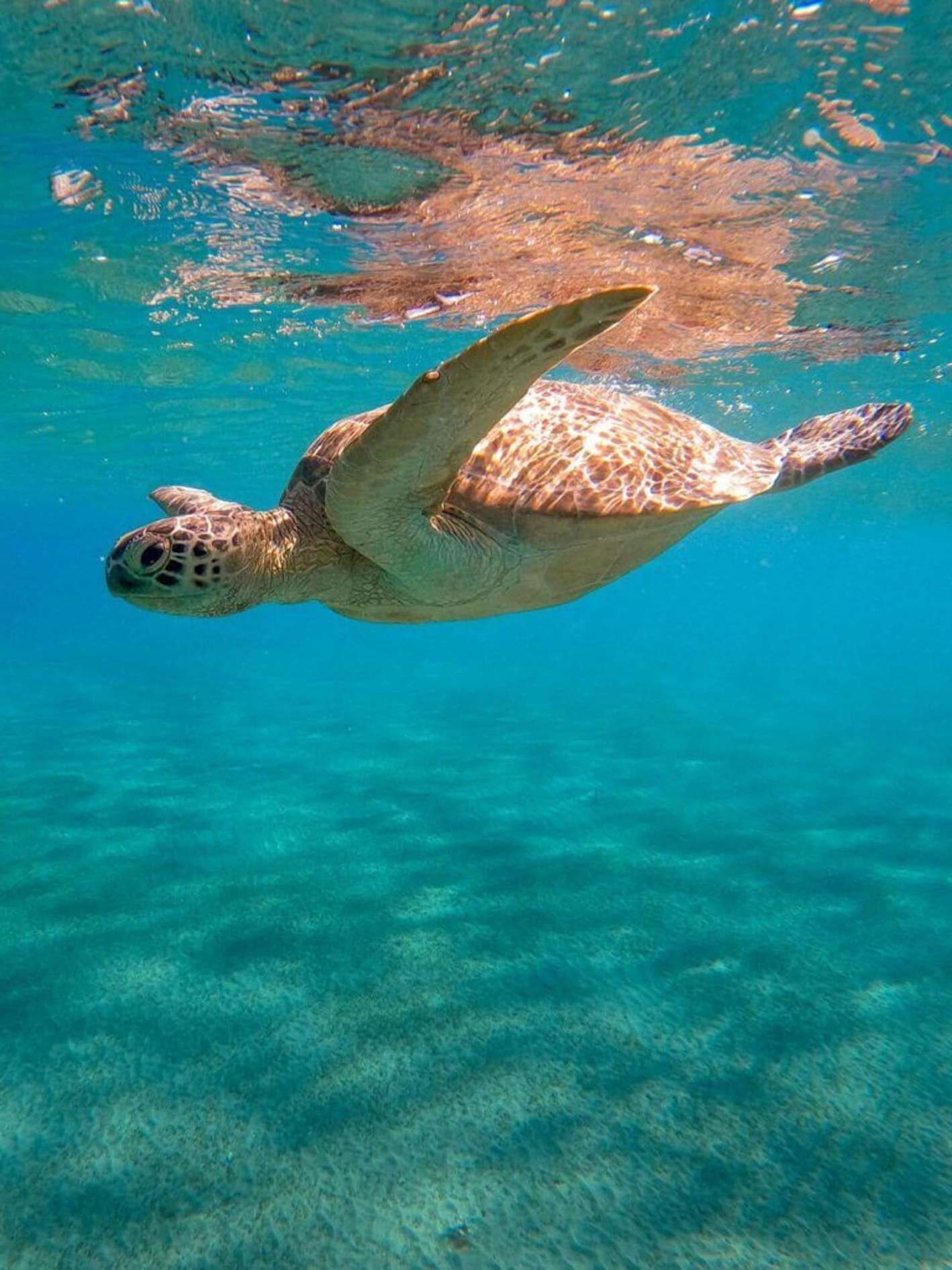
Turtles graze in several sheltered lagoons, but Mauritian law forbids swimming with them.
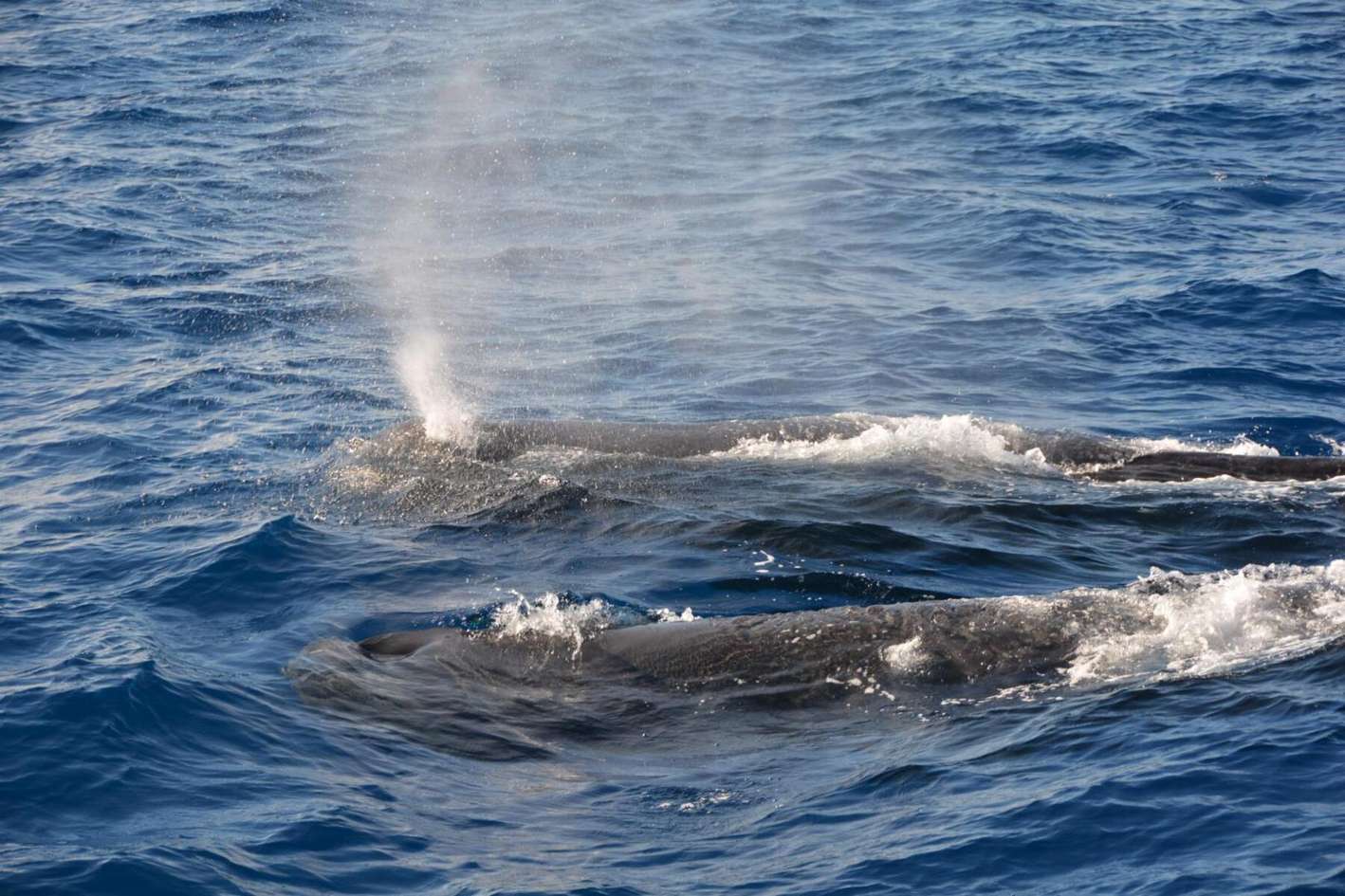
Read the guideSperm whales live off the west coast all year, and the law keeps every encounter at boat distance.
Read the guide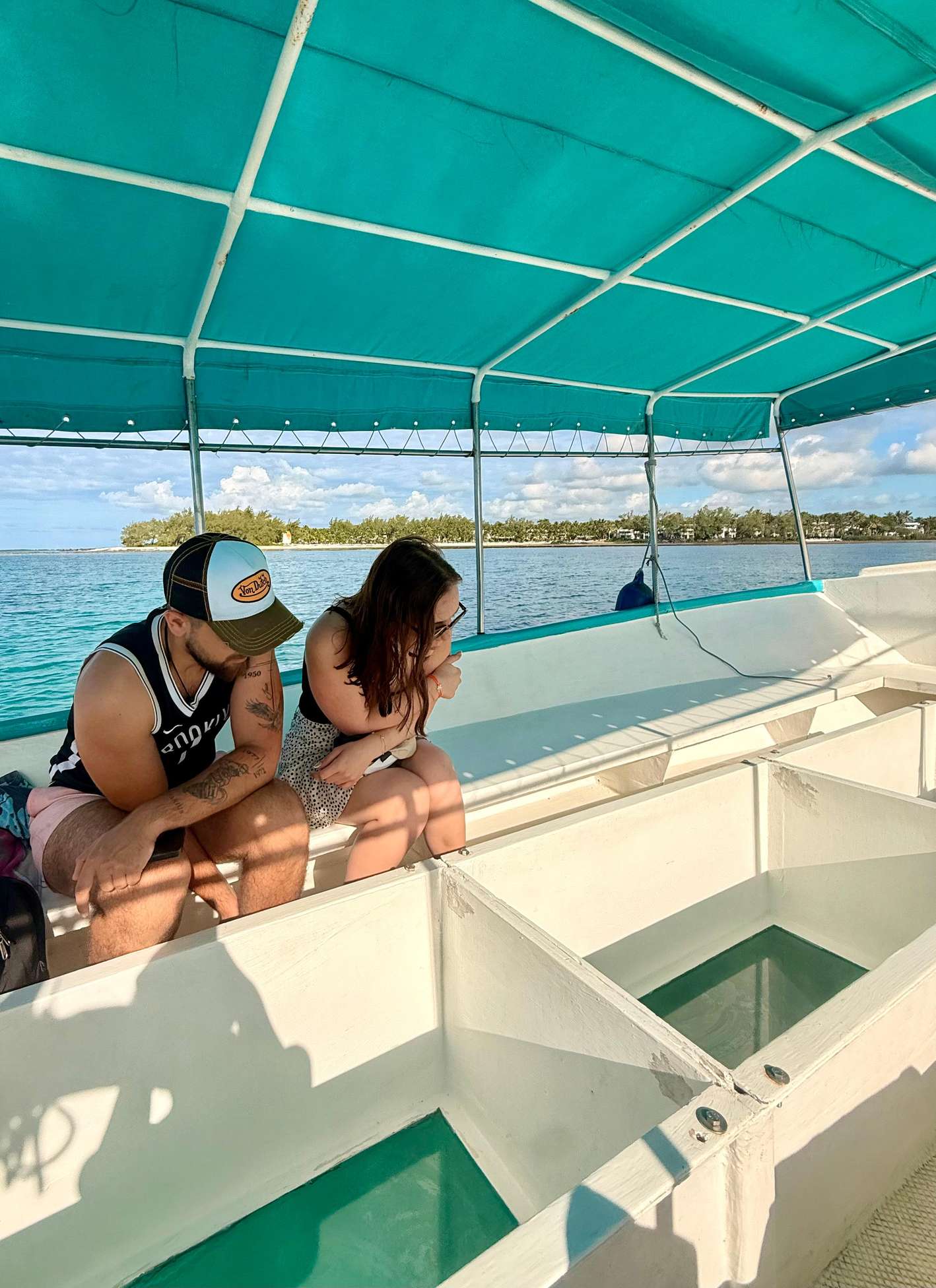
October to December pairs warm water with calm seas, and cyclone season has its own rhythm.
Read the guide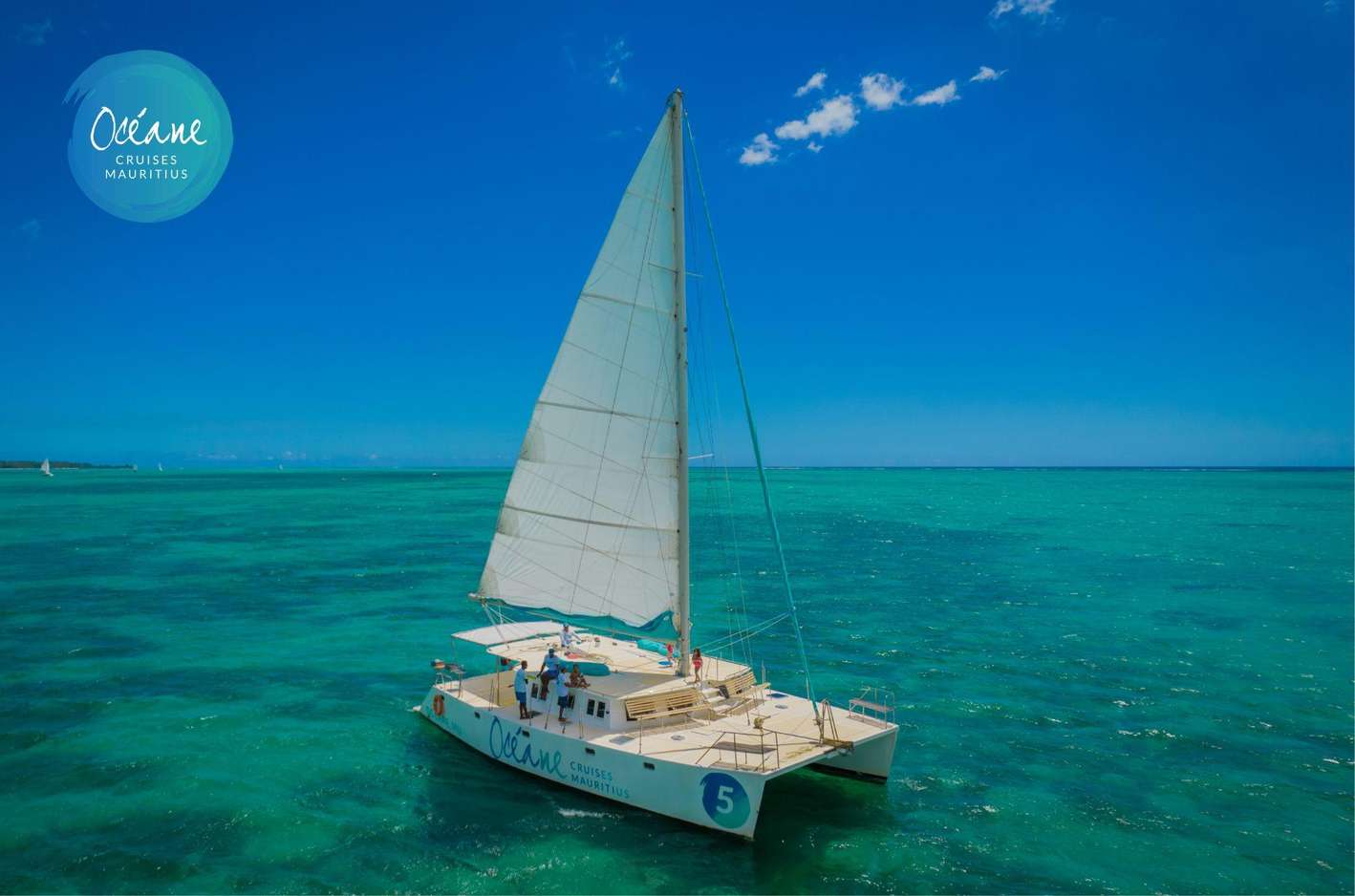
A twin-hulled day sail to Île aux Cerfs with barbecue lunch and about an hour on the island's sand.
Read the guide
A speedboat crosses to Île aux Cerfs in 10 to 20 minutes and reaches the waterfall's base itself.
Read the guide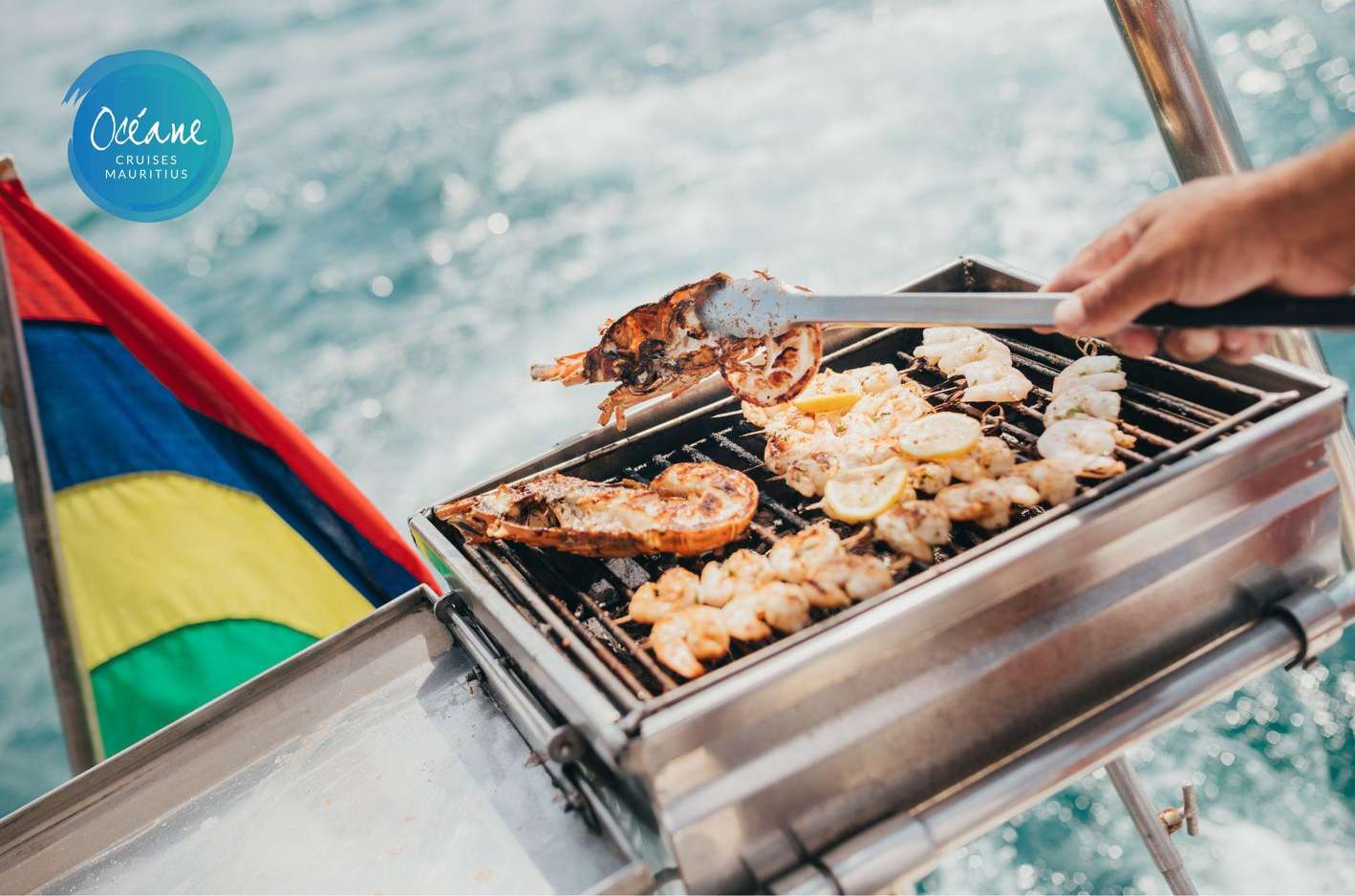
A private charter lets you set the stops and reach Île aux Cerfs before the crowds arrive.
Read the guideEach of these guides covers one coast or one kind of trip, told for the same reader who wants clear water and living reef.
The island-wide comparison that settles which coast to base yourself on
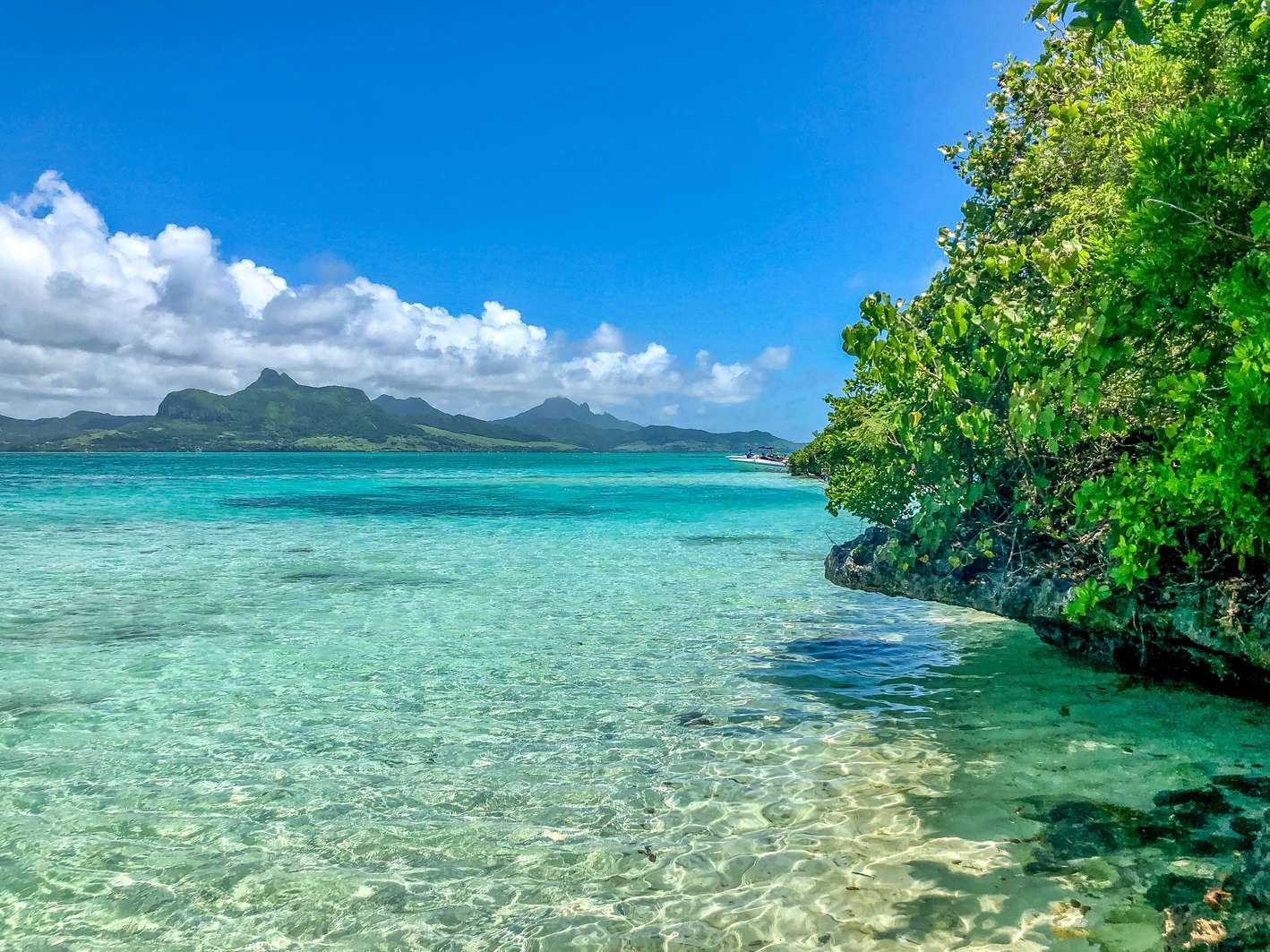
The same holiday week can give you flat, clear water or a chopped-up lagoon, and the difference is which side of the island you stand on.
From May to September the southeast trade winds hammer the east coast around Trou d'Eau Douce, where calm days can drop to almost none and waves top two metres. The mountains shield the west and northwest, so Tamarin, Flic en Flac and the northern beaches stay sheltered.
Coral tells its own story. Blue Bay Marine Park in the southeast holds the densest coral on the island, and the reef around Coin de Mire in the north is healthy and active. This guide lines the coasts up side by side so you can pick the water that fits your dates.
3 hours · ★ 5.0 (4)Blue Bay: Lagoon, Snorkeling, and Creole LunchFrom $87 7 hours · ★ 4.8 (869)Ile aux Cerfs Catamaran Cruise with BBQ Lunch & SnorkelingFrom $68 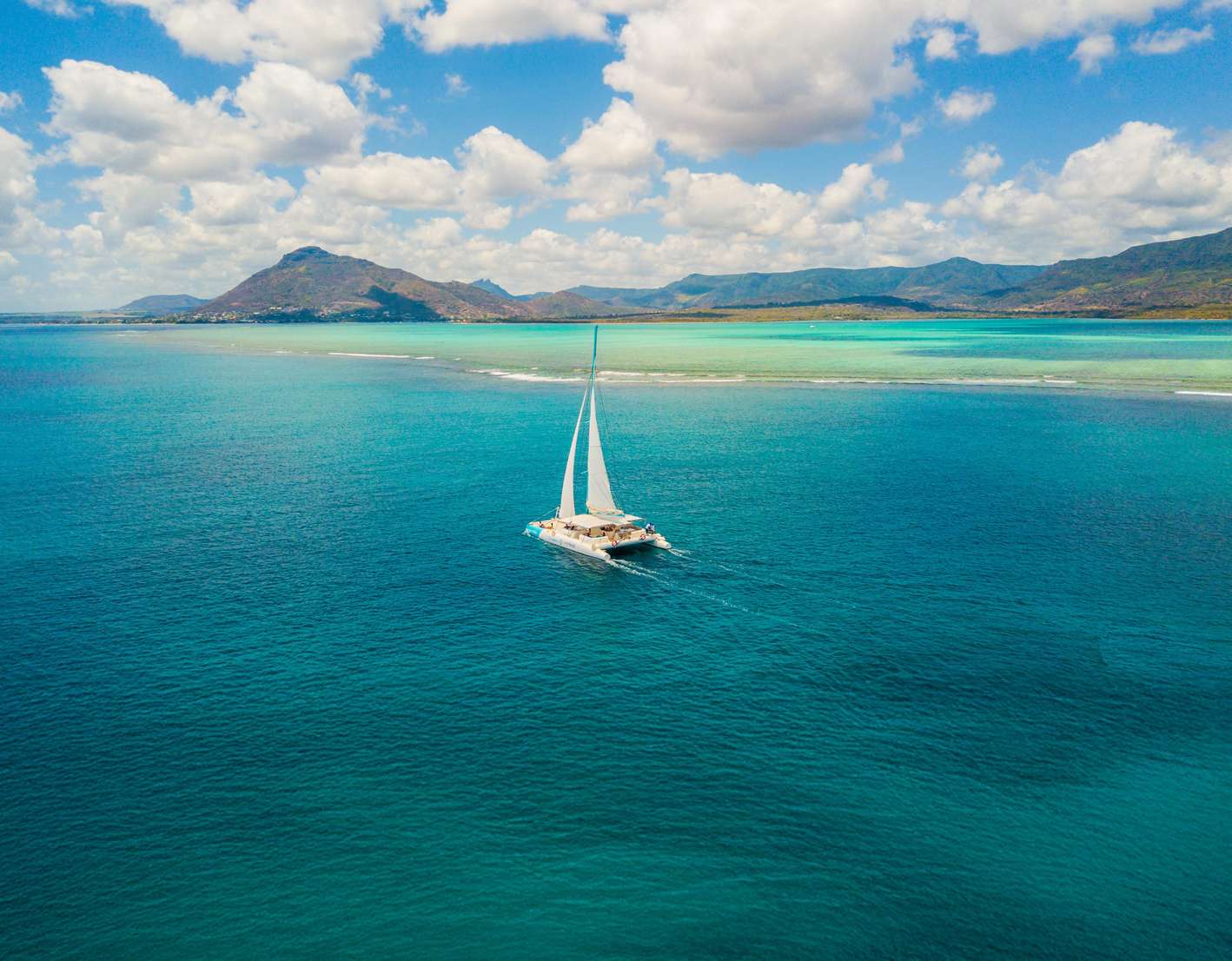 6 hours · ★ 4.7 (363)Mauritius: Catamaran Cruise - Dolphin Watching, BBQ & DrinksFrom $87 2 hours · ★ 4.7 (39)Mauritius: Snorkeling with turtles Le Transporteur speedboatFrom $375 /group
The island's protected coral garden, explored by glass-bottom boat
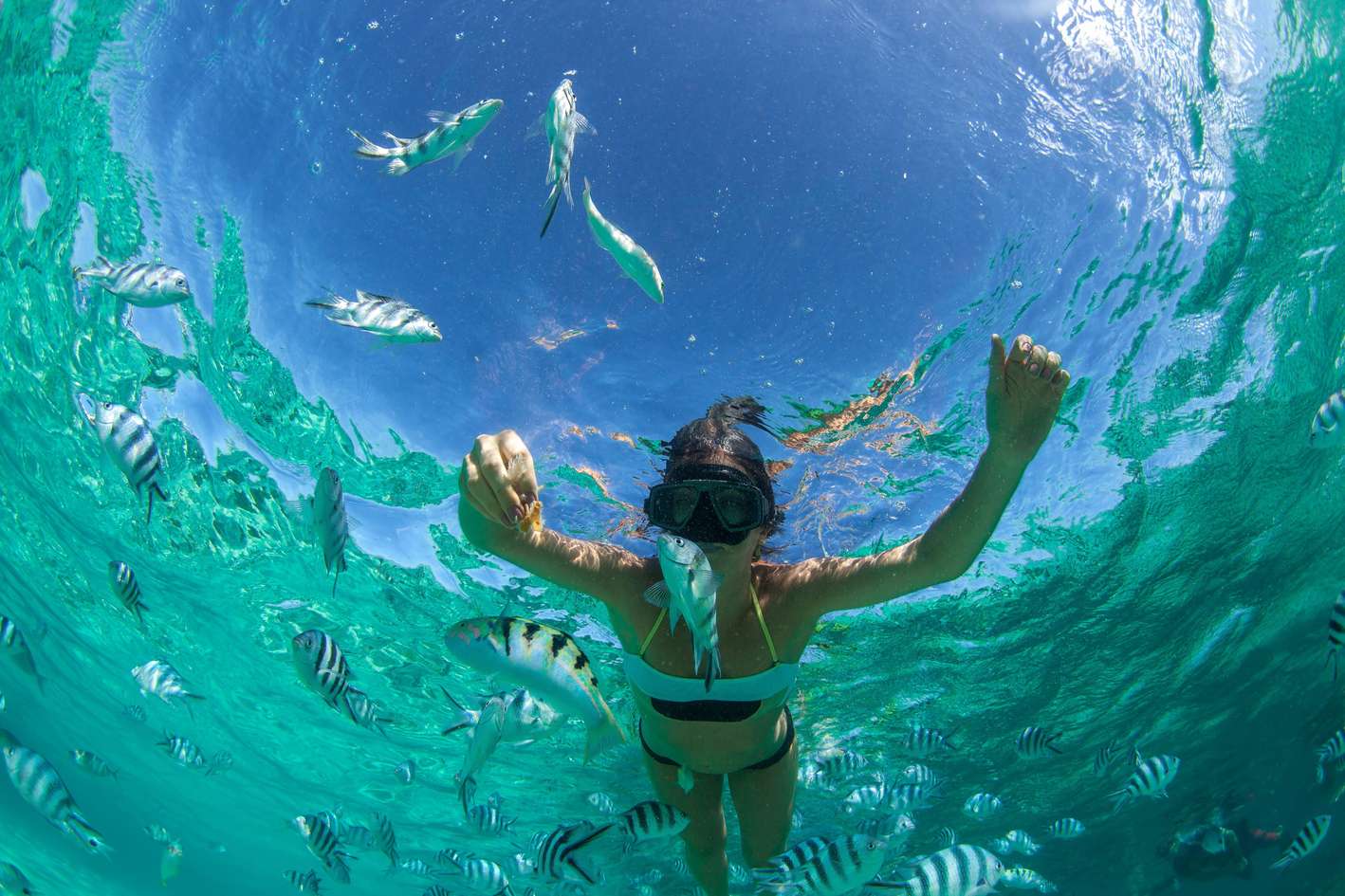
Blue Bay is the one place on Mauritius where the coral itself is the headline. The park starts about 100 metres off the public beach and holds table coral colonies up to 16 metres wide, plus brain corals you could park a car on.
Confident swimmers can reach the closest shallows from the sand; the best gardens sit farther out, so a glass-bottom boat covers them properly.
A one-hour trip gives you roughly 45 minutes in the water at a single spot. Pick the two-hour version if you want two reef locations, or the guided outing if you want a live guide naming the fish. Stay inside the yellow buoy line, because boats use marked lanes beyond it.
3 hours · ★ 5.0 (4)Blue Bay: Lagoon, Snorkeling, and Creole LunchFrom $87 2 hours · ★ 4.6 (17)Blue Bay Marine Park: Guided Snorkeling with Video Souvenirs and SnackFrom $58 4 hours · ★ 4.5 (306)Blue Bay: Half-Day Snorkeling Trip with Creole Picnic LunchFrom $67 1 hour · ★ 4.4 (155)Blue Bay Marine Park - 1-hour Snorkeling ExcursionFrom $28 Flat lagoon water most of the year, with turtles out on the reef shelf
The lagoon at Trou aux Biches sits behind the barrier reef on the leeward northwest coast, so it stays flat on 80 to 98 percent of days and never gets more than a few windy days a month.
Walk in from the sand and you find sandy flats with a few fish; the real coral and the sea turtles graze along the reef shelf 200 to 300 metres out.
That shelf is best reached by a short boat ride, and the outer reef itself is one for experienced snorkelers in excellent conditions. Go in the morning before the boats arrive and the turtles are most active. Water shoes help, because stonefish and urchins hide in this lagoon too.
One of the calmest lagoons on the island, with coral heads a short swim out
Flic en Flac holds one of the calmest lagoons in Mauritius. The barrier reef keeps it shallow and clear, and unlike some lagoons it stays swimmable at most tides. Scattered coral clumps and reef fish begin only a few dozen metres from shore, with denser coral about 200 metres out in the 300-metre-wide lagoon.
Where you enter matters. The water in front of the beachfront hotels near the temple gives healthier coral heads than the central public beach.
Boats for dolphins and Île aux Bénitiers leave straight from the public beach, so you can turn a lagoon morning into an open-water afternoon. Keep clear of the reef pass a kilometre or two offshore, where currents run.
8 hours · ★ 5.0 (2)Private Dolphins, Sea Turtles & Île aux Bénitiers TourFrom $850 /group 7 hours · ★ 5.0 (1)Mauritius: Private Whale Watching & Bénitiers BBQFrom $1,025 /group 2 hours · ★ 4.7 (28)Flic en Flac: Private Sunrise Dolphin Watching Boat TourFrom $309 /group 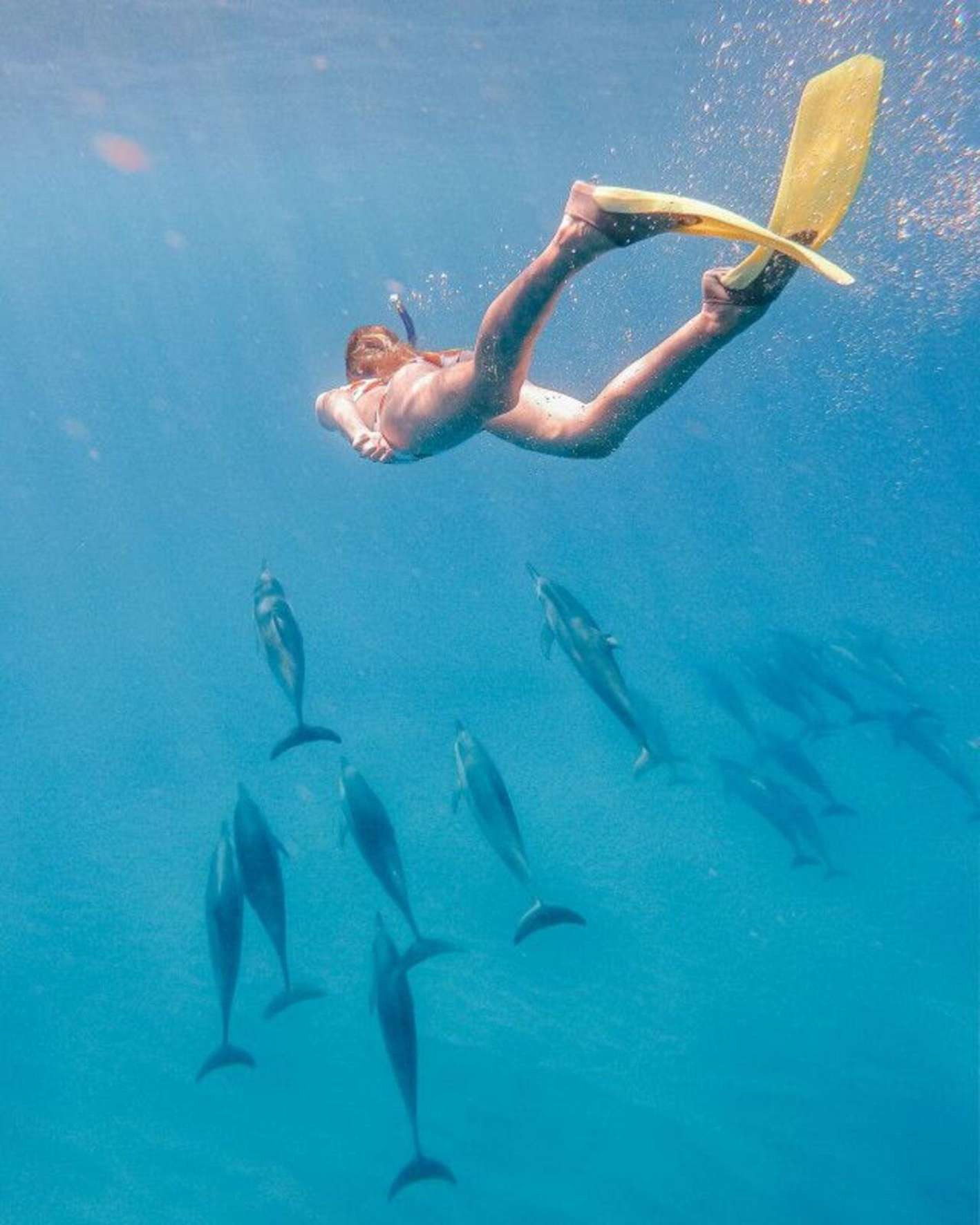 2 hoursMauritius: Private Dolphin Watching and Snorkeling TourFrom $441 /group
A small northern cove where turtles feed close to the rocky edges
Pereybere is the best spot on Mauritius for meeting sea turtles, and both green and hawksbill animals cruise the sheltered water close in.
Turtles appear in the lagoon 50 to 100 metres from shore, with the main feeding grounds a finning swim of 300 to 350 metres toward the barrier reef, reachable from the beach without a boat.
The fish gather along the rocky outcrops at the edges of the cove, while the sandy centre stays quiet. A buoyed swimming zone keeps motorboats out of the middle, so stay inside the buoys and mind the channels where boats enter. A short boat trip from here reaches the turtle grounds without the long swim.
The launch town for the northern islands and their offshore reef water
Grand Baie itself is a working harbour of moorings and day boats, and the swimming close to town stays pleasant rather than spectacular.
What the town gives you is departure: full-day catamarans to the northern isles and speedboats to the turtle lagoons leave straight from Grand Baie Public Beach, some collected by dinghy right off the sand.
The sailing out past Cap Malheureux crosses open water, and in the trade wind months of May to August the morning crossing can roll and spray.
October to April keeps it smooth on most days. Masks on the day boats are basic and shared, so bring your own if a leaky seal would spoil your swim.
The bay where wild dolphins rest at dawn and open-water swimmers earn their morning
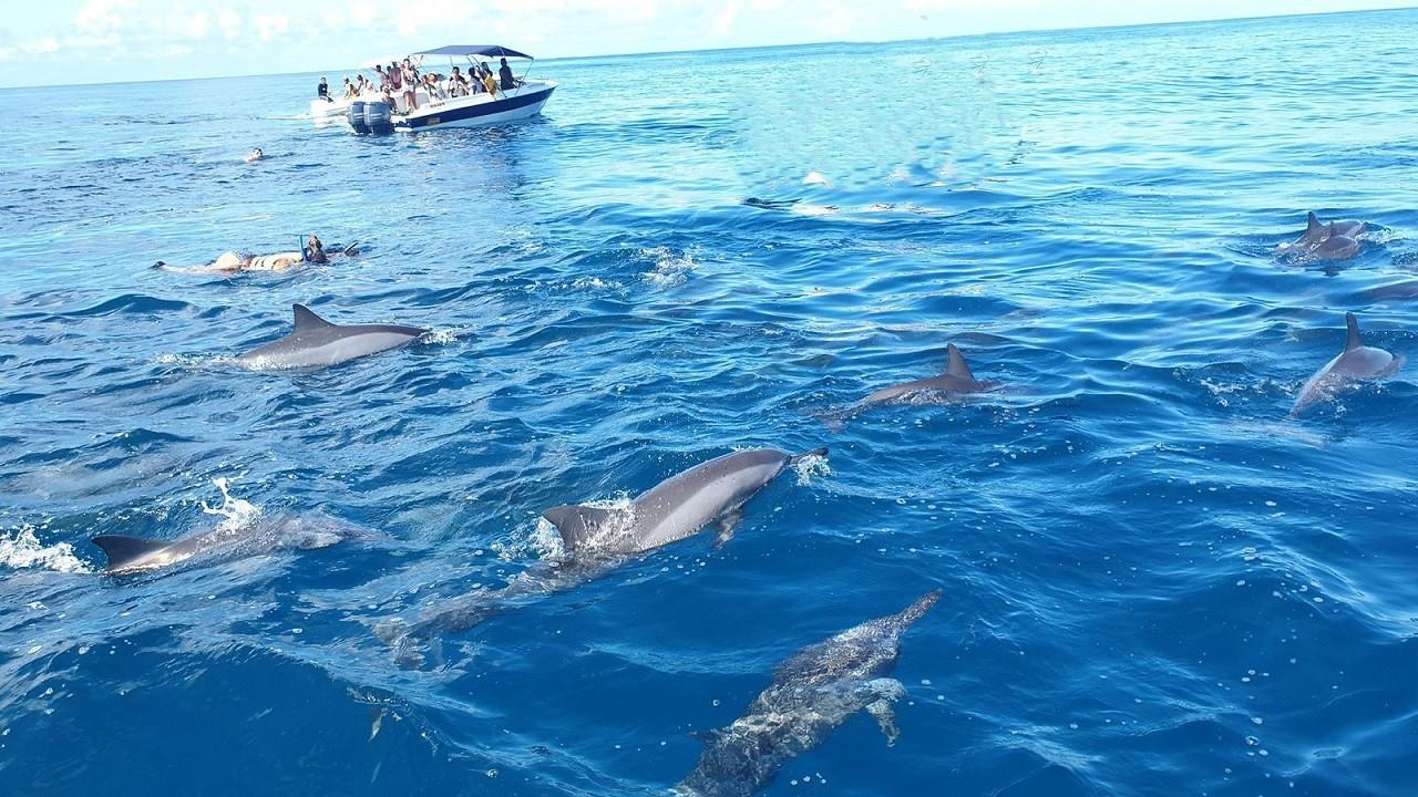
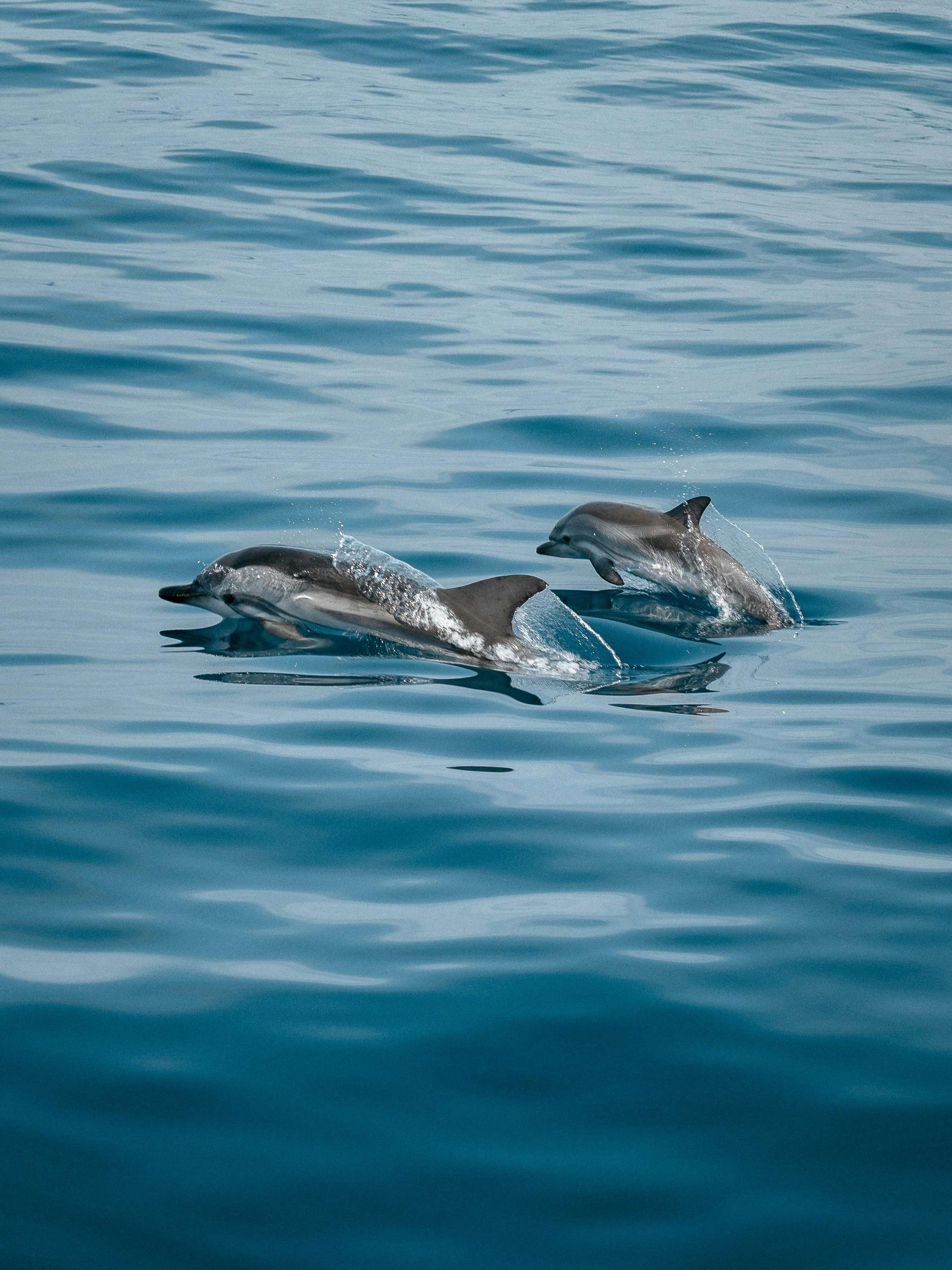
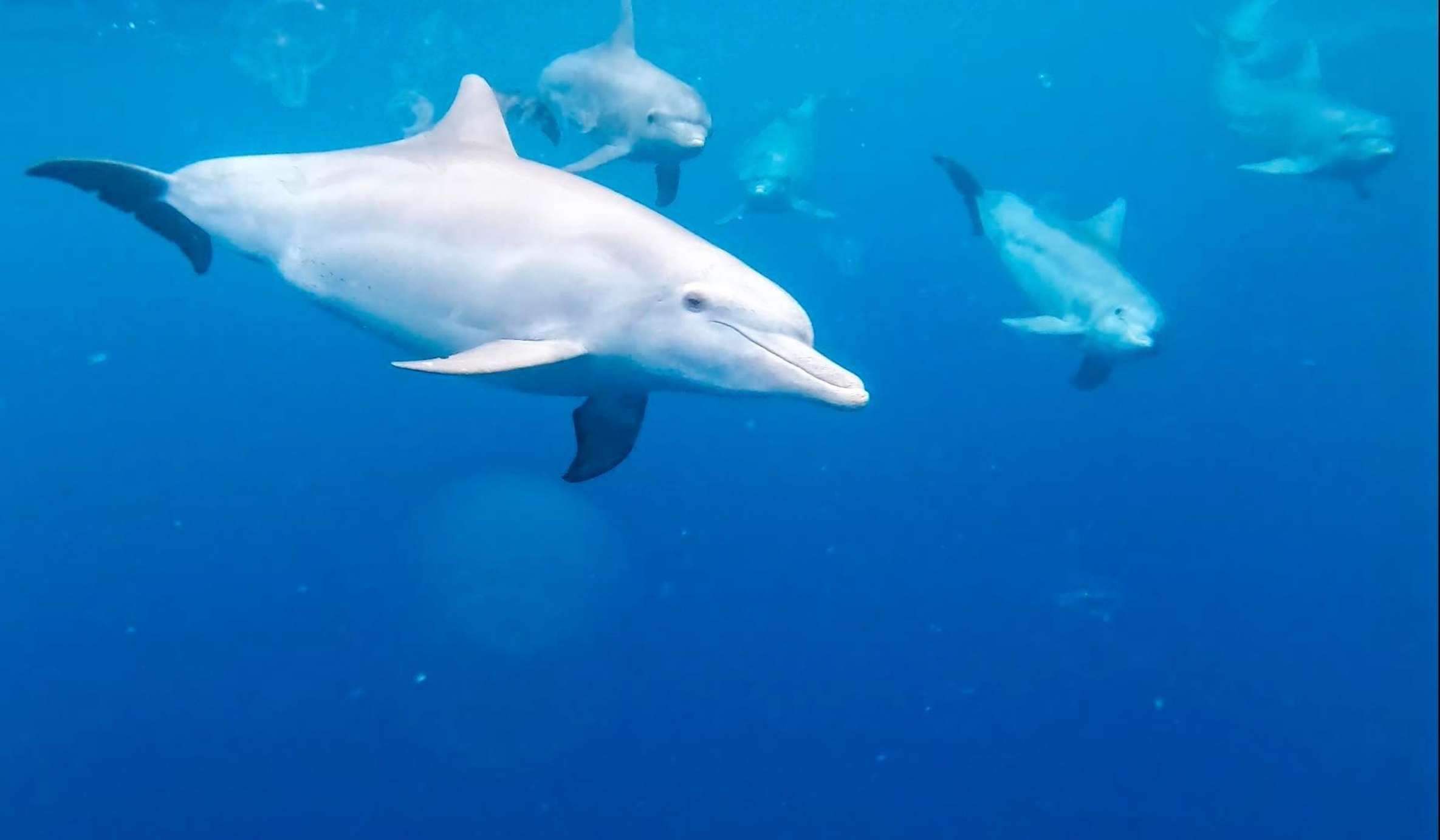
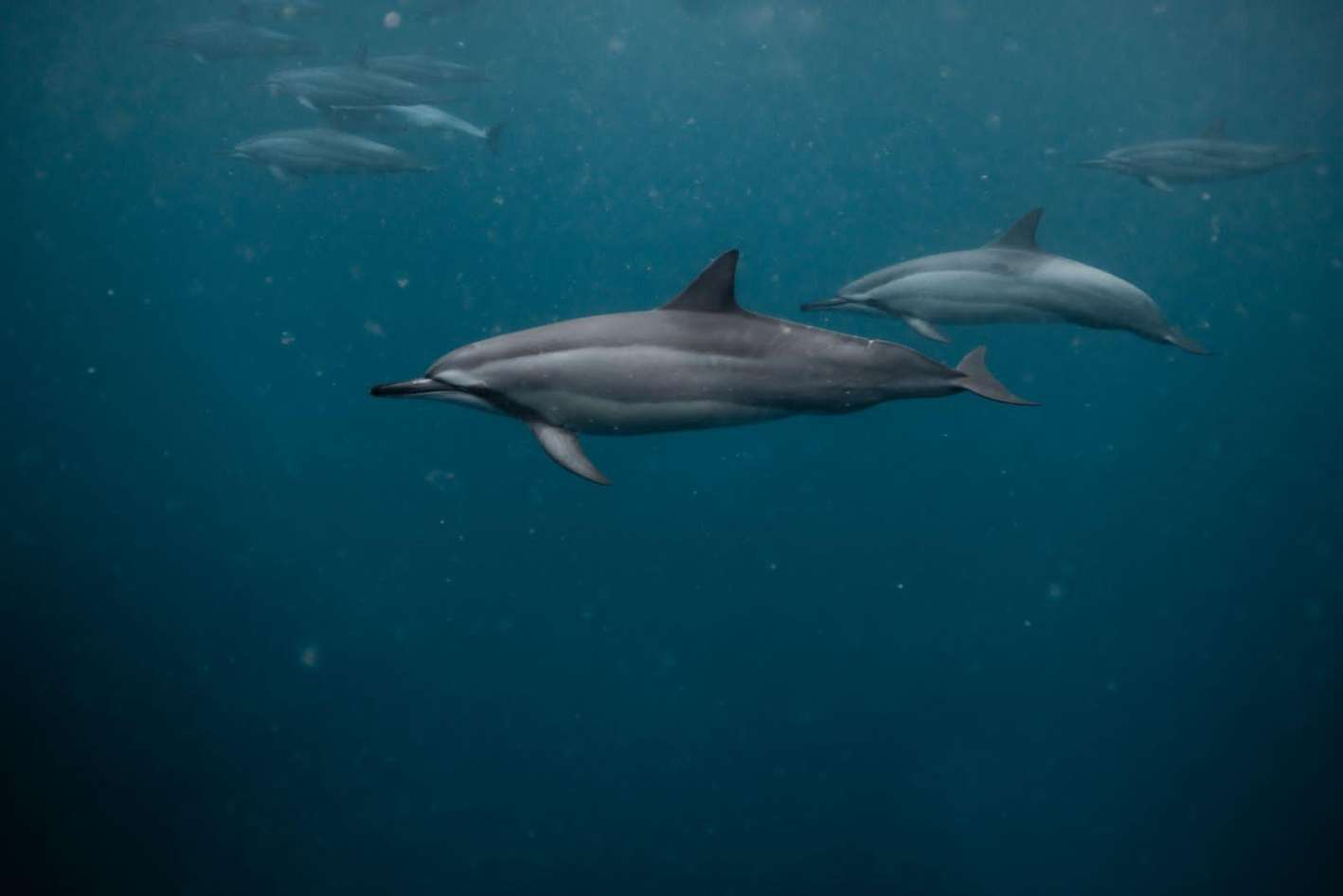
Tamarin Bay is where the dolphin boats launch, and the pods return to its sheltered water to rest and feed early. The best window runs from about six to half past seven, before dozens of tour boats arrive between eight and half past nine.
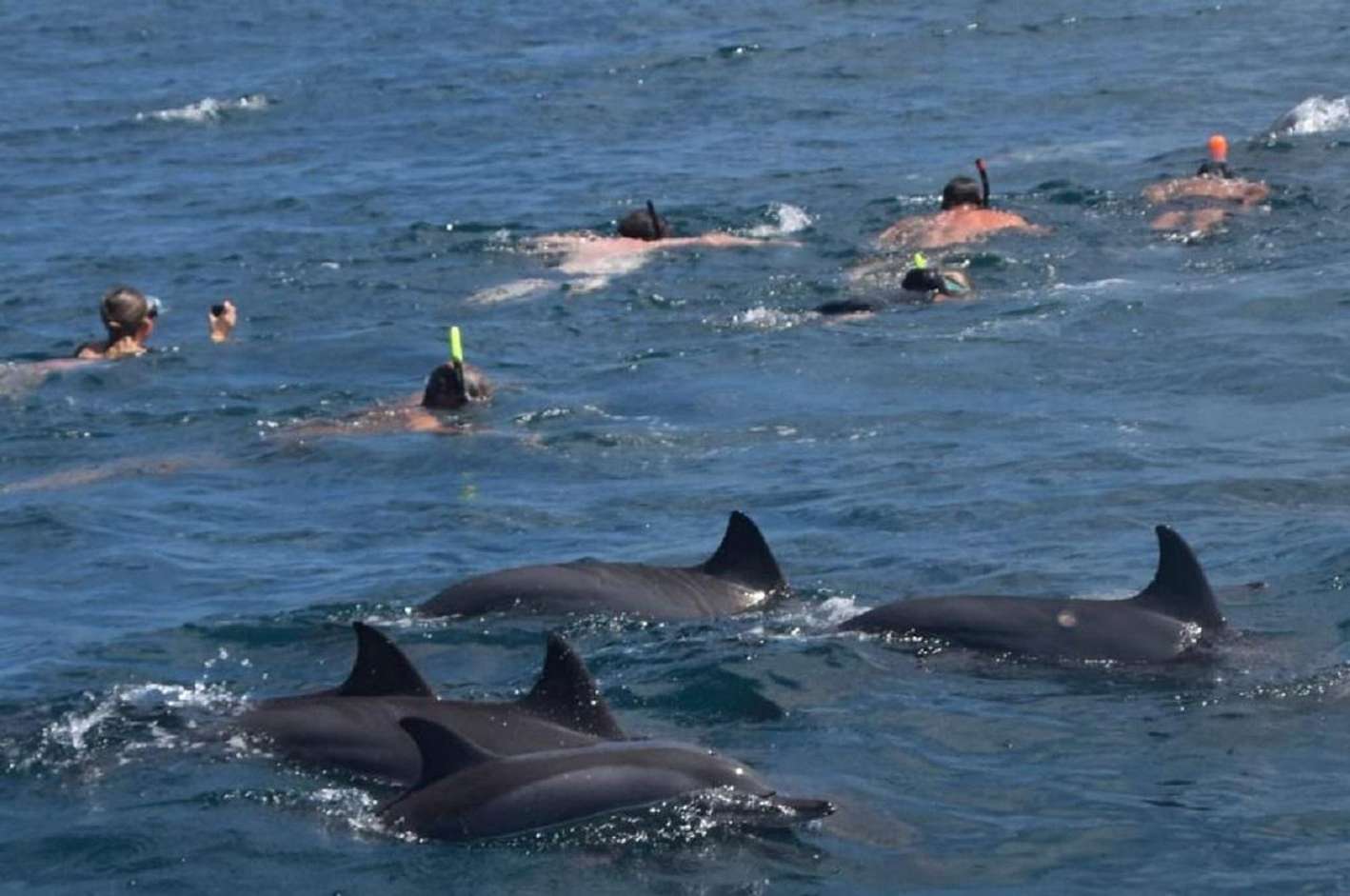
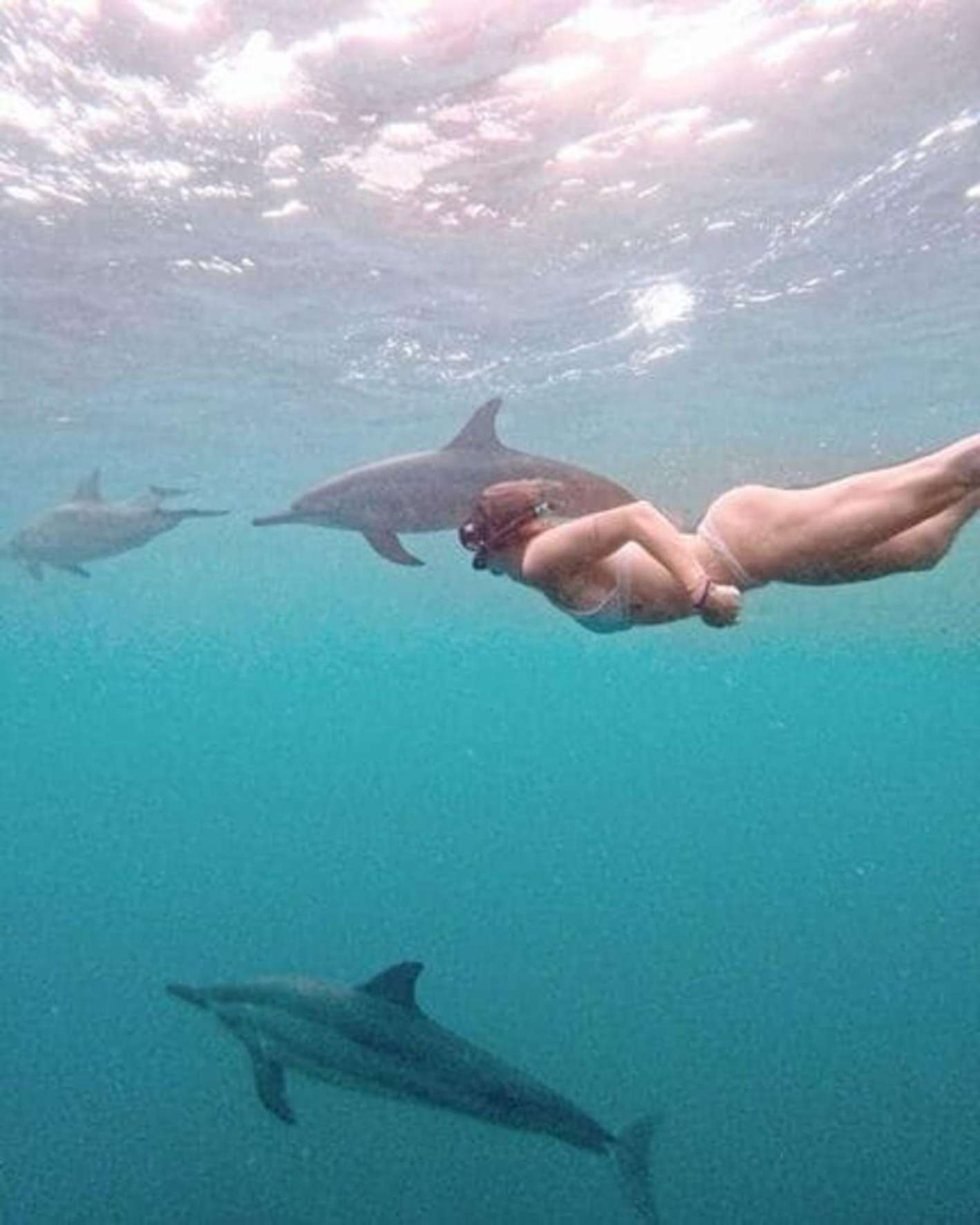
Swimming with them happens in deep open water outside the reef, and the animals move fast: you jump in and swim hard to keep pace, fins on.
The Beach Authority lists Tamarin as a hazardous bathing area, and currents form where the river mouth meets the reef opening, so this is water for confident swimmers with a boat. Rough seas cancel trips, and operators reschedule or refund when the weather turns.
7 hours · ★ 5.0 (5)Private Île aux Bénitiers Boat: Dolphin Snorkeling & LobsterFrom $738 /group 6 hours · ★ 4.7 (363)Mauritius: Catamaran Cruise - Dolphin Watching, BBQ & DrinksFrom $87 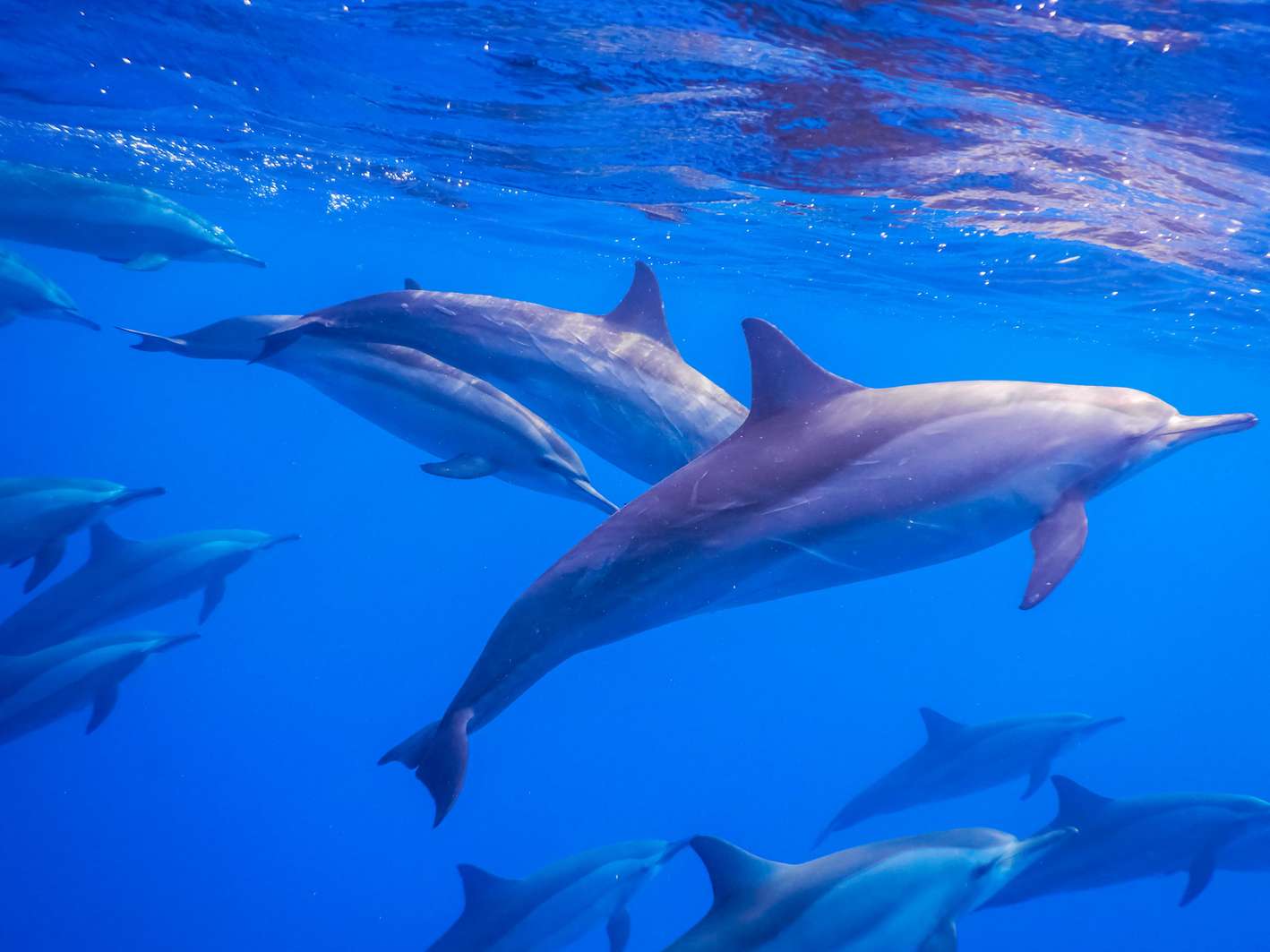 2 - 6 hours · ★ 4.7 (237)Dolphin Watching with Hotel Pickup (Mauritius)From $61 /group
 4 hours · ★ 4.4 (35)Dolphins & Whales: Private Snorkeling TourFrom $528 /group
A wide east coast lagoon with a dramatic pass that demands a boat and a skipper
Belle Mare's lagoon holds scattered coral and a reef about 500 metres offshore, and the honest advice is to reach that reef by boat rather than by swimming from the sand. The reef pass funnels strong currents out to sea, and boat and jet ski traffic crosses the lagoon through the day.
Inside the protected lagoon the picture softens. Sheltered spots hold calm, shallow water with coral heads where butterflyfish, damselfish and the occasional octopus live.
East coast tours collect guests straight from the area's resorts, and catamarans to Île aux Cerfs run from nearby Trou d'Eau Douce. In the June to September trade winds the open water roughens, so go early in the morning.
A shallow, sandy east coast lagoon that beginners can wade into at dawn
Palmar gives beginners the gentlest water on the east coast. The lagoon runs barely 250 metres to the barrier reef and stays calm over a sandy seabed, where small tropical fish cruise the seagrass and rocky points hold blennies and juvenile reef fish. Moorish idols, butterflyfish and honeycomb groupers turn up across the lagoon.
The trade winds write the rules here. From June to September the lagoon turns choppy and murky, with calm days dropping almost to none, so summer and early mornings are the time.
Watch your step in the shallows, because several kinds of sea urchins burrow in the sand and water shoes are a sensible idea. Boat tours pick up directly at the Palmar resort lobbies.
A north-facing bay of recovering coral and strict park rules
Balaclava bay faces north, out of the path of the southeast trade winds, so its reef-protected lagoon stays calm enough for all swimmers through the year. Scientists have logged a long list of coral species here, from branching Acropora to massive brain corals, though the reef is still recovering and patchy in places.
The marine park status brings rules worth knowing. Swimming is legal only inside designated zones, boats use marked traffic lanes, and entering conservation zones needs a permit.
The easy entry is from the resort beaches, where reef life starts a few strokes from the sand. Sea turtles graze here occasionally, and the reliable turtle grounds sit a short drive north.
A sheltered marine park where green turtles visit a quiet cove
Turtle Bay earns its name in one particular place. Green sea turtles enter the shallow water of Kuilima Cove regularly, and snorkelers meet them over the deeper sandy patches in the middle of the cove, a few fin strokes from the beach. Entry is easy, over ankle-deep sand with no rocks to climb.
The bay itself is a sheltered northwest lagoon that usually stays flat, and coral formations begin near the shore. Two cautions shape your swim.
Currents pull near the reef passes, so stay inside the cove, and some boat traffic crosses the wider bay, so a bright snorkel vest makes you visible. Sightings are likely in the cove rather than guaranteed everywhere.
A quiet southern base where the lagoon shallows and the outer reef play different games
Bel Ombre runs quieter boat routes than the north, with fewer operators and reefs that see fewer snorkelers, which can mean exceptional visibility on a good day. Snorkeling straight off the beach works on calm days around the rocky coral patches set in the sand, though at low tide the lagoon grows very shallow.
The channels are the thing to respect. Currents run strong through them, and swimmers should keep to the yellow bathing zones rather than heading for the passes.
Water clarity peaks around mid to high tide. The boat trips that suit this coast launch from Tamarin Bay about 40 minutes north, and most operators collect you from your hotel lobby before dawn.
The optical illusion that only exists from the air, and the real reefs beside it
The picture that draws people here shows pale sand pouring off a shallow shelf into dark water thousands of metres below.
Stand on the beach or put your mask in the water and it disappears, because the effect depends on an aerial view and the water limits what you can see sideways to a few metres.
What the same coastline gives you in the water is genuine. Scuba sites around Le Morne include a drift pass and a deep wall, most requiring advanced certification.
Swim or paddle toward the reef opening and you meet the danger behind the image: outgoing tide and surf generate strong seaward rip currents there. The lagoon, Crystal Rock and the dolphin grounds are the rewards that need no illusion.
Where turtles gather, and the law that changes how you meet them
Green and hawksbill turtles feed in several of Mauritius's sheltered lagoons, and the northern waters around Trou aux Biches and Pereybere give some of the most reliable sightings, with occasional appearances at Blue Bay and the northern islands. Watching one graze over seagrass a metre from your mask is the memory people carry home.
The rule that shapes every encounter is law, not etiquette. Since 2023 it has been illegal to swim with, feed, touch or harass any marine turtle in Mauritius, with penalties that can reach enormous fines and prison.
What that means in practice is simple: keep your distance, let the turtle come to the water near you rather than the reverse, and never kick hard with fins nearby.
8 hours · ★ 5.0 (2)Private Dolphins, Sea Turtles & Île aux Bénitiers TourFrom $850 /group 2 hours · ★ 4.7 (39)Mauritius: Snorkeling with turtles Le Transporteur speedboatFrom $375 /group 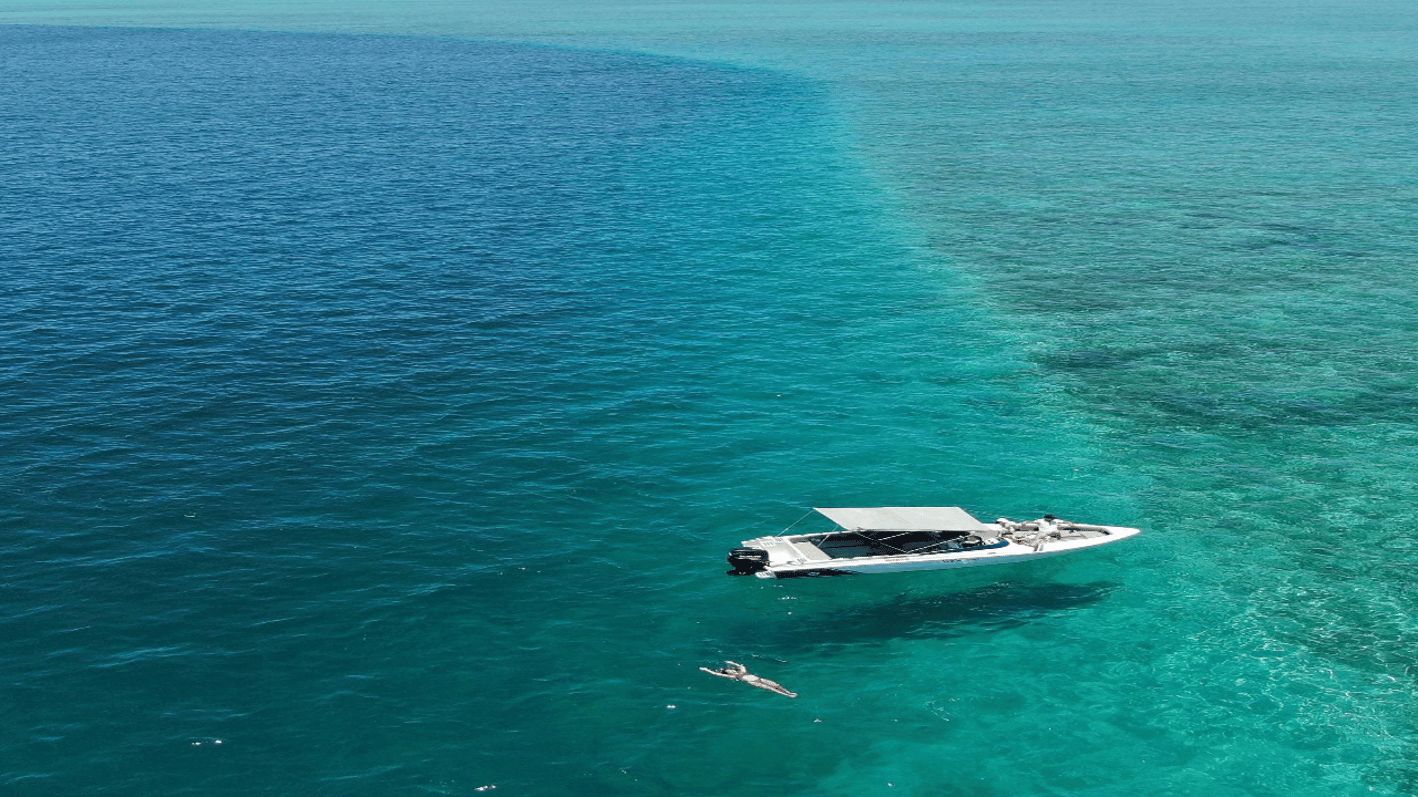 9 hours · ★ 4.3 (188)5 Islands Speedboat with Snorkeling, Sea Turtles, Lunch & DrinksFrom $95 1.5 hours · ★ 4.2 (314)Mauritius: Sea Turtle Adventure and Coral Reef DiscoveryFrom $44
Resident sperm whales off a steep drop-off, watched strictly from the boat
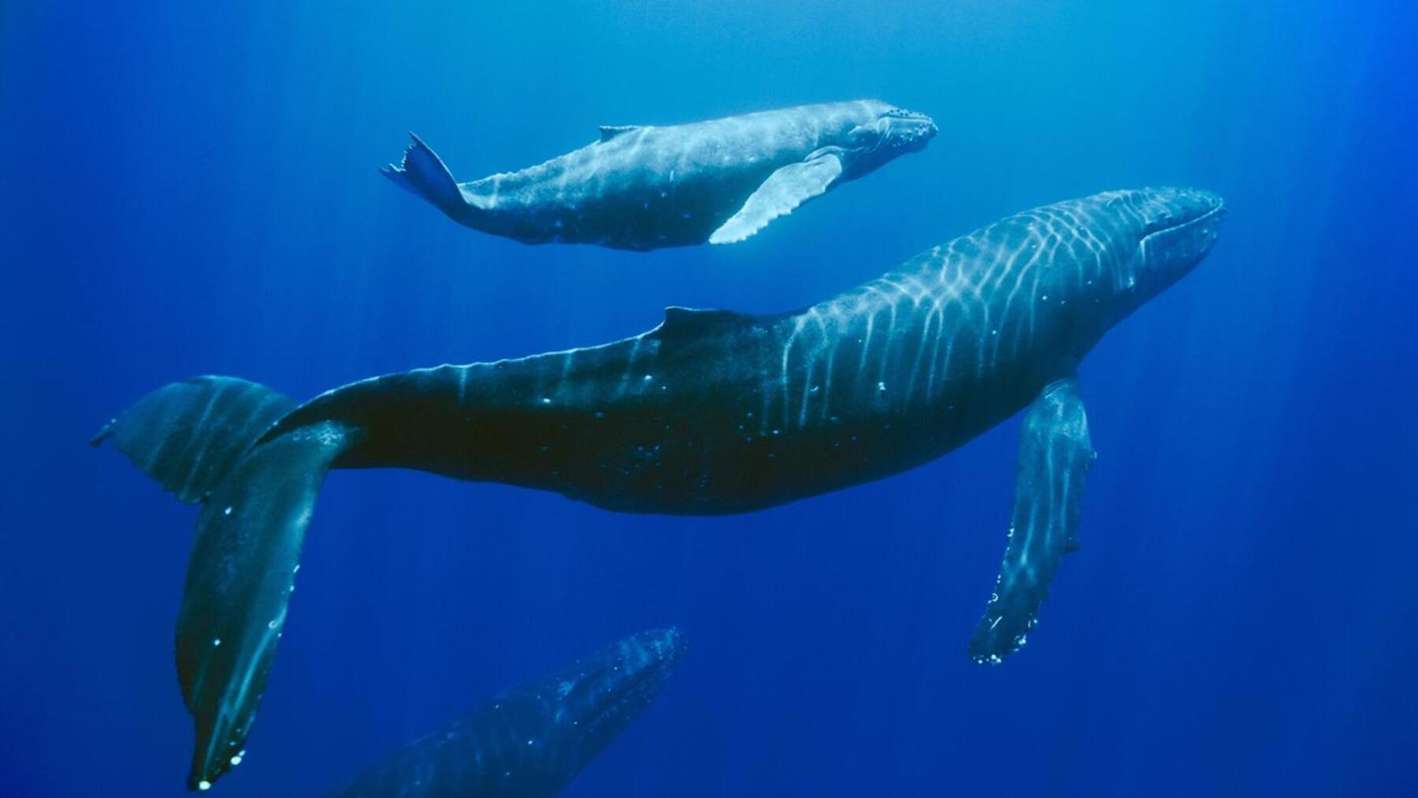
Off the west coast the seabed falls away fast into deep water, and that drop-off supports a resident population of sperm whales, so sightings do not depend on a migration window. Humpback whales pass between June and October, adding a second act in season.
One fact decides the shape of the day: Mauritian law prohibits swimming with, diving with or snorkeling with whales, and boats may not approach within 100 metres.
Everything happens from the deck, and licensed skippers hold certificates in how to position a boat beside the animals. That makes the trip calm rather than athletic, and a private charter gives you the whole boat's rail to yourself when a whale surfaces.
The month-by-month picture of temperature, visibility and wind
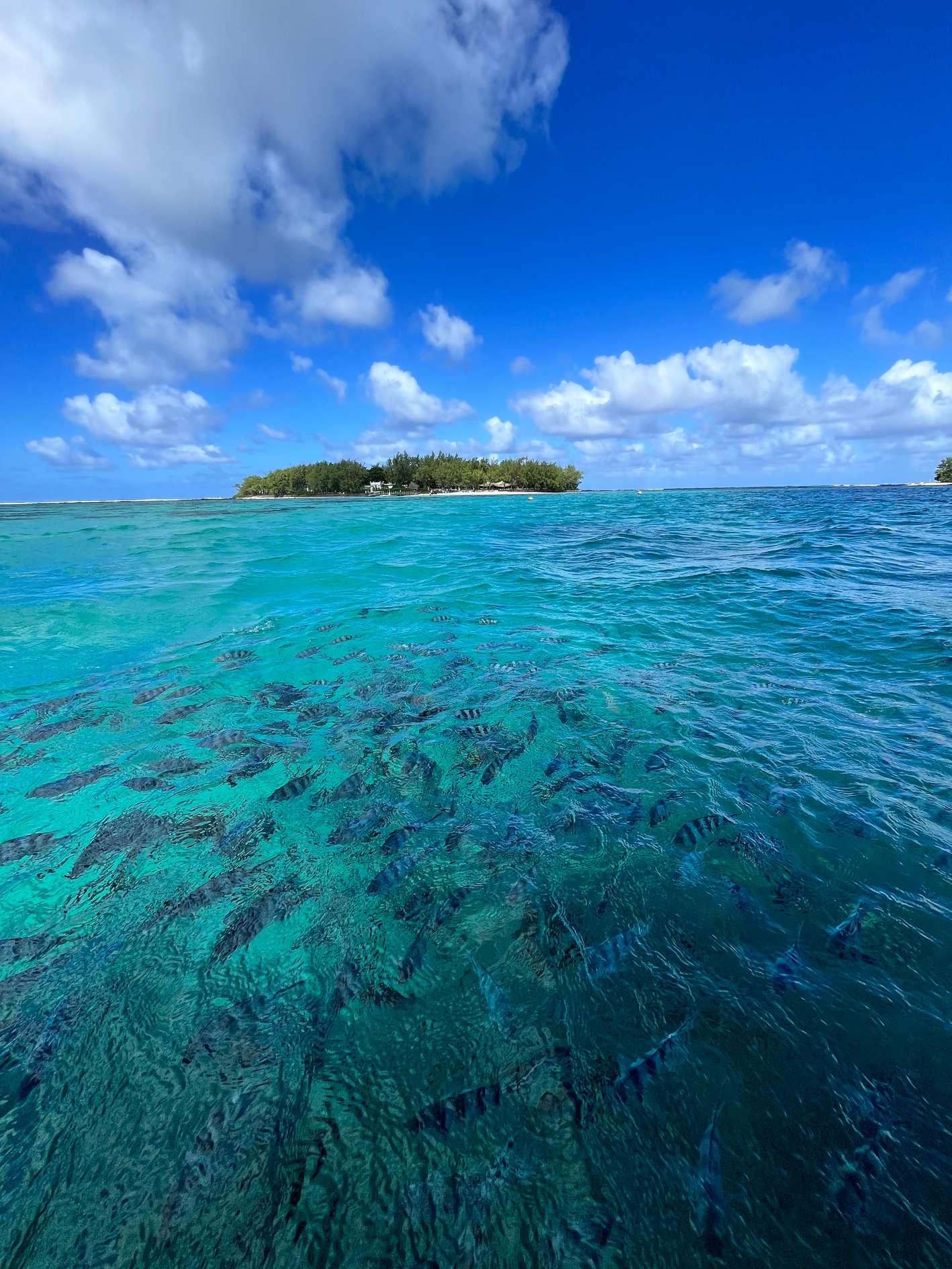
The calendar matters more here than on most islands. October to December gives the best combination of warming water around 26 to 28 degrees, calm seas and excellent visibility, and September and October regularly reach 20 to 30 metres of clarity once the rains stop.
From June to August the water cools to about 23 degrees and the trade winds roughen the east.
January to March is cyclone season. Direct hits come only every four or five years, but one or two passing systems each season can suspend boat trips for a day or three, and heavy rain clouds the lagoons with runoff.
A shorty wetsuit covers summer, and winter needs a 3 mm suit for long sessions in the water.
The classic catamaran day: lagoon sailing, a reef stop, a waterfall and an island lunch
The Île aux Cerfs catamaran is the day most first-time visitors picture when they picture Mauritius. A wide twin-hulled boat sails the sheltered east coast lagoon, stops for a snorkel in clear water, and detours up the river to the Grand River South East waterfall before lunch comes off the grill on deck.
The design works in your favour. Two hulls resist rolling, so the ride stays smooth and quiet, and even in the windy August months the route stays inside flat lagoon water for nearly the whole day.
Free time on the island's famous pale beach runs about an hour to ninety minutes in the afternoon. Barbecue lunches are generous, and vegetarian, vegan and halal meals can be arranged in advance.
6 hours · ★ 5.0 (11)Île aux Cerfs: Private Catamaran Cruise with Gourmet LunchFrom $1,133 /group 7 hours · ★ 4.8 (869)Ile aux Cerfs Catamaran Cruise with BBQ Lunch & SnorkelingFrom $68 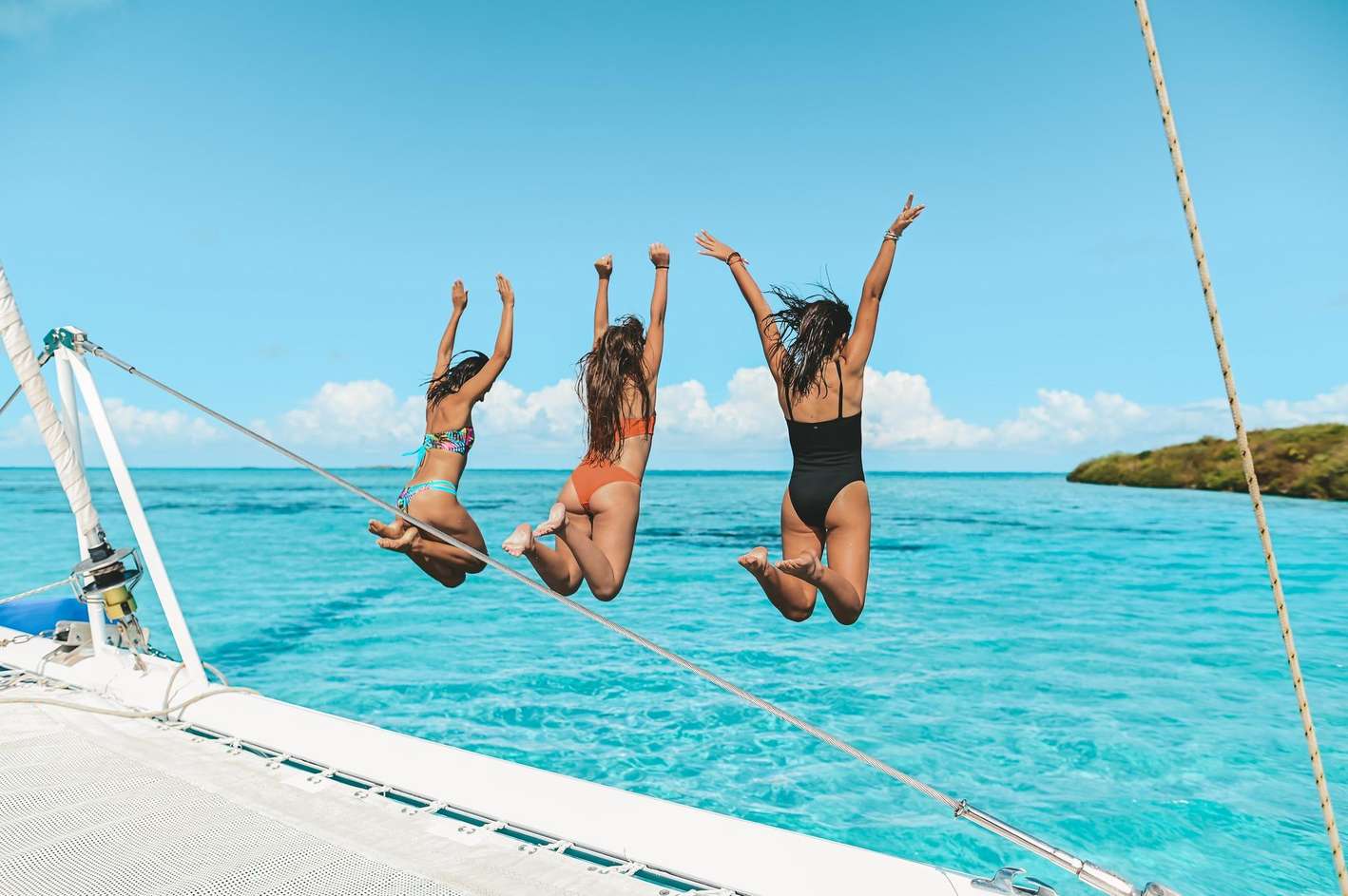 7 - 8 hours · ★ 4.7 (453)Mauritius: Ile aux Cerfs Catamaran, Waterfall & BBQ LunchFrom $62
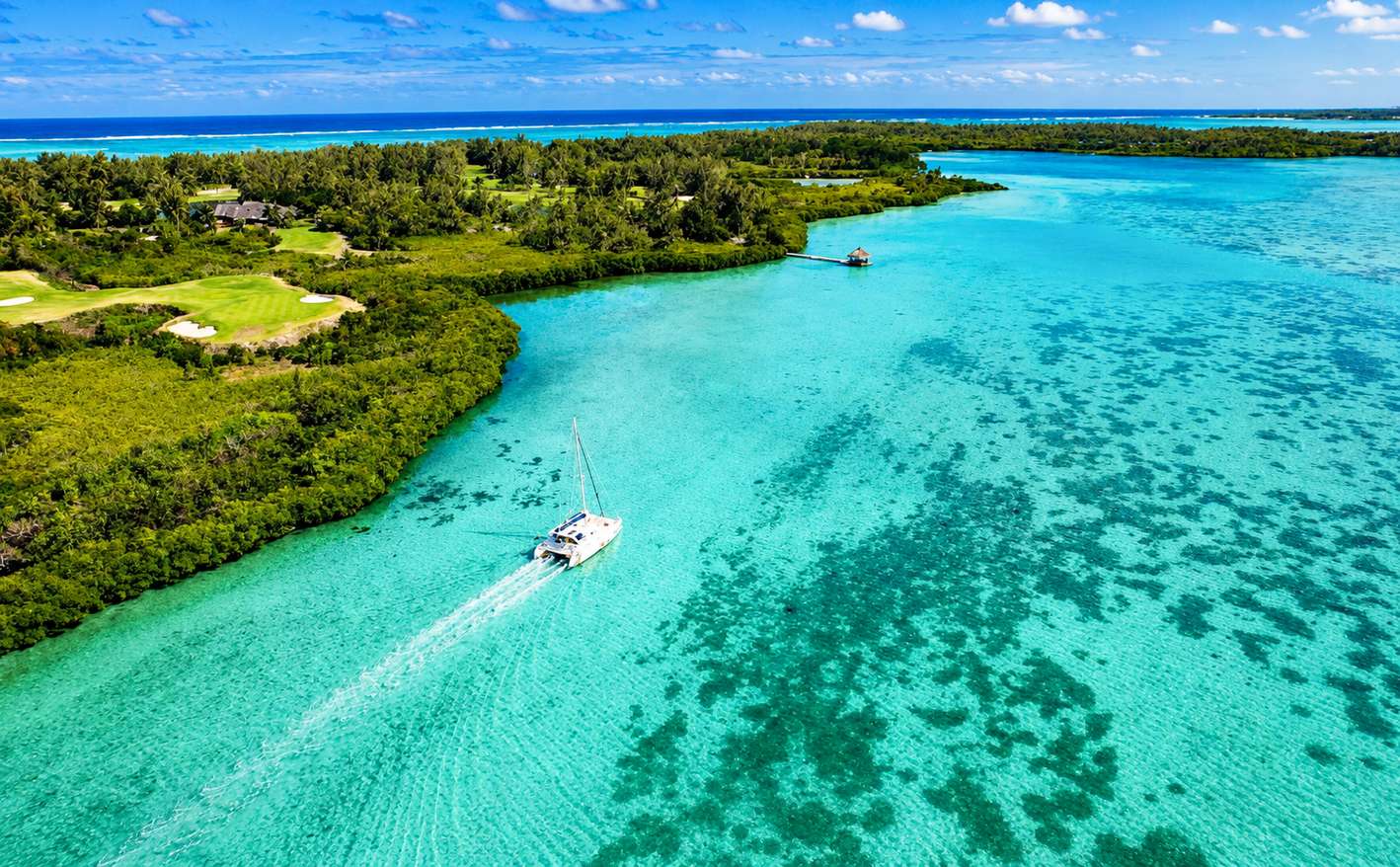 7 hours · ★ 4.6 (104)Mauritius: Ile aux Cerfs Catamaran Cruise, Waterfalls & BBQFrom $84
The fast crossing that buys you extra time on the island and reaches more stops
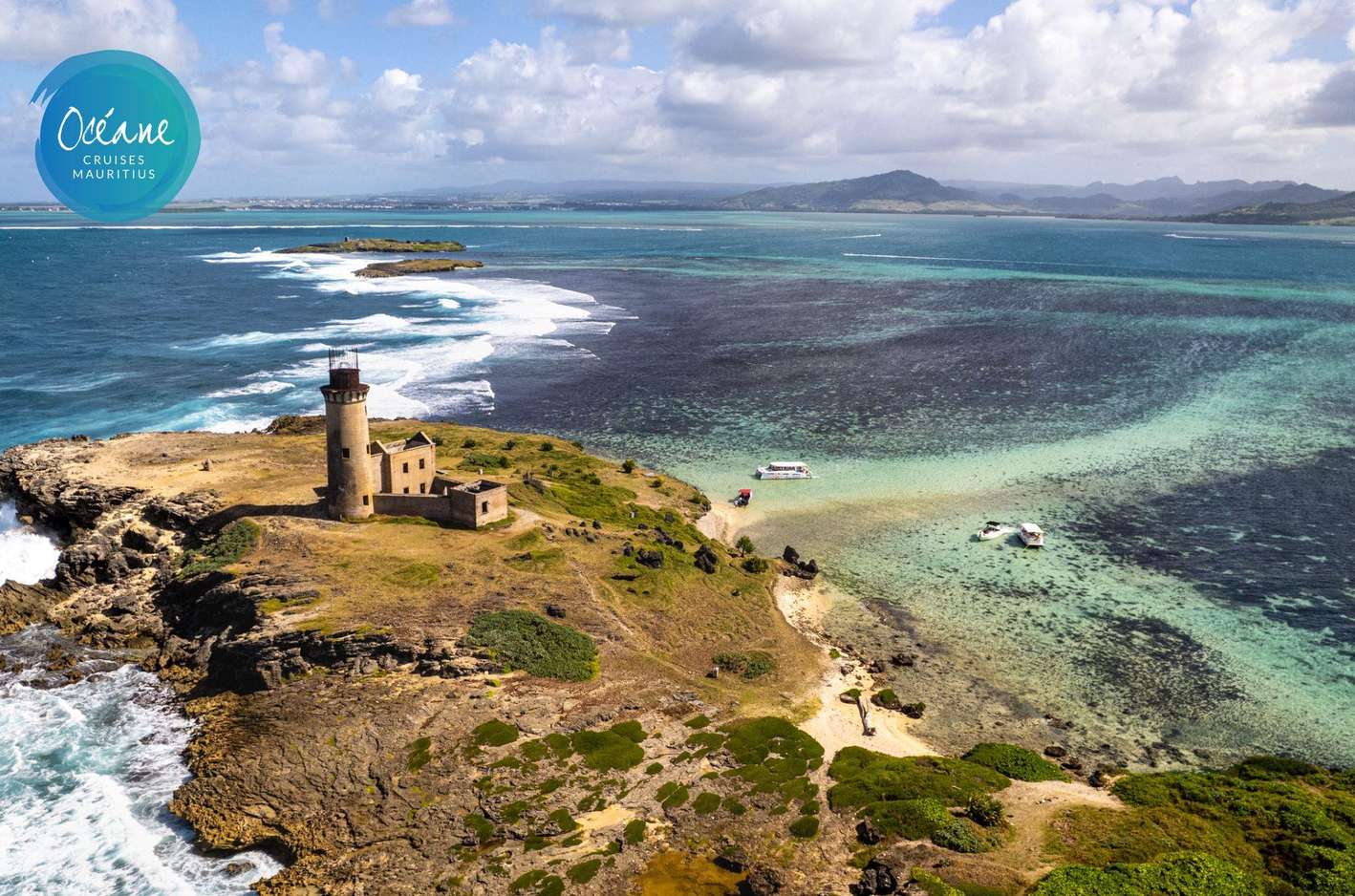
A speedboat crosses the Trou d'Eau Douce lagoon to Île aux Cerfs in ten to twenty minutes, against the 45 to 60 minutes a catamaran takes on its scenic route.
That difference hands you an extra half hour to an hour on the beach, and the shallow-draft boat goes where catamarans cannot, right up the river to the spray at the waterfall's base and out to the five eastern islands.
Two trade-offs come with the speed. The ride across the exposed east coast can be bumpy, especially in the trade wind season, and shared boats carry around 17 to 18 passengers, far fewer than a catamaran but no private charter. Pregnant travelers are advised against these east coast speedboat runs.
6 hours · ★ 5.0 (3)Private Island-Hopping Cruise: 5 Islands, Waterfall & LunchFrom $738 /group 6 - 7 hours · ★ 4.7 (1,451)Trou d'Eau Douce: 5-Island Adventure with BBQ & SnorkelingFrom $95 9 hours · ★ 4.3 (188)5 Islands Speedboat with Snorkeling, Sea Turtles, Lunch & DrinksFrom $95 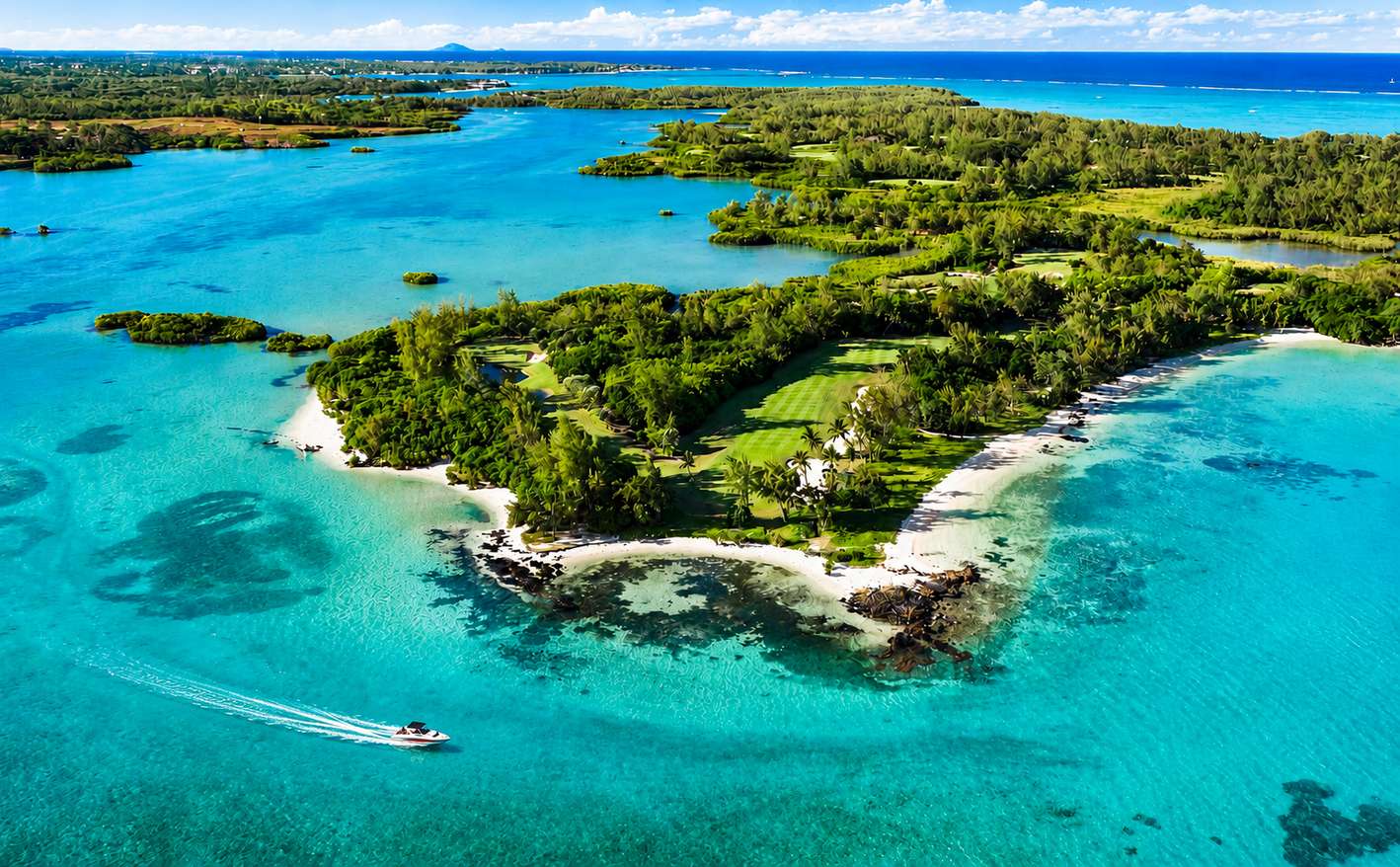 7 hours · ★ 4.3 (237)Mauritius: 5 Islands Speedboat Lagoon Experience with BBQFrom $74
Your own boat, your own timetable, and the beach before the ferries land
The beaches of Île aux Cerfs pack hard between about eleven in the morning and three in the afternoon, when the ferries and shared catamarans converge.
A private charter changes the arithmetic entirely: your skipper can have you on the sand before half past ten, linger at a quiet reef on your schedule, and pull off the water whenever your group has had enough.
The choice inside the choice is the vessel. A private sailing catamaran gives you the lounging day with a gourmet lunch, while a private speedboat covers more ground, slips up the river to the waterfall and hops between islands.
Charters run from around six hours for a small group, and every itinerary bends to what you want rather than the timetable.
dolphins rest in the bay before 8 am
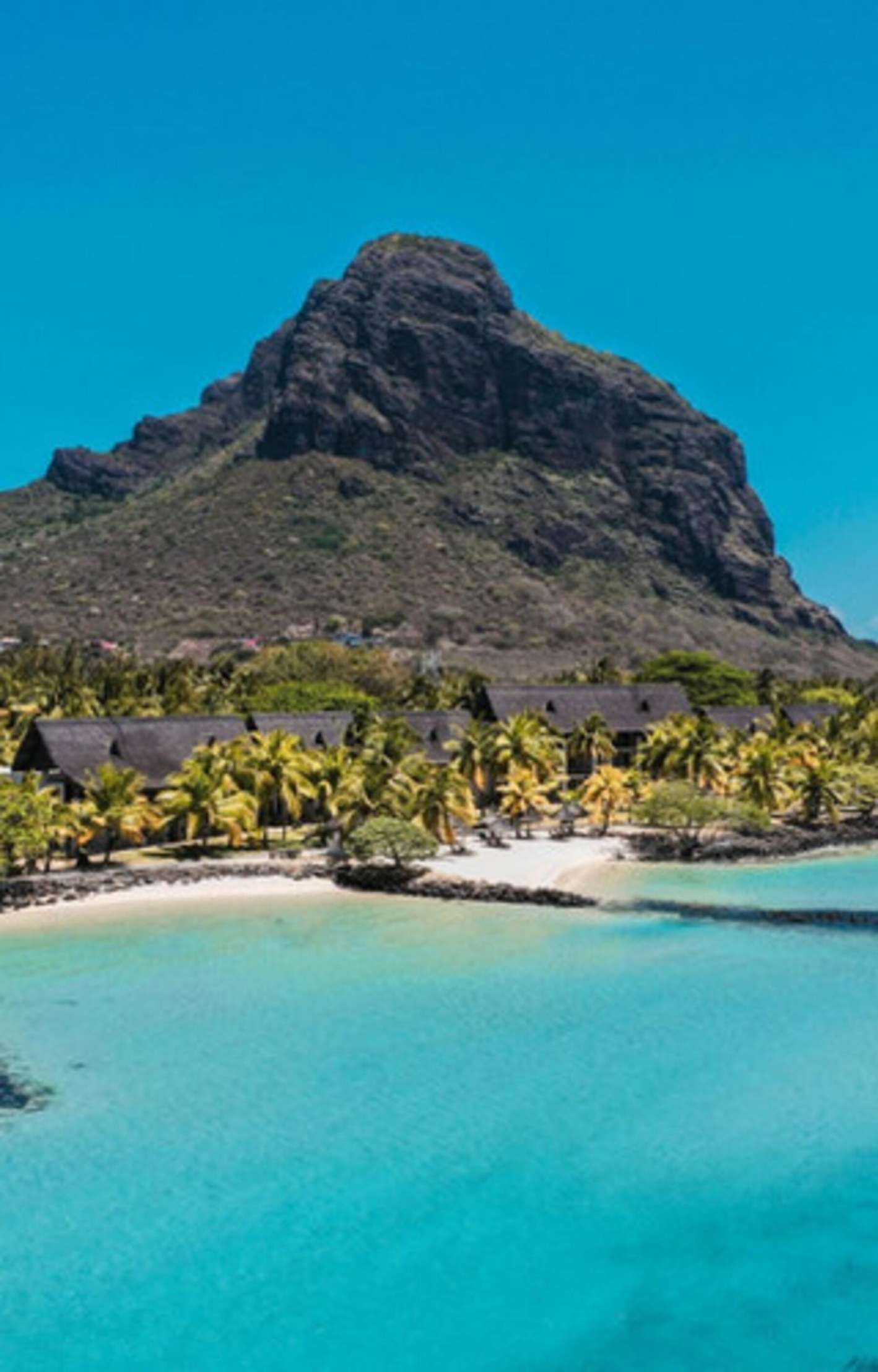
Behind the reef the lagoon runs calm and shallow under Le Morne Brabant, but the currents near the pass outrun any swimmer and the best coral needs a boat. How you swim here, and which boat you take, decides the day.
A long walk from the north end of Le Morne beach reaches living coral heads, but Crystal Rock and the outer patches need a boat.
Never swim toward the One Eye reef pass: on an outgoing tide the whole lagoon drains through it faster than you can paddle.
The underwater waterfall is an aerial illusion, invisible from the surface, and the currents near it are real.
At Crystal Rock the snorkeling is on a coral-block field nearby, in water up to four meters deep, best before 11 am.
A combined dolphin and Crystal Rock day cruise schedules about two hours of actual snorkeling time.
Reach the reef and its snorkeling spots by boat with a local skipper instead of swimming out from the beach, and stay inside the sheltered lagoon when you enter the water on your own.
The honest answer comes from walking the north end of Le Morne beach, past the coordinates marked -20.434256, 57.320428. From there, a long shallow-water walk carries you out to a stretch of living coral. It takes effort and it depends on the tide, but it is real reef, reached from the sand.
The lagoon itself is friendlier than most people expect. Behind the visible reef line the water sits 1 to 3 meters deep at mid-tide, calm and shared with swimmers.
At La Prairie, just south of the mountain, the reef starts a few meters from shore in water waist to chest deep, with Le Morne Brabant filling the frame behind you.
Then there is what the sand cannot give you: Crystal Rock, the offshore patch reefs and the spots the day boats reach. That is where a boat earns its seat.
One operator runs a private 2.5-hour trip from La Preneuse covering two reef spots, La Preneuse and the Le Morne lagoon, with a guide and a small boat for up to eight guests. A private boat buys you the pace.
The line on the map runs clean. Inside the lagoon, the water works for swimmers. Toward the pass, it does not, and there is no soft way to say it.
The trouble is the tide. On an outgoing tide a large share of the lagoon drains through the narrow reef pass at One Eye, and the current that leaves can outrun even a strong swimmer heading back.
The reef opening near the underwater waterfall does the same: breaking surf and outgoing tidal water build seaward rip currents right where the eye of an aerial photo would point you.
On an outgoing tide the lagoon drains through the One Eye reef pass, with currents too strong to paddle against Reach the reef by boat and stay inside the sheltered lagoon
The photo hides a smaller truth too. What looks like a falling torrent is sand and silt sliding off a shallow shelf into an oceanic canyon, visible only from a seaplane or helicopter.
From the surface, water clarity limits what you can see sideways to a few meters. The reef itself is worth every fin stroke; the waterfall belongs to the aircraft above.
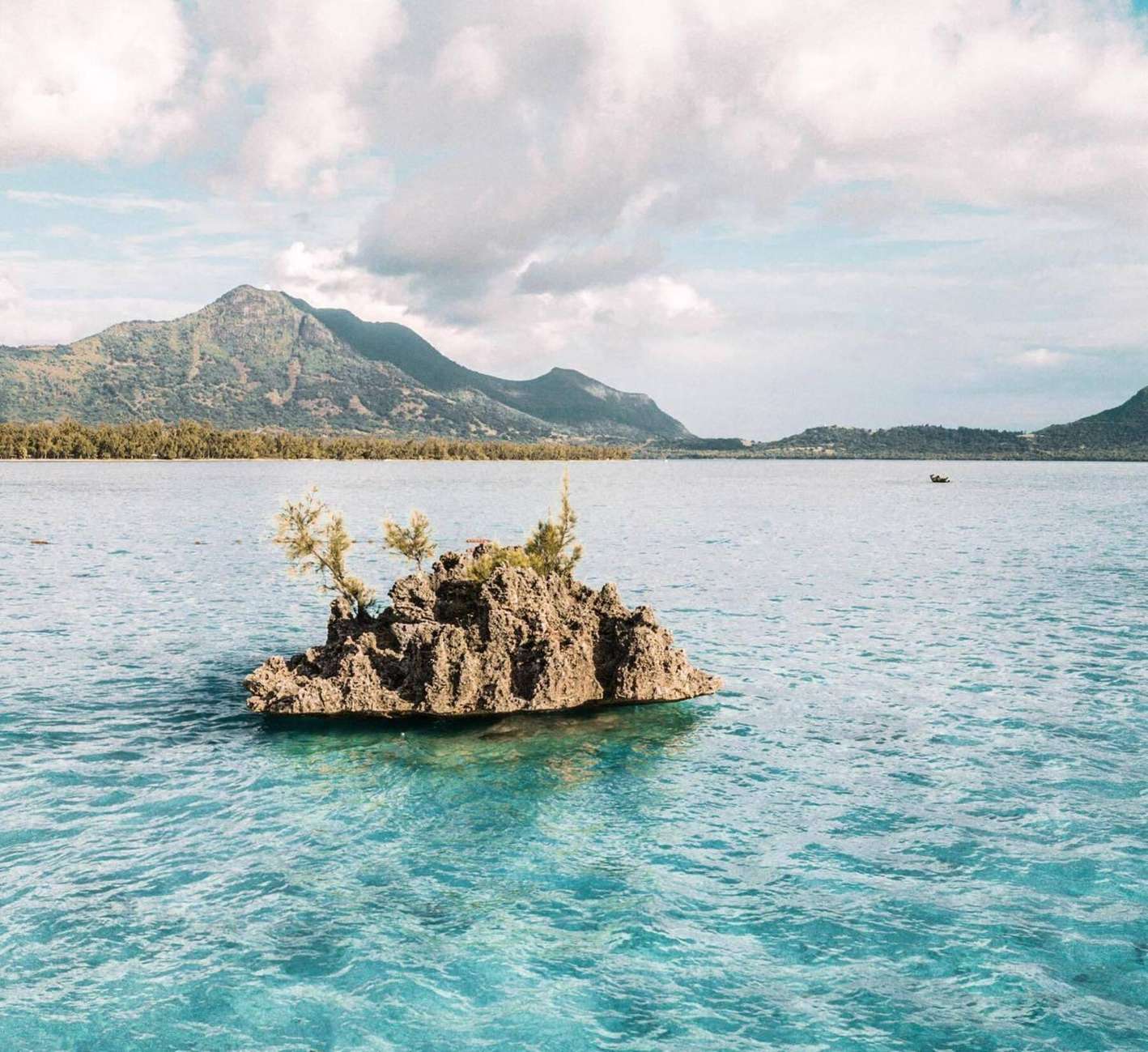
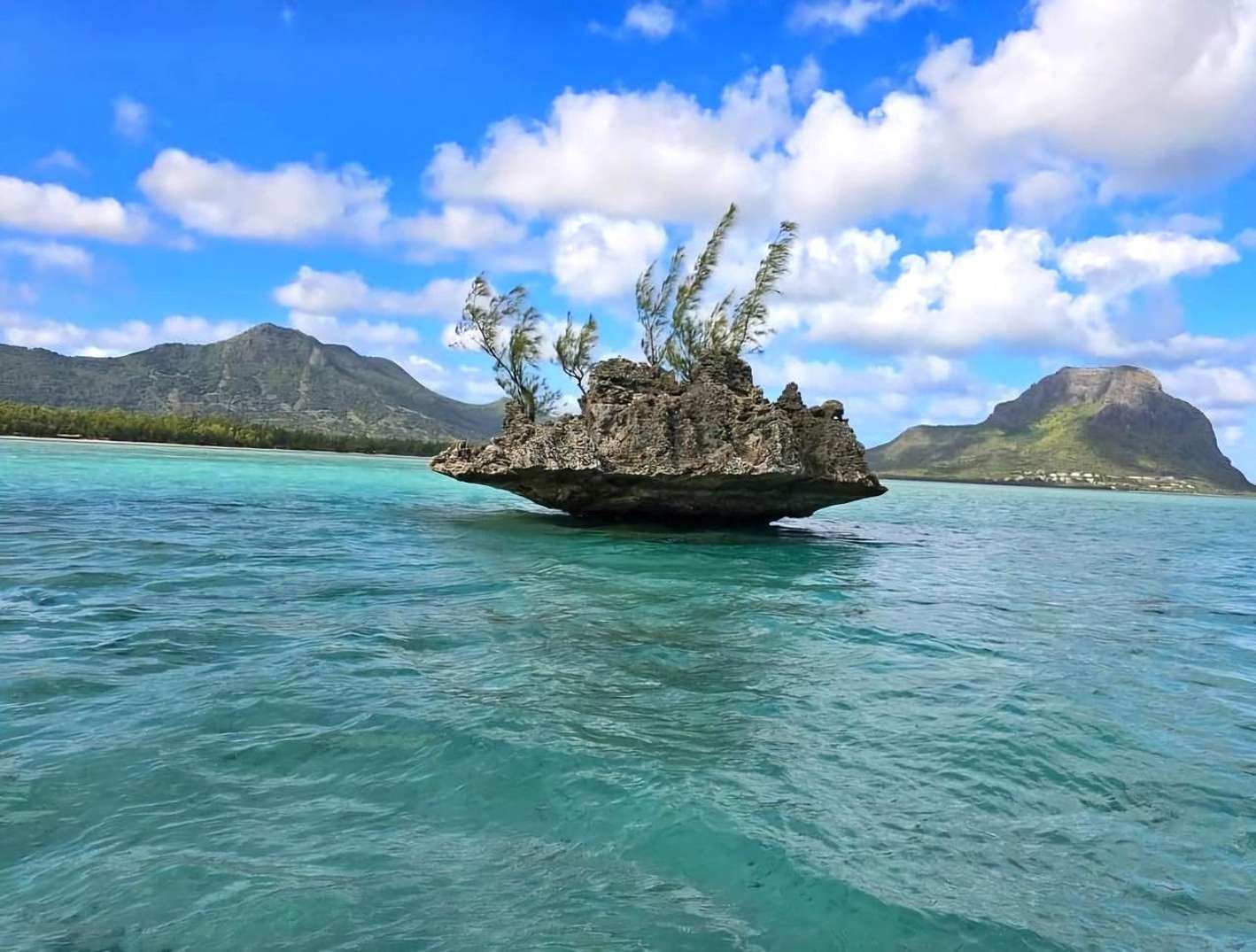
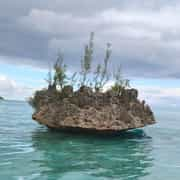
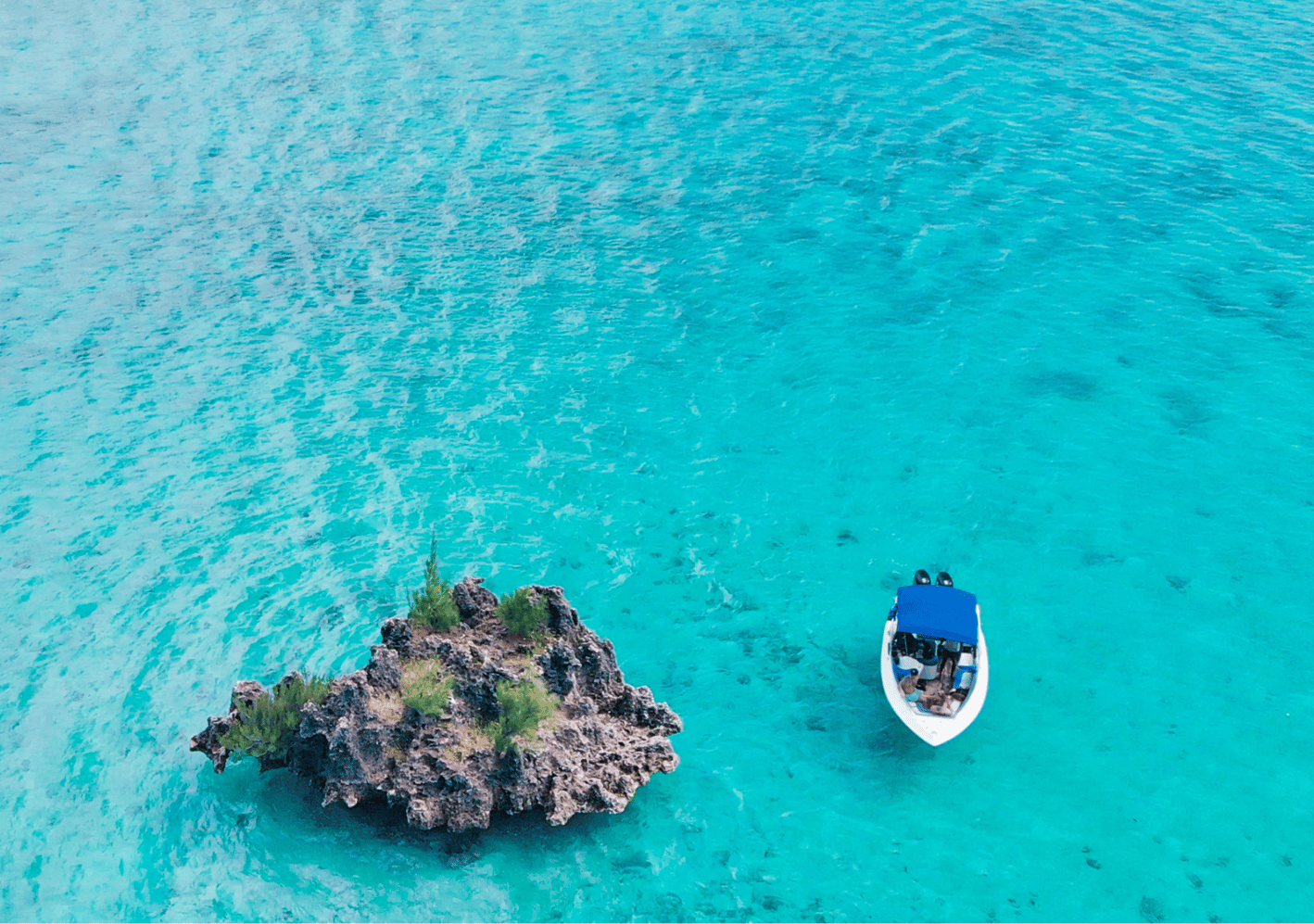
A grey mushroom on a narrow stem, standing alone in the lagoon with no land attached. That is Crystal Rock: pale, brittle coral limestone, wider at the top than the bottom, rising a few meters out of shallow water.
The surprise for most visitors is where the snorkeling actually happens. Directly at the rock the water is only hip-deep over sand.
The real stop sits nearby, a field of round coral blocks set dome next to dome in water up to four meters deep, where needlefish, pufferfish and colorful reef fish gather. The rock is the landmark; the blocks are the reef.
Glassy calm water and few tourist boats
Peak boat congestion and shared tour stops
Boats thin out but trade winds bring chop
What the timing means for your booking is straightforward. The early to mid-morning window brings glassy water and few boats, before the trade winds pick up and the day-trip catamarans arrive.
Midday brings peak congestion, and by afternoon the wind chop moves in even as the crowd thins after 3 pm. Book the first departure and you get the lagoon at its best.
Three vessels, three different days. A speedboat gets you to the stops first, covering water fast enough to reach the beaches and reefs before the catamaran crowds arrive, though it gives you little space to lounge.
A catamaran is the opposite trade: a wide twin-hull platform that resists rolling, shaded decks and dedicated snorkel stops, at a slower pace. Glass-bottom boats exist for the people who stay dry, with bench seating around a viewing well and, on some trips, a brief optional snorkel.
| Speedboat | Catamaran | Glass-bottom boat | |
|---|---|---|---|
| Speed to the stops | Fastest, arrives first | Slow, steady sailing | Slowest of the three |
| Comfort on deck | Little space to lounge | Shaded seating and trampolines, steadier ride | Small benches, tight legroom |
| Who it suits | Swimmers who want action | Relaxed day-trippers and families | Non-swimmers and small children |
| Snorkeling focus | Multiple quick stops | Dedicated reef and sandbank stops | Viewing through the floor panel, brief optional dip |
Whichever you pick, check the schedule against the clock. A full-day combined itinerary around here budgets about an hour at Crystal Rock and an hour with the dolphins, roughly two hours of scheduled snorkeling across the day.
On a short two-hour trip the captain has to split the time between finding dolphins, snorkeling and getting back, so reef time shrinks accordingly.
Common mistake: assuming the longest trip means the most time in the water.
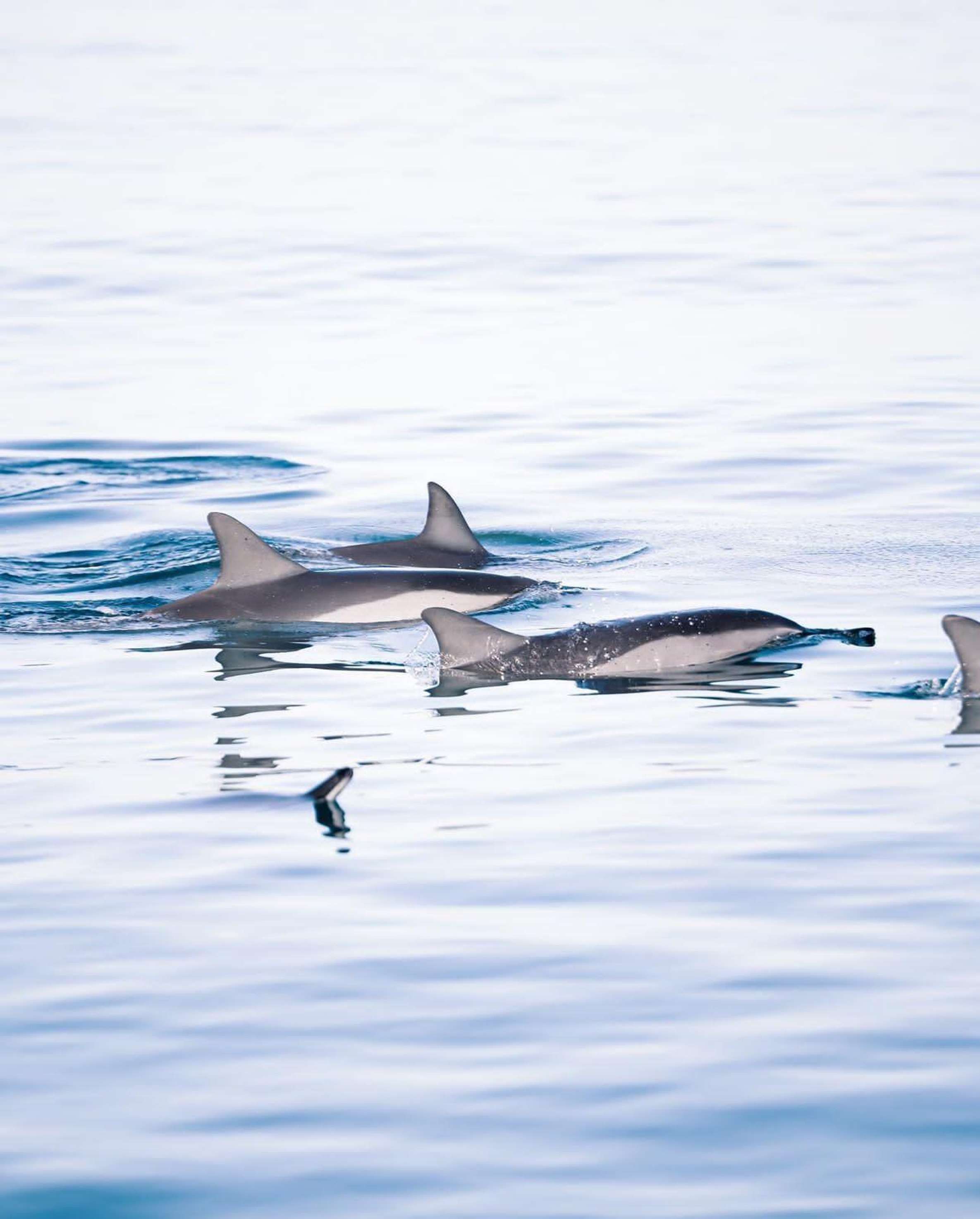
The classic southwest morning runs like this: dolphins off Tamarin or Le Morne at first light, then Crystal Rock, then lunch on Île aux Bénitiers. One tour, the Black River swim with dolphins speedboat trip with lunch, packs the whole sequence into six and a half hours.
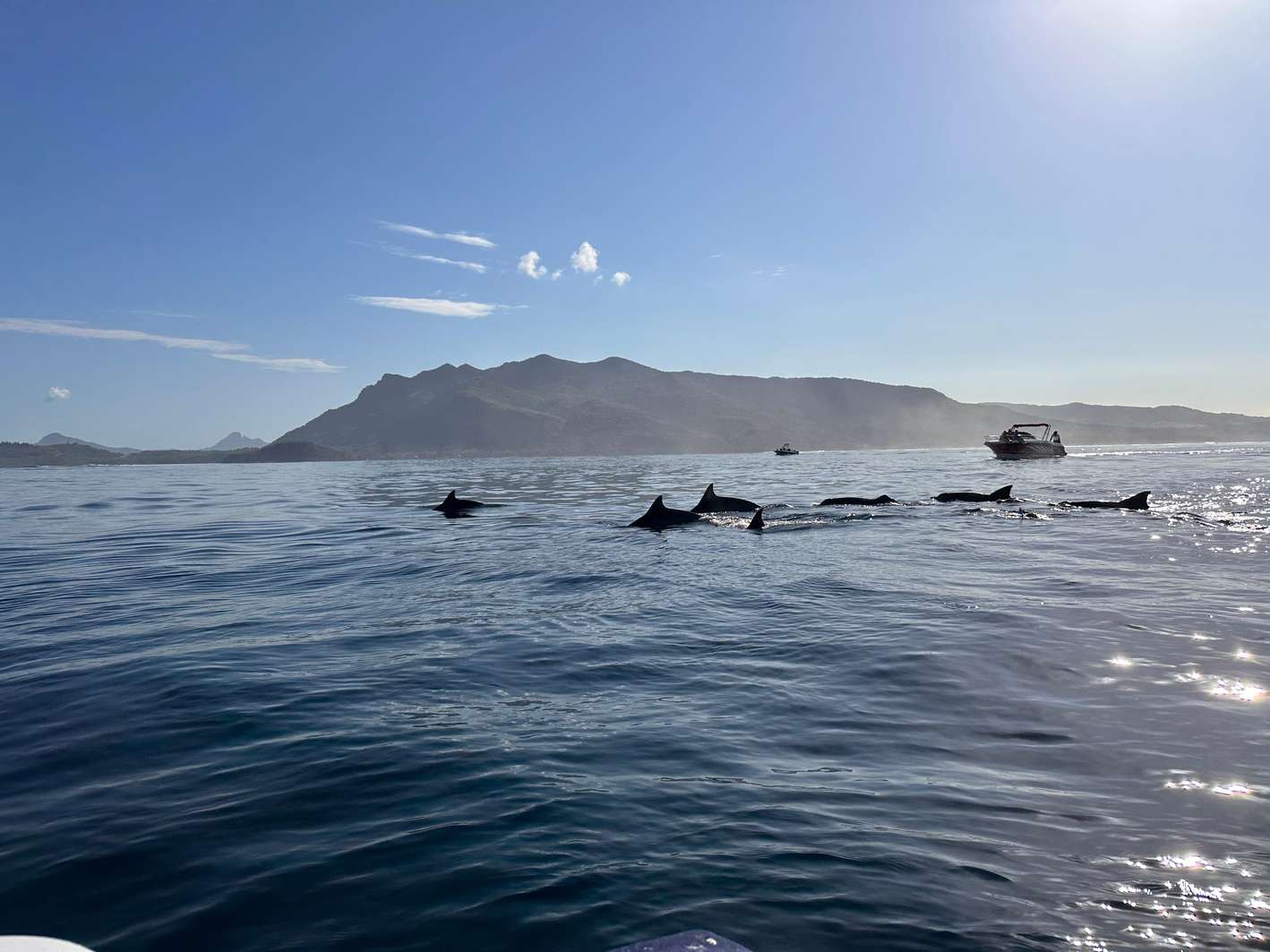
The early start matters more than the itinerary. Pods swim back into the sheltered bays from their night offshore between 6:00 and 7:30 am, when the water is calmest and few boats are out; once in the bay they rest and feed there through 8:00 to 10 am, the window the tour boats aim for.
The two numbers count different things, the return and the stay. An early departure means you meet animals that are still resting, calm and unhurried.
The rules are strict and they protect you as much as the dolphins. Licensed operators only, an Alpha flag flying, a signed liability disclaimer, a briefing on calm, silent swimming before you enter.
No more than three swimmers in the water at once, life-saver included, and nobody touches, chases or feeds an animal. Skippers keep to set distances and approach from the side.
| If this happens | What happens then |
|---|---|
| Rough seas or unsafe conditions cancel the trip | Licensed operators reschedule or refund |
| You are not a confident swimmer | Stay on the deck and watch the pods from the boat; non-swimmers are welcome aboard |
| You arrive late or the dolphins are elsewhere | The crew adjusts the route or holds back at a distance for the animals' safety |
One honest note: this swim is work. You jump into deep open water and move fast to keep pace with the animals, fins on. Young children and weak swimmers stay on the boat.
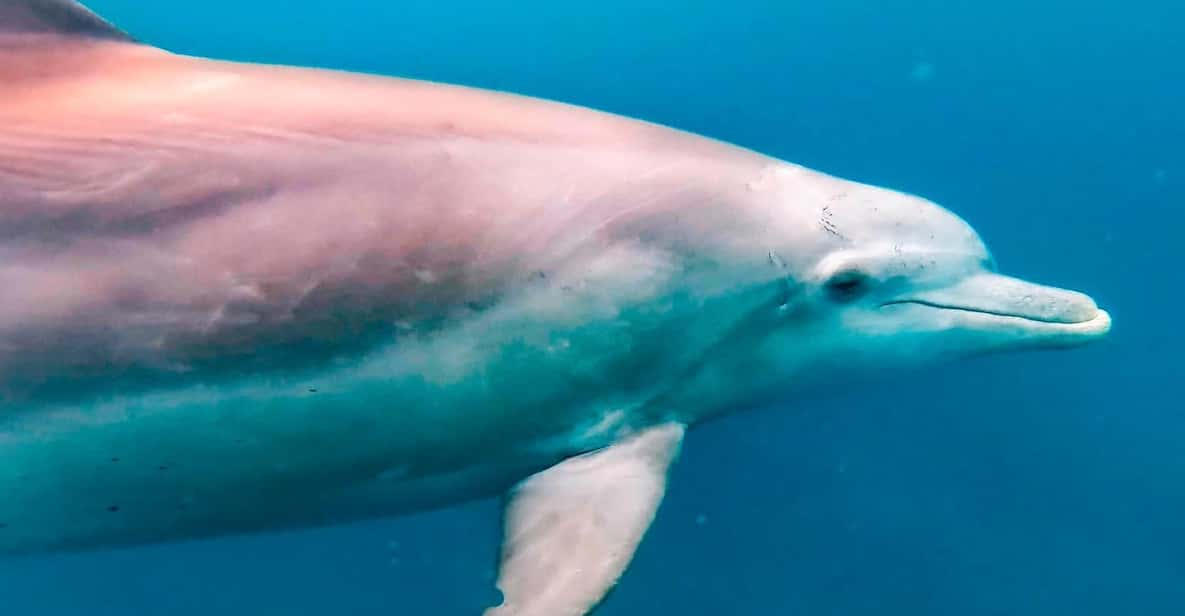
The southwest holds a card the east coast does not. From May to September the southeast trade winds hammer the opposite side of the island, but the central mountains put Le Morne in their lee, and those same winter winds keep the west coast's underwater visibility at its clearest, especially on morning outings.
The northern side of the peninsula stays calm; the southern point catches the full 15 to 30 knots and open swell.
The transitional months, October, November and April, are the island's softest overall, with roughly three in four days calm and gentle waves. Summer brings the warmest water.
November: 5 out of 5 for how busy it gets.
Tap a month to read it.
Two windows decide a trip here. February and March sit inside the peak cyclone season, the wettest months of the year, when storms legally force operators to suspend boat tours and heavy rain washes land runoff into the lagoons, clouding the water for days.
June and July, by contrast, hand the southwest its best underwater clarity in exchange for a cooler sea.
If you are prone to motion sickness, add one more check: the open-water crossing between Tamarin and Le Morne runs outside the reef, where swells of one to two meters pitch and roll the boat even in decent weather. Winter crossings roll more; a windbreaker and motion sickness tablets earn their space.
Pro tip: winter mornings deliver the clearest water on the west coast, so trade a warmer sea for a clearer one.
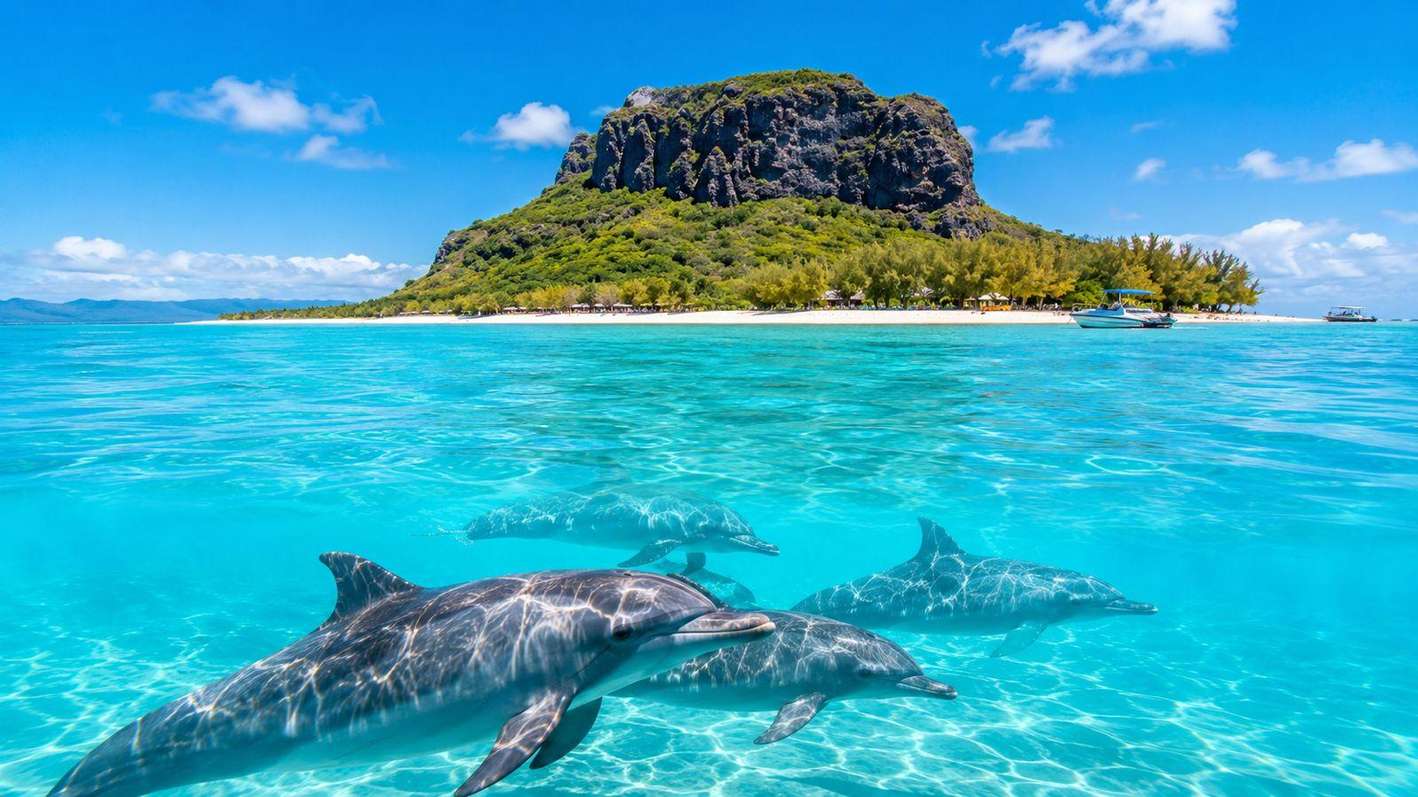
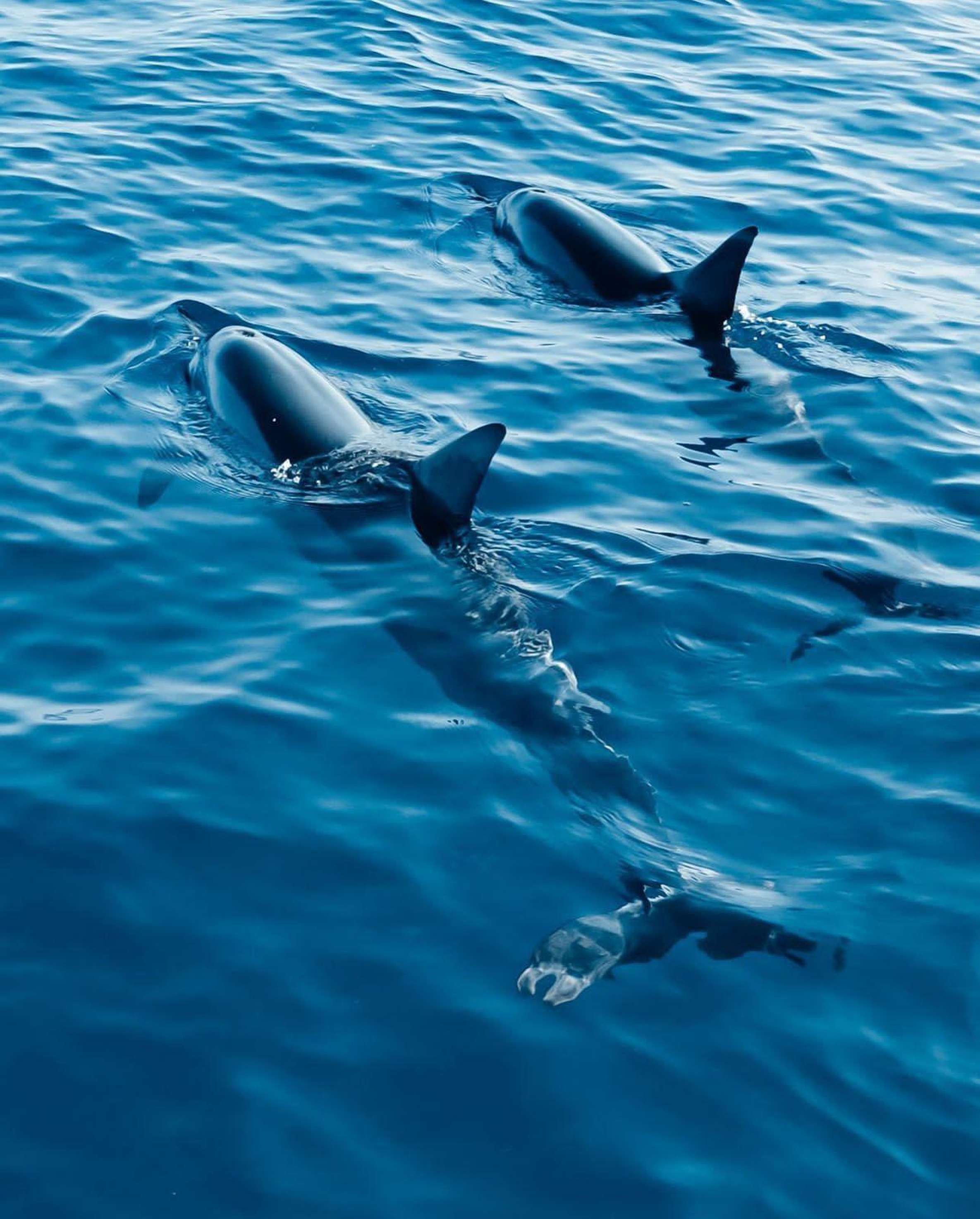
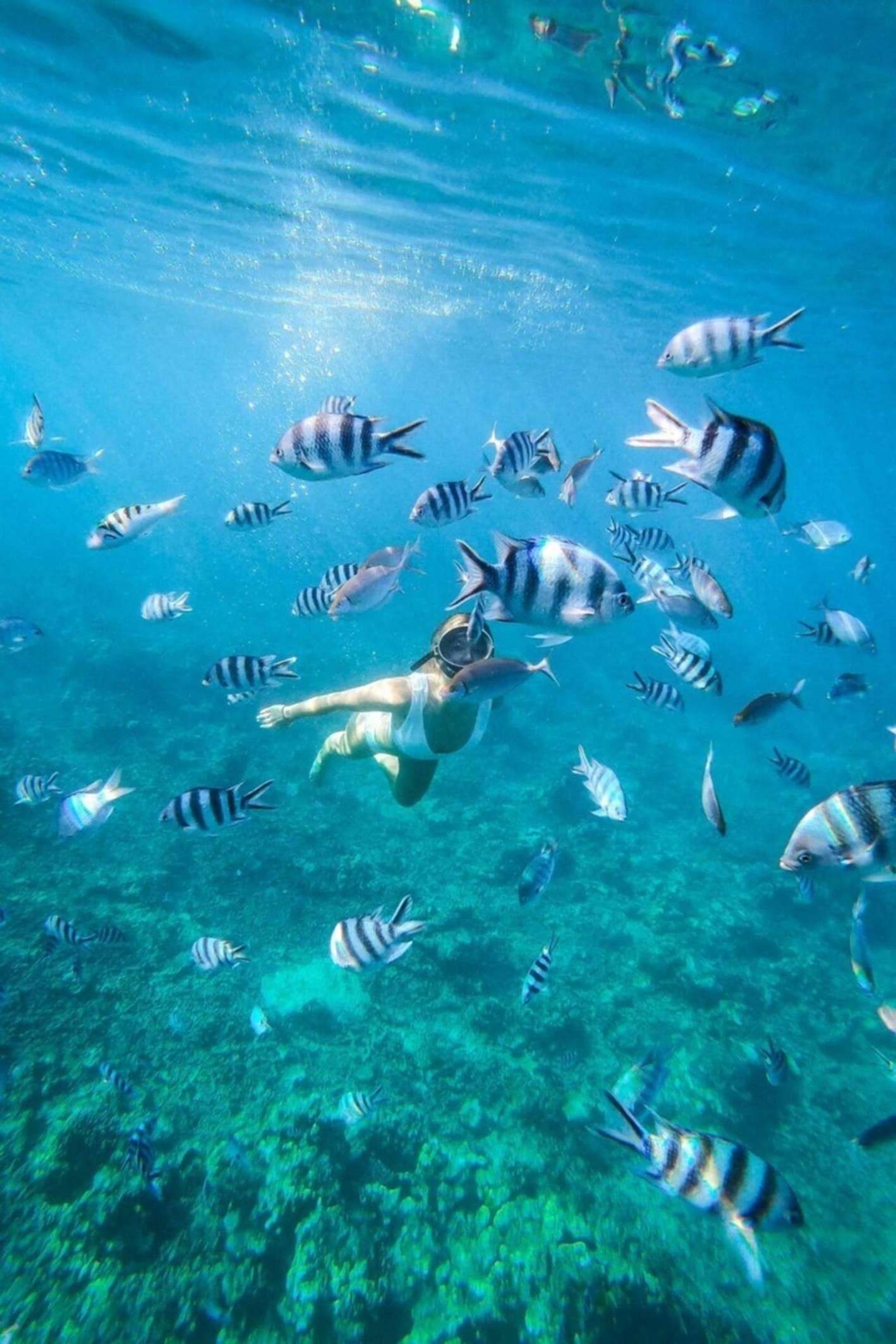
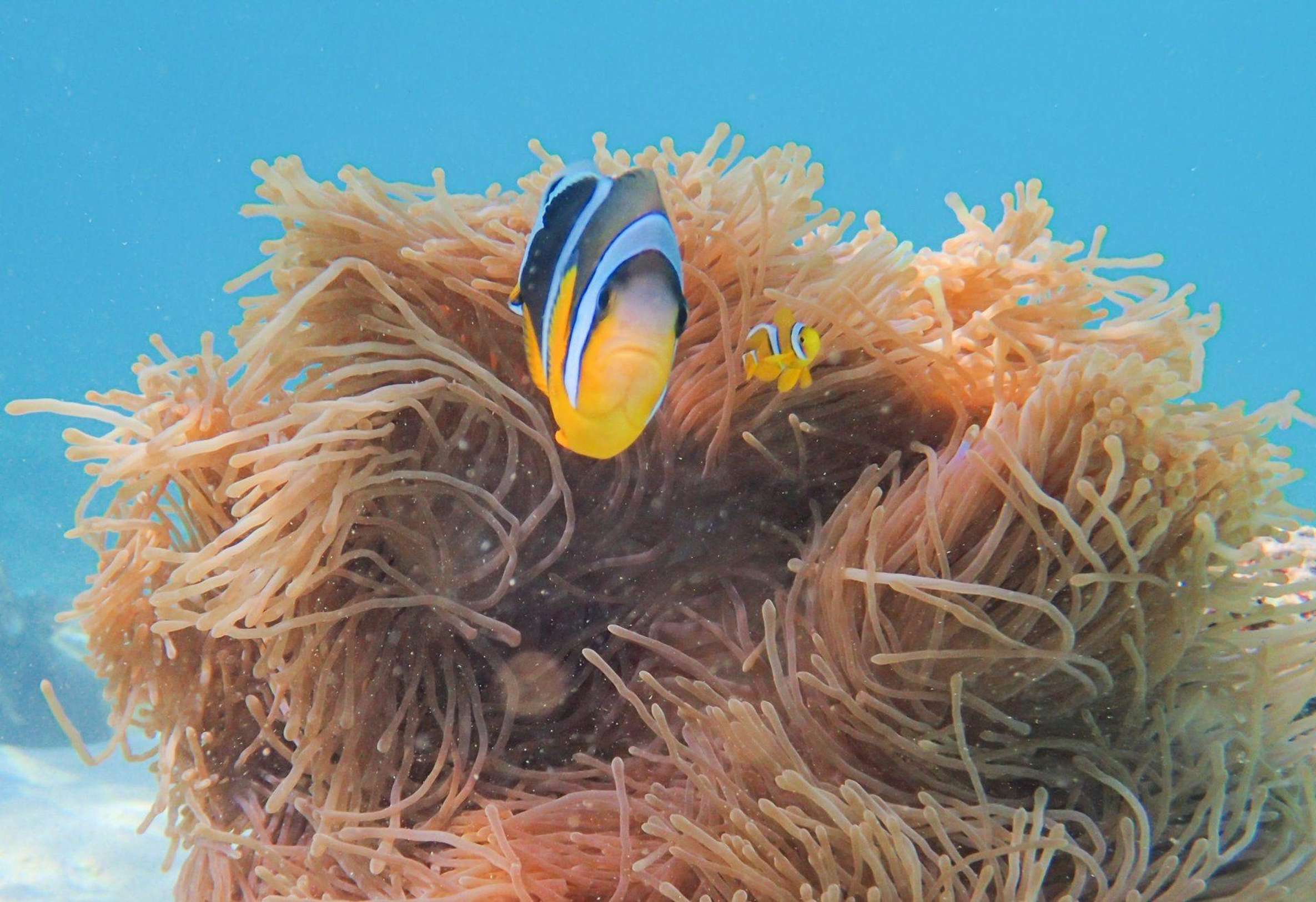
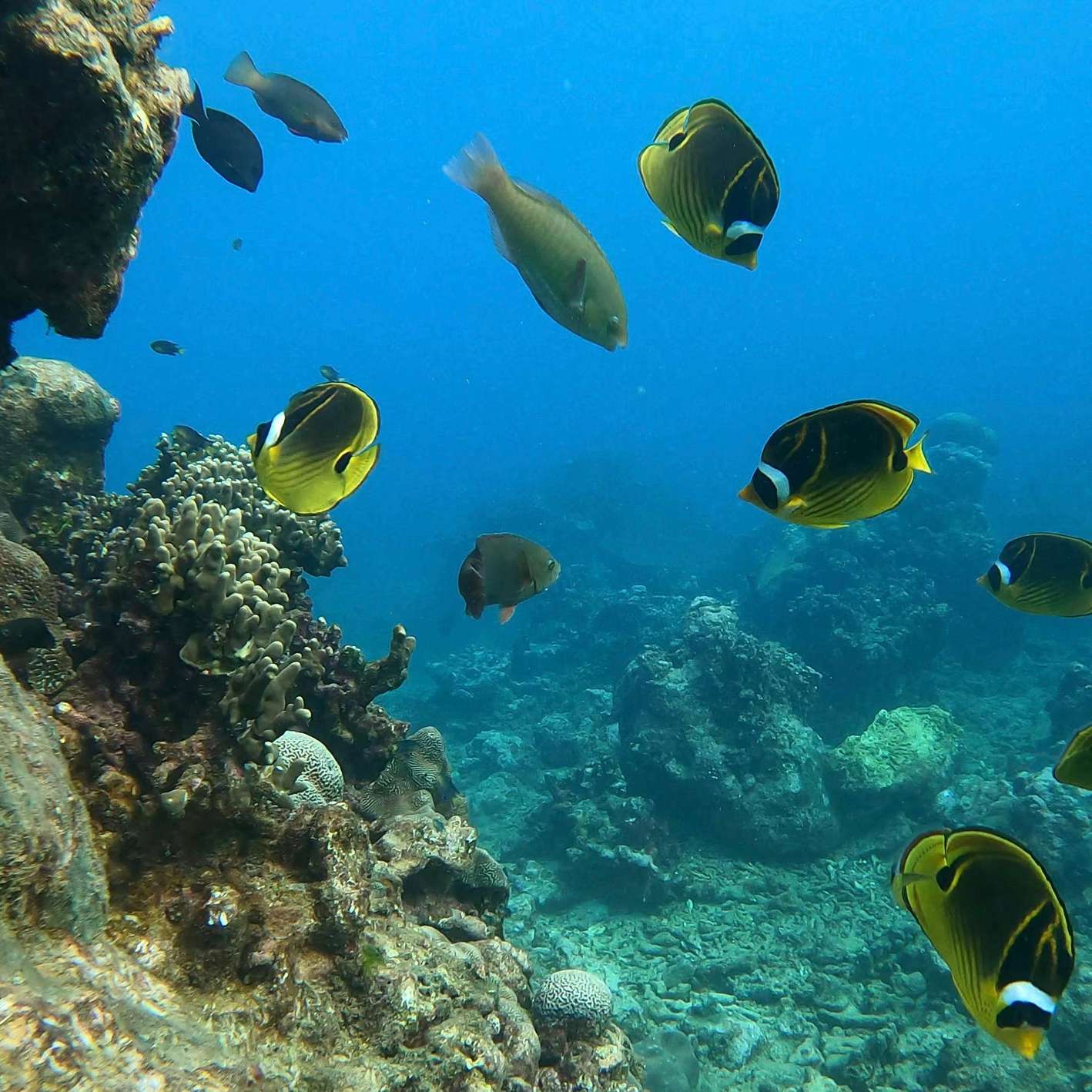
Set the expectation before you set the mask. The living reef patches in Le Morne lagoon hold branching staghorn coral, rounded brain corals and soft corals, with parrotfish scraping through them, schools of sergeant-majors holding station, and the odd scorpionfish doing its very best to be a rock.
Sea turtles drift through on occasion, and spotted eagle rays pass over the shallower sections.
What you will not find is Maldives coral. Much of the coral around Mauritius is heavily bleached, and fish diversity and reef density fall short of the Red Sea or the Seychelles, even inside the protected parks. The fish are active; the coral garden is patchier than the brochures imply.
Some patches are bleached, but the outer reef heads and the coral-block field near Crystal Rock are alive
It is an aerial illusion of moving sand, invisible from the water
Blue Bay Marine Park and Trou aux Biches beat it on coral density
Le Morne's case rests on something else: the mountain. Clear, shallow water with Le Morne Brabant rising straight out of the frame gives you a view no other snorkeling spot on the island can copy, and the water quality shifts noticeably from one day to the next with wind and swell.
Travelers who weigh scenery as heavily as fish come away happy here.

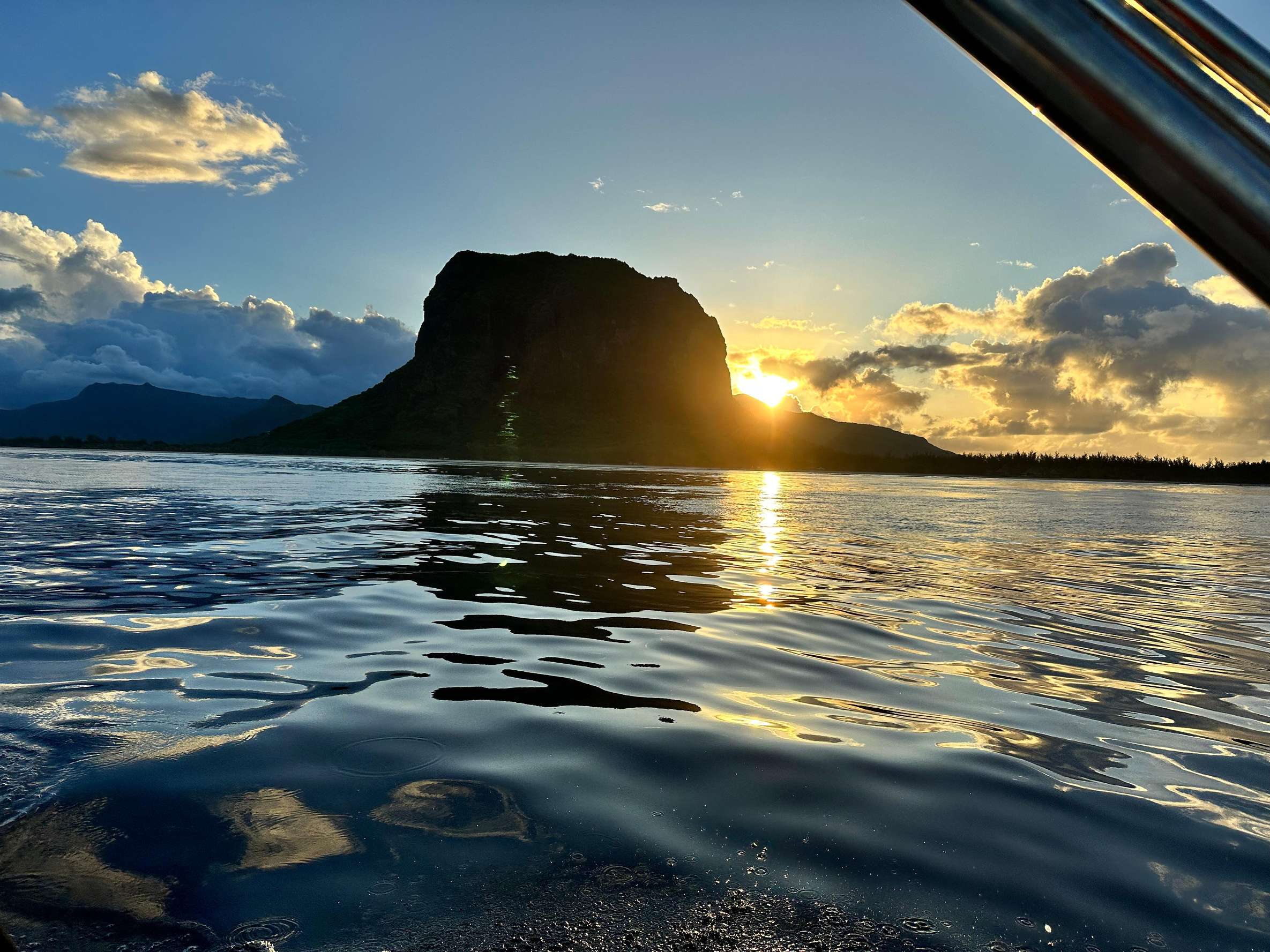
Two entries from the sand do the job. The first is La Prairie, the beach just south of Le Morne Brabant, where the lagoon reef begins a few meters from shore in calm water 1 to 2 meters deep.
Few people come here, the water starts clear at waist depth, and the mountain stands behind you the whole swim. About two kilometers offshore, the inner reef in front of Île aux Bénitiers gives the same backdrop from a boat.
The second is Le Morne Beach itself, and one stretch stands out: the water fronting LUX Le Morne Resort, widely held to be the best-placed hotel beach for shore snorkeling in the area, with the main reef directly in front of the property.
Then comes the part your feet will care about. Sections of these shorelines are soft white sand, but much of the shallow seabed carries scattered broken coral, sharp rocks, shells, sea urchins and, hiding among them, camouflaged stonefish, whose spines deliver venom that causes intense pain.
Water shoes or reef booties are not mandatory, but everyone who snorkels here regularly wears them, and you should too.
Shallow enough for easy swimming, deep enough that fins are worth wearing
Casual swimmers should stay on the protected west or east stretches
Stay inside them; motorboats are banned within the buoys but cross the open lagoon outside
One foot wrong on an urchin ends the swim for the day, which is all the argument the booties need.
Le Morne is one of the world's kitesurfing hubs, and that changes how you read the water.
Kites come off the beach in long, fast arcs, and the launch areas and the marked kitesurfing school zones belong to the riders, so swimmers leave those lanes alone. Stay near the shore in the marked areas and keep clear of the reef passes too.
The Beach Authority has a formal word for the mix: it designates Le Morne a hazardous bathing location, on account of strong currents at the passes and the high kitesurfing traffic. That is a map of where to go and where to leave alone, read it before you swim.
Wind writes the second half of the rule. Trade winds can chop the lagoon surface up on windy days, and the same breeze that delights the kiters flattens nobody's snorkeling. Pick your morning, and on a blustery afternoon enjoy the show from the sand.
One more habit worth borrowing from the boat snorkelers: wear a brightly colored snorkel vest so boats can see you, and treat marked channels as roads with right of way. Motorized craft keep out of the buoyed swimming zones, but the open lagoon between the zones belongs to everyone with an engine.
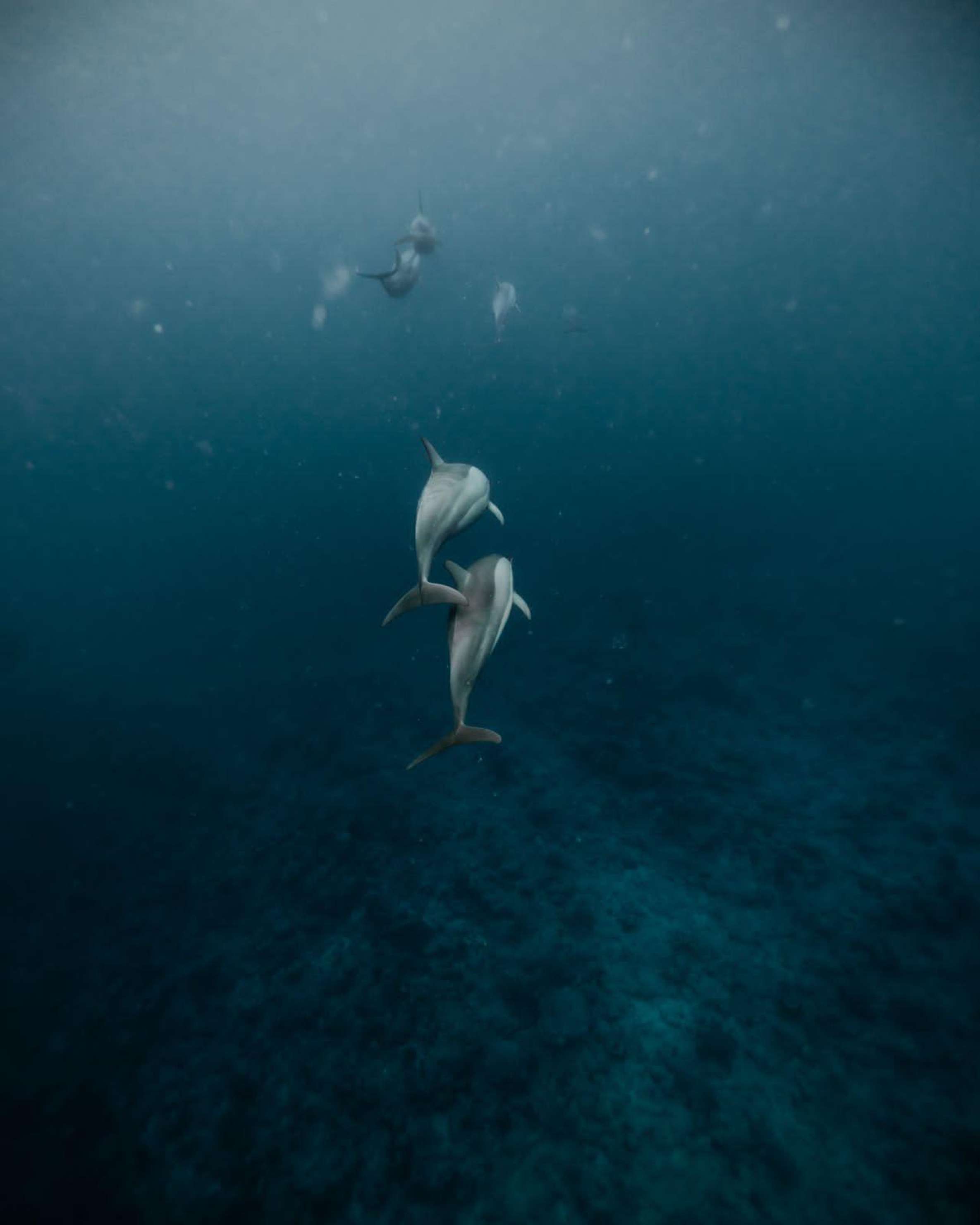
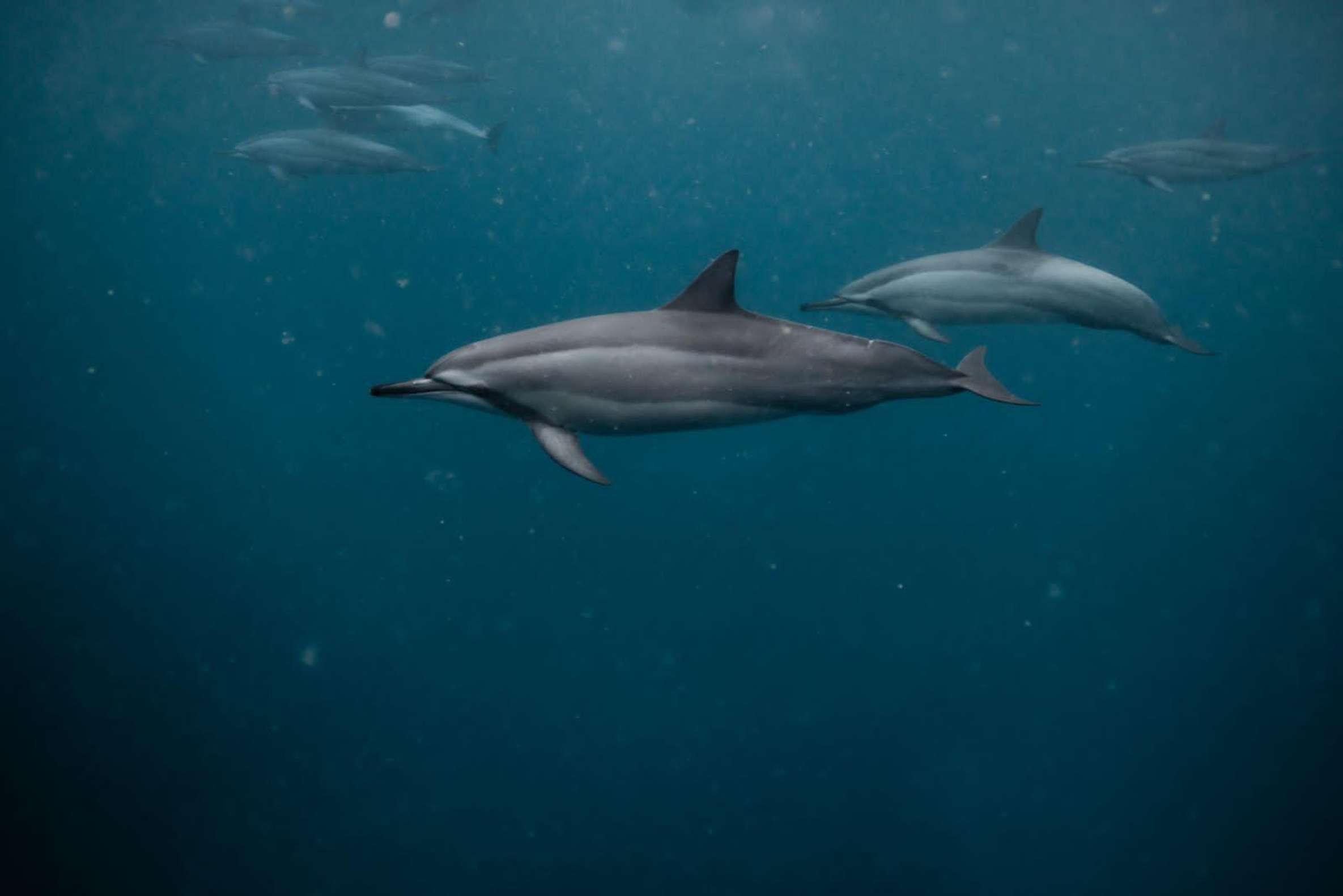
Look past the reef line and the southwest opens up. Wild dolphin pods gather along this coast to rest and feed in the morning, visible off Le Morne itself and straight from Flic en Flac beach during the feeding hours.
In Tamarin Bay they arrive between 8:00 and 10 am before moving offshore, though the boats that swim with them launch well before that to catch the animals at their calmest.
Nearly every dolphin trip on the island leaves from this stretch of coastline, between Tamarin, Black River and Flic en Flac, which makes a wildlife morning an easy add-on to any Le Morne stay.
You do not have to swim: plenty of visitors watch the pods from the deck and keep their snorkeling for the reef stops.
The drive list rounds out a non-snorkeling afternoon. La Preneuse and its Martello Tower sit nine minutes away, the climb or the viewpoint at Le Morne Brabant itself is under half an hour, and Black River Gorges National Park, the island's wild interior, is about half an hour by car.
A green turtle may drift through the Le Morne lagoon while you snorkel. Remember the law before you chase it: swimming with, touching or feeding sea turtles is prohibited by law, and the fines are serious. Let the turtle pass; it will be a better memory that way.
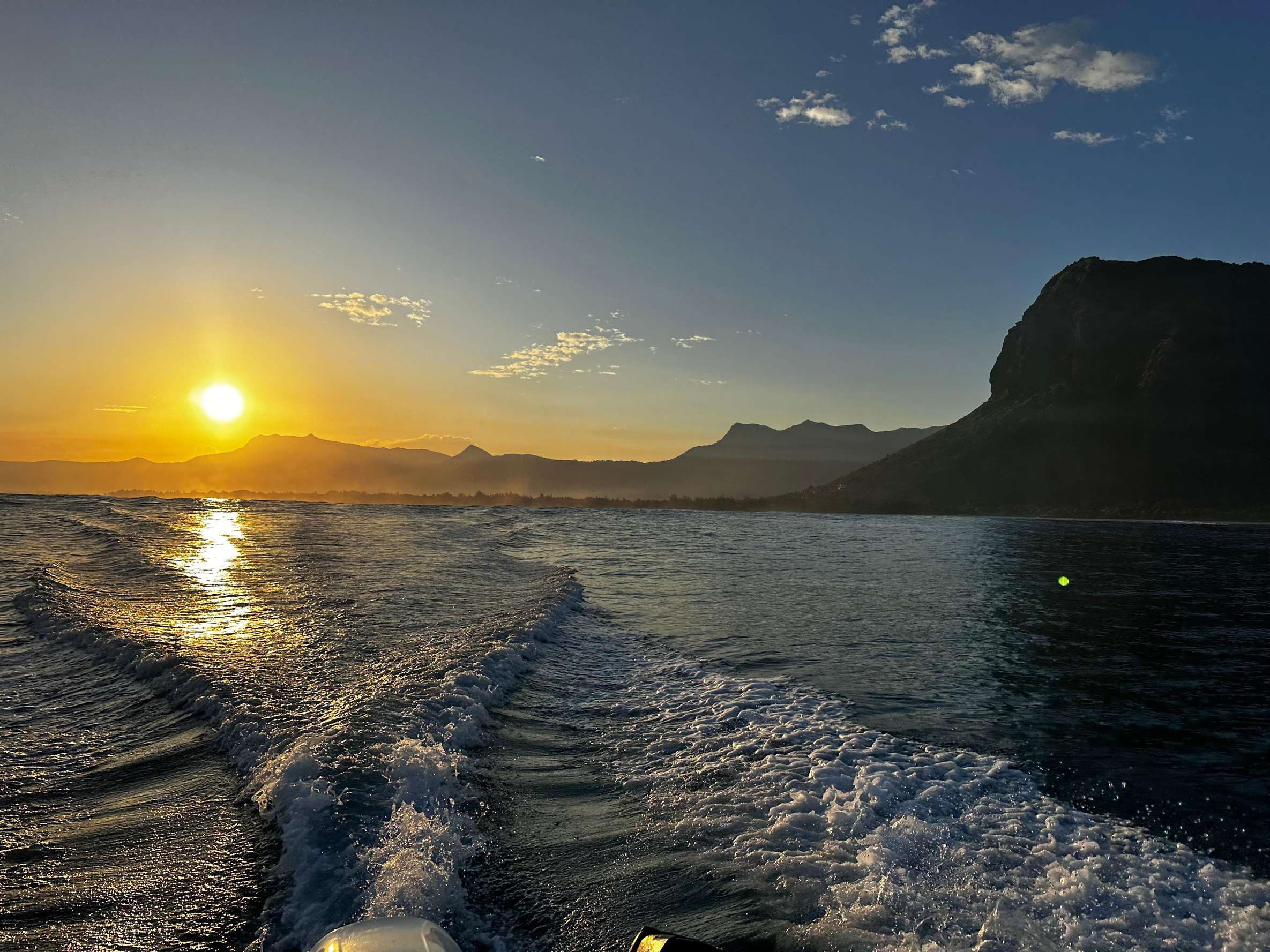
The departure points scatter along the west coast, and which one matters depends on your trip. Speedboats and catamarans for the Le Morne peninsula leave from Le Morne Anglers Club Jetty in Black River, with a 9:15 am crew meet for a 9:30 am departure on the west-coast cruise.
Private snorkeling trips to Le Morne and La Preneuse launch from La Balise Marina, also in Black River; boats for Île aux Bénitiers leave Tamarin Public Beach; and some tours run straight off the sand at La Preneuse near the Martello Tower, or from the beach in front of the Emba Filao restaurant in Le Morne itself.
Driving yourself is straightforward and the roads are good. Book directly with a local operator rather than through your resort hotel, and favor the boats with smaller passenger counts; the difference shows up in the water.
If you want the social version instead of a private charter, a full-day shared catamaran, the dolphin watching cruise with BBQ and drinks from the west coast, spends six hours covering Tamarin Bay, a snorkeling stop at L'Harmonie or La Preneuse, Crystal Rock and lunch on board. Fewer moving parts, more people, easier morning.
One custom worth knowing before you step off: crews on snorkeling and catamaran trips are commonly tipped together as a group at the end, handed to the captain or lead crew member to split.
Pro tip: work back from your 9:30 am departure when planning the drive; west coast mornings are calm but the jetty fills.
Start with what you do not need to carry. The boats here supply masks, fins, snorkels and life jackets, so the essential gear travels with you rather than in your bag.
What the boat cannot size to your face is the mask, and that is where packing earns its keep: your own mask guarantees a leak-free seal, while onboard masks run older, shared and hit-or-miss, and fin sizes vary by operator.
Now the things only you can bring. Swimwear goes on under your clothes before boarding.
Towels, high-SPF reef-safe sunscreen, sunglasses and a sun hat come from your bag, along with a UV rash guard and a wide-brim hat with a chin strap, because a full day on an open deck is a long day in the sun.
Sea state settles the rest of the list. Open decks throw spray, wind arrives with the afternoon and sudden showers pass through, so a light windproof jacket, a change of dry clothes and a roll-top dry bag for phones and electronics all earn their space.
The winter sea cools to 23 to 25 degrees Celsius, cool enough that a rash vest makes longer swims comfortable.
One last detail from the island stops: bring small-denomination rupees in cash for beach stalls and kiosks where cards go nowhere.
Le Morne rewards planning more than luck. Swim the sheltered lagoon and La Prairie from shore, keep clear of the One Eye pass and the kitesurf zones, and put a boat under you for Crystal Rock and the outer reefs.
Go early, wear water shoes, and take the winter mornings for the clearest water on the island.
The scenery under the peak is why people come, and the fish hold their own.
crystal rock water is hip-deep on sand
How the dolphin boats on the west coast work, what the law asks of them, and how to pick a crew that treats the pods well.

What it takes to slip into the water with wild dolphins, from the swimming skills you need to the rules swimmers sign up to.
Tamarin Bay is where the pods gather each morning, and this page covers the launches, the timing and what the bay is like.
Want dolphins and whales in one day out on the water? Here is how the combined trips run and what each season brings.
Why the earliest boats see calmer water and quieter pods, and how a dawn start changes the whole encounter.
A private boat gives you the pace and the reef stops you want. This page explains how the charters work and who they suit.
How a day under sail compares with a speedboat for shade, comfort and reef time, plus the classic routes to choose from.

Full-day catamaran trips with lunch and island stops, coast by coast, so you can match the route to where you stay.
stonefish hide in the shallows, wear booties
Straight answers on currents, shore access, gear and boat trips in the lagoon beneath Le Morne Brabant.
 La Gaulette2026
Yes, inside the sheltered lagoon. The reef-protected water is calm and shallow, generally 1 to 3 meters deep at mid-tide off Le Morne Public Beach. Stay inside the visible reef line and clear of the reef passes and kitesurf launch zones.
Le Morne Beach works for shore snorkeling, and the stretch fronting LUX* Le Morne Resort is one of the best spots, since the main reef sits right in front of the property. La Prairie Beach, just south of the mountain, offers clear water from waist depth with the peak in view.
No. On a falling tide the lagoon drains through that narrow pass with a current too strong to paddle against, and the reef there is sharp. The Beach Authority classifies Le Morne as a hazardous bathing area for exactly this reason. Reach the outer reef by boat instead.
You cannot. The underwater waterfall is an optical illusion of moving sand visible only from the air, by helicopter or seaplane. From the surface, visibility sideways runs a few meters, so there is no cascade to see. The currents near the reef opening are real, though, so keep clear.
Le Morne gives you clear, shallow water against a dramatic mountain backdrop, and it suits travelers who value the scenery as much as the reef.
Blue Bay Marine Park holds denser coral and more sea life, so it is the stronger pick if underwater variety comes first. Conditions at Le Morne also vary noticeably from day to day with wind.
The living reef patches hold branching staghorn coral, rounded brain corals and swaying soft corals. Parrotfish, schools of sergeant-major fish, trumpetfish and camouflaged scorpionfish move along the reef, and sea turtles and spotted eagle rays occasionally drift through the shallows.
They are not mandatory but strongly advised. Some shoreline is soft white sand, yet much of the shallow seabed has broken coral, sharp rocks, sea urchins and camouflaged stonefish, so a protective sole saves your feet.
It is a freestanding outcrop of pale coral limestone, narrower at the base than the top, rising a few meters out of the lagoon like a giant mushroom.
Snorkeling happens not at the rock itself but at a nearby field of round coral blocks in water up to four meters deep, where needlefish, pufferfish and colorful reef fish gather.
Early to mid-morning, before the trade winds pick up and the day-trip catamarans arrive. Late morning through midday brings the most boat traffic, and afternoon winds make the lagoon choppier.
Speedboats and catamarans for the area leave from Le Morne Anglers Club Jetty in Black River, and private snorkeling trips to La Preneuse and Le Morne depart from La Balise Yacht Centre.
Tours to Île aux Bénitiers leave from Tamarin Public Beach, and some boats launch from the beach at La Preneuse near the Martello Tower Museum.
Full-day itineraries typically schedule about an hour of snorkeling at Crystal Rock plus another hour in the water with dolphins off Tamarin, so up to two hours in total. The rest of the day goes to cruising, the island lunch and beach time.
Boat tours in the Le Morne and Black River area provide masks, snorkels, fins and life jackets, so you can rely on loaner gear. A well-fitting mask from home still gives you a better seal and clearer view, so bring it if you have one.
leave before 8 am, calmest water
Join a small early-morning boat from Le Morne for dolphins and a reef snorkel, and cancel free up to 24 hours before you go.
