
2 hours·French, English
4.7(39)
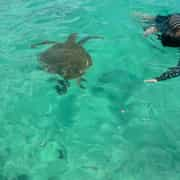
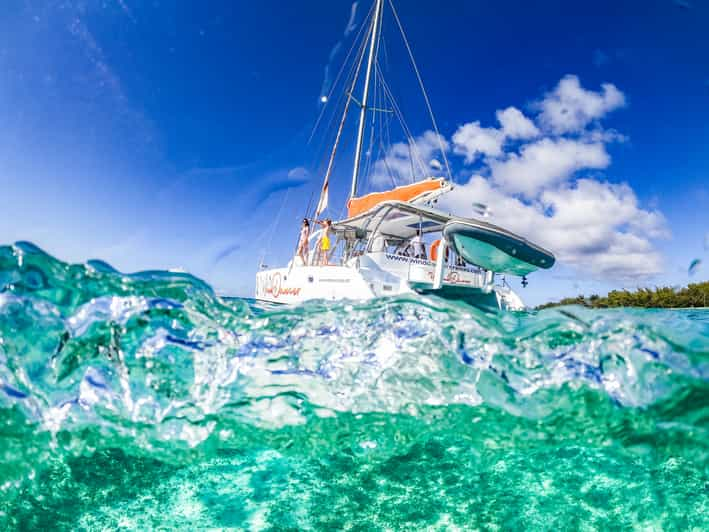
Mauritius: Snorkeling with turtles Le Transporteur speedboat
Admire the colourful marine fauna and TurtlesSwim and snorkel in the indian Ocean
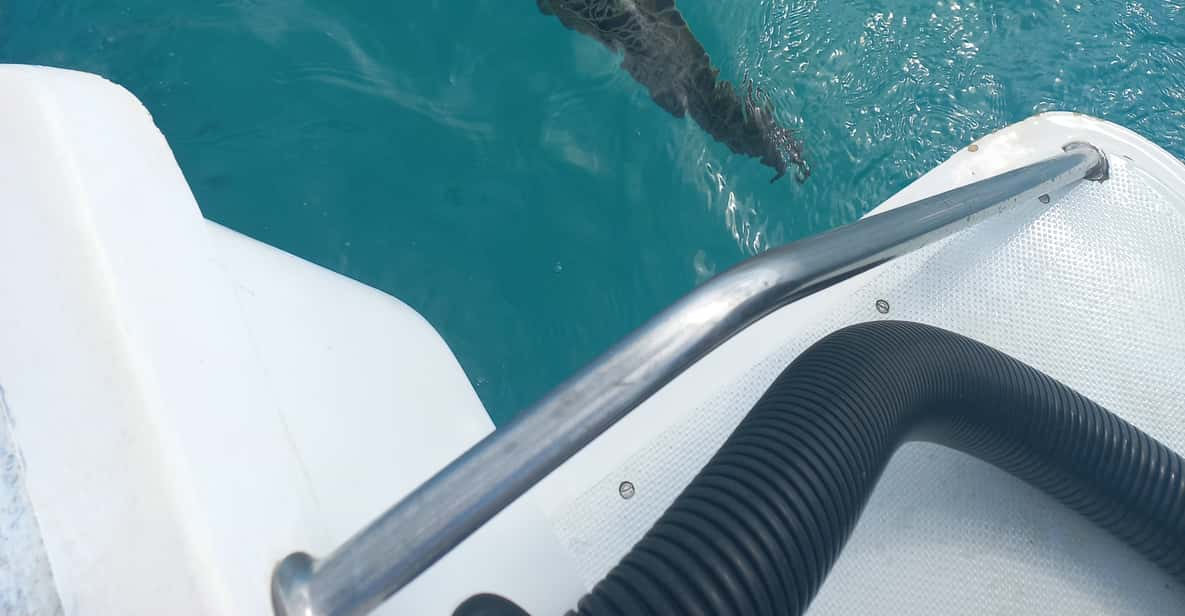
Step off your resort beach into a protected lagoon, then swim with wild turtles in the turquoise north. Snorkelers who came for calm water and real coral say the reefs here changed their whole holiday. Book a guided turtle speedboat from Grand Baie and see the best of Balaclava and beyond.
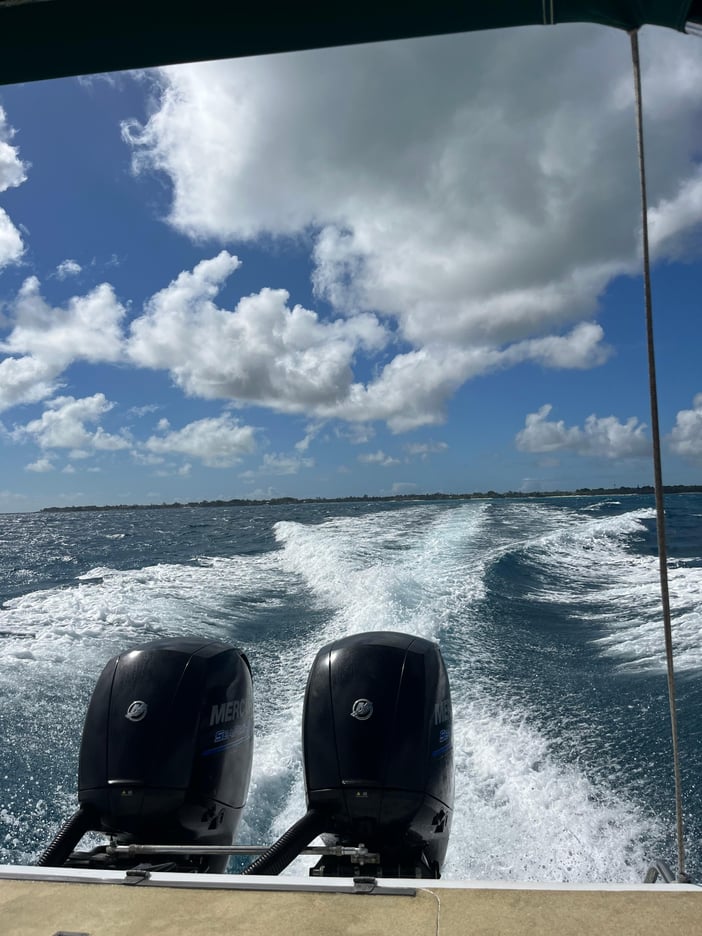
"It was great! No guarantee you'll see turtles, and at first it looked bad, so he took us to dolphins (amazing!). On the way back he spotted a turtle, we jumped in. Top!"
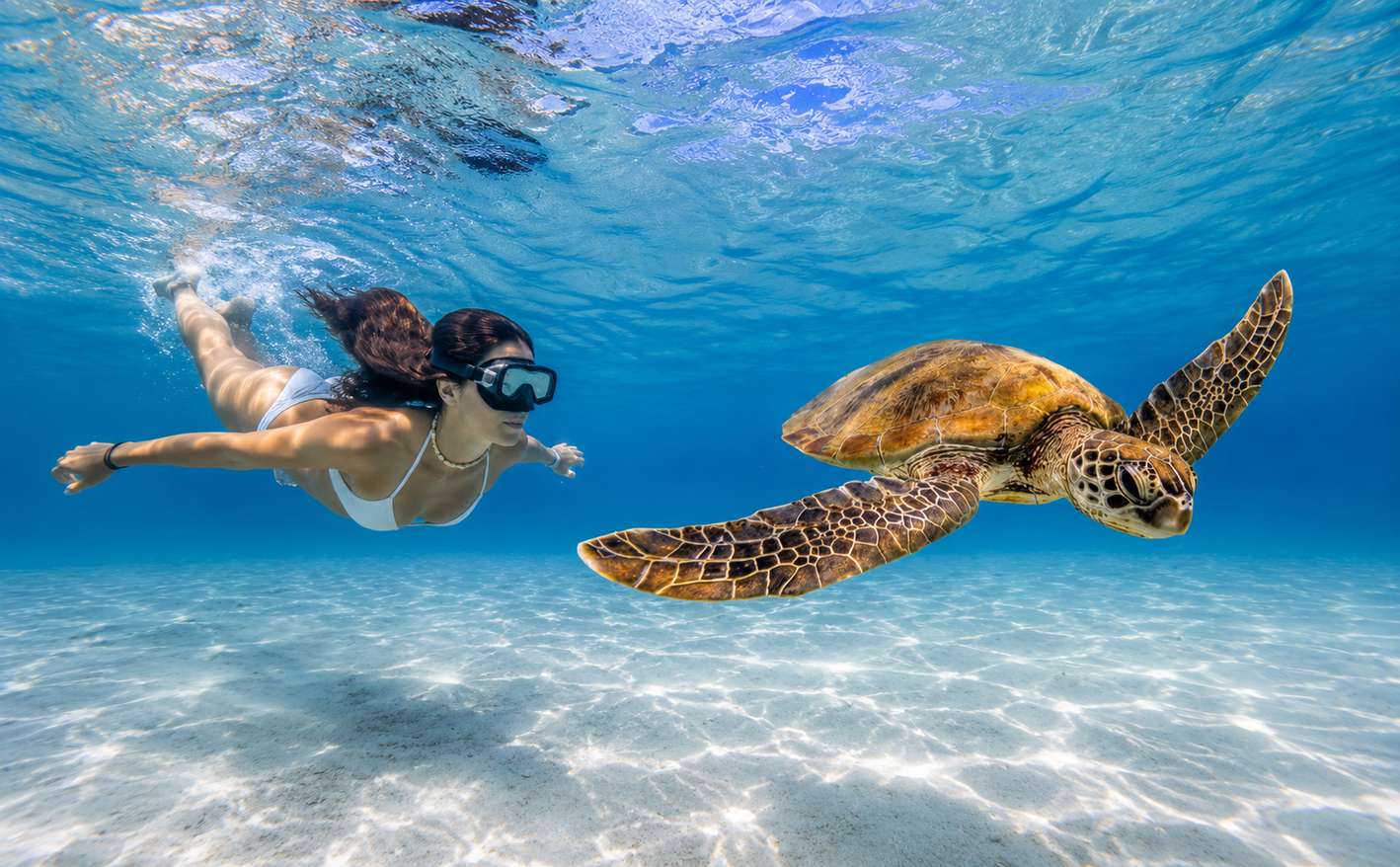
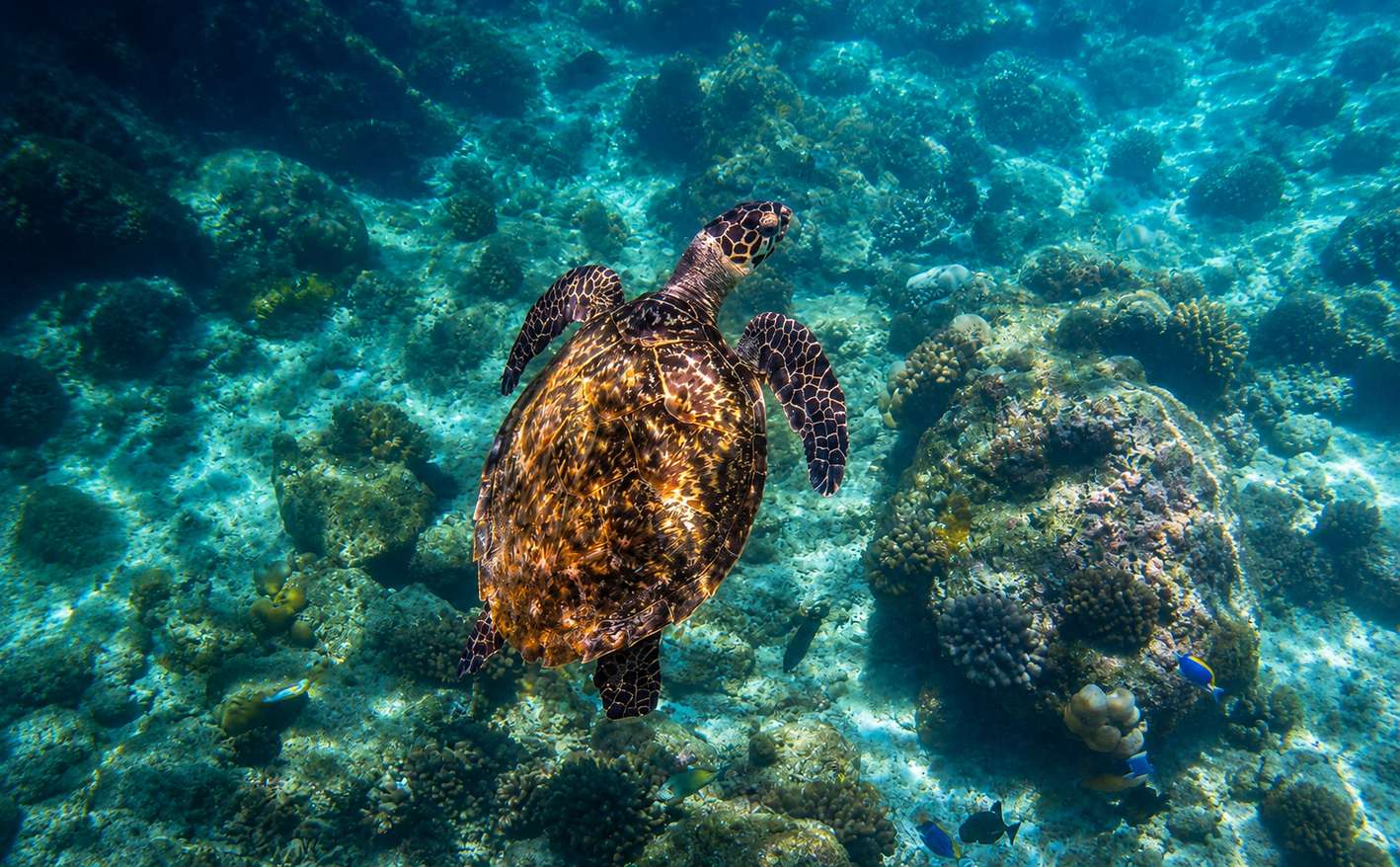
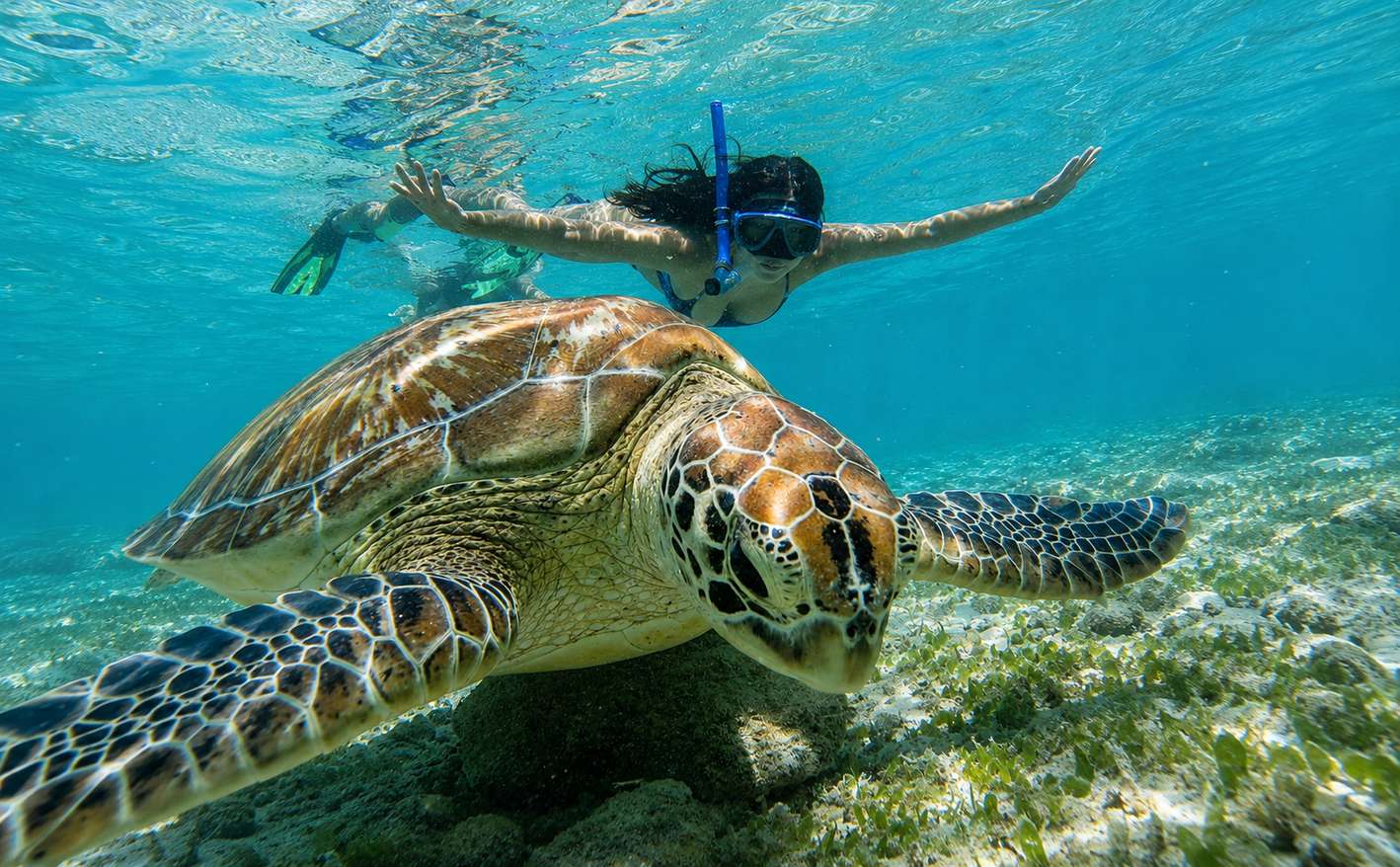



Compare Mauritius's four coasts before you book, because each side hides a different lagoon.
Read the guide
A state-protected reserve where the coral grows in shapes you will not find near Balaclava.
Read the guideThe northwest's classic shore-snorkeling lagoon sits one bay down from Turtle Bay.
Read the guide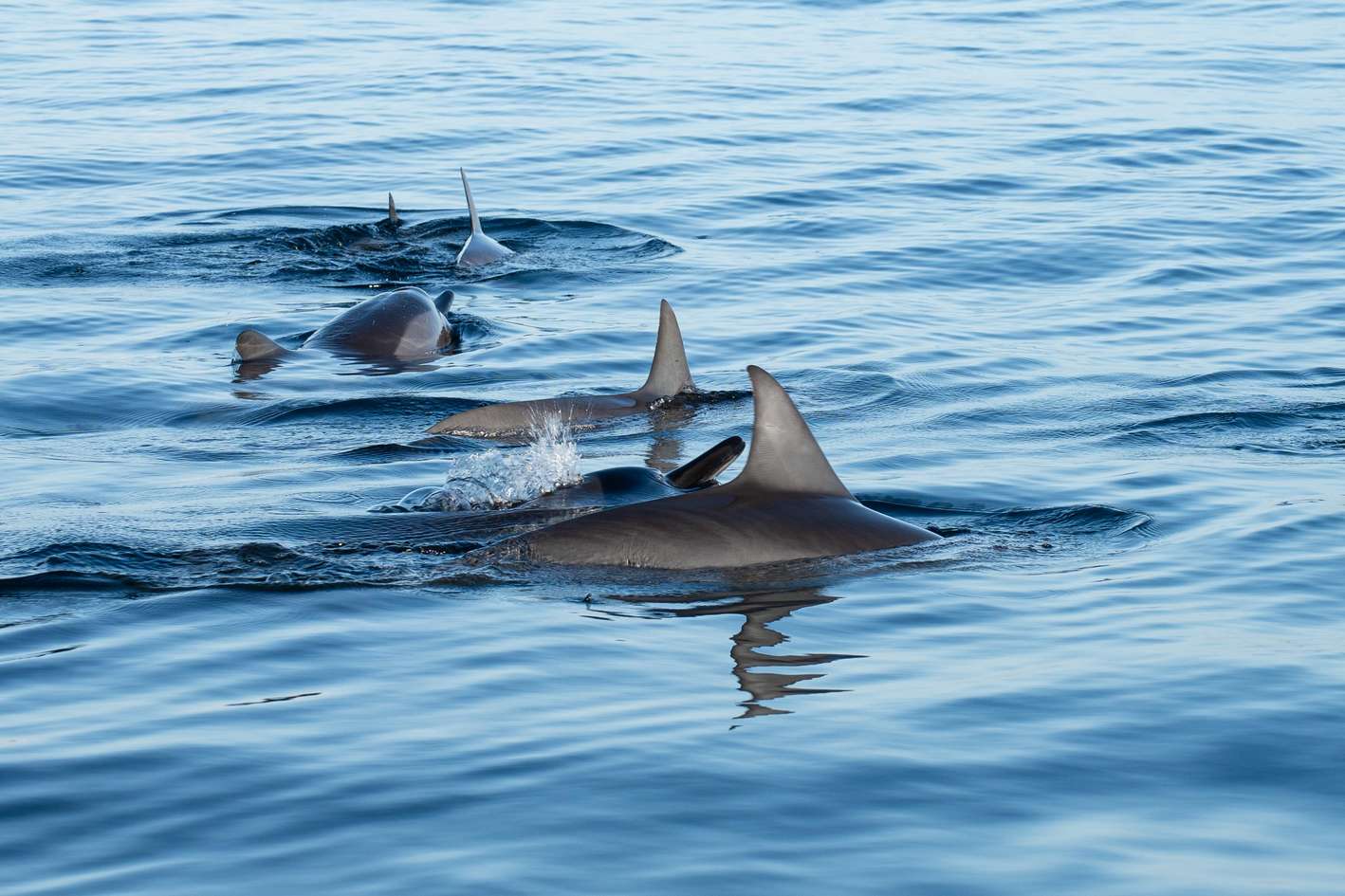
A flat, family-safe lagoon where scattered coral heads start a few dozen meters from shore.
Read the guide
Mountain views and a lagoon rock formation, balanced by strong currents at the passes.
Read the guideA northern cove where green and hawksbill turtles pass close to the sand.
Read the guideGrand Baie is where the boats leave for Coin de Mire, Flat Island and Gabriel Island.
Read the guide
The west coast's dolphin bay, where the best reef life sits outside the lagoon.
Read the guide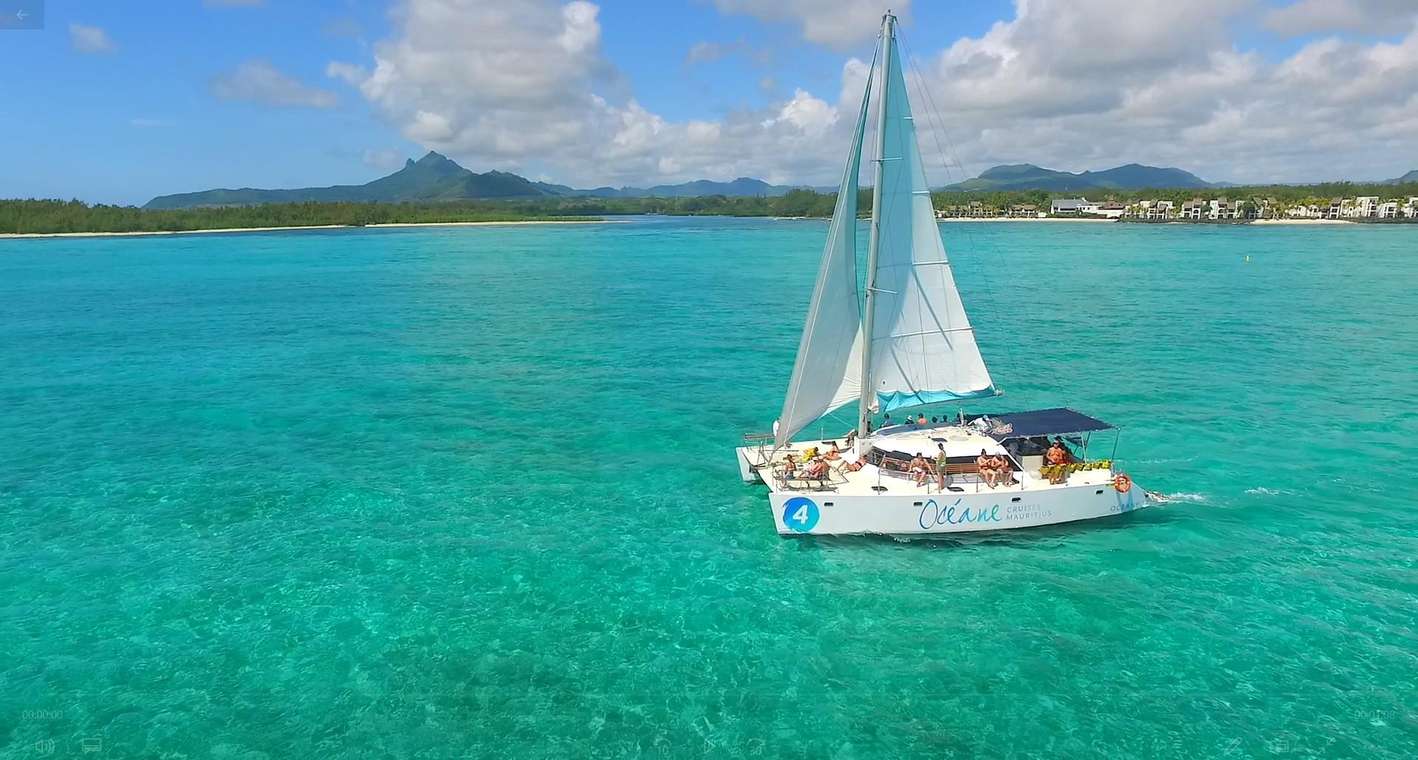
Quiet east coast sand, with the best reef reached by boat and resort pickup included.
Read the guide
Gentle sandy shallows for beginners, with sea urchins underfoot and reef a boat ride away.
Read the guideThe same protected bay this page covers, read as its own destination.
Read the guide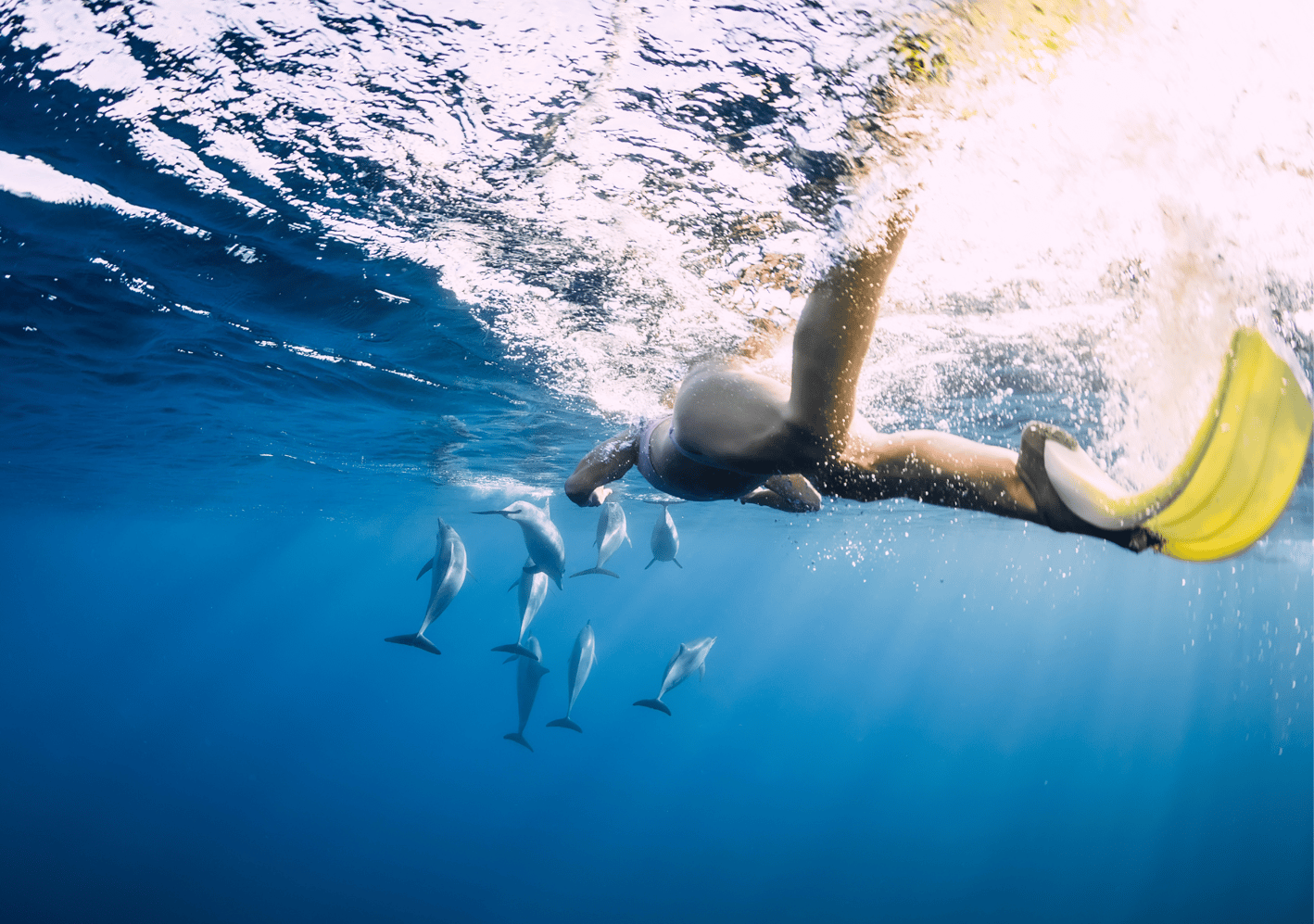
Southern calm on windy days, with currents at the channels that beginners must respect.
Read the guide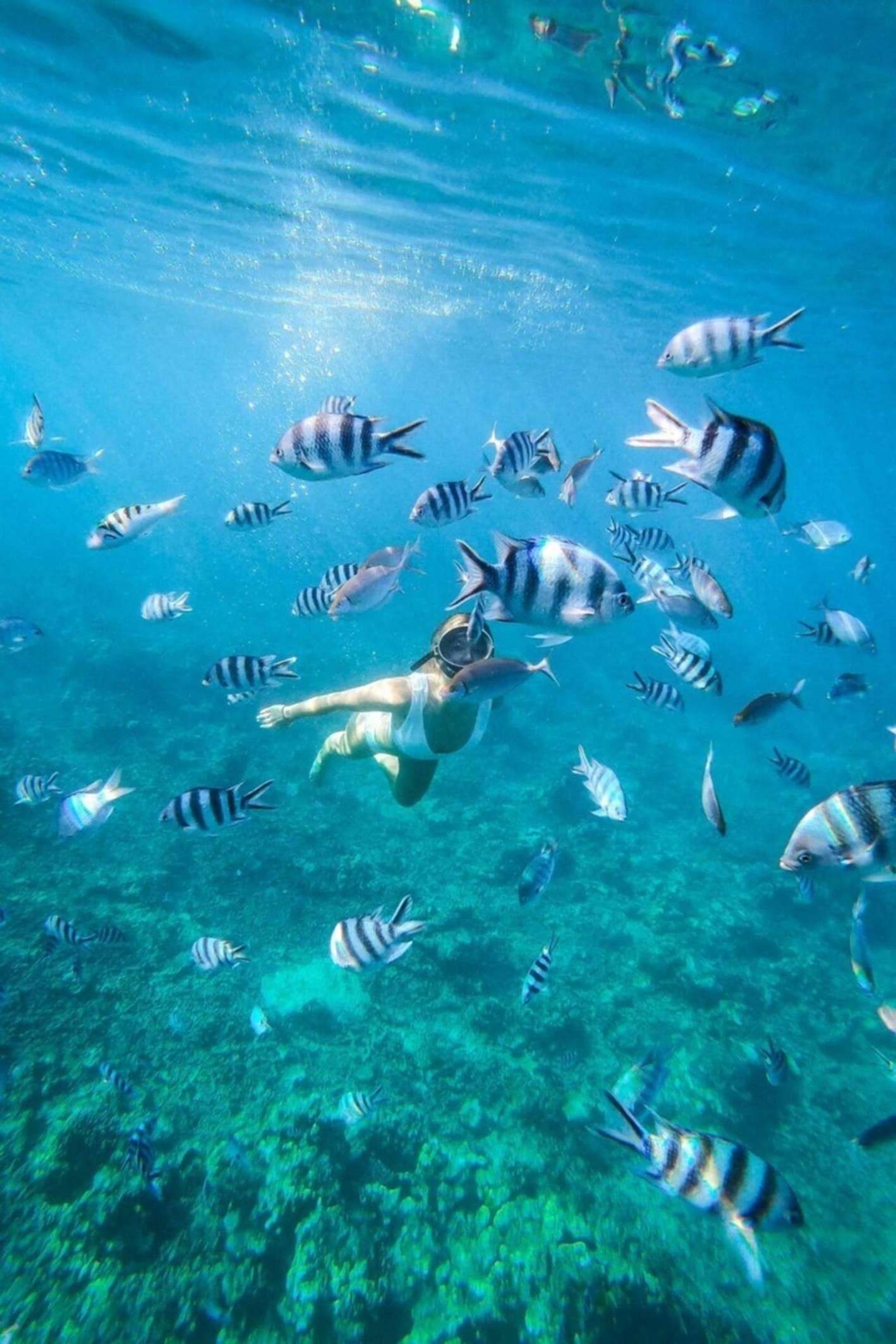
What the underwater waterfall really is, and what to snorkel instead nearby.
Read the guide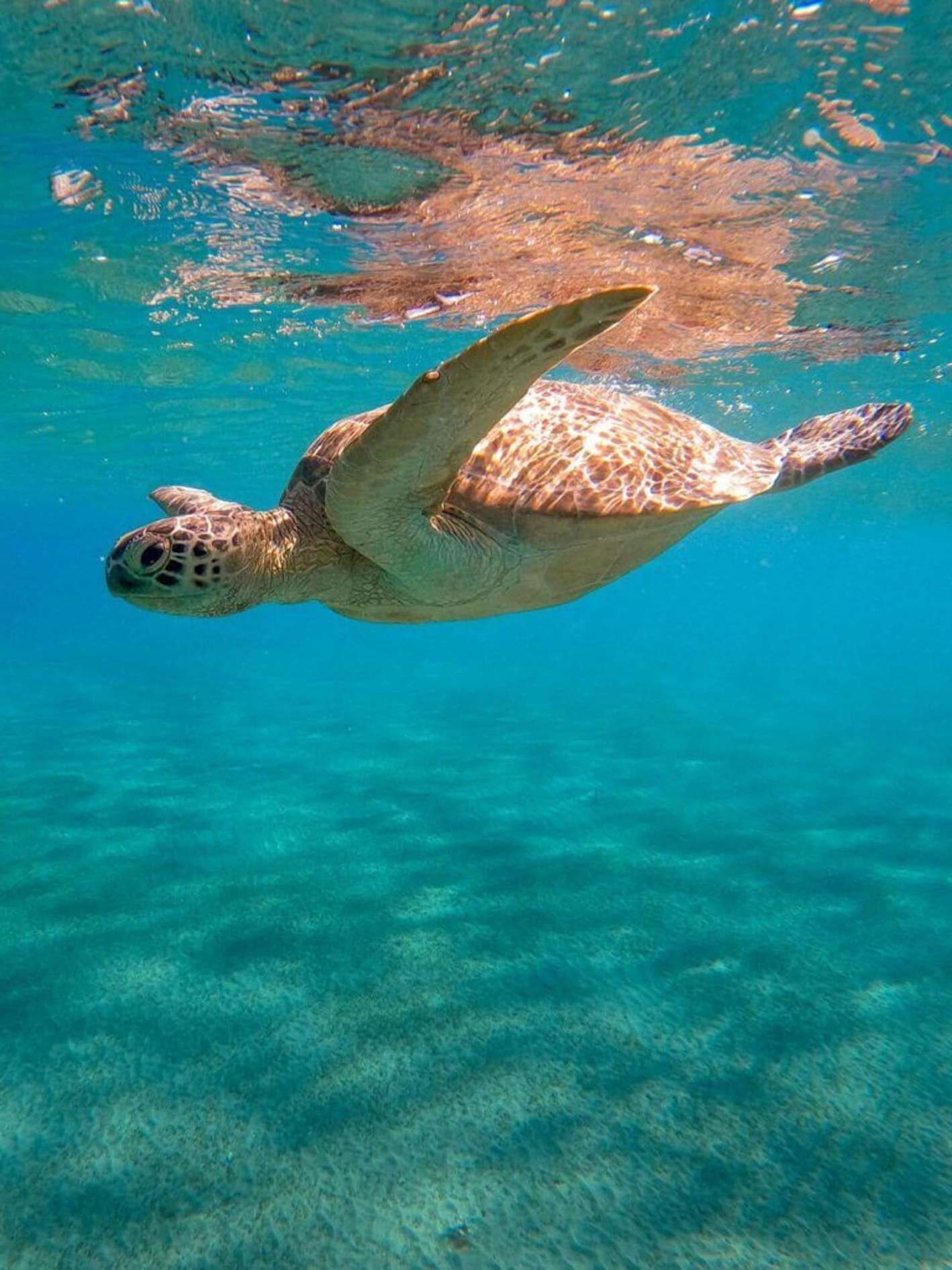
The turtle hotspots of the whole island, plus the etiquette every swimmer should know.
Read the guide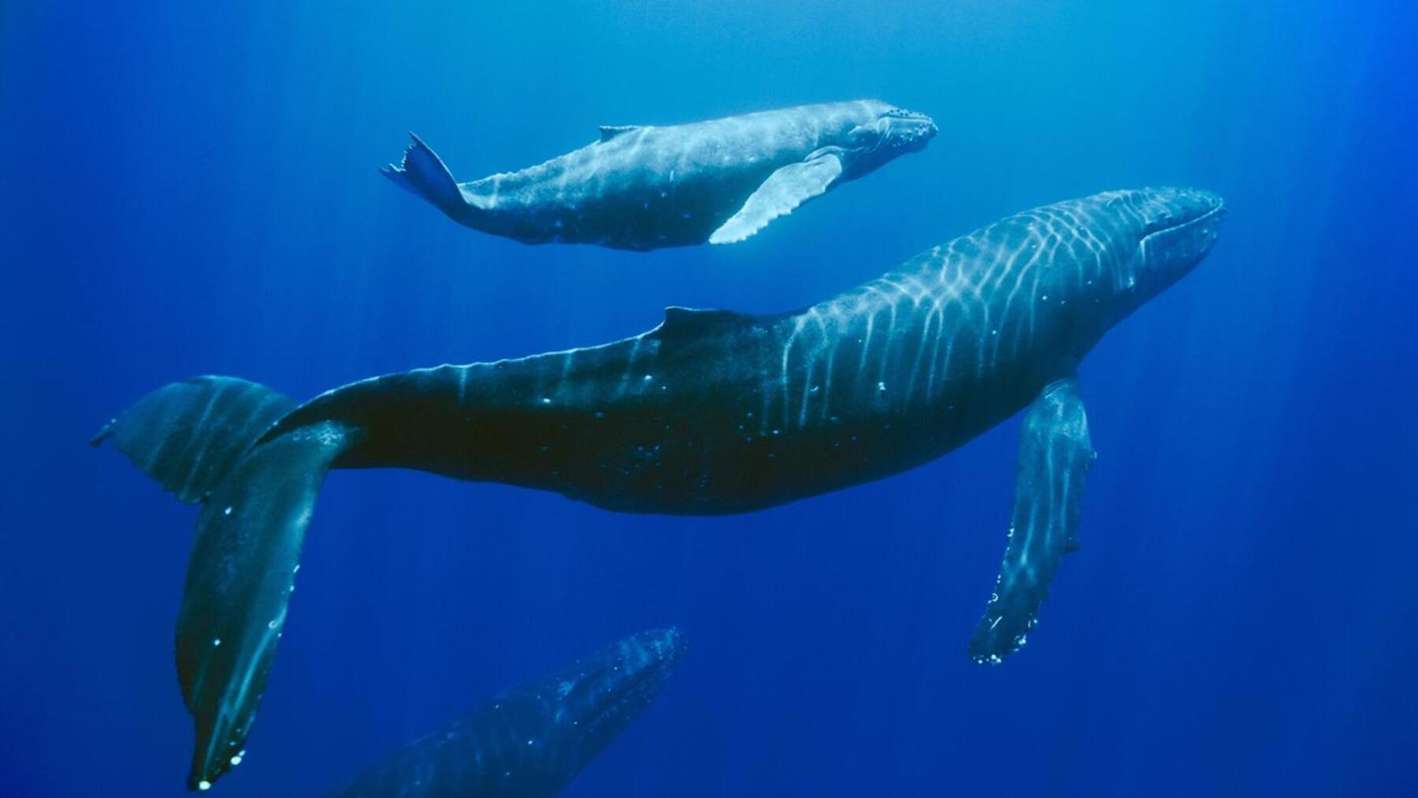
A year-round whale population off the west coast, seen from the deck only.
Read the guide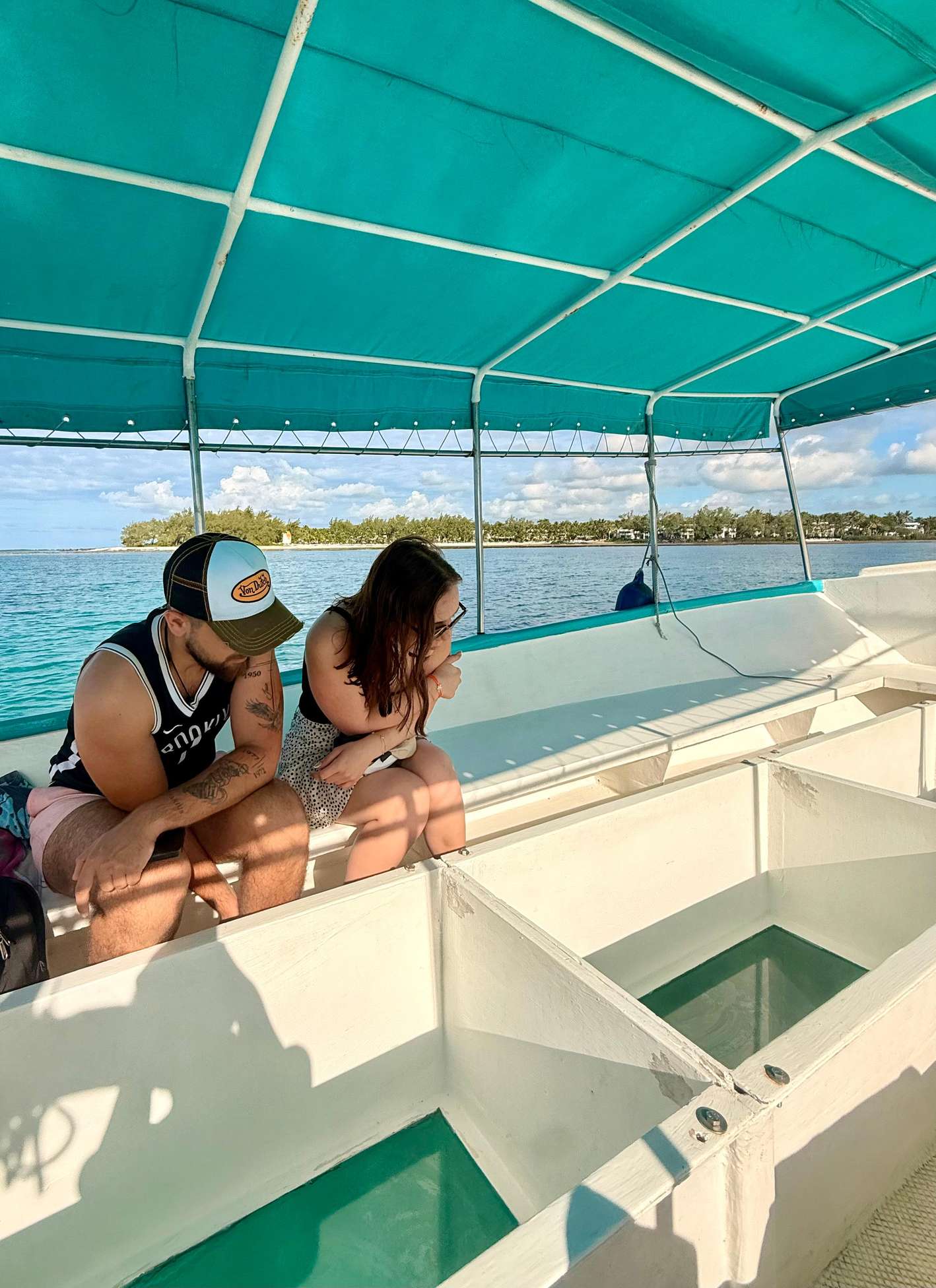
Pick your month with open eyes: when the water is warm, clear and calm.
Read the guide
A stable catamaran day to Île aux Cerfs with snorkeling and lunch built in.
Read the guide
Trade the slow sail for speed: more stops, more island time, a livelier ride.
Read the guide
An exclusive charter that beats the mass boats to the beach and the reef.
Read the guideEvery coast on this island snorkels differently, and the one you pick shapes what you see.
Trade winds, reef health and boat traffic change from side to side
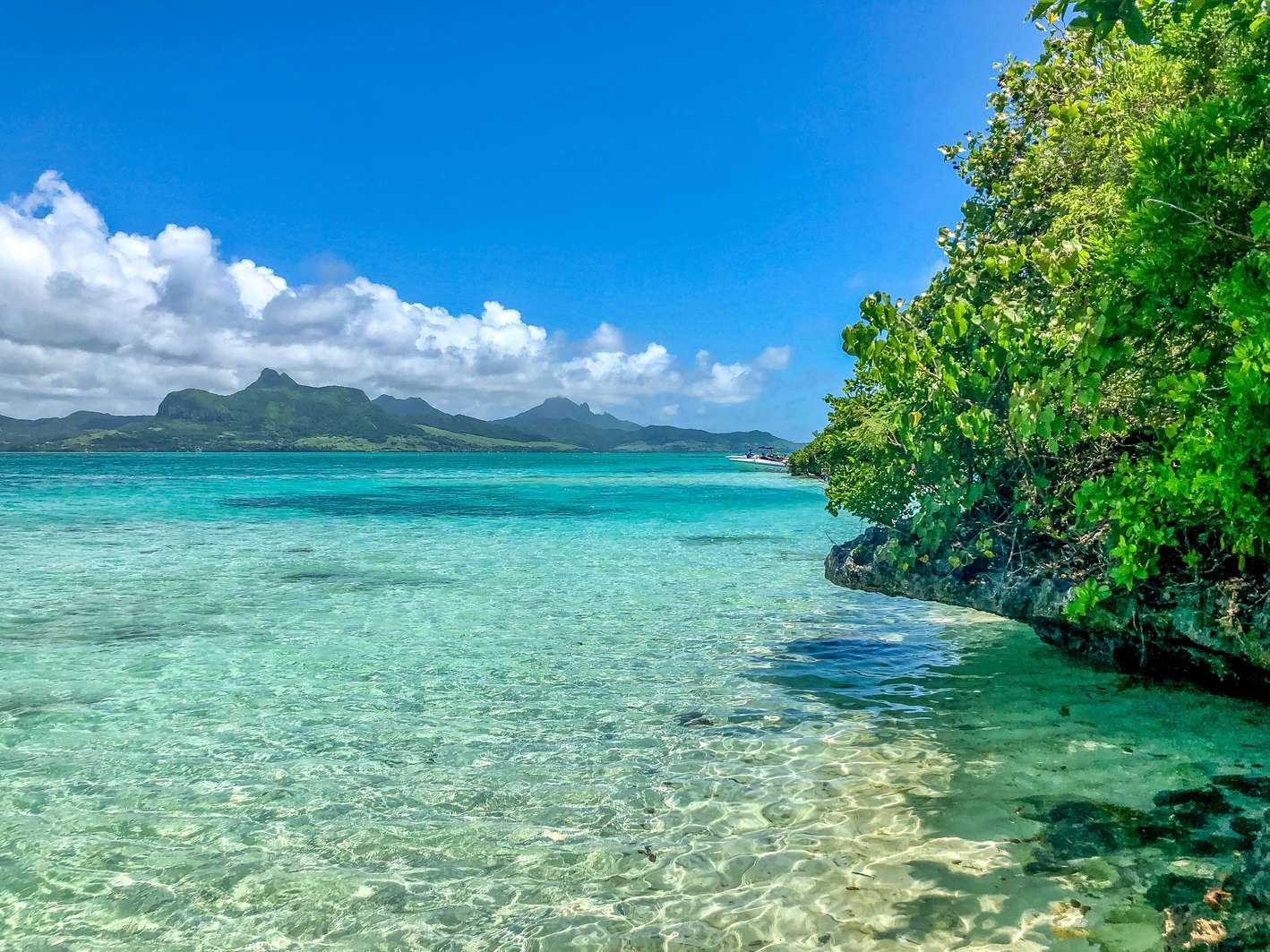
Mauritius sits inside a ring of coral, but the water on each side behaves differently. The southeast trade winds chop up the east coast lagoons from May to September, while the island's high ground shelters the west, and the north keeps calm conditions on most days of the year.
The coast decides more than your hotel view decides. It decides how clear the water stays, which reefs are worth a boat, and how much wind you fight by lunchtime. This page sets the coasts side by side so you can place Balaclava's sheltered northwest against the rest before you plan a single excursion.
3 hours · ★ 5.0 (4)Blue Bay: Lagoon, Snorkeling, and Creole LunchFrom $87 7 hours · ★ 4.8 (869)Ile aux Cerfs Catamaran Cruise with BBQ Lunch & SnorkelingFrom $68 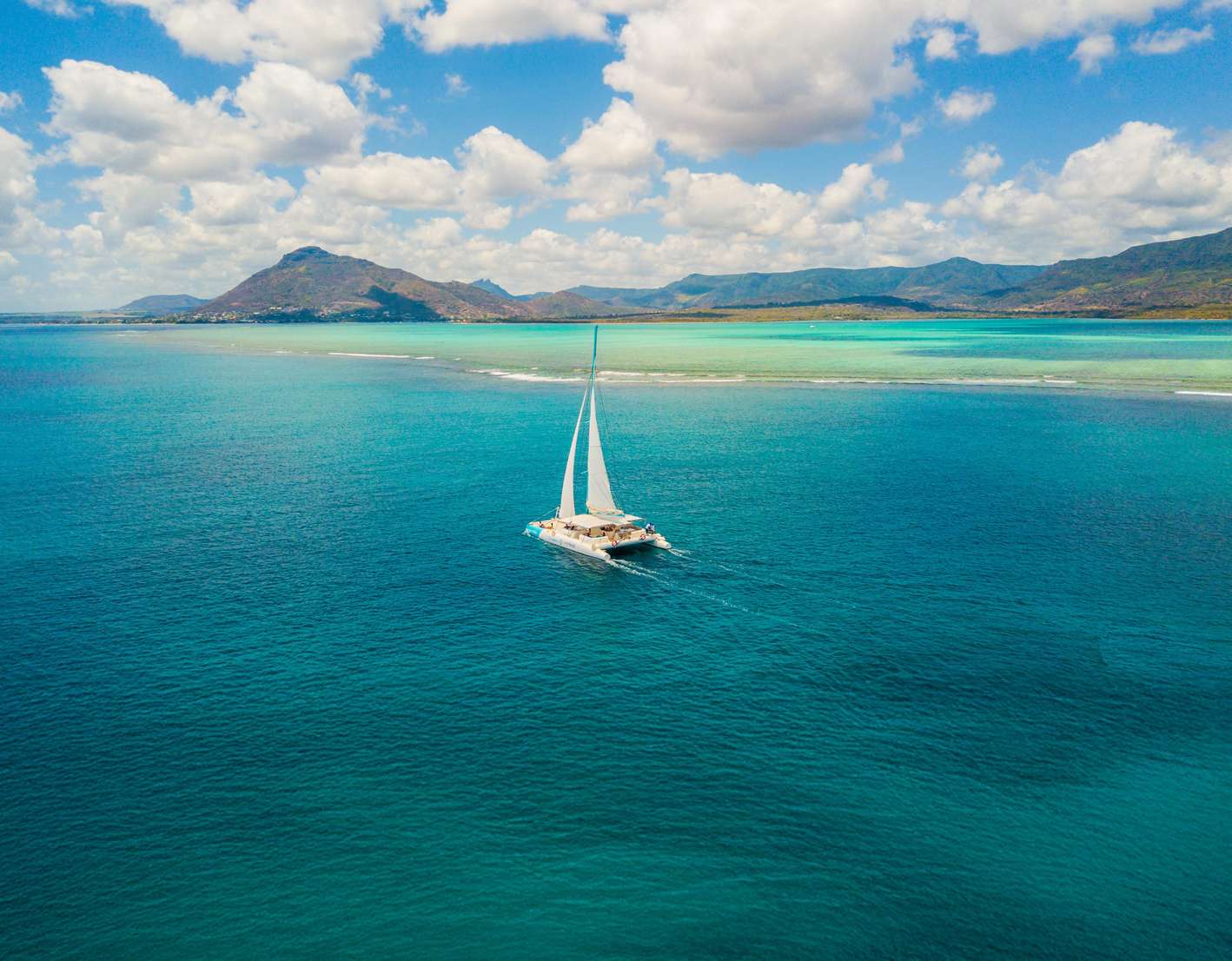 6 hours · ★ 4.7 (363)Mauritius: Catamaran Cruise - Dolphin Watching, BBQ & DrinksFrom $87 2 hours · ★ 4.7 (39)Mauritius: Snorkeling with turtles Le Transporteur speedboatFrom $375 /group
Mauritius's biggest protected coral reserve, seen from a glass-bottom boat
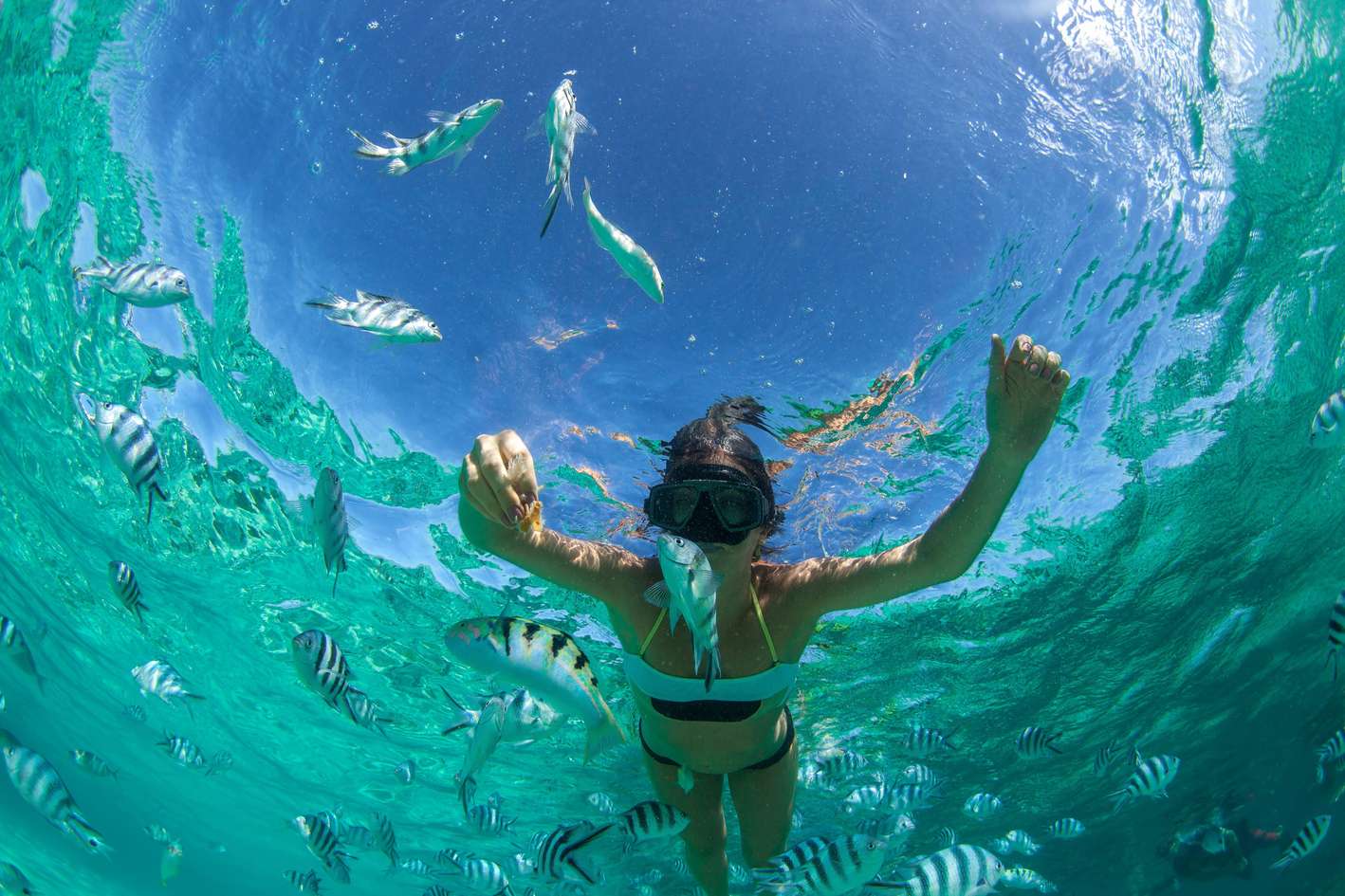
Blue Bay holds the largest coral reserve on the island, protected as an official nature reserve since 1985. Glass-bottom boats leave the public beach, so children and non-swimmers watch the reef through the floor panel while everyone else drops in for a snorkel.
Trips run from a one-hour loop to a half-day outing with a Creole picnic, and the two-hour versions cover two reef spots when the tide allows.
The park starts close to shore, so you can even swim in from the sand if you are confident. It sits at the opposite end of the island from Balaclava, which makes it a full-day plan rather than a morning.
3 hours · ★ 5.0 (4)Blue Bay: Lagoon, Snorkeling, and Creole LunchFrom $87 2 hours · ★ 4.6 (17)Blue Bay Marine Park: Guided Snorkeling with Video Souvenirs and SnackFrom $58 4 hours · ★ 4.5 (306)Blue Bay: Half-Day Snorkeling Trip with Creole Picnic LunchFrom $67 1 hour · ★ 4.4 (155)Blue Bay Marine Park - 1-hour Snorkeling ExcursionFrom $28 Calm lagoon, a long swim to the good coral, and turtles on the seagrass
Trou aux Biches keeps a shallow, reef-protected lagoon that stays flat on most days of the year. Right next to the sand the bottom is mostly bare sand, and the living coral starts near the barrier shelf, roughly a 200 to 300 meter swim out.
That outer shelf is where green turtles graze on seagrass, and morning water before the tour boats arrive gives the most reliable sightings. Green turtles graze the seagrass beds along the lagoon edge, and the outer reef holds the best chance of seeing them.
If you would rather let a boat find them, private turtle snorkeling trips run out of nearby Grand Baie and head straight for that same lagoon.
One of the island's calmest lagoons, with coral heads a short swim out
Flic en Flac sits on the sheltered west coast, and its barrier reef keeps the lagoon shallow and calm even when the east side is windy. The beach runs long and open, with swimmers of every level in the water.
Scattered coral clumps and reef fish begin a short swim from the shore, and denser formations lie around 200 meters out.
Two shore marks matter: healthier coral heads sit off the Villa Caroline stretch, and coral grows directly opposite the Hindu temple, so you can reach living reef without a boat. Private dolphin boats also leave from the local public beach, which turns a lazy lagoon day into a wildlife morning.
8 hours · ★ 5.0 (2)Private Dolphins, Sea Turtles & Île aux Bénitiers TourFrom $850 /group 7 hours · ★ 5.0 (1)Mauritius: Private Whale Watching & Bénitiers BBQFrom $1,025 /group 2 hours · ★ 4.7 (28)Flic en Flac: Private Sunrise Dolphin Watching Boat TourFrom $309 /group 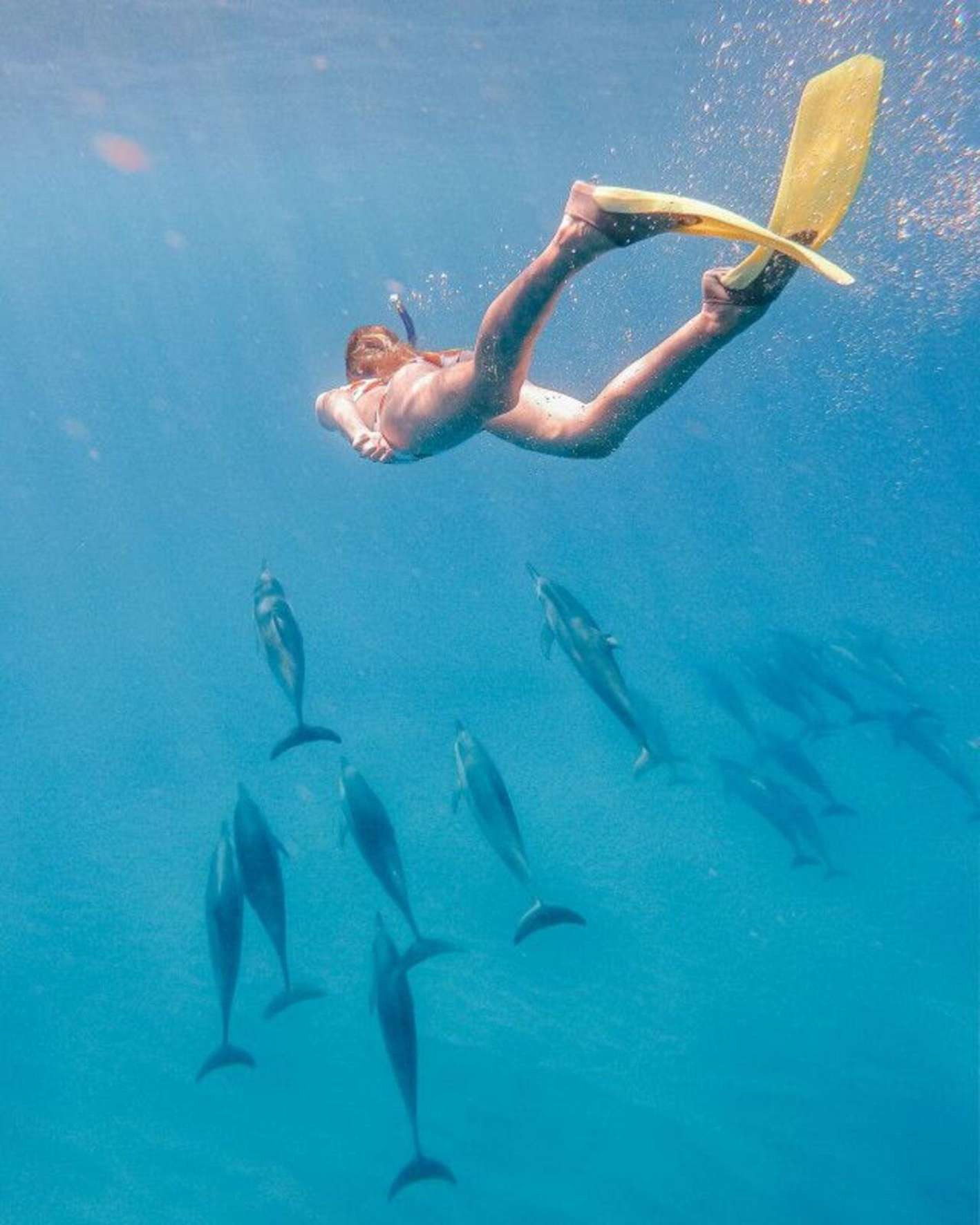 2 hoursMauritius: Private Dolphin Watching and Snorkeling TourFrom $441 /group
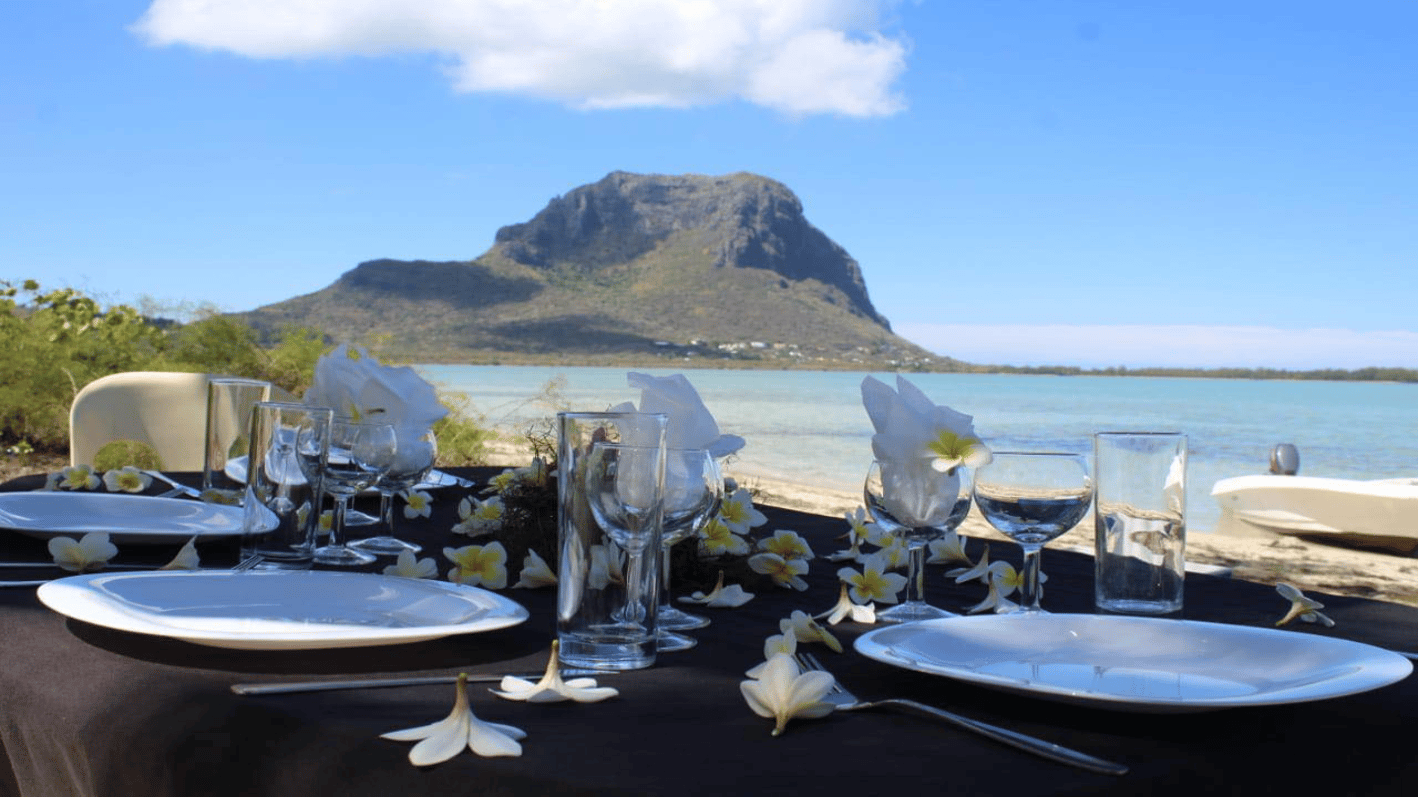
Snorkeling under the Le Morne peak, with Crystal Rock in the lagoon
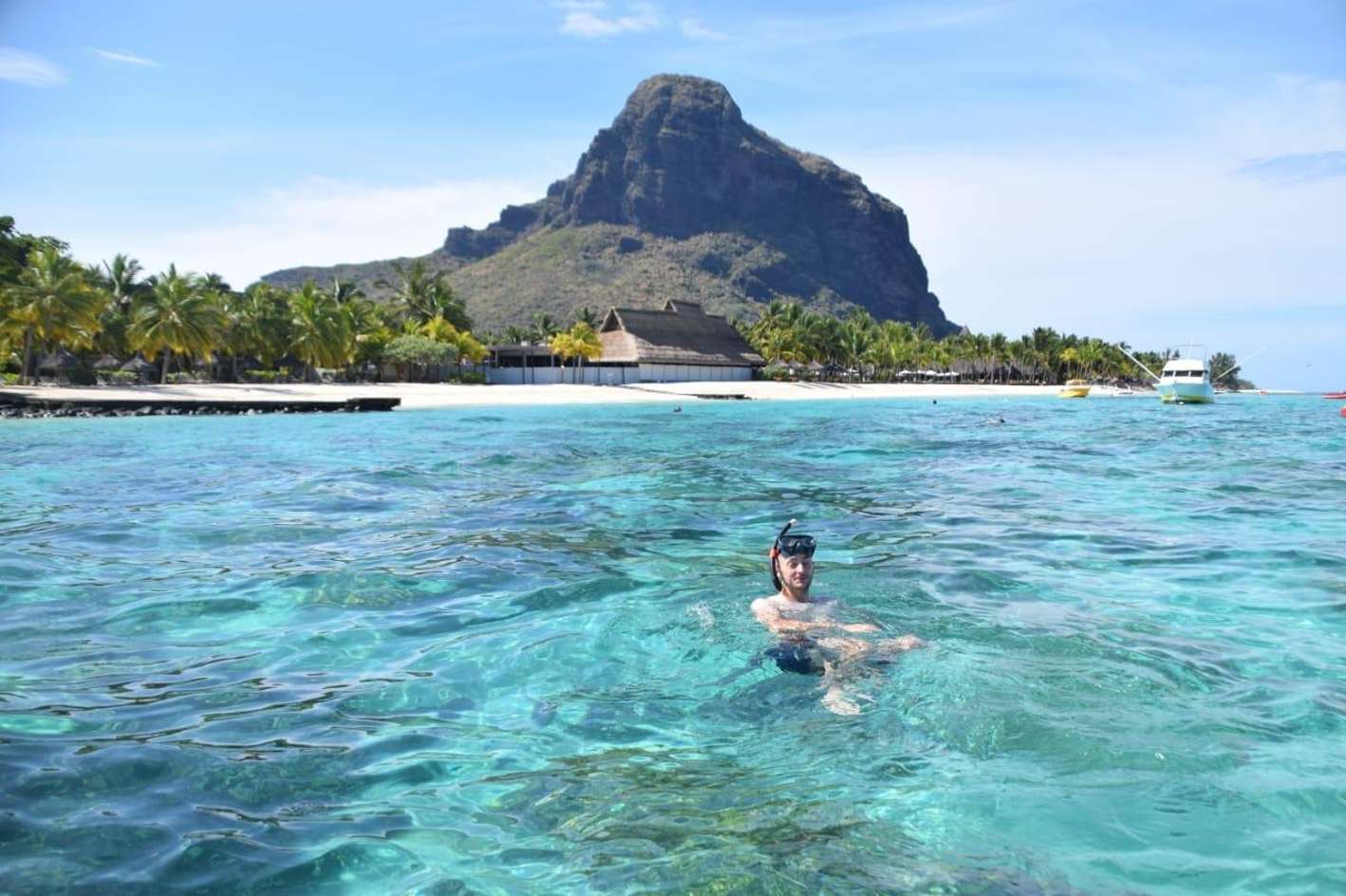
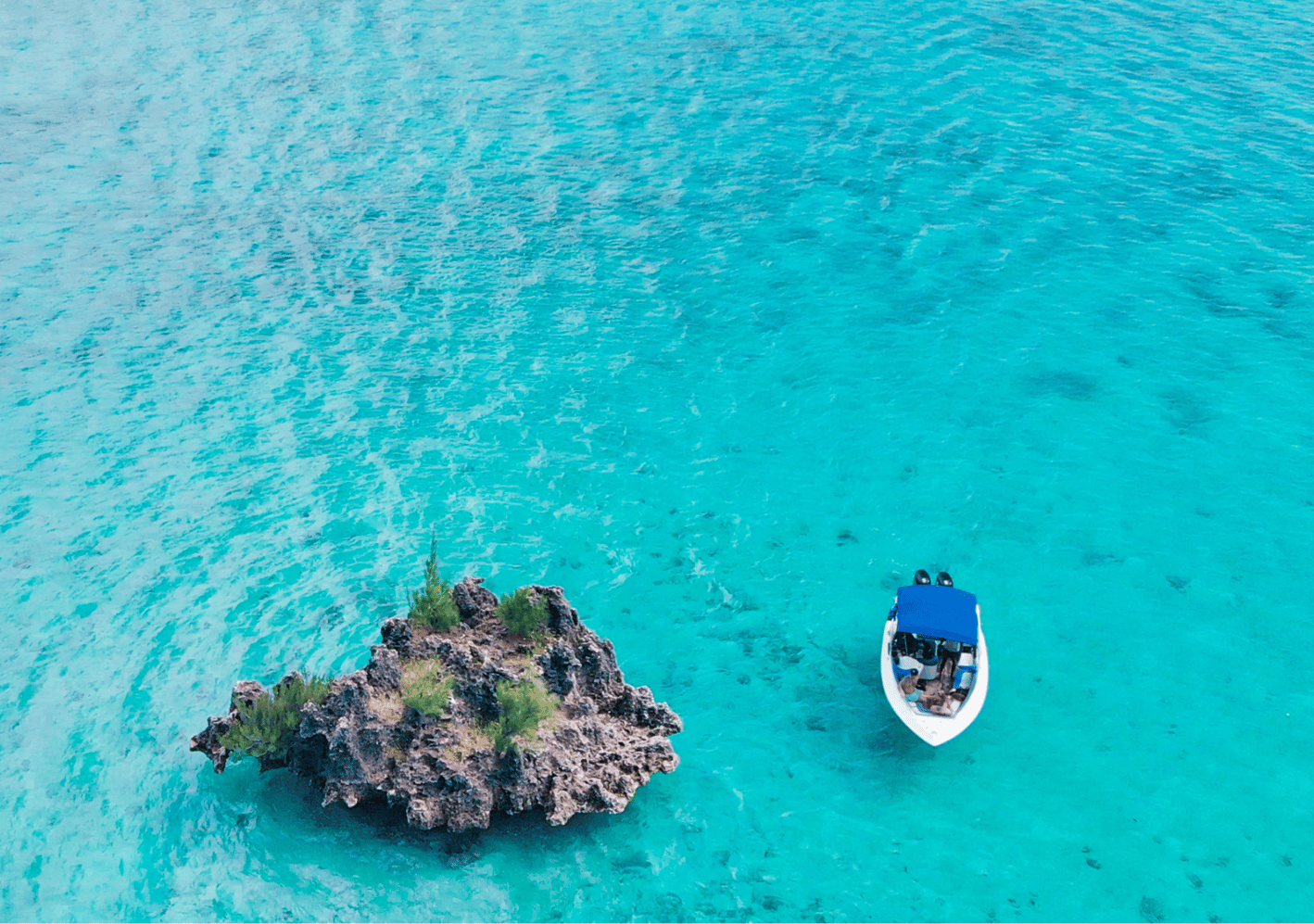
Few snorkeling spots come with a backdrop like the Le Morne Brabant peak. The inner lagoon stays shallow and sheltered, and the water around Crystal Rock is calm and shallow, with coral blocks and reef fish in water no deeper than a few meters.
The passes are a different story. On a falling tide the reef channels drain the lagoon, and the current can run too hard to swim against, so the reef edge and the famous pass belong to boats and experienced divers.
Boat trips from Le Morne and nearby Black River handle the crossings, combine a snorkel stop with Crystal Rock and Île aux Bénitiers, and often add a dolphin search on the way.
7 hours · ★ 5.0 (5)Private Île aux Bénitiers Boat: Dolphin Snorkeling & LobsterFrom $738 /group 7 hours · ★ 5.0 (1)Mauritius: Private Whale Watching & Bénitiers BBQFrom $1,025 /group  2 hours · ★ 4.9 (151)Mauritius Le Morne: Wild Dolphin Watching & SwimmingFrom $331 /group
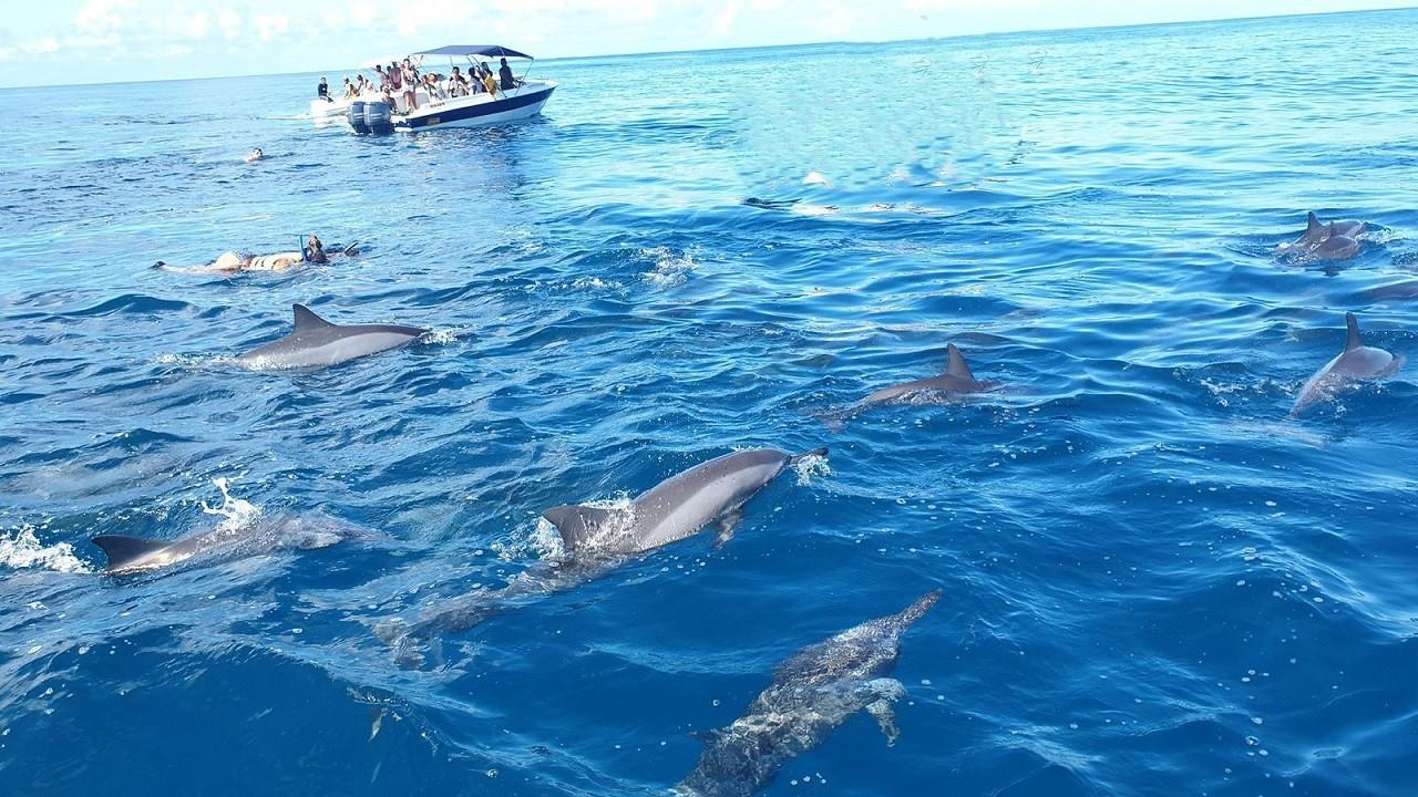 6.5 hours · ★ 4.3 (318)Black River: Swim with Dolphins Speed Boat Tour with lunchFrom $69
A sheltered swimming cove with turtles close in and reef on the rocky edges
Pereybere is a small, sheltered cove on the north coast, and its buoyed swimming zone keeps motorboats out of the middle. Both green and hawksbill turtles visit the sheltered inner waters, sometimes within 50 to 100 meters of shore.
The sandy centre holds little, so head for the rocky edges of the cove, where tropical fish gather and a reef with more life sits just beyond the swimming area.
Tidal currents run outside the protected zone and near the reef, so stay inside the buoys or follow the marked edges. When you want a boat instead, the turtle and reef trips that leave from Pereybere Beach reach deeper turtle feeding grounds in an hour and a half.
The departure beach for the northern isles and their open-water reef
The bay itself is a working harbour of moorings and boat traffic, so the inner water is not where you snorkel. What Grand Baie gives you is the north coast's best fleet: catamarans and speedboats that sail straight off the public beach toward the northern islands.
The payoff is Coin de Mire, a volcanic islet with healthy coral and busy fish life in clear open water, reached in about half an hour of sailing. Basic swimming skill matters there because you snorkel over deeper water.
Full-day cruises add beach time on Flat Island and Gabriel Island, a barbecue lunch on board, and dinghy transfers from the sand, so the day asks nothing of you except sunscreen.
Dolphins at dawn, then reefs and Crystal Rock for those who stay out
Tamarin Bay draws the island's dolphins, and the boats that chase them leave before sunrise from the public beach and the nearby marina. Pods of spinner and bottlenose dolphins rest in the bay in the early morning, and licensed crews drop small groups of swimmers alongside them.
Swimming here is open-water work: you drop into deep water and swim fast to keep pace with the animals, so fins and reasonable fitness matter.
Inside the bay the reef is limited, and the richest stops, such as Crystal Rock and the reefs off Île aux Bénitiers, sit south of the bay and are reached by boat. Two to three hours covers the dolphins and a snorkel; full-day versions add lunch on the island.
7 hours · ★ 5.0 (5)Private Île aux Bénitiers Boat: Dolphin Snorkeling & LobsterFrom $738 /group 6 hours · ★ 4.7 (363)Mauritius: Catamaran Cruise - Dolphin Watching, BBQ & DrinksFrom $87 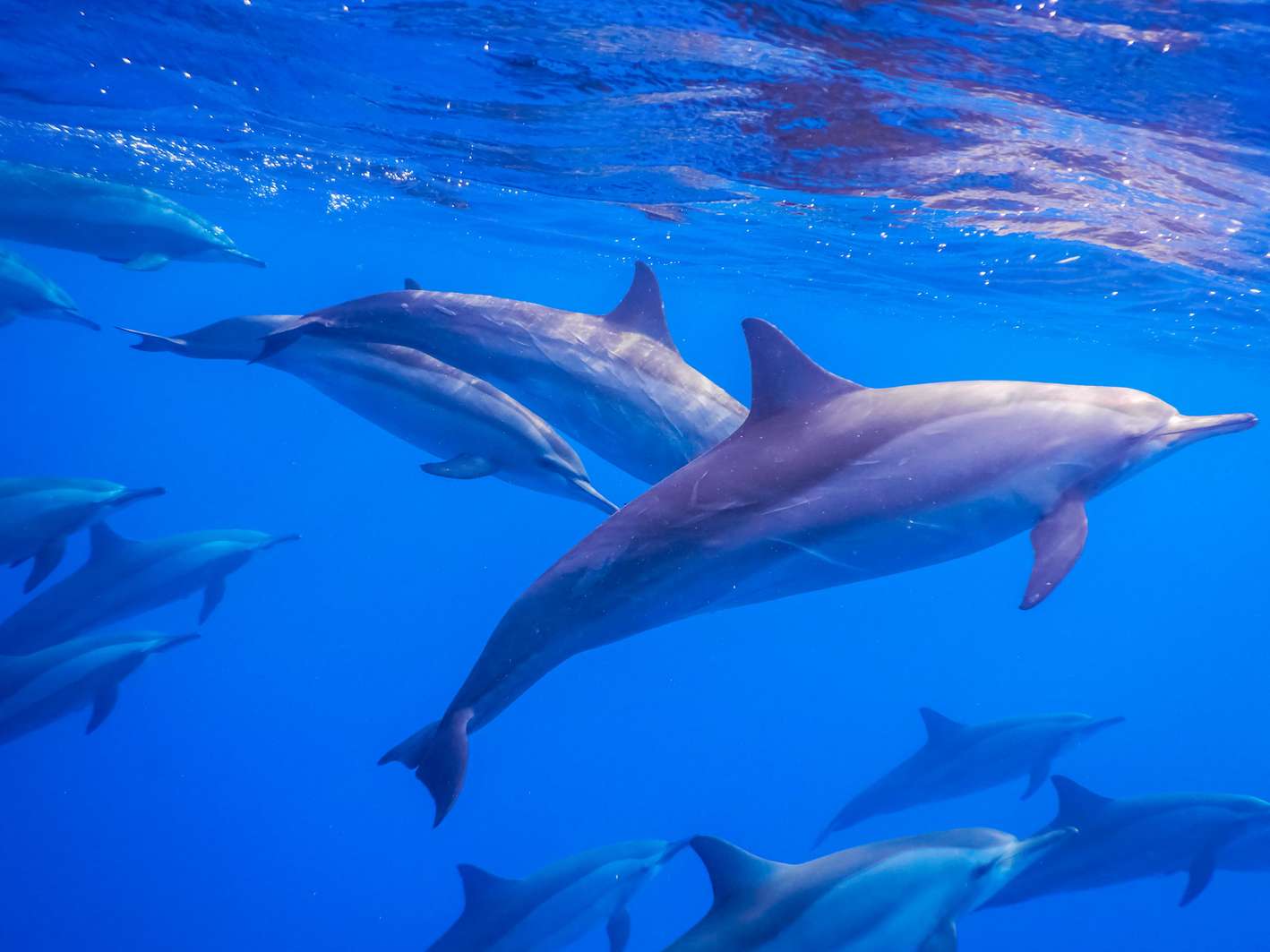 2 - 6 hours · ★ 4.7 (237)Dolphin Watching with Hotel Pickup (Mauritius)From $61 /group
 4 hours · ★ 4.4 (35)Dolphins & Whales: Private Snorkeling TourFrom $528 /group
East coast lagoon with a reef pass that belongs to boats, not swimmers
Belle Mare runs a wide east coast lagoon behind the barrier reef, and on calm mornings the water over the sand is pleasant for a first snorkel. The catch sits at the reef: the pass funnels strong currents out to sea, and swimming toward it from the beach is not advised.
The living reef lies roughly 500 meters offshore, and local guides reach it by boat in a few minutes.
That is the practical shape of a day here: a beach morning in the shallows, then a boat trip that carries you to the reef and often on to the Grand River South East waterfall. East coast operators pick up directly from the Belle Mare resorts, so no taxi planning is needed.
A calm, shallow lagoon a short walk from the east coast resorts
Palmar's lagoon is barely 250 meters wide to the barrier reef, and the offshore reef keeps it calm while the trade winds work the east coast. Beginners get flat, shallow water over sand, with small tropical fish around the seagrass and the rocky points.
Two things shape the day. The shallows hold sea urchins of several kinds, so water shoes earn their place before you wade in.
And the southeast trades make the lagoon choppiest and murkiest from June through September, with calm days rare in those months, so time your visit for the morning and the shoulder seasons. For real reef, the boats leave from Trou d'Eau Douce a few minutes south, with pickup straight from the Palmar hotel lobbies.
Walk-in reef access and occasional green turtles, minutes from Balaclava
Turtle Bay earned its name from seventeenth-century Dutch sailors, and the bay still delivers on the shallower promise: walk-in beach access, a sheltered lagoon and coral close to shore, with green turtles entering the shallow waters on occasion rather than on schedule.
The page sorts the practical details a Balaclava stay runs into: which parts of the shoreline give a clean entry, where boat and jet ski traffic passes, why a bright snorkel vest helps you be seen, and how the reef health is recovering inside the marine park.
If your holiday is based here, it is the chapter that turns a resort beach into a plan.
Outer barrier reef within reach, but a shallow, tide-sensitive lagoon
Bel Ombre's lagoon can be snorkeled straight off the beach on calm days, especially where rocks and coral sit in the sand. The bay's nautical centres run organized snorkeling and glass-bottom outings, so south coast guests reach the water without crossing the island.
Tides and currents decide the experience. At low tide the lagoon becomes very shallow and squeezes the swim, while the channels toward the barrier reef carry strong currents that beginners should not test.
For outer-reef snorkeling, most guests join a tour with resort pickup, and the boats that work this coast encounter fewer other vessels than the busy northern routes.
The famous underwater waterfall is an illusion seen only from the air
The sand cascade you have seen from the air is an optical illusion: pale sand and silt wash off a shallow shelf into a deep canyon, and the picture only works from above. From sea level, and through a snorkel mask, there is nothing to see but ordinary water.
Swimming toward the reef opening there is also a poor plan, because outgoing tide and breaking surf push strong seaward currents through it.
The page explains the geology plainly and points you at what the same corner of the island does hold, from calm La Prairie shallows with the mountain behind them to the boat reefs and dolphin grounds off Black River.
Where turtles reliably feed, and the conduct rules that keep it legal
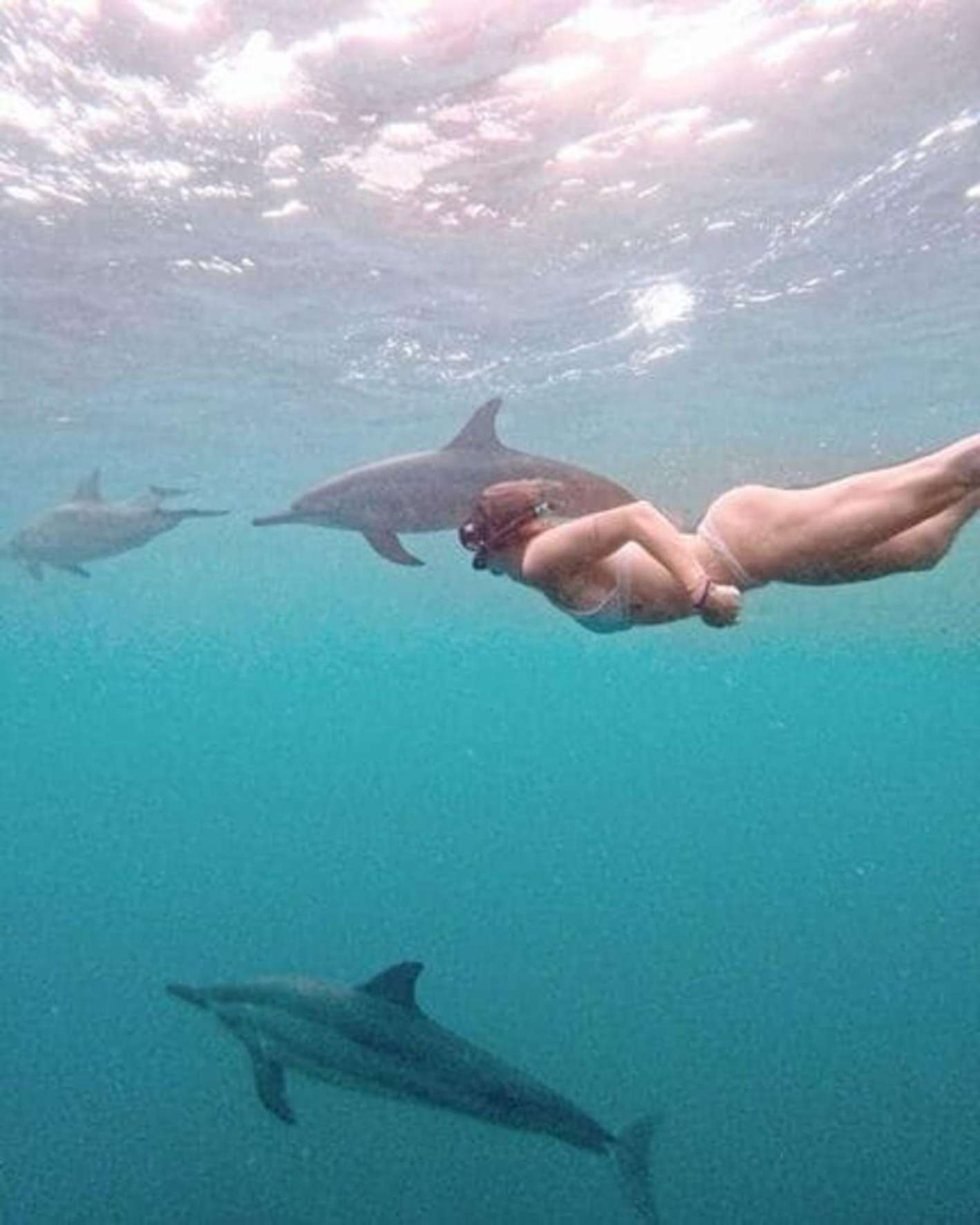
Green and hawksbill turtles feed at a handful of reliable spots around Mauritius, and this page lines them up, from the northwest lagoons a short drive from Balaclava to the southern bays and the reefs off the northern islets.
It tells you which encounters come from shore, which need a boat, and which months clear the water.
The rules matter as much as the map. Touching, chasing or feeding any wild turtle is against the law in Mauritius, and gentle behaviour around the animals is what keeps the encounters happening.
Guided boat trips put you over the feeding grounds with a crew that knows the etiquette, which is the straightforward way to do it.
8 hours · ★ 5.0 (2)Private Dolphins, Sea Turtles & Île aux Bénitiers TourFrom $850 /group 2 hours · ★ 4.7 (39)Mauritius: Snorkeling with turtles Le Transporteur speedboatFrom $375 /group 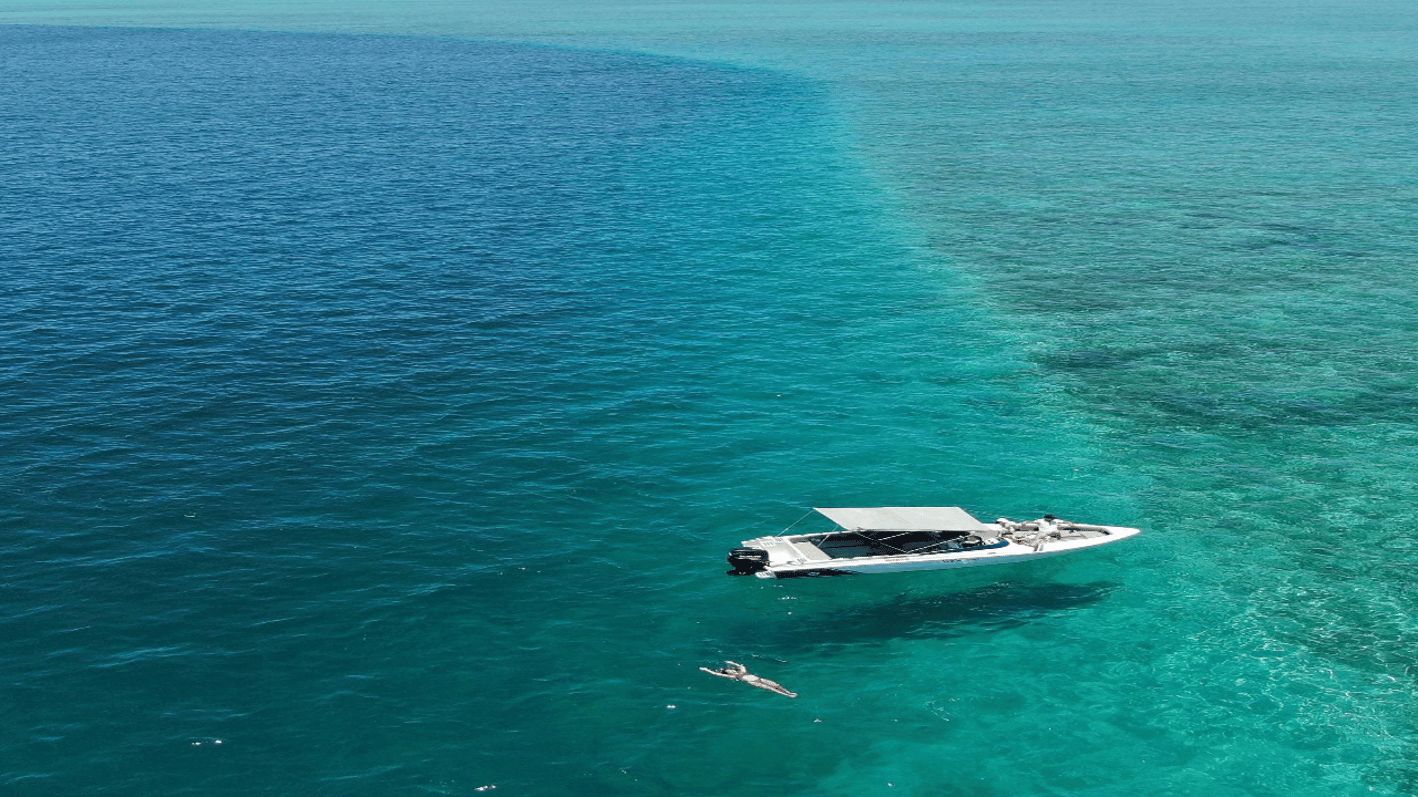 9 hours · ★ 4.3 (188)5 Islands Speedboat with Snorkeling, Sea Turtles, Lunch & DrinksFrom $95 1.5 hours · ★ 4.2 (314)Mauritius: Sea Turtle Adventure and Coral Reef DiscoveryFrom $44
Resident sperm whales off the deep west coast, watched from the boat
The seabed drops away fast off Mauritius's west coast, and that depth keeps a resident population of sperm whales close to shore all year, with humpbacks passing between June and October. Private speedboats go out from Flic en Flac and the west coast marinas to find them.
The legal line is clear: whales are watched from the boat, and entering the water near one is prohibited under Mauritian regulations, with boats keeping at least 100 meters.
That makes this a deck experience, binoculars and spray, and it pairs naturally with a morning snorkel in the calmer lagoon water on the way home. The open sea can roll, so a private boat and a steady stomach help.
Month by month: water warmth, visibility and the cyclone window
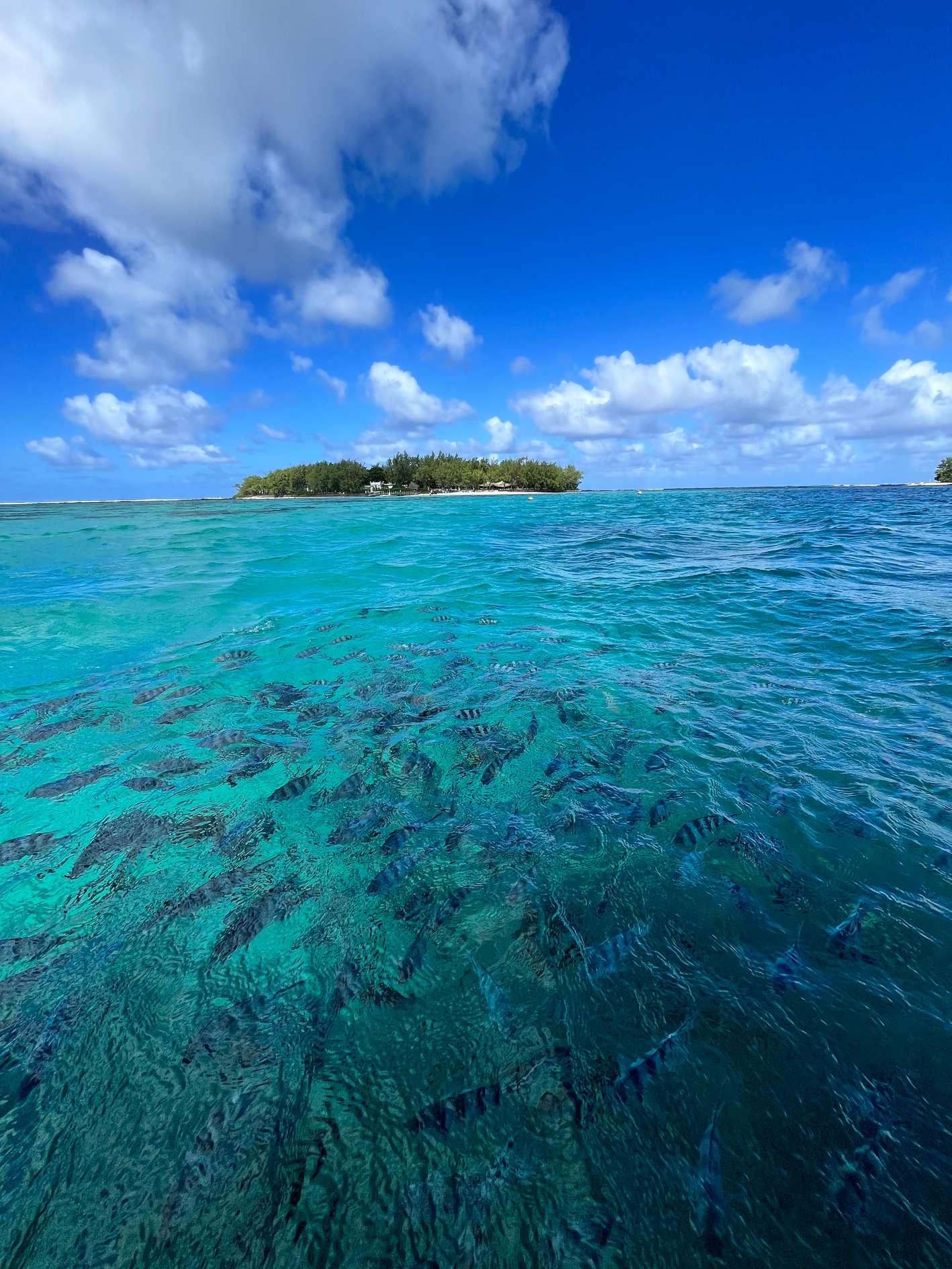
Underwater conditions swing more between months than most visitors expect. The clearest reef water runs from May through November, peaking in September and October, while the summer downpours wash sediment into the lagoons and the winter trades stir the east coast.
Water warmth follows its own clock: a warm 27 to 29 degrees through the southern summer, cooling to about 23 in July and August, when a light wetsuit earns its keep on long swims.
The page also explains the cyclone window from January to March and what a passing storm does to boat schedules. Balaclava's sheltered bay softens all of this, which is one more reason the northwest is a forgiving base.
The classic sailing day: lagoon, reef snorkel, waterfall and a BBQ lunch
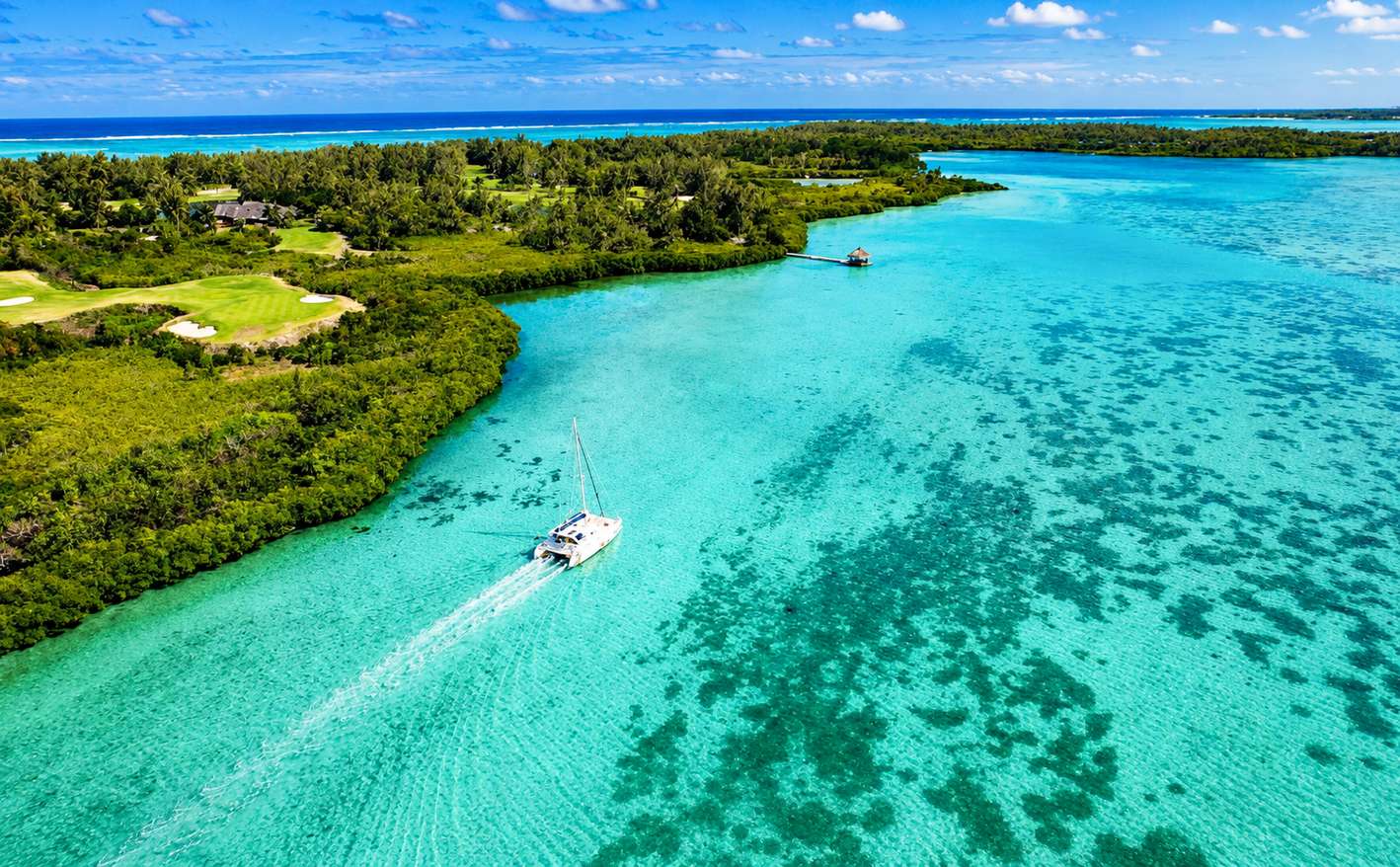
The Île aux Cerfs catamaran is the island's signature day out, and it earns the reputation. A wide twin-hulled catamaran sails the east coast lagoon, which stays sheltered and flat even in the windy months, so the ride suits almost anyone.
A typical day stacks a lagoon snorkel stop, a smaller boat detour up the Grand River South East to the waterfall, a barbecue lunch with drinks on board, and an hour or so of free time on the island's pale sand.
Vegetarian, vegan and halal meals can be arranged with notice. The boats collect guests from the east coast resorts, and from Balaclava the trip starts with a longer drive, so plan it as a dedicated day.
6 hours · ★ 5.0 (11)Île aux Cerfs: Private Catamaran Cruise with Gourmet LunchFrom $1,133 /group 7 hours · ★ 4.8 (869)Ile aux Cerfs Catamaran Cruise with BBQ Lunch & SnorkelingFrom $68  7 - 8 hours · ★ 4.7 (453)Mauritius: Ile aux Cerfs Catamaran, Waterfall & BBQ LunchFrom $62
 7 hours · ★ 4.6 (104)Mauritius: Ile aux Cerfs Catamaran Cruise, Waterfalls & BBQFrom $84
A fast crossing that buys extra beach time and reaches the waterfall itself
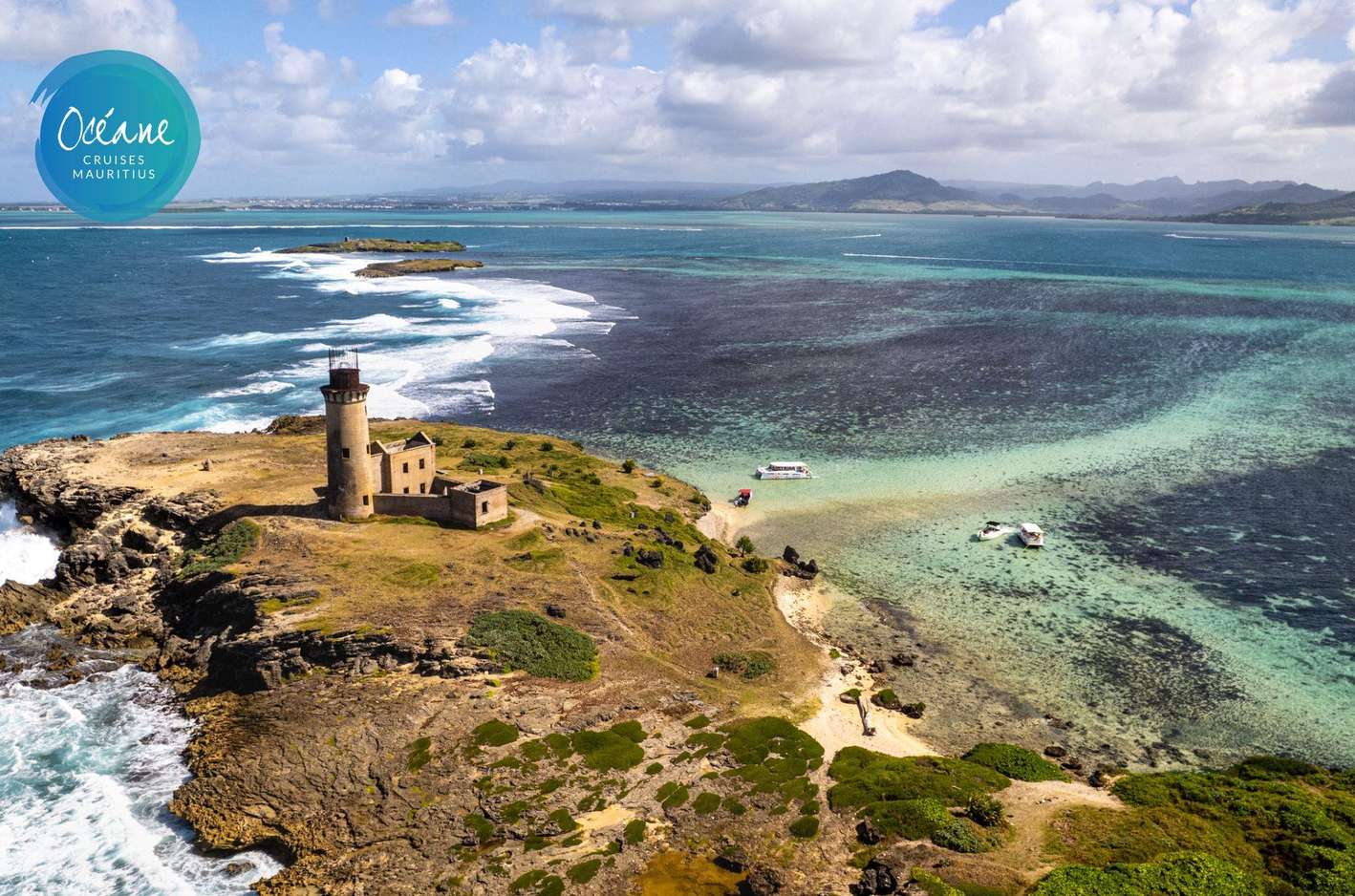
A speedboat crosses the east coast lagoon to Île aux Cerfs in 10 to 20 minutes, against the 45 to 60 minutes a catamaran takes, and the time saved turns into extra stops and extra beach.
Because a shallow-draft boat runs up the river where the big cats cannot, the Grand River South East waterfall comes right to you.
Shared boats carry roughly 17 or 18 passengers, a good deal fewer than a day-cruise catamaran. The trade is the ride: open stretches of the east coast can be bumpy, especially in the trade wind season, and speedboat days exclude pregnant travelers and those with serious back conditions.
Five-island routes add the lighthouse islet, the waterfall and a beach barbecue to the same day.
6 hours · ★ 5.0 (3)Private Island-Hopping Cruise: 5 Islands, Waterfall & LunchFrom $738 /group 6 - 7 hours · ★ 4.7 (1,451)Trou d'Eau Douce: 5-Island Adventure with BBQ & SnorkelingFrom $95 9 hours · ★ 4.3 (188)5 Islands Speedboat with Snorkeling, Sea Turtles, Lunch & DrinksFrom $95 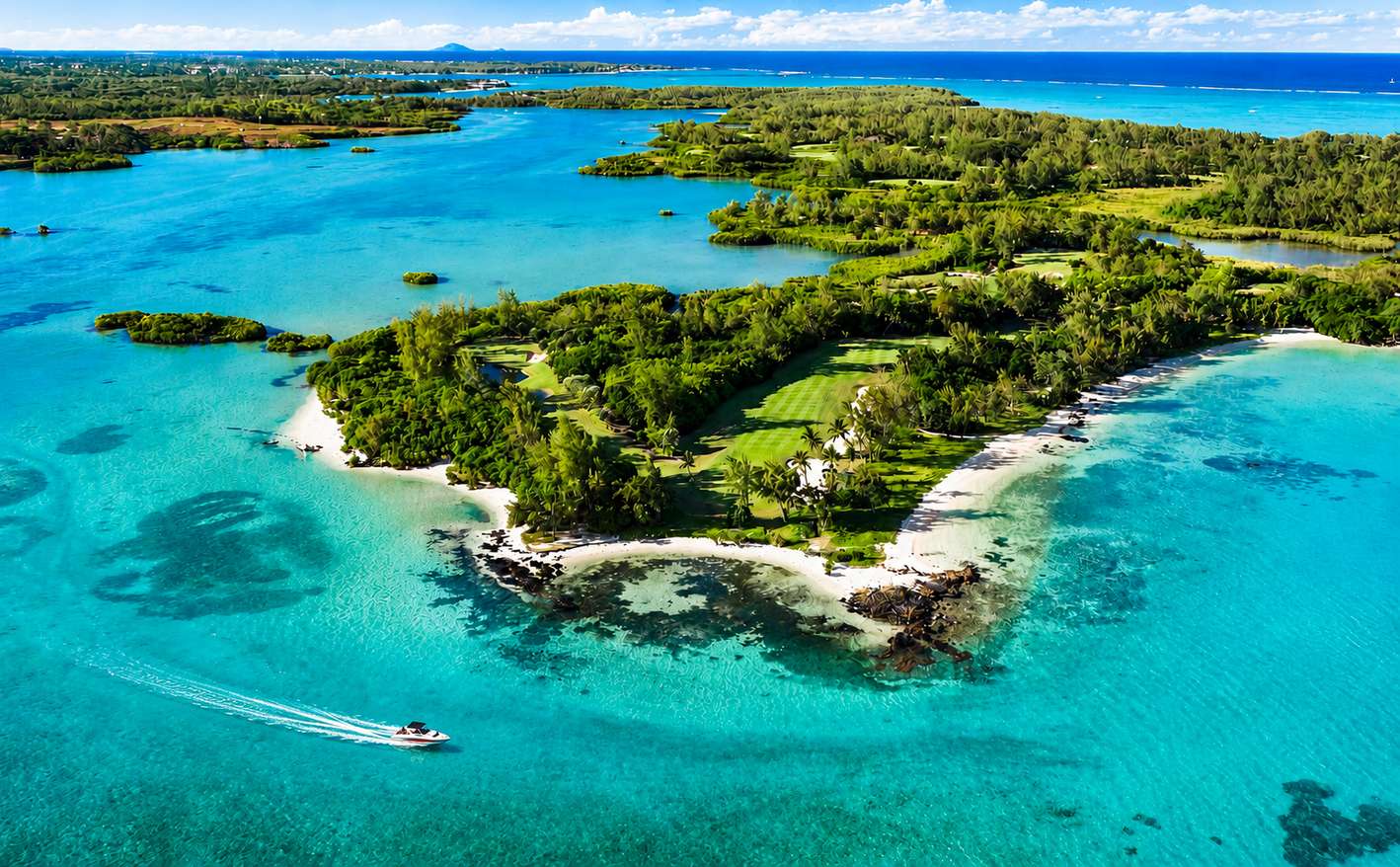 7 hours · ★ 4.3 (237)Mauritius: 5 Islands Speedboat Lagoon Experience with BBQFrom $74
Your own boat, your own schedule, and the island before the crowds land
The main beaches of Île aux Cerfs pack up between late morning and mid-afternoon as the shared boats converge. A private charter works around that: your skipper sets the schedule, reaches the sand before the ferries do, and lets you linger at the reef stops at your own pace.
Two shapes exist. A private catamaran with a gourmet lunch suits a group that wants space and service on deck, while a private speedboat turns the day into island-hopping, with the waterfall, the lighthouse islet and quiet sandbanks in one run.
Both carry a price that makes sense per group rather than per head, so the maths works for families and parties of friends.
8 to 15 m viz in the park lagoon
Turtle Bay's park is one of the few corners of Mauritius where the coral is genuinely healthy, and you can swim straight in from the sand. What the label doesn't tell you is where the reef actually starts, and why the best turtle swim of your trip sits twenty minutes north.
Balaclava Marine Park is one of the few places in Mauritius with genuinely healthy coral, but the resort sand in front of your hotel is not where it lives.
Visibility in the park's inner lagoon runs 8 to 15 meters, and the bay faces north, so it stays calm all year.
Water shoes are not optional here: broken coral, rocks and sea urchins line the shoreline entry.
Green turtles graze in Turtle Bay occasionally, not daily; reliable swims happen by boat in the Trou aux Biches lagoon.
Swimming outside the marked zones or touching a turtle is illegal, with fines that can reach into the millions of rupees.
Stay inside the line of yellow floats, keep clear of the marked boat traffic lanes where snorkeling is prohibited, check the flags each morning, and hold back from the reef edge and channel passes, where currents can pull.
The verdict first, because you will make plans around it: yes, you can snorkel off the beach in Balaclava, and the park in front of you holds some of the healthiest coral on the island. Just don't expect the reef at your toes.
The sand in front of a resort strip is usually broken coral rubble and stirred sand. Balaclava Marine Park is one of the few places in Mauritius with genuinely healthy coral coverage, and its calm, shallow inner lagoon stays swimmable year-round.
What you will not find is Red Sea coral cover. Mauritius's reefs are heavily bleached in places, and the fish life here, while active, is thinner than the Maldives or Egypt.
The honest shape of a good Balaclava trip: easy shore swims on calm mornings, plus one or two boat days that reach the deeper reef heads. The marine park label promises more than it delivers on its own.
The protected reef is real, but the shallows in front of resort strips hold rubble and stirred sand; the living coral needs a short swim out or a boat
Coral here is heavily bleached in places, though fish life stays active; divers who expect Red Sea cover leave disappointed
Much of the shoreline is too far or too busy with boat traffic to reach safely; a boat ride gets you to the healthier heads
So go in with sorted expectations: the park earns its label on coral health, the resort shallows give you an easy warm-up, and the boat days carry the highlights. Plan for that mix and the bay delivers.
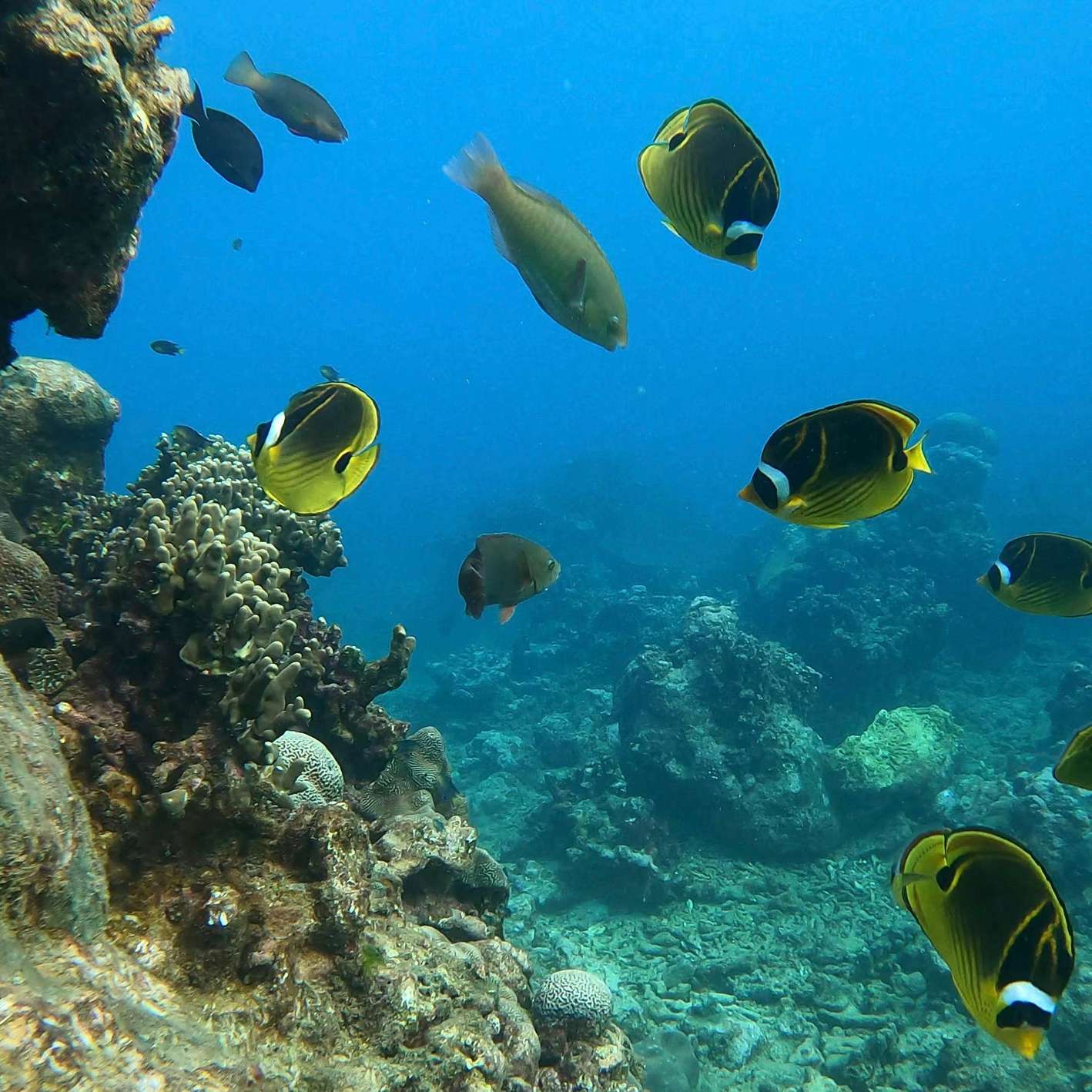
Protection here is real, and it is specific. Surveys have recorded corals such as Acropora grandis, Galaxea and Porites across the park, along with parrotfish, surgeonfish, butterflyfish, wrasses, moray eels and lionfish.
The park itself is a set of habitats: an outer reef slope, reef flats, a lagoon that runs a full kilometer seaward, a pass and a bay.
The protection comes with rules, and the rules shape every swim. Swimming anywhere outside a designated swimming zone is prohibited in a marine protected area, traffic lanes are off limits entirely, and a permit governs the conservation zone.
Boats carrying snorkelers may not moor at a designated device for more than 90 consecutive minutes, and they cannot drop anyone in the water unless the A-flag is up.
In practice, that means the water you swim in has been chosen for you: marked, sheltered and away from the engine lanes. Stay inside the buoys and the park works exactly as its protection intended.
Swimming outside a designated zone is illegal, and currents near the reef edge punish it too
Vessels carrying snorkelers may face a permitted schedule set by the authorities, so the reef has its own quiet hours
A boat may release swimmers only once it flies the A-flag, and a crew that waits for it is following the law to the letter
None of this complicates a holiday. It just means you swim where the yellow floats mark the zone, and you let a licensed boat handle the rest of the park.
Two kinds of entry, two kinds of morning. If you are staying at one of the Turtle Bay resorts, the water starts at your towel.
At Kuilima Cove, snorkelers walk from the beach onto ankle-deep sand with no rocks underfoot, and the reef inside the cove sits close to the surface, 4 to 8 feet deep in places. A live reef starts just a few strokes out in front of the dive resort.
Not a resort guest? Balaclava Public Beach, also called Coden Beach, sits in the Vieux Banians district, reached off Arsenal Road toward Pointe-aux-Piments, on the sand between two of the big resorts.
Mauritian law keeps every beach public up to the high-water mark, so nobody can turn you away. What the public stretch won't give you is gear: beachside stalls are scarce, so you bring your own equipment or rent through a tour operator or dive center.
Wherever you enter, the same rule applies. The shoreline mixes broken coral into the sand, with submerged rocks, pebbles and patches of sea urchins, so water shoes are non-negotiable here.
Pick your entry by where you sleep: resort guests get the easiest water, everyone else gets a perfectly good beach and one errand for gear before the first swim.

Balaclava plays a different game from the rest of the island. The bay faces directly north, away from the southeast trade winds that chop up the east coast lagoons from May to September, so the reef-protected lagoon stays calm and suitable for all swimmers year-round.
While other coasts drop to roughly half their calm days in June and August, the sheltered northwest actually keeps its clearest underwater visibility during those winter mornings.
The catch sits at the river mouth. The bay lies where the Citron River meets the sea, and heavy rain from November to April flushes muddy runoff into the lagoon, clouding the water for a while after each downpour.
February and March bring the wettest stretch of the year, and passing cyclone systems legally suspend boat trips.
Read the beach flags the way the lifeguards mean them: two red flags ban swimming outright, one warns of danger. And wherever the water looks inviting, keep clear of the reef edge and channel passes, where currents pull. Visibility typically runs 8 to 15 meters when the conditions hold.
November: 5 out of 5 for how busy it gets.
Tap a month to read it.
Busy months line up with the best water, so book boat days early for October and November, and lean on the shore lagoon when the crowds peak.
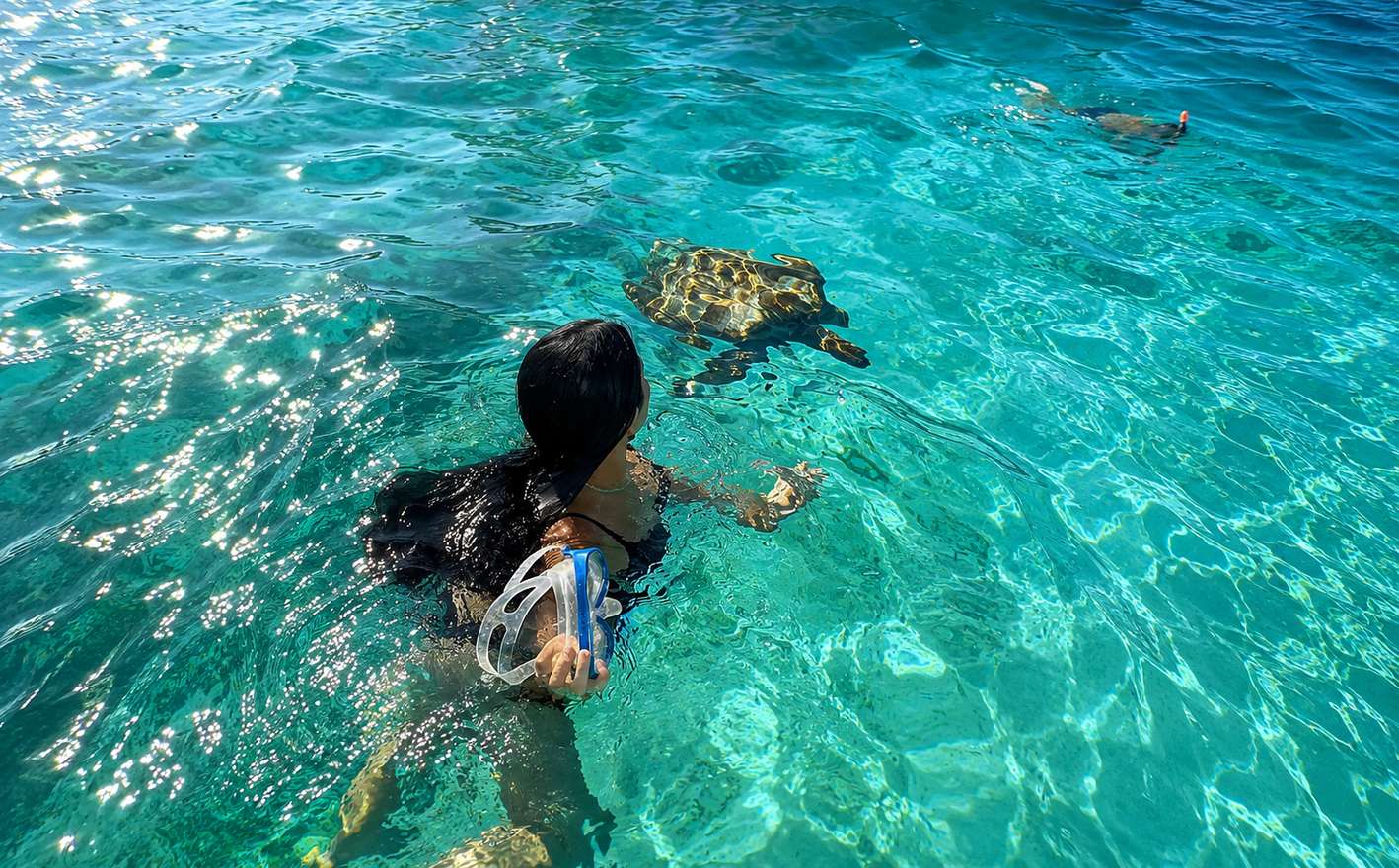
The name came first and the sightings come second. Seventeenth-century Dutch sailors renamed this bay Turtle Bay because turtles crowded its waters, and green turtles still graze the seagrass here. The honest odds, though: from shore they are spotted only occasionally. Treat a sighting as a gift, not a plan.
The law is firm either way. Swimming with, feeding, harassing or touching a sea turtle is prohibited in Mauritian waters, and the Fisheries Act 2023 backs it with fines of up to 25 million rupees and prison time.
Turtles can also bite if crowded or offered food, though most simply drift away from too much attention. Let them graze; never fin hard after one.
For the swim you are actually picturing, the reliable option sits a short drive north: the Trou aux Biches lagoon, where sightings are consistent and boats run dedicated turtle trips.
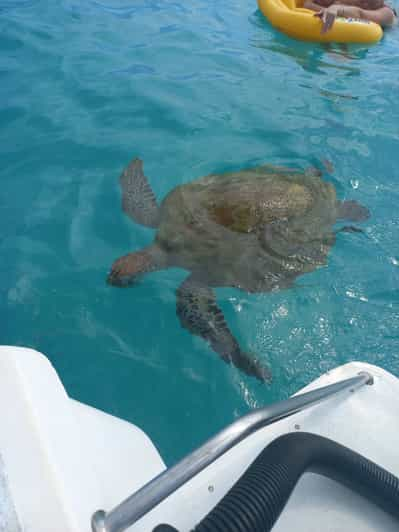
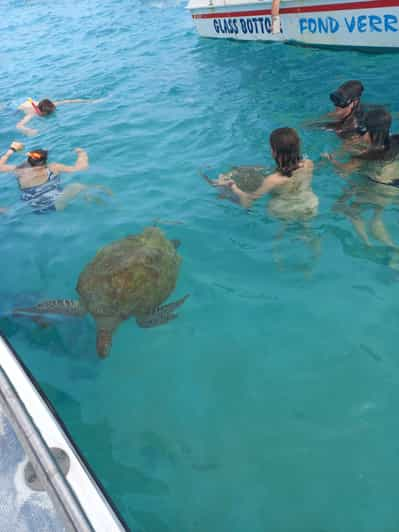
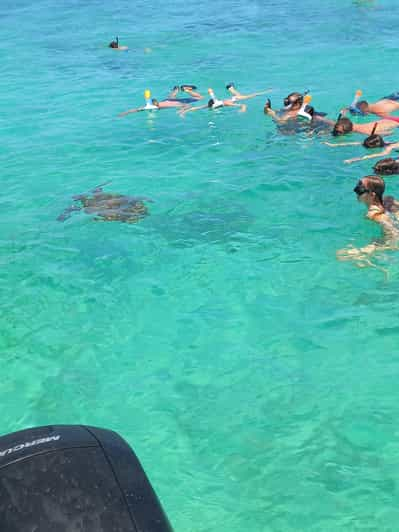
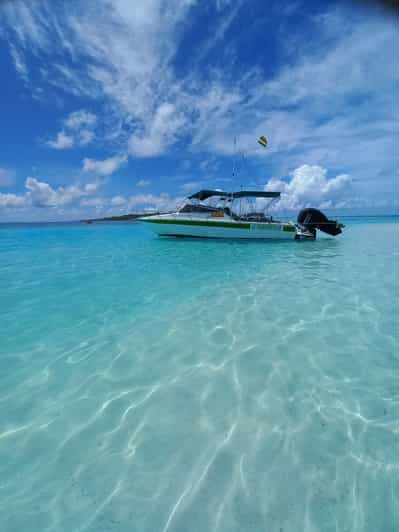
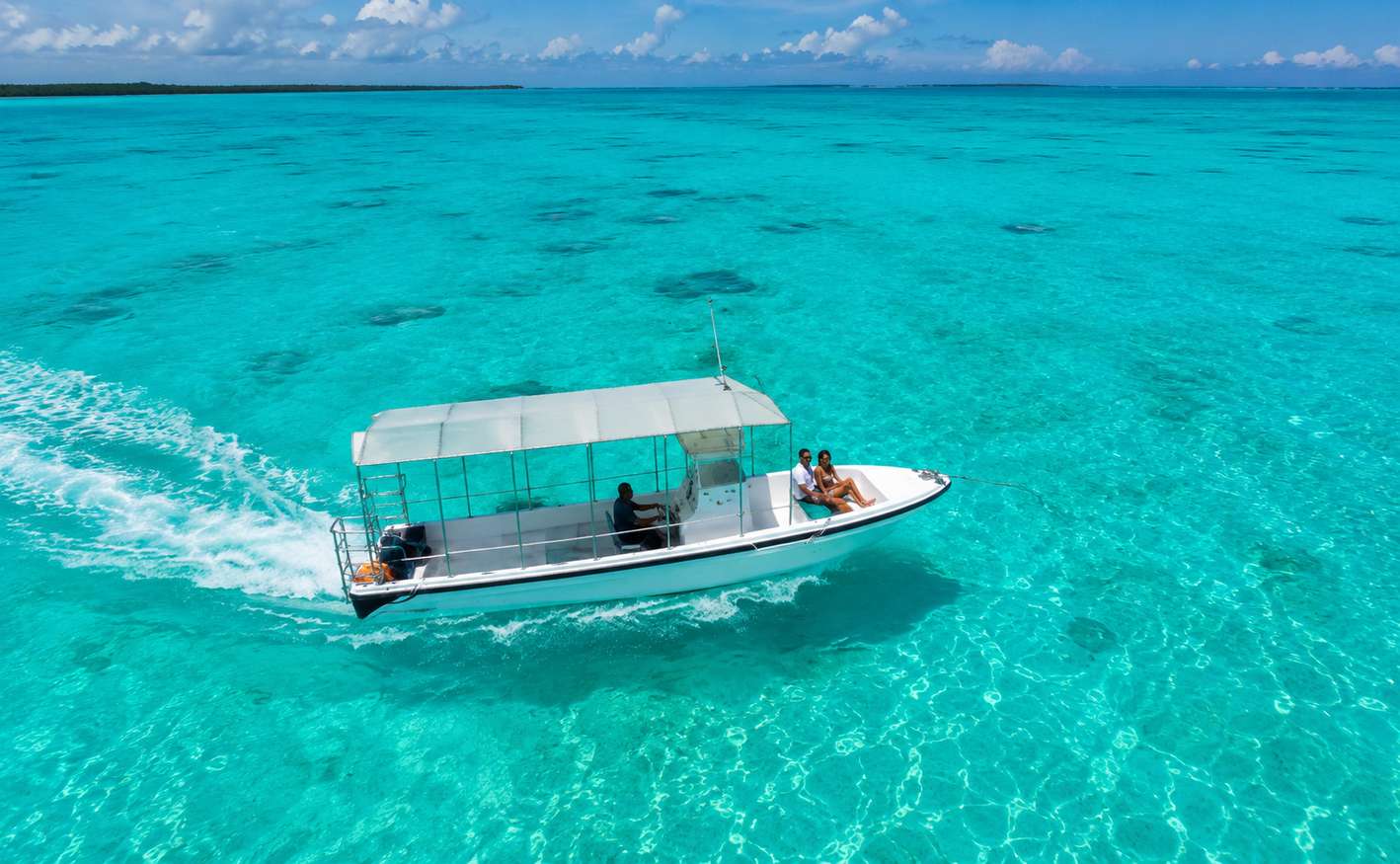
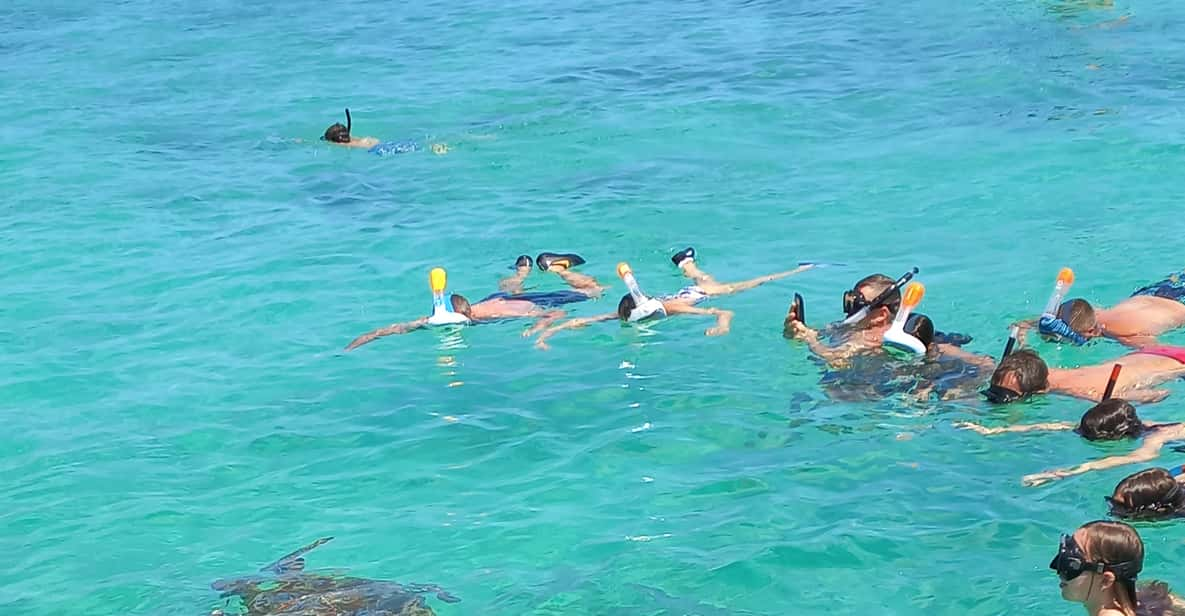
One tour operator runs a private, two-hour turtle snorkeling trip by speedboat out of Grand Baie that carries you there with gear, snacks and soft drinks included. Some travelers also visit Mauritius's other turtle waters, such as the protected park at Blue Bay in the southeast.
That is the encounter the northern lagoon delivers on most departures, and the reason the short transfer is worth a morning of your week.
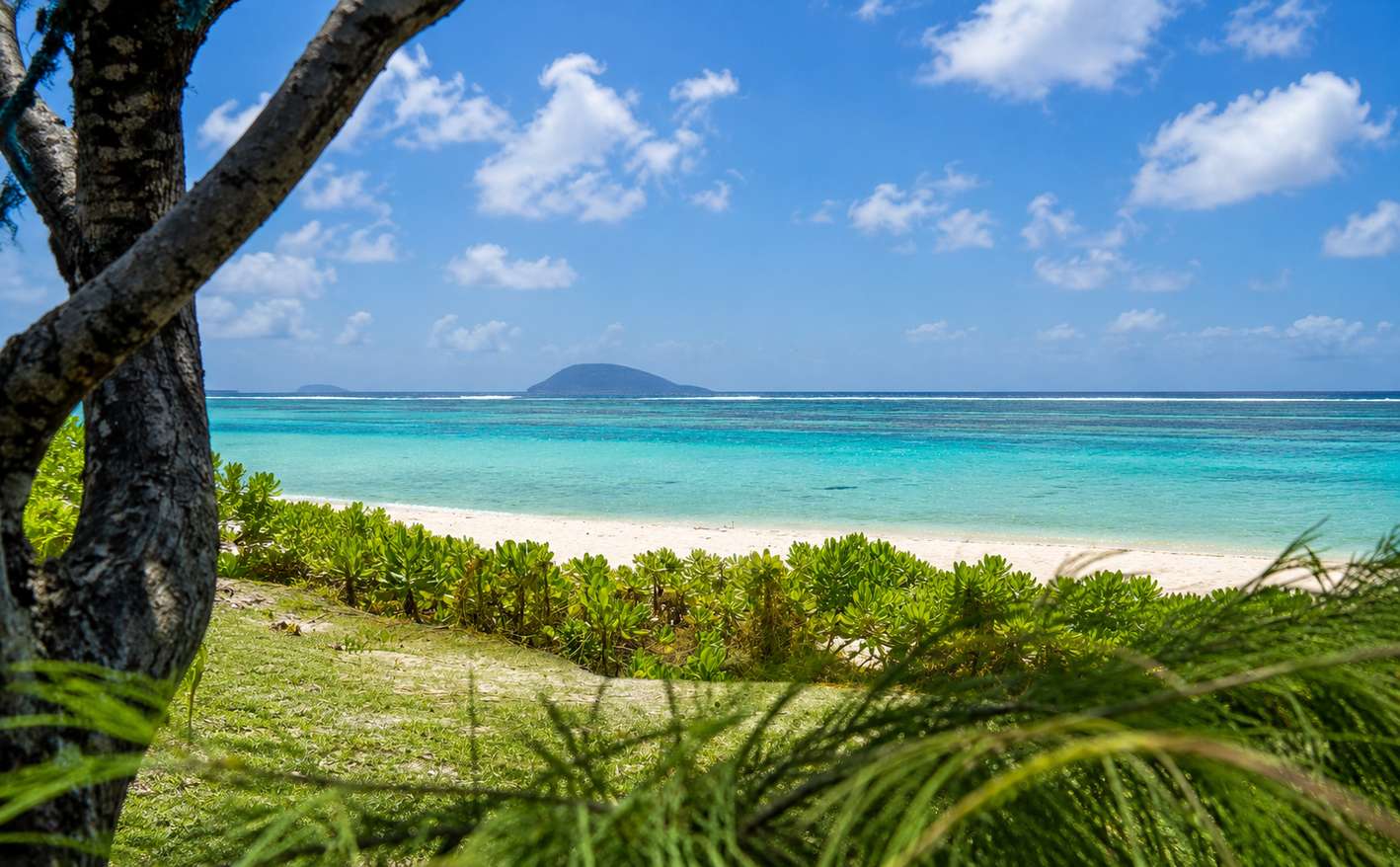
Nothing in this bay hunts you. Dangerous shark attacks are practically non-existent around Mauritius's lagoons, and the blacktip and whitetip reef sharks snorkelers occasionally see on outer slopes are not aggressive. Large species stay outside the fringing reef.
The real risks are small and still. Stonefish camouflage themselves on rock and sand, and their spines deliver venom that causes severe pain. Long-spined black sea urchins leave brittle spines in skin, and fire coral stings. Water shoes handle most of this before it starts.
Then there is traffic. Turtle Bay sees boat and jet ski activity near the resorts, so stay inside the buoyed swimming zones, where motorized craft are forbidden, and keep out of the marked channels.
A brightly colored snorkel vest makes you visible from a wheelhouse. Currents concentrate where the lagoon meets the sea, so never fin toward the reef edge or a pass; the outgoing flow there can carry a strong swimmer seaward faster than they can return.
Three habits cover the whole list: stay in the buoys, wear a bright vest, and keep your feet protected.
Plan the week as two different days. The Balaclava lagoon owns the easy mornings: flat water, shallow reef, fish life a short fin from your towel, no timetable. That is your rest-day currency.
The boat days buy what the shore cannot. Deeper coral heads, open-water fish, and turtles you can count on. Two shapes of day work from this coast.
The Mauritius: Sea Turtle Adventure and Coral Reef Discovery is a gentle hour and a half from Pereybere Beach, with glass-bottom viewing and a turtle stop that suits mixed groups and non-swimmers who stay aboard.
At the other end sits the Mauritius: Full-Day Catamaran Cruise to the Northern Isles, eight hours from Grand Baie to Flat Island, Gabriel Island and the open-water aquarium at Coin de Mire, with lunch and drinks on board.
Many Balaclava resorts also run complimentary lagoon boat trips twice a day to deeper, clearer reef sections; ask at the dive shop before you book anything. And snorkelers based here who tried long scuba excursions most often say the better week is simple: snorkel locally, use the resort, take one big boat day.
| Resort shore snorkeling | Pereybere turtle speedboat | Northern isles catamaran | |
|---|---|---|---|
| Water | Calm, shallow lagoon all year | Sheltered northern lagoon | Open water at Coin de Mire, basic swim skill needed |
| Marine life | Reef fish, occasional turtles | Consistent turtle sightings, coral and tropical fish | Coin de Mire's aquarium reef and island nature reserves |
| Effort | Walk in whenever you like | 1.5 hours, gear included | Full 8-hour day with dinghy transfers |
| Best for | Easy mornings and beginners | Turtle-focused snorkelers and families | Travelers who want a full day on the water |
The pattern that works: shore mornings whenever you feel like it, the short Pereybere trip for turtles, and the catamaran saved for a calm-weather day.
Balaclava works best as an anchor, and the northwest hands you a full week of water days without a long drive.
North of the bay, Grand Baie's fleet runs the northern islands and open-water reef, while Pereybere's short turtle trips fill an afternoon. Turtle snorkeling boats from the area head for the same Trou aux Biches lagoon that borders this park.
If a change of coast appeals, Blue Bay in the southeast holds the island's biggest protected coral reserve and is widely rated its best snorkeling, a full-day plan from here rather than a morning.
Flic en Flac offers the calmest family lagoon on the west side, and Tamarin gives confident swimmers a dawn with dolphins. For readers still weighing where to base the whole trip, the best-area comparison sets every coast side by side.
Around the excursions, keep the practical rhythm: shore mornings when the water is flat, boat days when the forecast holds, and a day kept loose after heavy rain. The park in front of your hotel carries the week; the boats finish it.
Stay in Balaclava for the calmest easy snorkeling on the island, and know exactly what you are getting: healthy protected coral, 8 to 15 meter visibility, and turtles as a bonus rather than a promise.
Book one turtle swim by speedboat and, if the sea allows, one full catamaran day north. That combination is the trip the marine park label made you expect.
green turtles graze here, just not every day
How to watch wild dolphins around Mauritius without crowding them, from the west coast bays they return to each morning.

The full rulebook for slipping into the water with wild dolphins, from the swimmer limits to the briefing you sign.
What a dolphin trip from Tamarin Bay looks like hour by hour, and why the earliest boats reach the calmest water.
How tours combine dolphins with whales, and which months bring sperm whales and humpbacks into Mauritian waters.
Why sunrise departures find peaceful pods before the boat traffic builds, and what the early start involves.
What a private boat charter costs in time and freedom, and when a boat of your own beats a shared trip.
How a catamaran day pairs sailing and reef stops, and which route suits a first visit to the island.
A plain comparison of full-day catamaran cruises, their island routes, lunches and departure points.
vis 8-15 m in the inner lagoon
Short answers to what visitors ask most before slipping on a mask in Balaclava.
Grand Baie2026Yes. The fringing reef sits close to shore, and a live reef starts just a few strokes out in front of the resort strip along Turtle Bay. Wear water shoes for the entry, since the shoreline mixes broken coral, rocks and sea urchins into the sand.
The bay faces north, so the southeast trade winds that chop up other coasts slide past it. The reef-protected lagoon stays shallow and calm year-round, and the inner lagoon suits confident beginners and older children. Keep to the swimming zone and stay away from the reef edge, where currents can pull.
Visibility in the inner lagoon typically runs between 8 and 15 meters, which is good by any snorkeling standard. Morning usually gives the clearest water, before wind and boat traffic stir the surface.
Balaclava Marine Park is a gazetted protected area and one of the few spots in Mauritius with genuinely healthy coral coverage. Surveys have recorded Acropora, Galaxea, Porites and other hard coral genera, along with parrotfish, surgeonfish, butterflyfish, wrasses, moray eels and lionfish.
Green sea turtles are occasionally spotted grazing on seagrass here, accessible straight from the beach without a boat. Occasional is the honest word, so treat a sighting as a bonus. If turtles are the whole point of your trip, a short boat trip north to Trou aux Biches lagoon gives you a far better chance.
The law prohibits touching, chasing, feeding or swimming with sea turtles in any form, and violations can carry heavy fines. Keep your distance, avoid kicking your fins hard near one, and let the animal decide how close it comes. Turtles here are curious and usually drift away from crowding.
They can deliver a strong bite if you get too close or try to feed one, though most injuries in these waters come from accidental contact with coral or urchins rather than from animals. Give a turtle space and it will give you the same.
You do. The entry has broken coral pieces in the sand, submerged rocks and pebbles, and patches of sea urchins, so sturdy water shoes or dive booties protect your feet from cuts and punctures.
Not easily. The public beach, also called Coden Beach, has little on-site infrastructure, so beachside gear rental is generally unavailable. Bring your own mask, snorkel and fins, or rent through a local tour operator or dive center.
Balaclava Public Beach, also known as Coden Beach, lies in the Vieux Banians district on the northwest coast. You reach it from the main road via Arsenal Road toward Pointe-aux-Piments, on a stretch of sand between two of the resort properties.
Swimming and snorkeling are prohibited in boat traffic lanes and anywhere outside demarcated swimming zones, which are marked by lines of yellow buoys. Watch the beach flags too: two red flags mean swimming is banned outright, and a single red flag warns of dangerous conditions.
It can. The bay sits at the mouth of the Citron River, so heavy rain during the November to April wet season flushes muddy runoff into the water and clouds the visibility for a while. After a big downpour, give the lagoon a day to settle.
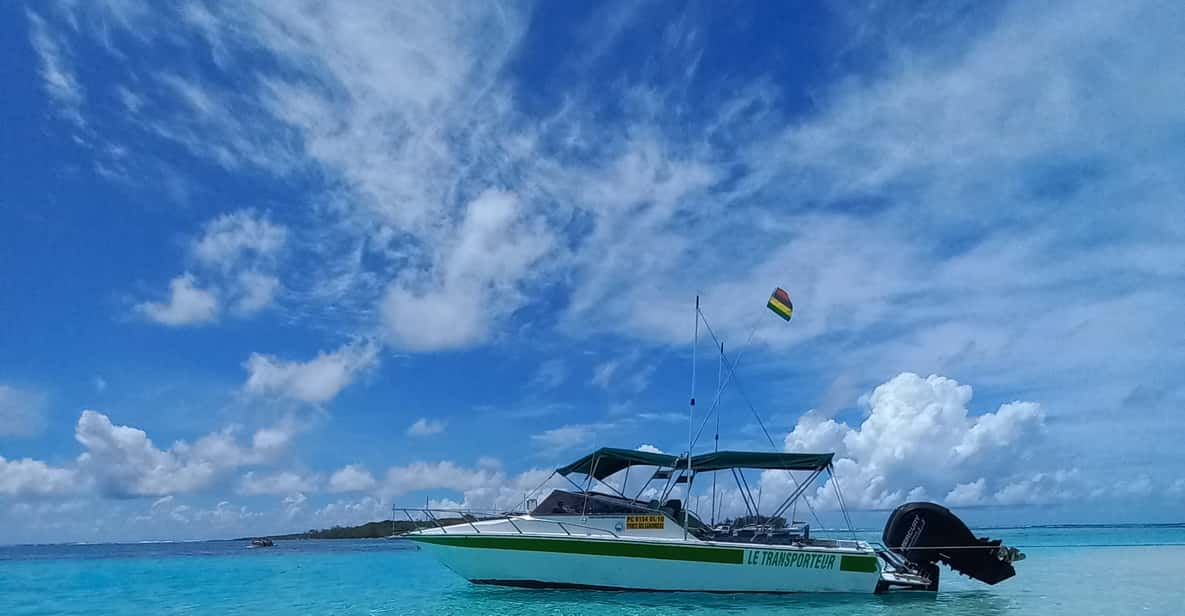
turtles gather at the lagoon, 20 minutes north
A private two-hour speedboat to a calm lagoon where sea turtles graze, with masks and fins on board and free cancellation up to 24 hours before.