
7 hours·English, French
4.8(869)

Ile aux Cerfs Catamaran Cruise with BBQ Lunch & Snorkeling
Snorkel in crystal-clear waterCruise along Mauritius’ east coast lagoon
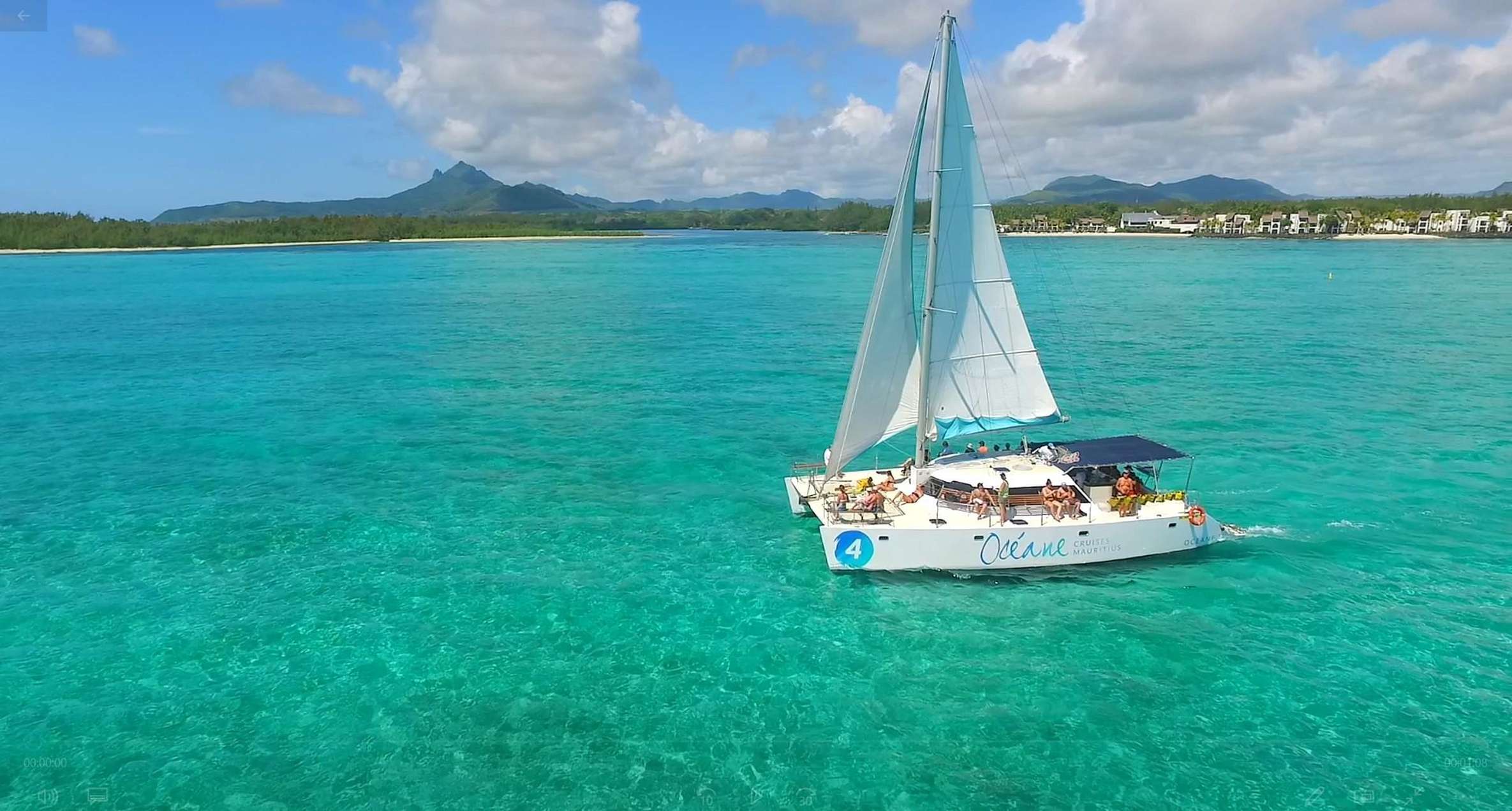
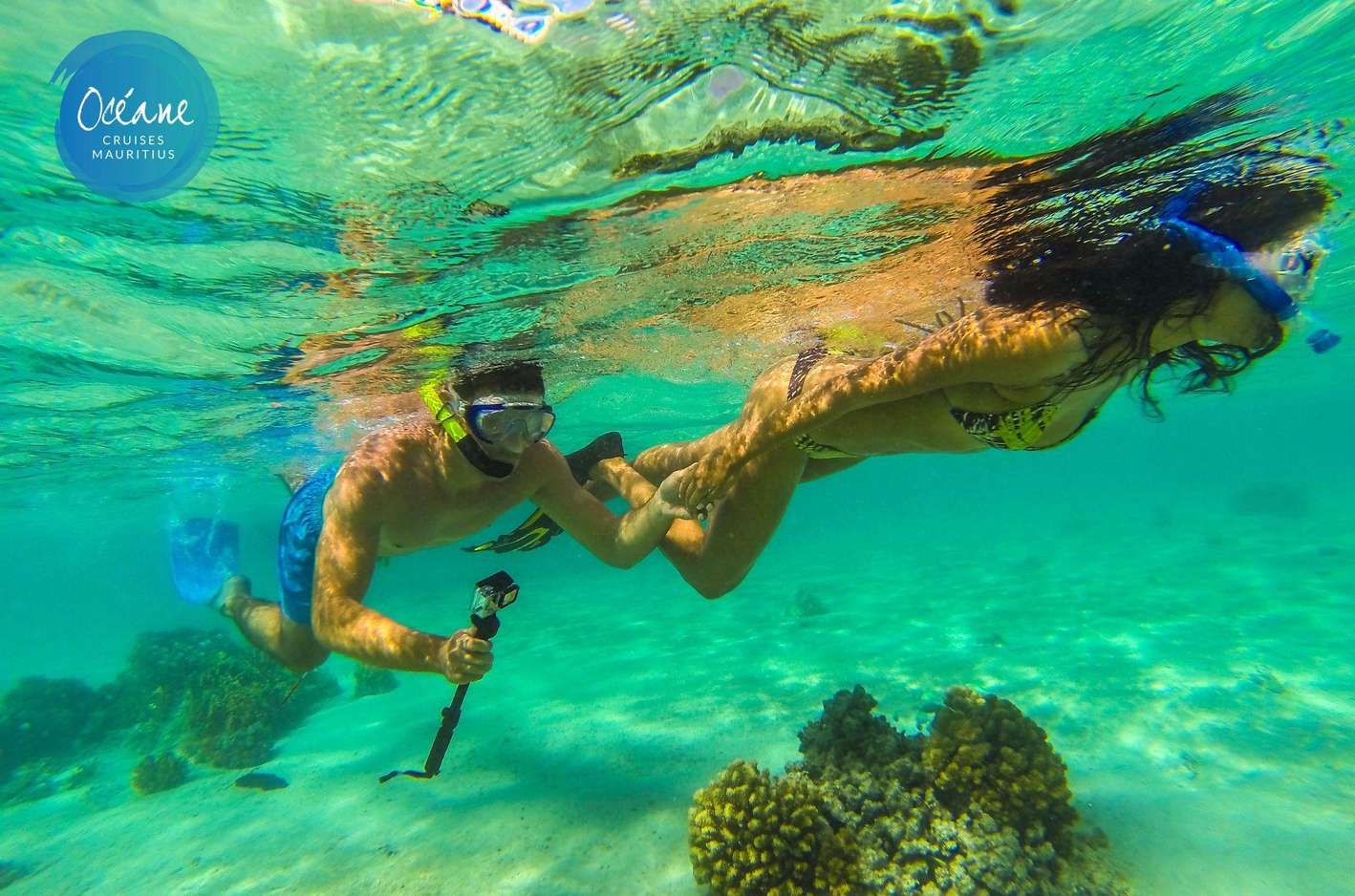
Wake up on the east coast and step straight from your hotel into a calm lagoon. Book a catamaran from the beach at Belle Mare with hotel pickup, a BBQ lunch onboard and a snorkel stop at the reef. Over 860 travelers spent the day in these turquoise waters and came back talking about the fish. Pick your departure and the boat collects you in the morning.
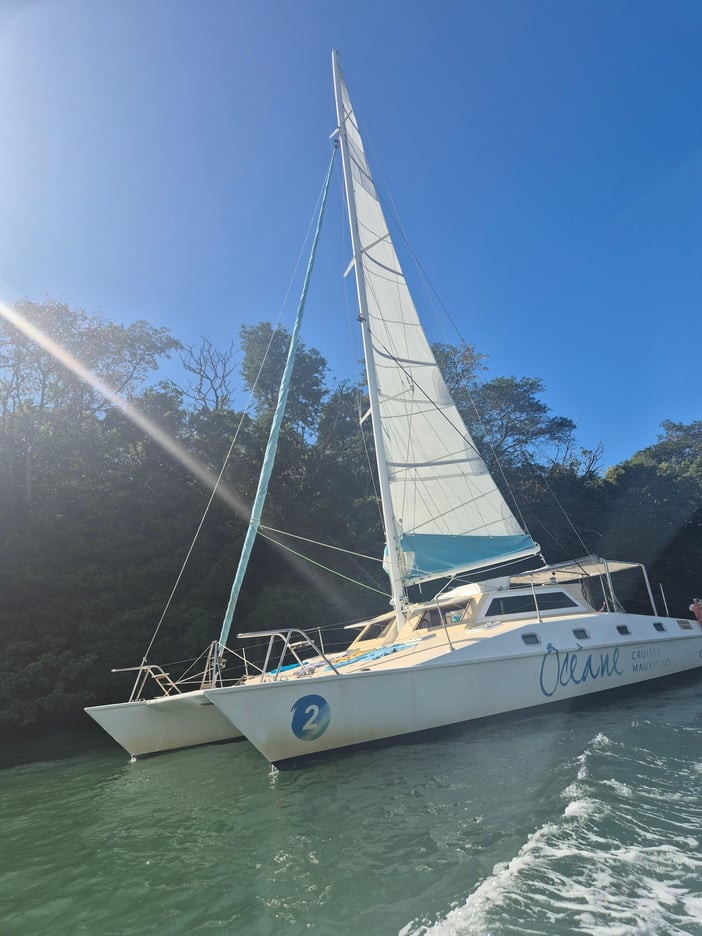
"Lovely crew, so kind, communicative and helpful. They made the trip unforgettable. Everything ran smoothly and the food exceeded all expectations. Highly recommend."

A candid coast-by-coast comparison of sea conditions, reef health and boat departures before you commit to a base.
Read the guide
The island's densest coral reserve, where a glass-bottom boat lets non-swimmers see the reef dry-shod.
Read the guide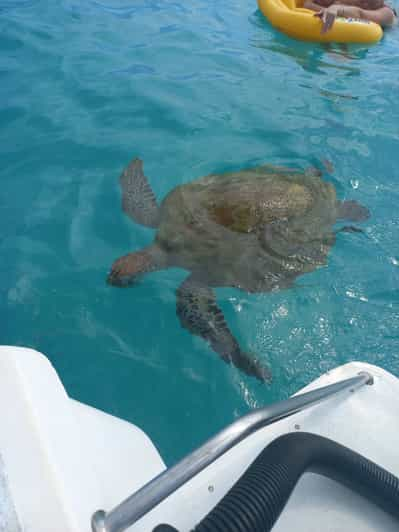
Green turtles graze the seagrass along the reef edge, and the lagoon stays flat nearly every day of the year.
Read the guide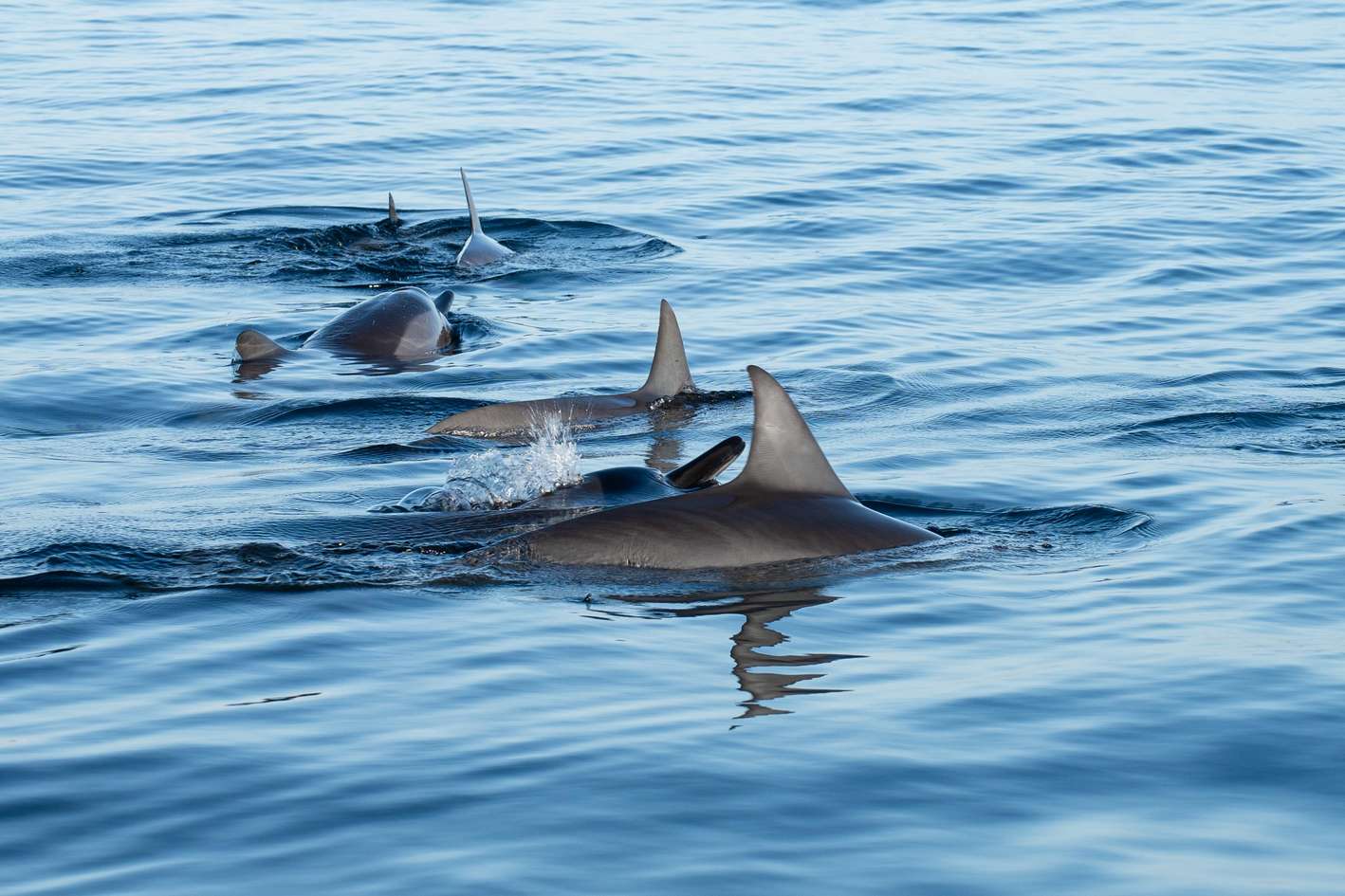
A reliably flat west-coast lagoon where the first coral heads start a few dozen meters from your towel.
Read the guide
Hip-deep coral blocks at Crystal Rock under the mountain, with dolphin boats leaving from the same shore.
Read the guide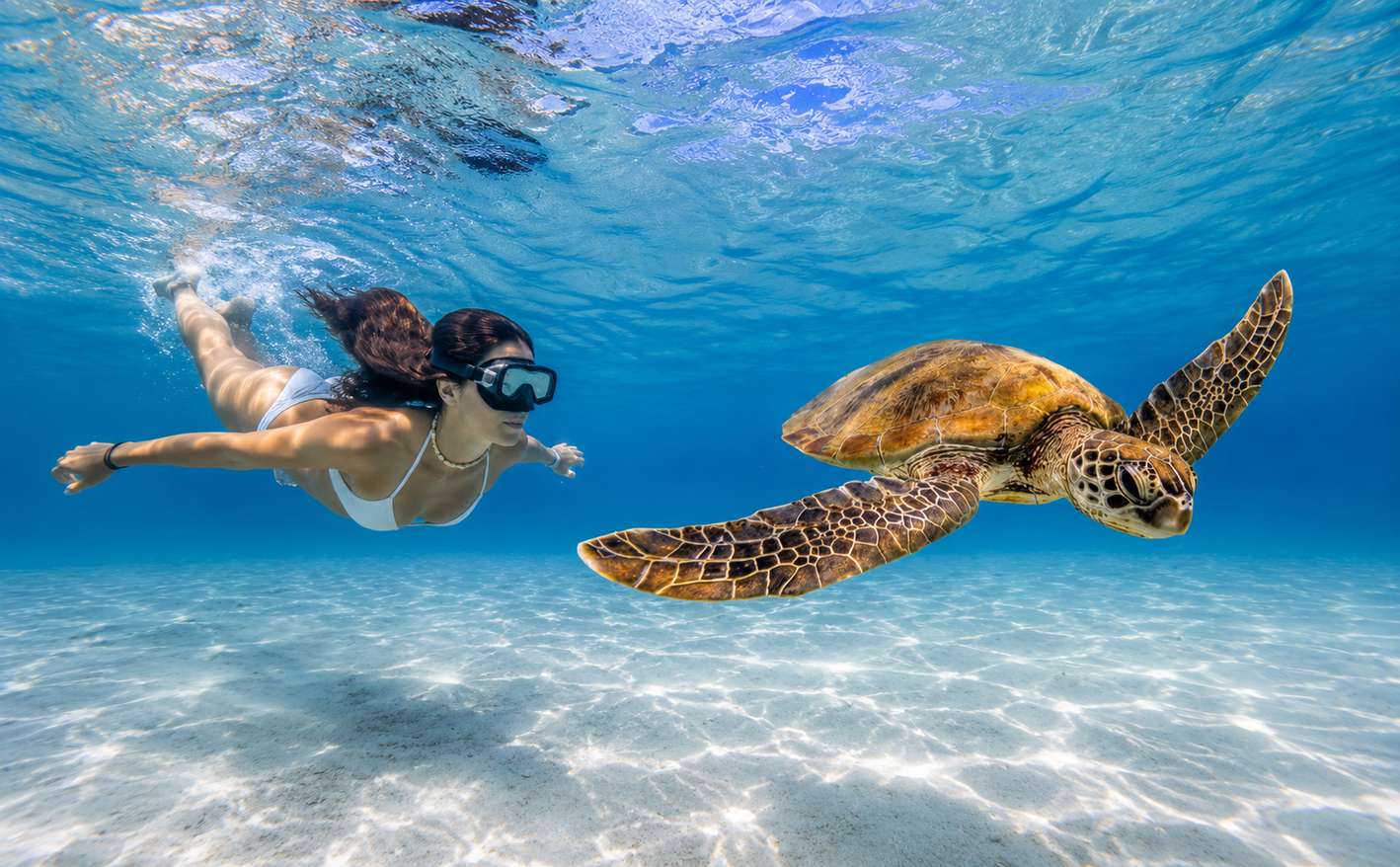
Green and hawksbill turtles pass within a short swim of this cove, and fish gather along its rocky edges.
Read the guide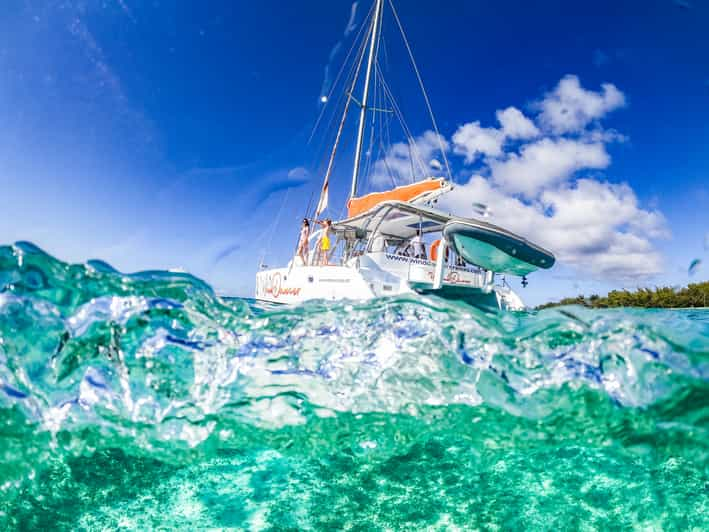
Grand Baie's bay itself holds little coral, but its beach launches the boats to the northern isles.
Read the guide
The island's dolphin swimming ground, where pods rest in the bay and boats leave before 7:30 am.
Read the guide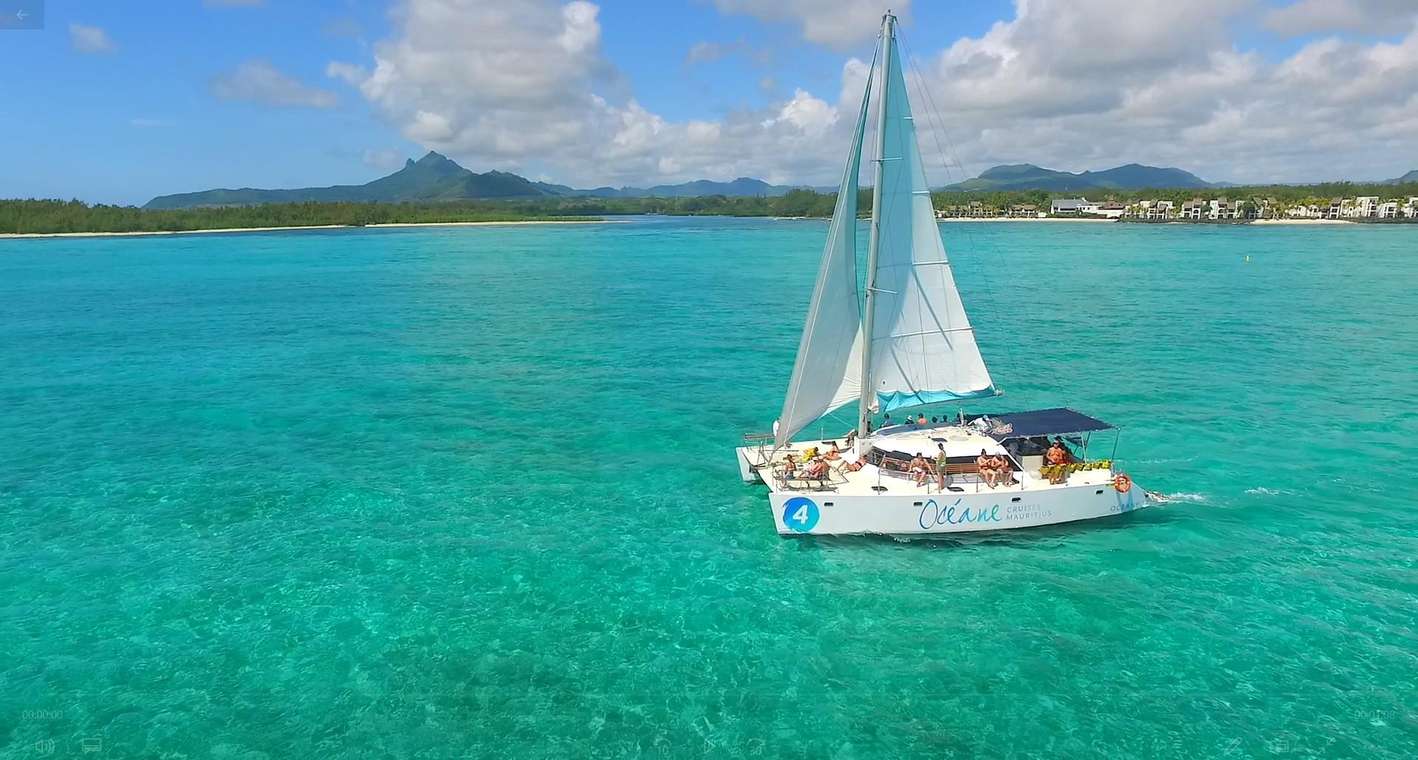
A wide shallow lagoon ten minutes from Belle Mare, with direct hotel pickup for the Trou d'Eau Douce boats.
Read the guide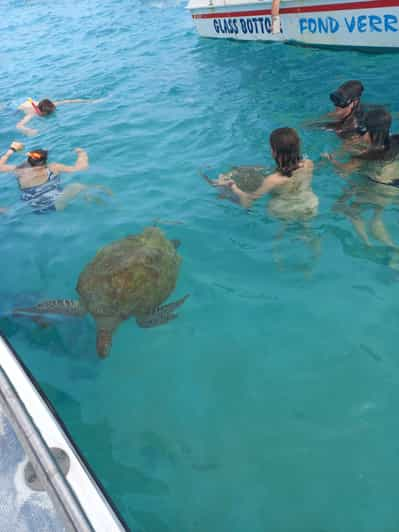
A sheltered northwest marine park where coral is recovering and calm water suits beginners year-round.
Read the guide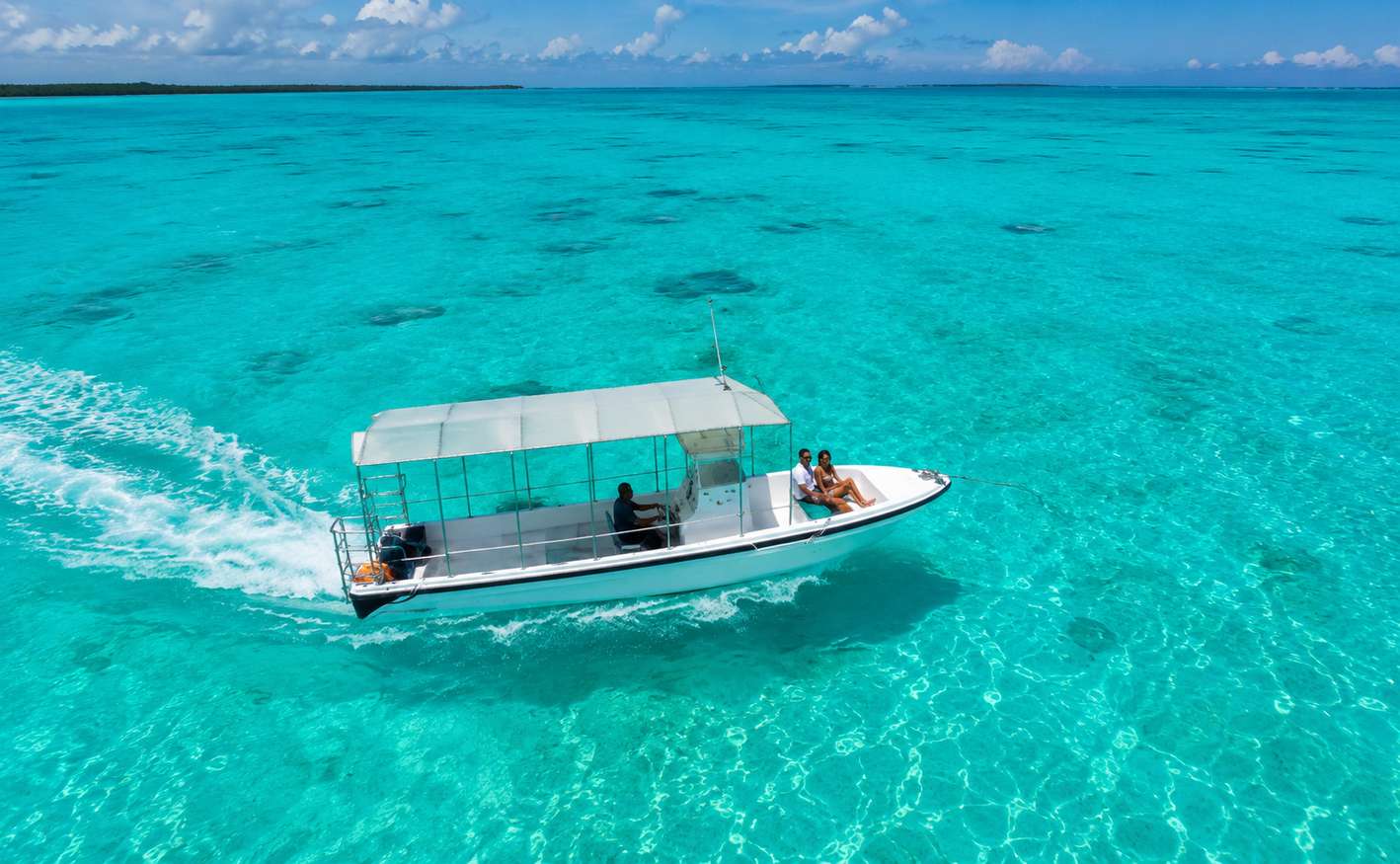
Green turtles enter the shallow water of Kuilima Cove, and you can wade in from the beach without a boat.
Read the guideA quiet southern lagoon where shore snorkeling works around the rocks and boats run from the resorts.
Read the guide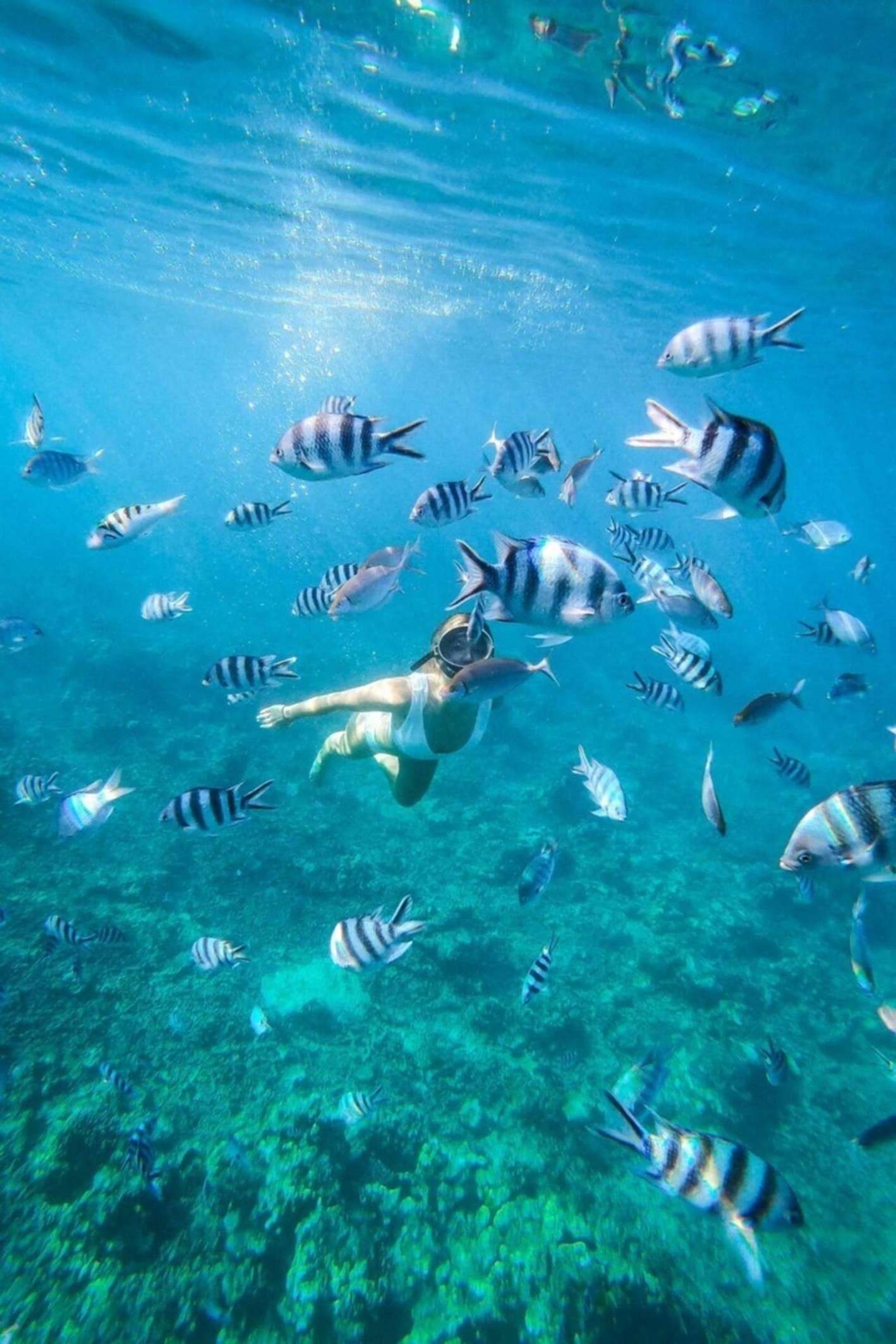
The underwater waterfall is a sand illusion seen only from the air, and the lagoon beside it holds the real snorkeling.
Read the guide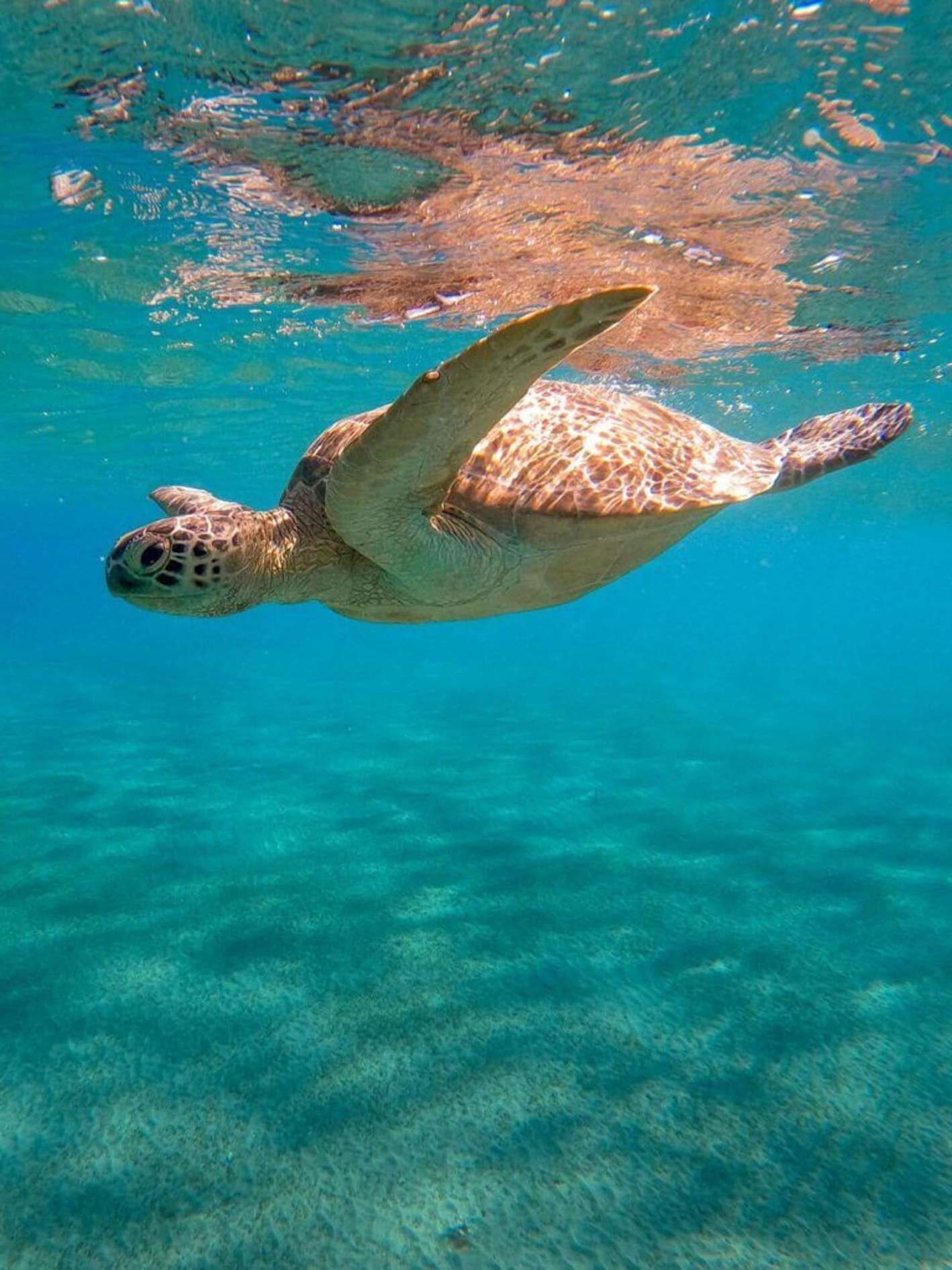
A country-wide guide to turtle grounds, from Blue Bay's seagrass to the northern reefs, with the rules spelled out.
Read the guide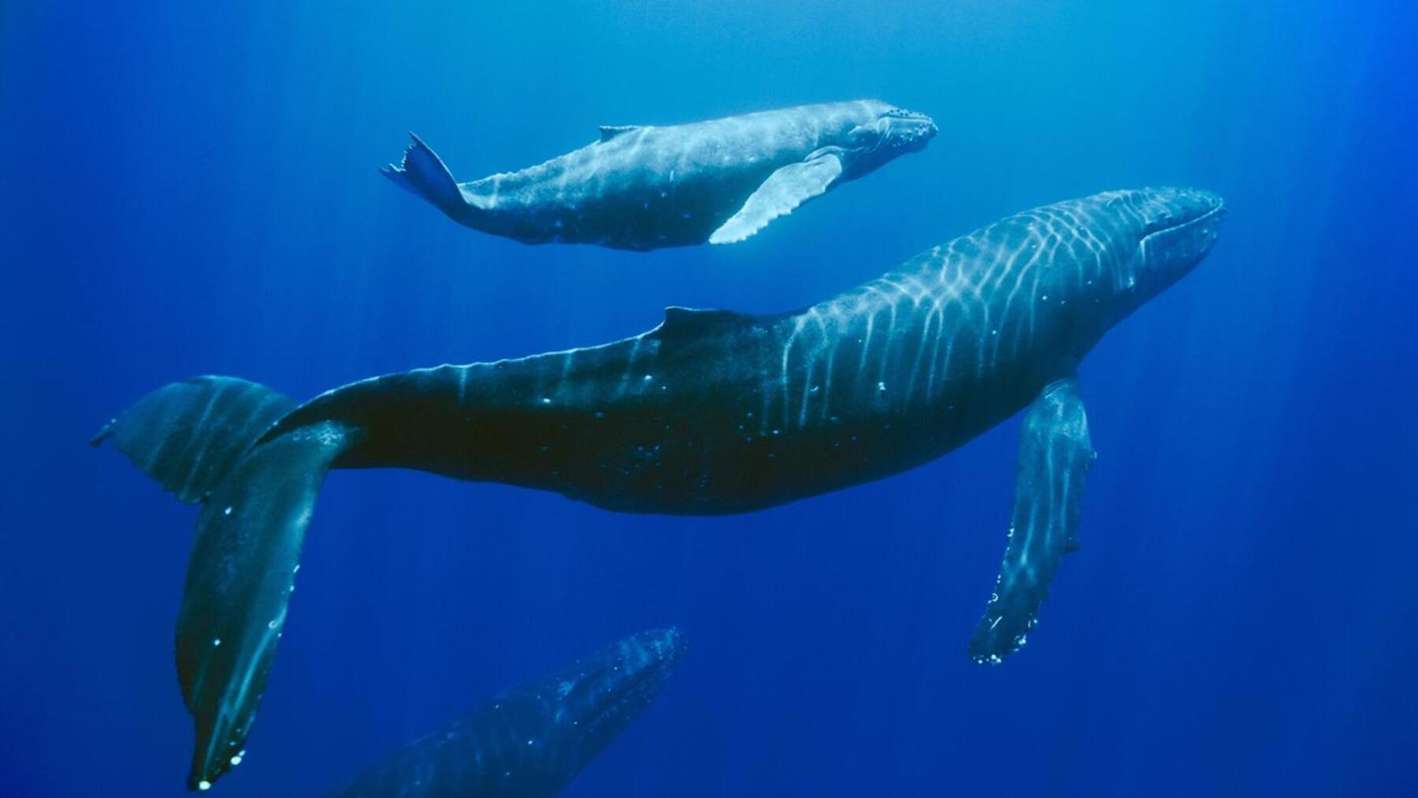
Resident sperm whales off the deep west coast drop-off, observed strictly from the boat.
Read the guide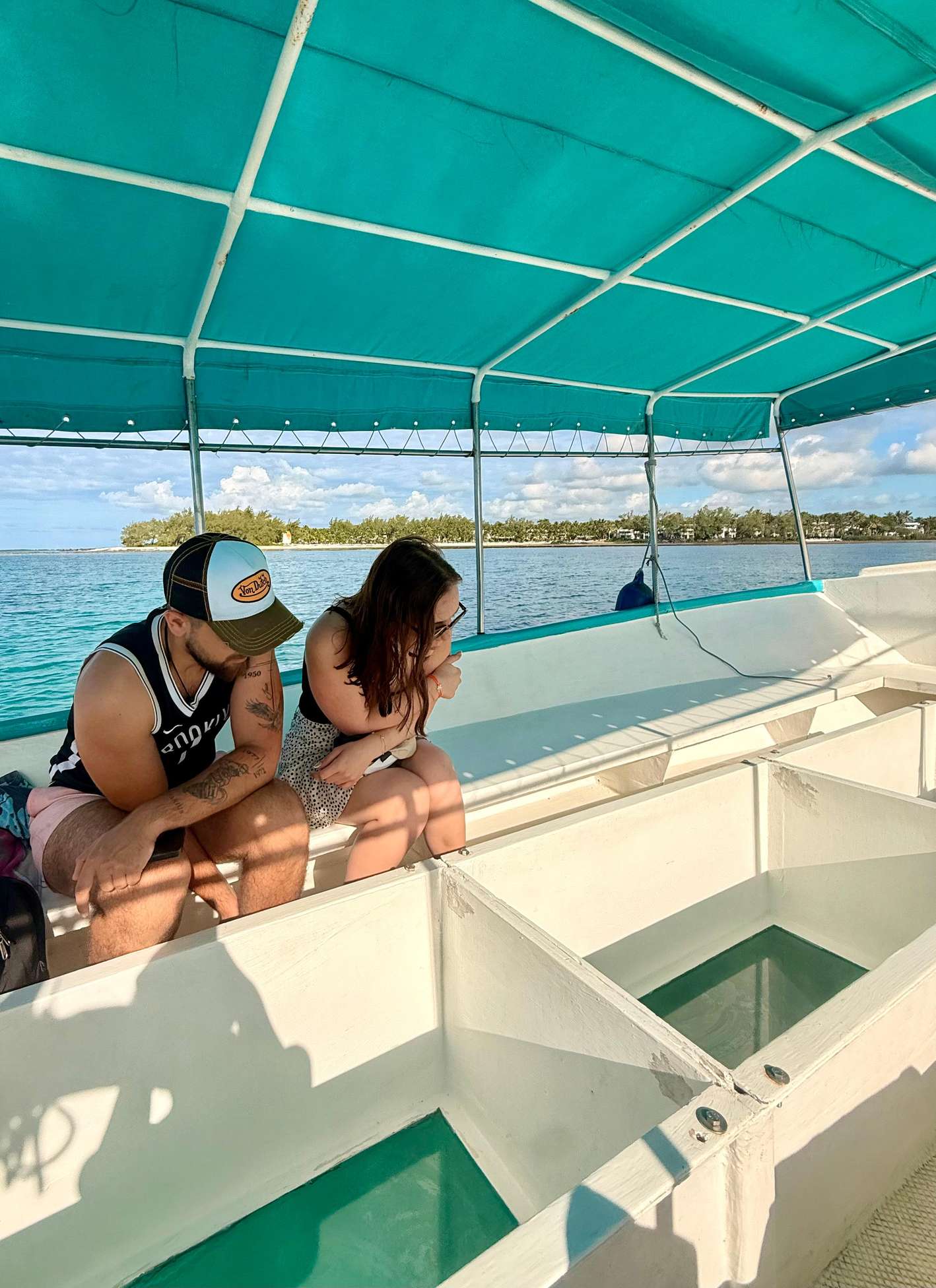
The month-by-month guide to water temperature, visibility and wind that decides your snorkeling dates.
Read the guide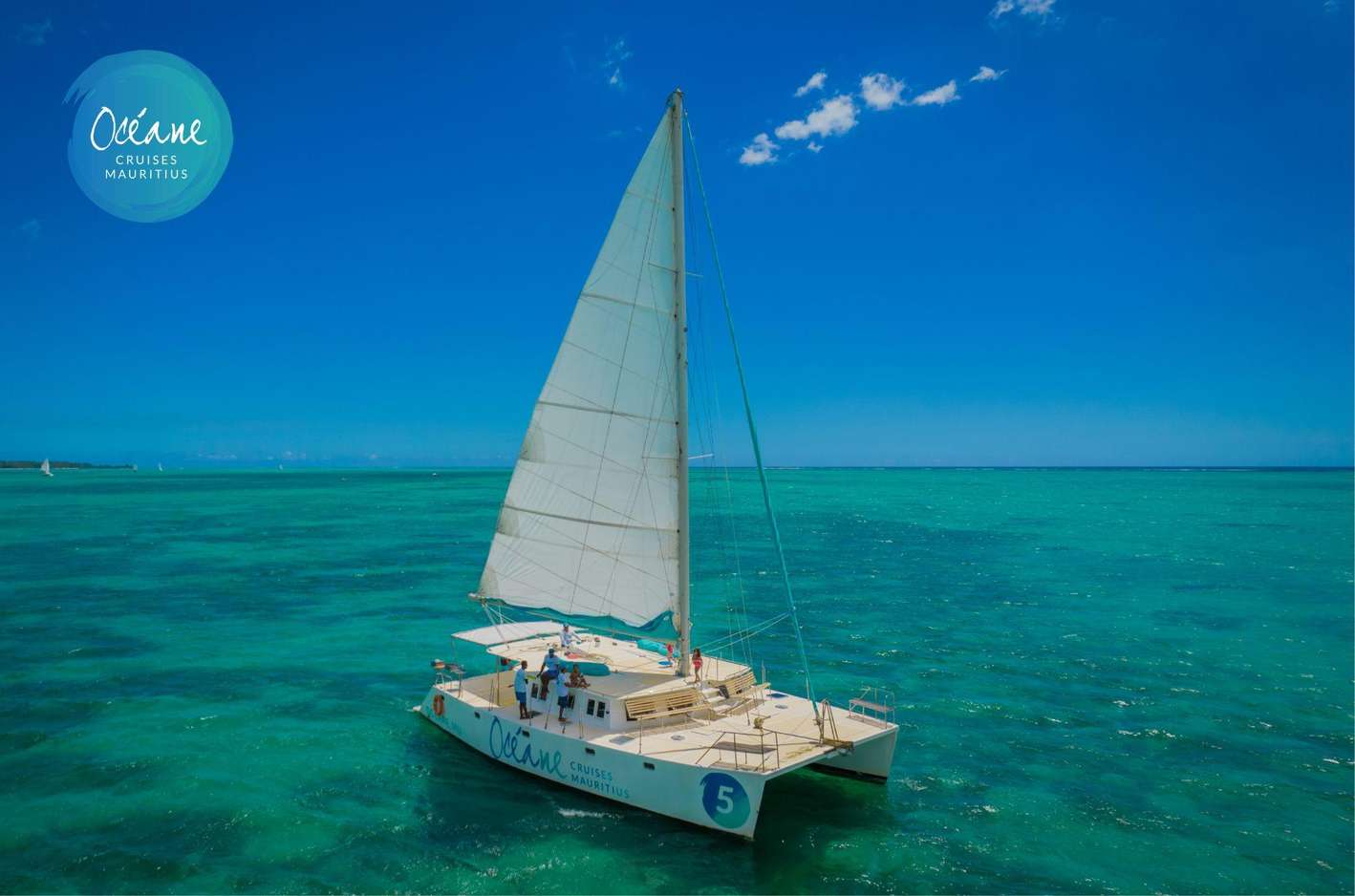
Sailing catamarans cross the flat east lagoon to Île aux Cerfs, with snorkeling, a waterfall detour and lunch.
Read the guide
Speedboats cross to Île aux Cerfs in a quarter of the catamaran's time, adding islands and beach hours.
Read the guide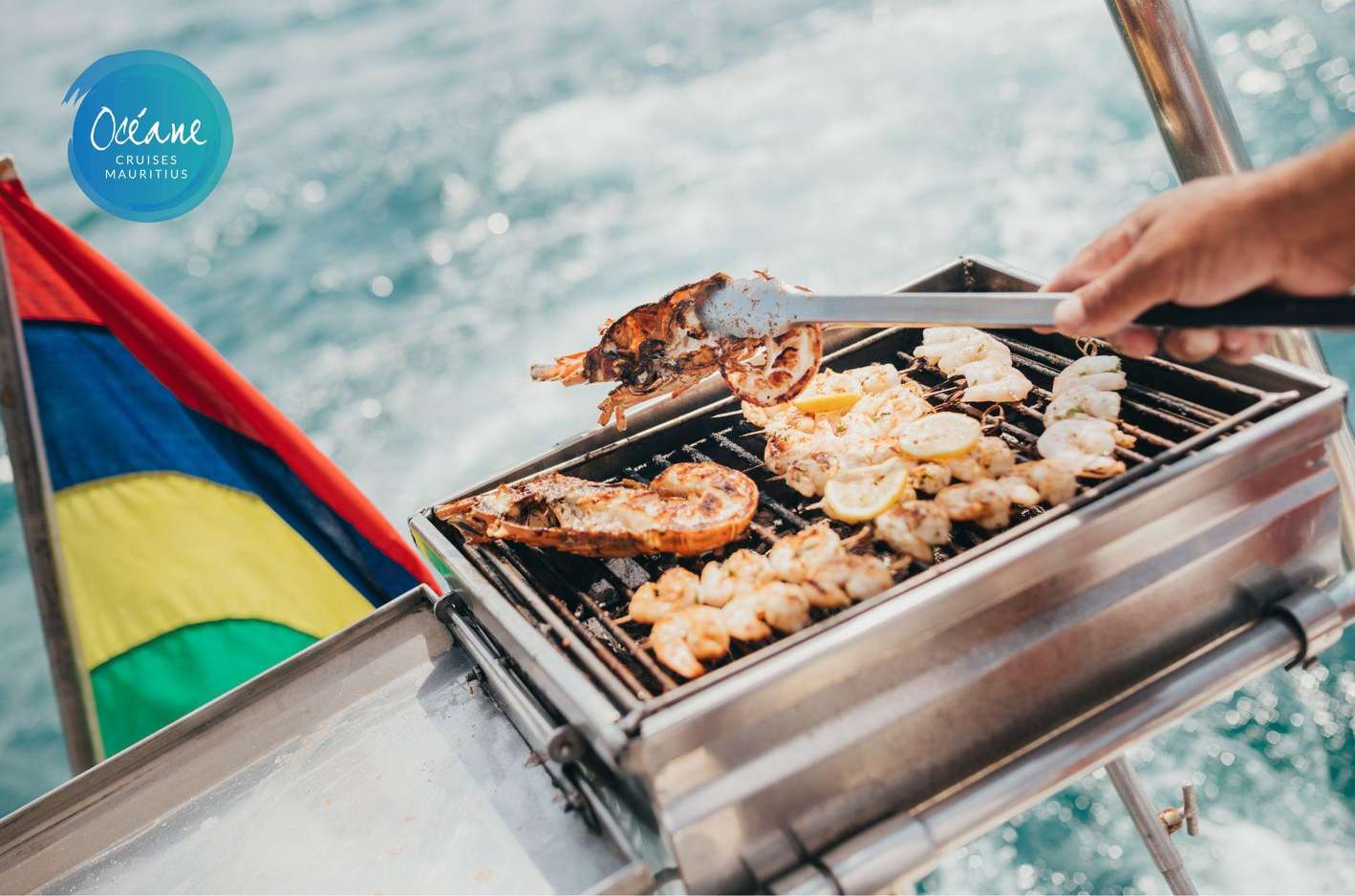
A private catamaran or speedboat to Île aux Cerfs, with a skipper who bends the day around your group.
Read the guideEvery one of these snorkeling bases works a little differently, from walk-in lagoons to open-water boats. The facts and scores below line them up against your stay.
Decides which side of Mauritius your snorkeling should happen on
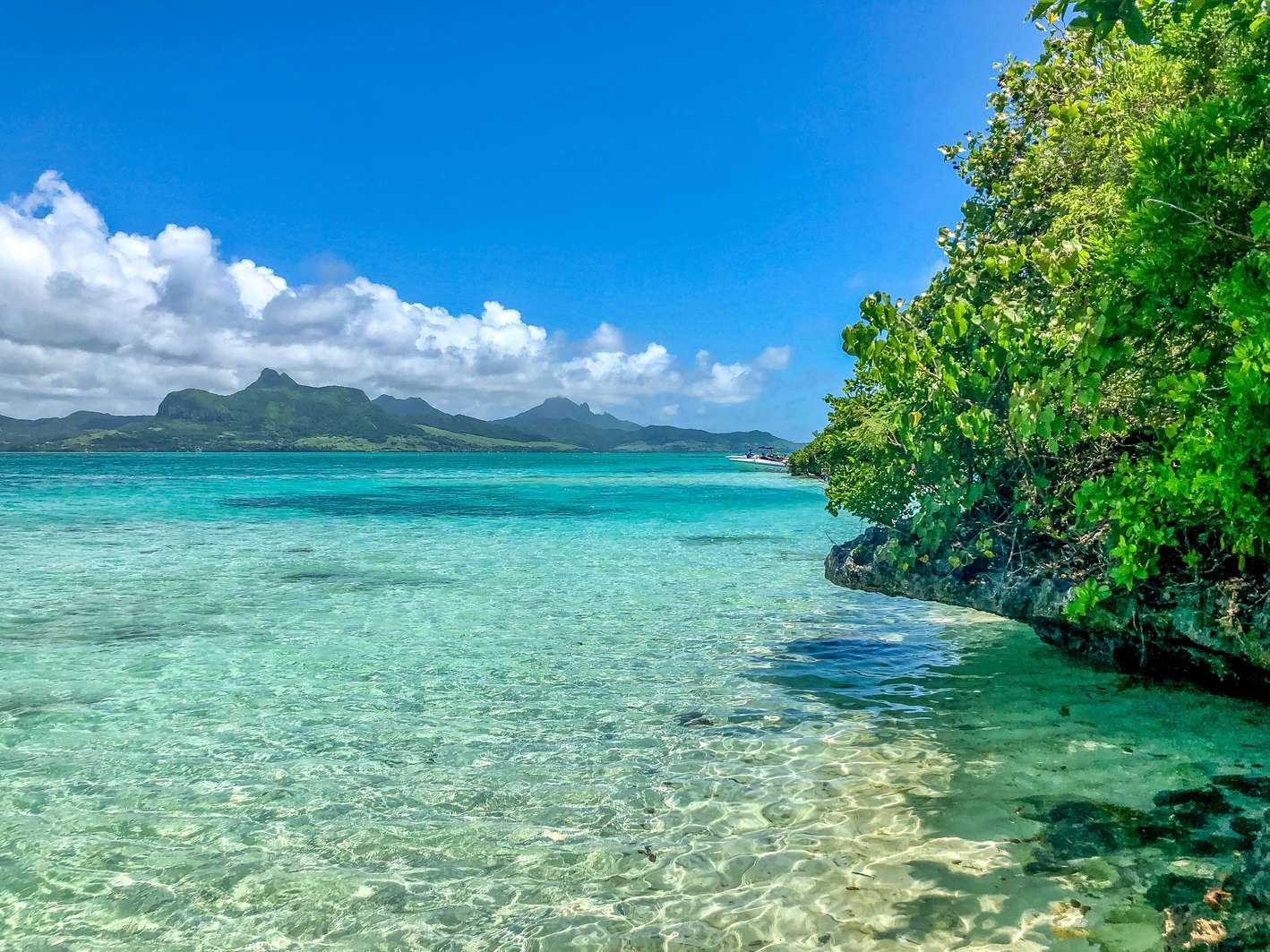
Mauritius wears four different underwater moods, and this guide sorts them out. Southeast trade winds strike the east coast head-on from May to September, chopping the lagoons around Trou d'Eau Douce, while the island's central mountains leave the west sheltered. Blue Bay holds the densest protected coral; the north trades coral for offshore islets.
Read it while your hotel is still bookable, so the water can pick the room. It names which coast stays clear in which month and where each coast's tours leave from.
3 hours · ★ 5.0 (4)Blue Bay: Lagoon, Snorkeling, and Creole LunchFrom $87 7 hours · ★ 4.8 (869)Ile aux Cerfs Catamaran Cruise with BBQ Lunch & SnorkelingFrom $68 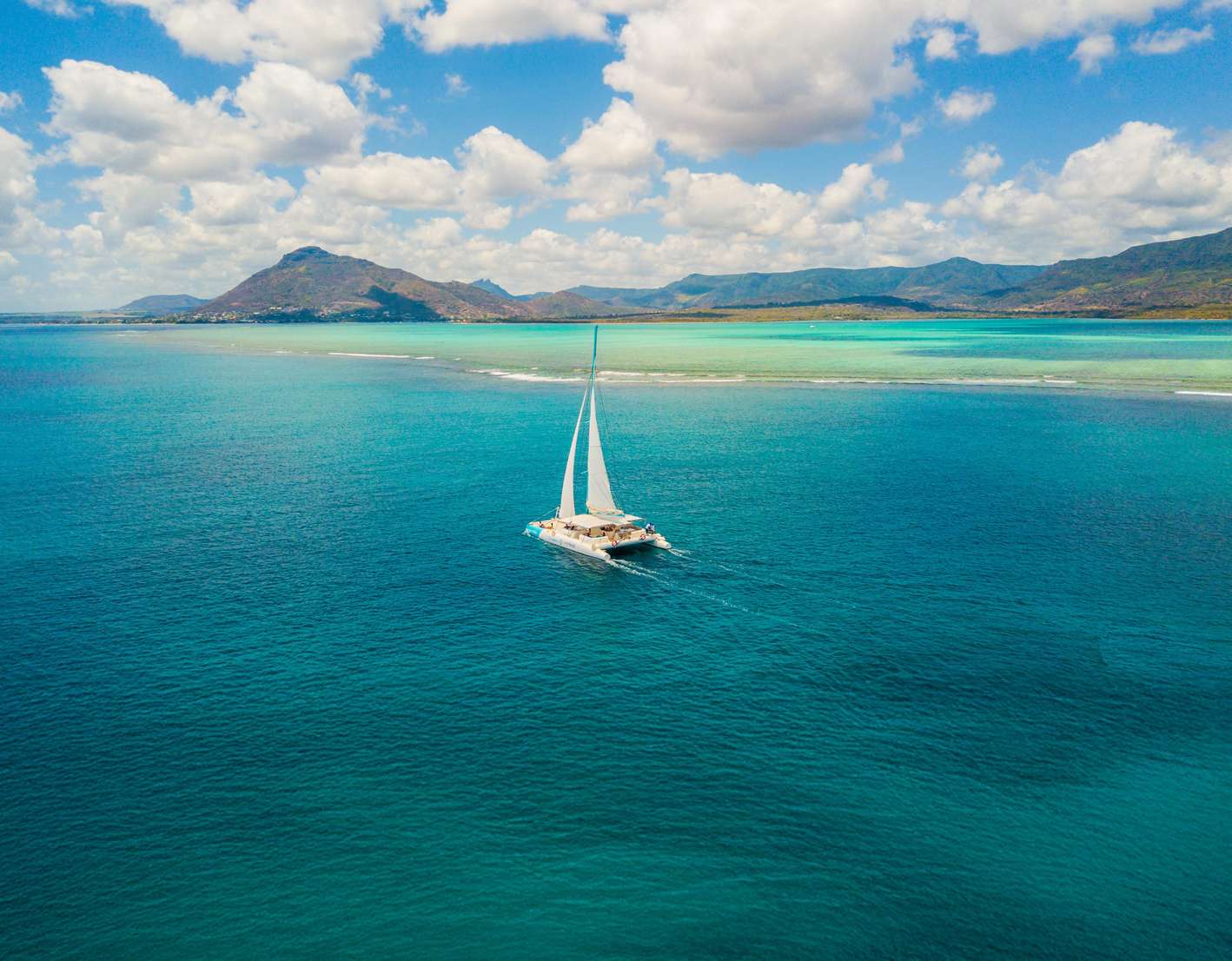 6 hours · ★ 4.7 (363)Mauritius: Catamaran Cruise - Dolphin Watching, BBQ & DrinksFrom $87 2 hours · ★ 4.7 (39)Mauritius: Snorkeling with turtles Le Transporteur speedboatFrom $375 /group
Mauritius's biggest protected coral garden, viewed by glass-bottom boat
Brain corals six to seven meters wide and table colonies stretching sixteen meters grow inside this officially protected reserve. The park starts about a hundred meters off the public beach, and a glass-bottom boat carries anyone who would rather stay dry. Table coral this size grows nowhere else in Mauritius.
A one-hour trip buys roughly forty-five minutes in the water at a single spot; the two-hour version covers two reef locations. Go between seven and ten in the morning, before wind clouds the water. Blue Bay beats Belle Mare on fish and coral density, so many east-coast guests drive the trip south.
3 hours · ★ 5.0 (4)Blue Bay: Lagoon, Snorkeling, and Creole LunchFrom $87 2 hours · ★ 4.6 (17)Blue Bay Marine Park: Guided Snorkeling with Video Souvenirs and SnackFrom $58 4 hours · ★ 4.5 (306)Blue Bay: Half-Day Snorkeling Trip with Creole Picnic LunchFrom $67 1 hour · ★ 4.4 (155)Blue Bay Marine Park - 1-hour Snorkeling ExcursionFrom $28 Calm northwest lagoon with green turtles grazing on seagrass
Green turtles graze the seagrass beds that back coral bommies along the northern reef edge here, and calm conditions hold on most days of the year. The inner shallows themselves are mostly sandy flats with a few triggerfish and butterflyfish, so manage your first swim accordingly.
The barrier reef shelf sits two to three hundred meters offshore. That crossing crosses boat channels and carries strong current, so snorkelers reach the outer reef and its turtles by boat. Go in the morning, before tour boats arrive and before the turtles move on.
One of the calmest lagoons on the island, swimmable at most tides
The barrier reef keeps this lagoon shallow and flat, and unlike some shallow lagoons it holds enough water to swim at most tides.
First coral clumps and small reef fish begin a few dozen meters from the sand, with denser coral about two hundred meters out in the wide lagoon. Swim straight out opposite the Hindu temple for the easiest coral without a boat.
Boats for dolphins and turtles launch right from the beach here, so no long drive is needed. Stay clear of the reef pass and boat channels, where currents run.
8 hours · ★ 5.0 (2)Private Dolphins, Sea Turtles & Île aux Bénitiers TourFrom $850 /group 7 hours · ★ 5.0 (1)Mauritius: Private Whale Watching & Bénitiers BBQFrom $1,025 /group 2 hours · ★ 4.7 (28)Flic en Flac: Private Sunrise Dolphin Watching Boat TourFrom $309 /group 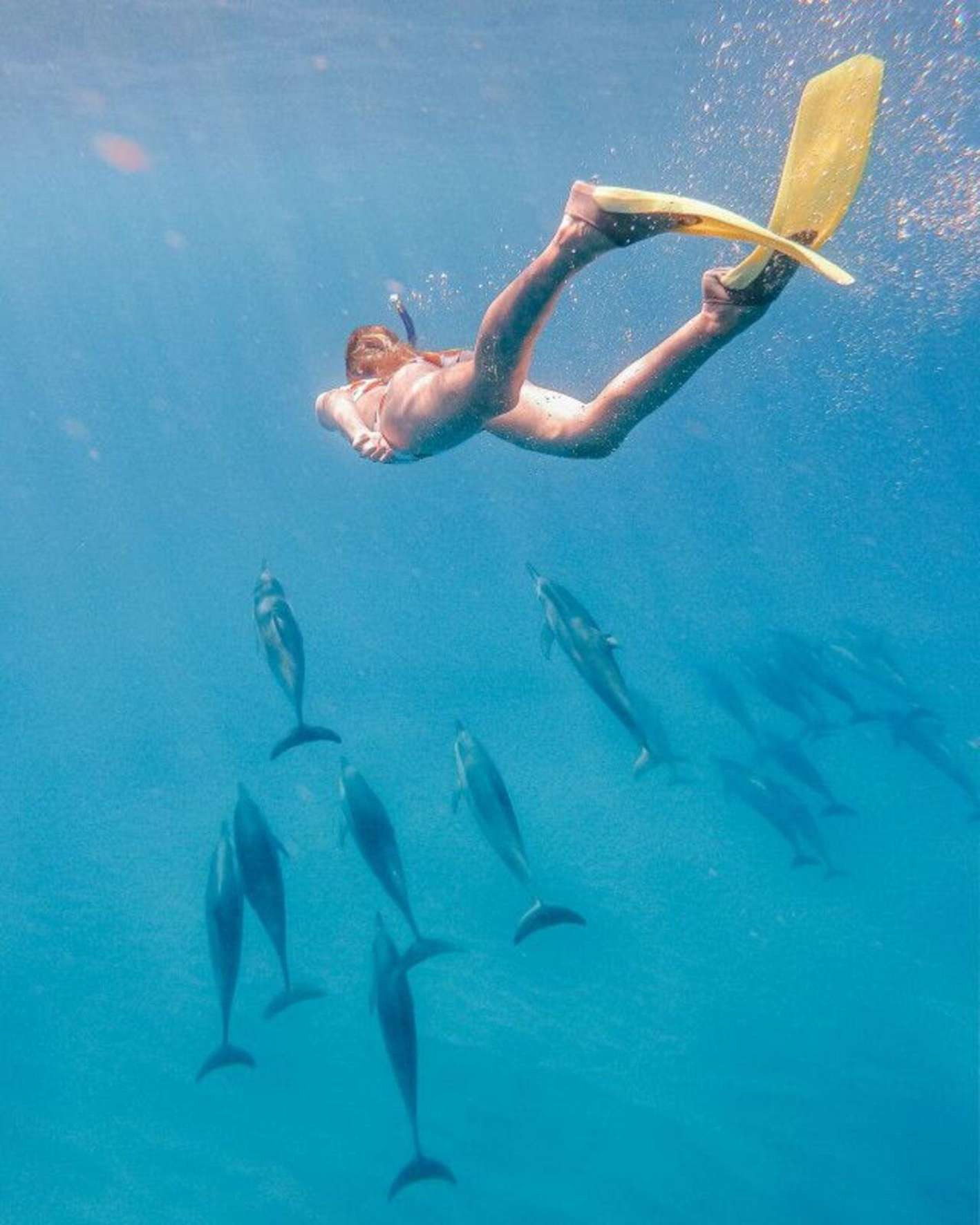 2 hoursMauritius: Private Dolphin Watching and Snorkeling TourFrom $441 /group
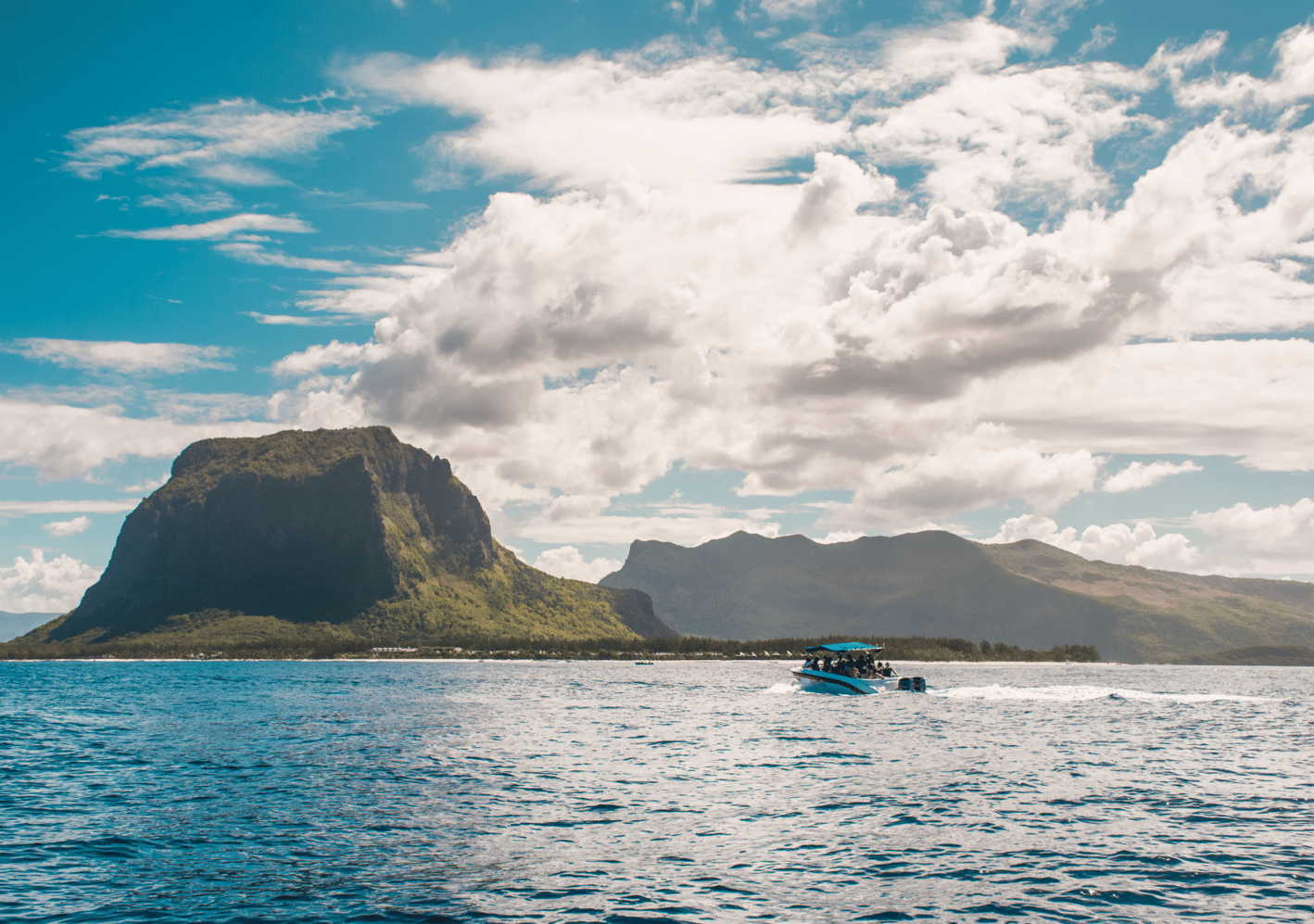
Snorkel Crystal Rock's coral blocks with Le Morne Brabant behind you
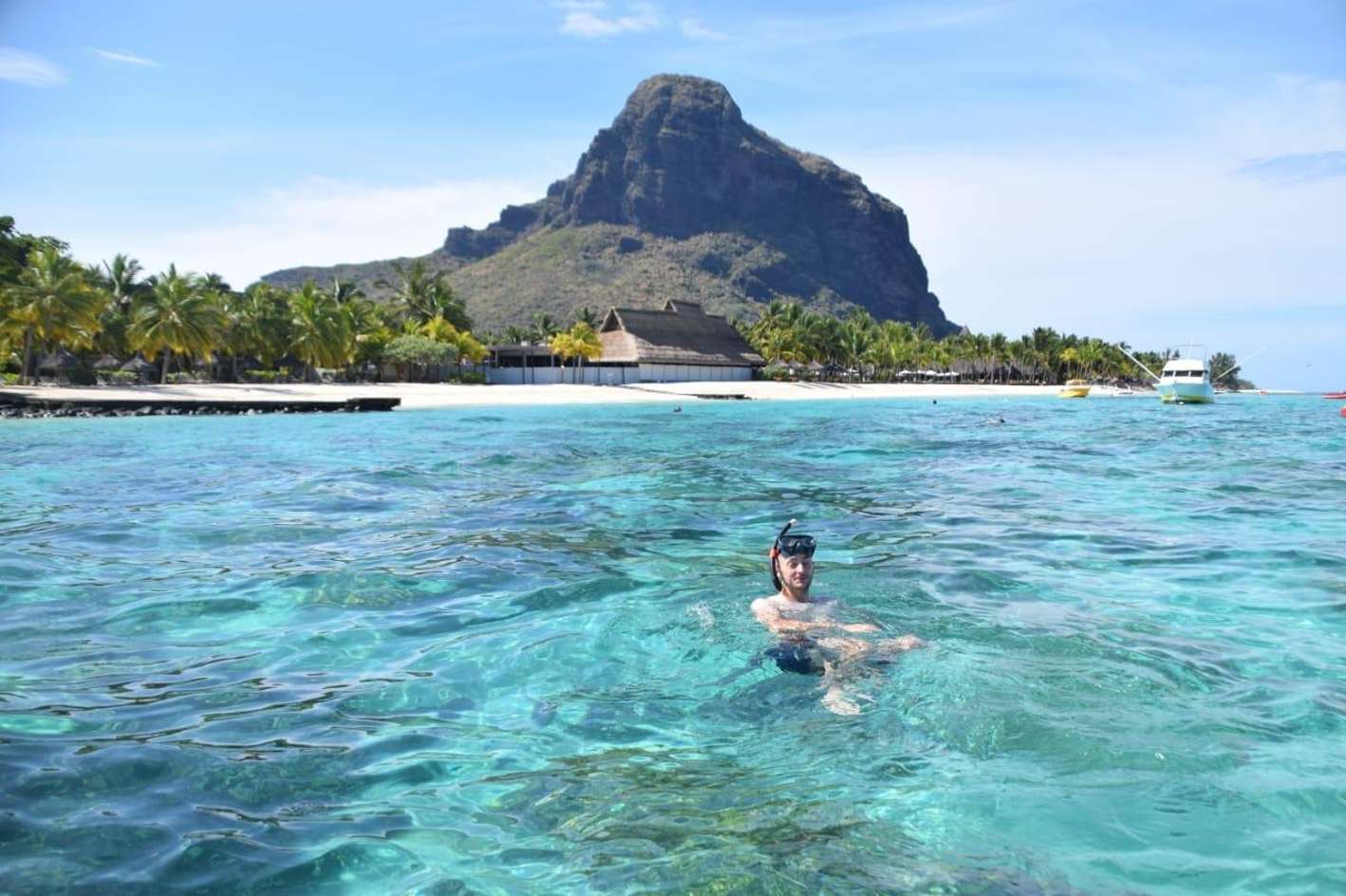
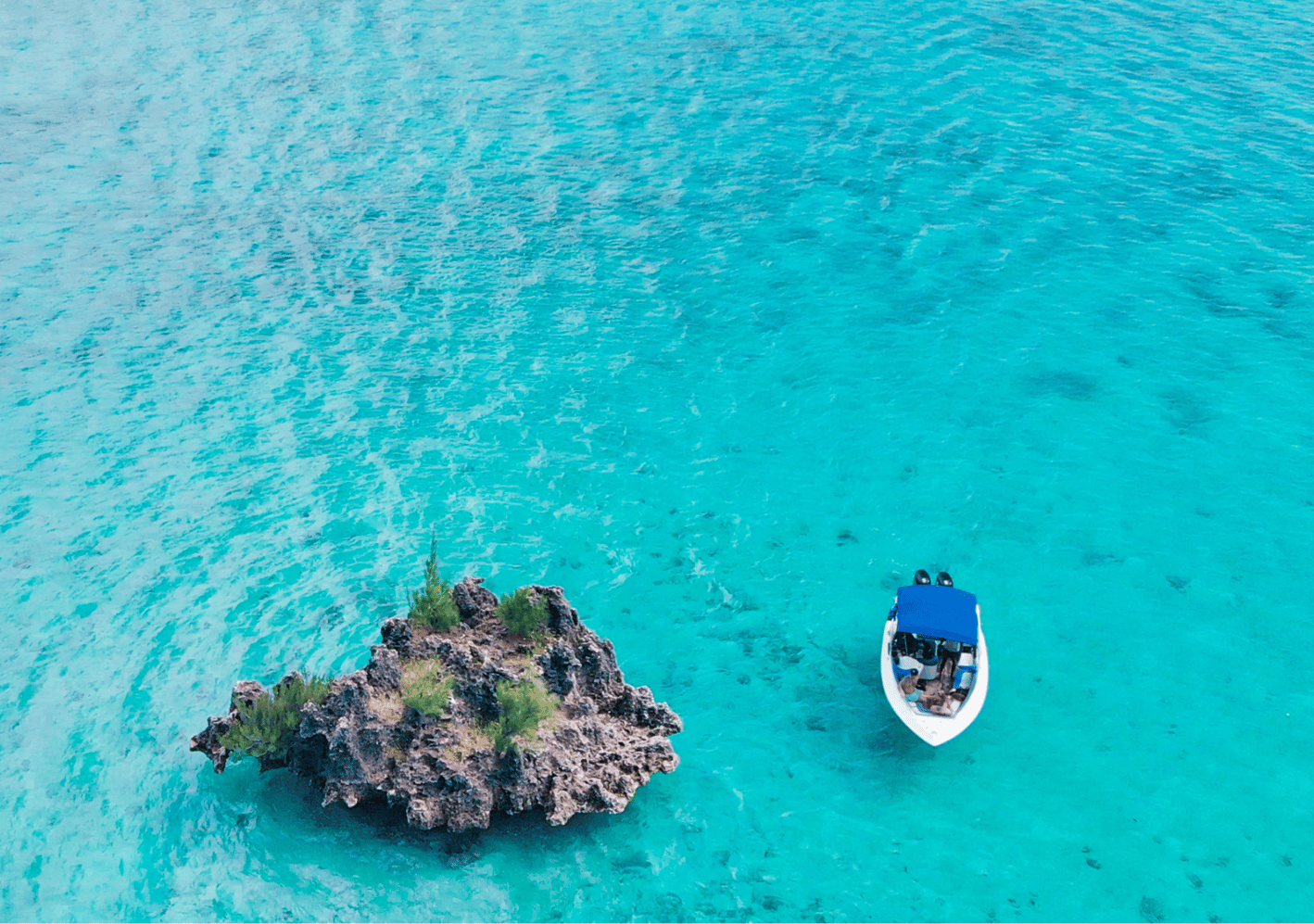
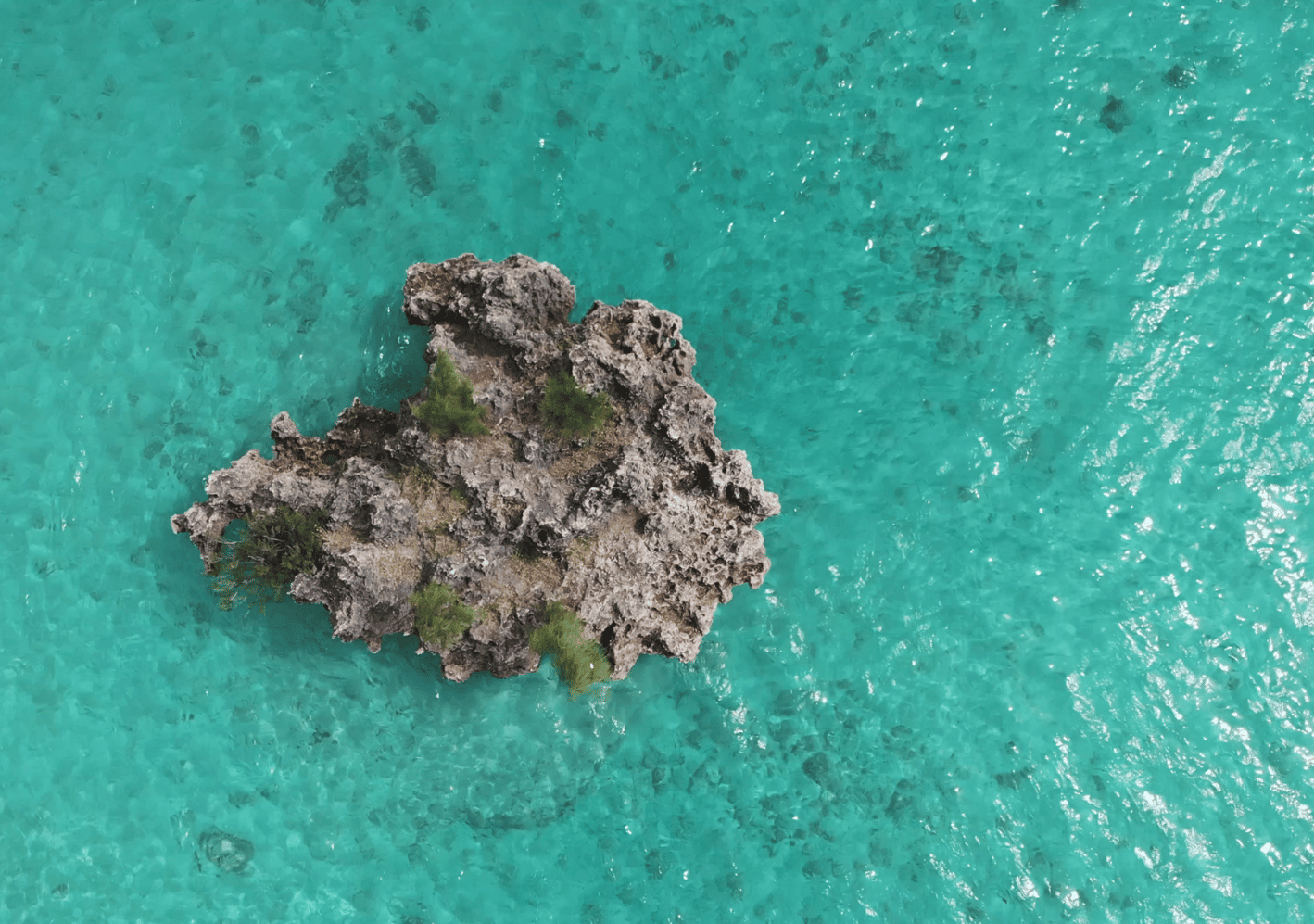
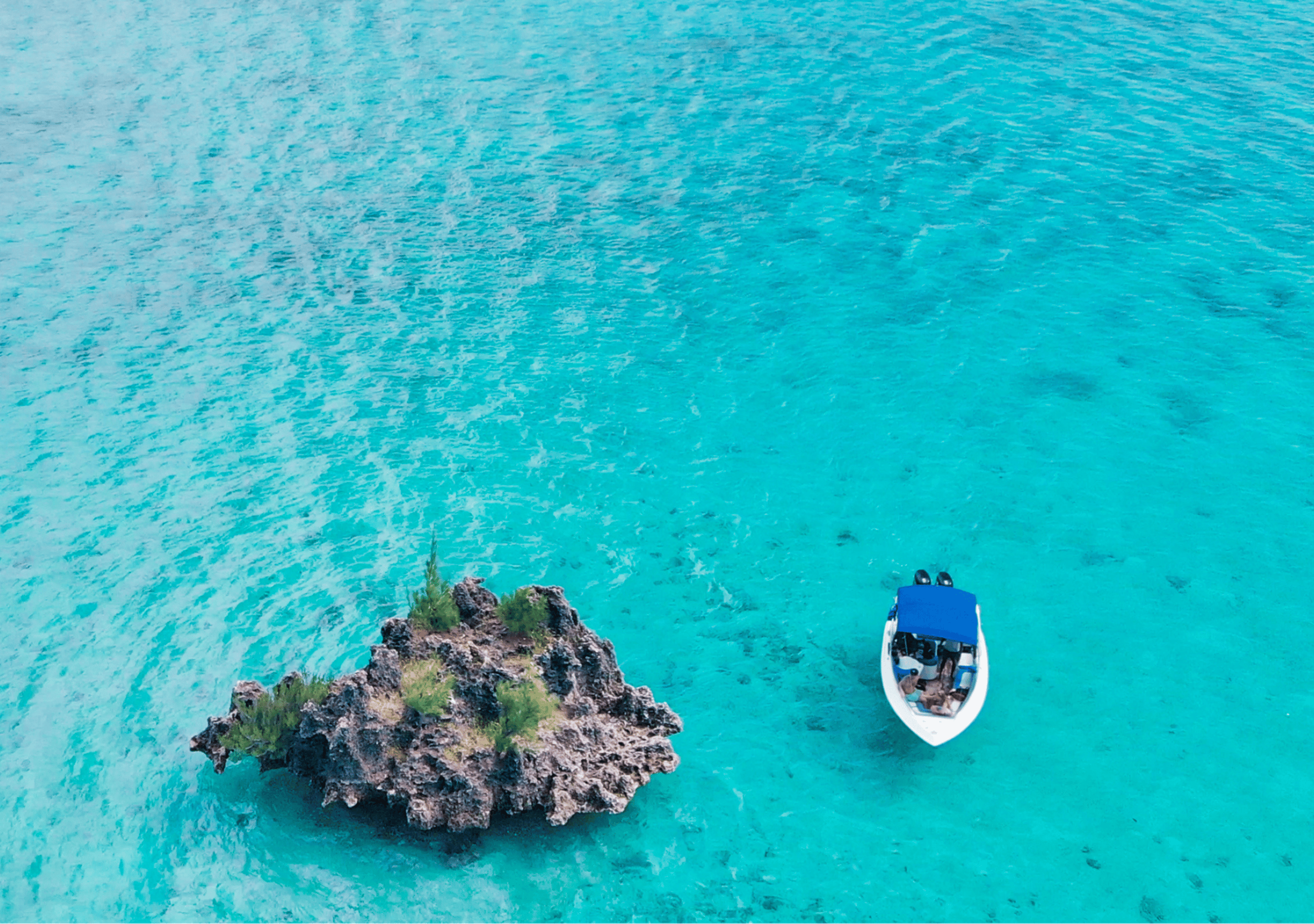
Crystal Rock stands alone in the lagoon, and the snorkeling happens at a field of round coral blocks nearby, waist to chest deep over sand.
Needlefish, pufferfish and small reef fish drift among the blocks, and Le Morne Brabant fills the background. La Prairie beach gives shore swimmers calm, shallow water with the same mountain view.
The reef pass here is a different story. On an outgoing tide the lagoon drains through it with a current too strong to paddle against, so reach the outer reef and the rock by boat. Combine the snorkel stop with a dolphin search on the same trip.
7 hours · ★ 5.0 (5)Private Île aux Bénitiers Boat: Dolphin Snorkeling & LobsterFrom $738 /group 7 hours · ★ 5.0 (1)Mauritius: Private Whale Watching & Bénitiers BBQFrom $1,025 /group  2 hours · ★ 4.9 (151)Mauritius Le Morne: Wild Dolphin Watching & SwimmingFrom $331 /group
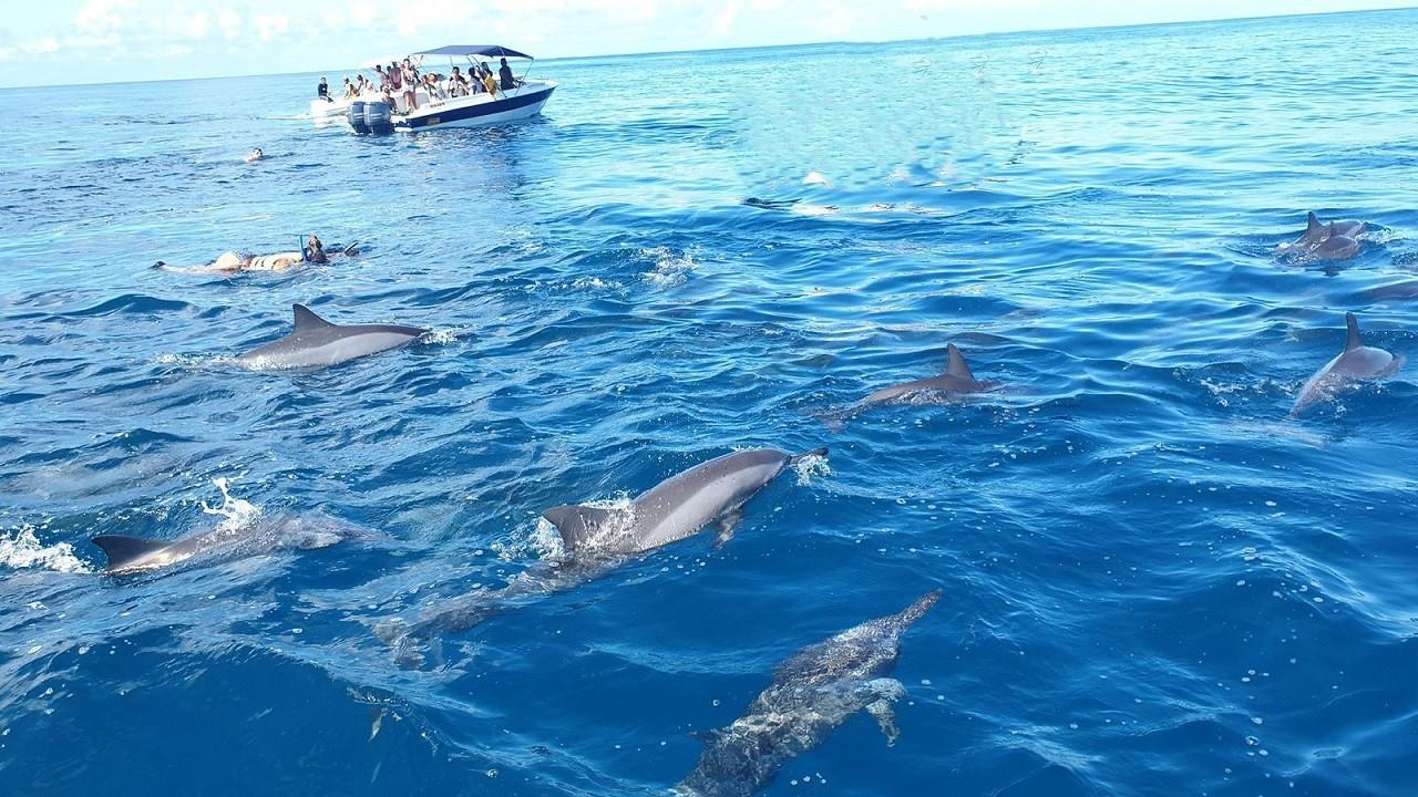 6.5 hours · ★ 4.3 (318)Black River: Swim with Dolphins Speed Boat Tour with lunchFrom $69
A small northern cove where turtles pass close to the sand
Both green and hawksbill turtles visit the sheltered water in front of the public beach and the cove's northern lagoon, often fifty to a hundred meters from shore. The fish life sits along the rocky edges at either end of the bay, while the middle stays sandy.
A buoyed line marks the swim zone, and motorboats keep to marked channels outside it. Finning about three hundred meters brings you to the inner reef feeding grounds toward the barrier.
Do not go past the bay's edges, where current and boat lanes begin. Public toilets, showers and parking sit at the beach entrance, and the lot fills fast on weekends.
The launch point for the northern isles and Coin de Mire
The bay itself works as a harbor first and a snorkel spot second, with moorings and boat lanes across the water. What Grand Baie does have is the beach.
Full-day catamarans and speedboats leave directly from the sand for Îlot Gabriel, Île Plate and Coin de Mire, where coral stays healthy and the water runs deep.
The crossing past Cap Malheureux rolls with open-ocean swell, liveliest between May and August when peak waves reach about a meter and a quarter. Wear reef shoes for island landings, and bring your own mask if a snug fit matters to you.
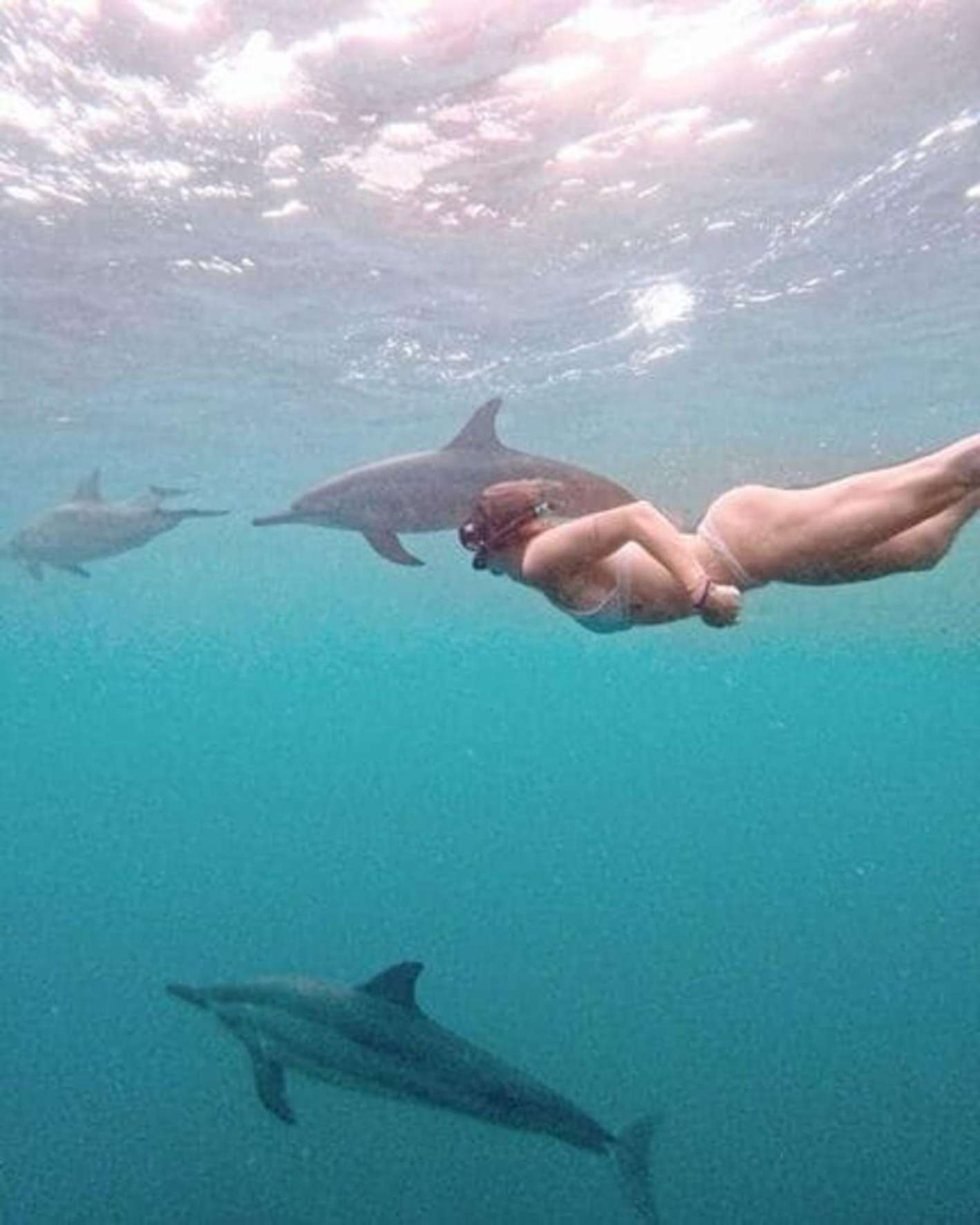
Wild spinner and bottlenose dolphins at sunrise, reef snorkeling after
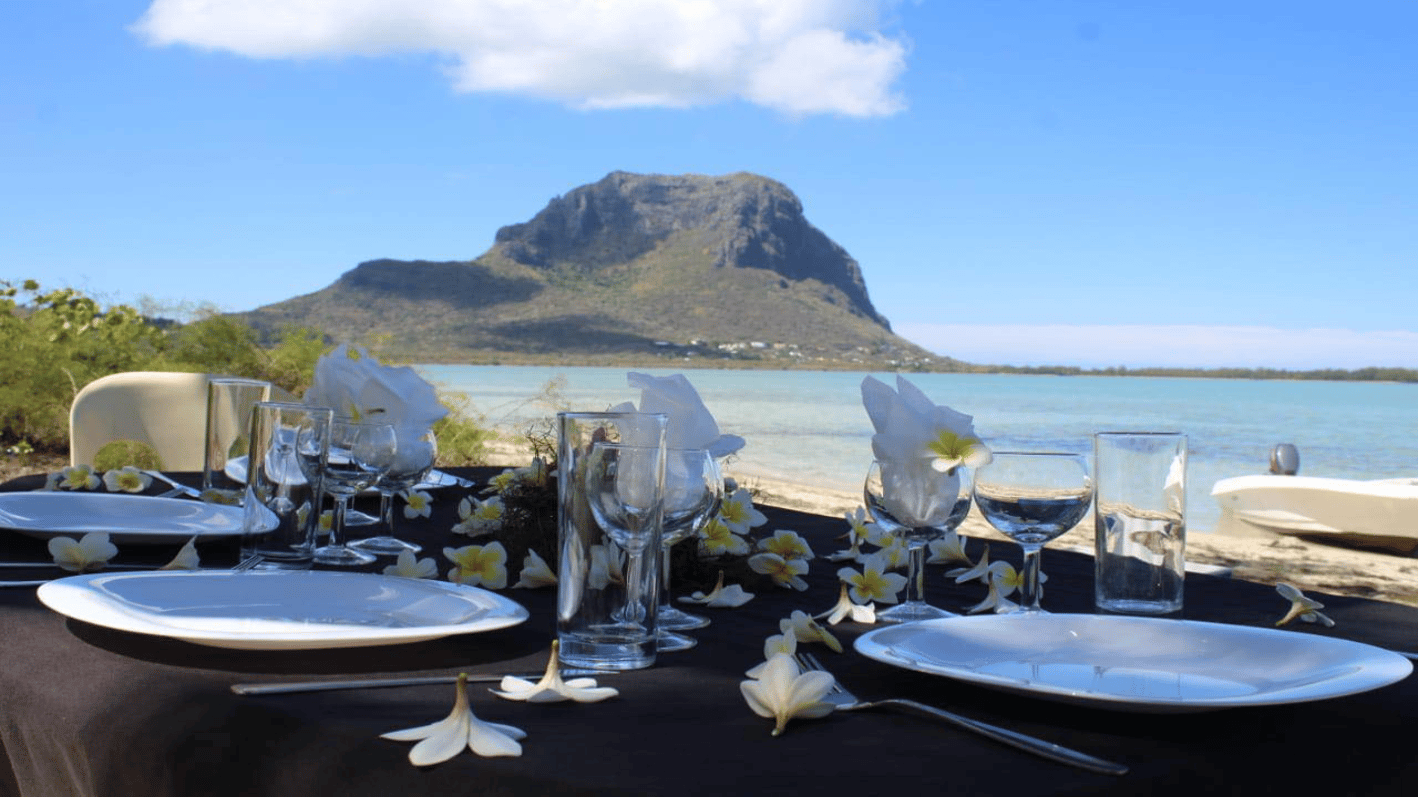
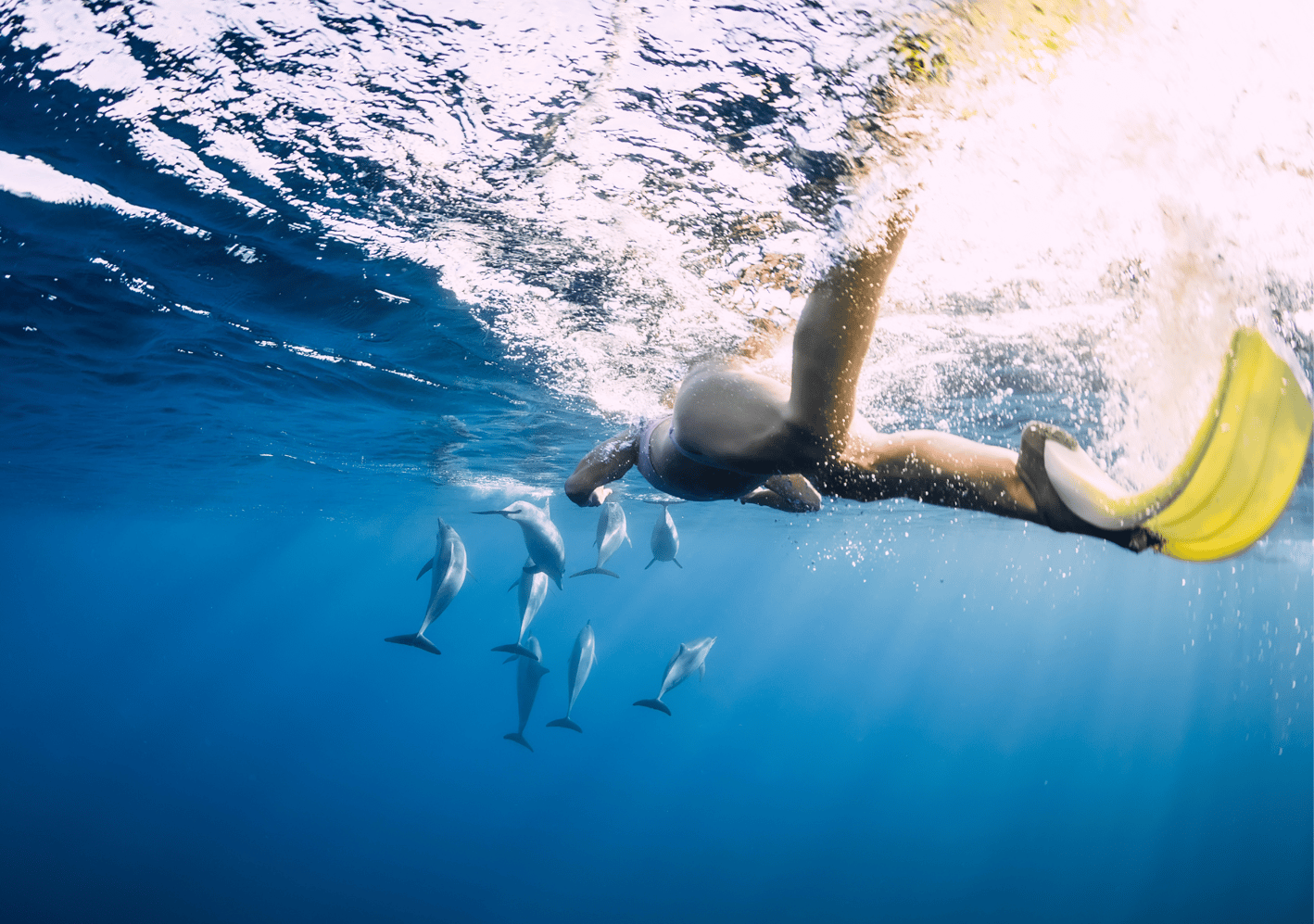
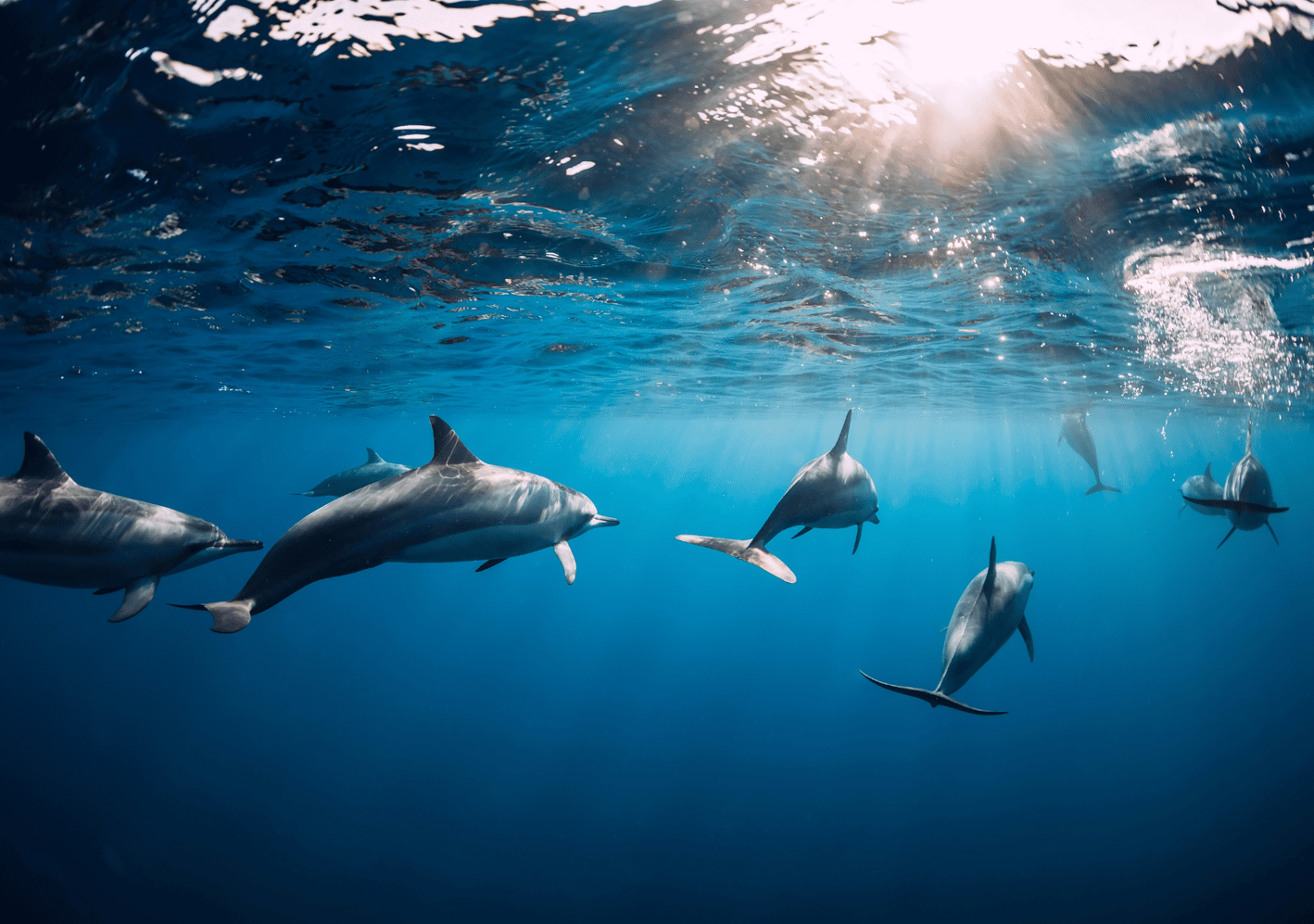
Spinner and bottlenose dolphins rest and feed in this bay in the morning, and the window that works runs from about six until seven-thirty, before boat traffic peaks. Pods gather in western bays here, off Black River and off Flic en Flac before moving offshore.
Swimming with them is an athletic business: you drop into deep open water and swim fast with fins to keep pace with a moving pod. Life jackets are compulsory on the boats and in the water.
The bay has no outer reef, so ocean swell and rip currents reach the shore, and the Beach Authority lists it as hazardous for bathing.
7 hours · ★ 5.0 (5)Private Île aux Bénitiers Boat: Dolphin Snorkeling & LobsterFrom $738 /group 6 hours · ★ 4.7 (363)Mauritius: Catamaran Cruise - Dolphin Watching, BBQ & DrinksFrom $87 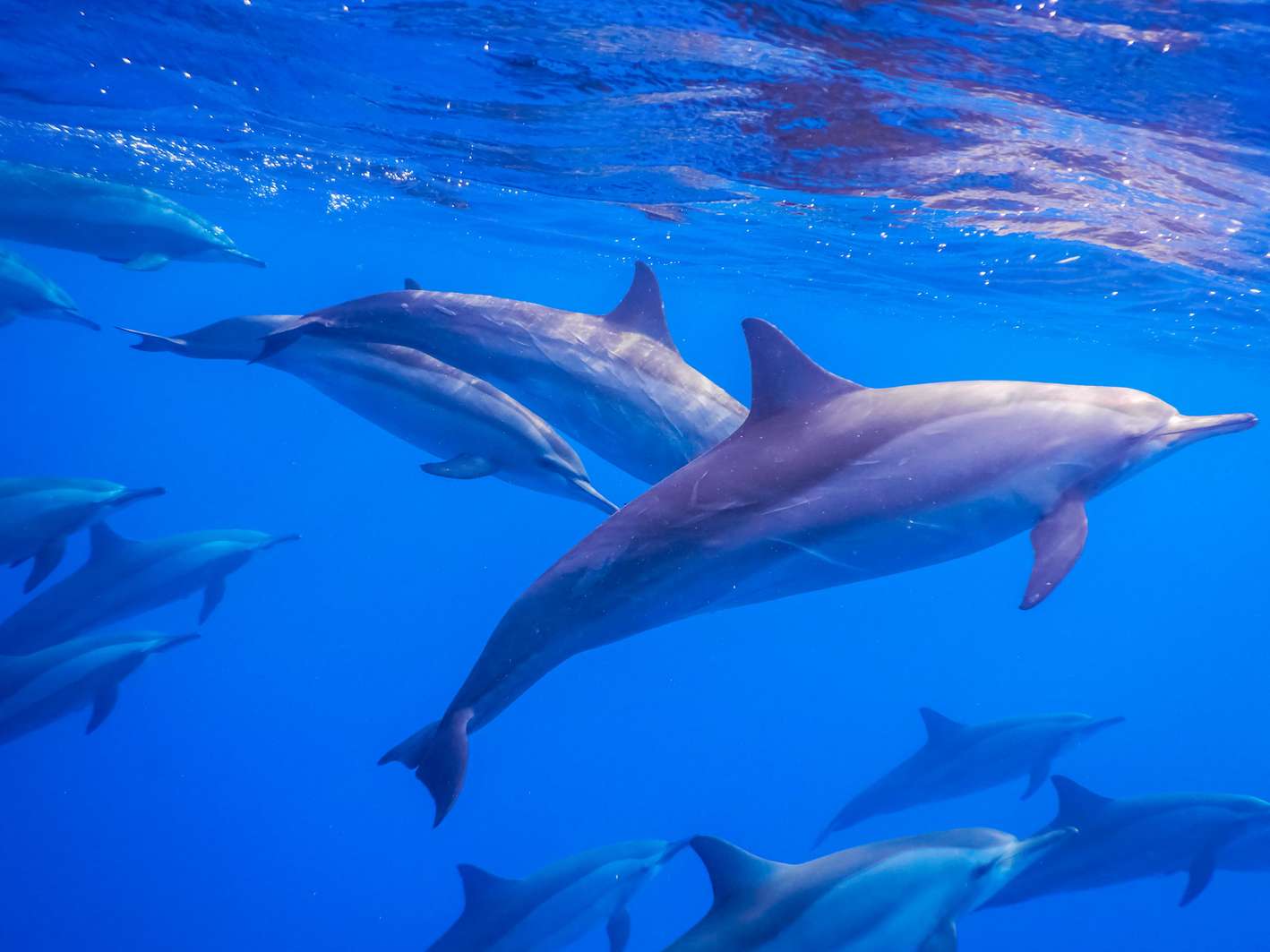 2 - 6 hours · ★ 4.7 (237)Dolphin Watching with Hotel Pickup (Mauritius)From $61 /group
 4 hours · ★ 4.4 (35)Dolphins & Whales: Private Snorkeling TourFrom $528 /group
Belle Mare's calm neighbor with a wide, shallow, sandy lagoon
Palmar sits just north of Belle Mare, and its lagoon shows what the east coast does best: a wide, shallow, sandy stretch of water held calm by a distant reef about two hundred fifty meters out.
Beginners wade in over sand, and small tropical fish move through the seagrass and around the rocky points, with Moorish idols and butterflyfish across the lagoon.
Wear water shoes, because sea urchins and coral fragments wait on the floor. June to September brings the roughest, murkiest weeks. Boats for Île aux Cerfs leave from Trou d'Eau Douce a few minutes south, with round-trip pickup from the Palmar resort lobbies.
A north-facing marine park with sheltered, beginner-friendly lagoons
This bay faces north, out of the path of the southeast trade winds, so its lagoon stays calm for swimmers of every level through the year. The marine park's coral is recovering rather than lush, and the reef structure runs rockier and shallower than first-time visitors expect.
The rules matter here. Swimming and snorkeling are prohibited in the marked traffic lanes and outside designated swim zones, and boats must fly the diving flag before putting snorkelers in the water. At Kuilima Cove you can walk straight in over ankle-deep sand, though the shoreline elsewhere hides rocky volcanic patches, so watch your feet.
Walk-in turtle sightings inside a sheltered, named marine park
Green sea turtles regularly move into the shallow water of Kuilima Cove, and snorkelers meet them over the deeper sandy patches in the middle of the cove. The coral inside the park is still recovering from past bleaching, though coral formations start close to shore and run out toward the barrier reef.
Boat traffic and marked channels exist here, so a bright snorkel vest helps you stay visible, and the currents near the reef and passes pull. The park's zones also set where you may legally swim, so keep inside the marked areas. The walk-in access means no fee and no booking for a first look.
Quiet southern reefs reached through resort nautical centres
You can snorkel straight from Bel Ombre beach on calm days, around the rocks and coral patches that sit in the sand. At low tide the lagoon turns very shallow, squeezing the swimming space and stirring silt, so mid to high tide gives the clearest water.
The currents in the channels here pull hard, and beginners should stay inside the yellow swim zones and away from the passes. Local resort nautical centres run organized snorkeling and glass-bottom outings, and the southern reefs see fewer boats than the northern routes, which some visitors count as the area's best feature.
The famous underwater waterfall, an illusion you meet by air
The famous image shows sand and silt pouring off a shallow shelf into deep ocean, and it exists only from above, by seaplane or helicopter.
Through a mask at sea level, water clarity limits your view to a few meters, so the cascade stays invisible. The reef opening beside it sends strong rip currents seaward on the outgoing tide.
What the area does hold is worth a day on the water: the calm, shallow lagoon under Le Morne Brabant, the coral blocks at Crystal Rock, and wild dolphins beyond the reef. Treat the flights as the sightseeing and the boats as the snorkeling.
Where turtles gather and the law on swimming with them
Sea turtles gather at a handful of reliable feeding grounds around Mauritius: the seagrass of Blue Bay, the northwest bays, the shallows of Pereybere and the reefs around Coin de Mire, where sightings happen rather than promises. This guide walks through each one and what you will actually see.
Mauritian law, under the Fisheries Act 2023, forbids swimming with, feeding, touching or chasing sea turtles, with heavy penalties. So the encounters here happen on the turtles' terms: you watch them graze from a distance, keep your fins quiet, and let them decide how close they come.
8 hours · ★ 5.0 (2)Private Dolphins, Sea Turtles & Île aux Bénitiers TourFrom $850 /group 2 hours · ★ 4.7 (39)Mauritius: Snorkeling with turtles Le Transporteur speedboatFrom $375 /group 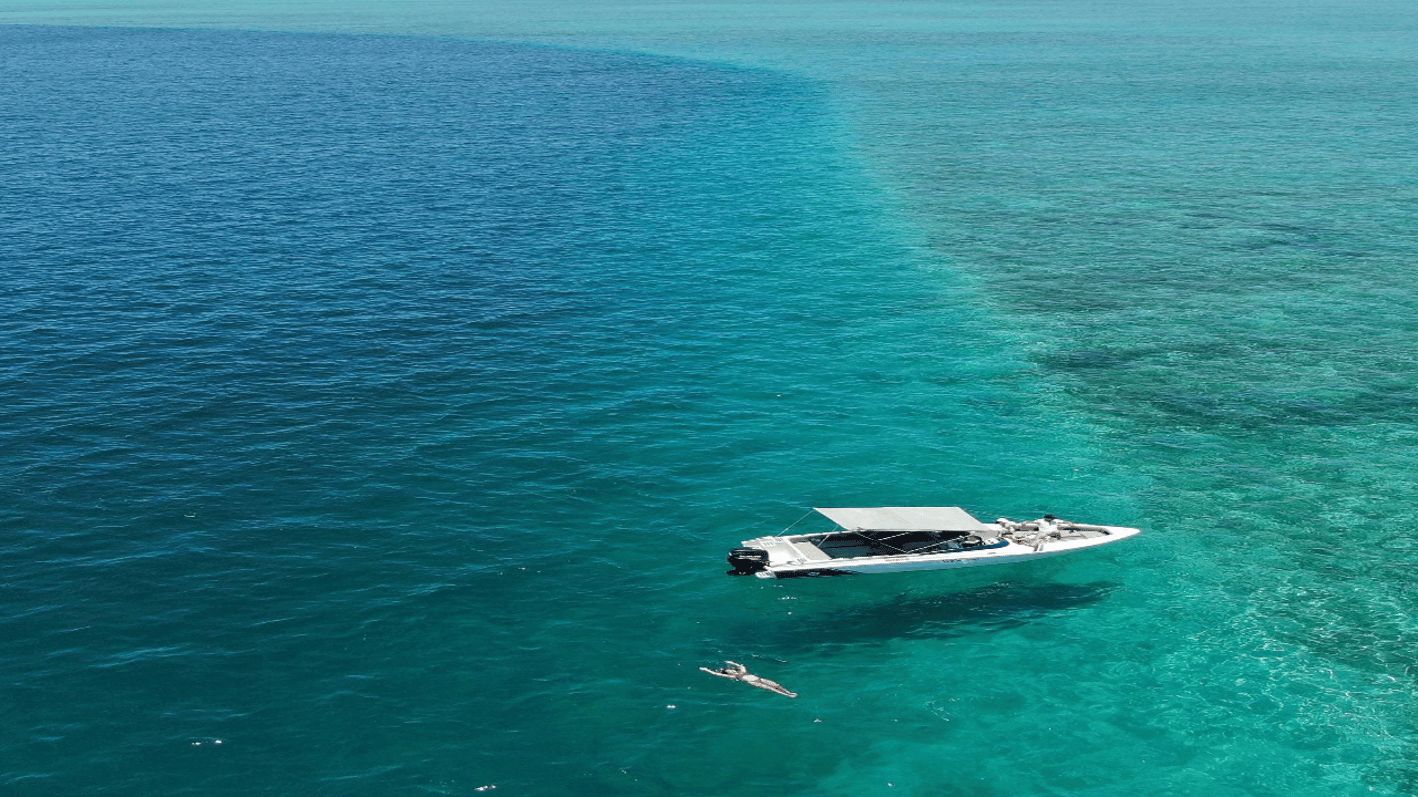 9 hours · ★ 4.3 (188)5 Islands Speedboat with Snorkeling, Sea Turtles, Lunch & DrinksFrom $95 1.5 hours · ★ 4.2 (314)Mauritius: Sea Turtle Adventure and Coral Reef DiscoveryFrom $44
Resident sperm whales watched from the boat, by private charter
A resident sperm whale population lives off the west coast all year, drawn by deep water that drops away close to shore, while humpback whales pass only between June and October. Skippers find them along the drop-off, usually on private speedboat charters with room for a small group.
Mauritian law allows no in-water encounters: swimming, diving or snorkeling with whales is prohibited, and boats must stay at least a hundred meters away and hold a parallel course.
So this day happens from the deck, with the engine in neutral when the boat stops. If you want to be in the water with wildlife, the dolphin trips are the legal route.
Which months bring clear water, and which bring cyclones
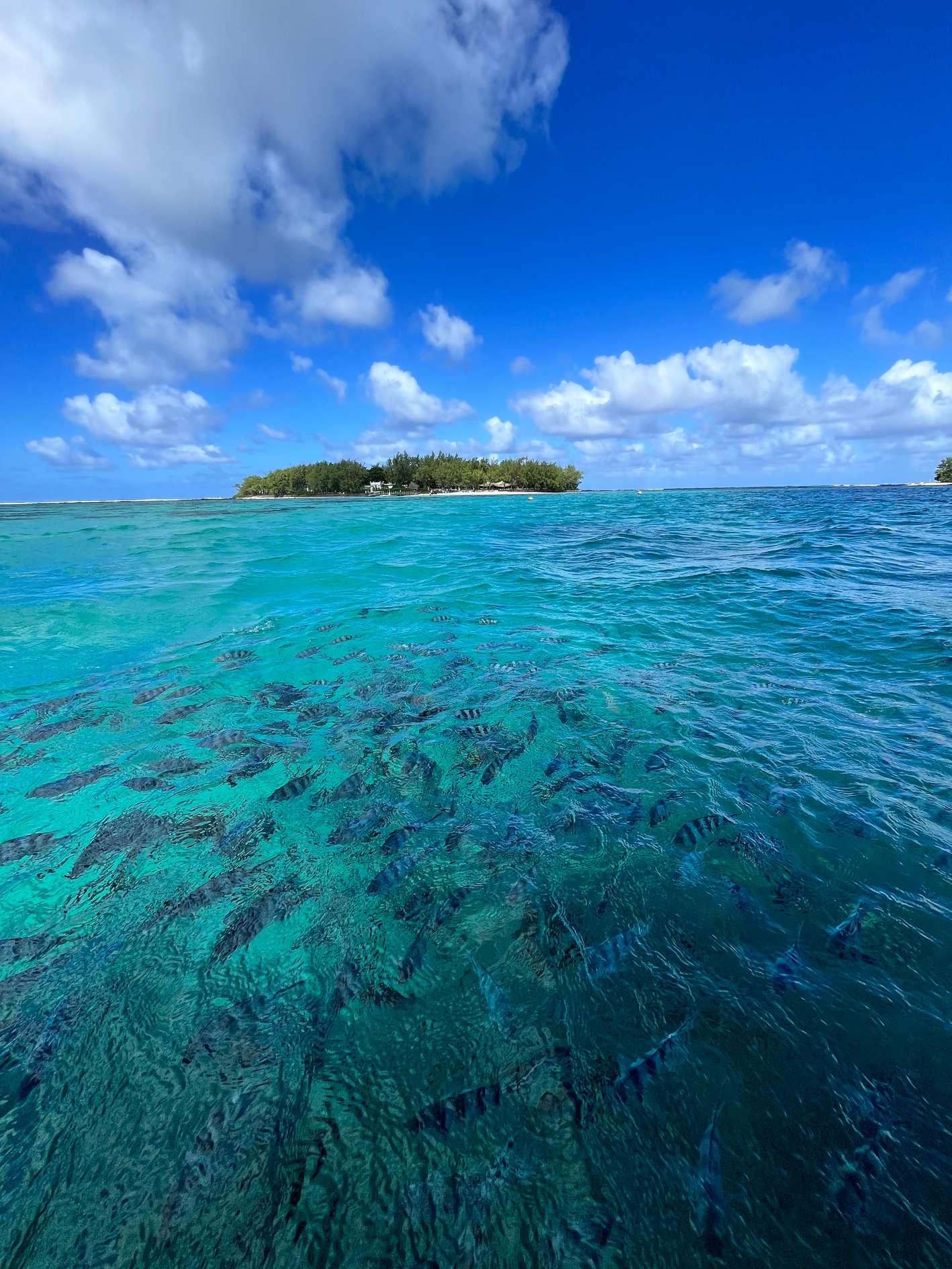
October to December is the island's best window, with warming water around 26 to 28 degrees, calm seas and lagoon clarity reaching twenty to thirty meters.
Winter from June to August cools the water to about 23 degrees and drives trade winds that chop the eastern reefs. January to March brings the cyclone season, when one or two passing systems can stop boat trips for a few days.
The guide also sorts wetsuits: a 3 mm shorty covers summer, and winter calls for more warmth on long dips. Use it to fix your dates, then book the tours that suit the season you land in.
The classic sailing day to Île aux Cerfs with a deck barbecue
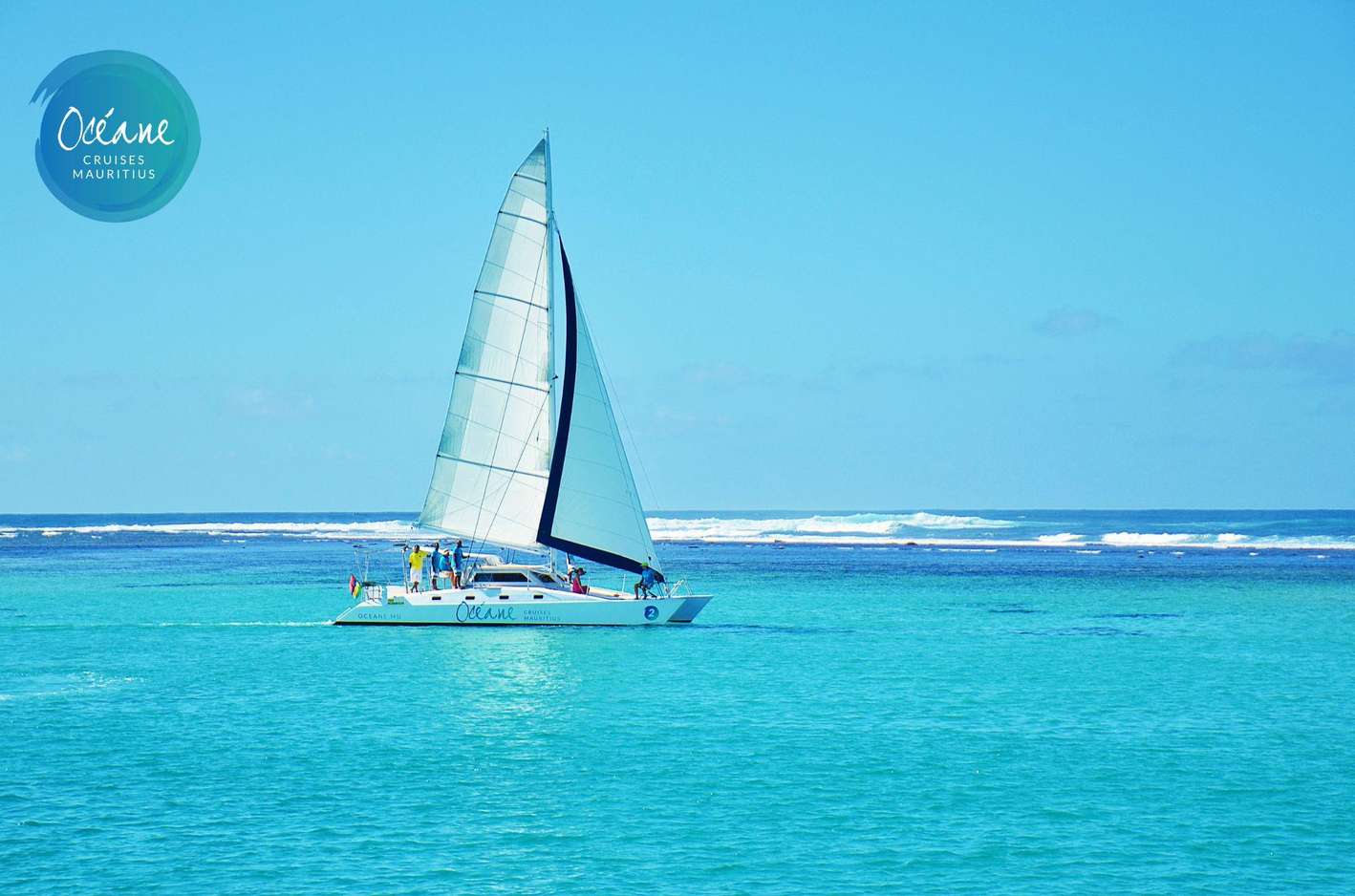
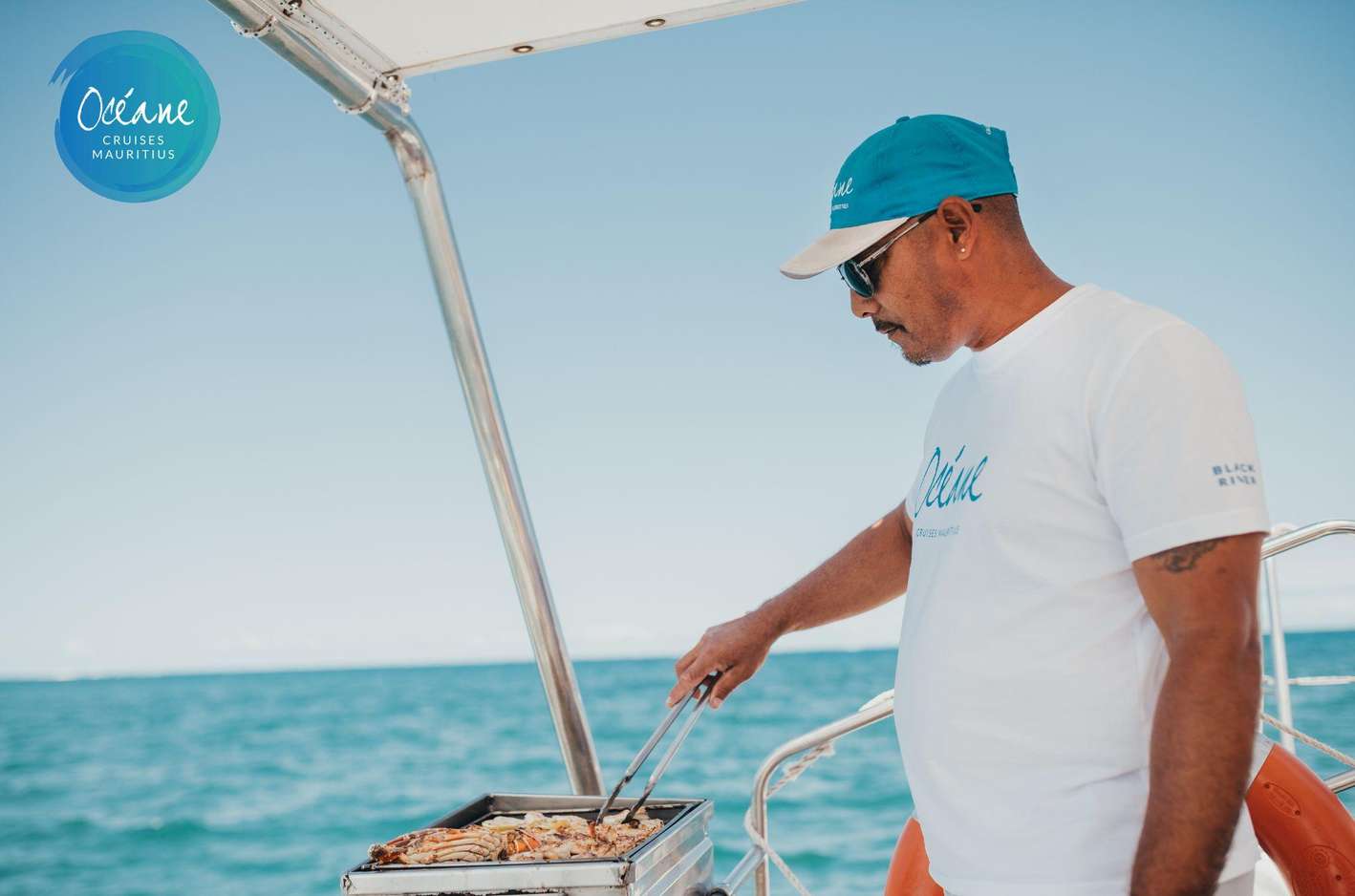
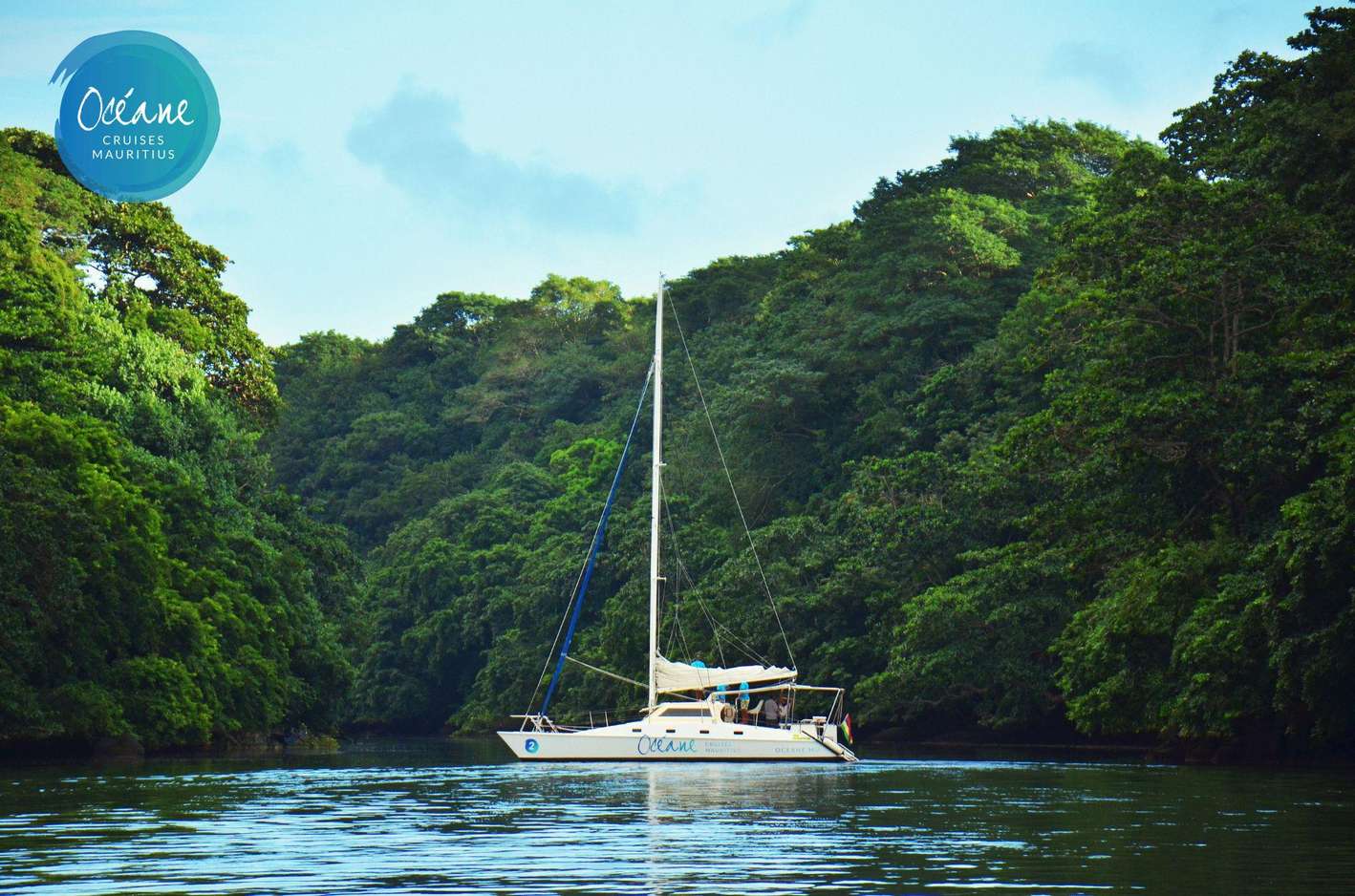
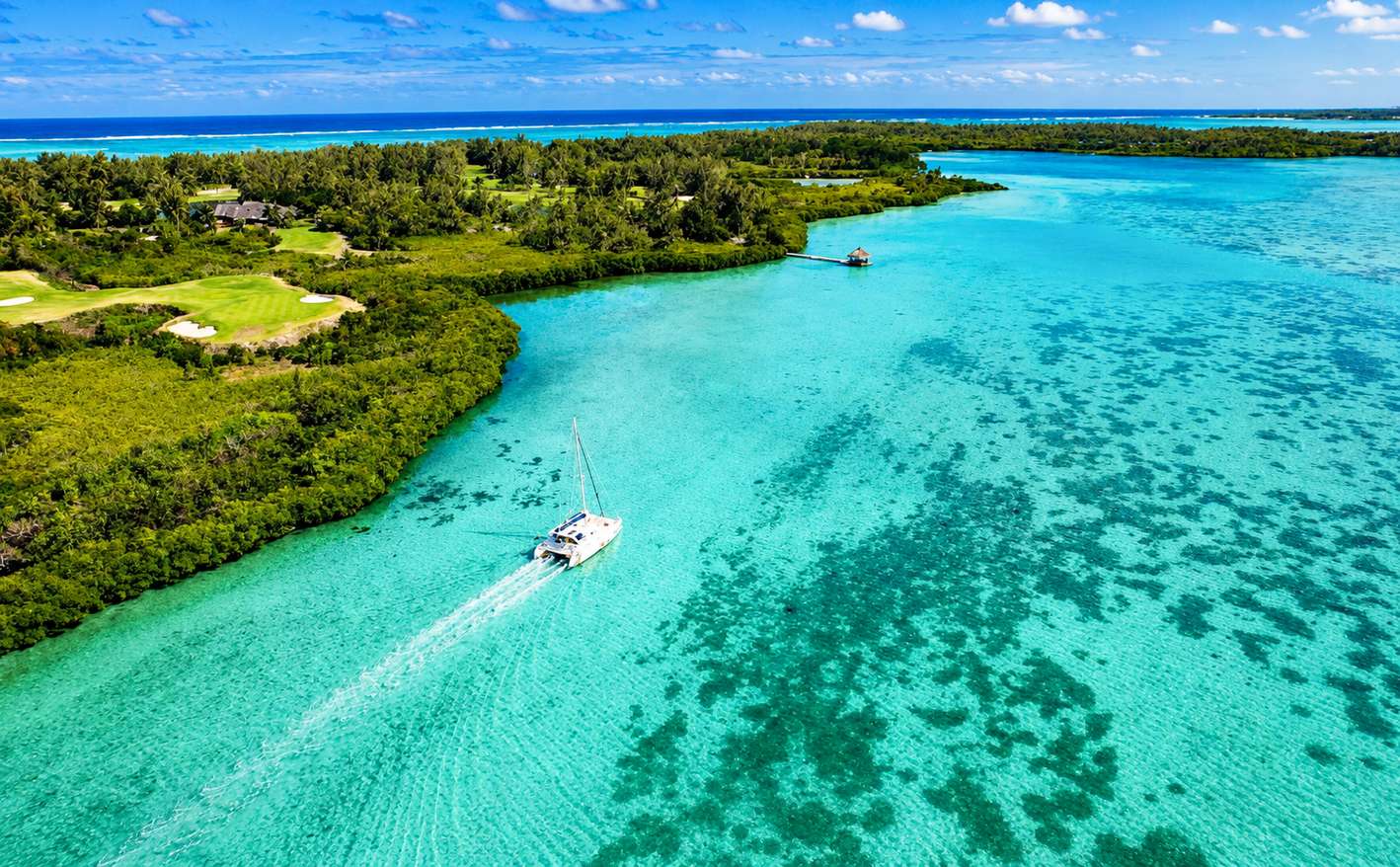
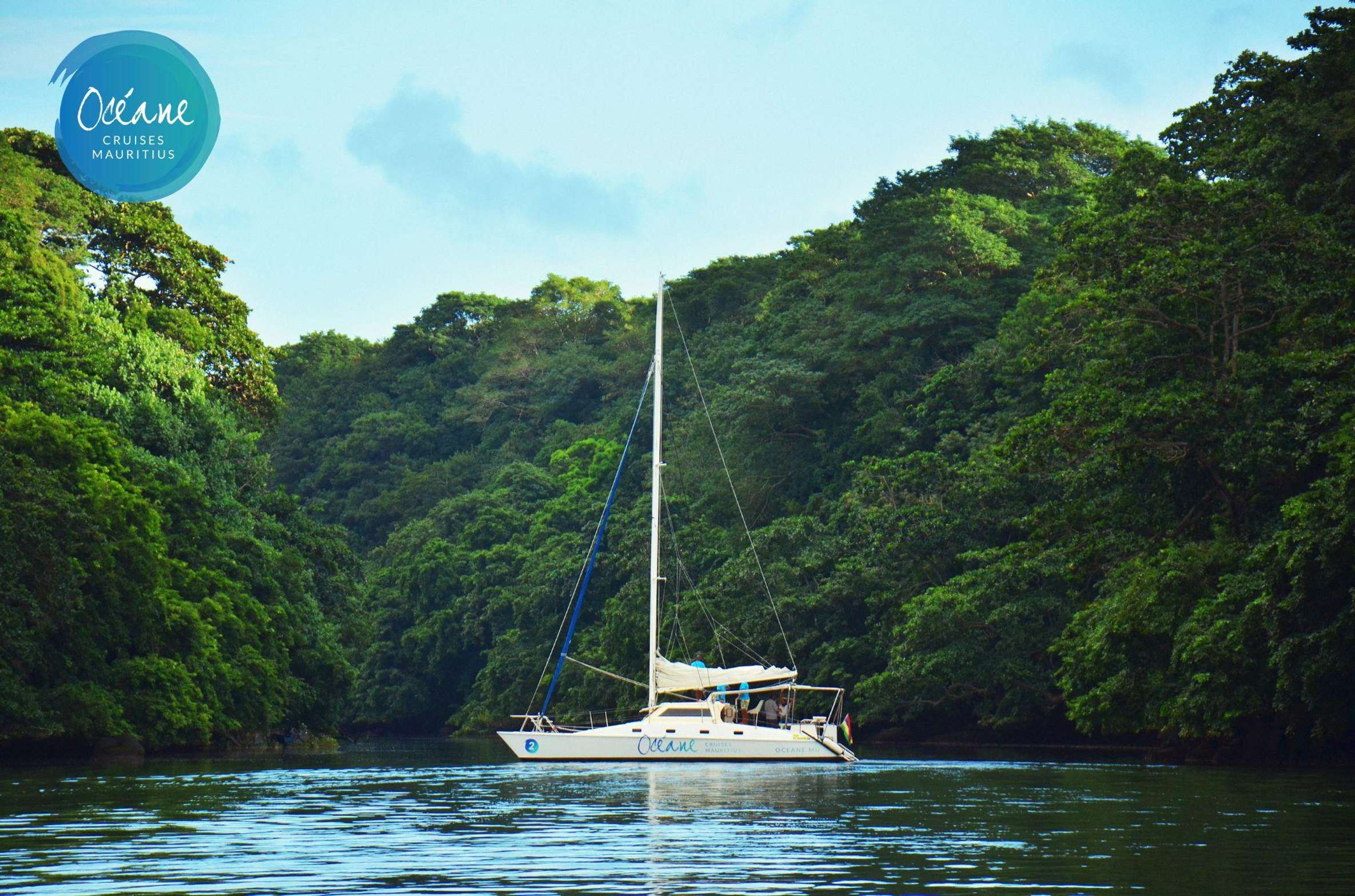
This is the classic east-coast day: a catamaran crosses the sheltered lagoon toward Île aux Cerfs, pausing for a reef snorkel and a detour up the Grand River South East to the waterfall, then a barbecue lunch with drinks on deck. The wide twin hull keeps the ride smooth even when the trade winds blow.
Free time on the island's beaches runs about an hour to ninety minutes in the afternoon. From Belle Mare, one operator's cruise includes a list of east-coast hotels for pickup, from the big resorts down to the smaller ones. Speedboats cover the same lagoon faster, if a slow sail is less your thing.
6 hours · ★ 5.0 (11)Île aux Cerfs: Private Catamaran Cruise with Gourmet LunchFrom $1,133 /group 7 hours · ★ 4.8 (869)Ile aux Cerfs Catamaran Cruise with BBQ Lunch & SnorkelingFrom $68 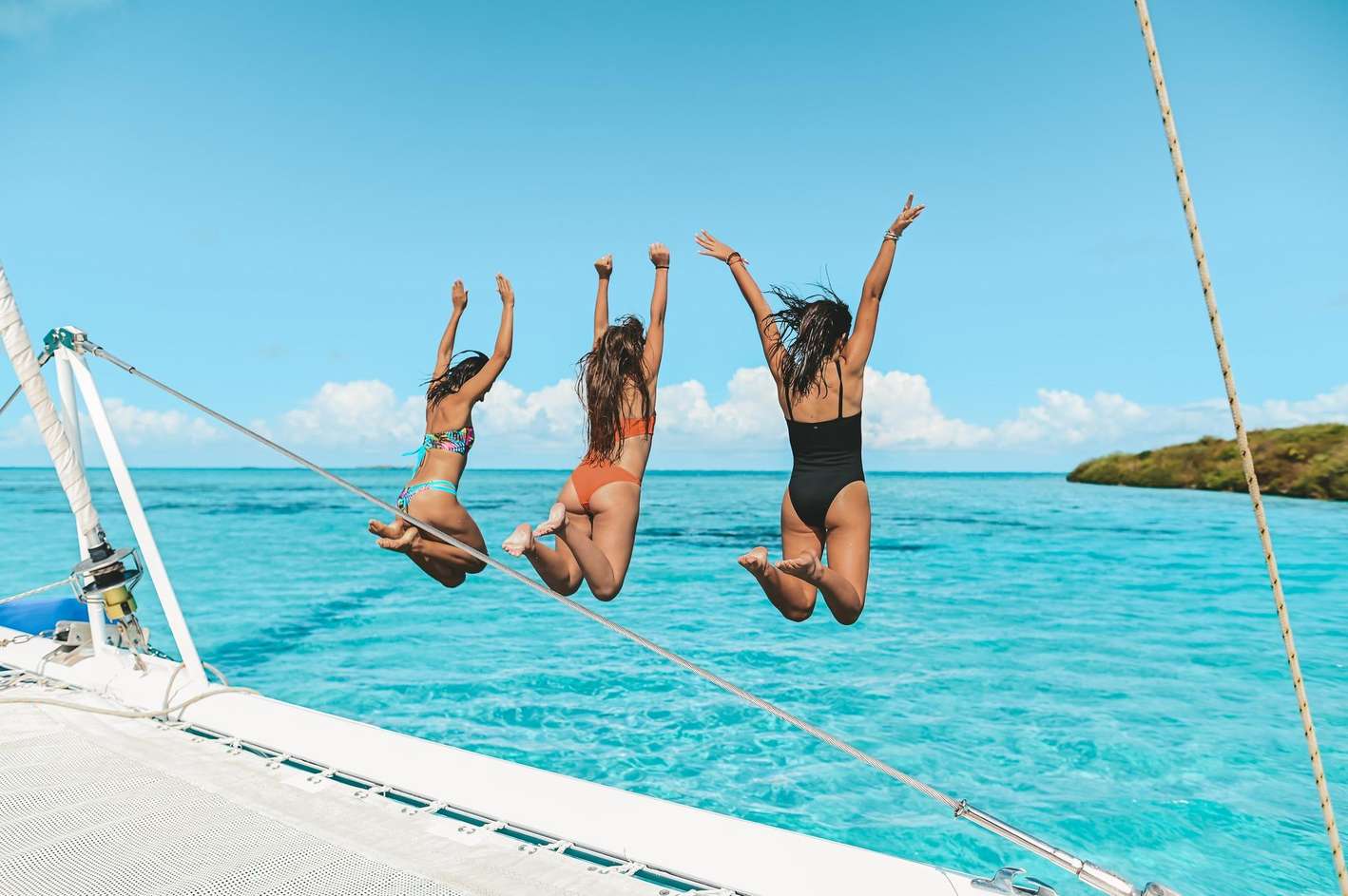 7 - 8 hours · ★ 4.7 (453)Mauritius: Ile aux Cerfs Catamaran, Waterfall & BBQ LunchFrom $62
 7 hours · ★ 4.6 (104)Mauritius: Ile aux Cerfs Catamaran Cruise, Waterfalls & BBQFrom $84
A faster crossing that buys extra beach time and more stops
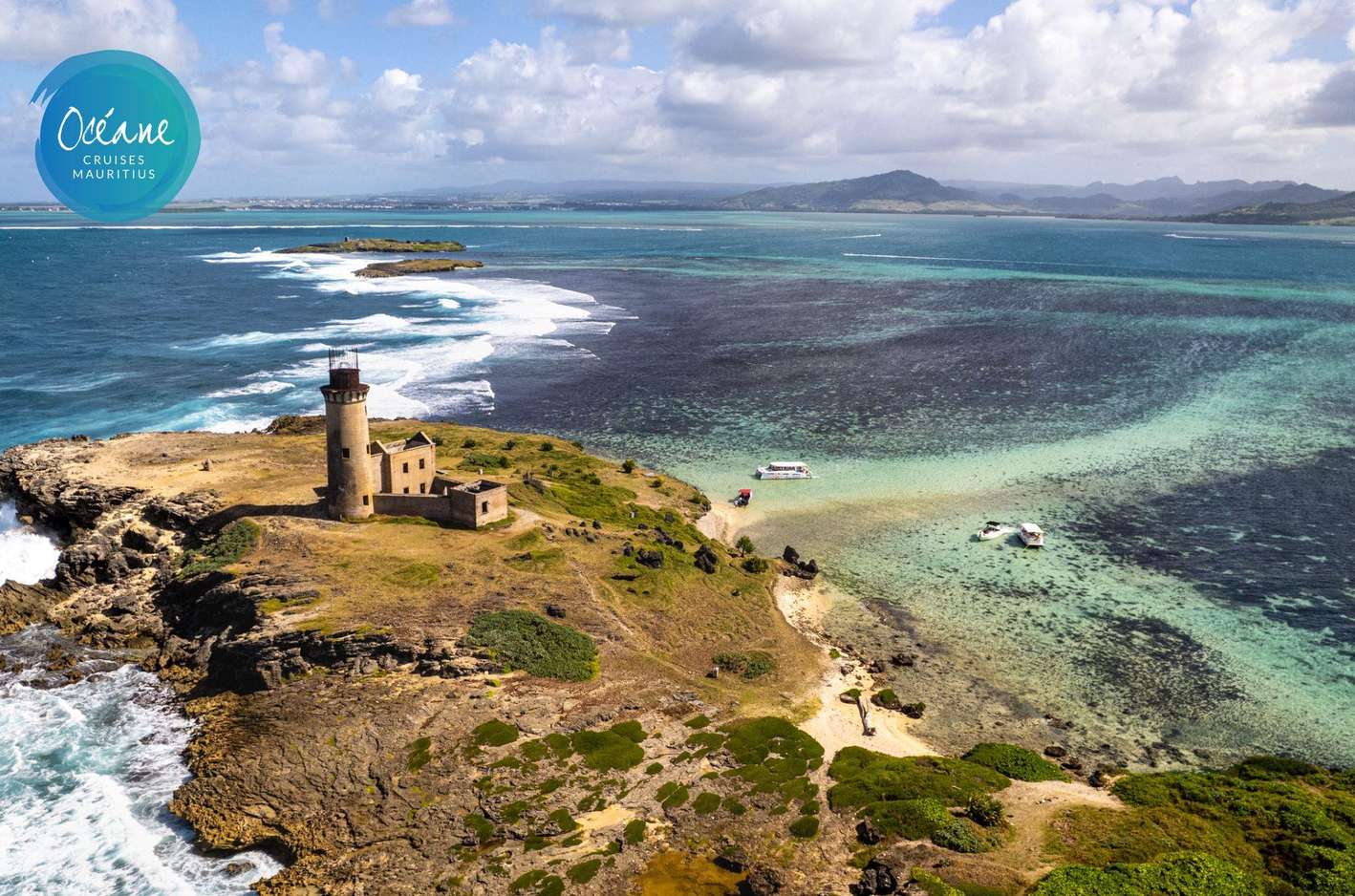
A speedboat crosses the Trou d'Eau Douce lagoon to Île aux Cerfs in ten to fifteen minutes, against the catamaran's forty-five to sixty, which buys you an extra half hour or more on the island.
The five-island day runs the whole southeast coast, taking in the lighthouse island, Île de la Passe and the Grand River South East waterfall, which catamarans cannot reach upriver.
Shared boats carry well under the catamarans' passenger count, and the ride across the exposed east coast gets bumpy, especially in trade wind season, so expect motion. Pregnant travelers are advised off these boats.
6 hours · ★ 5.0 (3)Private Island-Hopping Cruise: 5 Islands, Waterfall & LunchFrom $738 /group 6 - 7 hours · ★ 4.7 (1,451)Trou d'Eau Douce: 5-Island Adventure with BBQ & SnorkelingFrom $95 9 hours · ★ 4.3 (188)5 Islands Speedboat with Snorkeling, Sea Turtles, Lunch & DrinksFrom $95 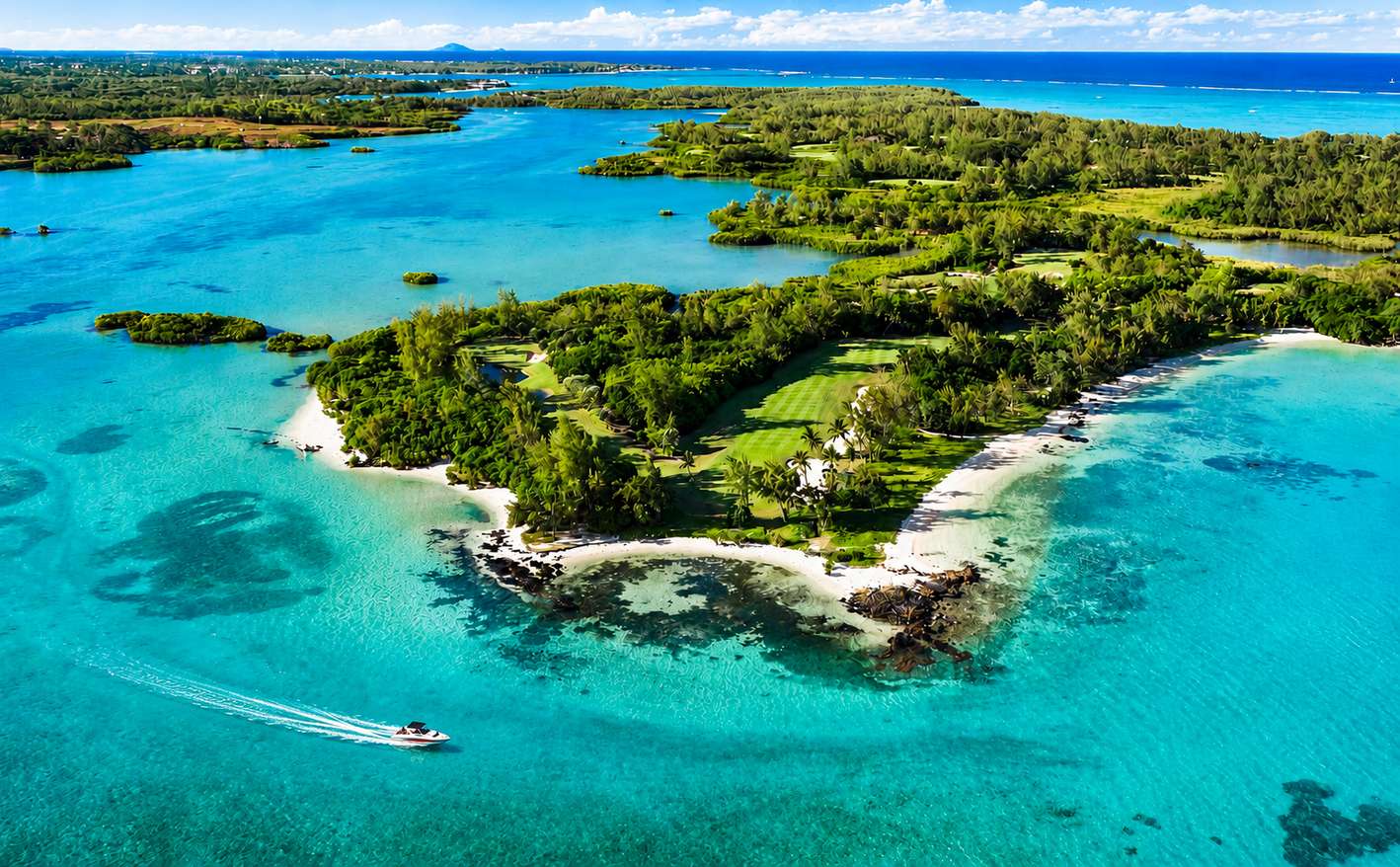 7 hours · ★ 4.3 (237)Mauritius: 5 Islands Speedboat Lagoon Experience with BBQFrom $74
Your own boat, your own timetable, before the ferry crowds land
Chartering your own boat changes the shape of the Île aux Cerfs day. You set the stops, the skipper adapts the route, and you reach the beaches before the ferries and shared boats pack the northern shore from mid-morning, leaving it again after mid-afternoon.
Two vessels fit two tastes: a private sailing catamaran with a leisurely, comfortable day and a generous lunch, or a private speedboat that slips up the river to the waterfall basin where the big cats cannot go. It costs several times a shared seat, so it suits families and small groups splitting the fare.
coral starts 500 m out, go by boat
Belle Mare's lagoon looks like an easy swim from the sand, and the first fifty meters are. The reef that makes this coast worth talking about sits half a kilometer out, past boat lanes and a pass that pulls. Here is how the day actually works.
Shore snorkeling works over sand and scattered rock, but the healthy coral sits on the outer barrier reef, 400 to 600 meters offshore, and you reach it by boat.
Reef passes funnel outgoing currents that can sweep even strong swimmers seaward faster than they can swim back, so never head for the reef from the beach.
Go early: sunrise to 10 am gives glassy water, while afternoon trade winds chop the lagoon and cloud the visibility.
December and November bring the most calm days on this coast, June and August almost none, and February and March carry cyclone risk.
Boats for Île aux Cerfs leave from Trou d'Eau Douce, about 10 kilometers south, with pickup from a list of Belle Mare resorts.
Skip the long swim from shore and reach the outer reef by boat instead. Book an excursion with a local skipper, or snorkel near the beach inside the marked snorkelling zone, ideally in the morning before the trade winds roughen the water.
The first walk-in from Belle Mare's sand is an easy one. You wade in over shallows less than a meter deep, and the required level here is beginner. Children do well in this water, because the offshore reef holds the lagoon calm and shallow.
What the nearshore seabed actually holds is sand, scattered rocks and patches of seagrass. Corals are scarce, except around one spot people who swim here often mention: the black rocks near the northern temple, where fish gather in numbers.
The coral worth the trip sits along the outer barrier reef, roughly 400 to 600 meters from the beach. That distance, with deep lagoon channels and steady boat traffic between you and it, makes the swim out a poor plan. The reef is a boat errand, and a short one.
Regulars on this beach trade a few tips that first-timers miss.
The open sand in front of the hotel strip holds little worth finning to, so head for the rocks
Swimming the half kilometer to the outer reef puts you in their lanes, so let a boat drop you at the reef instead
Quieter sand sits a few minutes further down the beach than where most visitors stop
The takeaway: the beach works for an easy first swim, and the fish you came for gather at the rocks, so aim your mask there before you book anything.
Every lagoon on this coast has gaps in its barrier reef, and the water leaves through them. At Belle Mare, the current through the pass can run faster than a strong swimmer can swim back, especially on an ebbing tide with swell behind it.
That is the one rule this coast insists on. Enter the water from a boat, never from shore toward the reef. Local guides and fishermen run boats out to the reef all day, so access is easy and safe when it starts from a hull.
The danger is bigger than the current alone. The lagoon between the beach and the reef carries constant boat and jet ski traffic, and swimmers crossing it are hard for a skipper to see.
Underfoot, the floor holds sea urchins and stonefish. A stonefish spine delivers venom that causes intense pain, and the fish hides so well in sand and rock that you can hover over one without ever seeing it.
One fact decides whether this coast is safe for you at all.
Reef pass currents can sweep even strong swimmers out to sea on an ebbing tide Reach the outer reef by boat with a local skipper, and never snorkel toward the passes or the reef from the shore
Handled that way, the pass is simply one more reason the outer reef belongs to a booked boat with a local skipper.
The east coast faces the southeast trade winds head-on, and from May to September those winds chop the lagoon almost daily. Around Trou d'Eau Douce, calm days become rare in the heart of winter, and operators cancel open-reef stops or move routes into sheltered inner channels and the flat water around Île aux Cerfs.
December and November give the best odds of a flat lagoon, with October close behind. June and August are the months that almost never deliver one.
Inside the barrier reef, visibility usually stays decent over sand and scattered coral even in wind, because the reef blocks the open-ocean swell. It drops when strong wind pushes swell over the reef and stirs the sediment.
February and March bring their own problem: the peak cyclone window. These are the wettest months, and storms legally suspend boat departures while land runoff clouds the lagoons.
October: 5 out of 5 for how busy it gets. A very busy month brings fading trade winds, resulting in noticeably calmer lagoon waters and improving underwater clarity.
Tap a month to read it.
December: calm sea on 45% of days. High holiday bookings coincide with the calmest offshore seas of the year and outstanding underwater clarity across the lagoon.
Tap a month to read it.
June: waves up to 2.3 m on an average day. The quietest start to winter features brisk trade winds and surface chop that lower snorkeling visibility inside the lagoon.
Tap a month to read it.
February: 2 windy days. A quieter summer month brings warm lagoon water and light trade winds, but higher ocean swells break outside the reef.
Tap a month to read it.
Read the table against your dates, then book around it. A calm-day month plus a morning departure is the combination this coast rewards.
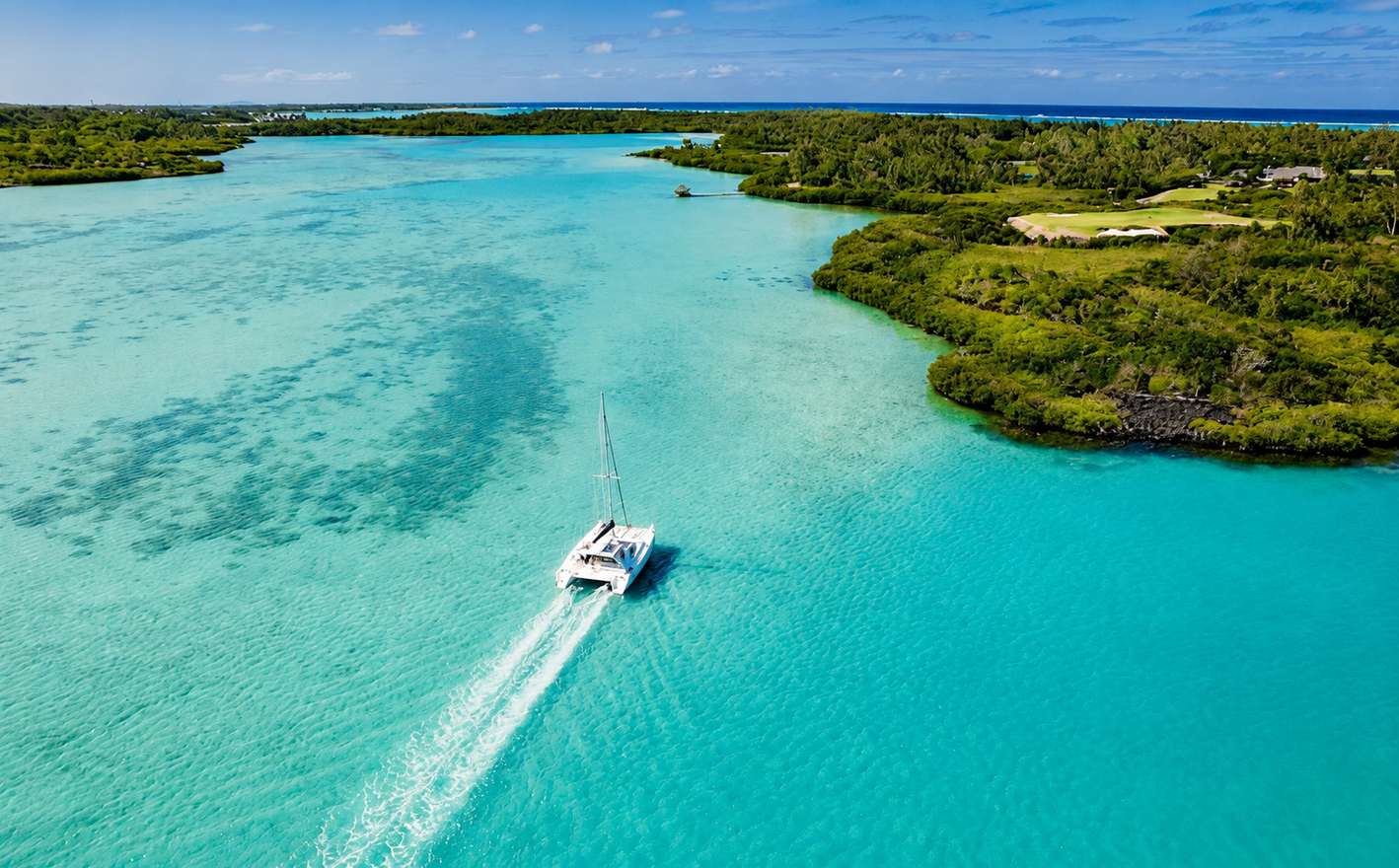
At seven in the morning the lagoon lies flat enough to read the seabed from the boat. This coast looks directly into the southeast trade winds, so the window from sunrise to 10 am is the one that delivers clear water. Mornings give glassy conditions and the sharpest visibility of the day.
From late morning, the breeze builds. Chop forms on the surface, boat traffic multiplies, and the water you snorkeled at eight looks different by two. Swimmers from shore feel it first on the exposed stretches, where swimming turns uncomfortable even when the reef still blocks the ocean swell.
The day splits into three windows, and they score very differently.
Glassy calm water and peak visibility before trade winds rise.
Breeze picks up and boat traffic stirs the lagoon shallows.
Trade winds create surface chop that reduces underwater clarity.
A shore swimmer who misses the morning window rarely gets a second clear one the same day, so put the water first and the lounger second.
None of this needs clever planning, only an early start. Most east-coast tours already run on the morning clock, boarding around nine. Shore snorkelers have more freedom and less excuse: get in before the beach umbrellas go up, and you will see the lagoon at its best.
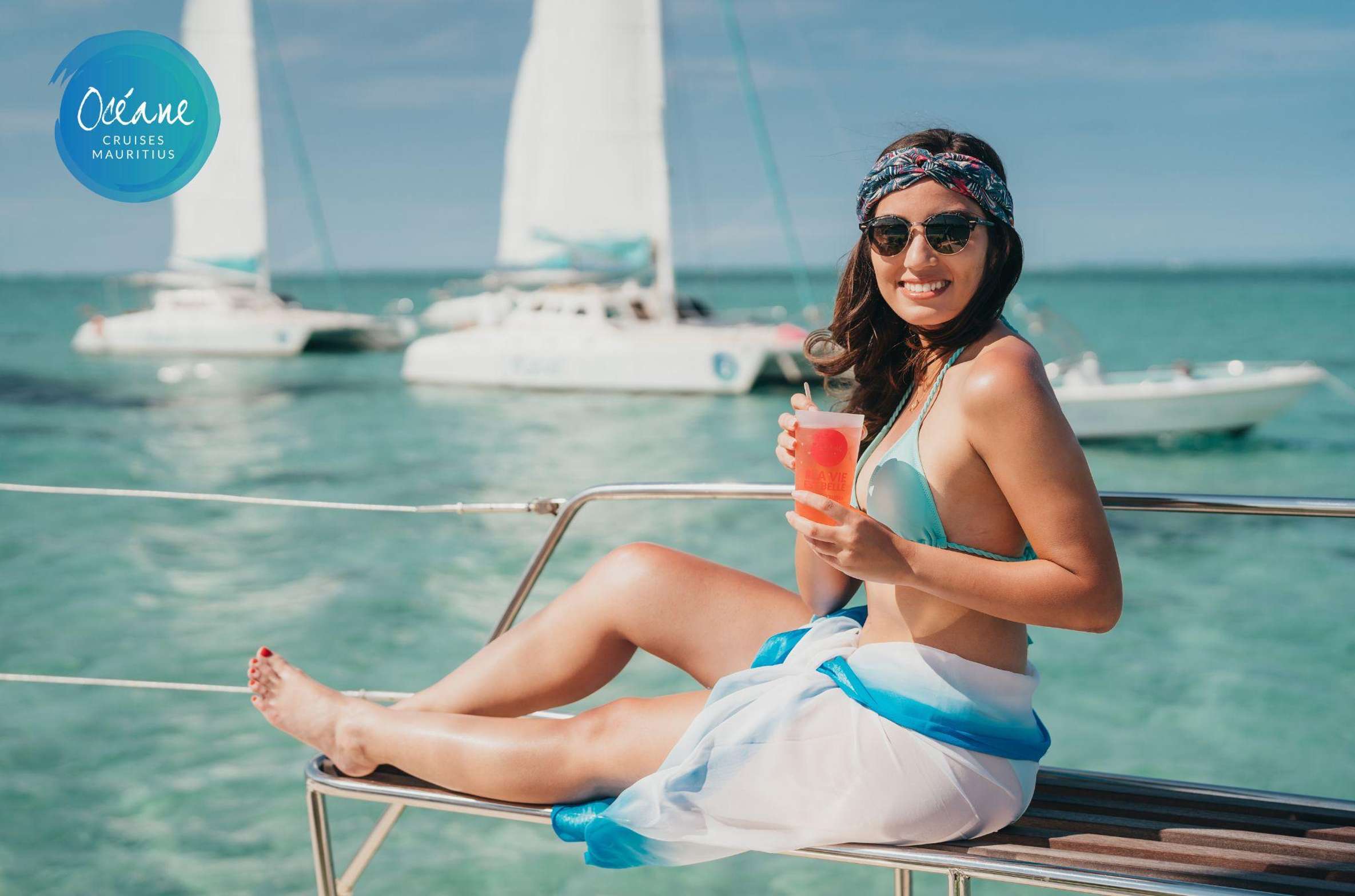
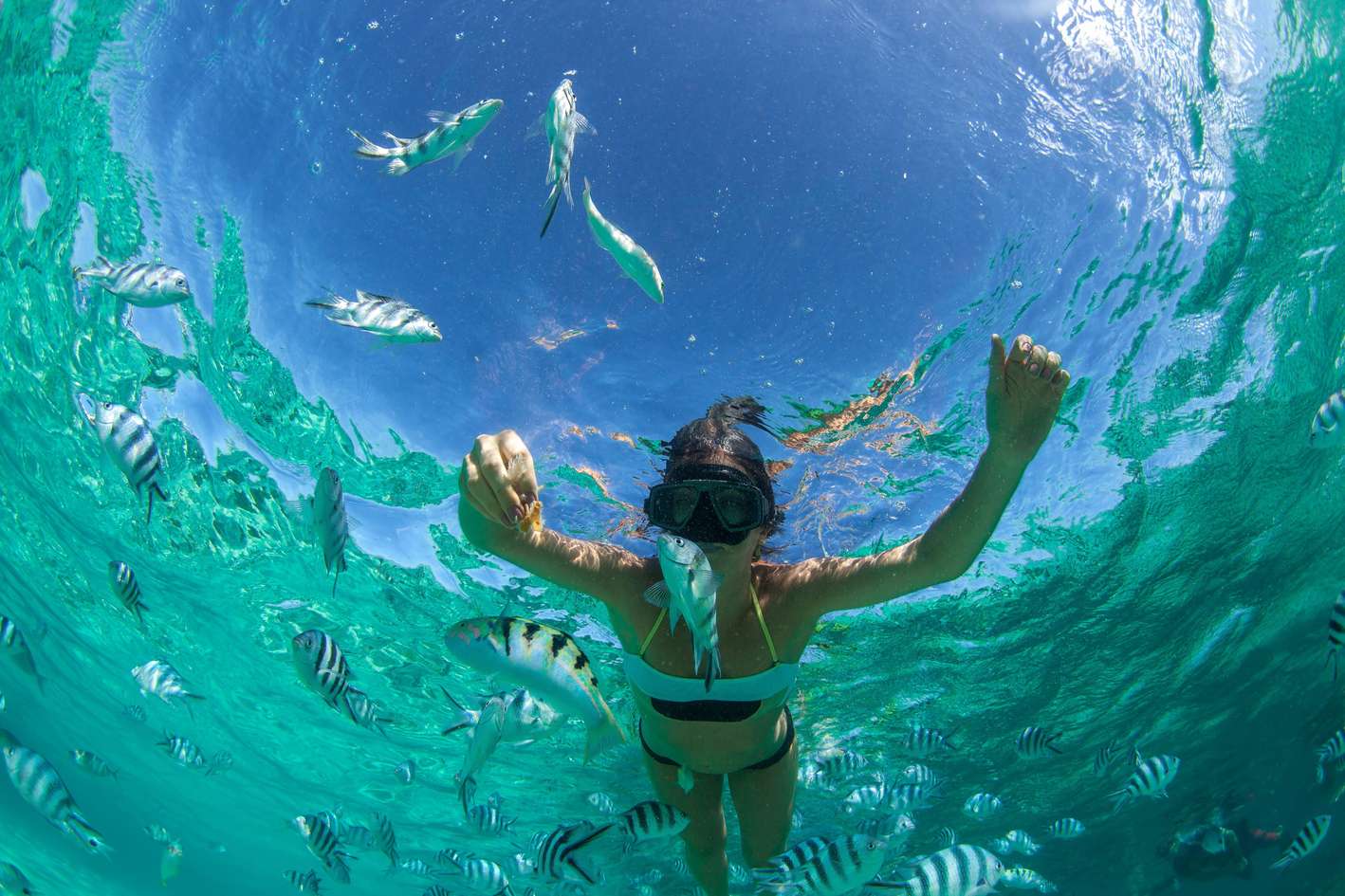
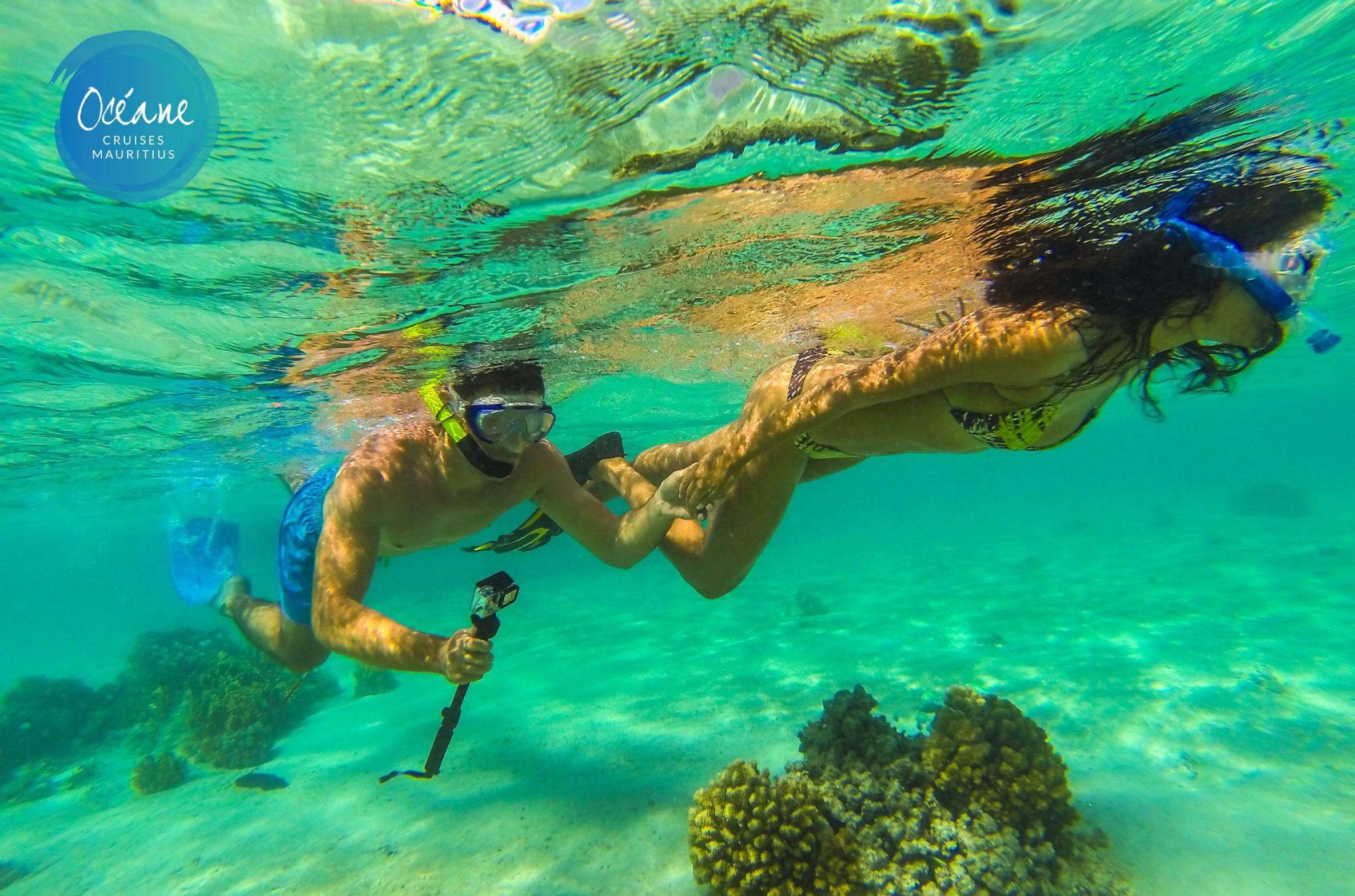
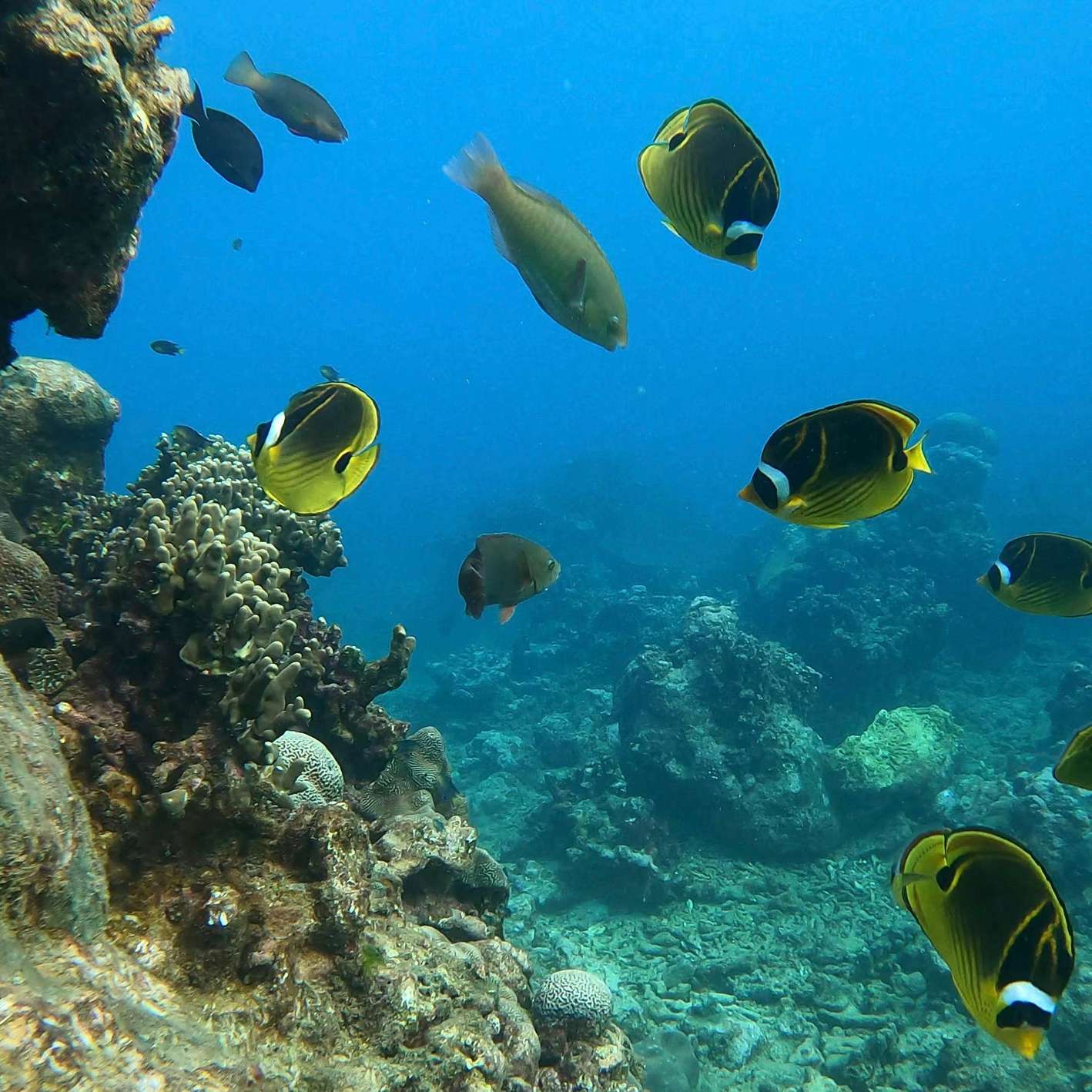
Honest expectations help here, and the lagoon rewards them. Over the inner sand, rocks and seagrass, snorkelers regularly spot green birdmouth wrasse, trumpetfish, surgeonfish and yellowfin goatfish. The blackspotted puffer shows up often enough that regulars look for it by name.
Beginner-friendly spots inside the protected lagoon, such as the coral-head sites locals call Trou Padi and the 3 Meters, hold butterflyfish, damselfish, juvenile wrasses, and now and then an octopus or small moray eel tucked into the rock.
The denser life waits on the outer barrier reef, where the boat takes you. One thing to know before you book against memories of other seas: Mauritius's coral is largely bleached, though fish life stays active, and even the island's best reserve does not match the coral cover of the Red Sea or the Maldives.
Sharks are not a concern here. Large species rarely enter the lagoons, and the reef sharks snorkelers occasionally glimpse on outer slopes leave people alone.
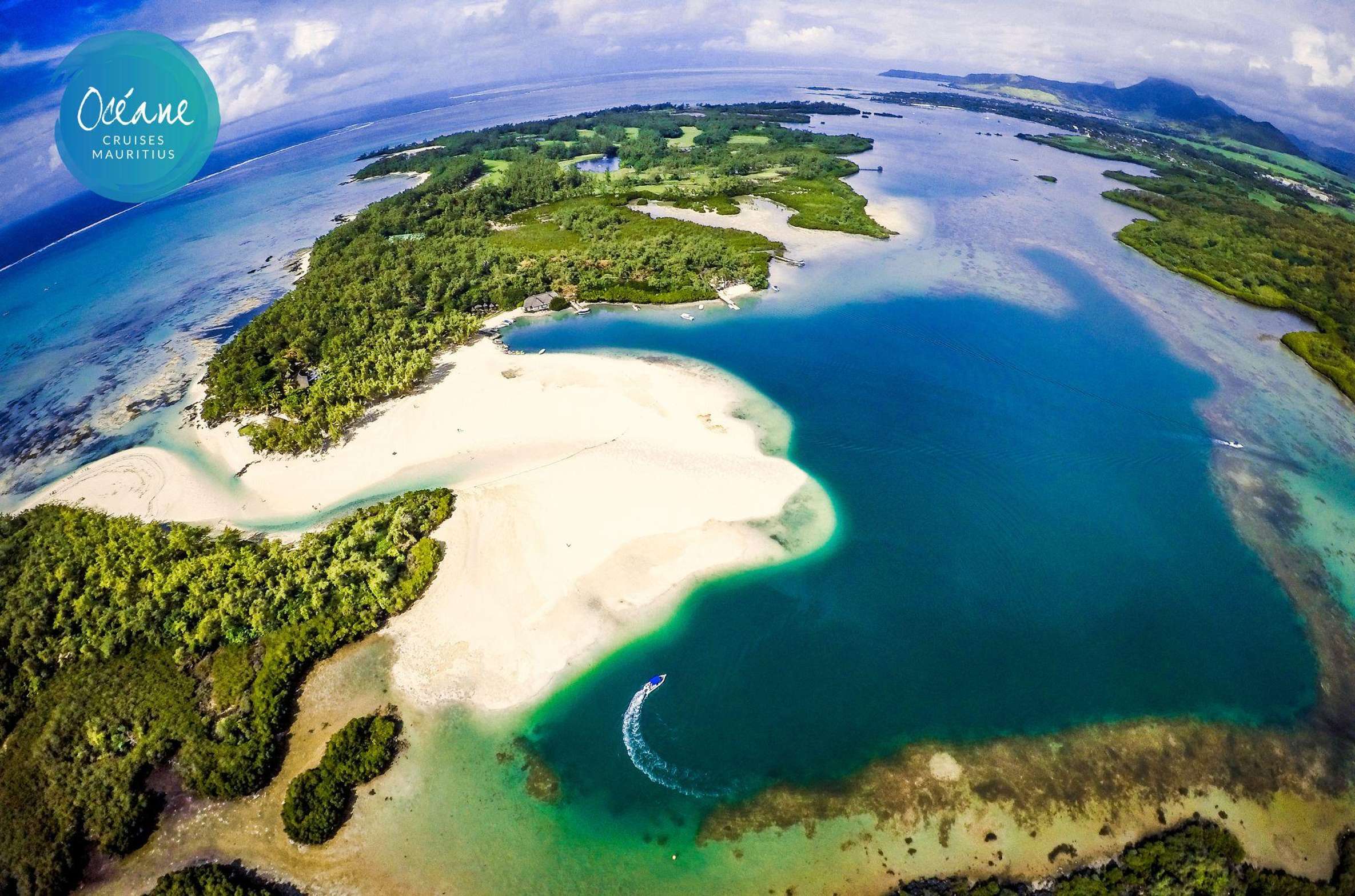
From the beach you can see the line: red marker buoys strung across the water. That is the designated snorkeling zone, and the law keeps pleasure craft out of it except in an emergency. Stay inside the buoys and you swim in a lane no speedboat may enter.
Outside the buoys, the picture changes. Pleasure craft in the marked speed zones may run at up to 10 knots, and the traffic between the beach and the reef includes fast boats, jet skis and excursion vessels. This is the other reason shore-to-reef swims are advised against: it is not only current, it is traffic.
A few habits make you easy to see and easy to protect. Wear a brightly colored snorkel vest when you drift beyond the crowd.
Keep clear of any marked channel, where boats pass in a steady line. And respect the buoy line in both directions: the boats keep out of it, and swimmers who cross it lose that protection.
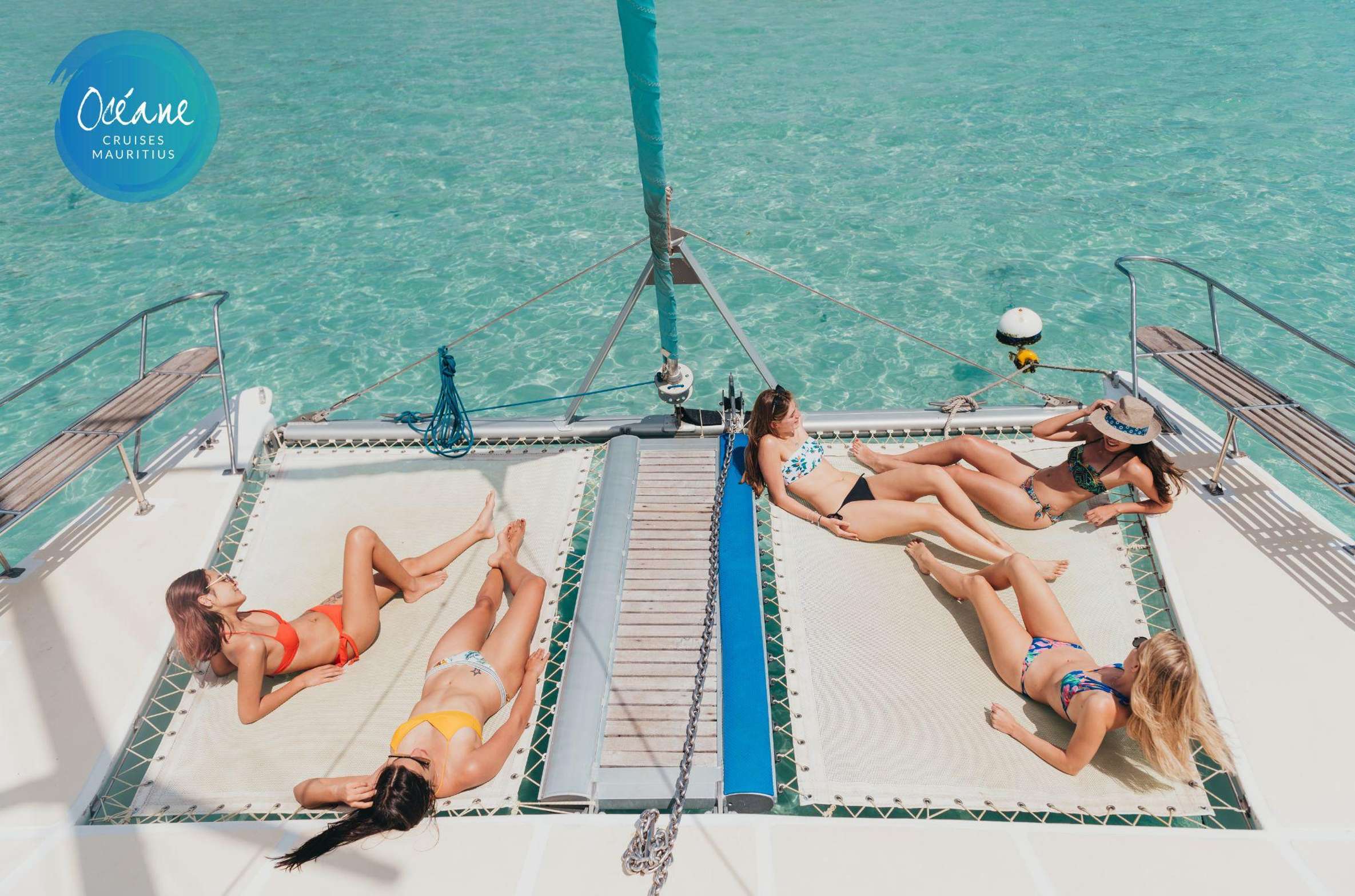
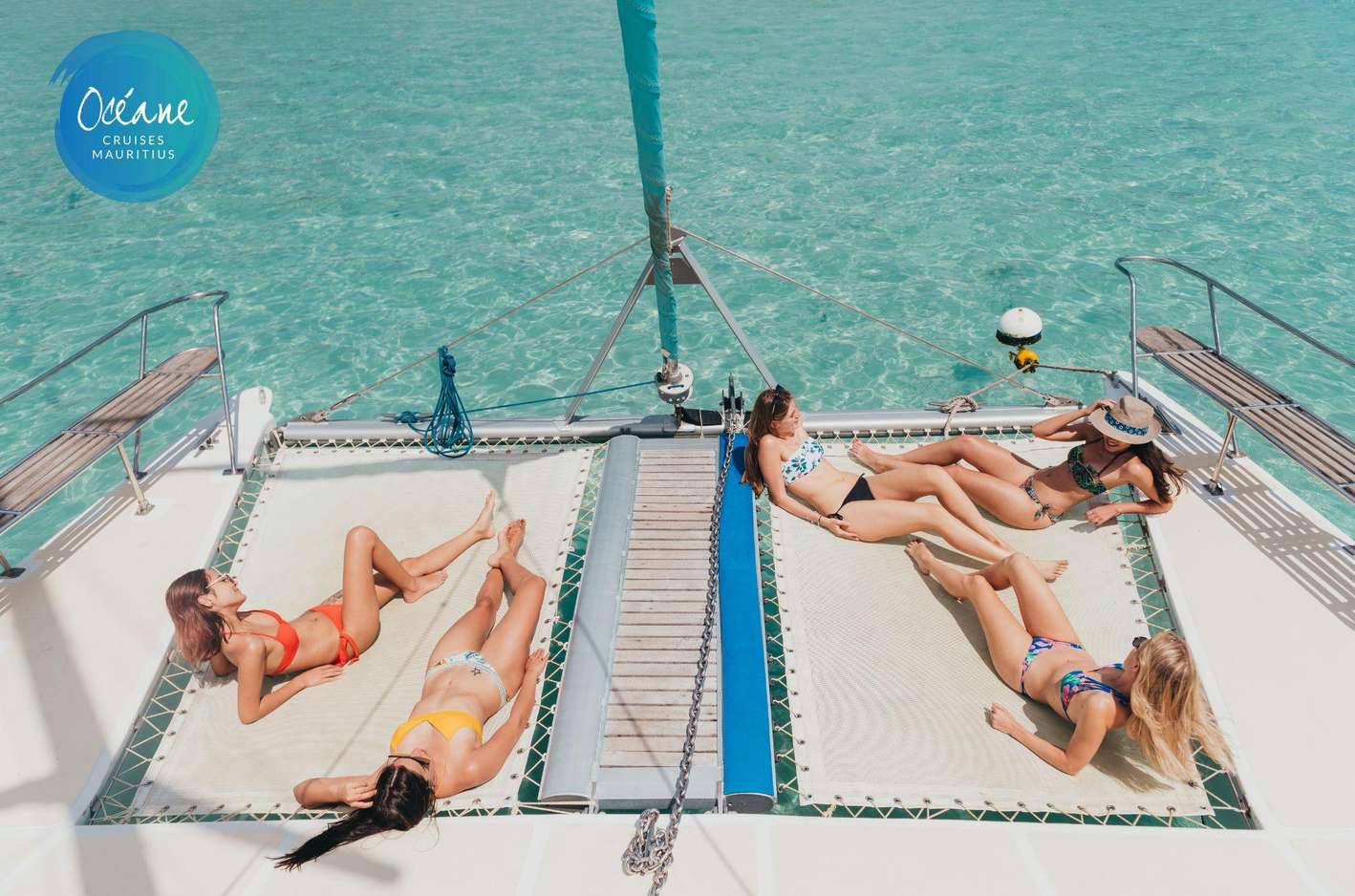
Two boats reach this reef, and they build very different days. A shared sailing catamaran is built around lounging: shaded decks, trampolines, a steadier ride from its twin hulls, and dedicated snorkel stops at reefs and sandbanks.
Non-swimmers fit in easily, because the deck, the drinks and the views work whether you get wet or not.
A speedboat trades comfort for pace. It moves faster and hits the beaches and snorkel spots before the catamaran crowds arrive, hopping more stops in a day. The ride is livelier and there is far less space to spread out.
Choose by group and stomach. Families and anyone prone to rolling seas do better on the catamaran. Speedboat days are not suitable for pregnant women or people with serious back problems, and some exclude non-swimmers from the water entirely.
When the coral is the point, an east-coast catamaran that runs the full Île aux Cerfs circuit, such as the Ile aux Cerfs Catamaran Cruise with BBQ Lunch & Snorkeling, covers the sheltered lagoon and the offshore stops in one outing.
The two boats differ on five things worth checking before you pick.
| Catamaran | Speedboat | |
|---|---|---|
| Speed | Slow, steady sailing between stops | Fast, reaches snorkel spots before the crowds |
| Comfort | Shaded decks, trampolines, room to lounge | Little space to relax between stops |
| Ride | Twin hulls resist rolling and swell | Livelier in open water |
| Snorkel focus | Dedicated stops at reefs and sandbanks | More spots in less time |
| Not suitable for | Few restrictions on board | Pregnant women and serious back problems |
Read that last row twice if anyone in your group is pregnant or carrying a back injury, because the speedboat is out for them and the catamaran takes the day in its stride.
The day starts at your own door. East-coast catamaran operators collect guests from a fixed list of Belle Mare hotels, including Long Beach, Solana, Sunrise Attitude, The Residence, Lux Belle Mare and C Mauritius, and run them the short distance south to Trou d'Eau Douce.
There, boats leave from Pointe Maurice Jetty and the waterfront jetties, with public parking about 60 meters from the meeting point if you drive yourself. For the Île aux Cerfs catamarans, the clock is firm: arrive at the meeting point at 9 am for boarding, because the boat departs at half past.
Timing matters beyond the jetty. A departure before 9 am, ideally between 8:30 am and 8:45 am, puts you at Île aux Cerfs before the day-catamaran crowds wade ashore.
The full-day version of this trip, the Ile aux Cerfs Catamaran Cruise with BBQ Lunch & Snorkeling, builds the whole arc into one booking, and cancellation up to 24 hours ahead keeps it low risk.
A short ride south to Trou d'Eau Douce
Boarding before the 9:30 departure
Watch the riverbanks for monkeys
Vegetarian meals on request, asked ahead
The catamaran returns to the jetty around 4 pm
The order can shuffle with the tide and the sea, and captains adjust it on the day. What stays fixed is the pickup list and the jetty clock, so plan your morning around those two.
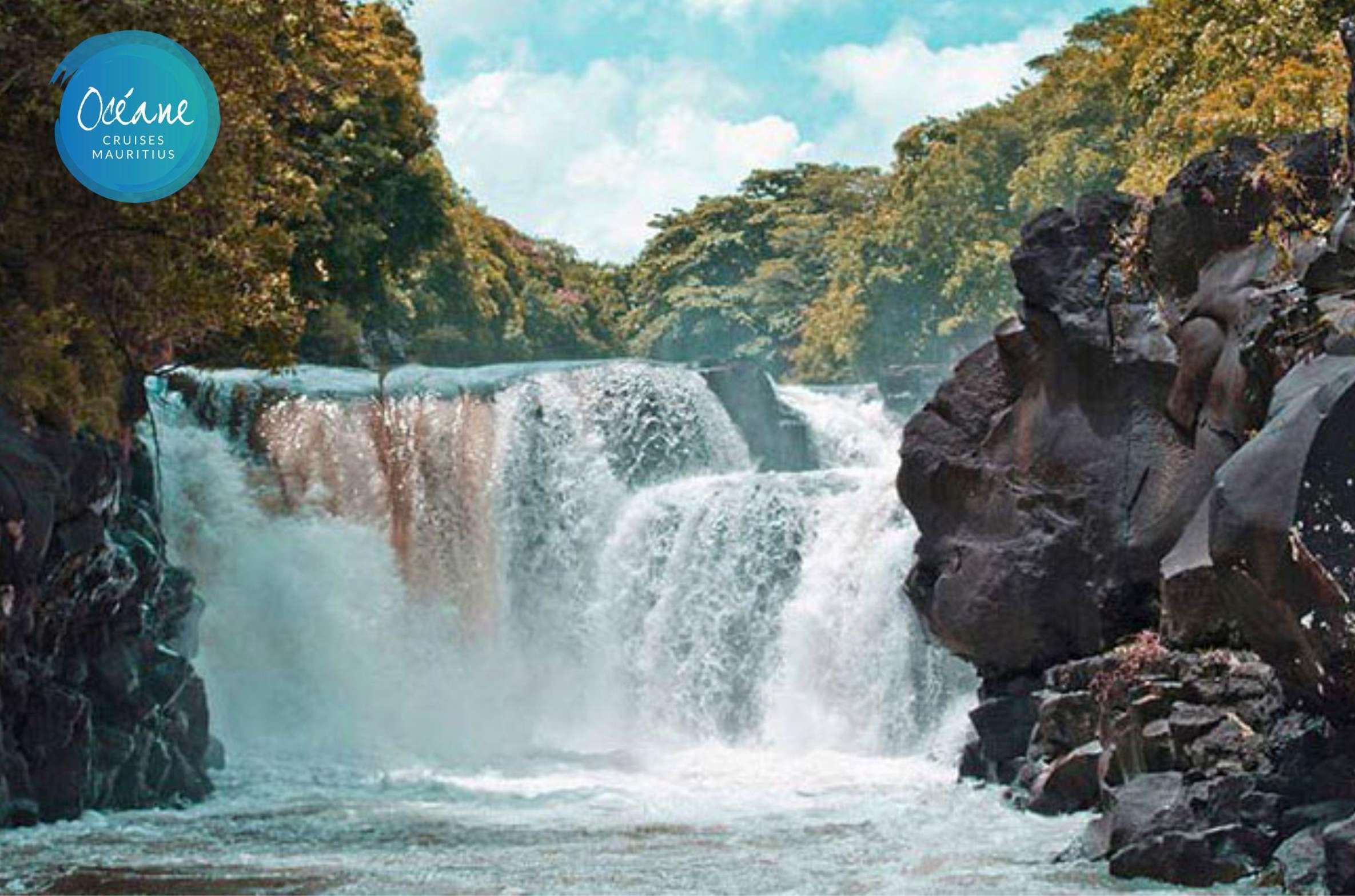
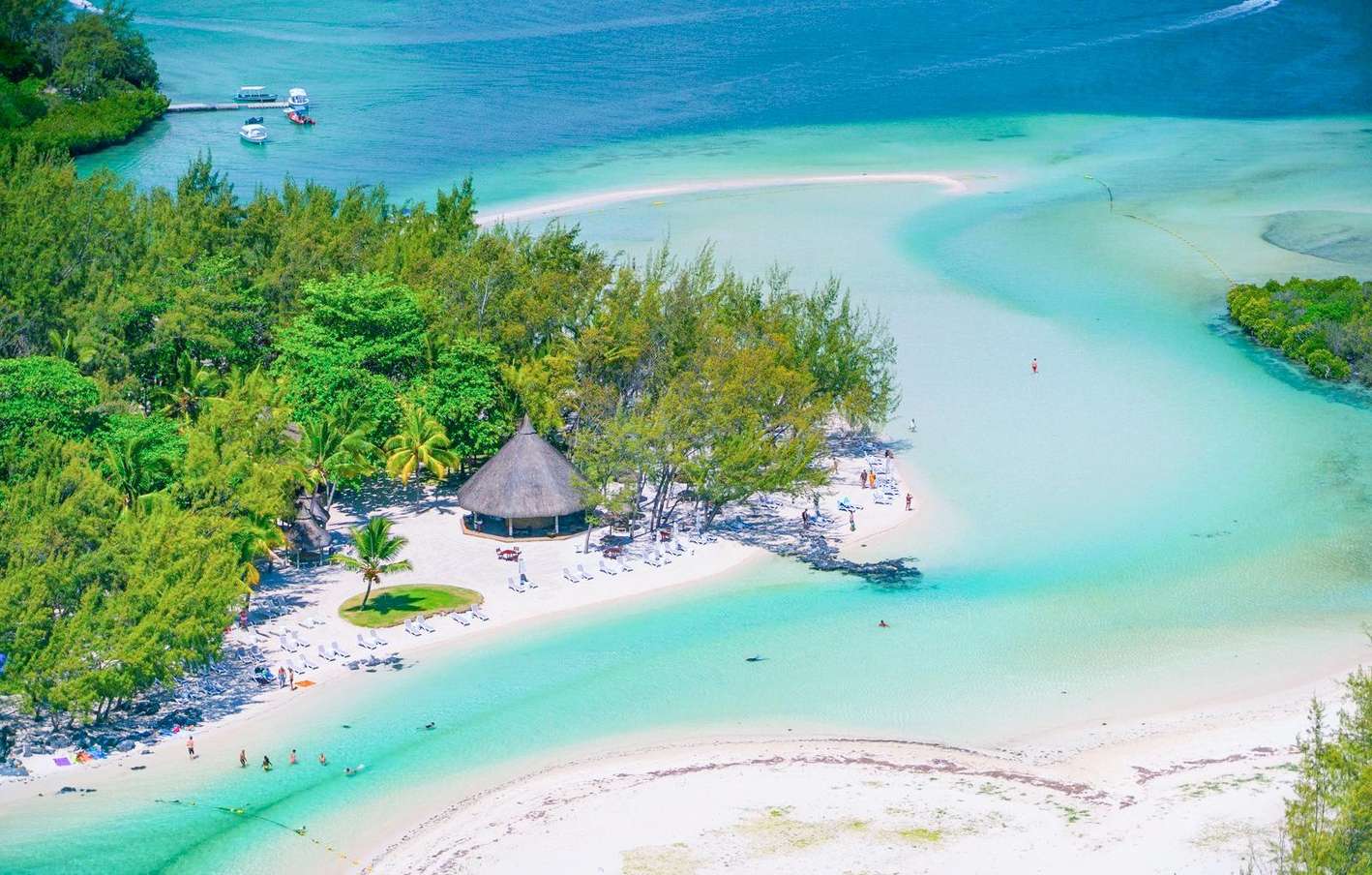
The classic east-coast day stacks three things: lagoon snorkeling, the Grand River South East waterfall where the river meets the sea, and free hours on Île aux Cerfs itself.
Trips like the Mauritius: Ile aux Cerfs Catamaran, Waterfall & BBQ Lunch run exactly that circuit, with monkeys often visible along the riverbanks and sometimes hopping onto the boats.
On the island, budget for the extras. Sun loungers and umbrellas rent at an added cost, and the parasailing and tube rides are run by independent operators, paid on site per activity.
The restrooms and changing rooms are free, and no fence holds the beach: every shoreline here is public up to the high-water mark by law.
Weather rarely ruins the plan outright. When southeast winds and swell hit, crews reroute into the sheltered Île aux Cerfs lagoon or drop an open-reef stop, and operators are known for flexible rescheduling when a day turns.
| If this happens | What happens then |
|---|---|
| Strong southeast winds or swell arrive | Open-reef stops are cancelled and routes move into the sheltered Île aux Cerfs lagoon |
| A cyclone warning is issued | Operators must suspend boat departures until it lifts |
| Weather turns on your booked day | Crews usually reschedule the trip or reroute the day into sheltered water |
Water shoes first. The lagoon floor at Belle Mare holds rocks, coral patches, sea urchins and venomous stonefish tucked into sand and rock, so reef shoes are essential for the walk-in.
Boats supply most of the rest. Masks, snorkels and life jackets come standard on the catamarans, but fin provision varies: some boats carry them, others run masks only or short on sizes.
Bring your own mask, snorkel and fins if a snug, leak-free fit matters to you. Vendors near the public beach rent mask-and-snorkel sets too.
Dress for a full day on open decks. Wear swimwear under your clothes, and pack a UV rash guard, high-SPF reef-safe sunscreen, a wide-brim hat with a chin strap and polarized sunglasses on a strap.
A light windproof jacket handles the breezy crossings, a towel and a change of clothes dry you off, and a roll-top dry bag keeps phones and cameras safe from spray.
Carry small rupee notes for island stops, where vendors and kiosks take cash. And keep a group tip for the crew: handing it to the captain at the end, to be split among the team, is the local custom.
Place Belle Mare on the island's map and its trade becomes clear. The east and south hold more pristine coral but wear the rougher seas, while the west and north coasts offer calmer, easier water for most of the year, sheltered by the central mountains from the southeast trades.
For pure coral, the strongest single site is Blue Bay Marine Park in the southeast, with denser colonies, more fish and regular turtle sightings than Belle Mare offers. Many east-coast guests drive south for a day there. In the northwest, Trou aux Biches pairs calm shallows with green turtles on the seagrass.
The pattern holds everywhere, though: the best coral almost always needs a boat. Much of the accessible shoreline across Mauritius is broken rubble and stirred sand, and swimming out to the barrier reef from public beaches is usually too far and too busy with traffic to be worth it.
Belle Mare is a quieter, relaxed lagoon base, at its best when you accept the boat as part of the plan.
An east-coast base gives you three easy second days. The first sits just north: Palmar, with a wide, shallow, sandy lagoon built for beginners and children, though its floor hides urchins and coral fragments, so water shoes come too. Its roughest, murkiest weeks run from June into September.
The second heads south. Blue Bay Marine Park rewards an early start between 7 am and 10 am, when its water is smoothest and clearest; a one-hour glass-bottom trip buys about 45 minutes at a single spot, and the two-hour version covers two.
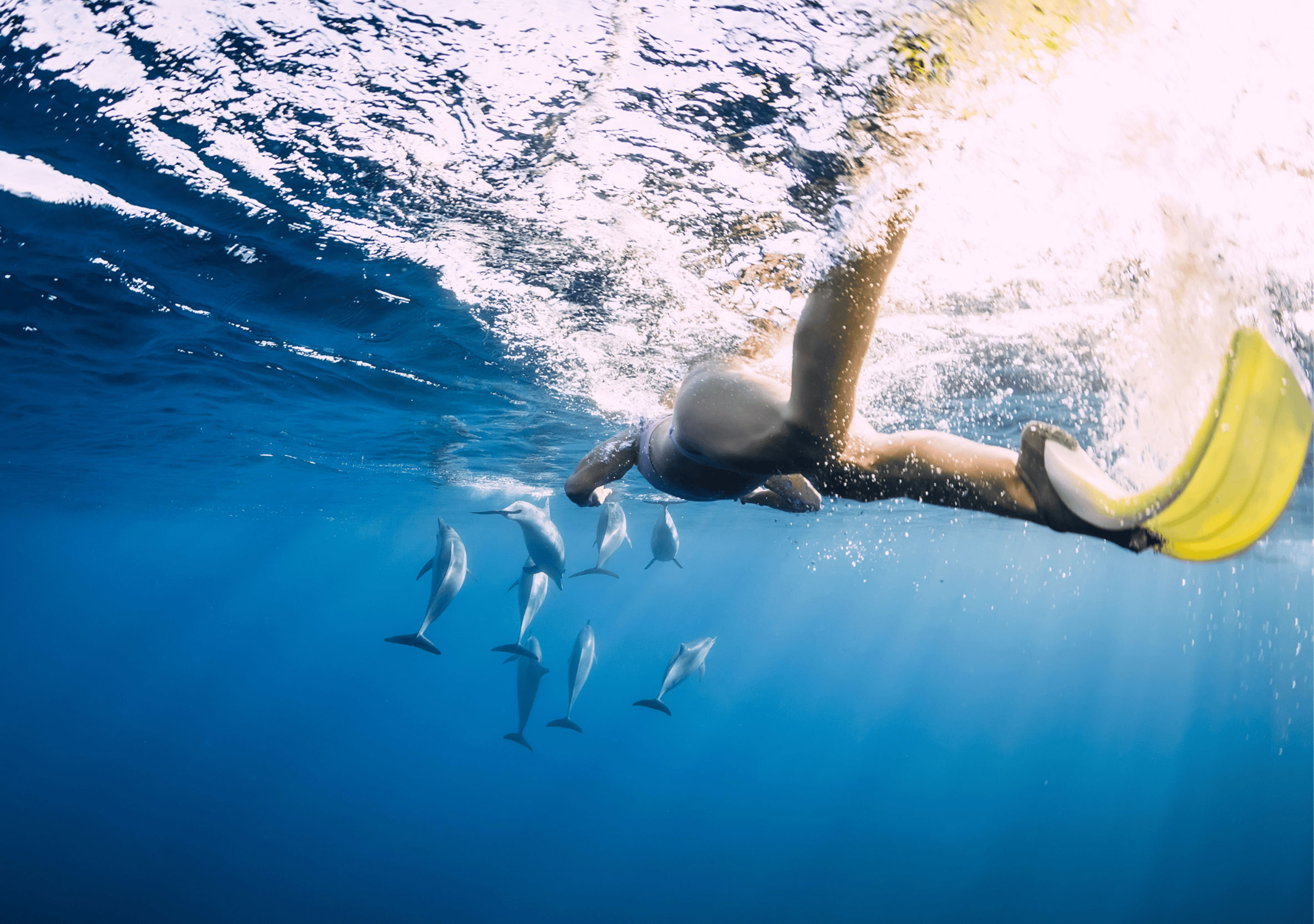
The third is the dolphin morning. Spinner and bottlenose pods gather off Tamarin, Black River and Flic en Flac, and the window that works runs from about six until seven-thirty, before boat traffic builds. It is an energetic open-water swim, and the ocean off Tamarin cools to around 23 to 25 degrees on winter dawns.
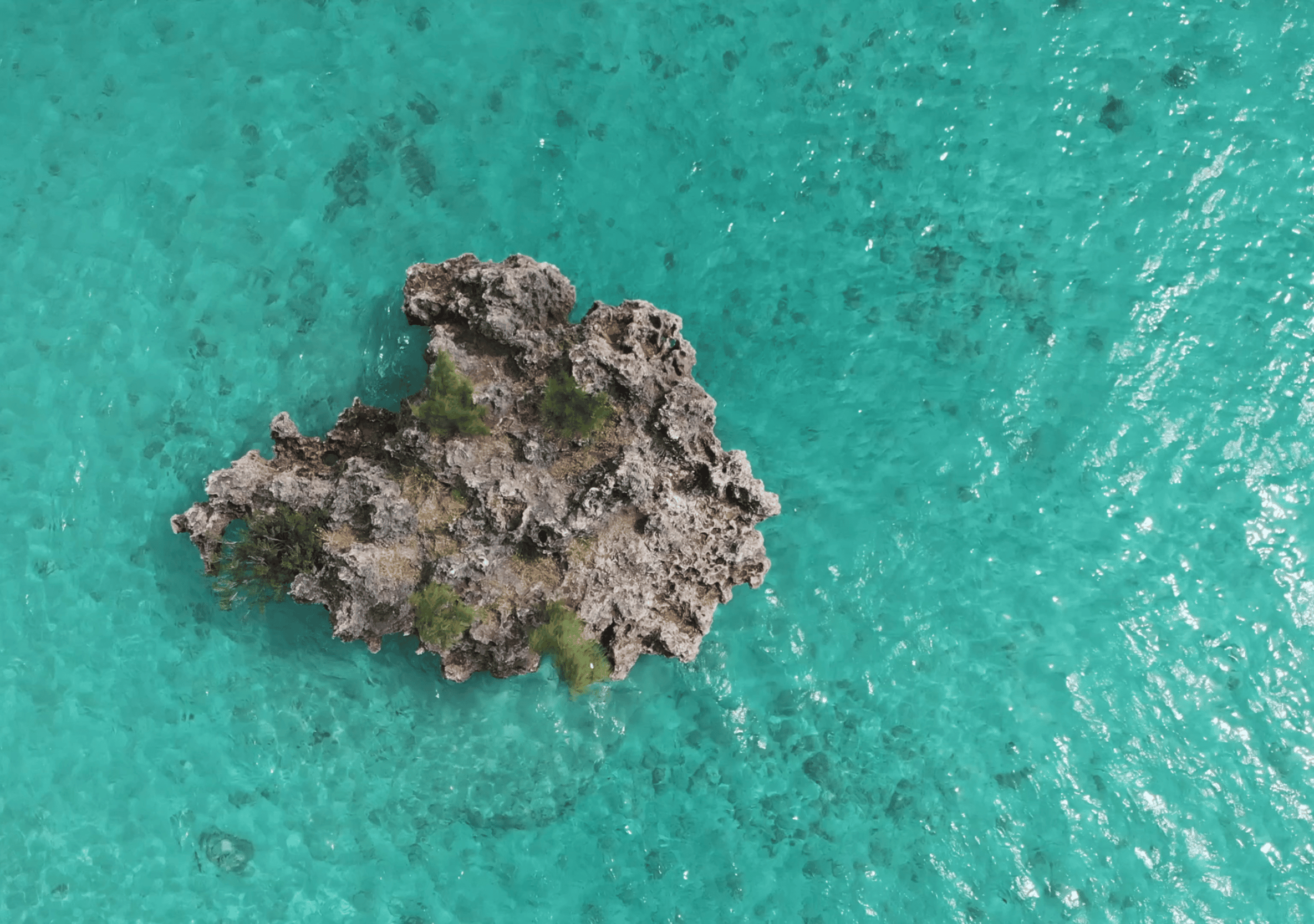
Belle Mare rewards the visitor who reads it right: an easy, sandy morning swim near the black rocks, and the real coral reached by boat from Trou d'Eau Douce. Go early, stay inside the buoys, and let a skipper handle the reef and the pass. On the east coast, that combination beats every cross-island detour.
go before 10 am for glassy water
Wild dolphins gather off the west coast each morning, and this guide shows where the pods rest and how boats approach them.

Slipping into the water beside a passing pod takes timing and rules. This page walks through both, from booking to the swim itself.
Tamarin Bay is where the boats leave before dawn. Find out what a morning trip there looks like hour by hour.
Some trips pair dolphins with a search for whales further out. Here is how those full-day outings run and who they suit.
The calmest water and the quietest bay belong to the early boats. This page explains why a sunrise start pays off.
If sharing a boat with a crowd is not your style, see what a private charter costs in space and freedom instead.
A catamaran pairs gentle sailing with reef stops and a deck lunch. This guide compares the routes worth a full day.

From island landings to onboard barbecues, the full-day cruise options are laid out coast by coast so you can pick one.
sunrise to 10 am, calmest water
Quick answers on lagoon conditions, currents, gear and hotel pickup.
 Quatre Cocos2026
You can enter the water directly from the beach, and the shallow edge runs 0.5 to 1.5 meters deep. The nearshore seabed is mostly sand and rocks with scarce coral, plus patches of seagrass, so fish gather around the black rocks near the Hindu temple in the north.
The best coral sits along the outer barrier reef, roughly 500 meters offshore. Swimming out from shore is not recommended because of heavy boat and jet ski traffic in the lagoon, so enter the water from a boat instead.
No. The gaps in the reef funnel strong currents out to sea, and a pass can pull a swimmer seaward faster than they can swim back. Stay inside the lagoon on calm days or join a boat trip that reaches the outer reef safely.
The lagoon is shallow and calm near the beach, which suits children and first-timers. Inside the protected lagoon, spots like Trou Padi and the 3 Meters offer flat water with minimal current, where coral heads host butterflyfish, damselfish and juvenile wrasses.
Go early, between sunrise and 10 am. The east coast faces the southeast trade winds directly, so mornings give glassy water and the clearest visibility before afternoon winds build chop.
Yes. The lagoon floor hides rocks, coral patches, sea urchins and venomous stonefish in the sand, so water shoes or reef shoes are essential when wading in.
Vendors near the beach rent mask and snorkel sets, and boat excursions carry gear onboard. If you can, bring your own for a snug, leak-free fit.
East-coast catamaran operators run optional pickup from Belle Mare hotels including Belle Mare Plage, Long Beach, Solana, Sunrise Attitude, The Residence, Lux Belle Mare and C Mauritius. Boats depart from Trou d'Eau Douce, about 10 kilometers south.
Pleasure craft are legally barred from the snorkelling zone marked by red buoys, and speed limits apply in designated zones. Stay inside those buoys, and don't swim across open lagoon lanes toward the outer reef.
Blue Bay offers denser coral and more fish, and is widely regarded as the island's best snorkeling spot. Belle Mare is the quieter choice, a relaxed east-coast lagoon with white sand and fewer crowds.
Around Belle Mare Beach, snorkelers commonly spot green birdmouth wrasse, trumpetfish, surgeonfish and yellowfin goatfish. The blackspotted puffer shows up frequently in the lagoon.
Stay inside the designated snorkelling zone marked by red buoys, where pleasure craft are legally barred. Boats in the speed limit zones must keep under 10 knots, but the safest plan is entering the water from a boat.
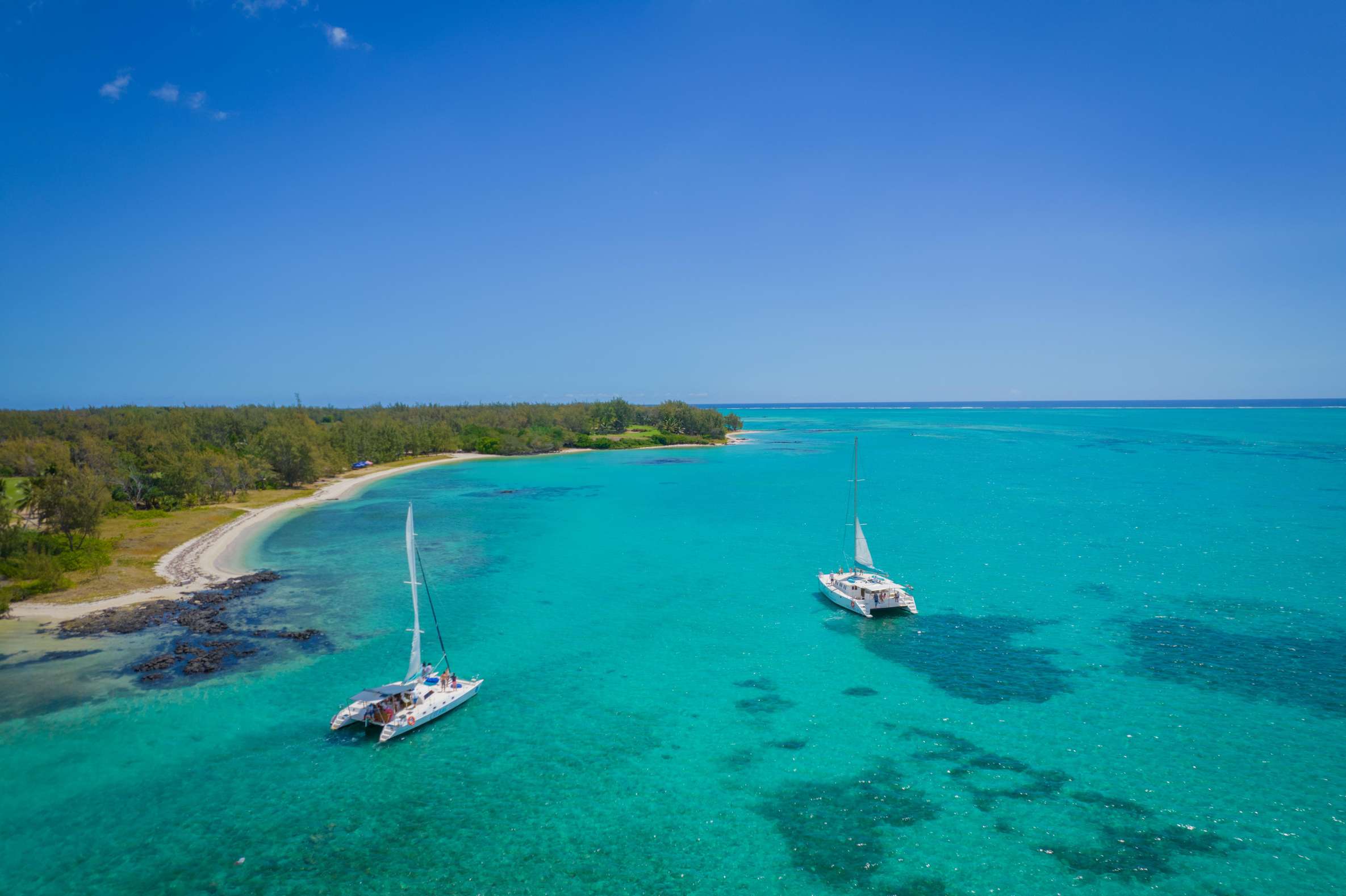
pickup from Belle Mare hotels incl. St Géran and Long Beach
Leave your Belle Mare resort for the east coast lagoon, snorkel at Eau Bleu and lunch on board, with free cancellation up to 24 hours ahead.
