
Likely to sell out
1.5 hours·English, French
4.2(314)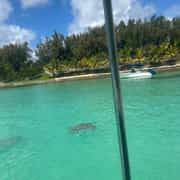
Mauritius: Sea Turtle Adventure and Coral Reef Discovery
Free cancellationSafety briefing before departureExperienced skipper and crew members
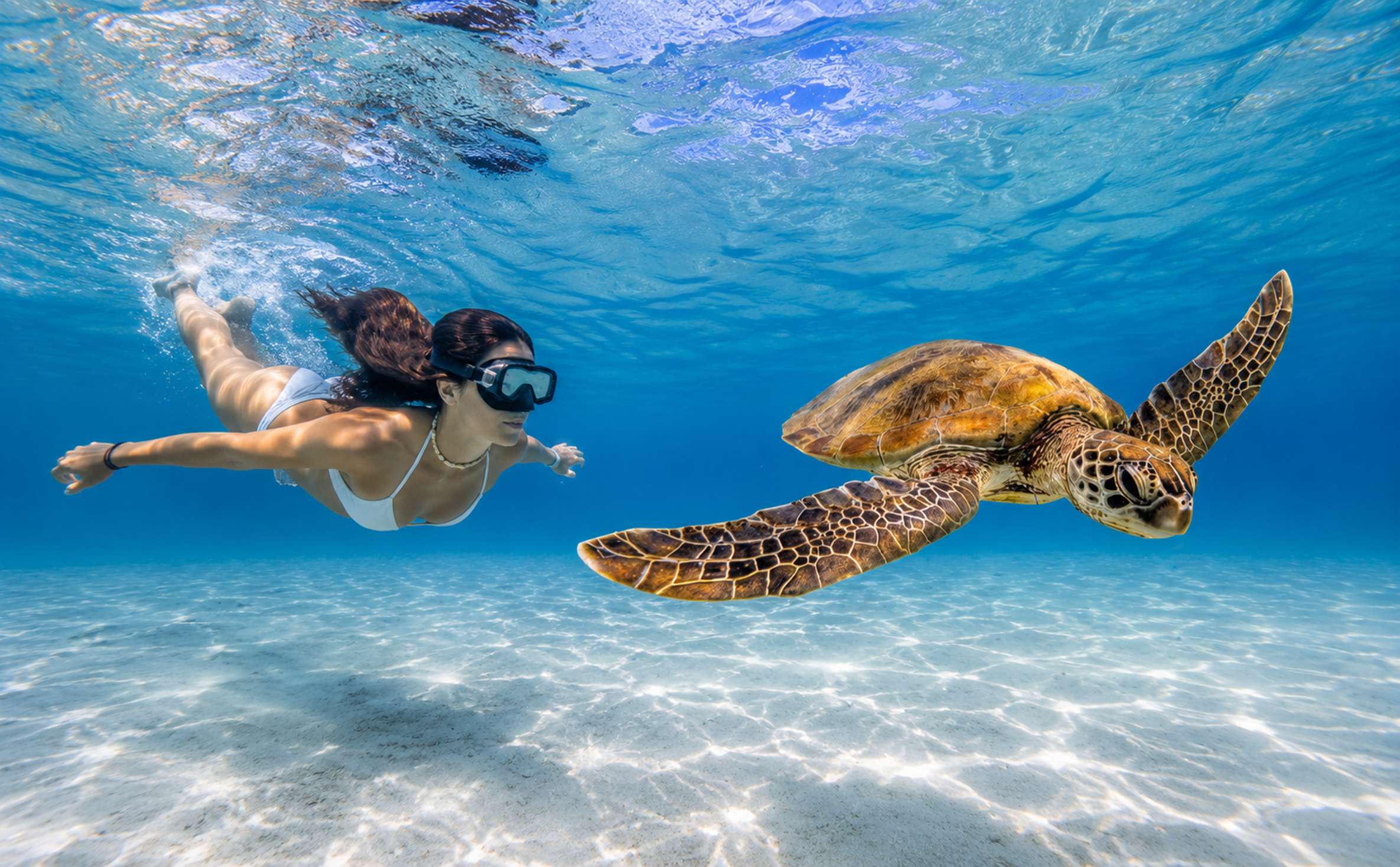
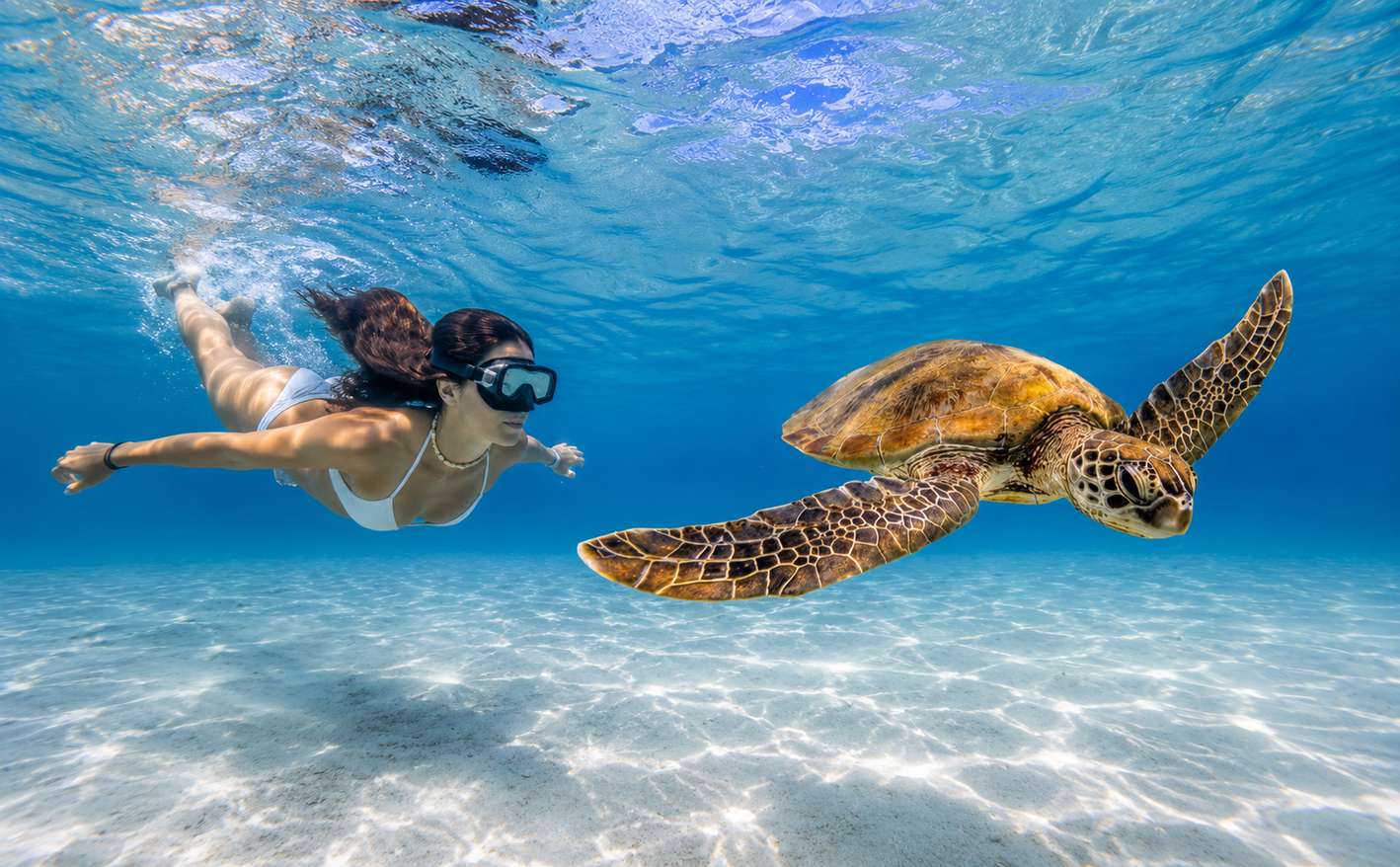
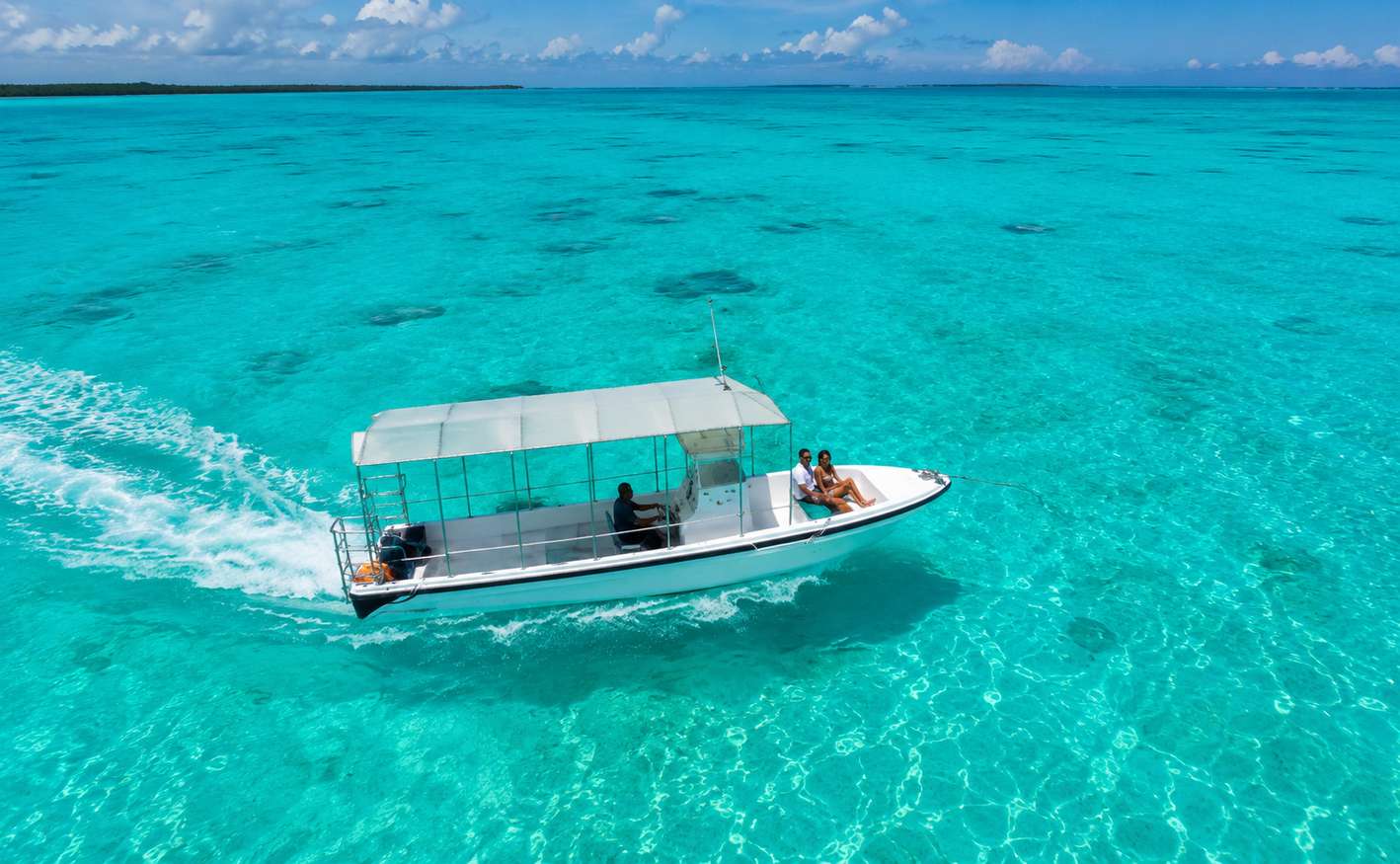
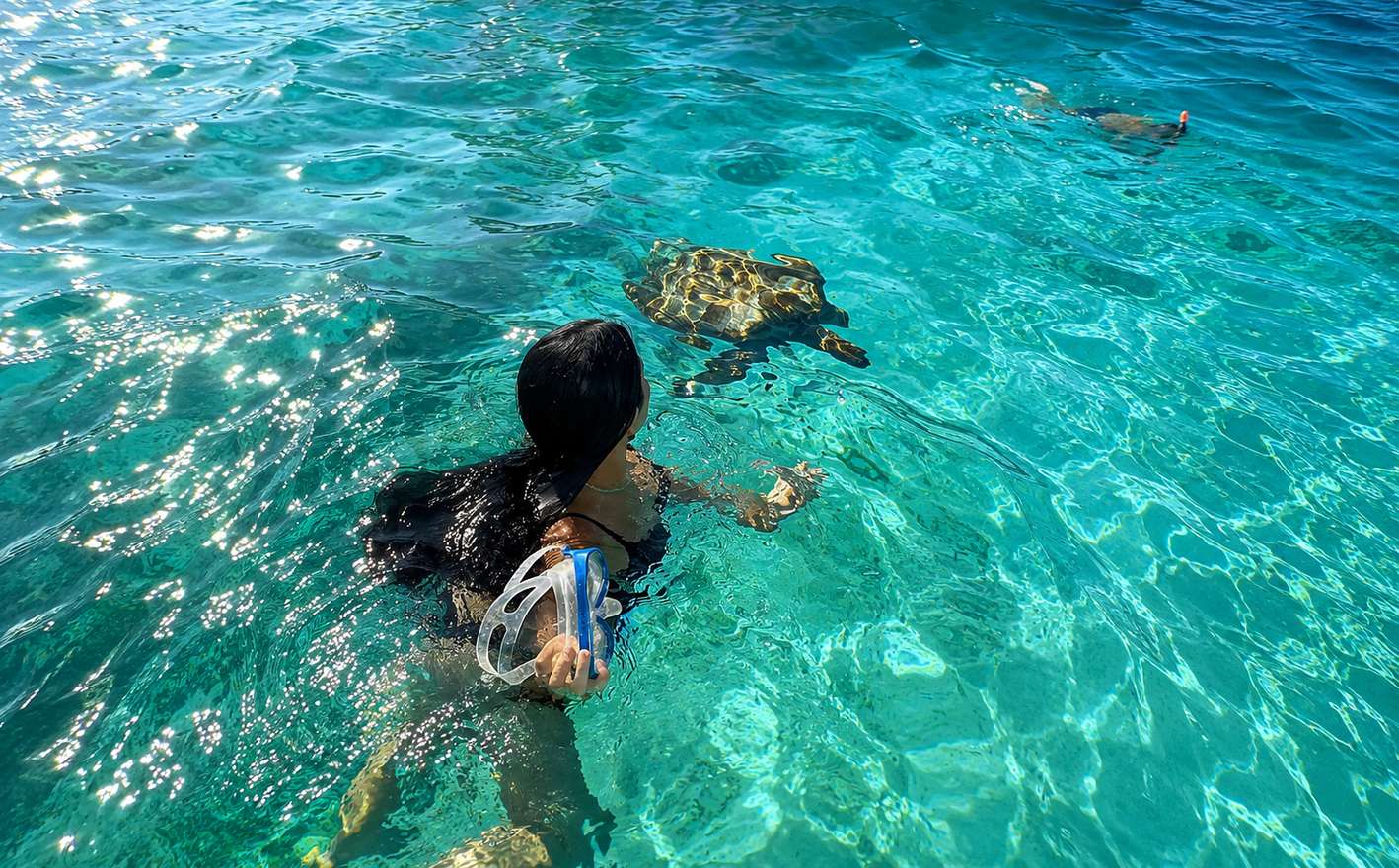
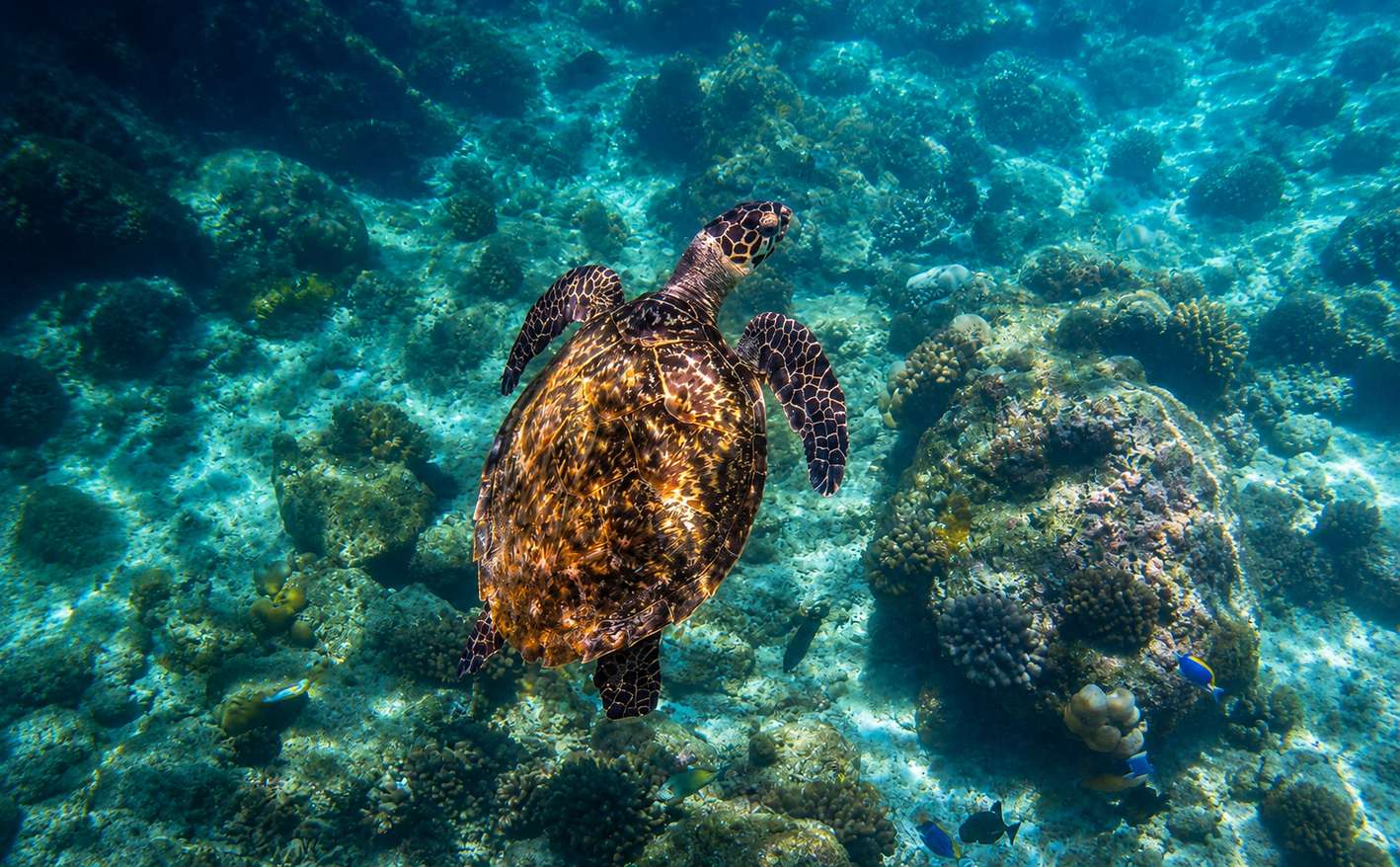
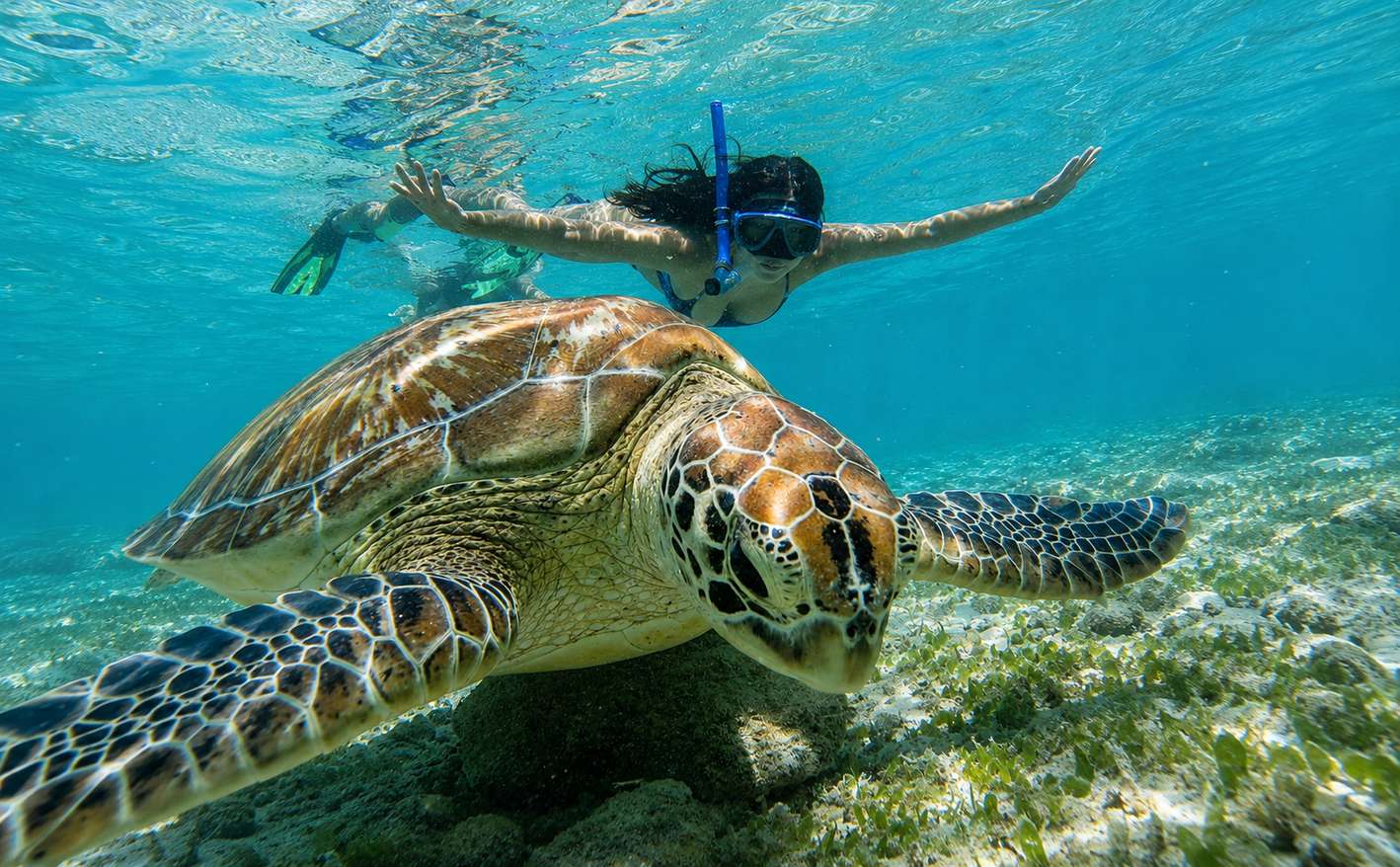
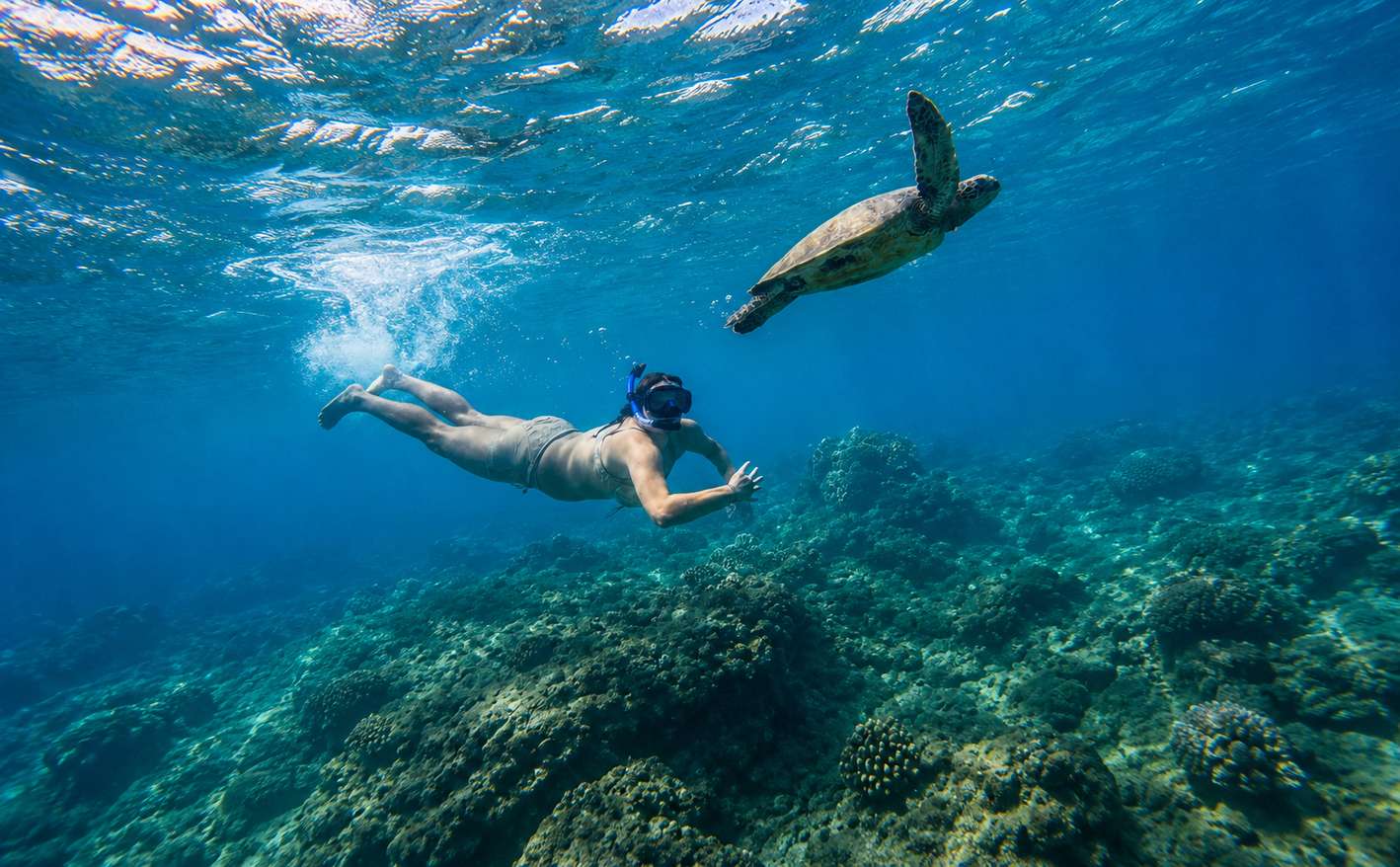
Swim where green turtles graze. Turtle Bay's sheltered lagoon takes beginners and kids, and a short boat ride puts you over the reef patches where sightings are most likely. Book a 1.5-hour turtle snorkel from the northwest coast and be in the water before lunchtime chop.
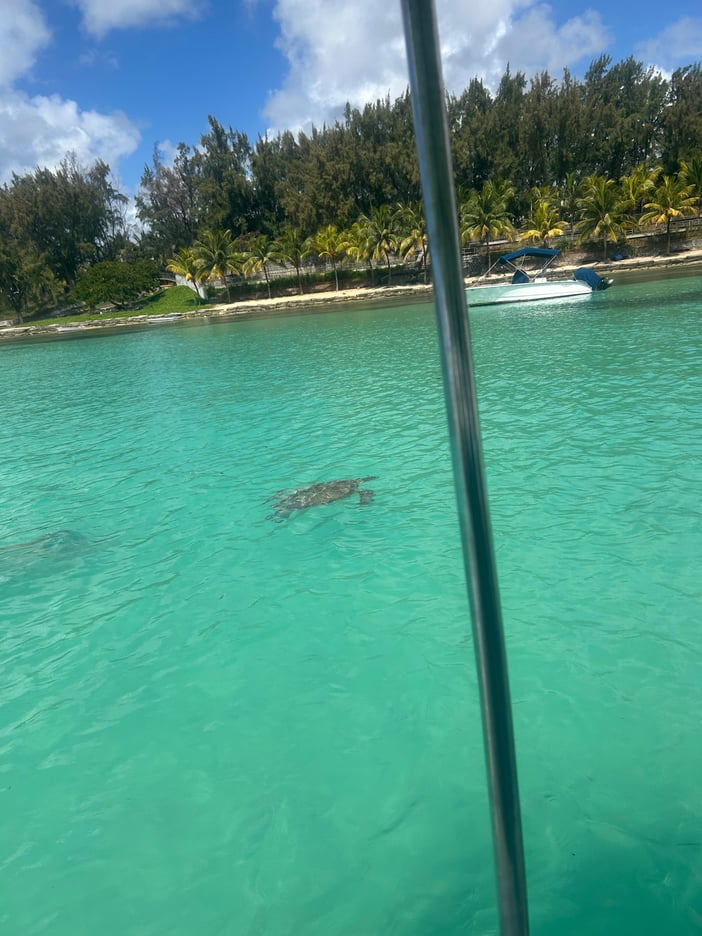
"Lovely short trip to see sea turtles. We spotted three and got to swim right alongside them."
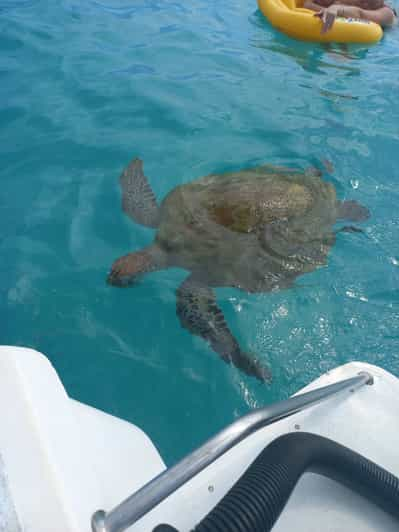
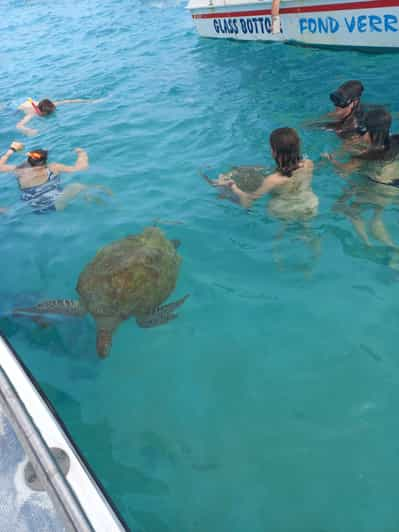



Trade winds, boat traffic and coastal development make every coast of Mauritius snorkel differently.
Read the guide
Brain corals the size of a room, a reserve protected since 1985, and boats that let non-swimmers watch too.
Read the guideTurtles feed along the reef edge here, and a private speedboat puts you on the grounds in two hours.
Read the guide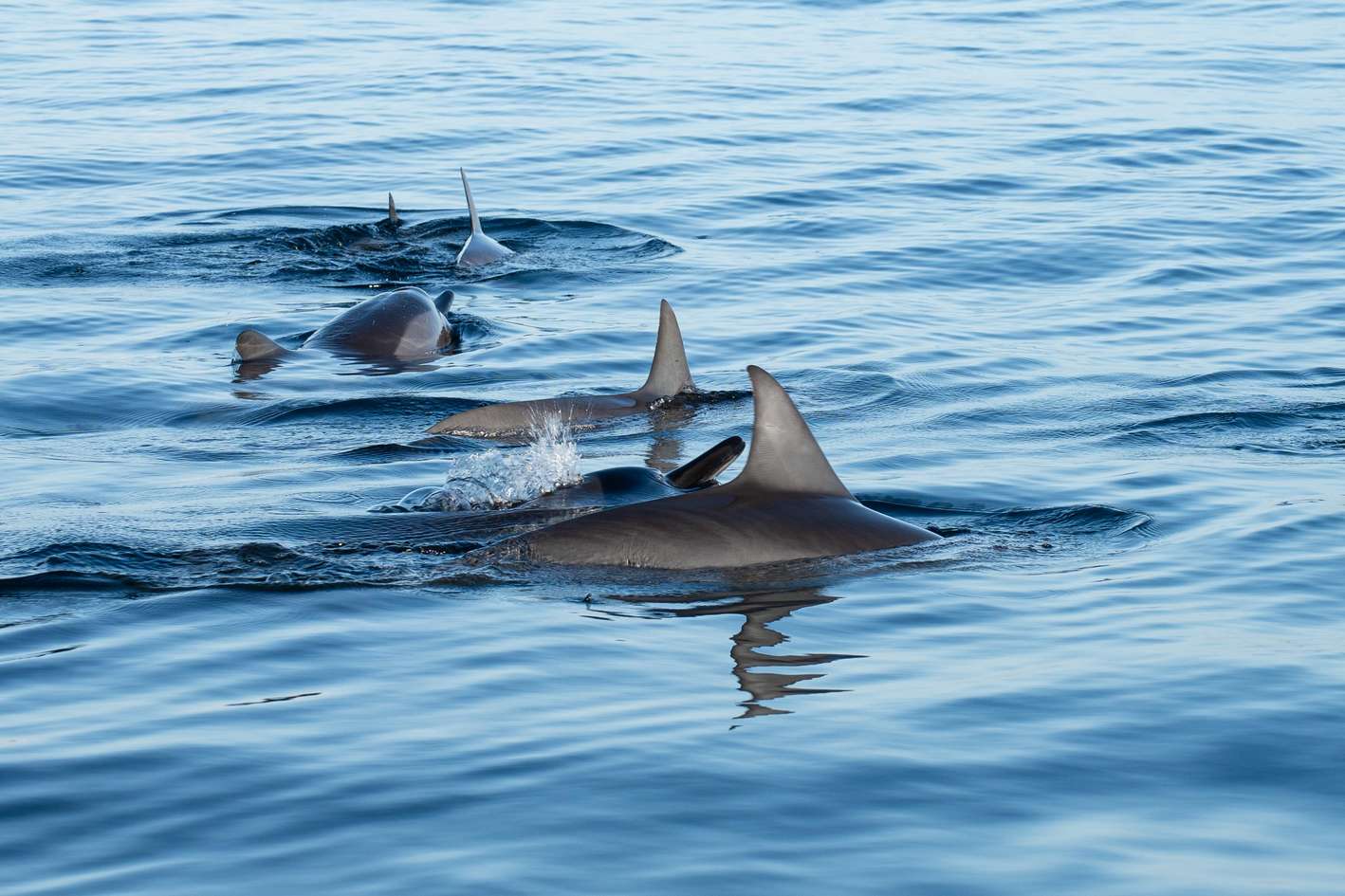
Flat water like a pool, coral opposite the Hindu temple, and sunrise dolphin boats leaving from the sand.
Read the guide
Shallow snorkeling around Crystal Rock with the peak behind you, and hard currents at the outer reef passes.
Read the guideTurtles feed 50 to 100 metres out, inside a buoyed zone the motorboats cannot enter.
Read the guideMoorings and water taxis in the bay, and catamarans sailing out to the coral at Coin de Mire.
Read the guide
Spinner and bottlenose pods rest here early, and swimming with them takes fitness and fins.
Read the guide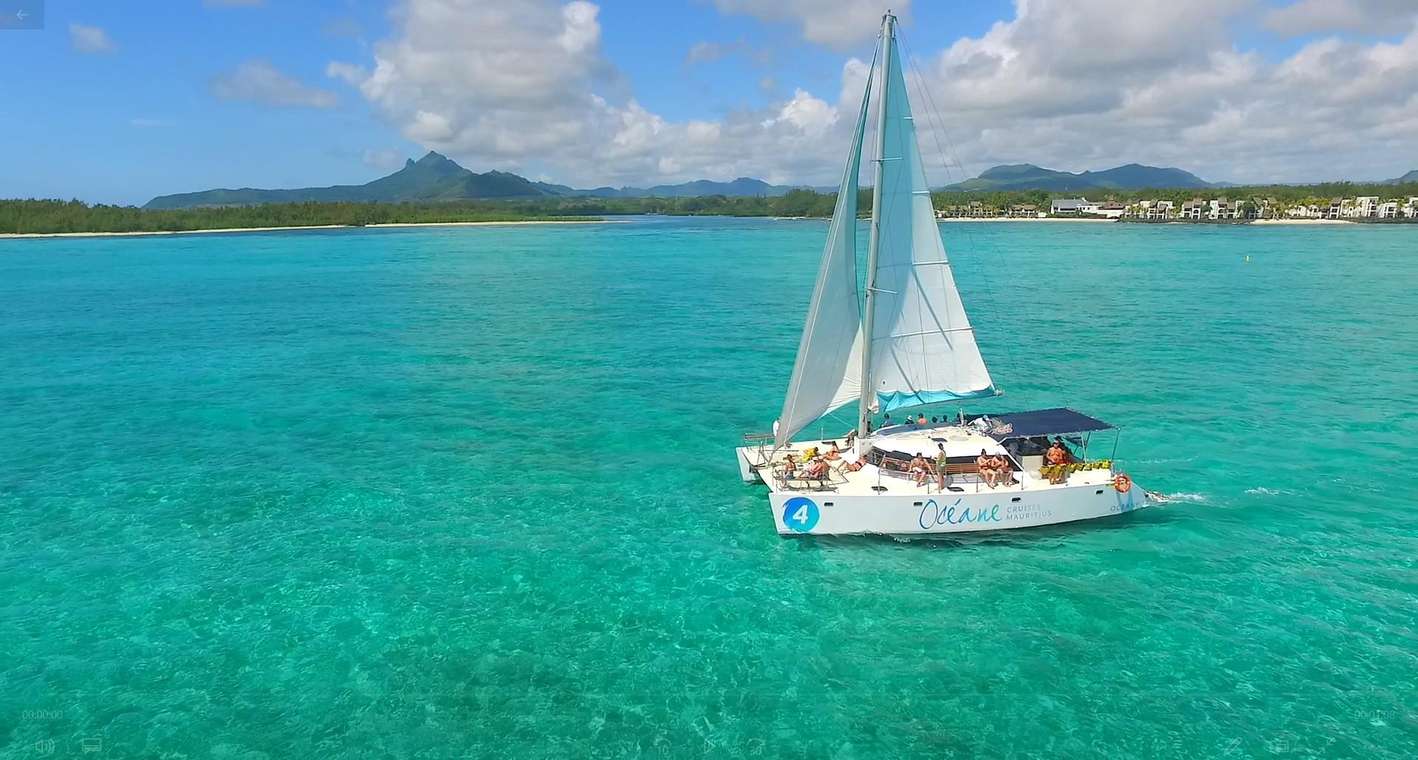
The reef sits 500 metres offshore and boats ferry you out, because swimming to it crosses currents.
Read the guide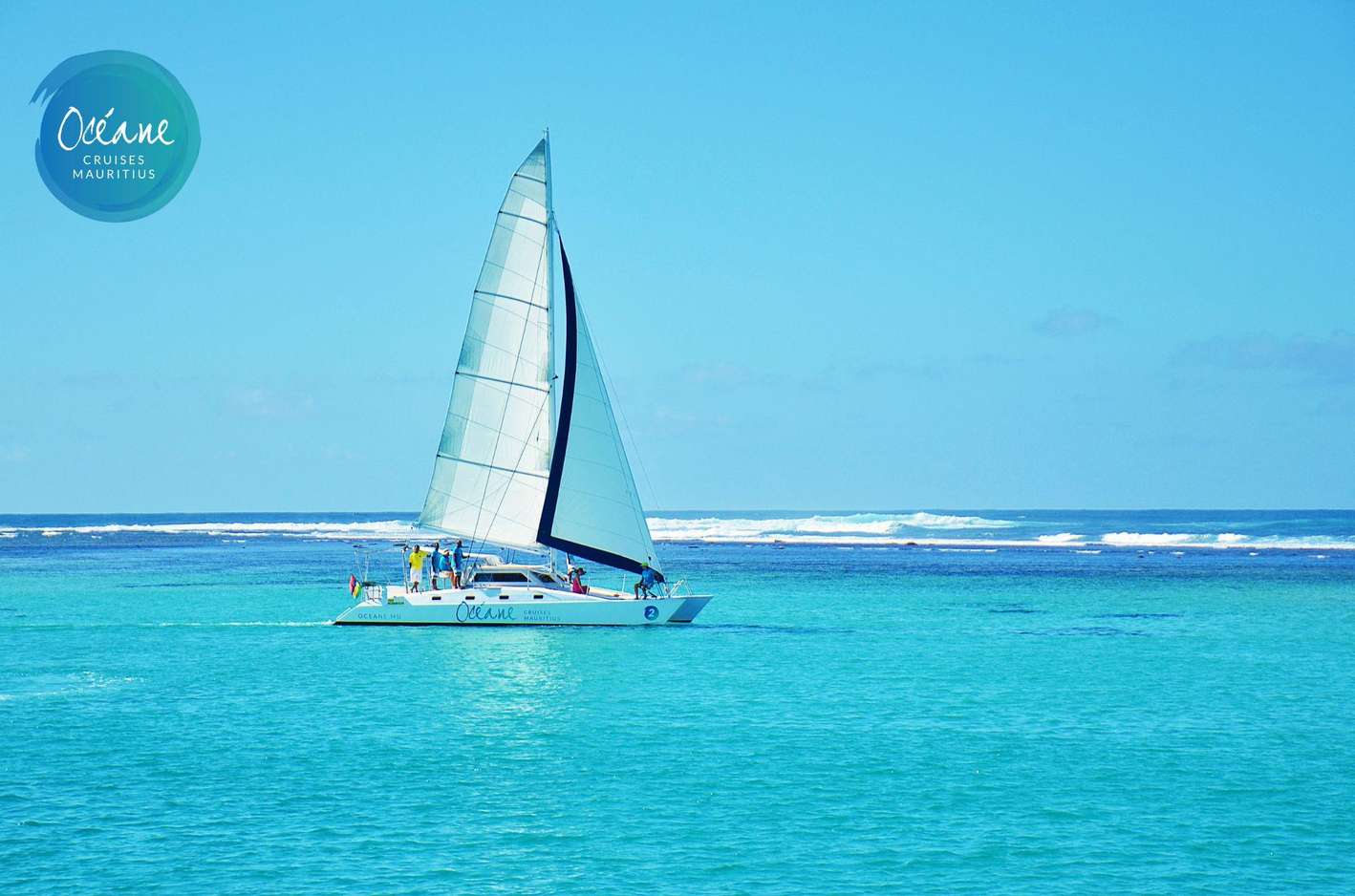
Small fish over seagrass from the sand, and tours that collect you at your hotel lobby.
Read the guideTurtles graze here sometimes, the reef is recovering, and the park rules are strict.
Read the guide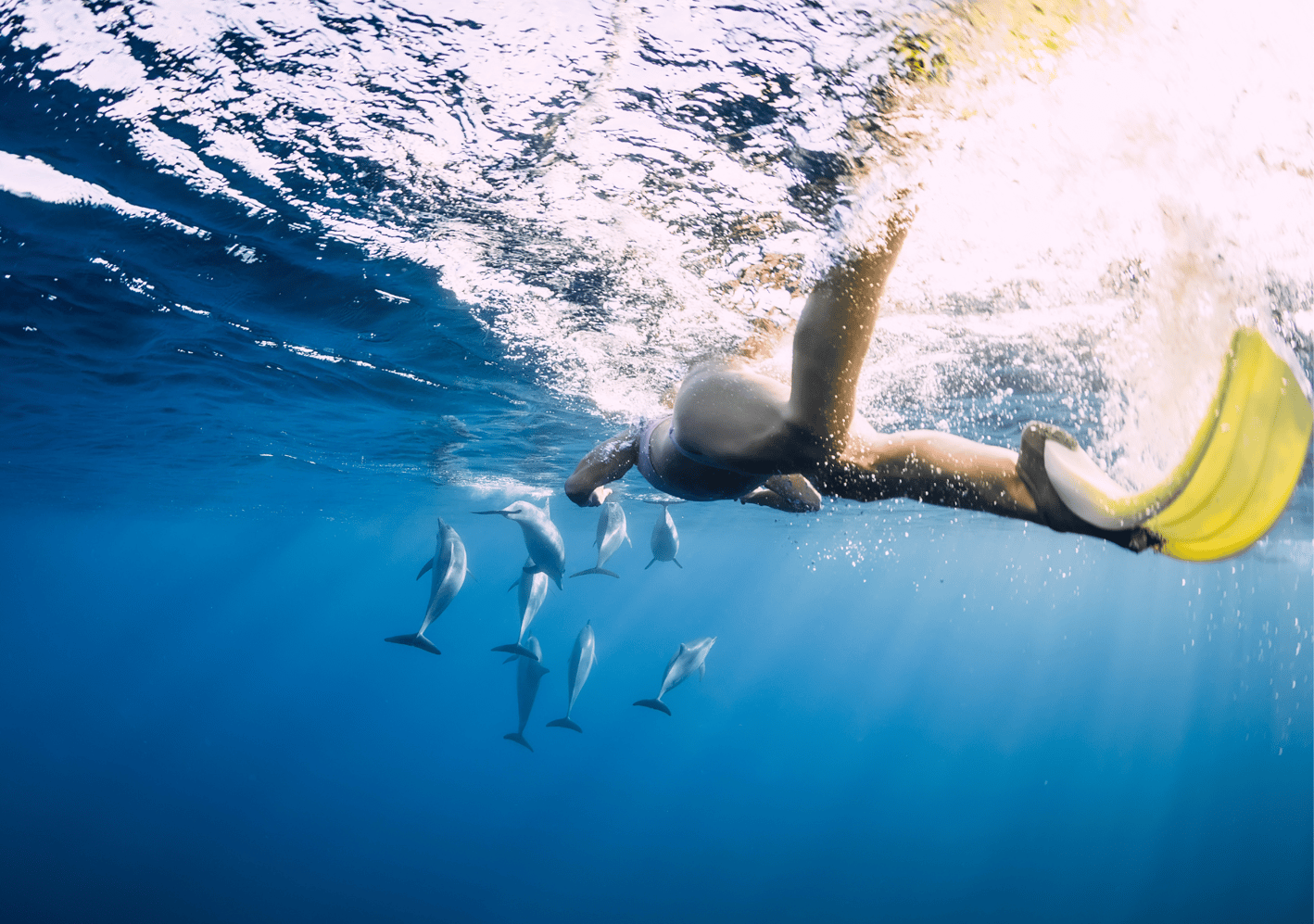
Fewer operators than the north, and most reef trips launch 20 to 40 minutes away.
Read the guide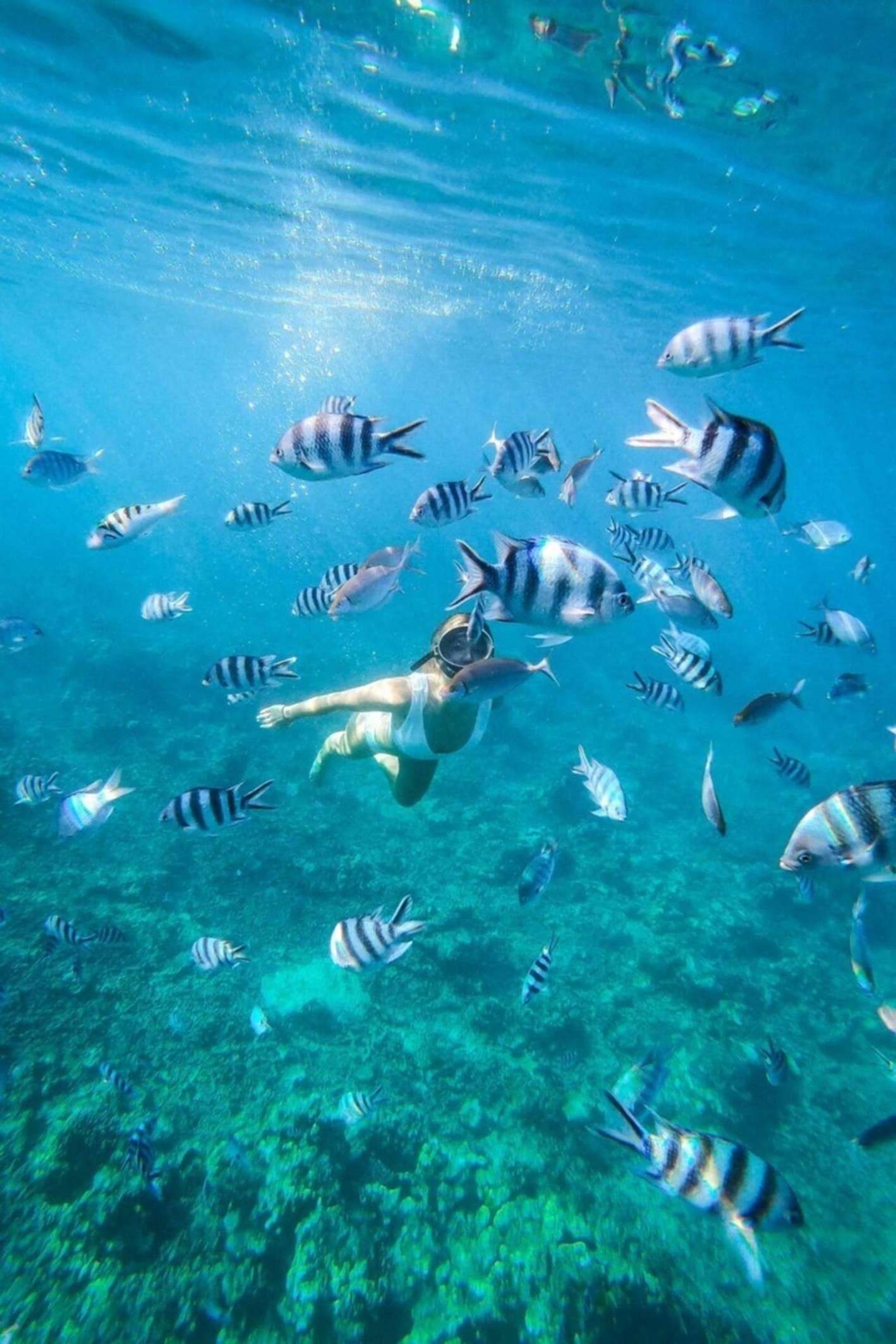
See the illusion by seaplane or helicopter, then spend your water time in the sheltered lagoon.
Read the guide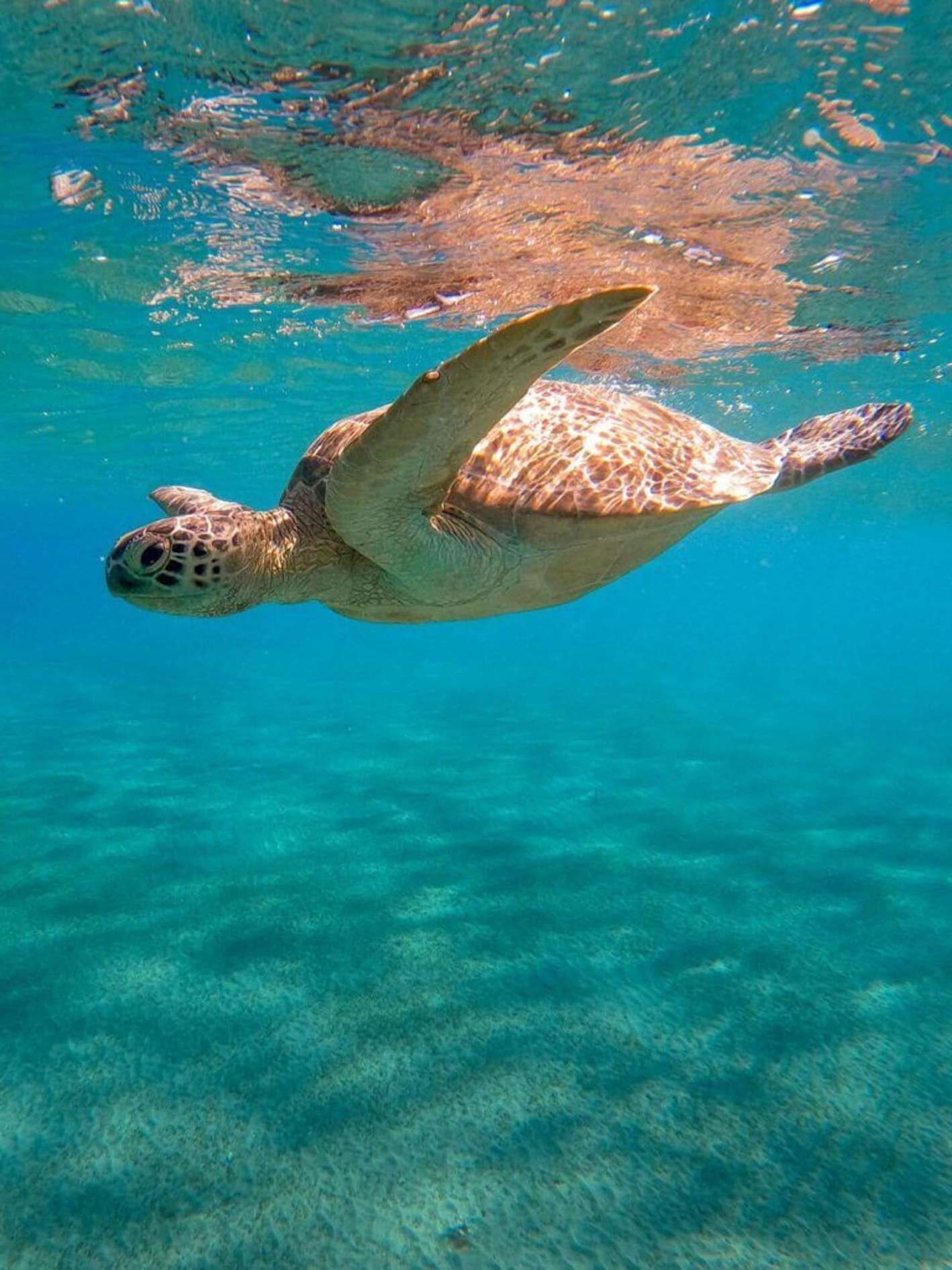
Turtles gather at known feeding grounds, and the Fisheries Act makes swimming with them illegal.
Read the guide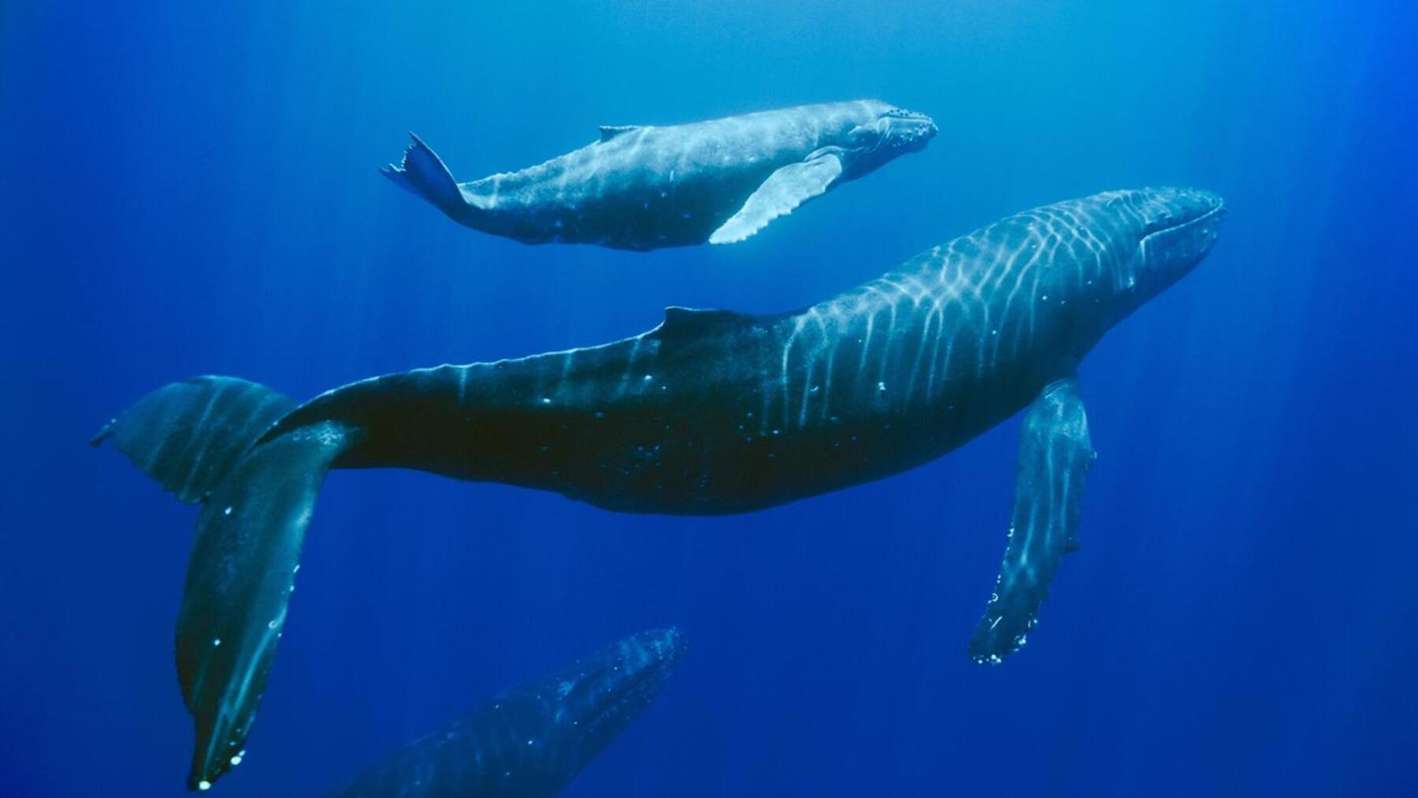
Sperm whales all year, humpbacks in season, and a 100-metre law that keeps you on deck.
Read the guide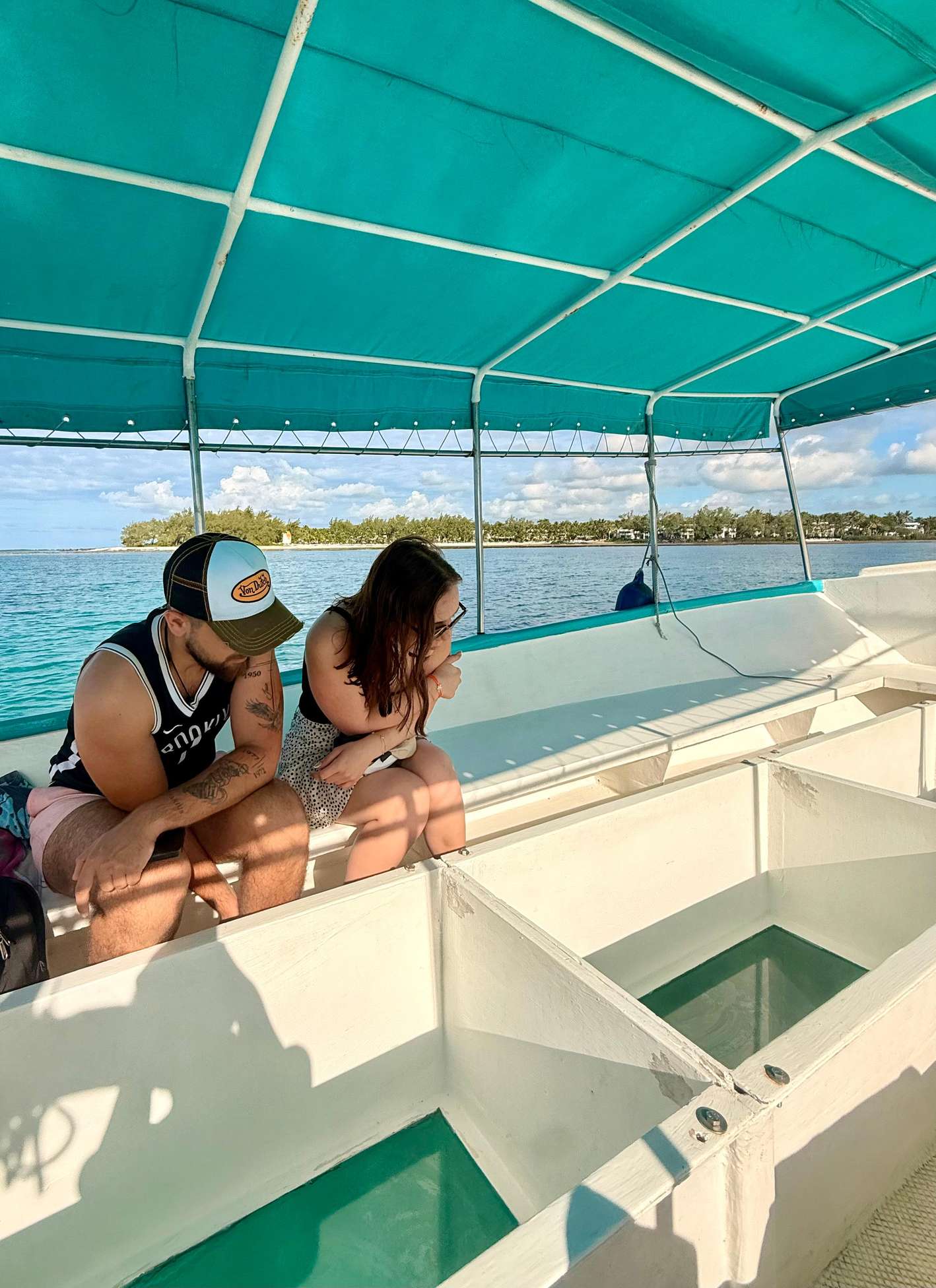
October to December wins on every count, and January to March plays with cyclones.
Read the guide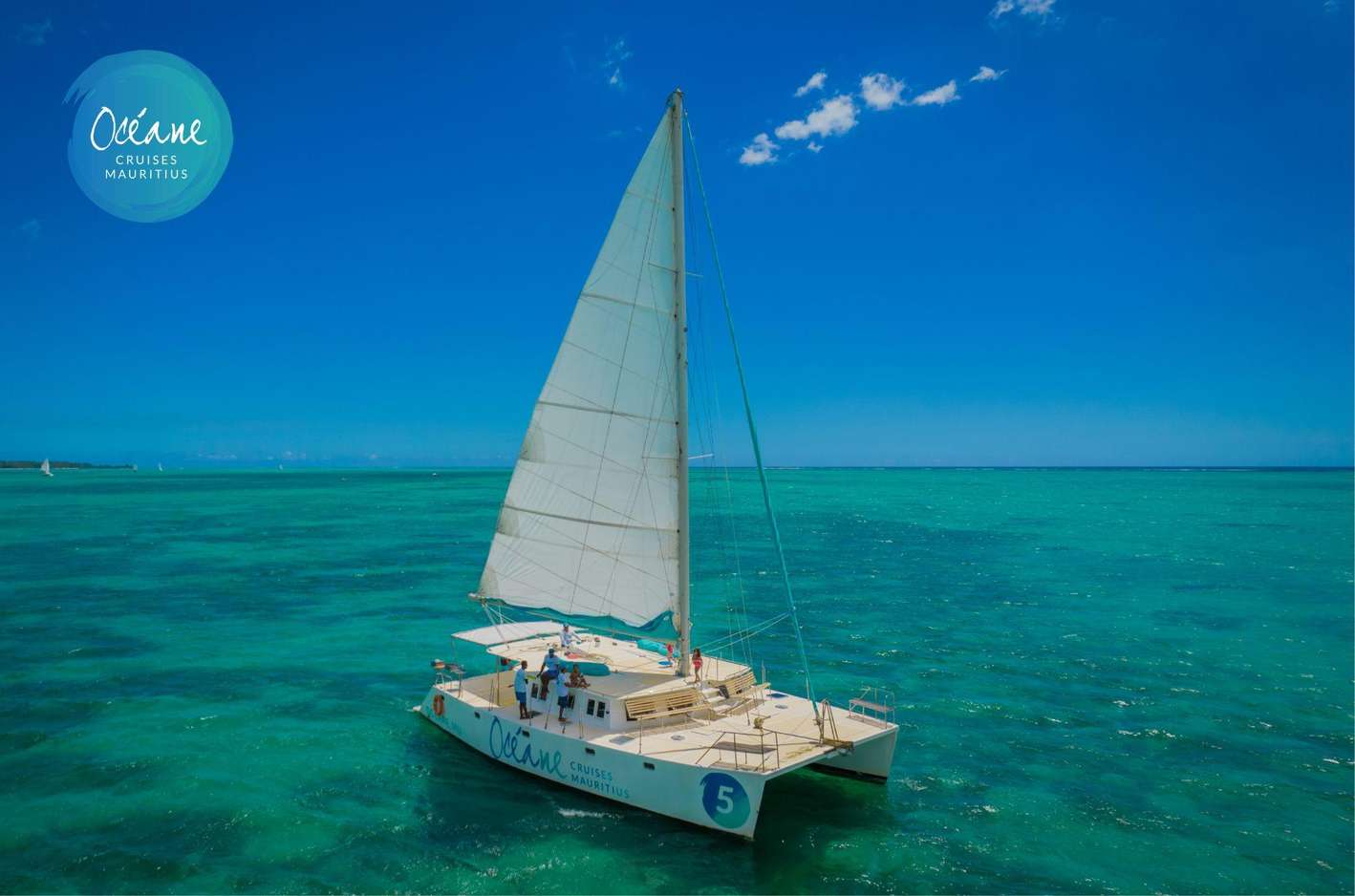
Twin hulls keep the ride smooth, and about an hour and a half of free time lands on the island beach.
Read the guide
Speedboats reach the waterfall basin and quiet sandbanks that catamarans cannot enter.
Read the guide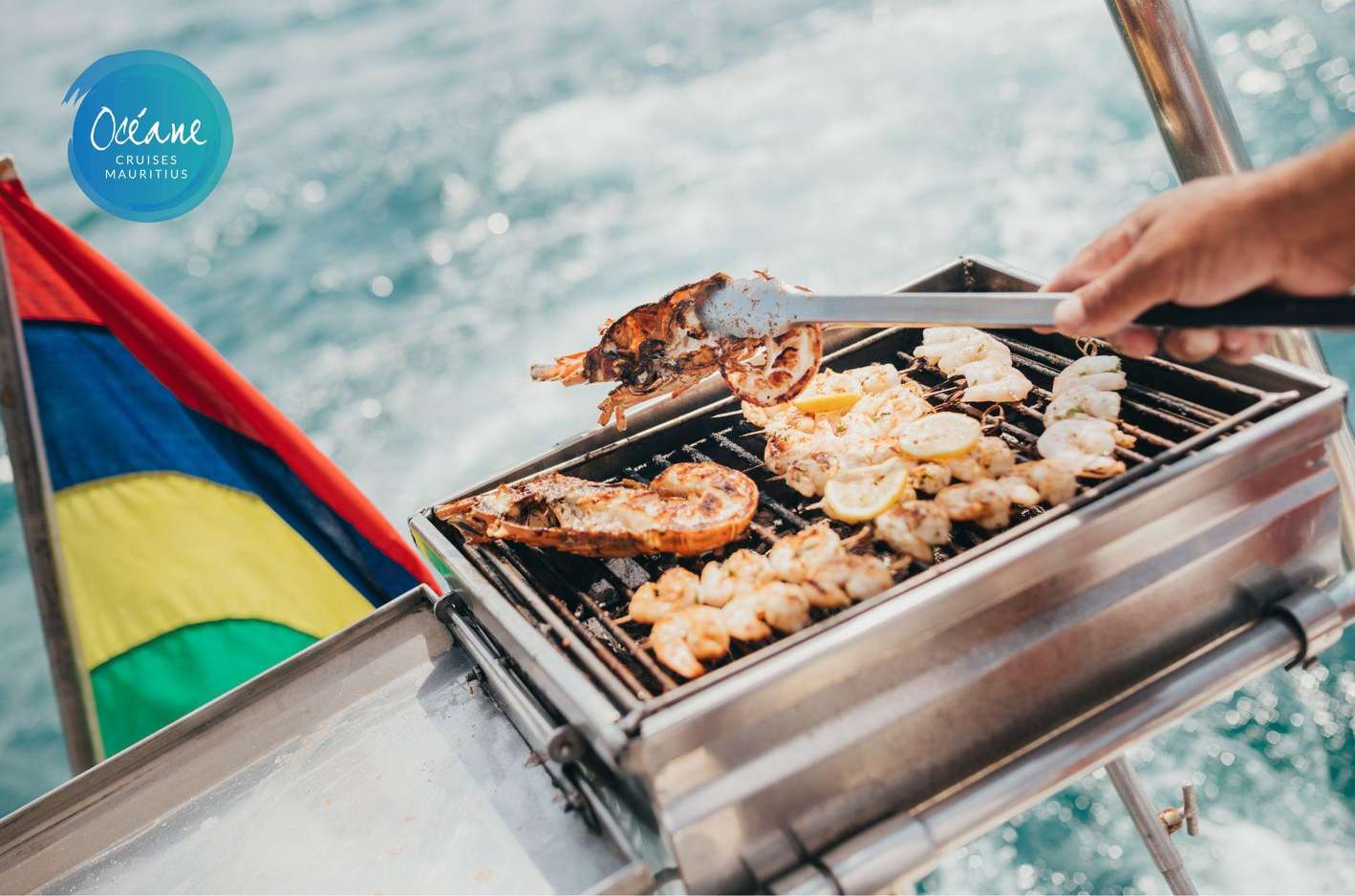
Ferries pack the island between 11 am and 3 pm, and a private boat lands before them.
Read the guideEach page covers one stretch of Mauritius water, and together they show how Turtle Bay compares before you commit your days.
Where to base yourself before you book a single boat
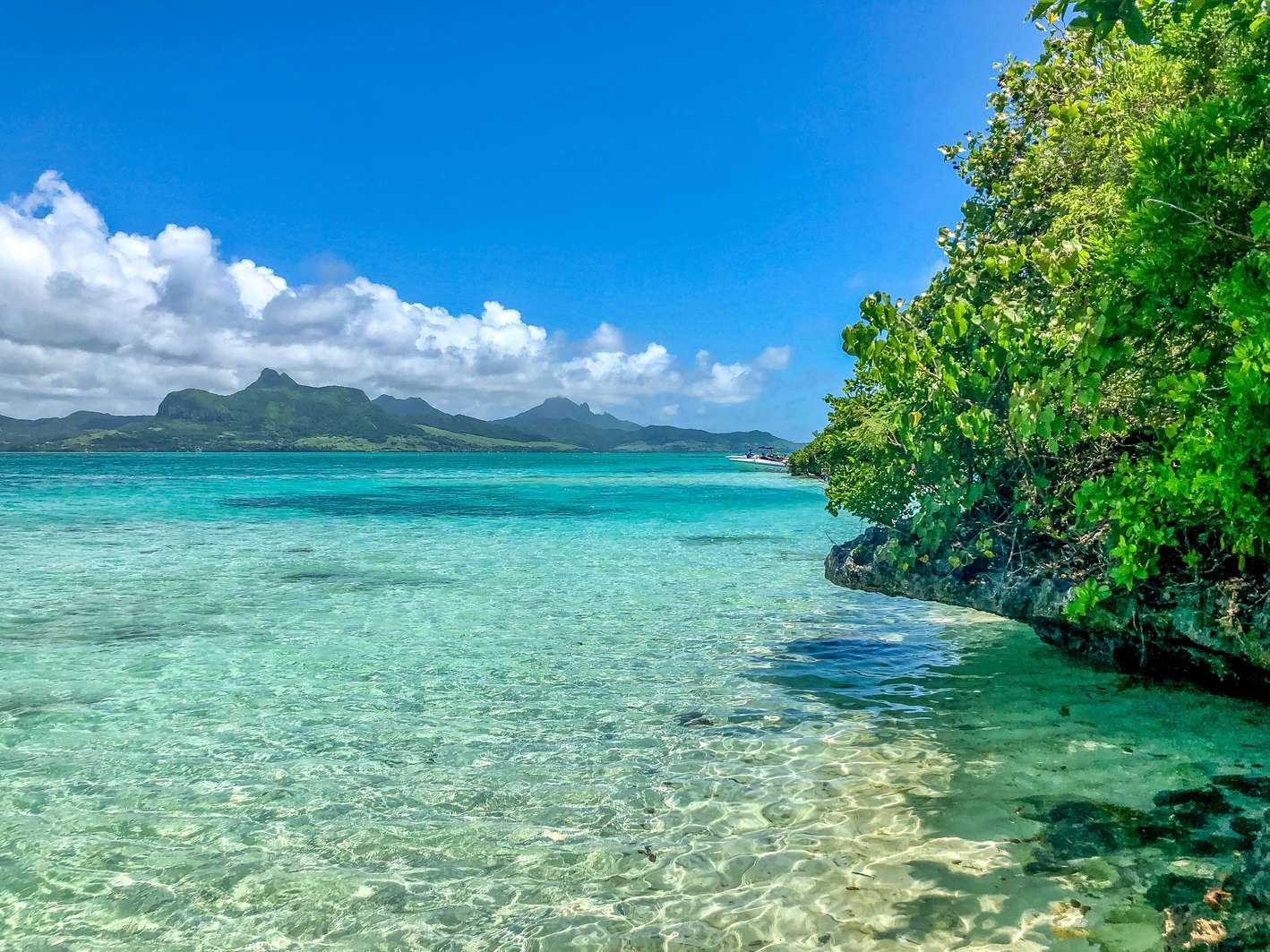
Mauritius is wrapped in coral, but every coast behaves differently. The west and north stay calm and clear, the east and south catch the southeast trade winds, and Blue Bay in the southeast holds the densest protected coral on the island.
From May to September the winds chop up the eastern lagoons while the sheltered west stays flat.
Start here when the holiday is still a blank map. The comparison settles where to base yourself, which beaches you can walk into, and which boat trips are worth booking from each coast. It saves you from picking a hotel on the windy side and discovering it too late.
3 hours · ★ 5.0 (4)Blue Bay: Lagoon, Snorkeling, and Creole LunchFrom $87 7 hours · ★ 4.8 (869)Ile aux Cerfs Catamaran Cruise with BBQ Lunch & SnorkelingFrom $68 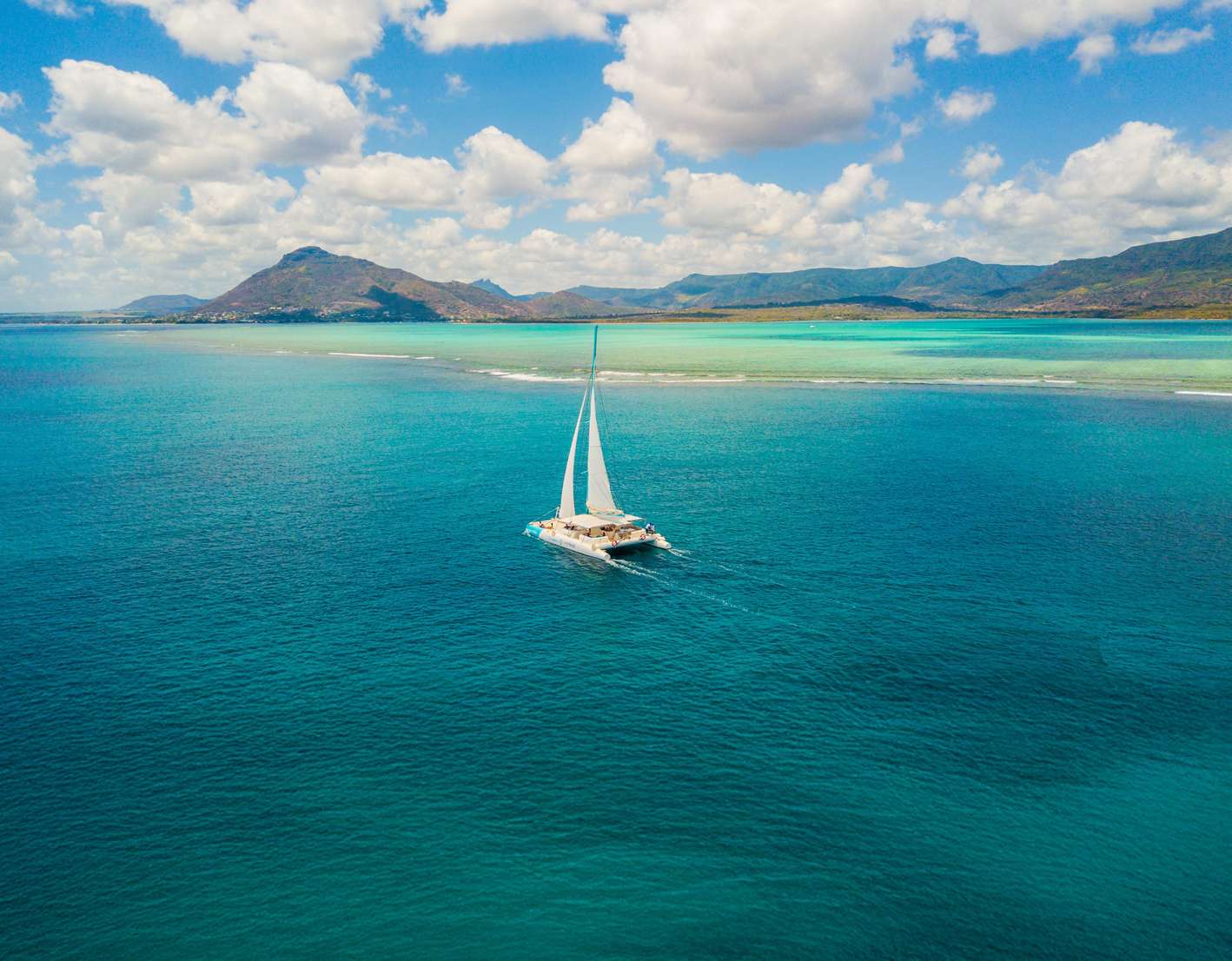 6 hours · ★ 4.7 (363)Mauritius: Catamaran Cruise - Dolphin Watching, BBQ & DrinksFrom $87 2 hours · ★ 4.7 (39)Mauritius: Snorkeling with turtles Le Transporteur speedboatFrom $375 /group
The island's biggest protected coral reserve, seen from a glass-bottom boat
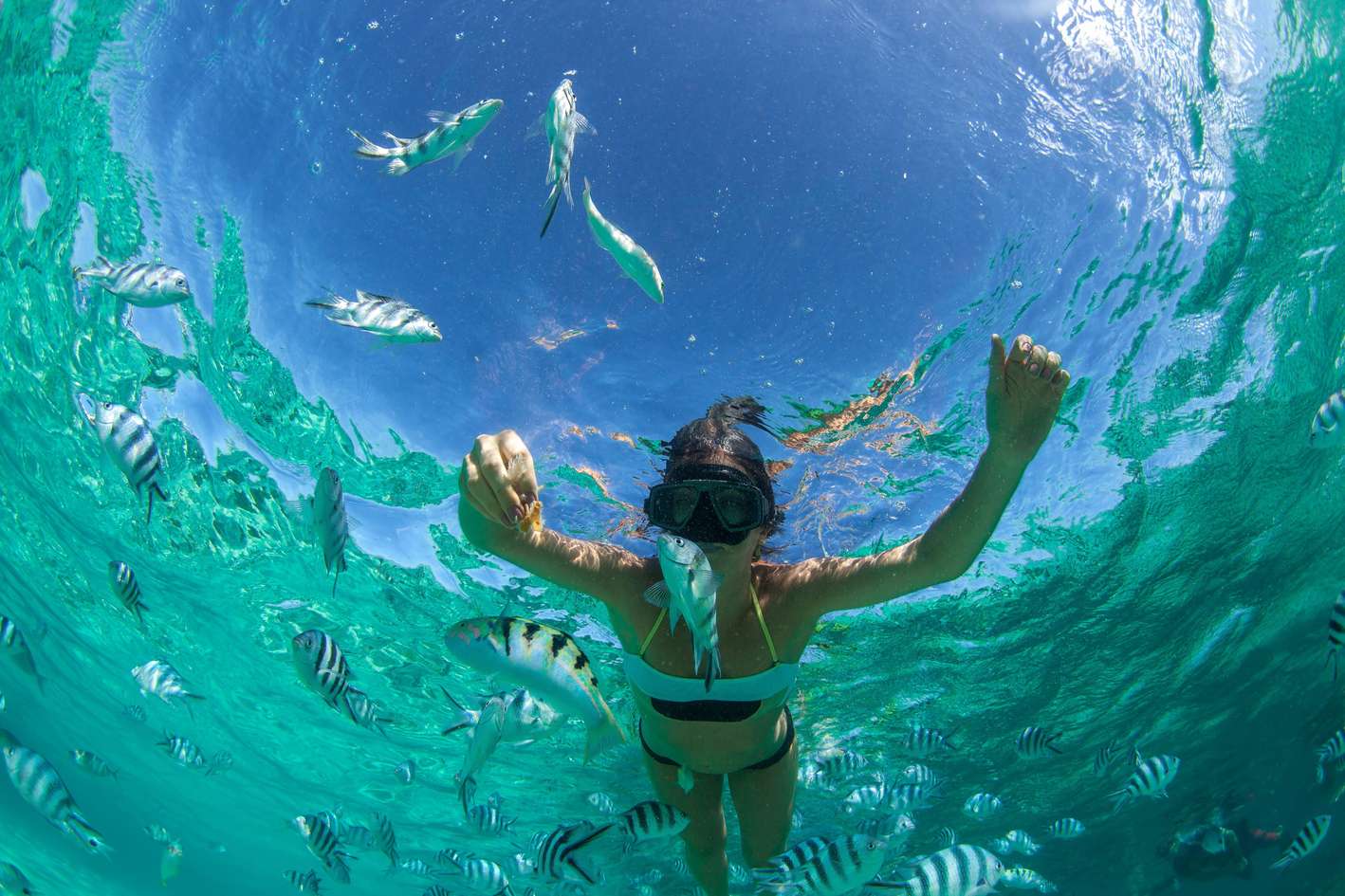
Glass-bottom boats leave the public beach and glide over brain corals six to seven metres across, inside a reserve protected since 1985. The park is the biggest coral reserve in Mauritius, and its gardens start about 100 metres offshore. Non-swimmers watch through the floor panels, and families get a shallow, calm lagoon.
It sits in the southeast, close to Mahébourg and the airport. Trips run one, two or four hours, with a Creole picnic on the longer option. Bus 46 leaves Mahébourg every 20 to 30 minutes. Go early: wind clouds the water toward midday.
3 hours · ★ 5.0 (4)Blue Bay: Lagoon, Snorkeling, and Creole LunchFrom $87 2 hours · ★ 4.6 (17)Blue Bay Marine Park: Guided Snorkeling with Video Souvenirs and SnackFrom $58 4 hours · ★ 4.5 (306)Blue Bay: Half-Day Snorkeling Trip with Creole Picnic LunchFrom $67 1 hour · ★ 4.4 (155)Blue Bay Marine Park - 1-hour Snorkeling ExcursionFrom $28 Green turtles grazing on seagrass, a lagoon that stays flat most days
Green turtles graze on seagrass along the reef edge here, most reliably in the calm morning water before the tour boats arrive. The lagoon stays flat on 80 to 98 percent of days, so entry is easy, though the sandy shallows near the beach hold few fish.
The richer coral sits on the barrier reef shelf 200 to 300 metres out, and swimming across the boat channel is for experienced snorkelers only. A private speedboat from Grand Baie drops you on the turtle grounds in two hours, gear and snacks included. Morning sessions win.
The calmest lagoon on the island, with coral heads a short swim out
This is the calmest lagoon on the island, flat behind its barrier reef. Coral clumps and reef fish begin a few dozen metres from the sand, and the denser formations lie about 200 metres out, opposite the Hindu temple and in front of one of the hotels past the public beach.
Private sunrise dolphin boats leave straight from the beach, some at 6:30 am with a handful of passengers. Water shoes help, because broken coral and sea urchins hide in the shallows. Weak swimmers and families get on well here.
8 hours · ★ 5.0 (2)Private Dolphins, Sea Turtles & Île aux Bénitiers TourFrom $850 /group 7 hours · ★ 5.0 (1)Mauritius: Private Whale Watching & Bénitiers BBQFrom $1,025 /group 2 hours · ★ 4.7 (28)Flic en Flac: Private Sunrise Dolphin Watching Boat TourFrom $309 /group 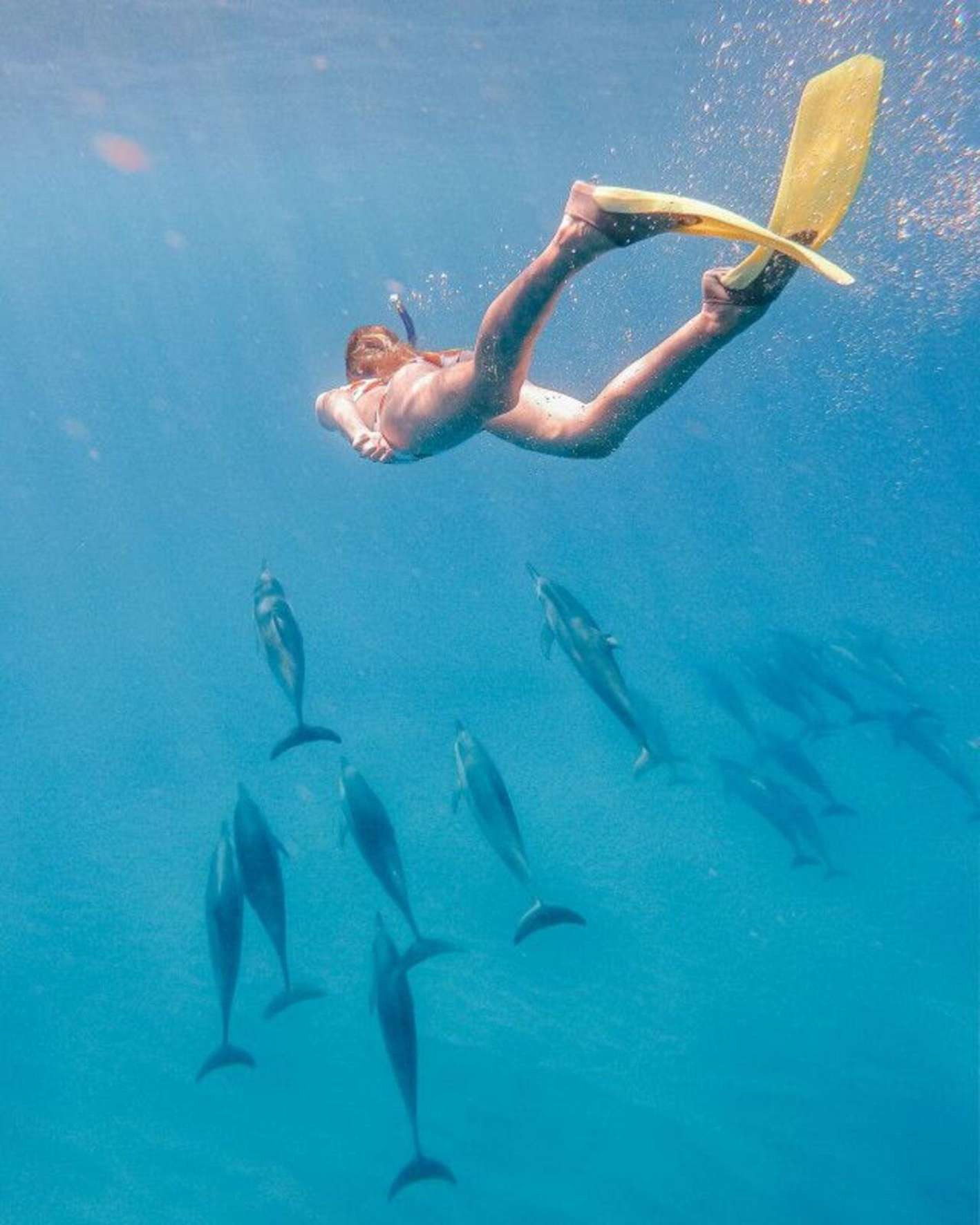 2 hoursMauritius: Private Dolphin Watching and Snorkeling TourFrom $441 /group
Snorkeling under the mountain, with Crystal Rock in the lagoon
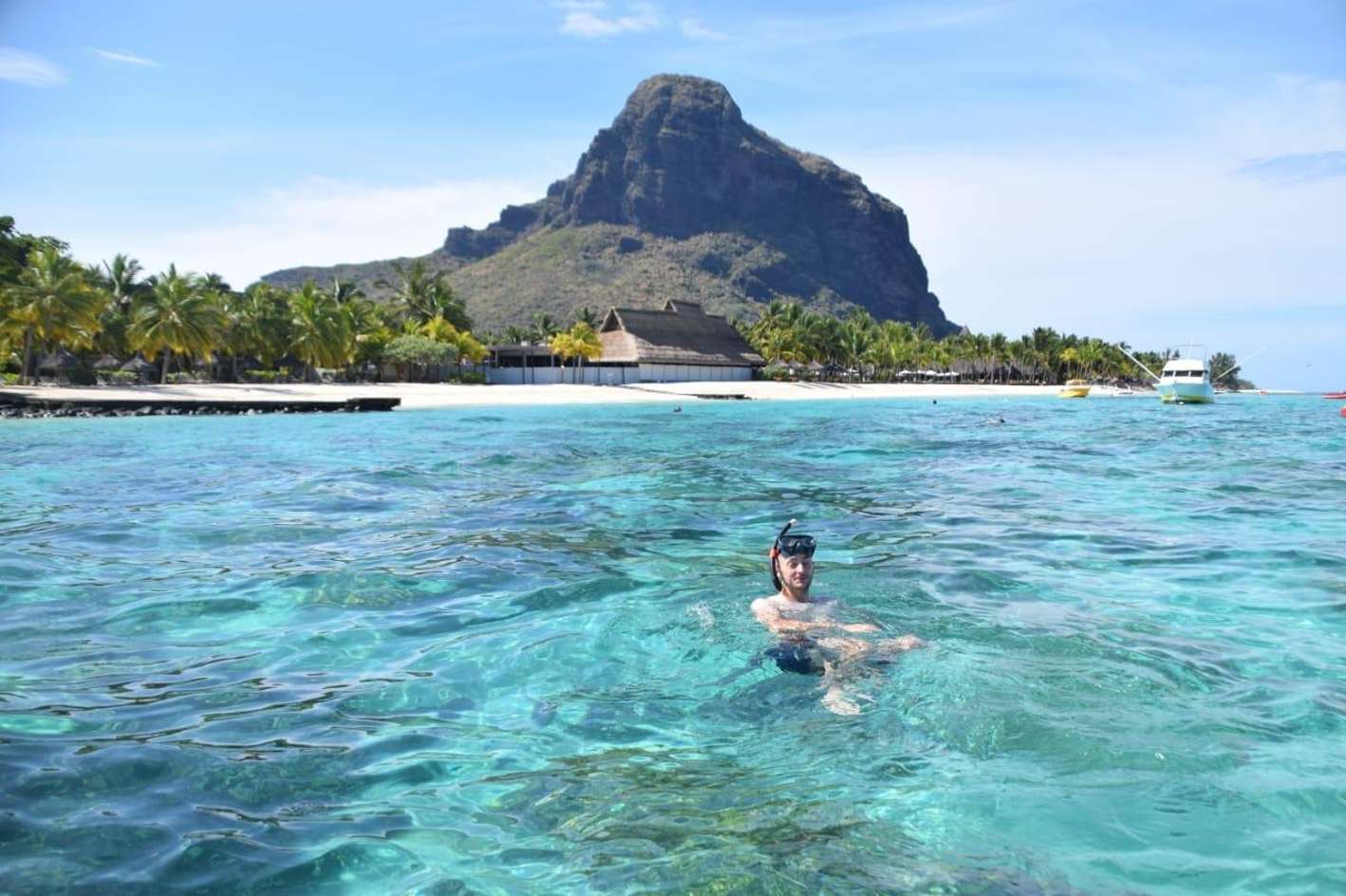
The lagoon under the mountain is calm and shallow, and the snorkeling happens around Crystal Rock, an isolated rock in the lagoon where the water runs waist to chest deep over sandy bottom. Needlefish, pufferfish and reef fish gather at the coral blocks nearby.
The reef pass at One Eye is a different animal: outgoing tides run hard through it, so reach the outer reef by boat with a skipper. Two-hour dolphin trips and private snorkel runs leave from La Gaulette and Black River. Mornings are flattest, and the trade winds build through the afternoon.
7 hours · ★ 5.0 (5)Private Île aux Bénitiers Boat: Dolphin Snorkeling & LobsterFrom $738 /group 7 hours · ★ 5.0 (1)Mauritius: Private Whale Watching & Bénitiers BBQFrom $1,025 /group  2 hours · ★ 4.9 (151)Mauritius Le Morne: Wild Dolphin Watching & SwimmingFrom $331 /group
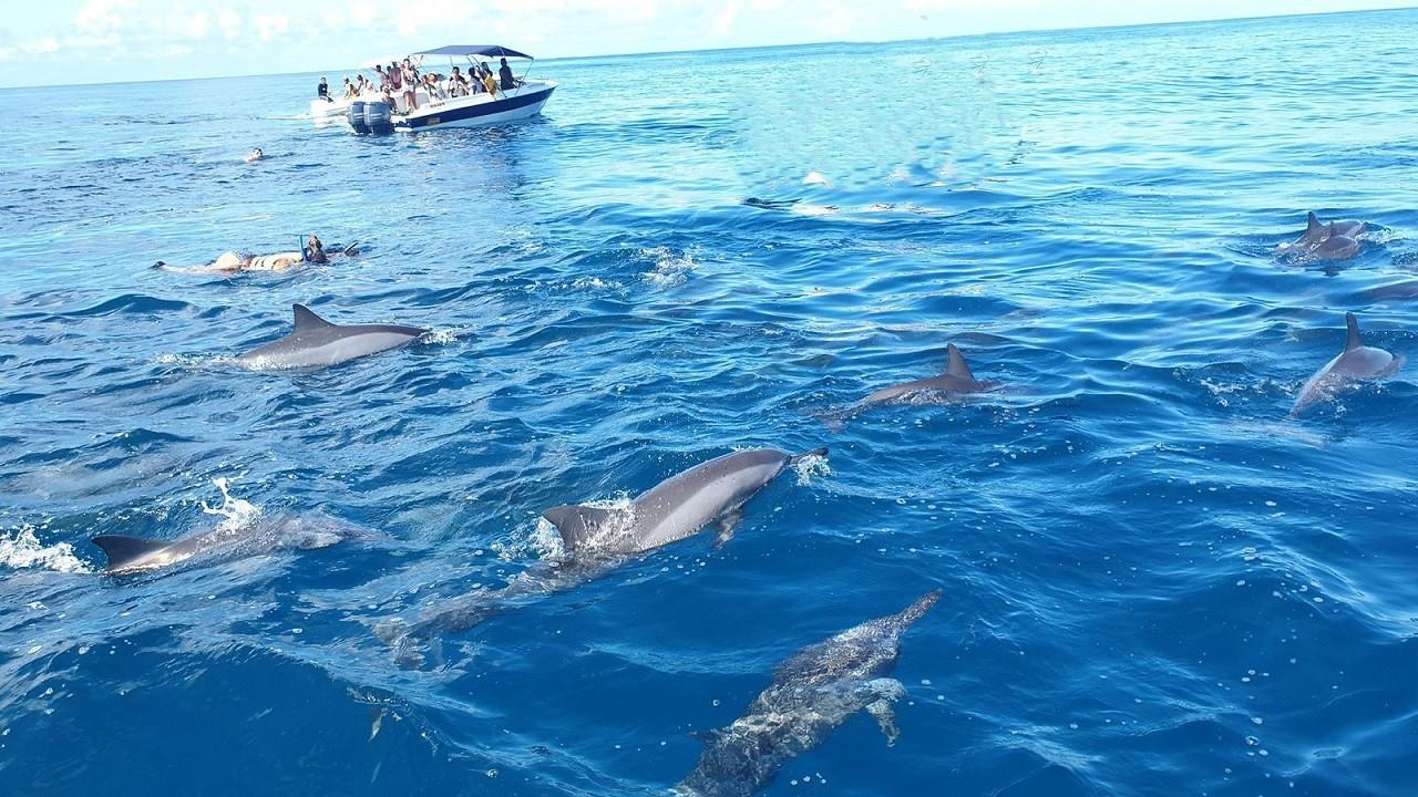 6.5 hours · ★ 4.3 (318)Black River: Swim with Dolphins Speed Boat Tour with lunchFrom $69
Turtles closer to the sand than almost anywhere else on the island
Turtles come closer to the sand here than almost anywhere on the island, often 50 to 100 metres out, and the cove keeps a buoyed swimming zone free of motorboats. Coral grows on the rocky edges of the bay, and the sandy centre holds little.
The best feeding grounds sit 300 to 350 metres out toward the reef, a long fin for some swimmers, and currents run outside the bay.
A boat tour from the beach covers the distance in minutes and puts you on the turtle spots with a guide. Showers, toilets and parking sit right at the beach entrance.
The launch beach for the northern isles and their offshore reefs
The bay itself is a harbour, busy with moorings and water taxis, and the reef worth your fins lies outside it. The value of Grand Baie is what leaves from its public beach: catamarans and speedboats bound for the northern isles, where snorkeling at Coin de Mire runs over deep water with plenty of fish.
Trips run from two hours to a full eight, with BBQ lunch on the island days. The open crossing past Coin de Mire can roll in trade wind season, so a morning departure is the smooth one. Life jackets sit onboard, just ask a skipper.
Wild dolphins in the bay at dawn, and an athletic swim to reach them
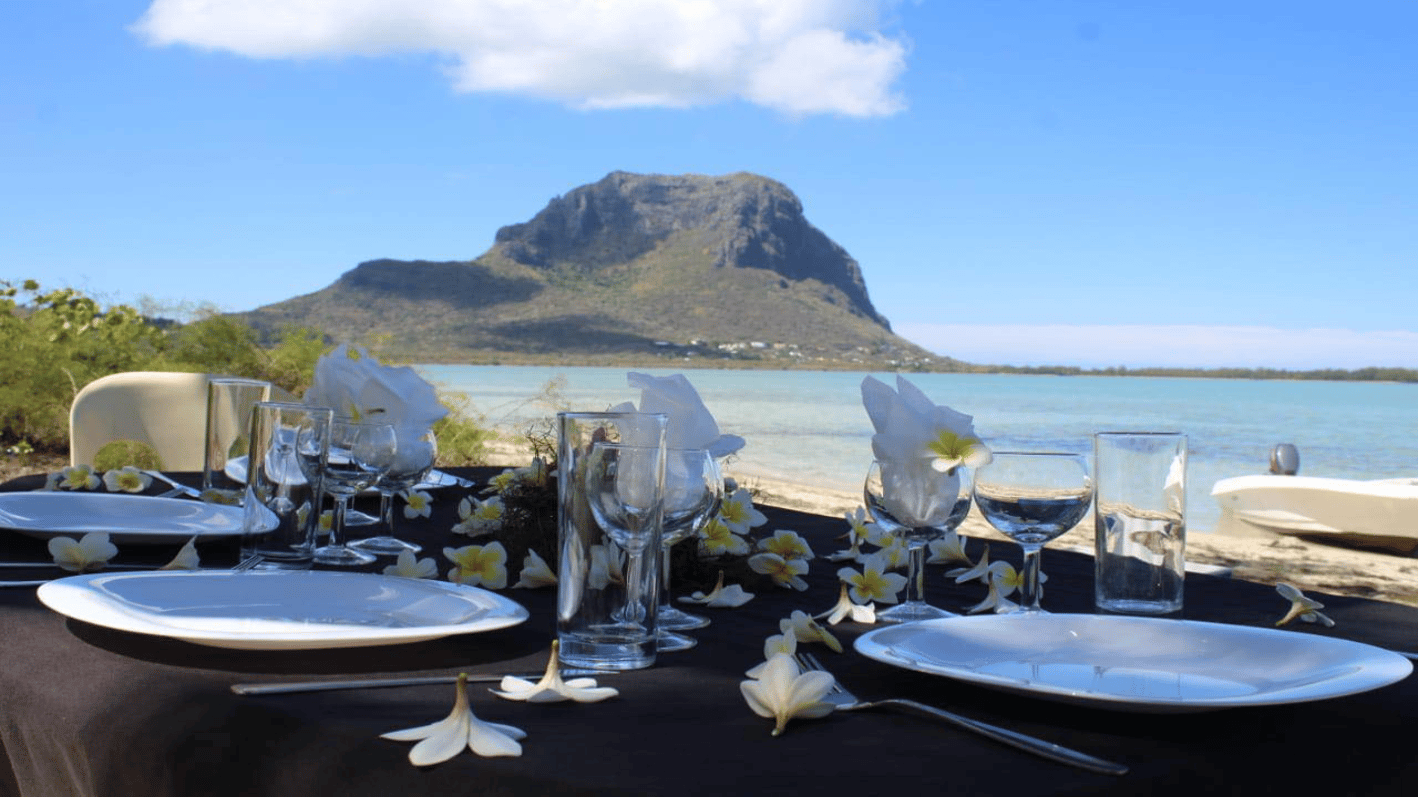
Dolphins are the draw here. Spinner and bottlenose pods rest in the bay in the early morning, and boats leave the public beach to swim with them outside the reef. The swim is athletic: you drop into deep water and keep pace with fast animals, fins on.
This is open ocean, with swells of one to two metres even in good weather and currents where the river mouth meets the sea. It suits confident swimmers. The same boats often carry on to Crystal Rock and a BBQ lunch on Benitiers Island.
7 hours · ★ 5.0 (5)Private Île aux Bénitiers Boat: Dolphin Snorkeling & LobsterFrom $738 /group 6 hours · ★ 4.7 (363)Mauritius: Catamaran Cruise - Dolphin Watching, BBQ & DrinksFrom $87 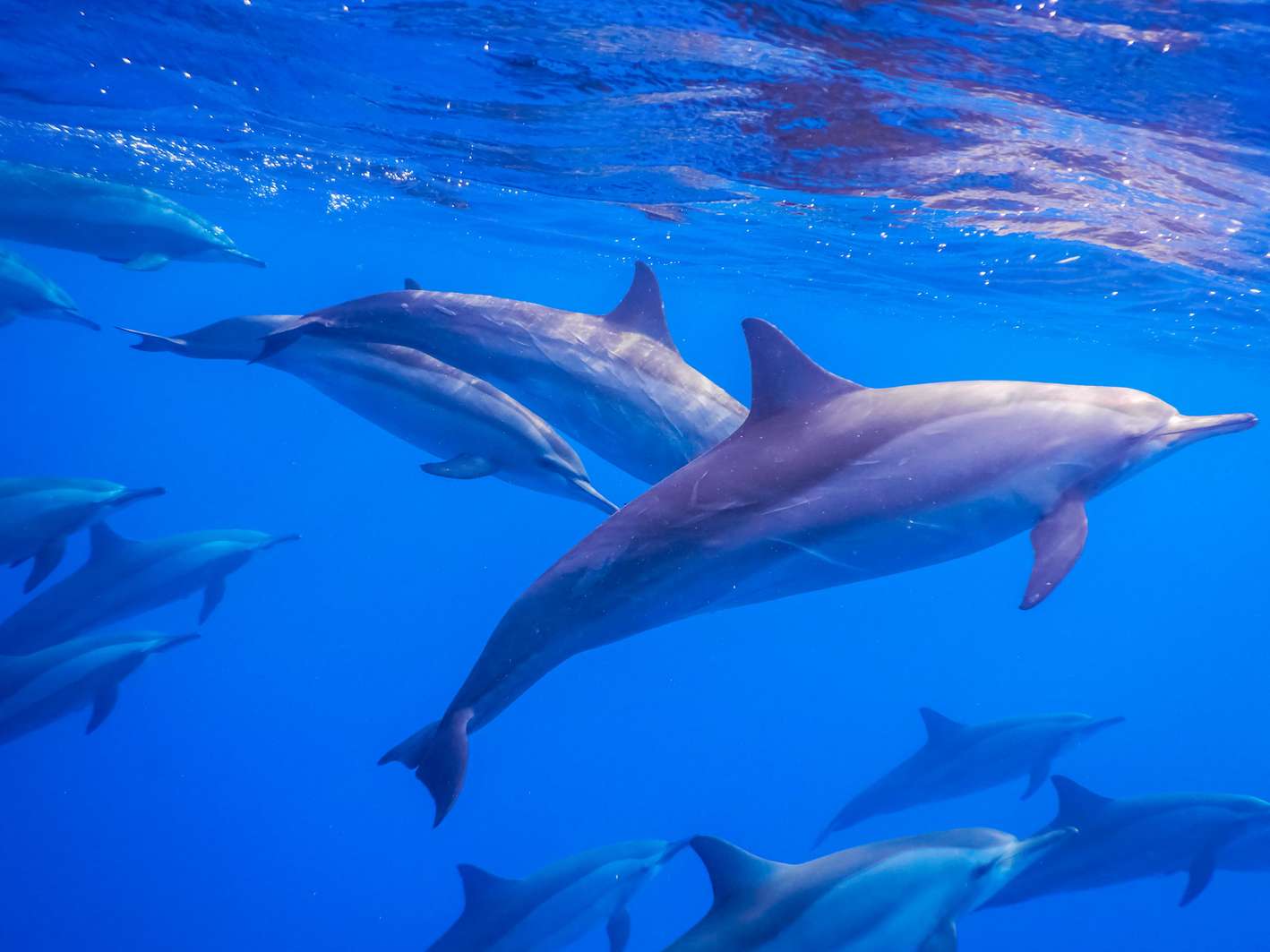 2 - 6 hours · ★ 4.7 (237)Dolphin Watching with Hotel Pickup (Mauritius)From $61 /group
 4 hours · ★ 4.4 (35)Dolphins & Whales: Private Snorkeling TourFrom $528 /group
A pretty lagoon that the trade winds own all winter
The lagoon is pretty from the sand, but the trade winds own this coast from May to September, and calm sea days can drop to almost none in June through August. Snorkel the sheltered inner spots early, before the wind roughens the water.
The reef sits about 500 metres offshore, and local guides ferry snorkelers out by boat, because swimming to it means crossing currents and jet ski traffic. Full-day catamaran tours collect guests from the east coast hotels and handle the reef stops for you. In summer the picture improves a lot.
A shallow beginner lagoon 250 metres wide, with resort pickup to the boats
A wide, shallow lagoon barely 250 metres to the reef keeps Palmar calm and beginner-friendly, with small tropical fish over seagrass and around the rocky points. June through August the same winds turn it choppy and murky, so time your visit outside winter or go at dawn.
There is little reef off the sand, and the good coral lives on outer boat trips. Resort pickup solves that: tours collect you at your hotel lobby and run south to Trou d'Eau Douce in minutes for the island-hopping days. Sea urchins share the shallows, so wear water shoes.
The park named for its turtles, with walk-in snorkeling at Kuilima Cove
This is the park that wraps Turtle Bay, and the name is no accident: Dutch sailors saw so many turtles here in the seventeenth century that they renamed the bay after them.
Today turtles are occasional visitors grazing on seagrass, seen sometimes from the shore at Kuilima Cove, where the reef sits in four to eight feet of water.
The park's rules are strict: no touching coral, no swimming in traffic lanes, permits for conservation zones. The reef is recovering, so expect patches of healthy coral between bare stretches. Boat tours from Grand Baie add the turtle grounds and northern reefs a short drive north.
Quieter reefs, a shallow lagoon at low tide, boats launched up the coast
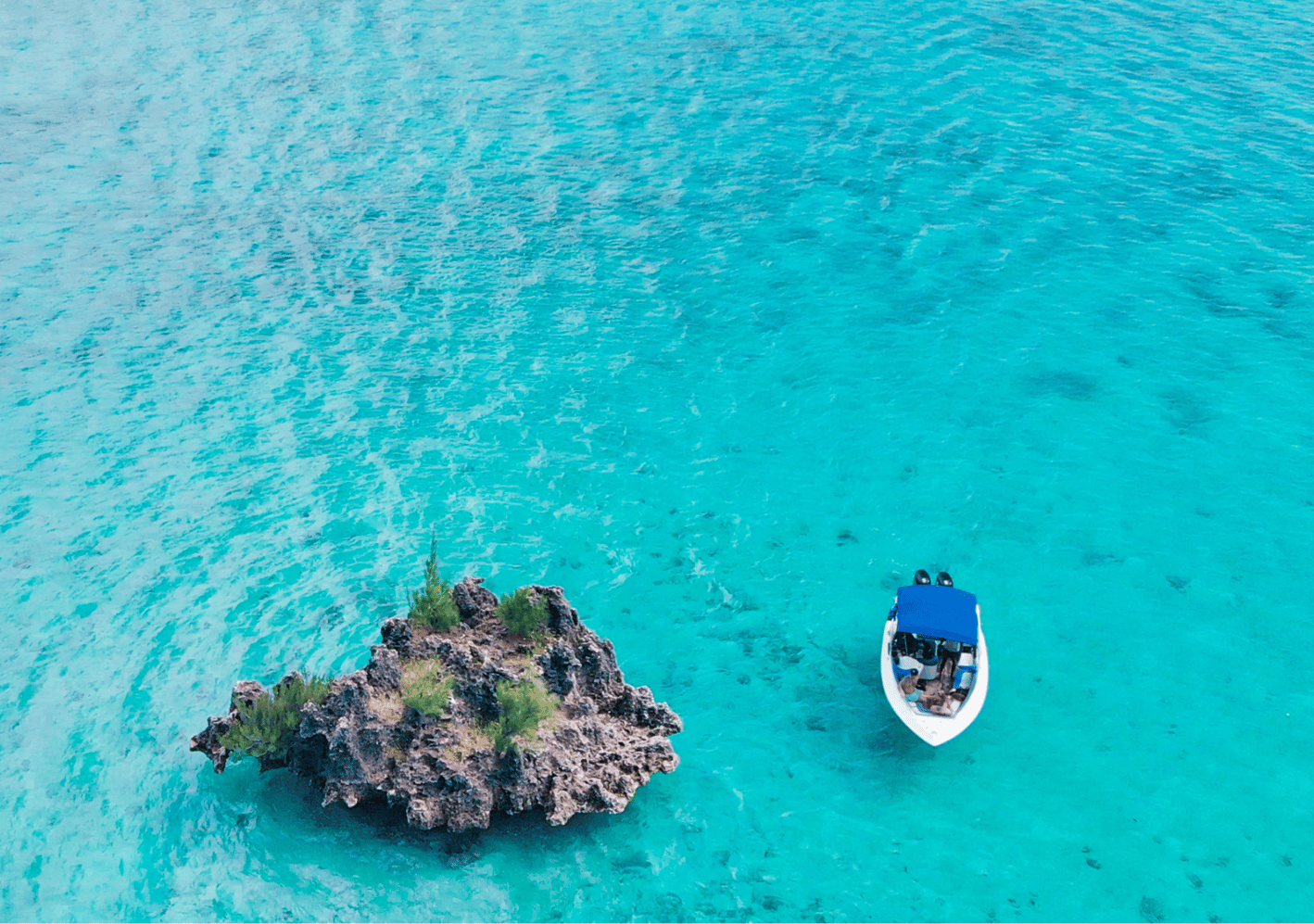
The south feels quieter than the north, with fewer operators and reefs that see fewer boats. Snorkeling off the beach works on calm days where rocks and coral sit in the sand, but at low tide the lagoon goes very shallow and the channels run strong currents.
Most boat trips launch 20 to 40 minutes north at Tamarin, Black River or Le Morne, with resort pickups before 6 am for 7:30 am boats. Come here for a quiet base, and let a tour handle the reef passes. Mid to high tide gives the clearest water.
The famous cascade exists only from the air, and the reef opening pulls hard
The famous cascade is an illusion: sand and silt washing off a shallow shelf into deep water, visible only from the air. From a snorkel mask you see a few metres sideways, and the reef opening where the water flows out generates strong rip currents.
So the plan splits in two. Take a seaplane or helicopter flight over Le Morne for the spectacle, then spend your water time in the sheltered lagoon and around Crystal Rock, where the dolphin and reef boats run. The flights leave from La Prairie beach and from helipads across the island.
Where turtles feed, and the one law that shapes every encounter
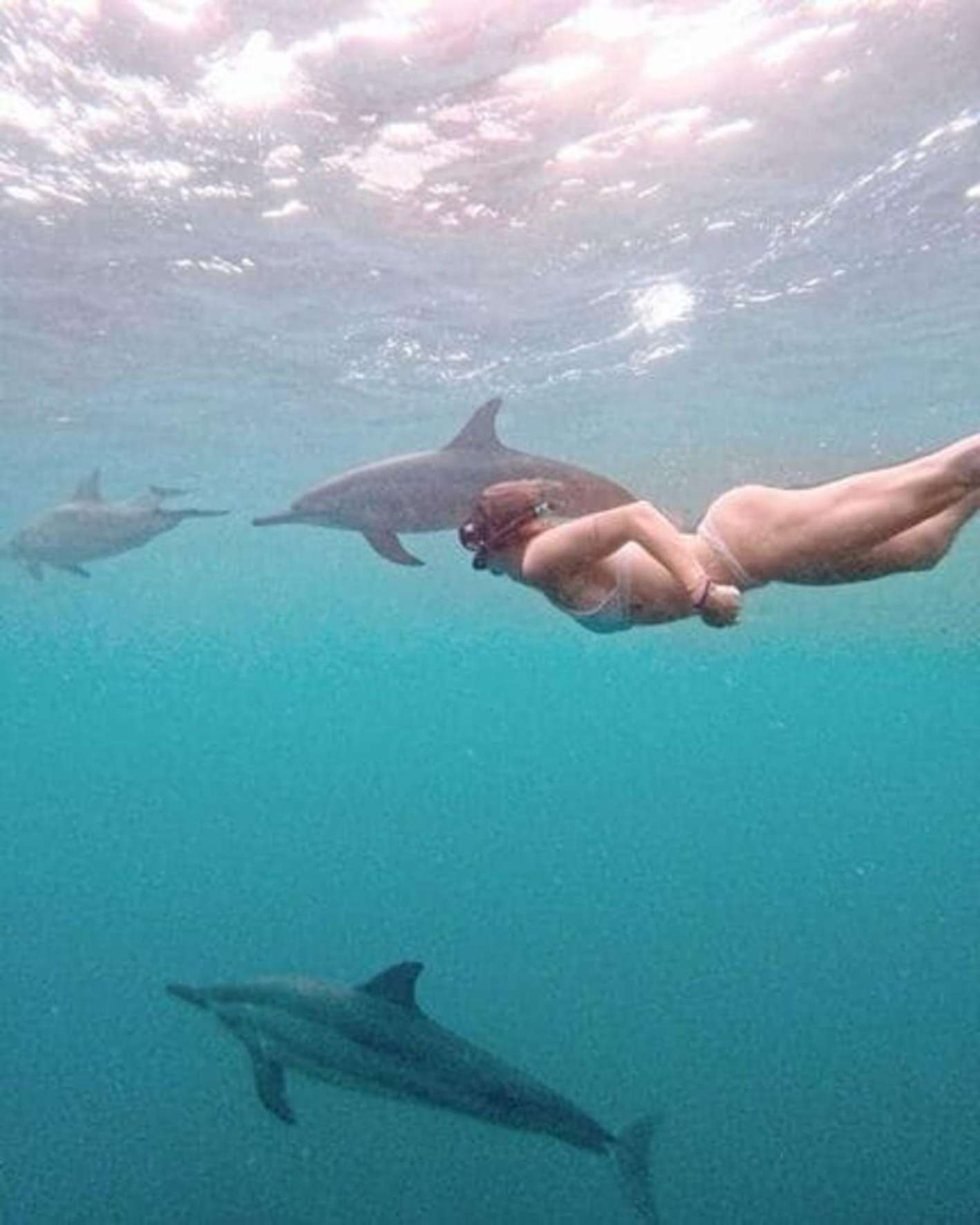
Wild sea turtles gather at a handful of feeding grounds around the island, most reliably at Pereybere, in the Blue Bay lagoon and along the northwest coast. Sightings are frequent at those spots, though no beach delivers a guarantee.
One rule shapes every encounter: under the Fisheries Act of 2023, swimming with, touching or feeding a sea turtle is illegal in Mauritius, and the penalties are heavy.
You watch from a distance and let them graze. Boat tours know where the animals feed and how to approach without stress, which is what makes the sightings happen.
8 hours · ★ 5.0 (2)Private Dolphins, Sea Turtles & Île aux Bénitiers TourFrom $850 /group 2 hours · ★ 4.7 (39)Mauritius: Snorkeling with turtles Le Transporteur speedboatFrom $375 /group 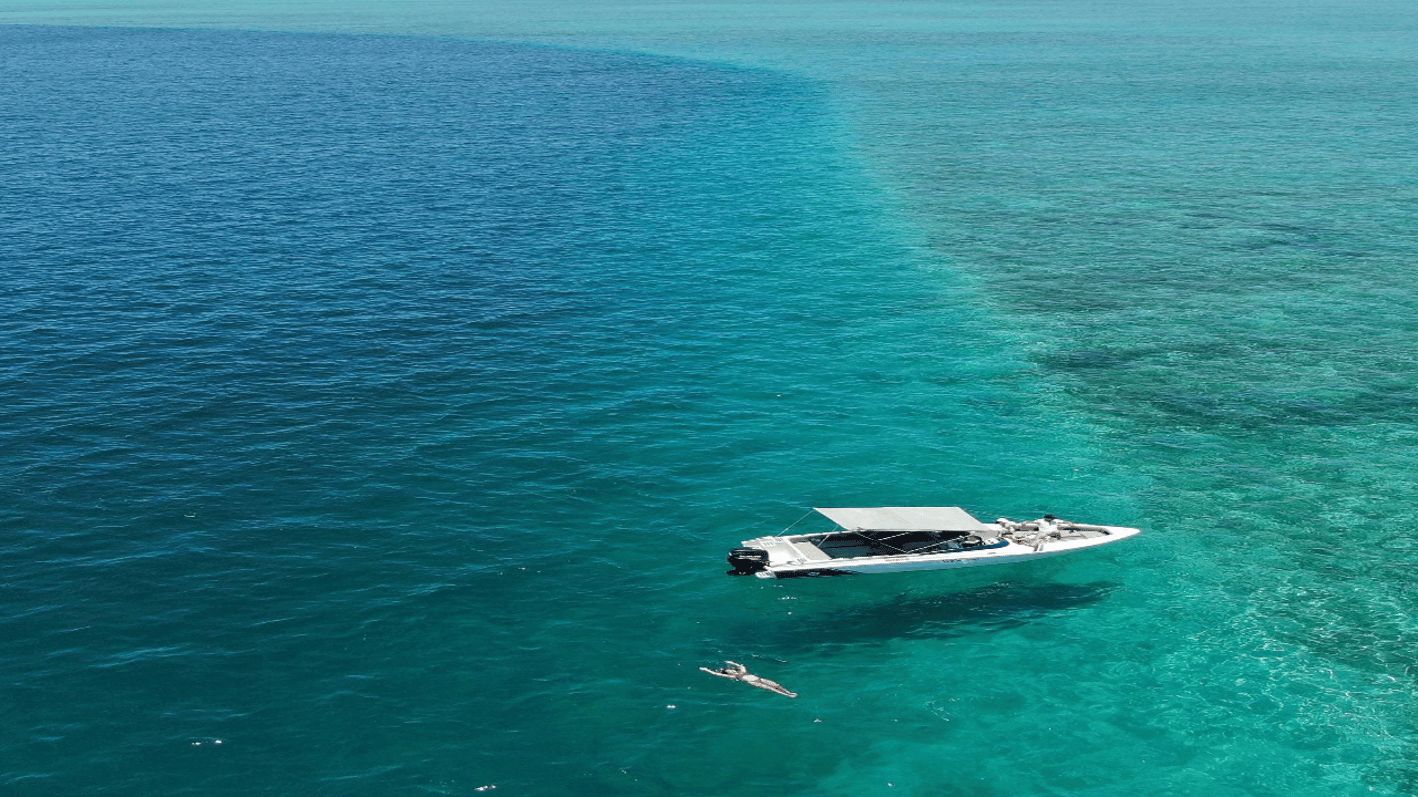 9 hours · ★ 4.3 (188)5 Islands Speedboat with Snorkeling, Sea Turtles, Lunch & DrinksFrom $95 1.5 hours · ★ 4.2 (314)Mauritius: Sea Turtle Adventure and Coral Reef DiscoveryFrom $44
Resident sperm whales in deep water close to shore, watched from the boat
Sperm whales live off the west coast year-round because deep water sits close to shore, and humpbacks pass between June and October. Watching happens from the boat only: Mauritian law bans swimming with whales and keeps boats 100 metres away, with licensed skippers holding a parallel course.
That makes this an observer's trip, and a private speedboat gives the calmest encounters. Full-day charters from Flic en Flac pair the whales with snorkeling at Crystal Rock and a BBQ on Benitiers Island. Open-sea swells are part of the day, so bring motion sickness tablets if you need them.
Which month gives you clear water, calm seas and a wetsuit you can pack
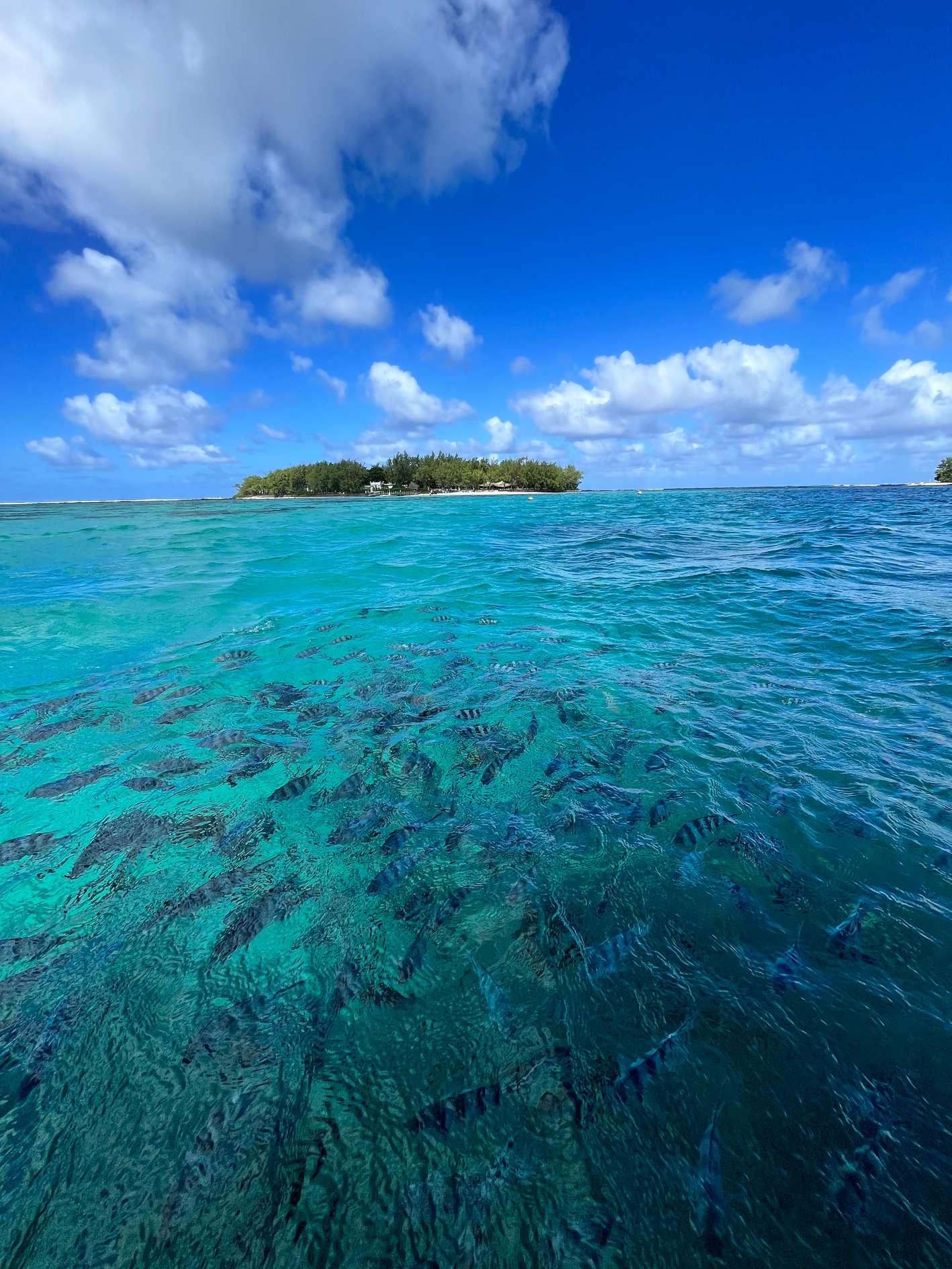
October to December is the sweet spot: water warming to around 26 to 28 degrees, calm seas and visibility that can reach 20 to 30 metres. Winter from June to August cools the water to about 23 to 25 degrees and stirs the eastern reefs with trade winds.
January to March is cyclone season, the wettest months, when passing storms suspend boat trips for a day or two at a time. Snorkeling runs year-round on the sheltered west, with a shorty wetsuit in summer and a fuller layer in winter. Book the trip first, then pick the month.
The classic catamaran day: lagoon, waterfall, snorkel and a BBQ on deck
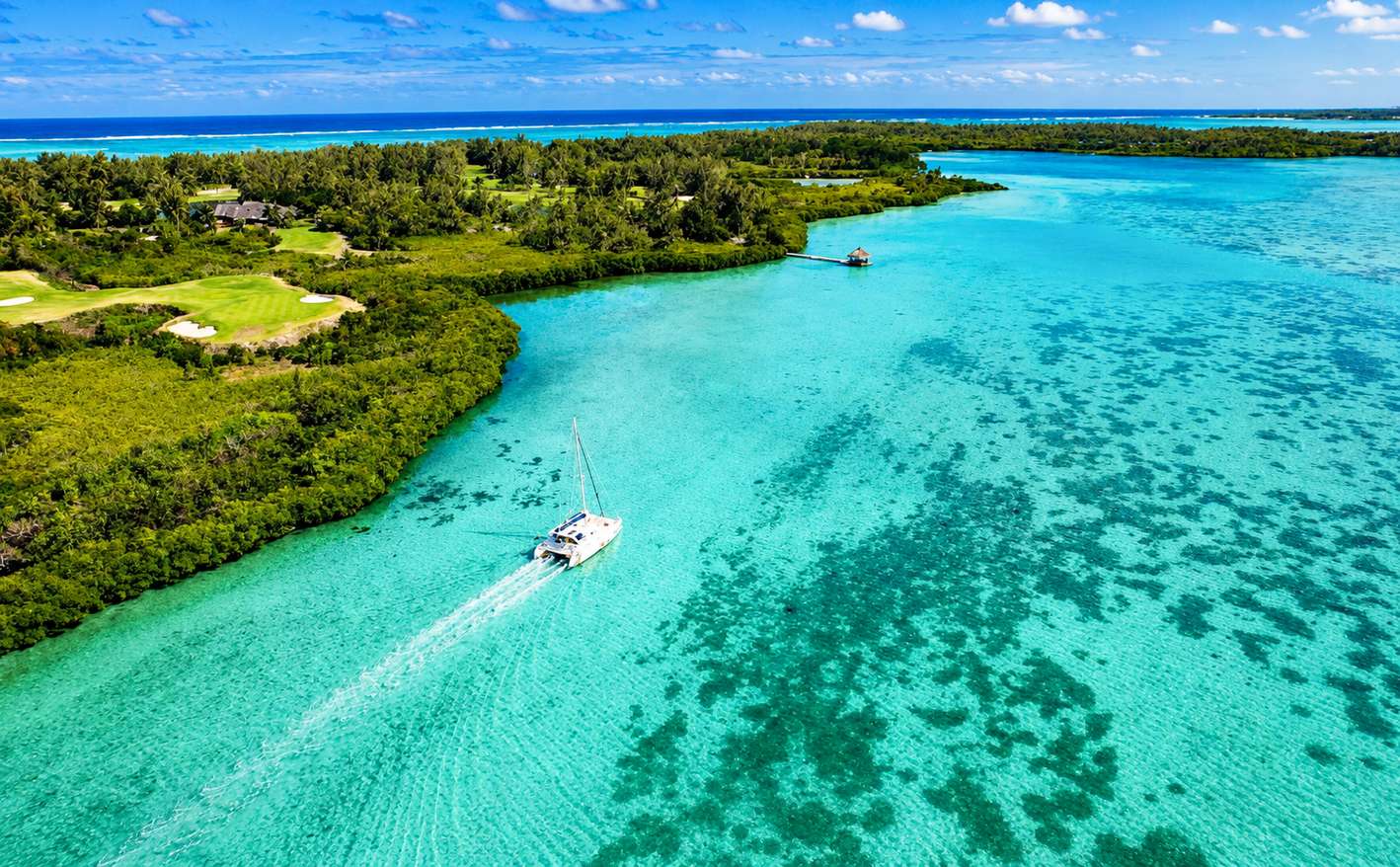
This is the classic sailing day: a catamaran across the east coast lagoon to Ile aux Cerfs, a stop at the Grand River South East waterfall, a snorkel break and a BBQ lunch with drinks on deck. The twin hulls keep the ride smooth even when the trade winds blow.
You get about an hour to an hour and a half of free beach time on the island, usually in the afternoon. Boarding at Trou d'Eau Douce is at 9 am with a 9:30 am departure. Transfers from east coast hotels are part of most options.
6 hours · ★ 5.0 (11)Île aux Cerfs: Private Catamaran Cruise with Gourmet LunchFrom $1,133 /group 7 hours · ★ 4.8 (869)Ile aux Cerfs Catamaran Cruise with BBQ Lunch & SnorkelingFrom $68 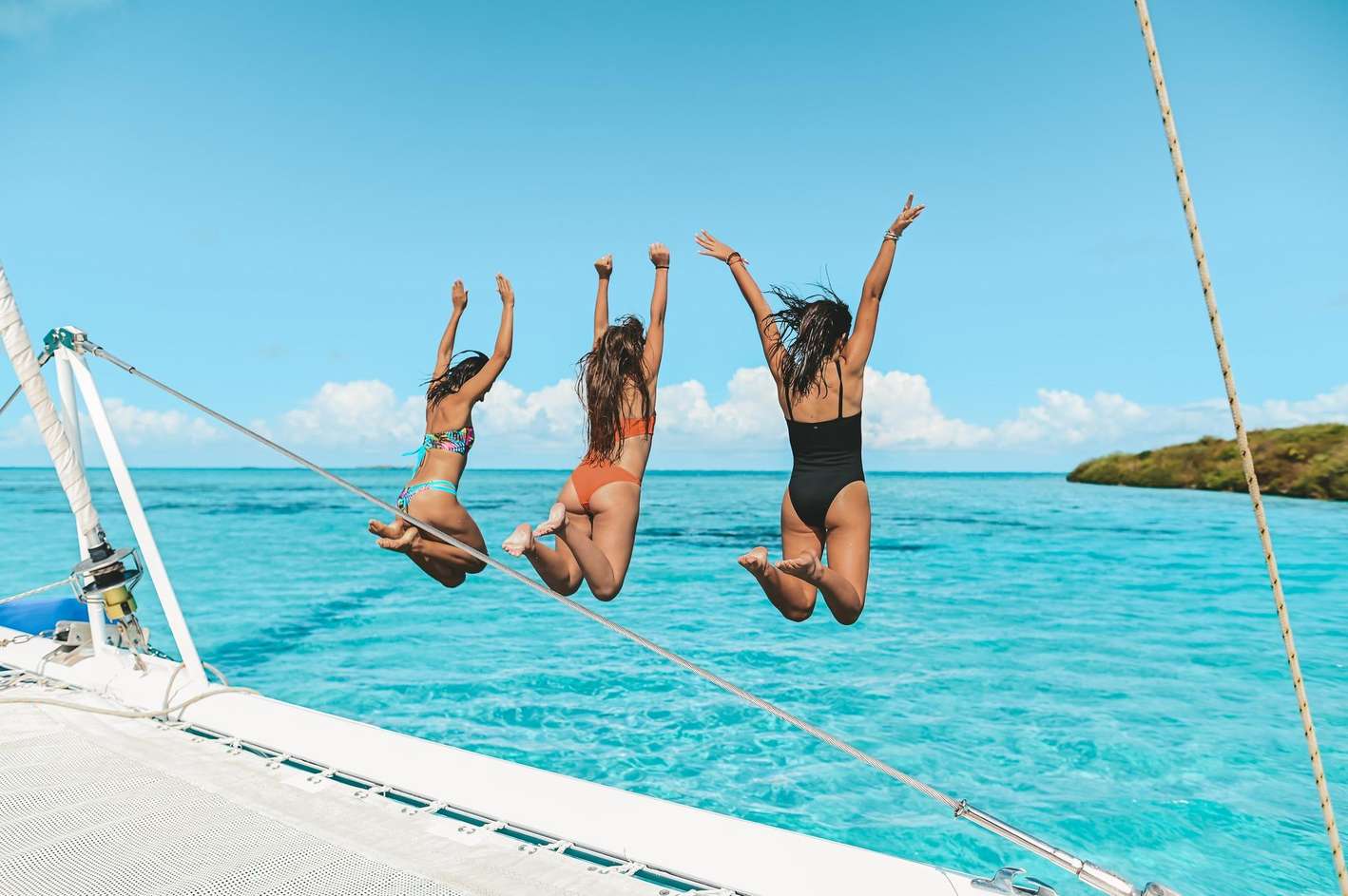 7 - 8 hours · ★ 4.7 (453)Mauritius: Ile aux Cerfs Catamaran, Waterfall & BBQ LunchFrom $62
 7 hours · ★ 4.6 (104)Mauritius: Ile aux Cerfs Catamaran Cruise, Waterfalls & BBQFrom $84
A 10-minute crossing that buys you extra beach time and hidden sandbanks
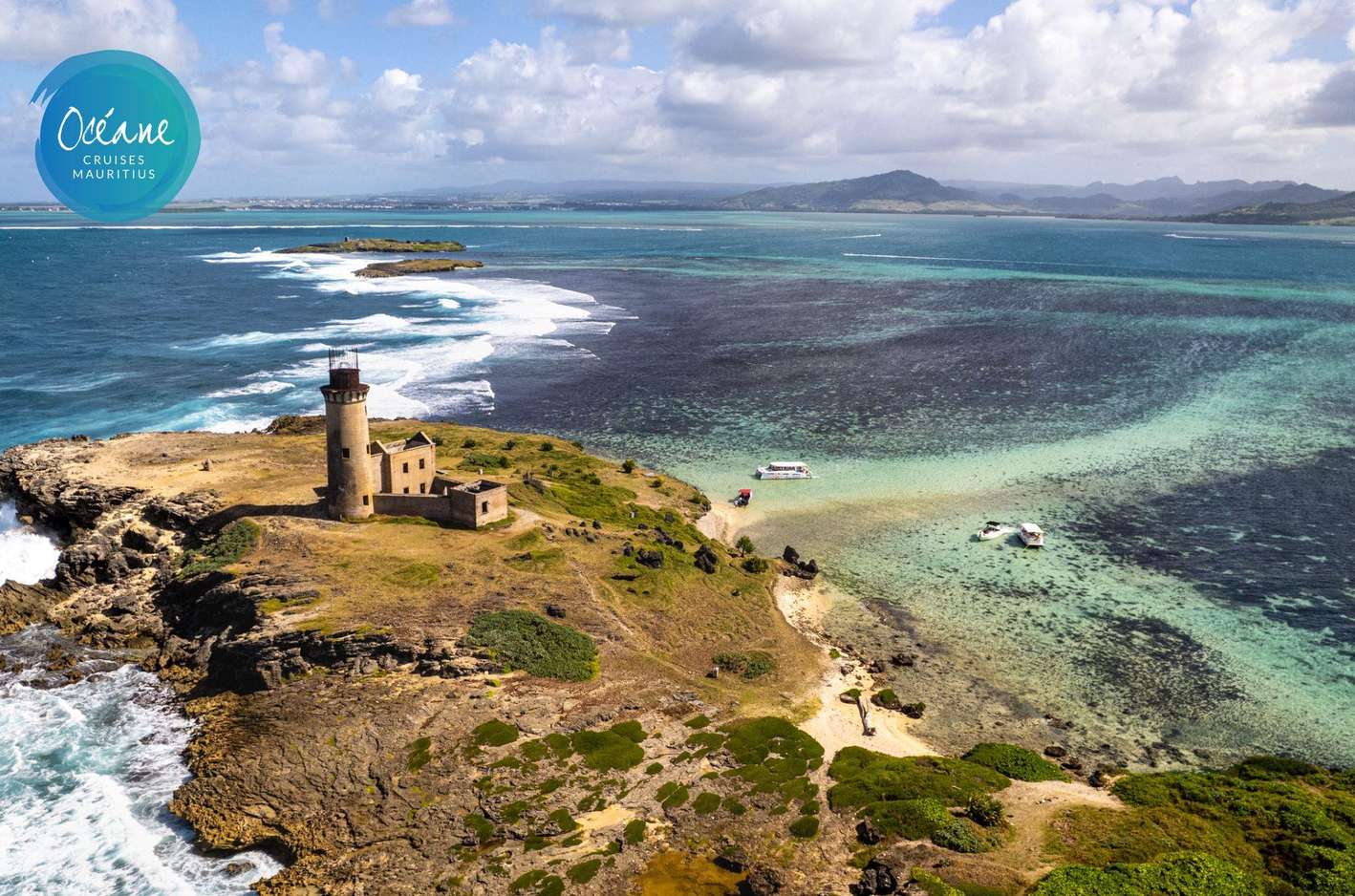
A speedboat crosses the lagoon to Ile aux Cerfs in 10 to 15 minutes, against 45 to 60 for a sailing catamaran, which buys you extra time on the beach. The trade is a bumpier ride: east coast swells make the trip lively, especially in trade wind season.
The shallow draft is the real advantage. Speedboats reach the waterfall basin at Grand River South East and the quiet sandbanks that catamarans cannot enter, and shared boats carry 6 to 18 passengers against 30 or more on a catamaran. Full-day island-hopping routes add five islands and a BBQ lunch.
6 hours · ★ 5.0 (3)Private Island-Hopping Cruise: 5 Islands, Waterfall & LunchFrom $738 /group 6 - 7 hours · ★ 4.7 (1,451)Trou d'Eau Douce: 5-Island Adventure with BBQ & SnorkelingFrom $95 9 hours · ★ 4.3 (188)5 Islands Speedboat with Snorkeling, Sea Turtles, Lunch & DrinksFrom $95 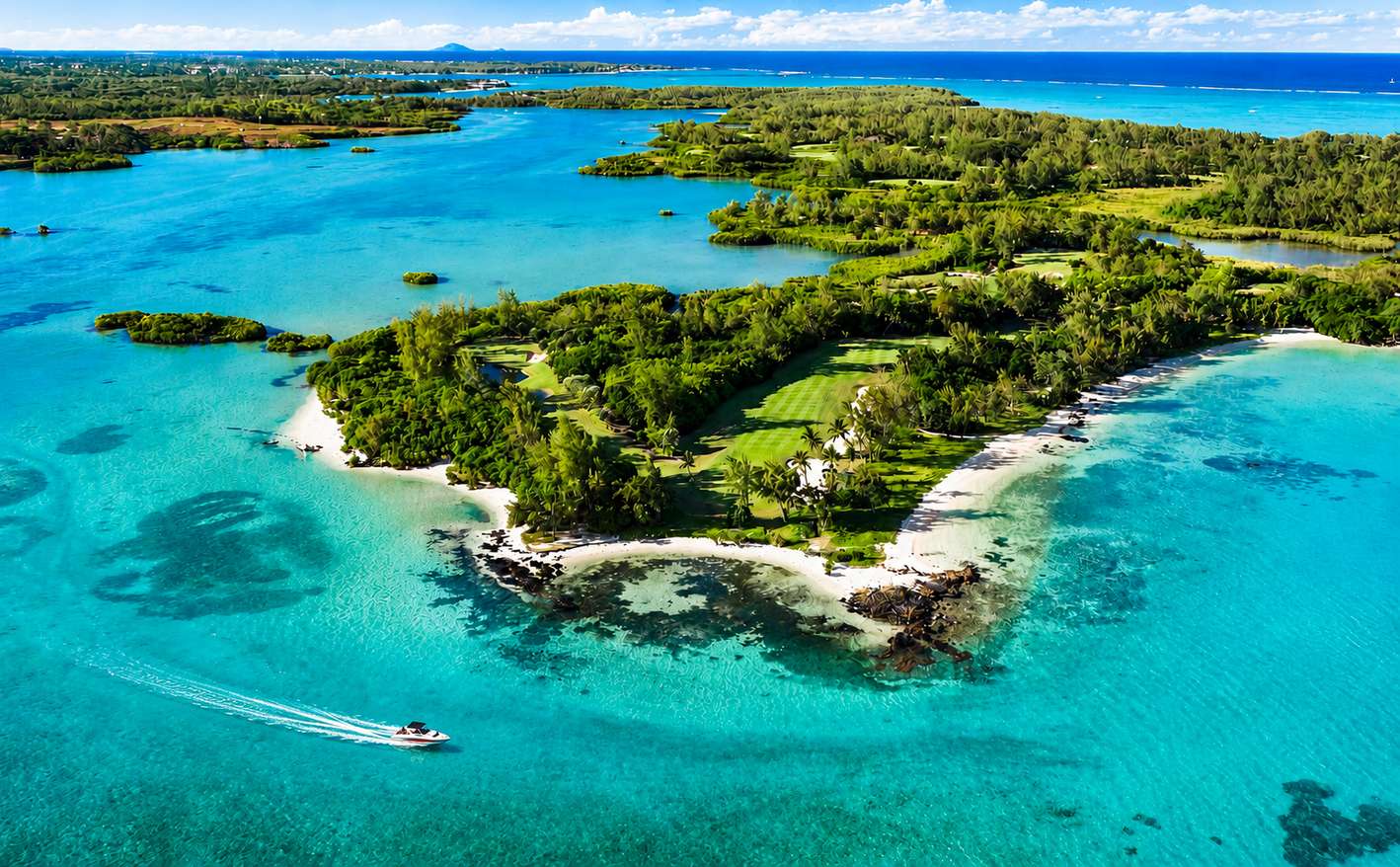 7 hours · ★ 4.3 (237)Mauritius: 5 Islands Speedboat Lagoon Experience with BBQFrom $74
Your own boat, your own timetable, and the crowds played around
The main beaches of Ile aux Cerfs fill with ferries and shared catamarans between 11 am and 3 pm, and empty again after 3:30 pm. A private boat plays around that schedule: early landings on quiet sand, reef snorkeling at your own pace, no fixed timetable.
Your skipper can adapt the route for your group, whether a slow sailing catamaran with a gourmet lunch or a nimble island-hopping boat that reaches the waterfall and sandbanks. Every beach stays public by law, so your advantage is timing, and a private charter owns it.
high tide gives the depth over the inshore coral
Dutch sailors named this bay for its turtles in the 1600s, and the animals still cruise its shallows. A calm lagoon and a guaranteed swim with a turtle are different promises, and the difference decides how you plan the day.
Turtles do show up in the shallow water of the cove, but sightings are never guaranteed from the shore.
Intentionally swimming with, chasing or touching turtles inside Balaclava Marine Park is a criminal offence under the Fisheries Act 2023, with fines that run into the millions of rupees.
Coral starts steps from the beach, and the densest part of the reef sits to the right of the wooden jetty on the southern beach.
Go early: calm water and clear visibility run from about 7 am until the day-trip boats and afternoon breezes arrive.
Wear reef shoes, because the entry runs over volcanic rock and the seabed hides sea urchins and stonefish.
Enter the water only inside the marked swimming zone near the wooden jetty, and keep to it. If you want the deeper turtle and coral spots further out, join a licensed boat tour with a skipper who holds the required park permits.
Three centuries ago, sailors from the Netherlands found so many turtles in this bay that they dropped its old name and wrote Turtle Bay on the chart. The animals are still part of the picture today, and the lagoon stays calmer than almost anywhere on the island.
So yes to the name. The coral asks for honesty. Mauritius trails the Red Sea and the Maldives for reef density, and Turtle Bay's table, fan and brain corals grow in healthy patches across sand and rubble.
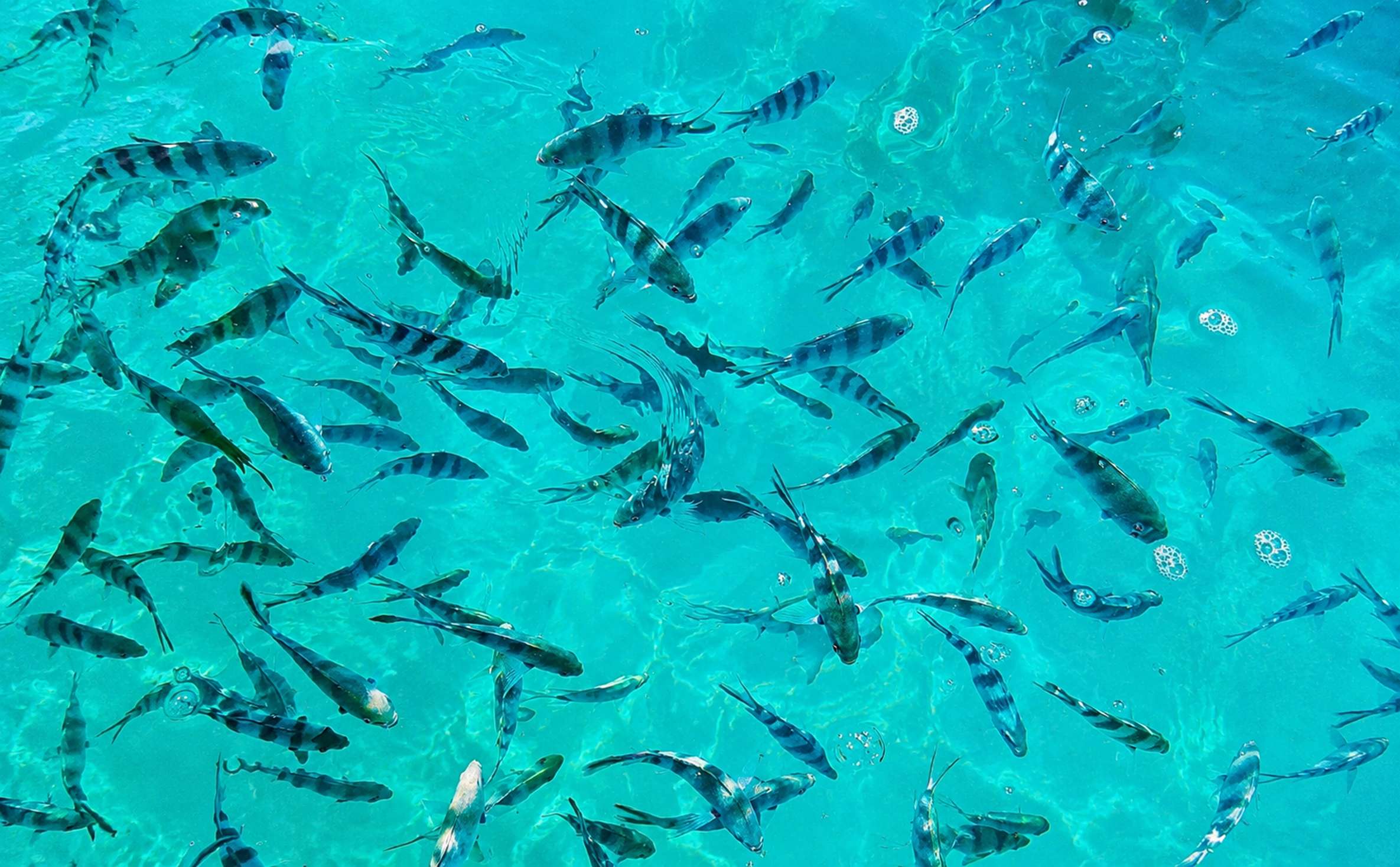
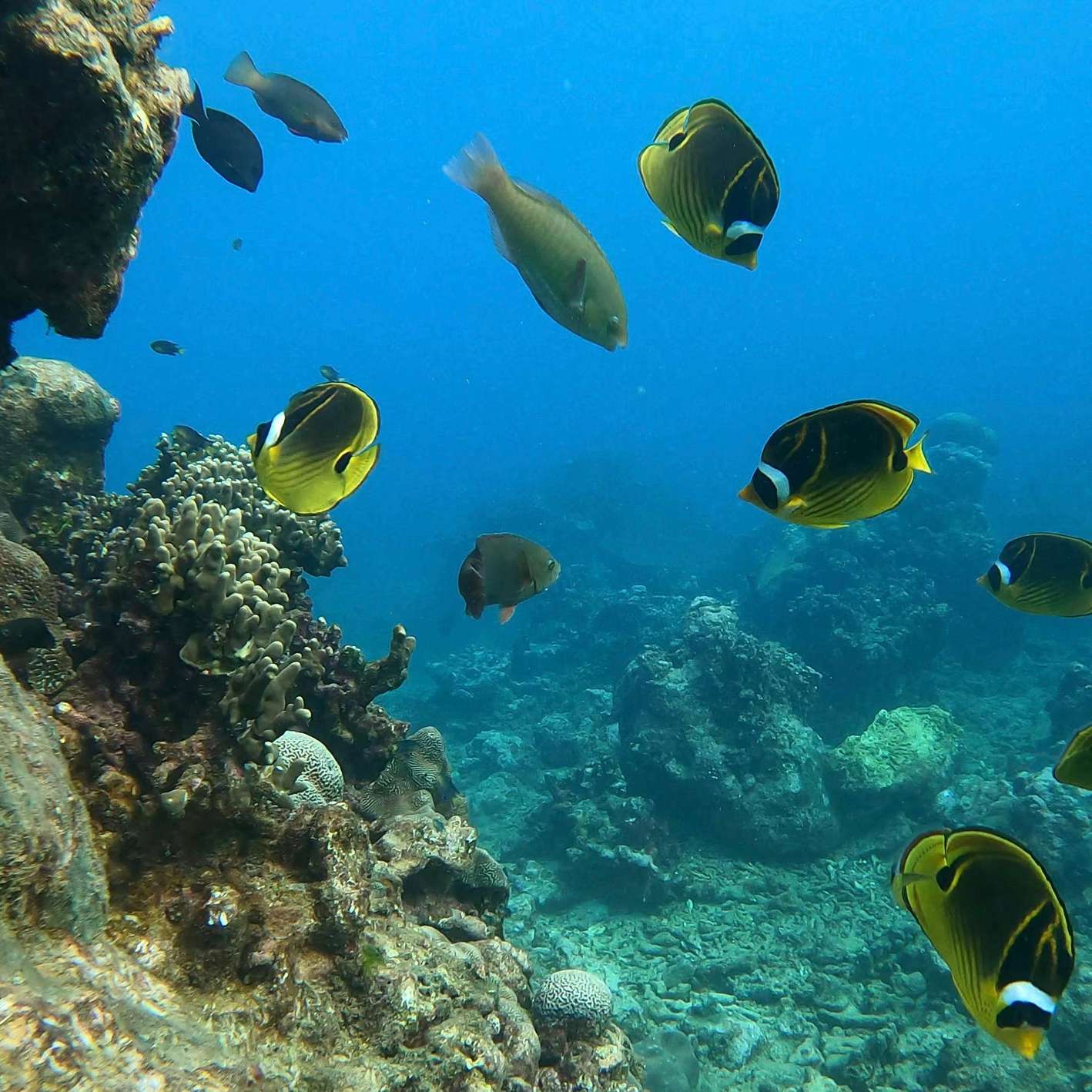
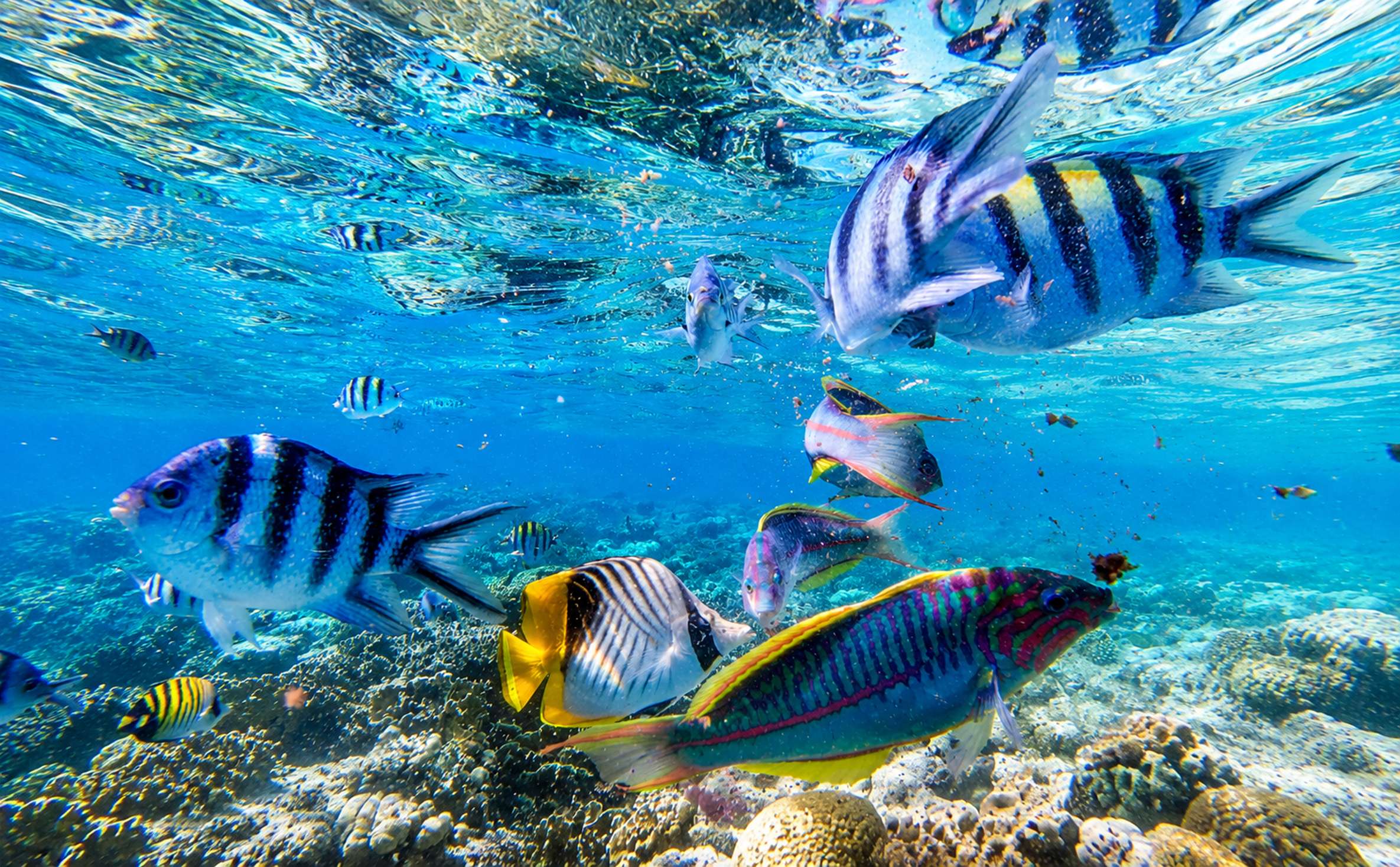
Schools of parrotfish and sergeant majors keep the water lively, and travelers who want the island's densest protected coral usually add a day at Blue Bay Marine Park.
Two beliefs about this bay cost people time: that a marine park promises untouched coral, and that a turtle sighting comes with the entry. Both are half right.
Balaclava Marine Park's reef is recovering, and bleaching remains a real threat; the park protects what is here, it does not guarantee a pristine aquarium
Green turtles do enter the shallows, especially near the cove, but they come and go on their own schedule and no sighting can be promised
The bay is calm, easy and pleasant, with good fish life, but reef density and coral diversity sit below the world's top snorkeling destinations
What the bay actually gives you is calm water and a real chance of a turtle, on the turtle's schedule and over a recovering reef. Plan the day around that, and it delivers.
This is the part most first-timers do not expect. Inside Balaclava Marine Park, the Fisheries Act 2023 makes it illegal to intentionally swim with, feed, touch, chase or harass a sea turtle, and commercial trips that promote turtle swimming are barred from the park itself.
Penalties reach up to 25 million Mauritian rupees and two years in prison. The same law protects turtles everywhere in Mauritian waters.
What you can do from shore is still good. Enter the water freely, no ticket needed, and snorkel the cove, where green turtles regularly pass over the deeper sandy patches in the middle. People see them often. They just do not appear on schedule.
The reliable in-water turtle time happens on a guided trip to the northwest feeding grounds.
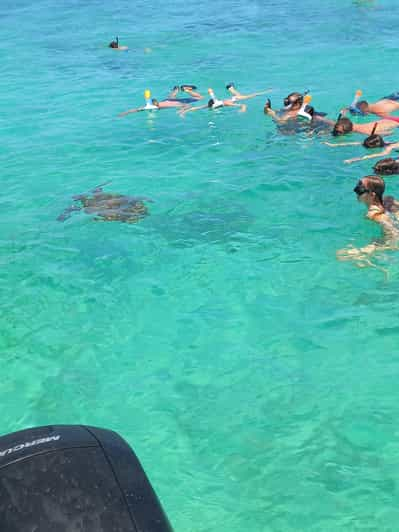
The Sea Turtle Adventure and Coral Reef Discovery runs from Pereybere Beach, a short drive from Turtle Bay, and puts you in the water with a skipper who knows where the animals feed. Non-swimmers ride along and watch from the boat.
Swimming with, feeding or touching sea turtles in Balaclava Marine Park is a criminal offence, with fines up to 25 million rupees Watch turtles from a distance, never touch or chase one, and let them approach or not as they choose
The rule is easier to live with than it sounds. A turtle that decides to pass close by is a gift you keep; one you chase is a court case.
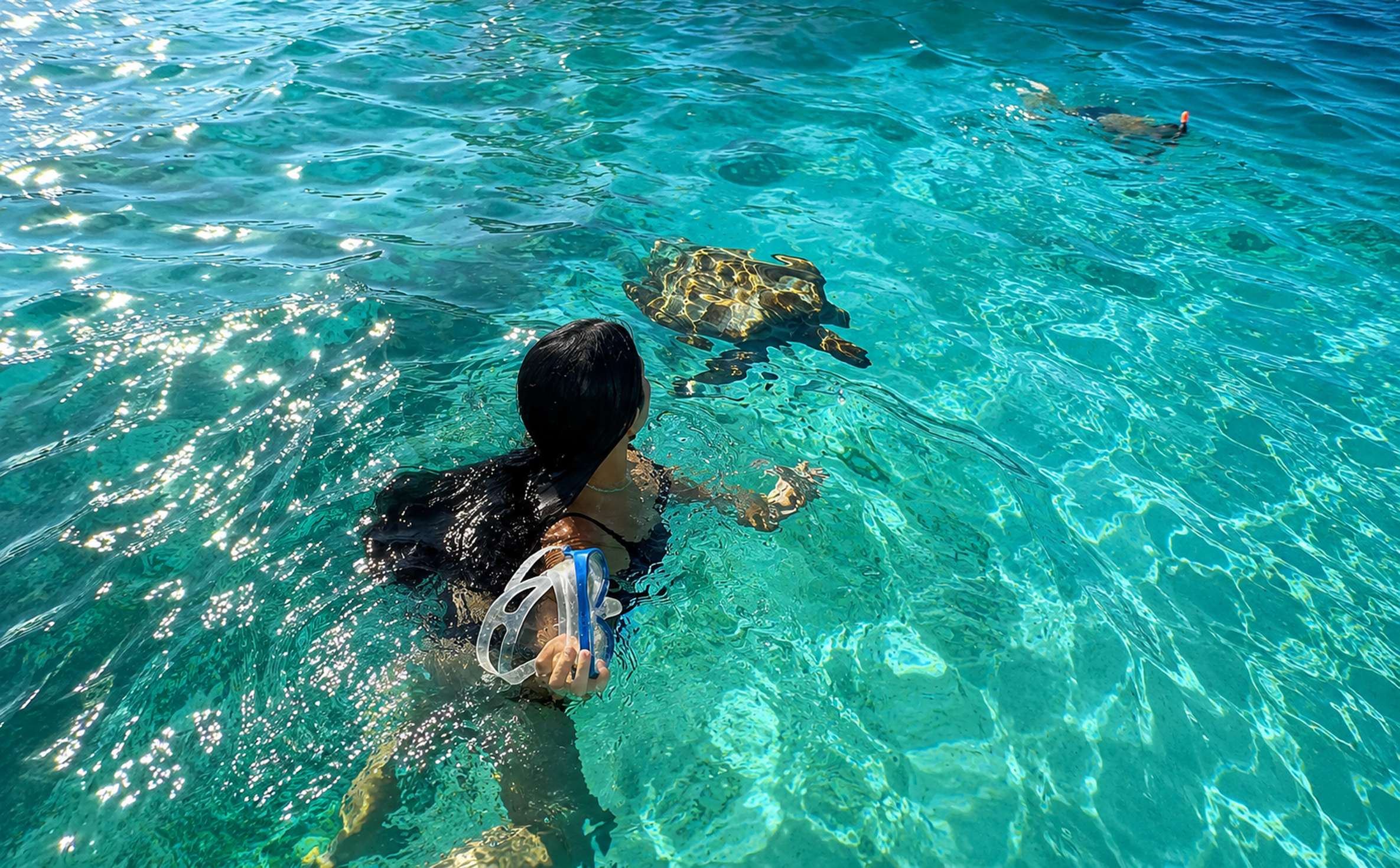
Calm is the reason families choose this bay. The lagoon sits on the sheltered northwest coast, behind the barrier reef, and the water usually lies flat.
Entry is a walk straight off the beach, there is no admission and no booking, and the shallows suit children and nervous swimmers well. While the east-facing lagoons chop up by lunchtime in trade wind season, the western ones stay flat.
One line on the map matters: the reef passes. Currents pull near the reef and the passes here, so keep well inside the lagoon and never swim out toward them.
Inside those limits, the bay is as forgiving as water gets in Mauritius, which puts it alongside the calm lagoons at Flic en Flac, Mont Choisy and Pereybere for families and weaker swimmers.
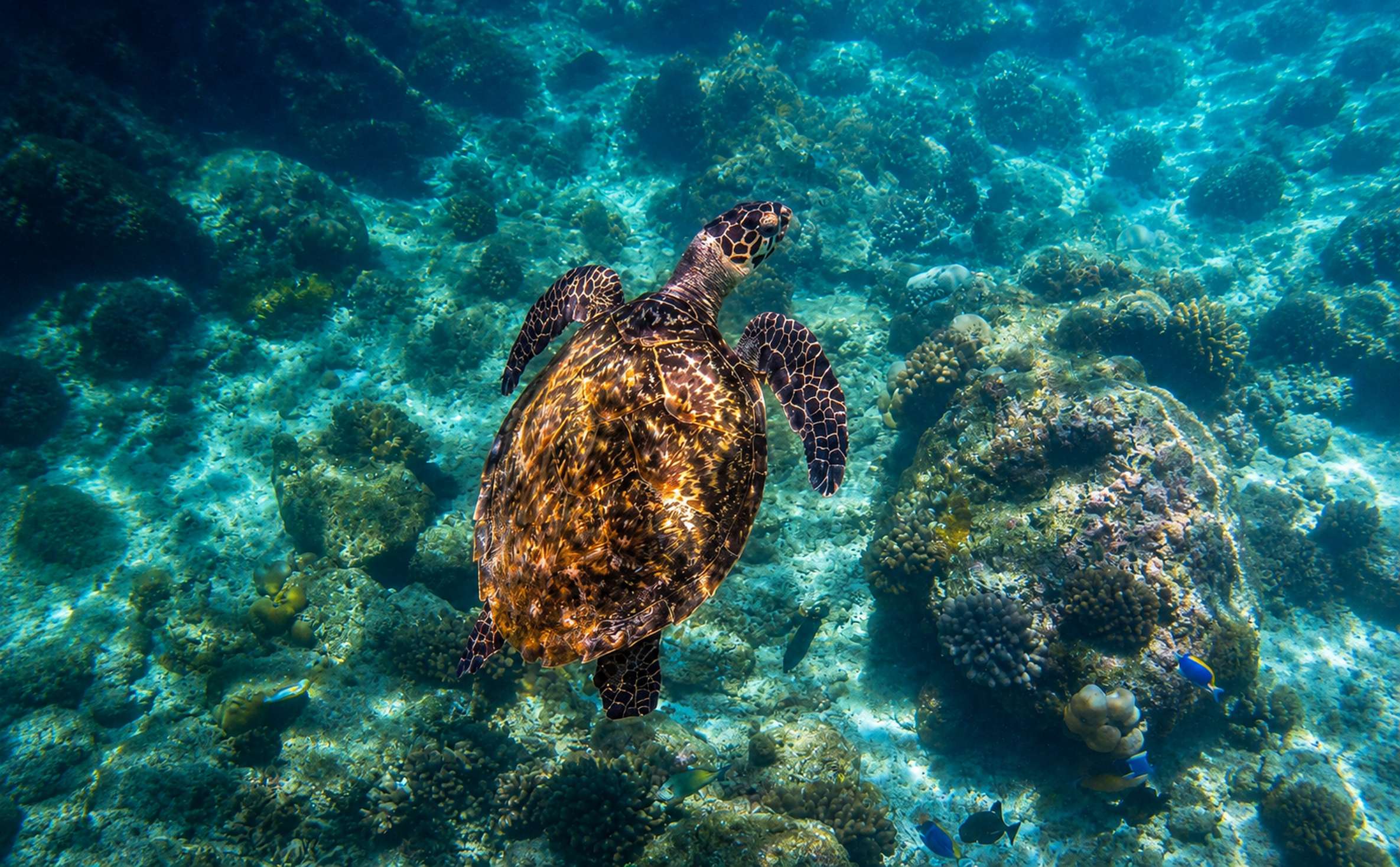
Straight answer: the reef is recovering and still short of immaculate. Balaclava Marine Park has been rebuilding since its establishment, but warm-water bleaching keeps testing it, and the bay's coral is honestly less spectacular than what you find at Blue Bay.
Where you look changes what you see. Coral formations begin near the shore in shallow water, and the reef carries on through the lagoon and out past the barrier reef for about a kilometre.
On the southern beach of Turtle Bay, the densest reef sits to the right of the wooden jetty, so start there instead of drifting over the sandy patches in front of the hotels.
The honest question is whether the bay alone satisfies a coral wish, or whether a Blue Bay morning earns its drive. The two differ on four counts.
| Turtle Bay | Blue Bay Marine Park | |
|---|---|---|
| Coral | Healthy patches of table, fan and brain coral, recovering overall | The island's biggest protected coral reserve, denser and more varied |
| Fish life | Parrotfish, sergeant majors, occasional large single-species schools | Documented 38 coral and 72 fish species, plus regular turtle sightings |
| Water | Sheltered northwest lagoon, usually flat | Southeast, calm early but wind clouds it toward midday |
| Suits | Resort guests, families, walk-in snorkelers | Travelers who want the richest coral on the island |
For most visitors the answer is both: snorkel Turtle Bay from the jetty on your lazy days, and give one morning to Blue Bay Marine Park for the coral.

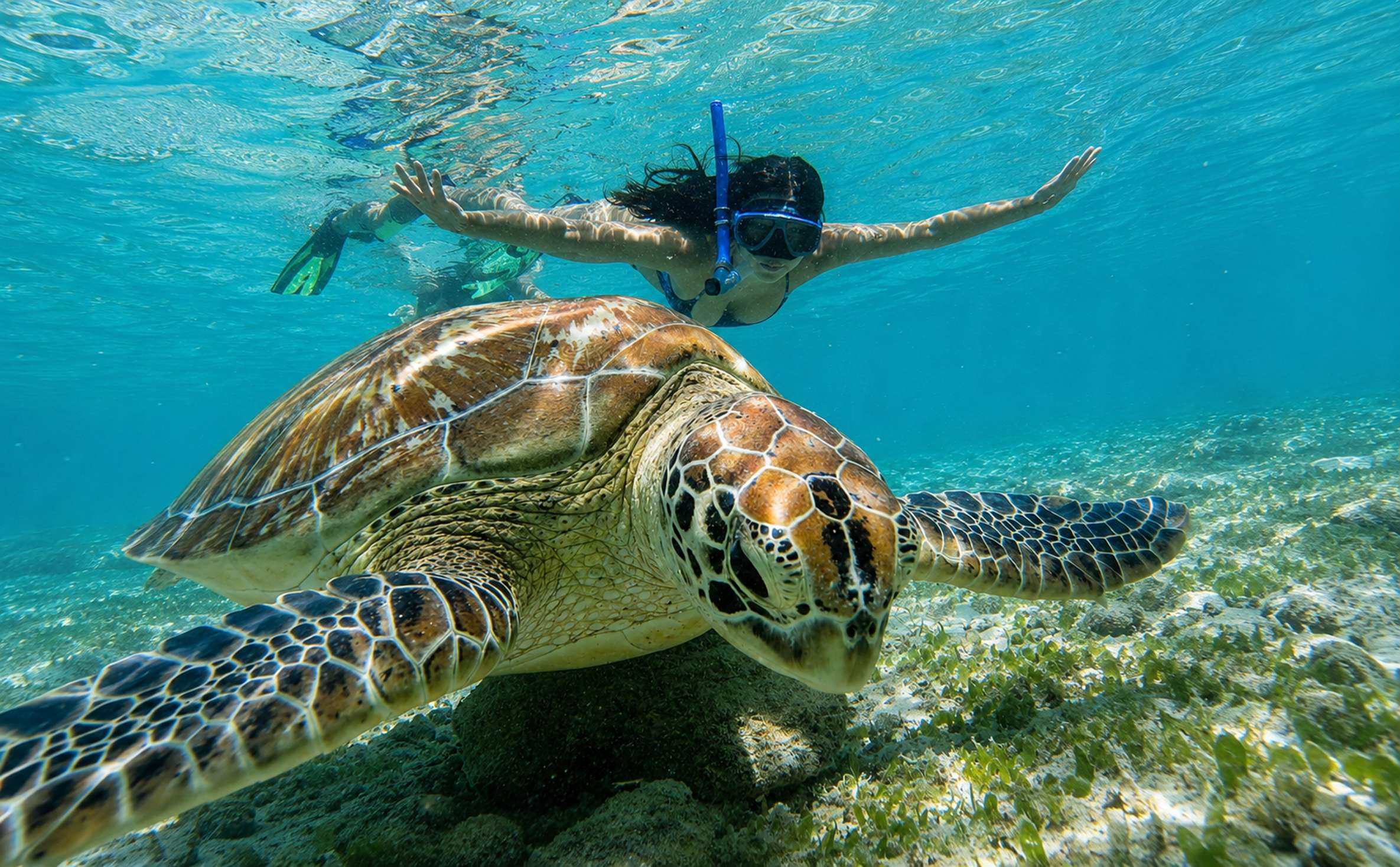
Both work, and the distance decides. Coral patches begin just steps from the sand, and the richer gardens and outer reef sections sit a moderate fin out, roughly 100 to 150 metres from shore. Wade in from the beach and the sheltered inner water carries you there without fuss.
What the beach cannot solve is the outer reef and the passes. Strong currents run there, rocky patches scrape, and there is no permanent lifeguard on this beach, so swimming to the reef crest on your own is where people get into trouble.
The park also bans swimming in its designated traffic lanes, and outside the marked swimming zones a dive flag is worth flying.
A boat skips all of it. One private speedboat tour leaves the Grand Baie public beach at 9 am or 11 am, crosses to the turtle grounds off Trou aux Biches and keeps two hours on the water, with gear, snacks and soft drinks aboard.
Pair it with the Grand Baie page for the wider launch picture.
Pick your entry point and take care on the first few steps
Head there first on the southern beach instead of the sandy patches in front of the resorts
Boats cross the bay, and being seen is the difference between a good swim and a close call
Seen together, the pattern is simple: the walk-in day rewards whoever starts at the jetty, and the boat day rewards whoever books the morning slot.
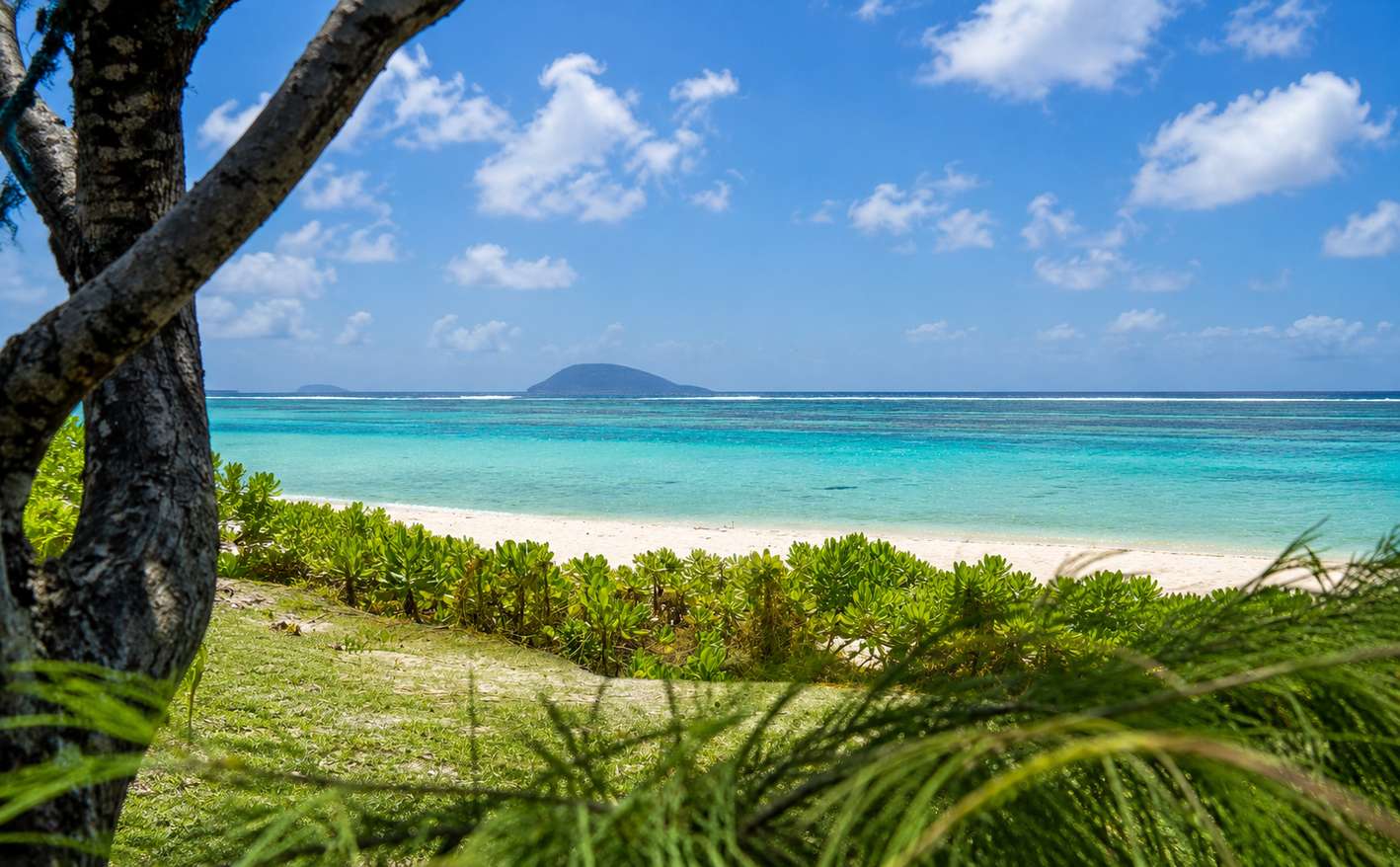
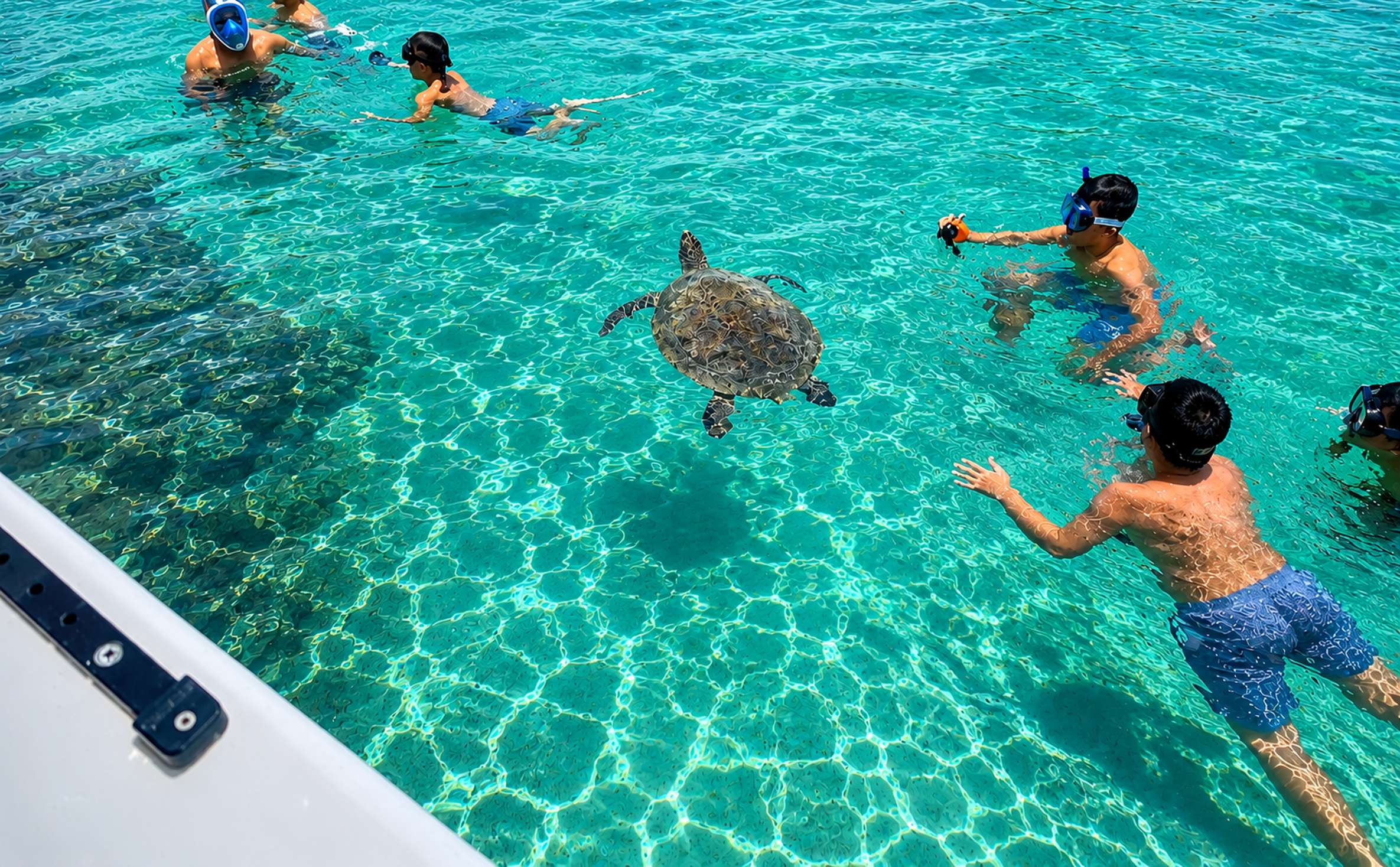
Two hazards share this bay, and neither is dramatic from the sand. The first is traffic.
Boats and jet skis cross the lagoon, so stay out of the marked channels and inside the buoyed swimming zones, which motorized craft are barred from entering. A bright snorkel vest makes you visible long before it makes you buoyant.
The second hazard is underfoot. The seabed hides sea urchins among the rocky patches, coral outcrops hold sharp edges, and stonefish lie camouflaged in the debris, well disguised and venomous. Reef shoes solve all three in one go, and they are the single item regulars never skip here.
The park's own rules do the rest: traffic lanes are legally closed to swimmers, and boats move at no-wake speed inside them. Swim where the yellow buoys say swim and the two hazards never meet you.
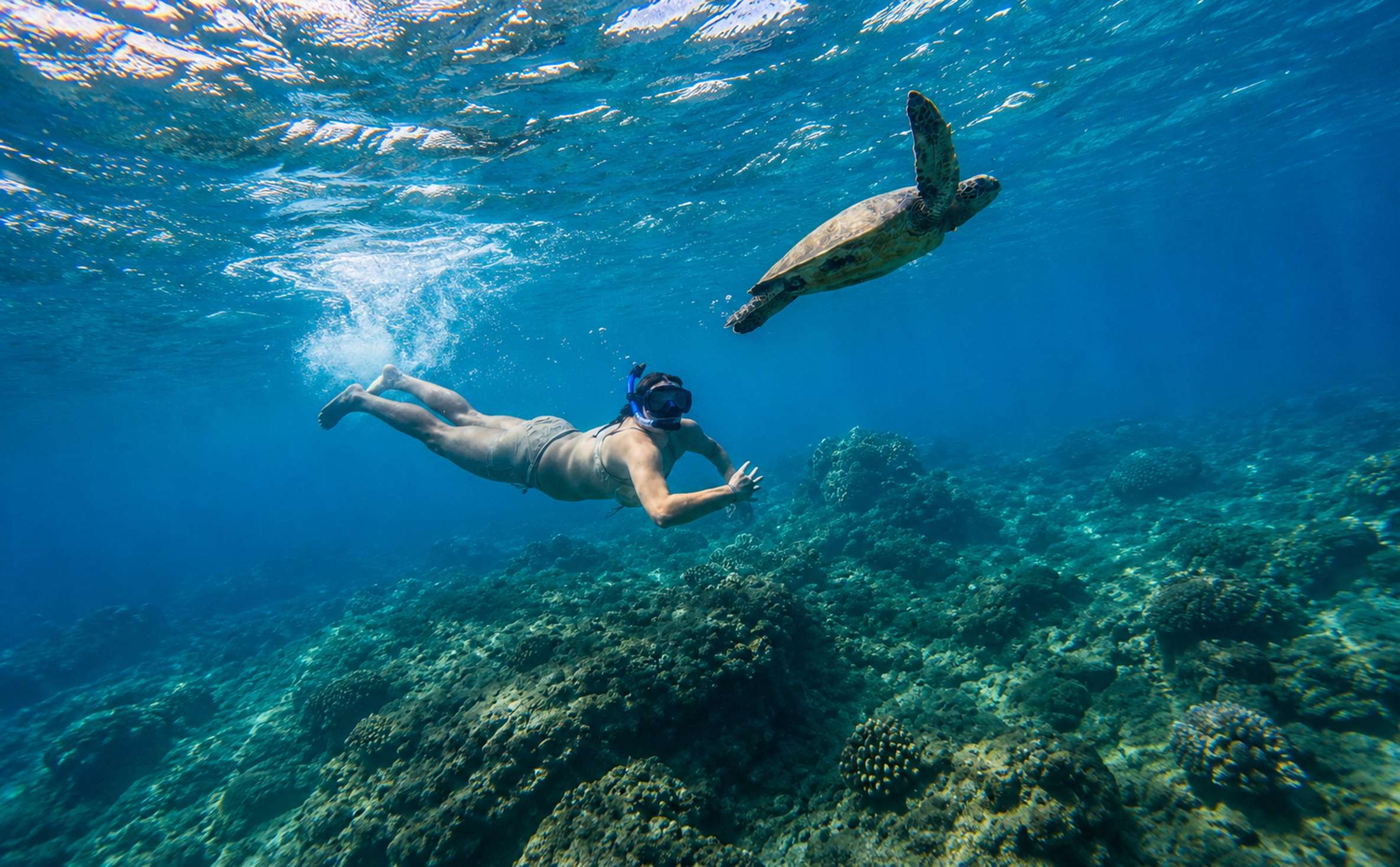
Mornings win on every count here. From about 7 am the sea is at its calmest and the visibility at its clearest, before the day-trip boats cross the bay mid-morning and the afternoon breeze roughens the surface. Around high tide is ideal, because the shallow inshore coral needs that extra depth to swim over cleanly.
Calm water and clear visibility before breezes build
Day-trip boat traffic increases across the bay
Afternoon breezes chop up the water surface
The month matters as much as the hour, and the northwest is the odd one out.
From May to September the southeast trade winds stir up the eastern and southern lagoons, but the same winds leave the sheltered west and northwest at their clearest underwater visibility, especially in the morning.
October, November and April bring the calmest sea overall. February and March are the months to avoid for boat plans, the wettest of the year and the peak of the cyclone window, when rain runoff clouds the lagoons and operators suspend trips in bad weather.
November: 5 out of 5 for how busy it gets.
Tap a month to read it.
Read the two together and the plan writes itself: a November morning, or a July one if that is when you come, entered around high tide and finished before the breeze settles in.
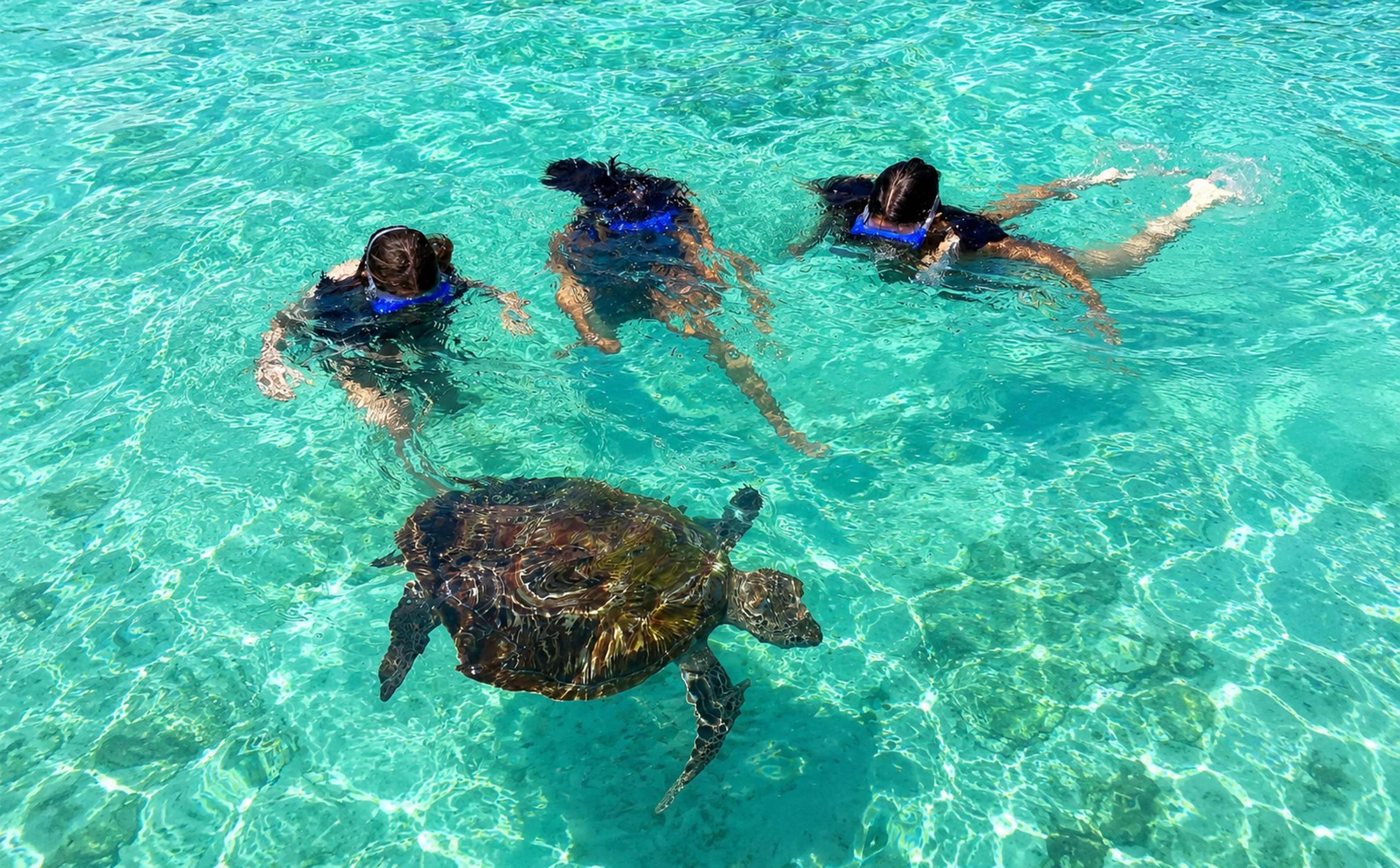
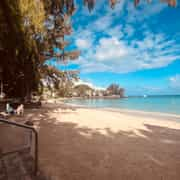
Not staying beachfront changes little. Public parking sits at the north end of the main resort lot, signed Shoreline Public Parking Access, and an ironwood-lined path runs from the lot straight down to the cove and the shoreline. The access trails are paved in places and stepped in others, all marked with Beach Access signs.
The law backs you up too. Under Mauritian law there are no private beaches in the usual sense: every beach is public up to the high-water mark, the coastal strip of State land belongs to everyone, and blocking someone from walking freely on the seashore is a criminal offence.
Swim, sit and picnic on any stretch you reach, free of charge.
A rental car is the easy way in for day visitors, since the bay sits at the end of resort roads and buses thin out this far northwest. Park, walk the path, and the water is yours.
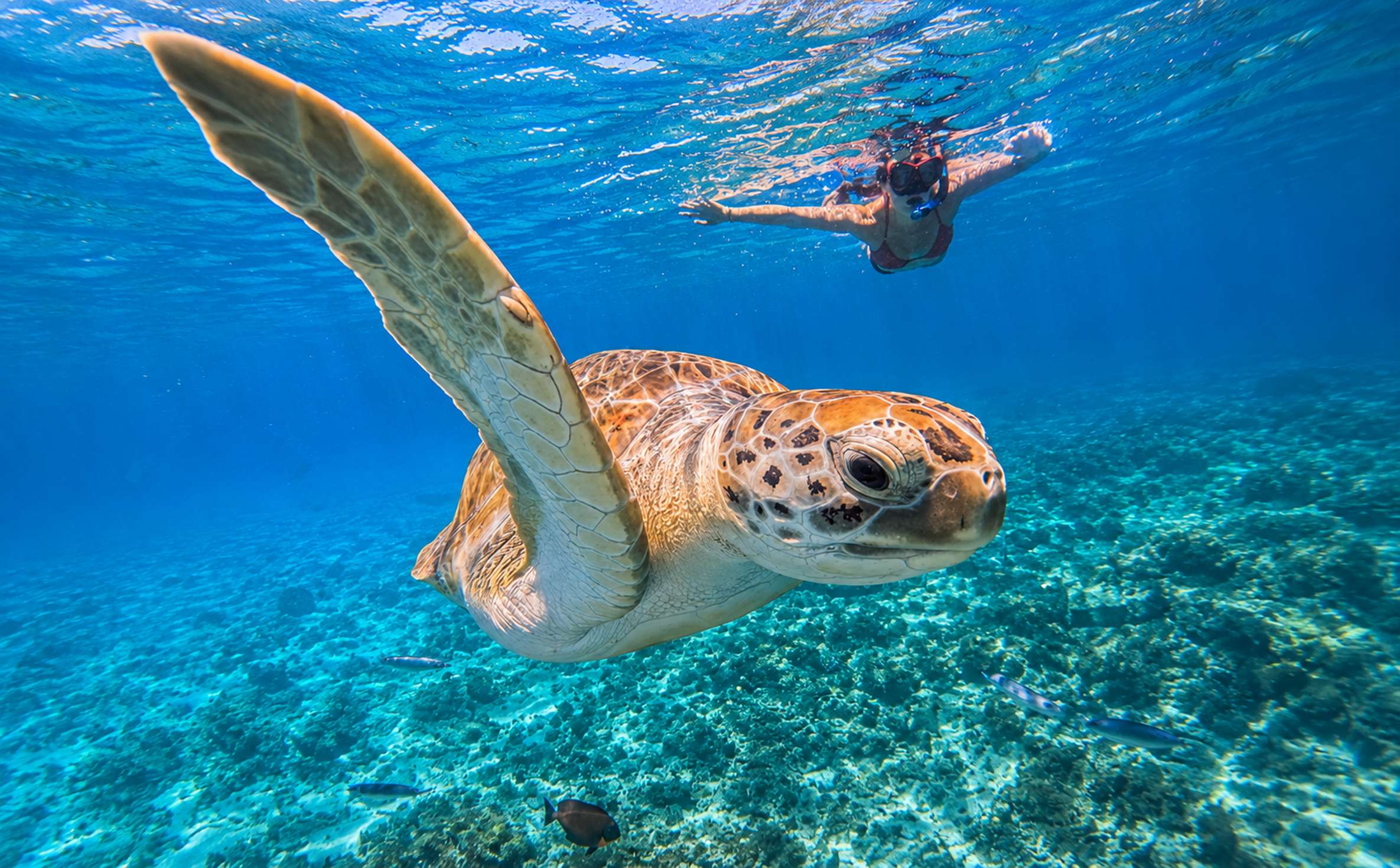
Turtle Bay sits in good company. Twenty minutes south, Trou aux Biches has green turtles grazing on seagrass along the reef edge and a lagoon that stays flat on most days, which makes it the strongest turtle bet in the northwest.
A little further, Pereybere brings turtles closer to the sand than almost anywhere on the island, often within 50 to 100 metres, with a buoyed swimming zone free of motorboats.
For the coral itself, the southeast has the crown, and the Blue Bay Marine Park glass-bottom boats run over the biggest protected reserve in Mauritius. Back in the north, Grand Baie is the harbour the island cruises leave from, bound for the northern isles and the deep-water snorkeling at Coin de Mire.
The shape of a week writes itself: turtles here and at Trou aux Biches, one Blue Bay morning, one island day out of Grand Baie.
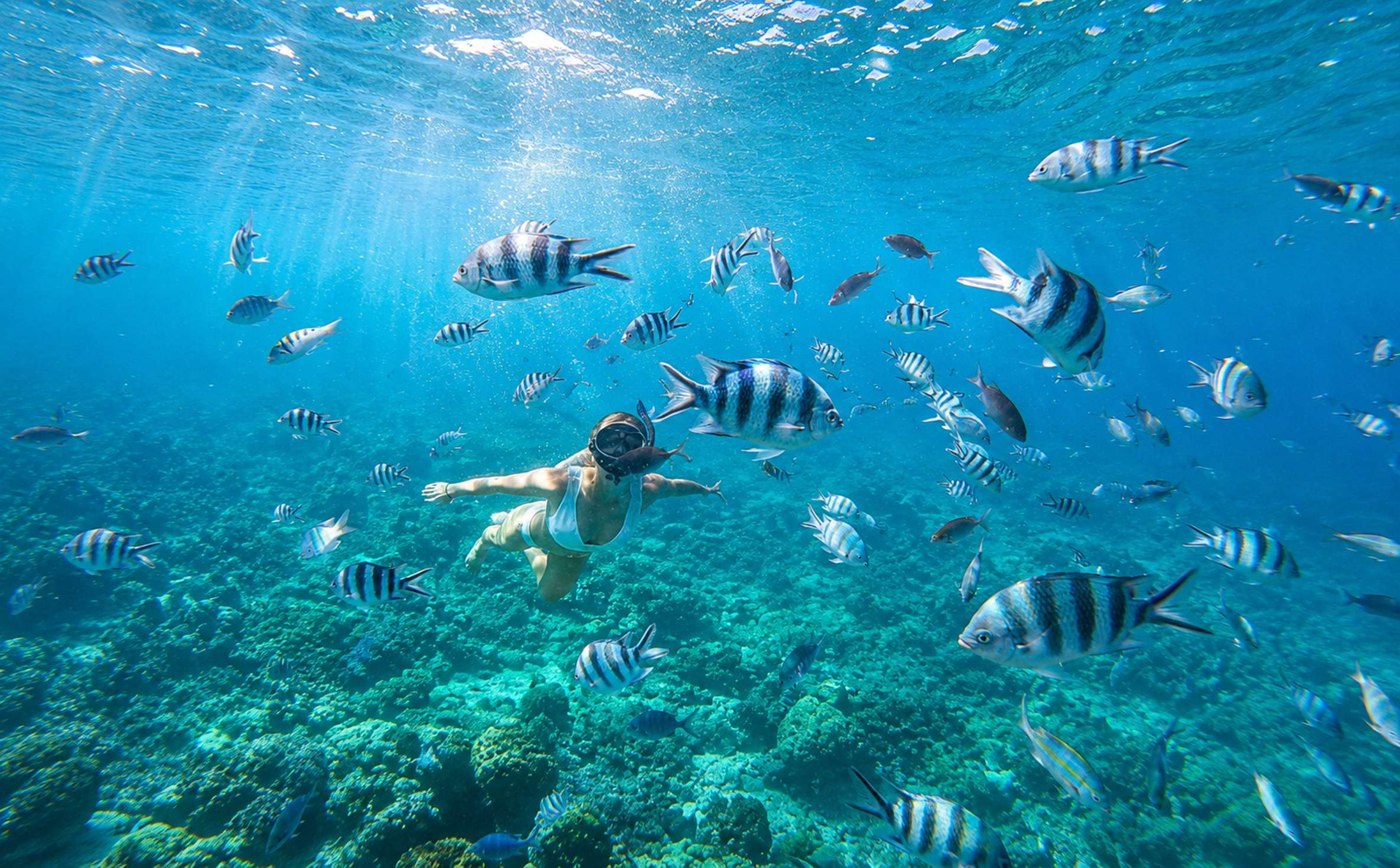
A good turtle trip starts with a legal one. Ask what the encounter looks like: crews that hold back, brief you before you enter and let the animals come to you are the ones worth booking, and touching any marine life should be off the table outright.
Gear comes next, because most boats supply masks and snorkels, and fins only sometimes, with quality that varies from departure to departure.
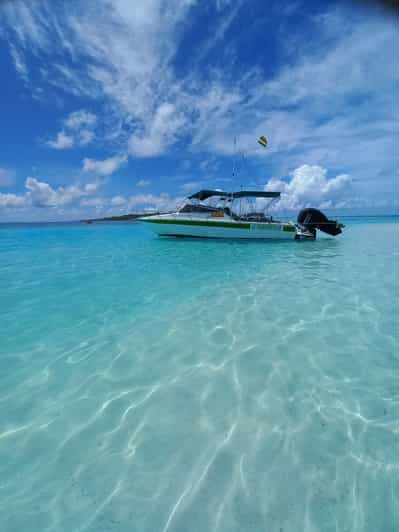
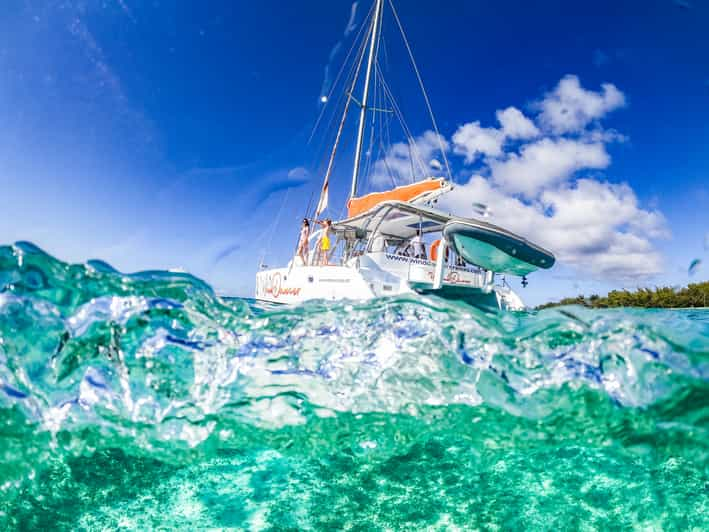
The Sea Turtle Adventure and Coral Reef Discovery covers the checklist well: a safety briefing, an experienced skipper and crew, snorkeling equipment, life jackets and a dedicated turtle stop, departing Pereybere at 9:30 am or 11:20 am and open to all ages, with free cancellation up to 24 hours ahead. Non-swimmers stay on the boat.
What the boat will not hand you is the rest of your day: towels, sun protection, your swimwear already on. Tipping the captain and crew as a group at the end is standard practice on these excursions, so keep some cash for it.
| Check | Why it matters | Our pick |
|---|---|---|
| Legality of the encounter | Chasing, touching or feeding turtles is illegal, and a crew that pushes it puts you at risk | Briefing before departure and no touching marine life, stated up front |
| Gear provided | Masks, snorkels and fins vary by boat, and a leaking mask ruins the hour | Mask and snorkel included, life jackets on board |
| Timing and access | Morning water is calmest, and the right launch point saves a long drive | Departs Pereybere 9:30 am or 11:20 am, a short hop from Turtle Bay |
| Flexibility | Weather can cancel any sea trip | Free cancellation up to 24 hours in advance |
Tick those boxes and the booking holds. The day itself then comes down to two things you control: the morning light and the tide.
Turtle Bay earns its visit for the calm water and the easy walk-in snorkeling. A guaranteed turtle or a pristine reef it cannot promise, so go in the morning, wear reef shoes, and treat any turtle that crosses your mask as a bonus.
For reliable in-water turtle time, book the Sea Turtle Adventure out of Pereybere and keep this bay as your lazy day.
dutch sailors named the bay in the 1600s
Where wild dolphins gather on the west coast, and how to watch them without crowding the pod.

What the rules say about slipping into the water with wild dolphins, and how to do it calmly.
Why Tamarin Bay draws the pods each morning, and which boat trips start there at dawn.
How combined dolphin and whale trips work, and what a day chasing both animals looks like.
Why an early start matters with dolphins, and what a sunrise launch gives you on the water.
When a private boat beats a shared one, and what an exclusive charter lets you decide yourself.
How a catamaran day mixes sailing, reef stops and lunch, and which routes suit calm water.
Which coasts and islands the full-day cruises cover, and how the boat types differ onboard.
densest reef is right of the wooden jetty
The questions visitors ask before slipping into the water at this calm northwest bay, answered plainly.
 Grand Baie2026
Green sea turtles regularly enter the shallow water here, and snorkelers often meet them over the deeper sandy patches in the middle of the cove. Sightings cannot be guaranteed on any given day, so treat a turtle as a good morning rather than a promise.
The lagoon is usually calm and shallow, with walk-in access from the beach, which suits families and first-time snorkelers well. Stay away from the reef passes, where currents can pull, and keep to the sheltered inner water.
Coral patches start just steps from the sand. The richer coral gardens sit a moderate swim of about 100 to 150 meters out, and the lagoon stays calm enough for confident swimmers to reach them without a boat.
The reef inside Balaclava Marine Park is recovering since the park was established, though bleaching remains a threat. You will find patches of table, fan, and brain coral along with parrotfish and sergeant majors, and the densest section of the southern beach reef lies to the right of the wooden jetty.
Yes. Sharp submerged coral, loose rocks, sea urchins, and camouflaged stonefish hide among the rocky patches, so reef shoes are the sensible first purchase of the day.
Mauritian law forbids swimming with, touching, feeding, chasing, or harassing sea turtles, and commercial trips that promote turtle swimming are illegal inside the park. Wear reef-safe sunscreen and let the turtles come to you, or not.
Blue Bay holds the denser coral and a longer species list, so guides rate its underwater show higher. Turtle Bay counters with calmer water, easier shore access, and regular turtle sightings close to the northwest resorts.
Keep an eye out for boats and stay out of marked channels, particularly where excursions pass through. A brightly colored snorkel vest makes you far easier for a skipper to spot.
departs 9:30 am or 11:20 am, all ages
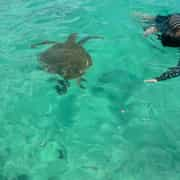
Snorkel alongside wild sea turtles off Pereybere Beach on this 1.5-hour boat trip, with free cancellation up to 24 hours before you go.