
7 hours·English, French
4.8(869)

Ile aux Cerfs Catamaran Cruise with BBQ Lunch & Snorkeling
Snorkel in crystal-clear waterCruise along Mauritius’ east coast lagoon
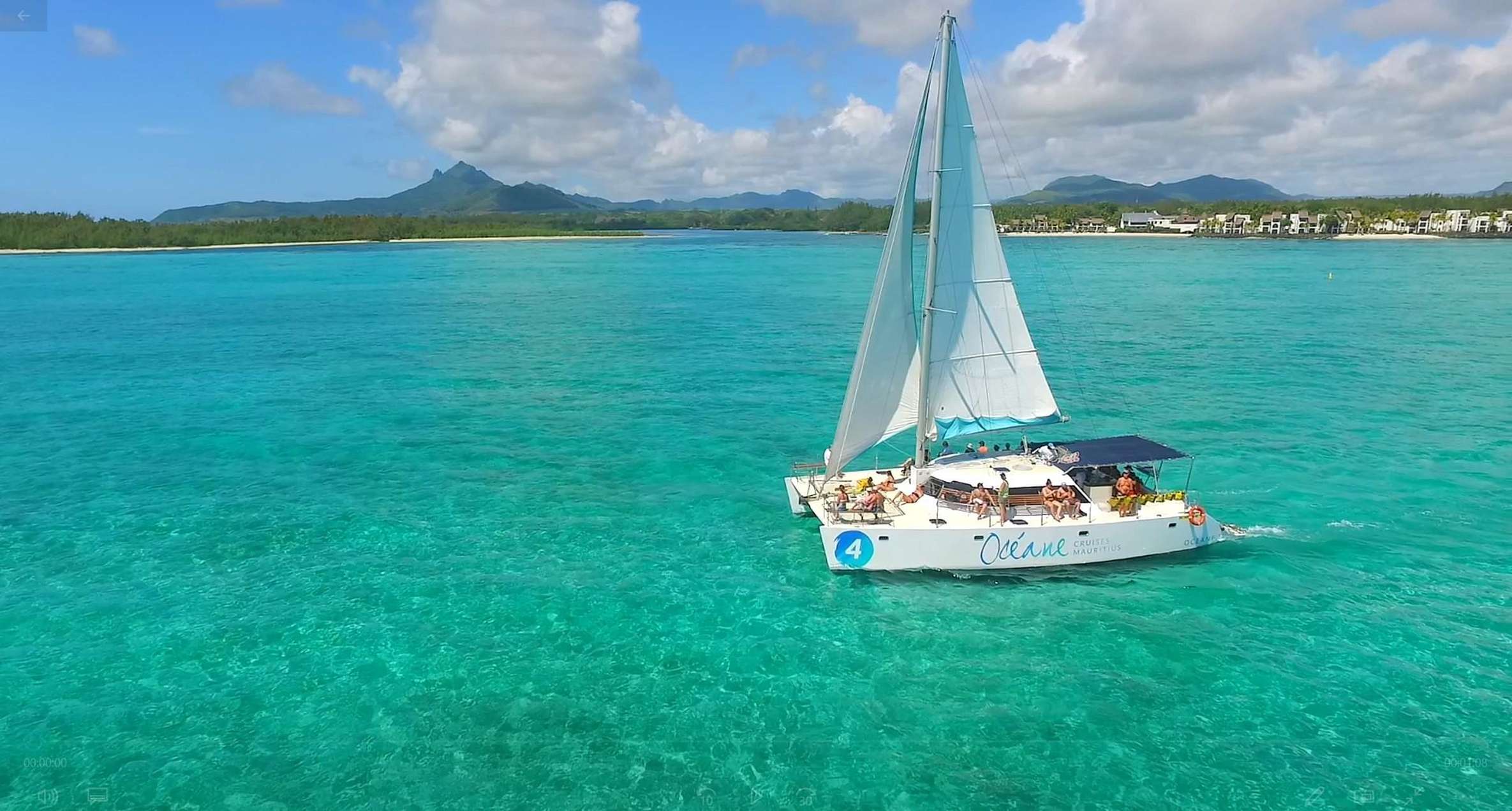
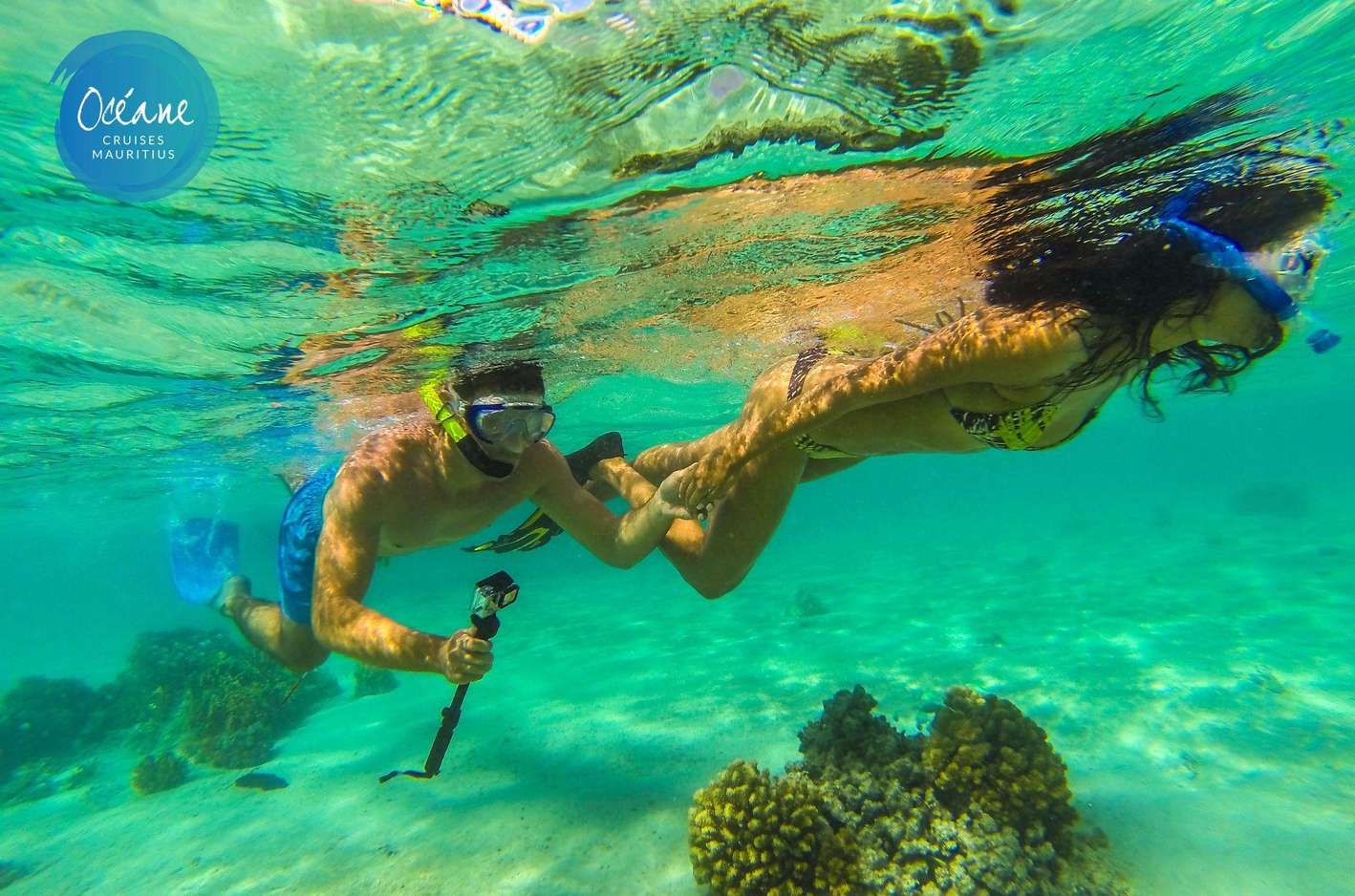
Snorkel Palmar's calm lagoon, then let the boat come to you. Join 1,451 travelers who step straight from their resort lobby onto a catamaran to Ile aux Cerfs, snorkeling stop, waterfall and BBQ lunch included. Book the cruise that picks you up at your Palmar hotel.
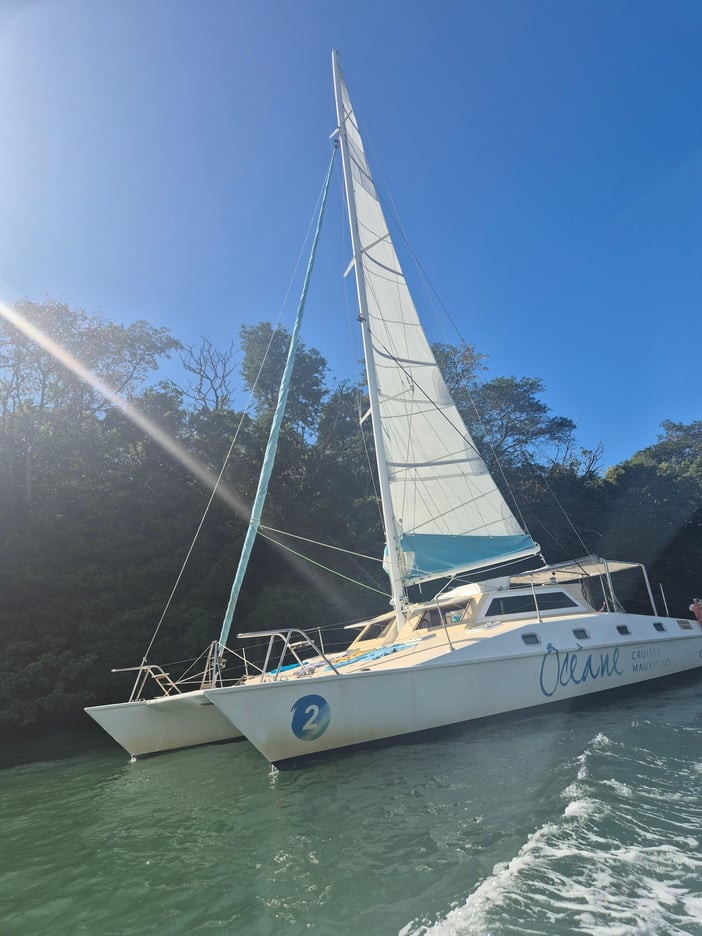
"The crew was so lovely, communicative and helpful, they made this trip unforgettable. Everything went smoothly and the food exceeded all expectations. Would recommend to anyone."

Compare every coast's calm water, reef health and crowds before you commit a single day to the sea.
Read the guide
Protected coral gardens with brain corals wider than a car, seen from a glass-bottom boat or on a fin.
Read the guide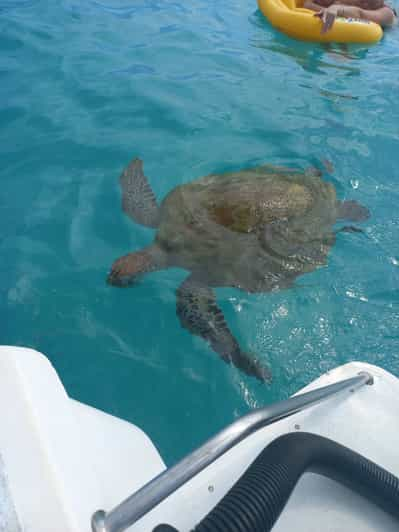
Calm northwest lagoon where green turtles graze seagrass beds along the reef edge.
Read the guide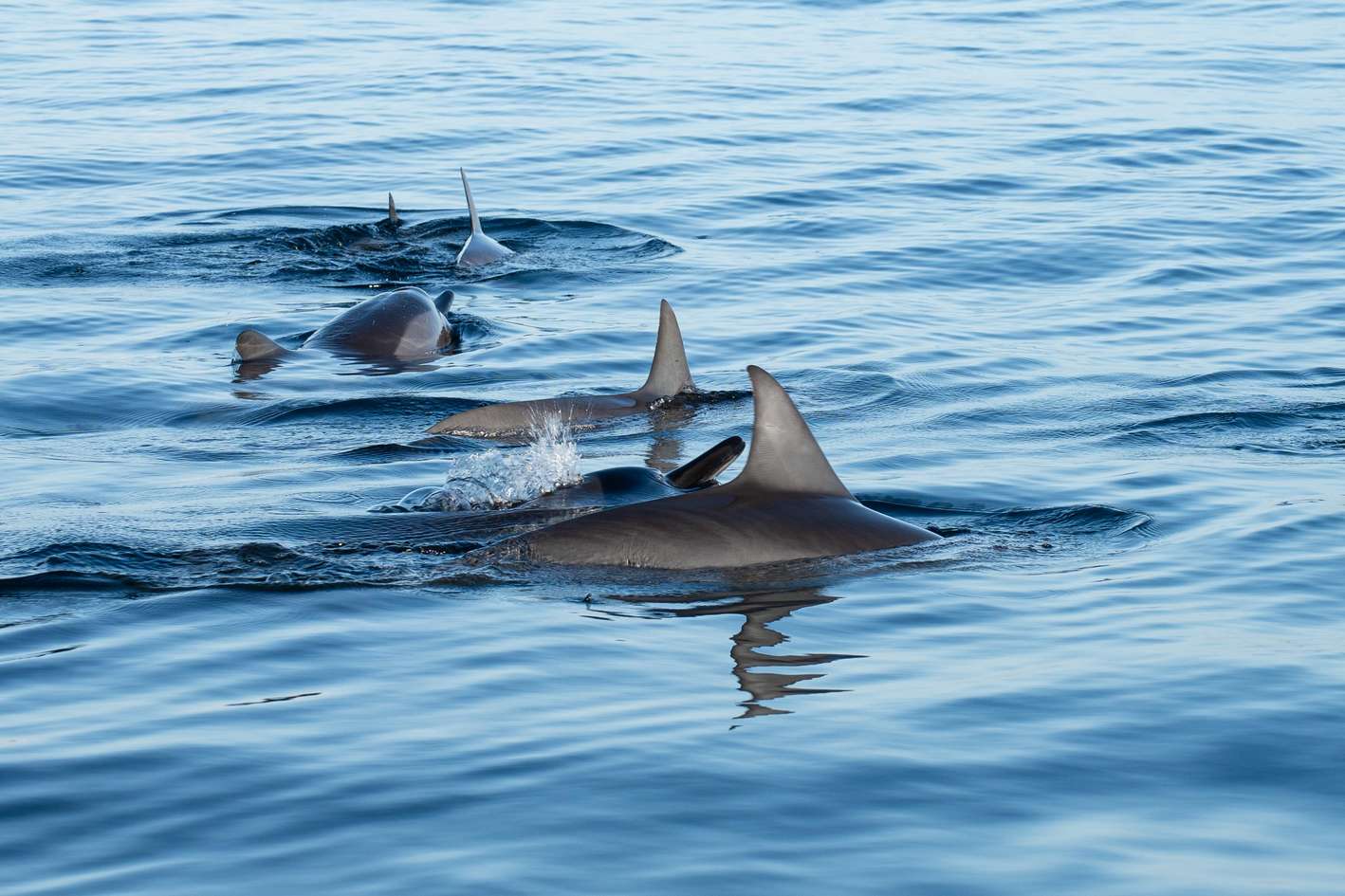
West coast calm with scattered coral heads and dolphin boats leaving right from the beach.
Read the guide
Calm lagoon beneath Le Morne Brabant, with Crystal Rock and coral patches reached by boat.
Read the guide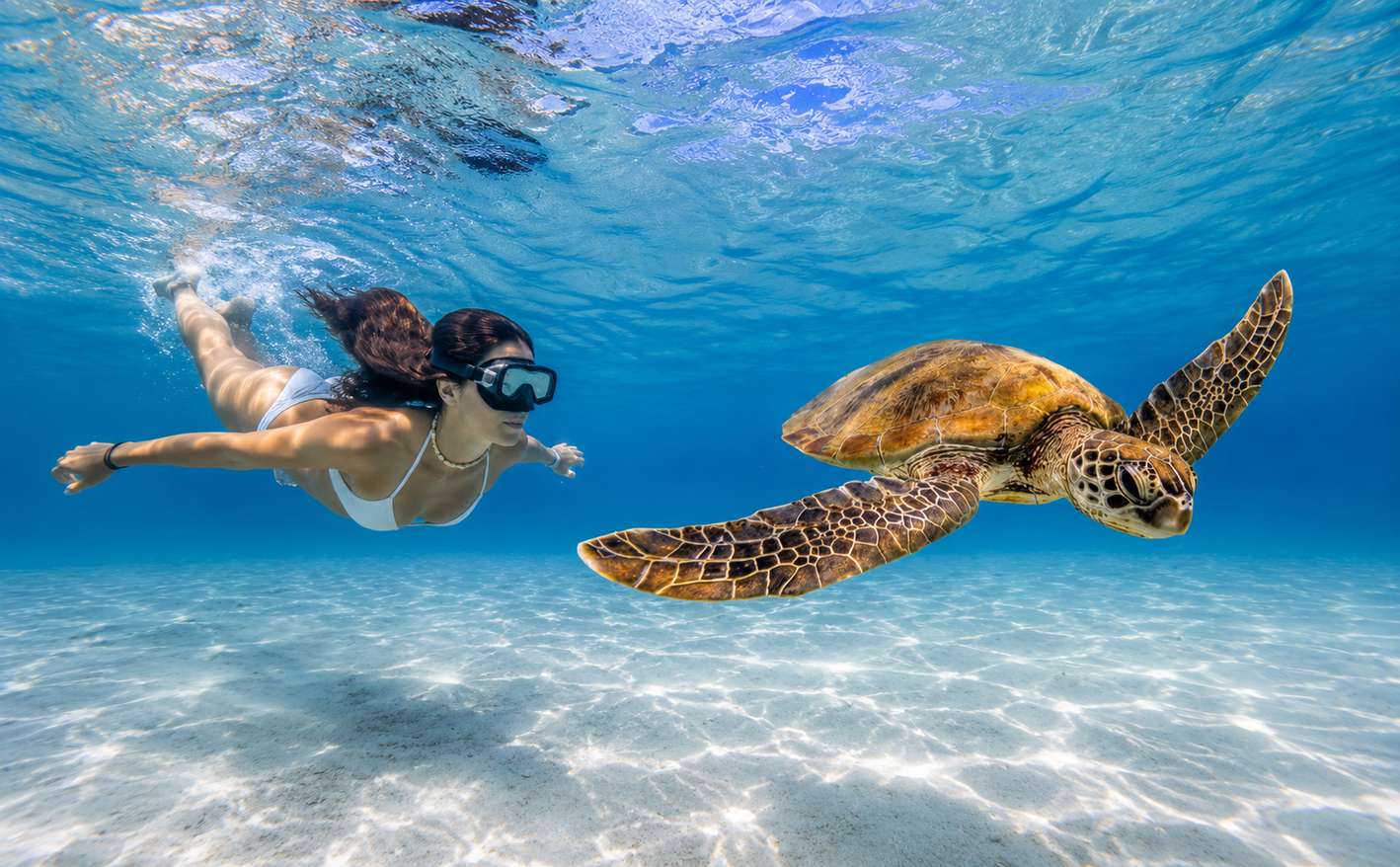
A small northern cove where turtles swim inside the bay and a short boat trip reaches them.
Read the guide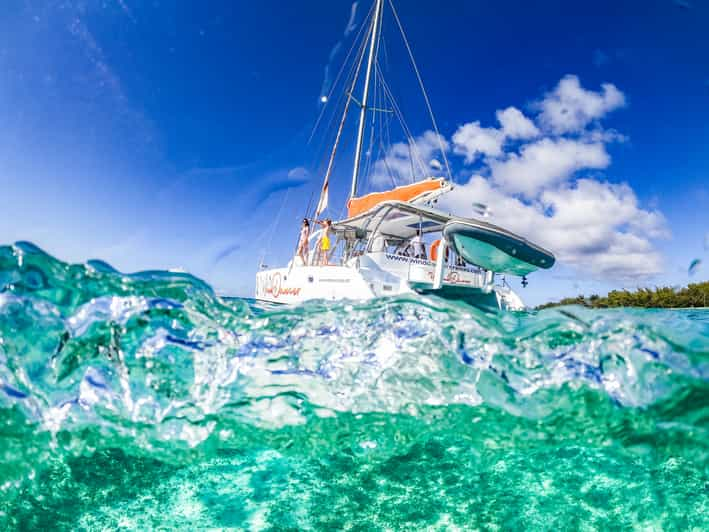
Mauritius's liveliest resort town, and the launch point for northern island catamarans.
Read the guide
The bay where wild dolphins rest each morning, and swim trips leave before sunrise.
Read the guide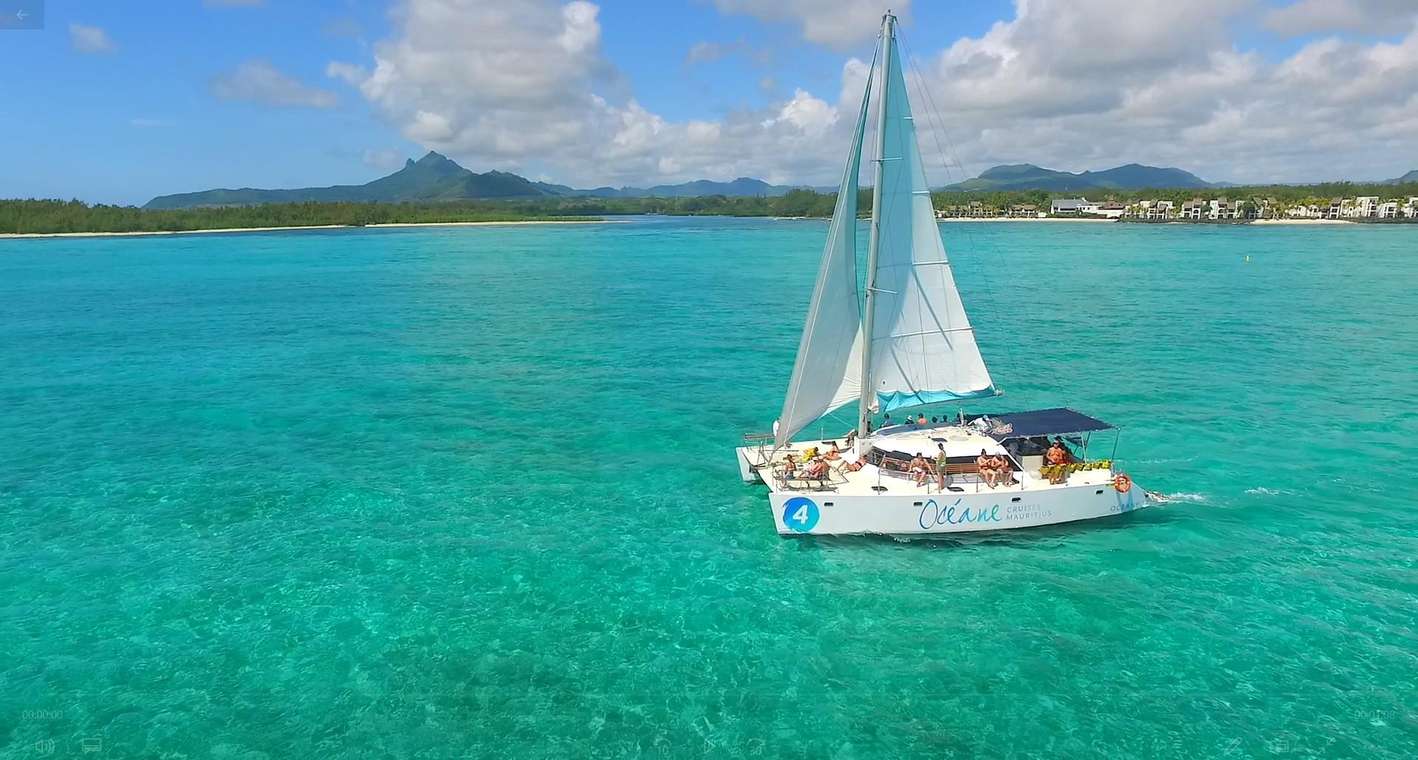
East coast lagoon with scattered coral heads inside and a reef pass best left to boats.
Read the guide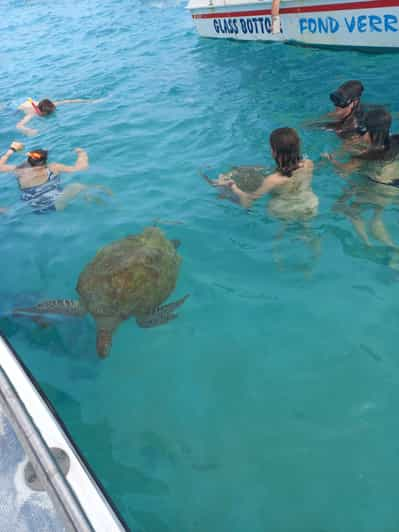
A northwest marine park with a sheltered lagoon and corals listed species by species.
Read the guide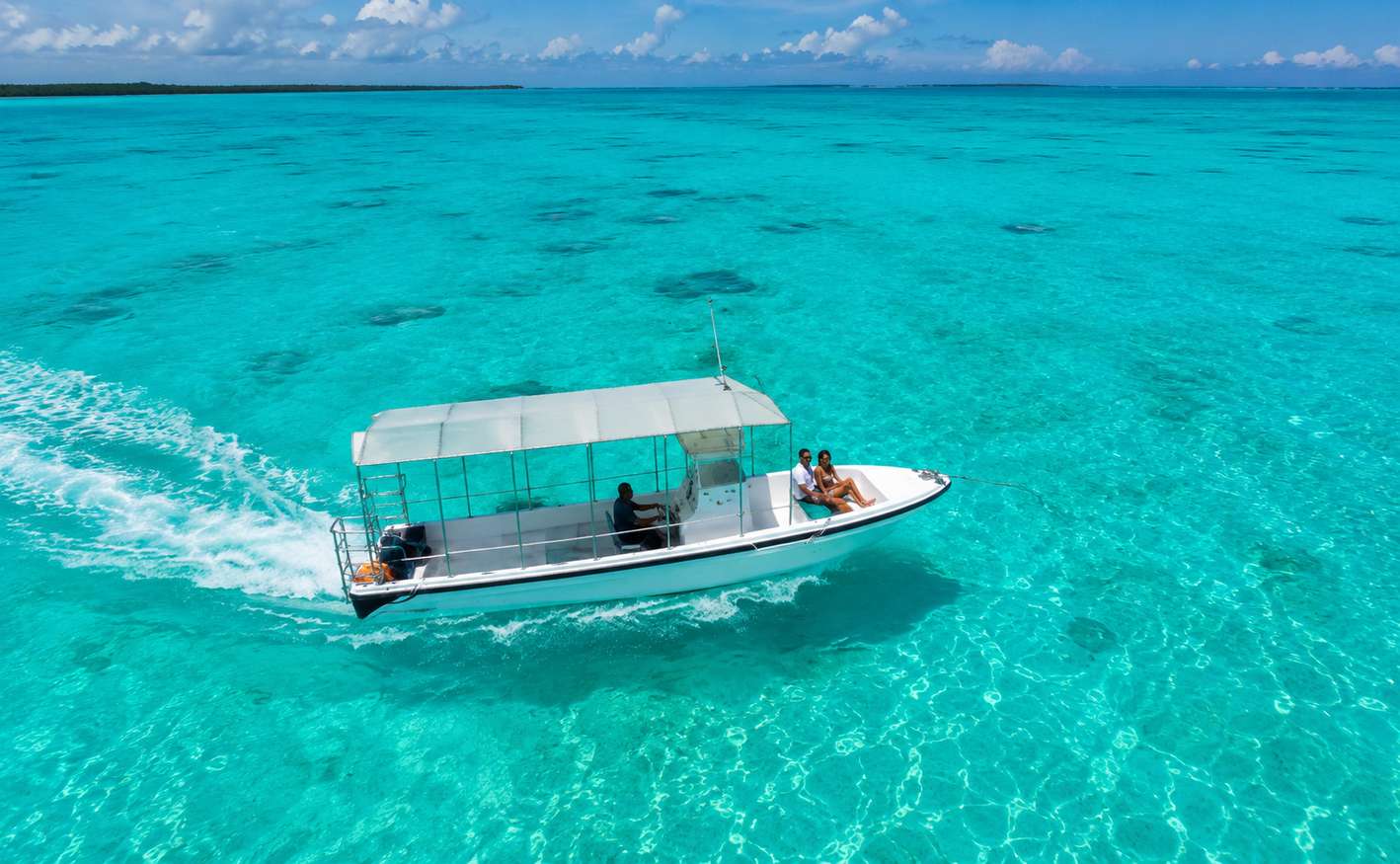
A walk-in cove where green turtles appear over the sandy patches and the lagoon stays calm.
Read the guide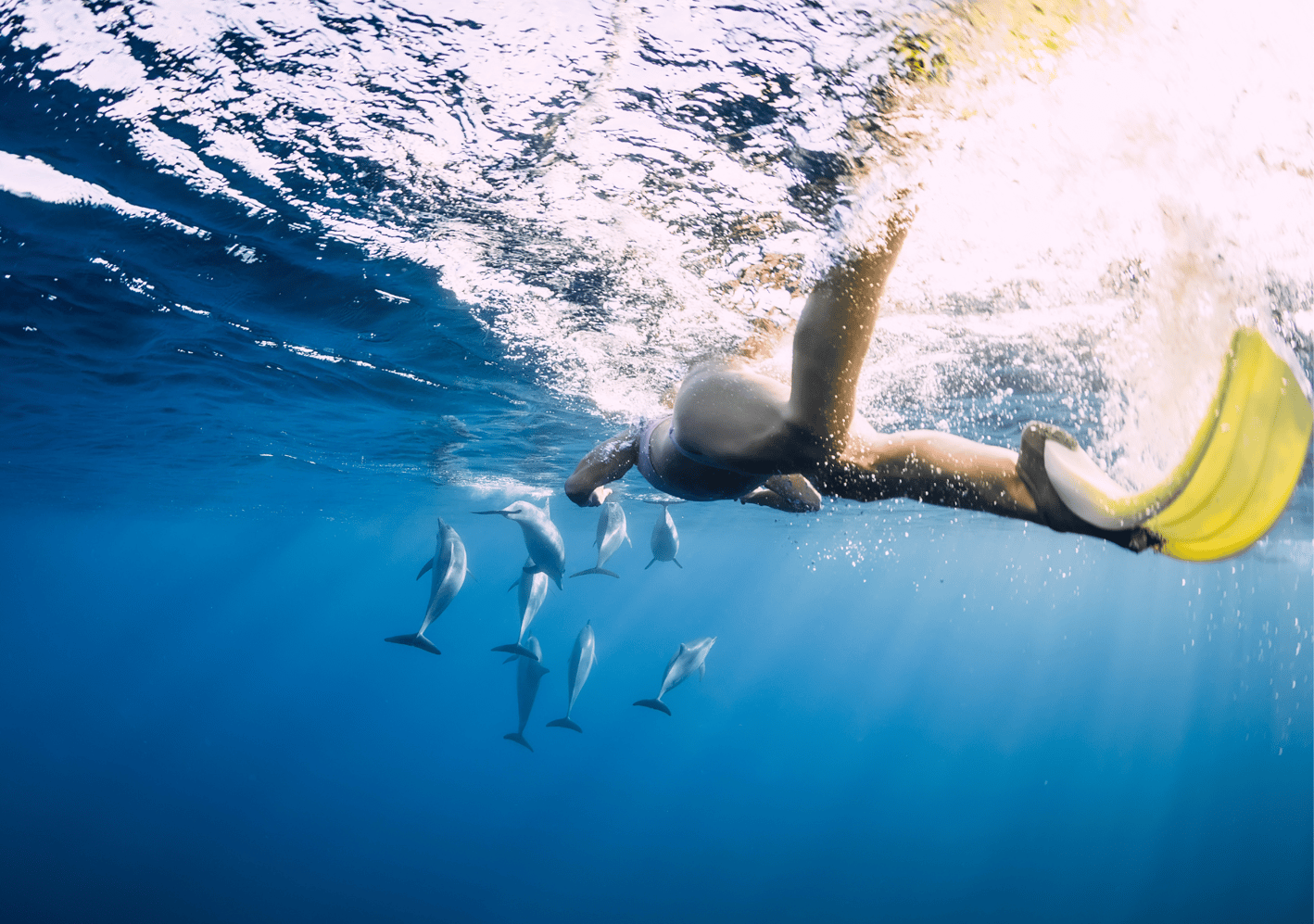
A quieter southern base with reef snorkeling arranged through the resorts.
Read the guide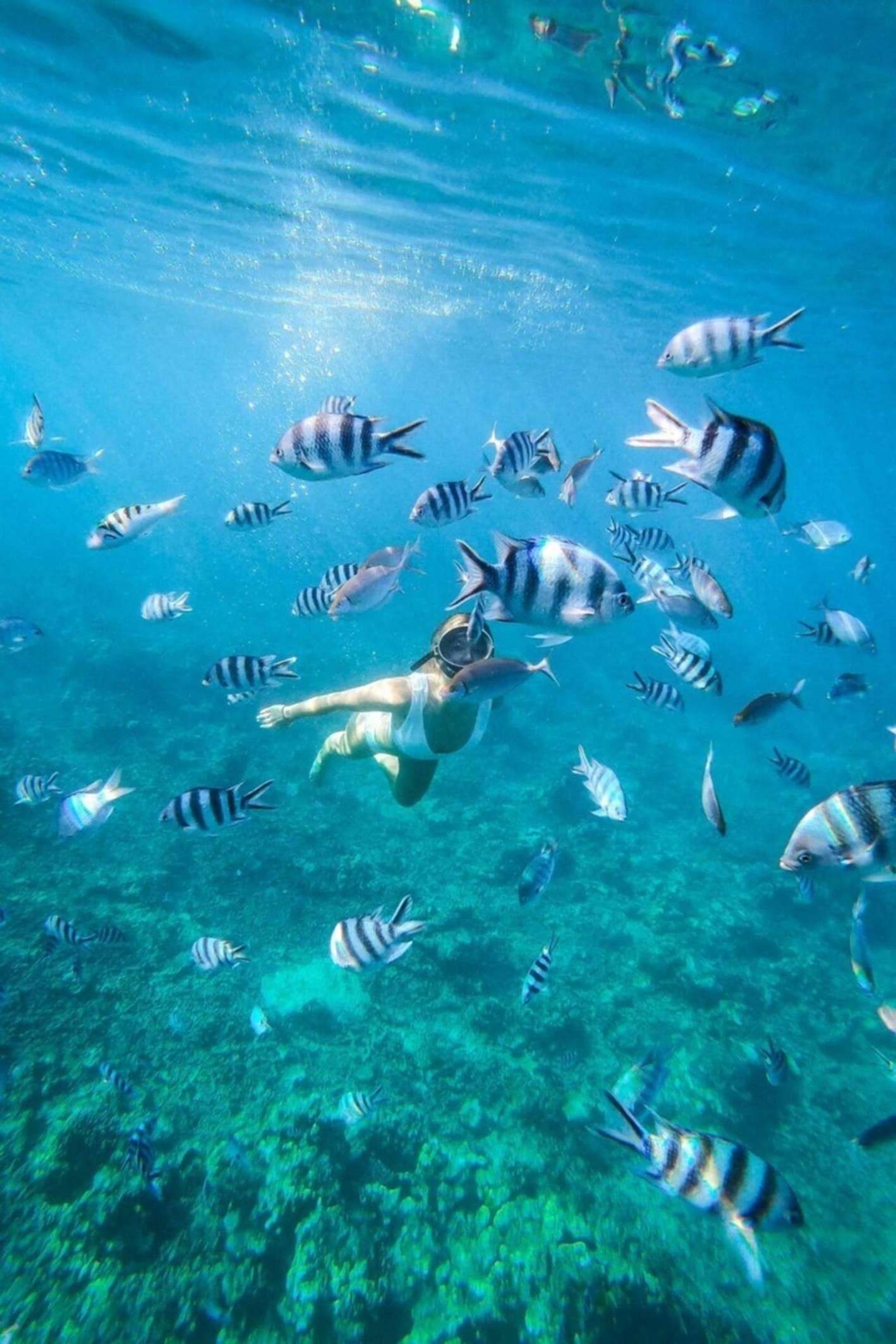
The underwater waterfall is an aerial illusion, and the honest way to see it is by seaplane or helicopter.
Read the guide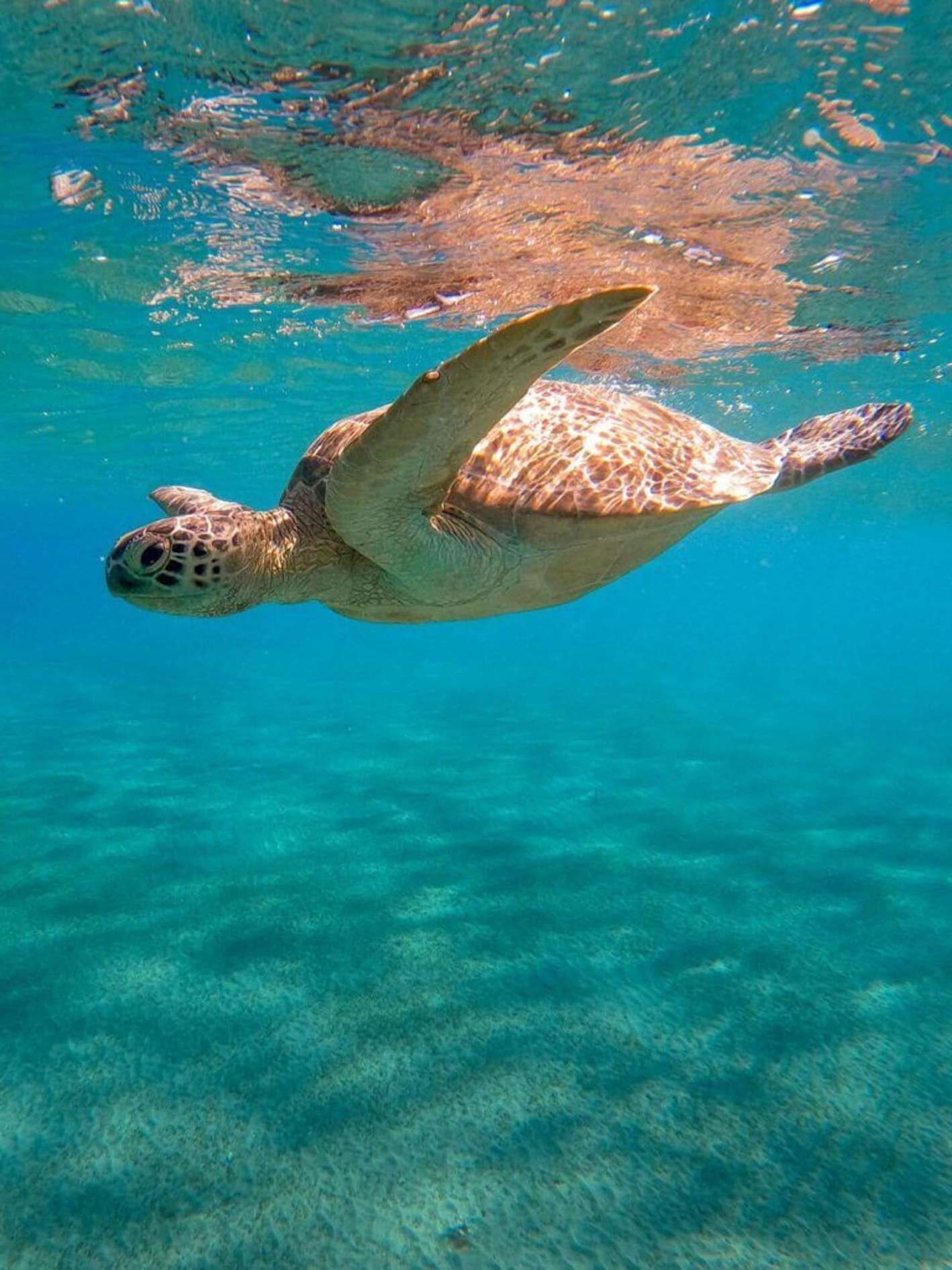
Turtle spotting done right: the reliable bays, the law that protects the animals, and the trips.
Read the guide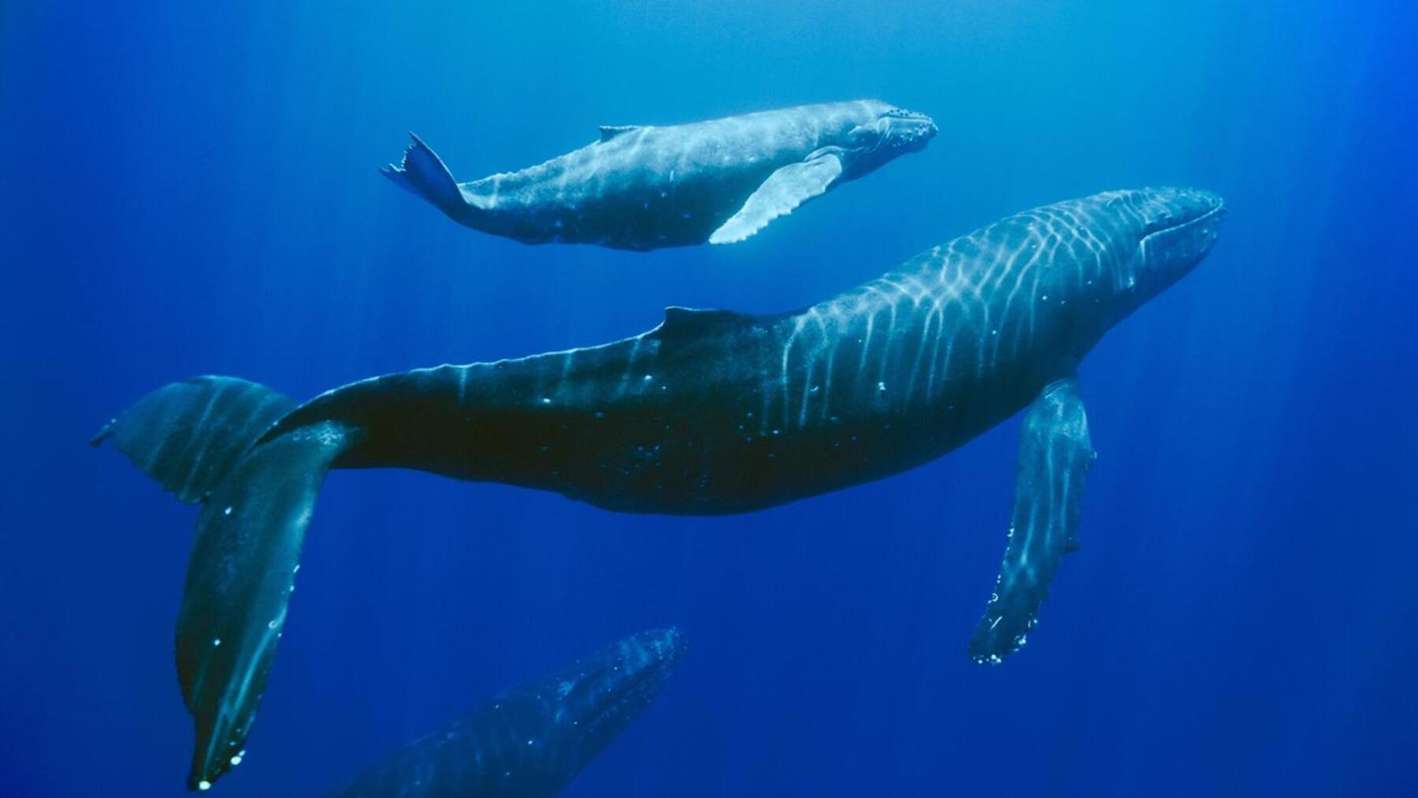
Sperm whales live off the west drop-offs all year; the law says watch them from the boat.
Read the guide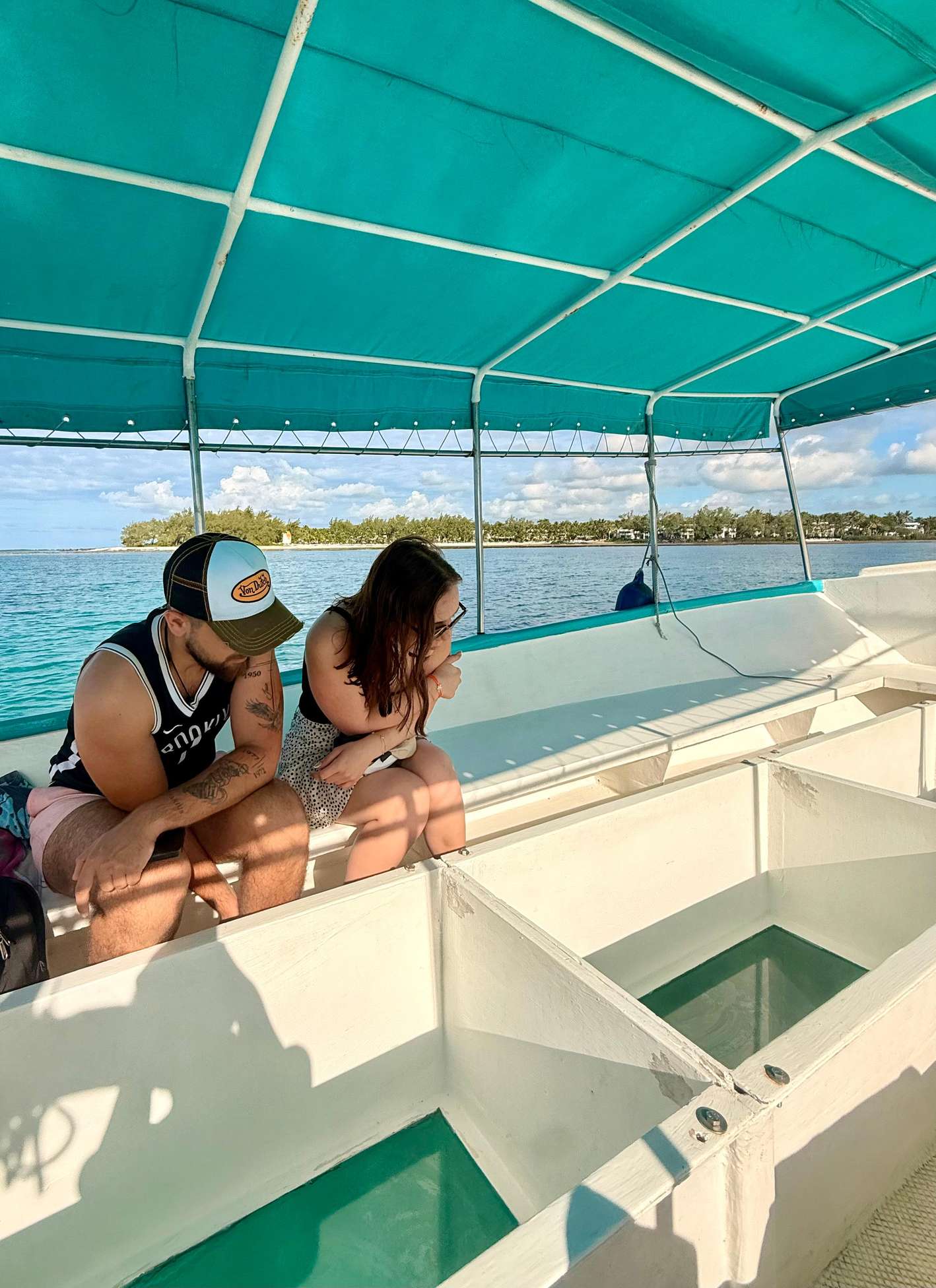
Timing decides everything underwater; this guide maps the year month by month.
Read the guide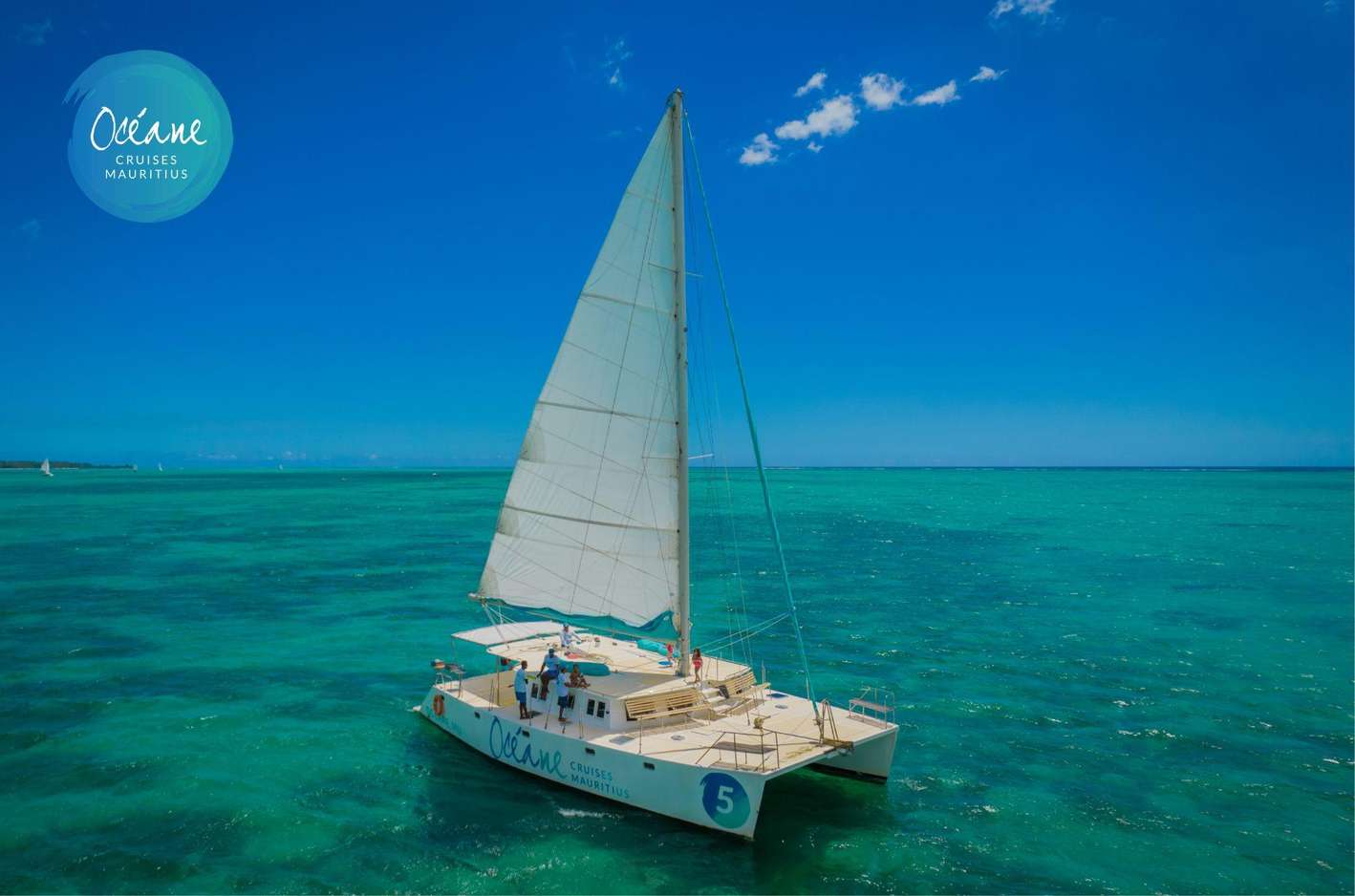
The classic catamaran day to Ile aux Cerfs, with a waterfall detour and a deck barbecue.
Read the guide
The fast route to Ile aux Cerfs and five more islands, with the waterfall reached by river.
Read the guide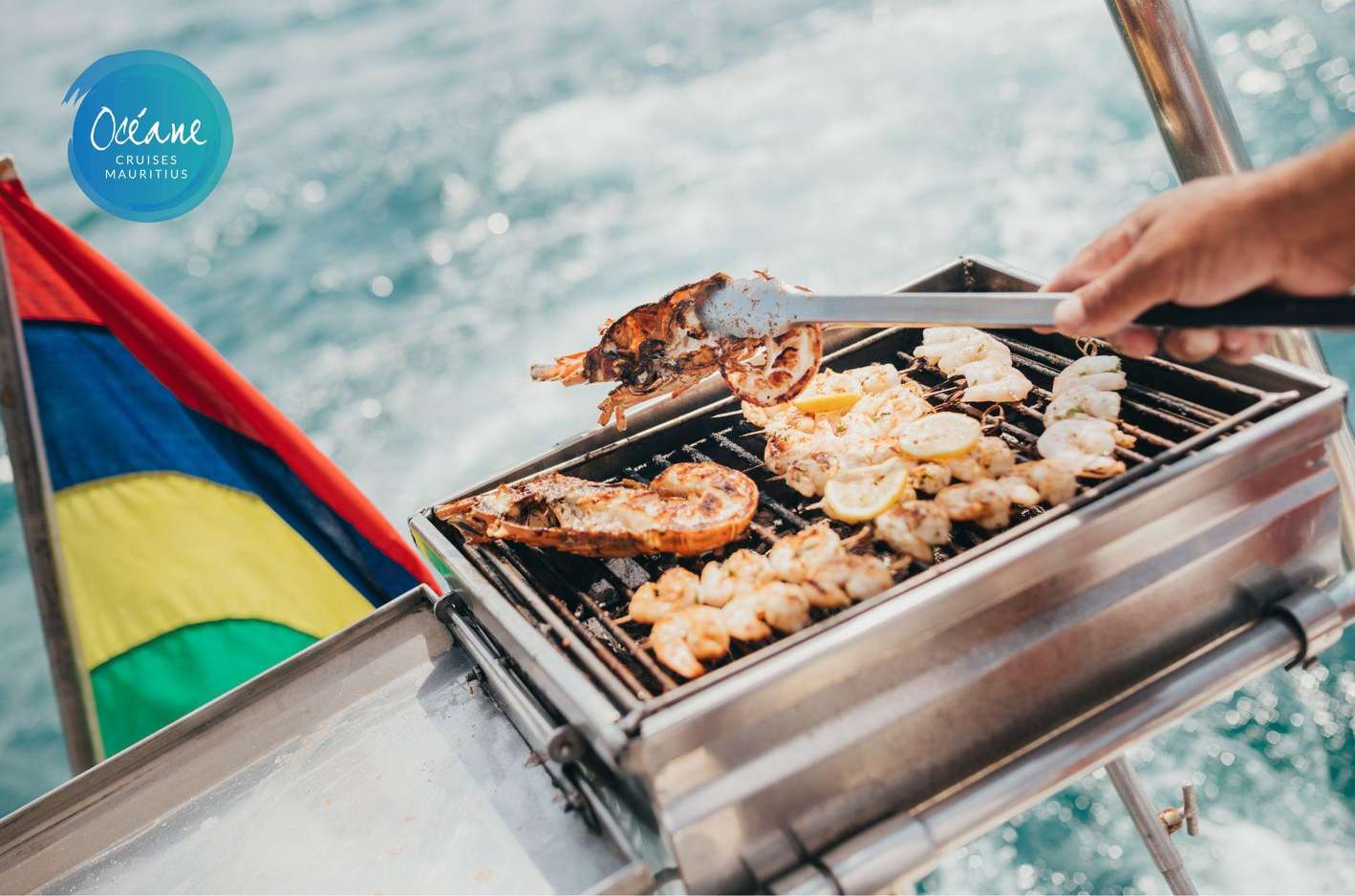
A private charter to Ile aux Cerfs: quiet sand, flexible stops and lunch on your schedule.
Read the guidePalmar is one lagoon among many. These are the other coasts and marine parks worth your water time, and how they differ.
A coast-by-coast comparison that decides where your water days go
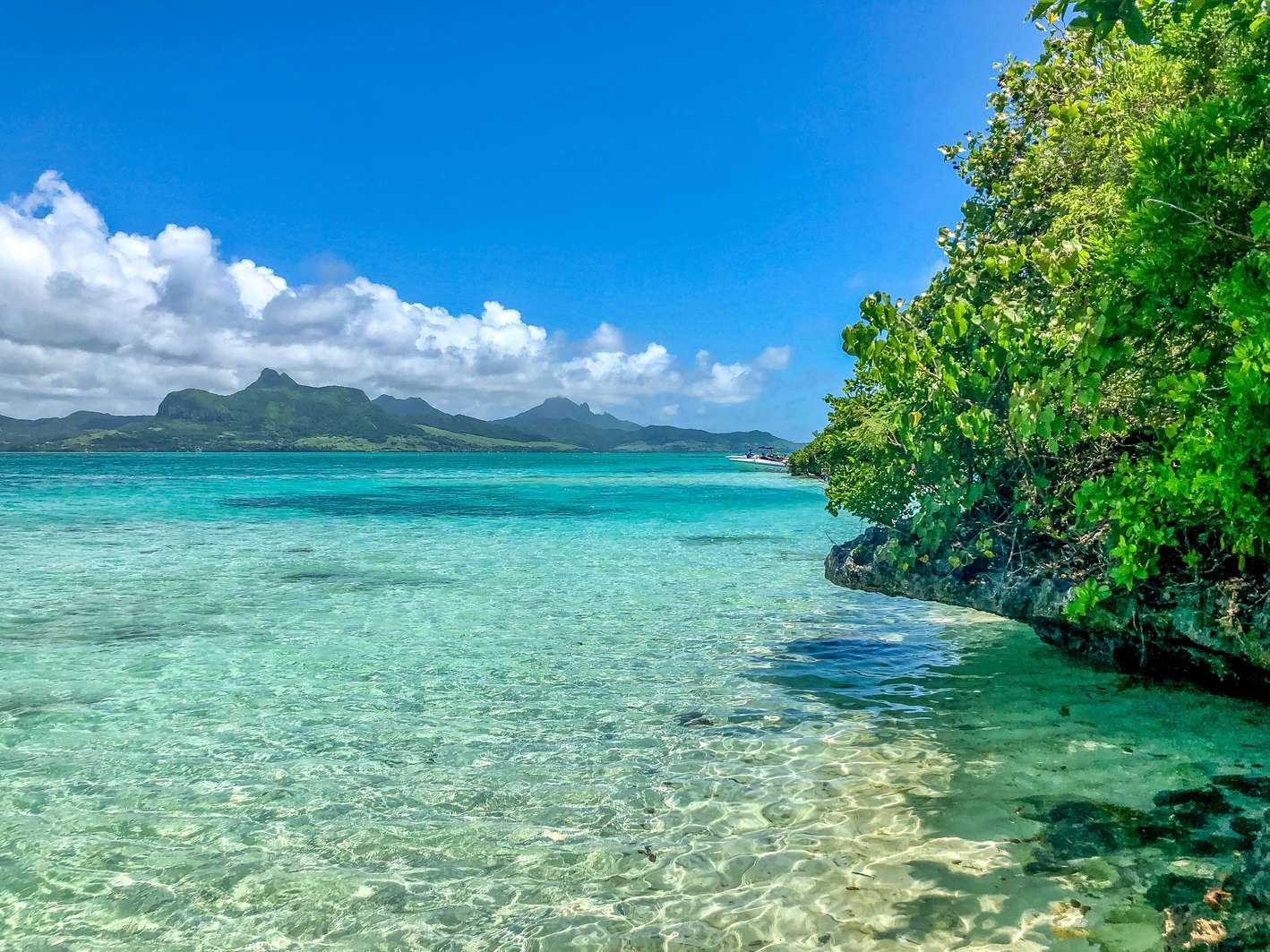
Trade winds make the same island feel like two different holidays. From May to September the east coast around Trou d'Eau Douce sees calm days on as little as 0 to 9 percent, while the mountains shelter the west and Flic en Flac sits flat like a swimming pool.
The page walks each coast side by side: calm water, reef condition, marine life and how far the boats have to go. If you have not fixed your hotel yet, read it before you book anything.
3 hours · ★ 5.0 (4)Blue Bay: Lagoon, Snorkeling, and Creole LunchFrom $87 7 hours · ★ 4.8 (869)Ile aux Cerfs Catamaran Cruise with BBQ Lunch & SnorkelingFrom $68 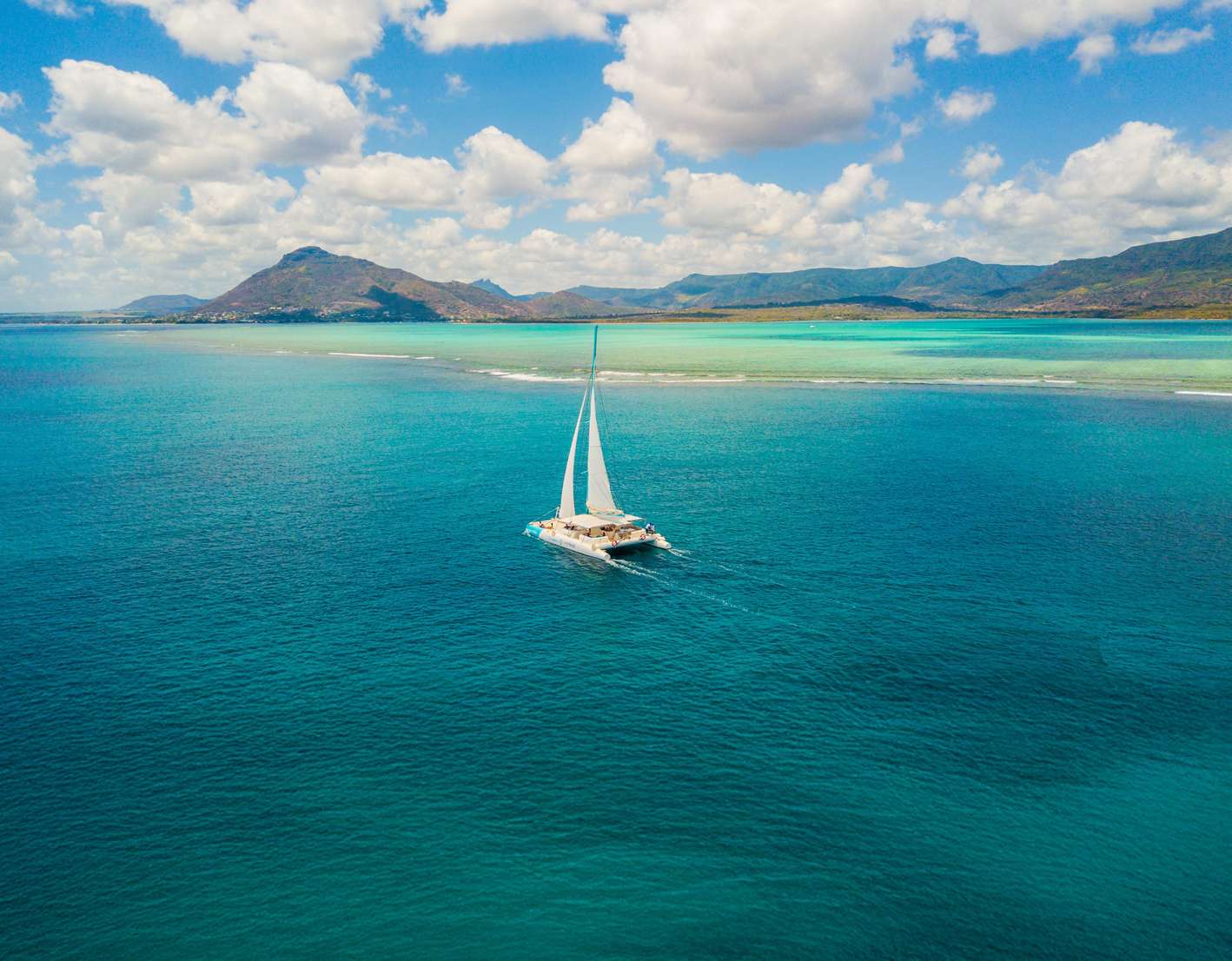 6 hours · ★ 4.7 (363)Mauritius: Catamaran Cruise - Dolphin Watching, BBQ & DrinksFrom $87 2 hours · ★ 4.7 (39)Mauritius: Snorkeling with turtles Le Transporteur speedboatFrom $375 /group
The biggest protected coral garden on the island, reached by glass-bottom boat
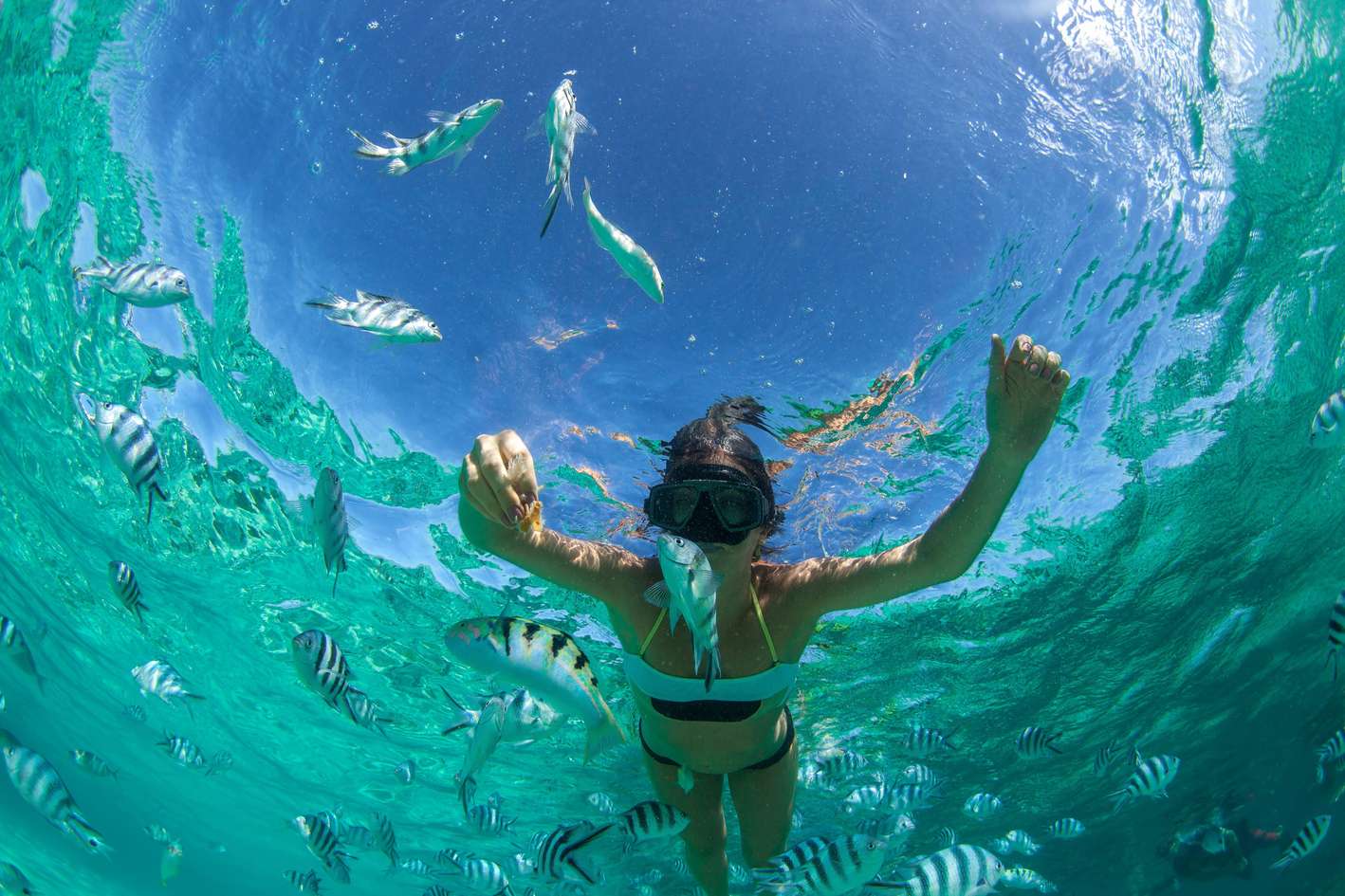
Blue Bay holds the densest coral colonies in Mauritius, officially protected since 1985. Brain corals here measure 6 to 7 meters across and table corals reach 16 meters. The park starts about 100 meters off the public beach, but the best gardens sit out in the deeper zones.
Trips run from one to four hours. An hour gives you about 45 minutes of snorkeling at one spot; two hours covers two spots. Non-swimmers ride the glass-bottom boat and see plenty through the floor panel. Go between 7 and 9 am for the flattest, clearest water.
3 hours · ★ 5.0 (4)Blue Bay: Lagoon, Snorkeling, and Creole LunchFrom $87 2 hours · ★ 4.6 (17)Blue Bay Marine Park: Guided Snorkeling with Video Souvenirs and SnackFrom $58 4 hours · ★ 4.5 (306)Blue Bay: Half-Day Snorkeling Trip with Creole Picnic LunchFrom $67 1 hour · ★ 4.4 (155)Blue Bay Marine Park - 1-hour Snorkeling ExcursionFrom $28 Flat water nearly all year and green turtles grazing on seagrass
Green turtles graze on seagrass along the lagoon edge at Trou aux Biches, and the calm morning water before the tour boats arrive is when sightings come most easily. The lagoon sits on the sheltered northwest coast behind the barrier reef.
The inner shallows near the beach are mostly sandy with scattered fish. The richer coral and the turtles lie out on the reef shelf, a short boat ride away. Speedboat turtle trips leave from Grand Baie and take about two hours.
One of the calmest lagoons in Mauritius, with coral heads a short swim out
The barrier reef at Flic en Flac keeps the lagoon shallow and calm, among the safest swimming water on the island. Coral clumps start a few dozen meters from shore, and denser formations sit about 200 meters out in the wide lagoon.
Snorkel opposite the Hindu temple or in front of one hotel stretch for the healthier heads. Wear reef shoes: sea urchins and stonefish hide in the shallows. Speedboats leave the public beach itself for dolphins and turtles, so no taxi ride is needed.
8 hours · ★ 5.0 (2)Private Dolphins, Sea Turtles & Île aux Bénitiers TourFrom $850 /group 7 hours · ★ 5.0 (1)Mauritius: Private Whale Watching & Bénitiers BBQFrom $1,025 /group 2 hours · ★ 4.7 (28)Flic en Flac: Private Sunrise Dolphin Watching Boat TourFrom $309 /group 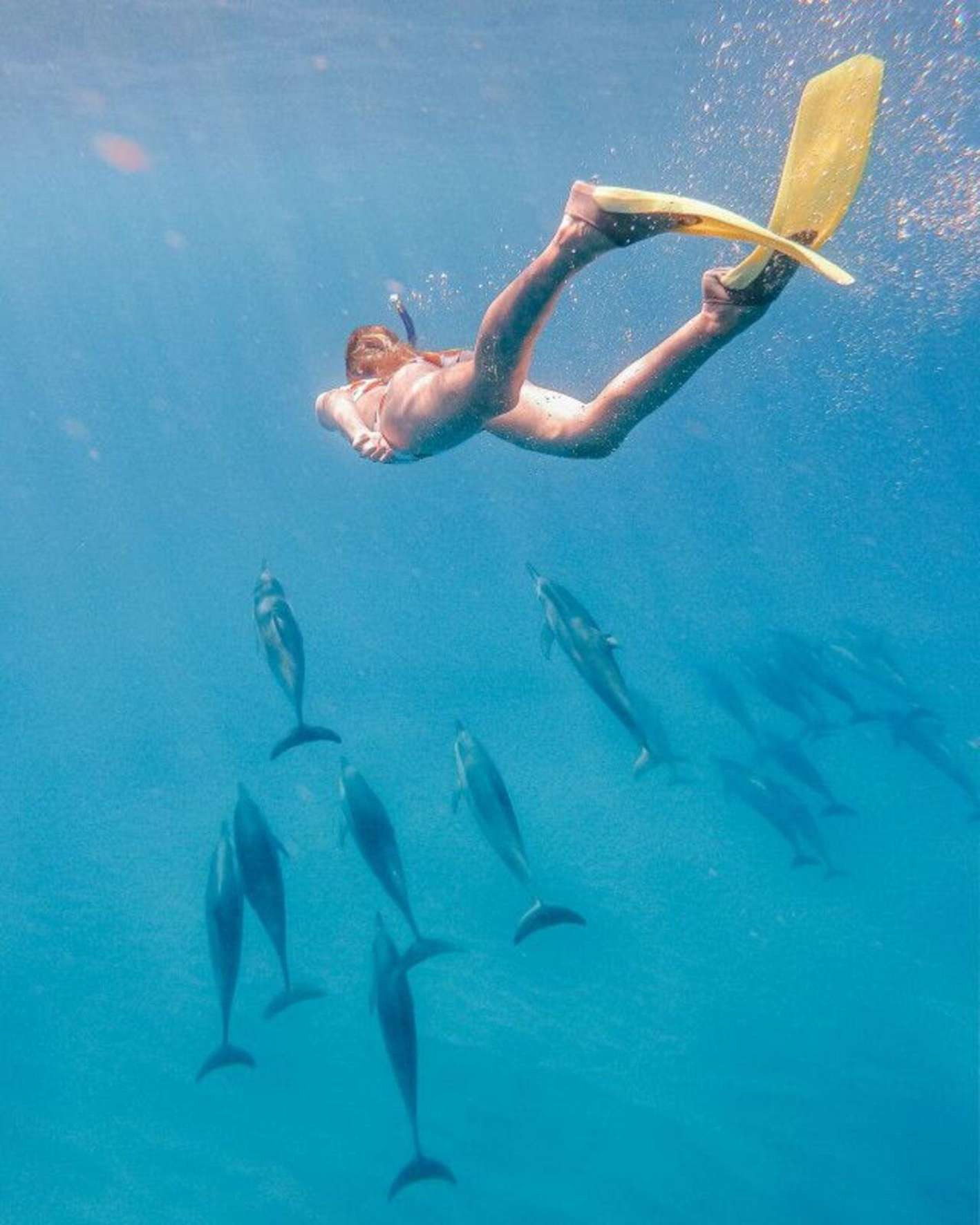 2 hoursMauritius: Private Dolphin Watching and Snorkeling TourFrom $441 /group
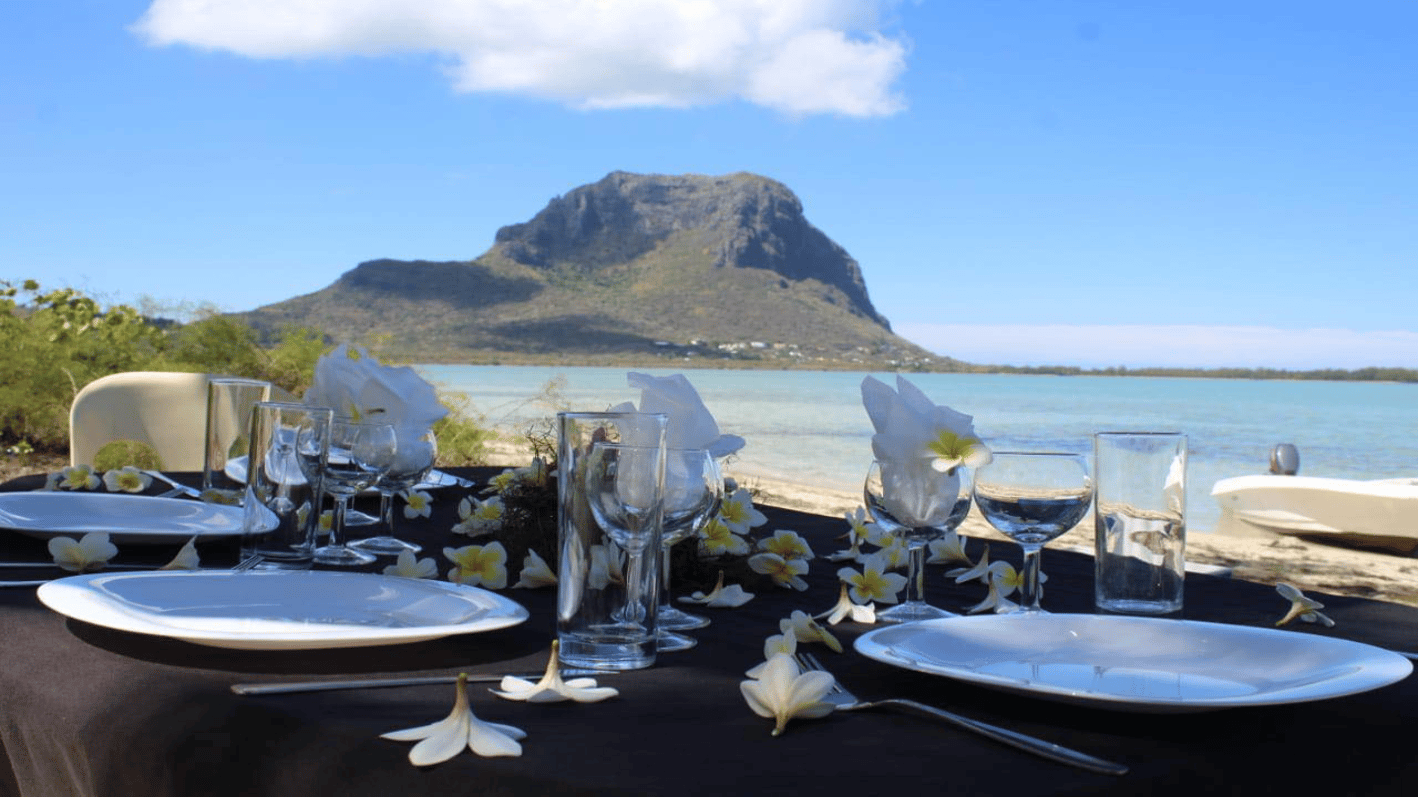
Sheltered lagoon under the mountain, with Crystal Rock just offshore
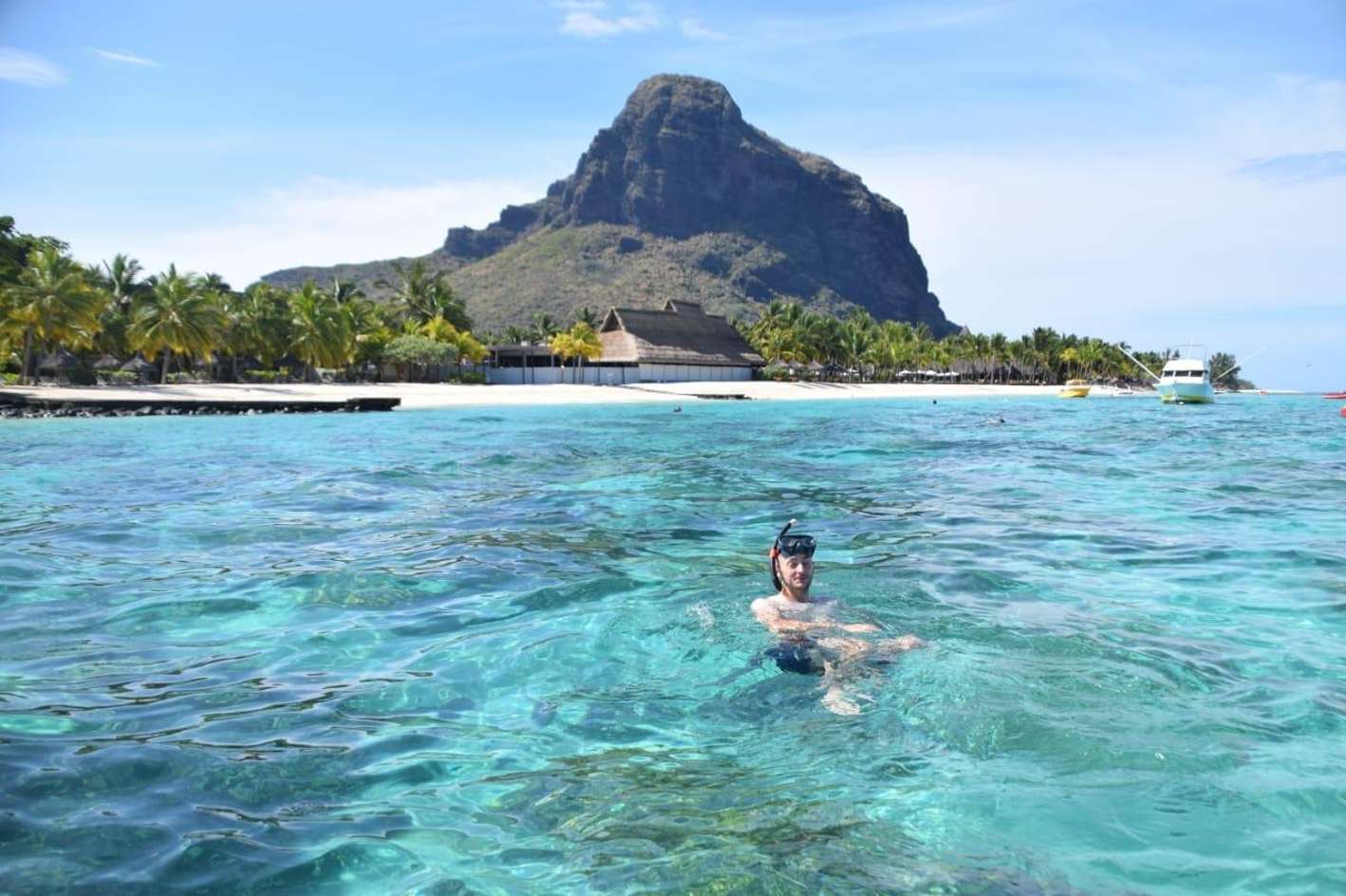
Le Morne's lagoon sits calm and shallow inside the reef, with the mountain rising behind every snorkel. The water at La Prairie Beach starts waist deep with the peak in view, and the northern side of the peninsula stays sheltered while the southern point catches winter trade winds of 15 to 30 knots.
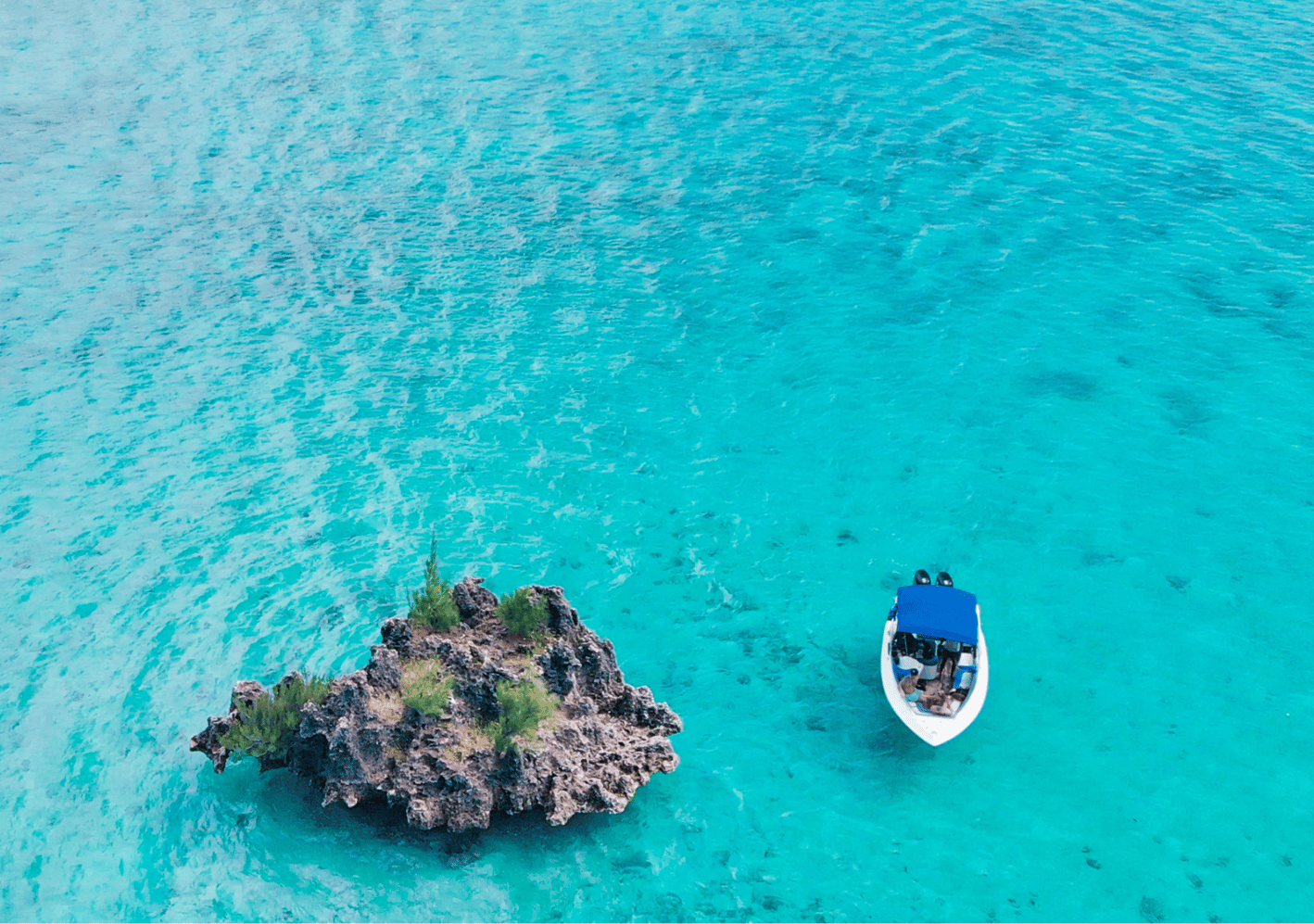
Crystal Rock is the local highlight: hip-deep over sand around the rock itself, with round coral blocks and reef fish nearby. Reef passes like One Eye run strong currents on an outgoing tide, so reach the outer reef by boat.
7 hours · ★ 5.0 (5)Private Île aux Bénitiers Boat: Dolphin Snorkeling & LobsterFrom $738 /group 7 hours · ★ 5.0 (1)Mauritius: Private Whale Watching & Bénitiers BBQFrom $1,025 /group  2 hours · ★ 4.9 (151)Mauritius Le Morne: Wild Dolphin Watching & SwimmingFrom $331 /group
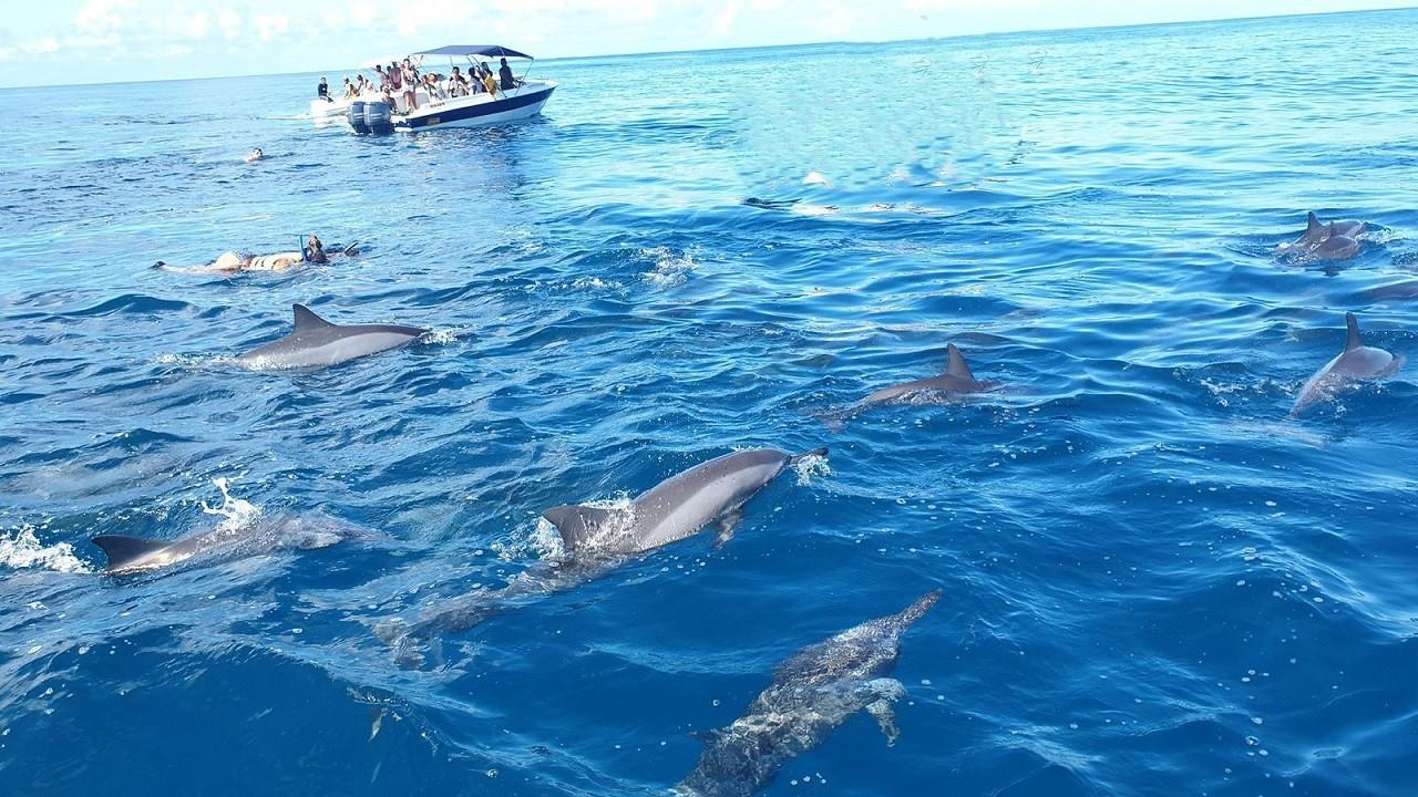 6.5 hours · ★ 4.3 (318)Black River: Swim with Dolphins Speed Boat Tour with lunchFrom $69
A sheltered cove with green and hawksbill turtles close to shore
Pereybere counts as the top spot on Mauritius for meeting sea turtles, with green and hawksbill turtles visiting the sheltered inner reef. The main feeding grounds sit 300 to 350 meters out toward the barrier, reachable by finning from the beach.
The central cove itself is sandy with few fish; coral begins along the rocky edges. A buoyed swimming zone keeps motorboats out, and marked channels carry the traffic. A 90-minute boat trip from the beach goes straight to the turtle grounds.
A busy launch pad whose best snorkeling lies beyond the bay
Grand Baie's inner bay holds moorings and boat traffic, so the town works as a launch pad more than a snorkel spot. What it buys you is the northern isles: catamarans leave the public beach each morning for Gabriel Island, Flat Island and the healthy coral around Coin de Mire.
The open crossing past Cap Malheureux rolls with swells, liveliest between May and August. Book the morning, bring your own mask if you want a leak-free fit, and let the crew collect you from the beach by dinghy.
Open-water dolphin encounters at dawn, outside the sheltered lagoon
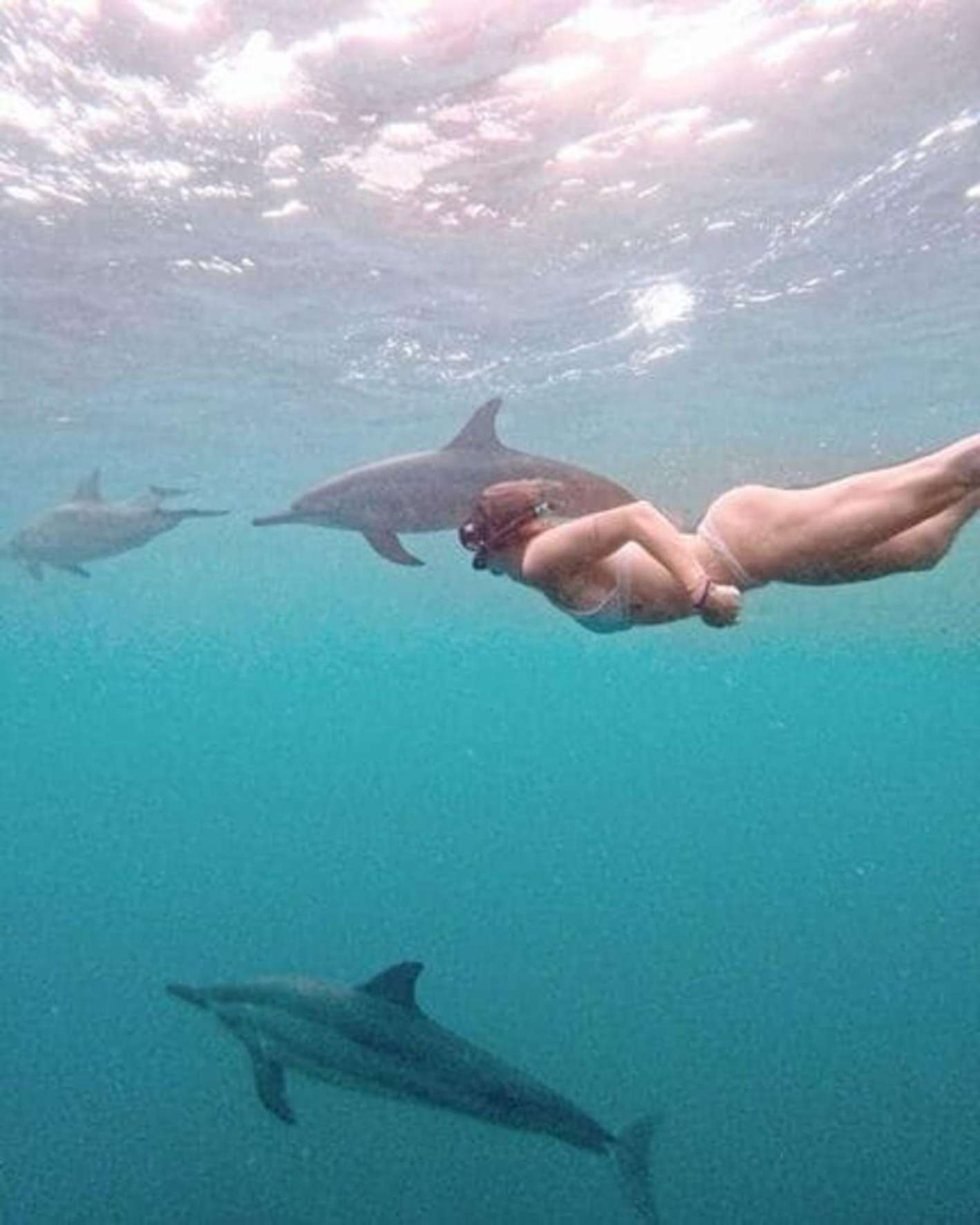
Wild spinner and bottlenose dolphins gather in Tamarin Bay to rest and feed in the morning. The reliable window runs from 6 to 7:30 am, before the tour boat traffic peaks between 8 and 9:30 am.
This is energetic open water, not a lagoon float. Swimmers jump into deep sea and move fast to keep pace, so you need fins, fitness and confidence.
Winter mornings here run cool, around 23 to 25 degrees in the water. On one operator's Tamarin trip, pregnant women, babies under one and people with back problems are not suitable; check the rules before you book.
7 hours · ★ 5.0 (5)Private Île aux Bénitiers Boat: Dolphin Snorkeling & LobsterFrom $738 /group 6 hours · ★ 4.7 (363)Mauritius: Catamaran Cruise - Dolphin Watching, BBQ & DrinksFrom $87 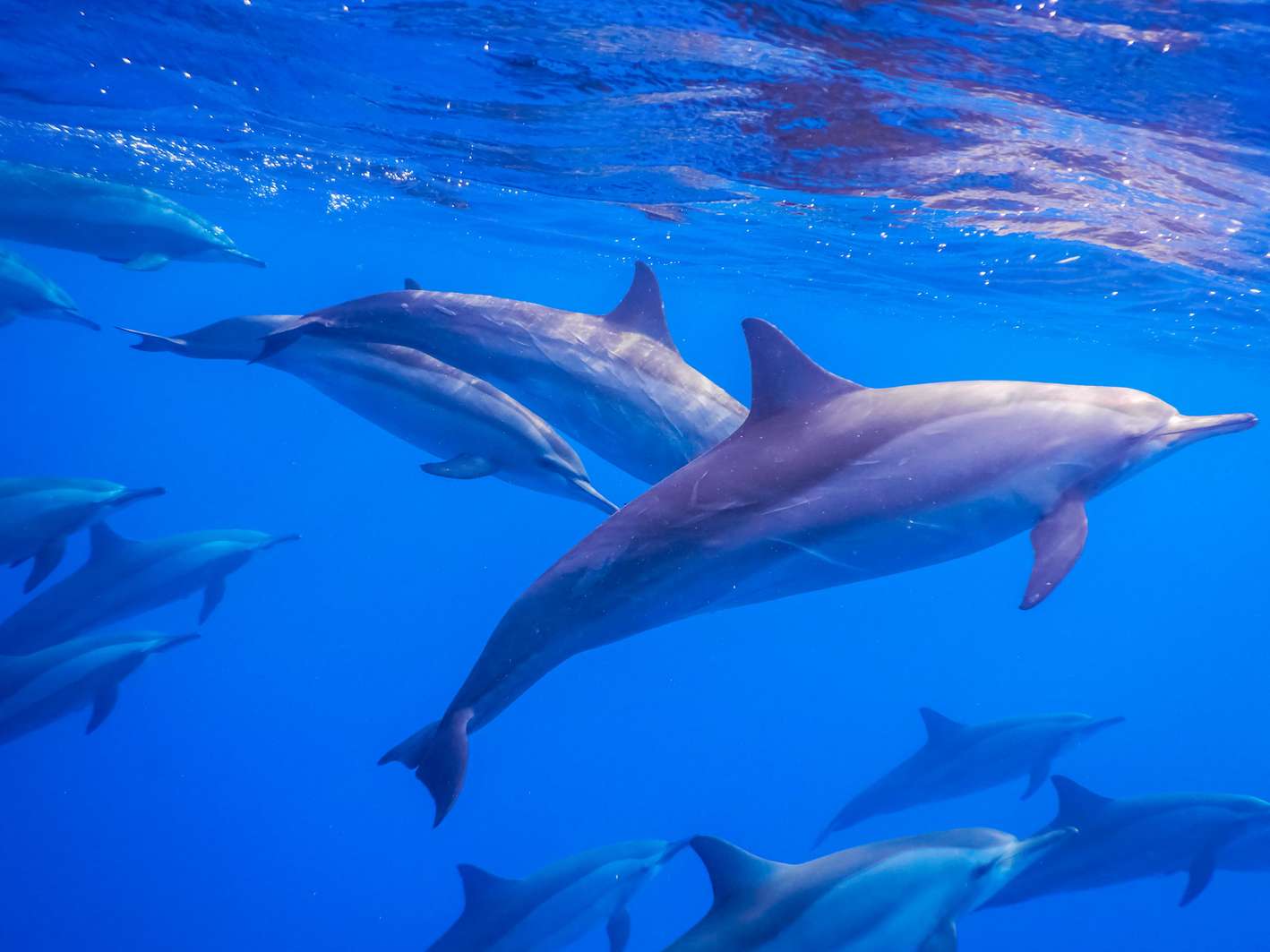 2 - 6 hours · ★ 4.7 (237)Dolphin Watching with Hotel Pickup (Mauritius)From $61 /group
 4 hours · ★ 4.4 (35)Dolphins & Whales: Private Snorkeling TourFrom $528 /group
Palmar's northern neighbour, with coral heads and a guarded reef pass
Belle Mare shares Palmar's east coast character: a wide lagoon, calm mornings, and trade winds that roughen everything from June to September. Coral sits about 500 meters offshore, and the reef pass is where currents pull.
Swimming out to the reef from the sand is not advised; boats carry snorkelers to the coral instead, and local guides run the crossing. Catamaran tours from the area collect guests at the big east coast resorts, so a full day on the water needs no taxi.
A protected park with rocky shallows and occasional grazing turtles
Balaclava's lagoon faces north, out of the trade winds, and stays calm enough for beginners and older children all year. Coral patches begin near the shore, and the park's species list runs long, from Acropora to Montipora.
Green sea turtles are seen occasionally grazing here, seen rather than promised. The shoreline has rocky volcanic patches underfoot, so enter with care, and keep clear of the traffic lanes and passes where currents pull. Boat trips run inside the park under its own rules, including flagged entries and time-limited moorings.
A sheltered bay whose shallow cove draws green turtles near the sand
Turtle Bay is one of the most sheltered corners of the island, with walk-in access and a lagoon that usually stays flat. At Kuilima Cove you step from sand into ankle-deep water and reach the reef without rocks underfoot; green turtles pass through the cove's deeper sandy patches.
Boat traffic inside the bay is minimal, but current can still pull near the reef passes, so stay within the marked zones. The reef is recovering rather than pristine, with the densest coral right of the wooden jetty at the southern beach.
A quiet southern stretch where the outer reef lies close but currents run
Bel Ombre sits on a quieter southern stretch where fewer boats and divers share the water. Resort nautical centres organise snorkeling and glass-bottom outings themselves, so a reef day starts at your own hotel desk.
The lagoon is shallow at low tide and can churn up silt, so mid to high tide gives the clearest water. Keep away from the reef passes and channels, where very strong currents run. Boat trips toward Le Morne and Crystal Rock collect guests at the lobby, often confirmed by message the evening before.
The famous cascade seen only from the air, with real reefs beside it
The underwater waterfall off Le Morne is moving sand pouring off a shallow shelf into deep ocean, an illusion that only works from above. From sea level or through a mask you will not see a cascade; the water clears only a few meters laterally.
Swimming near the reef opening there is a mistake you should not make: outgoing tide and surf push strong rip currents seaward. Scenic flights over the site leave from La Prairie beach and from helipads across the island, and the real reward beside it is the Le Morne lagoon snorkeling.
Where turtles gather, the rules that protect them, and the boats that find them
Mauritian law forbids swimming with sea turtles in any form, under the Fisheries Act 2023, and the penalties are heavy. What you can do is watch them graze: northwestern bays like Trou aux Biches and Turtle Bay hold seagrass the animals feed on.
Keep still, never touch or feed one, and ease off the fins nearby. Boat trips reach the feeding grounds and the crew briefs you on the etiquette first. A turtle adventure trip from Pereybere takes about 90 minutes, with non-swimmers welcome to stay on deck.
8 hours · ★ 5.0 (2)Private Dolphins, Sea Turtles & Île aux Bénitiers TourFrom $850 /group 2 hours · ★ 4.7 (39)Mauritius: Snorkeling with turtles Le Transporteur speedboatFrom $375 /group 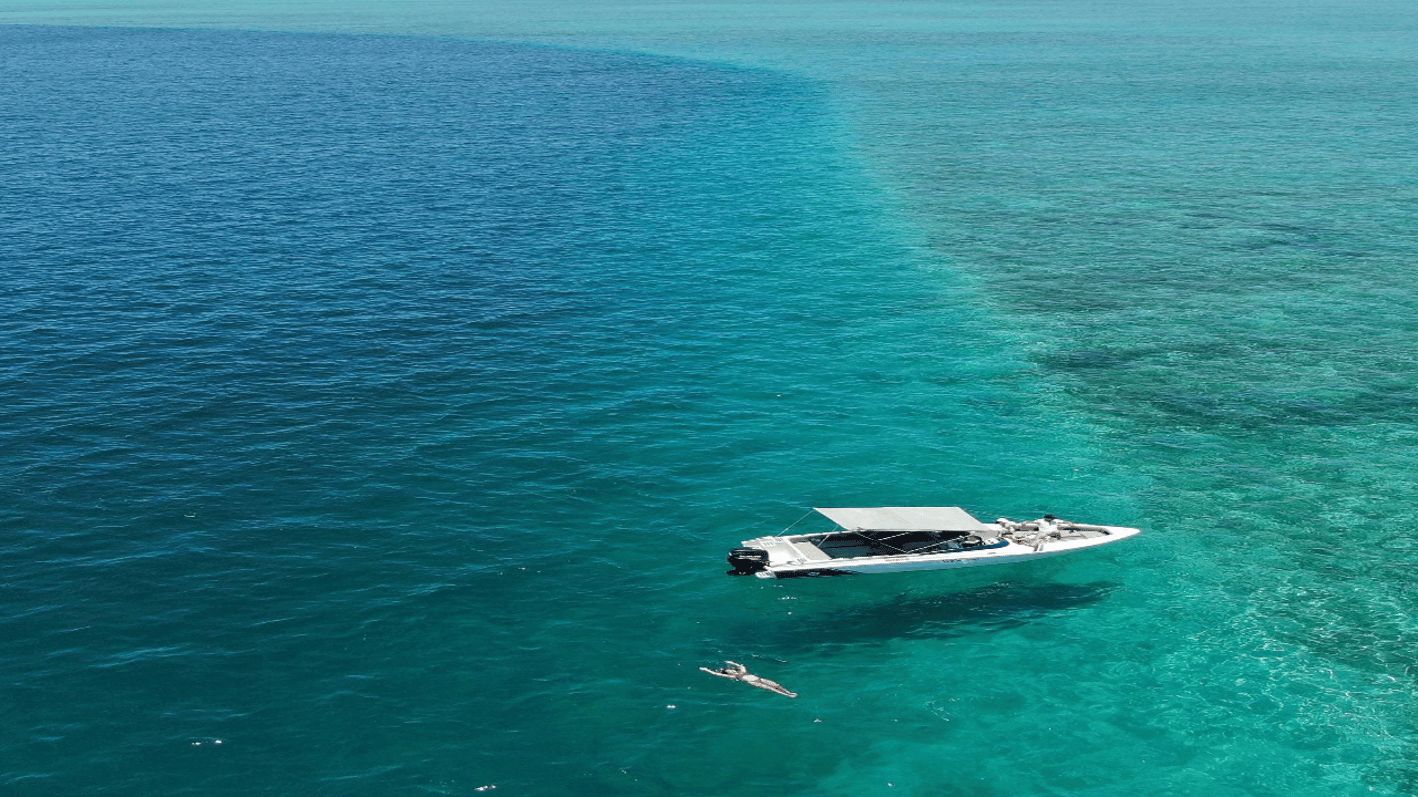 9 hours · ★ 4.3 (188)5 Islands Speedboat with Snorkeling, Sea Turtles, Lunch & DrinksFrom $95 1.5 hours · ★ 4.2 (314)Mauritius: Sea Turtle Adventure and Coral Reef DiscoveryFrom $44
Year-round sperm whales off the deep west drop-offs, watched from the boat
A resident sperm whale population feeds off the west coast year-round, because the seabed drops to deep water close to shore. Humpback whales pass in season between June and October.
The rules are strict and worth knowing before you dream of an in-water encounter: swimming with whales is prohibited, and boats must stay 100 meters away, approach from the side and hold a parallel course.
Private speedboat charters from Flic en Flac run whale watching combined with lagoon snorkeling and a beach barbecue, so the day still ends in the water.
Month by month: visibility, water temperature and the cyclone window
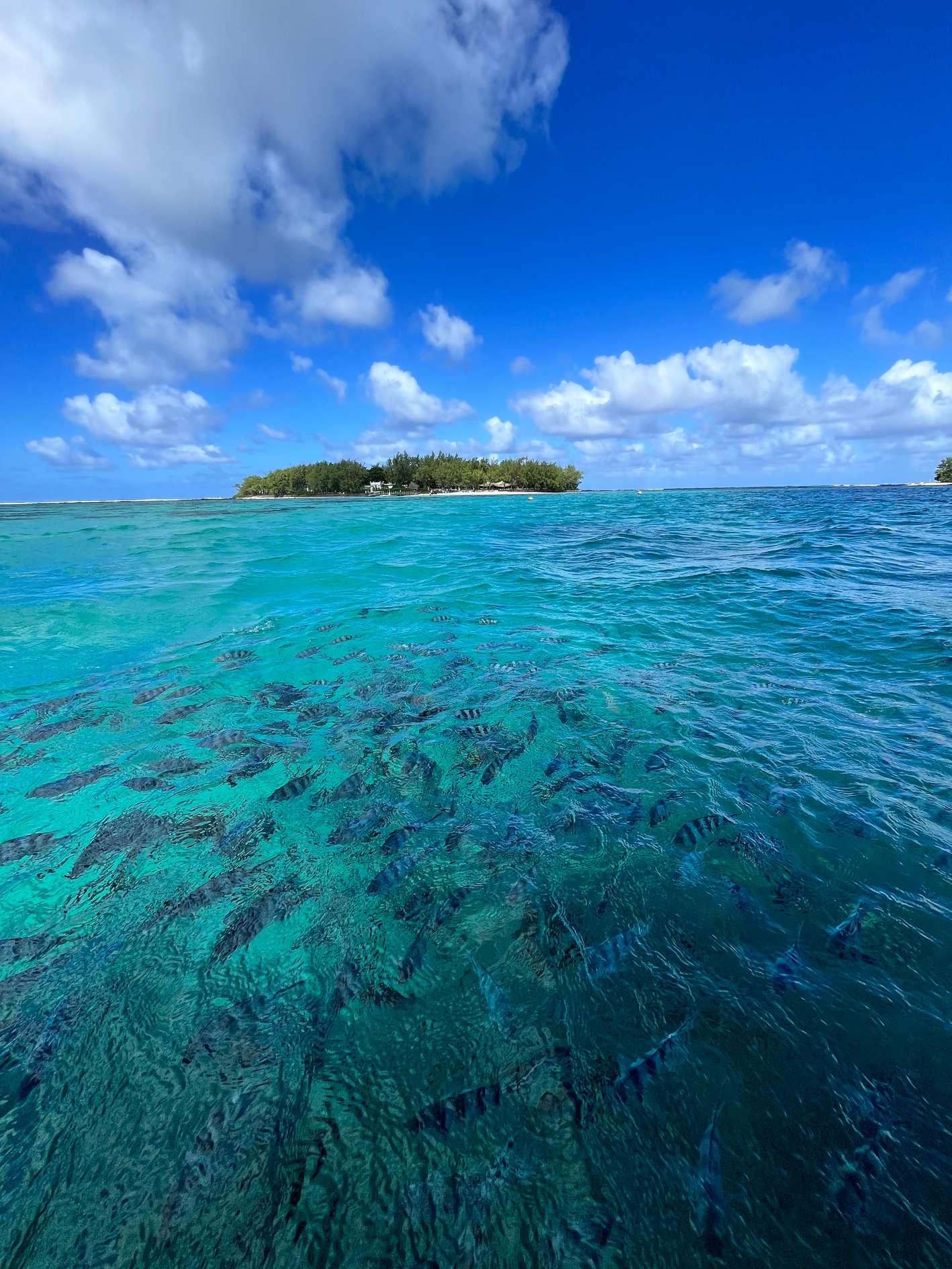
Underwater clarity peaks in the dry months, best in September and October when visibility regularly reaches 20 to 30 meters. From June to September the trade winds chop up the eastern reefs, and from January to March cyclone-season rains wash sediment into the lagoons.
Water swings from about 29 degrees in the southern summer to near 23 in July and August, cool enough that a rash vest earns its place. Cyclones close boat operations a few days a year at most. Read it once and you will know what your chosen month gives you.
The classic east coast sailing day: lagoon, waterfall, island and barbecue
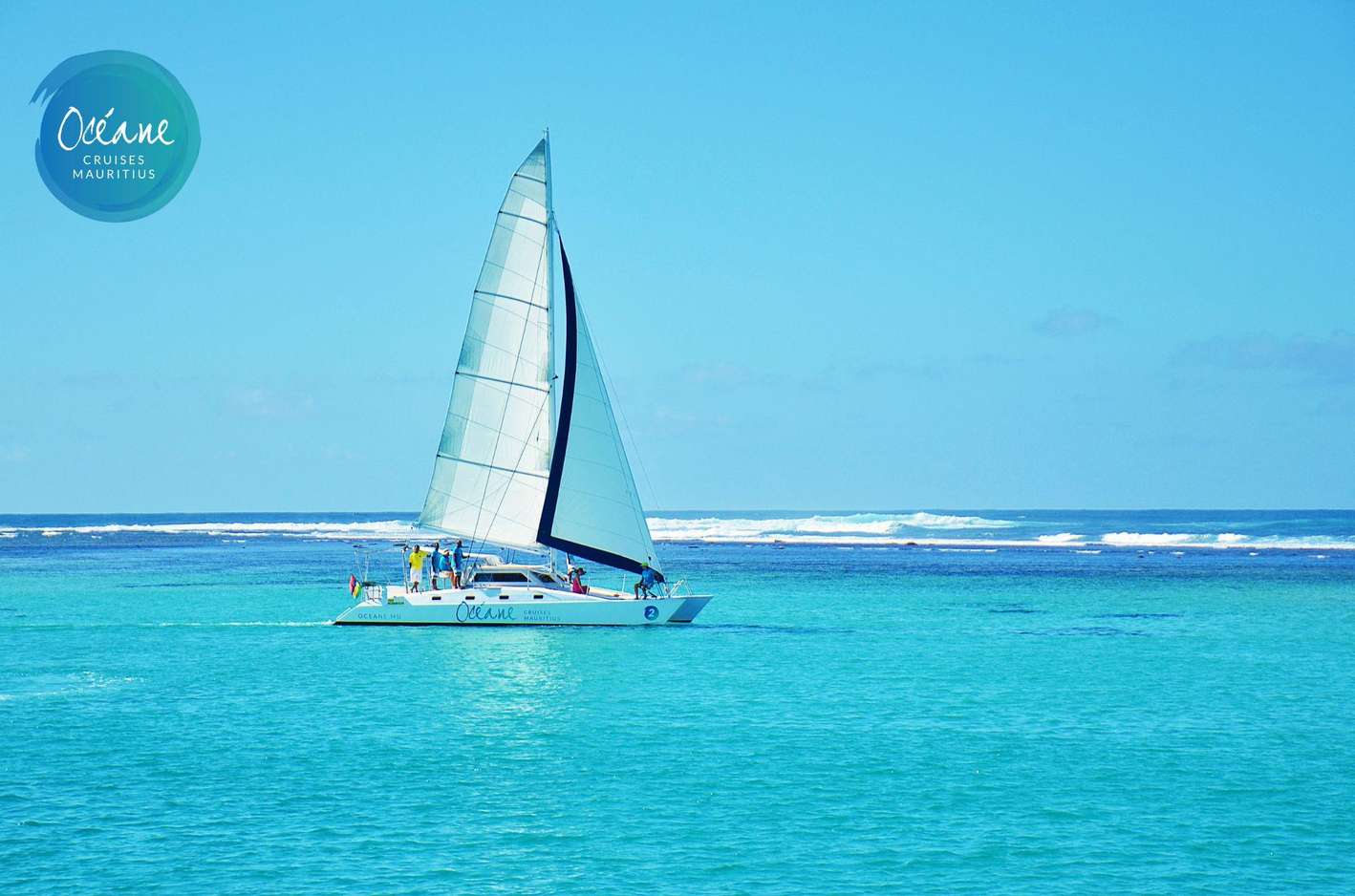
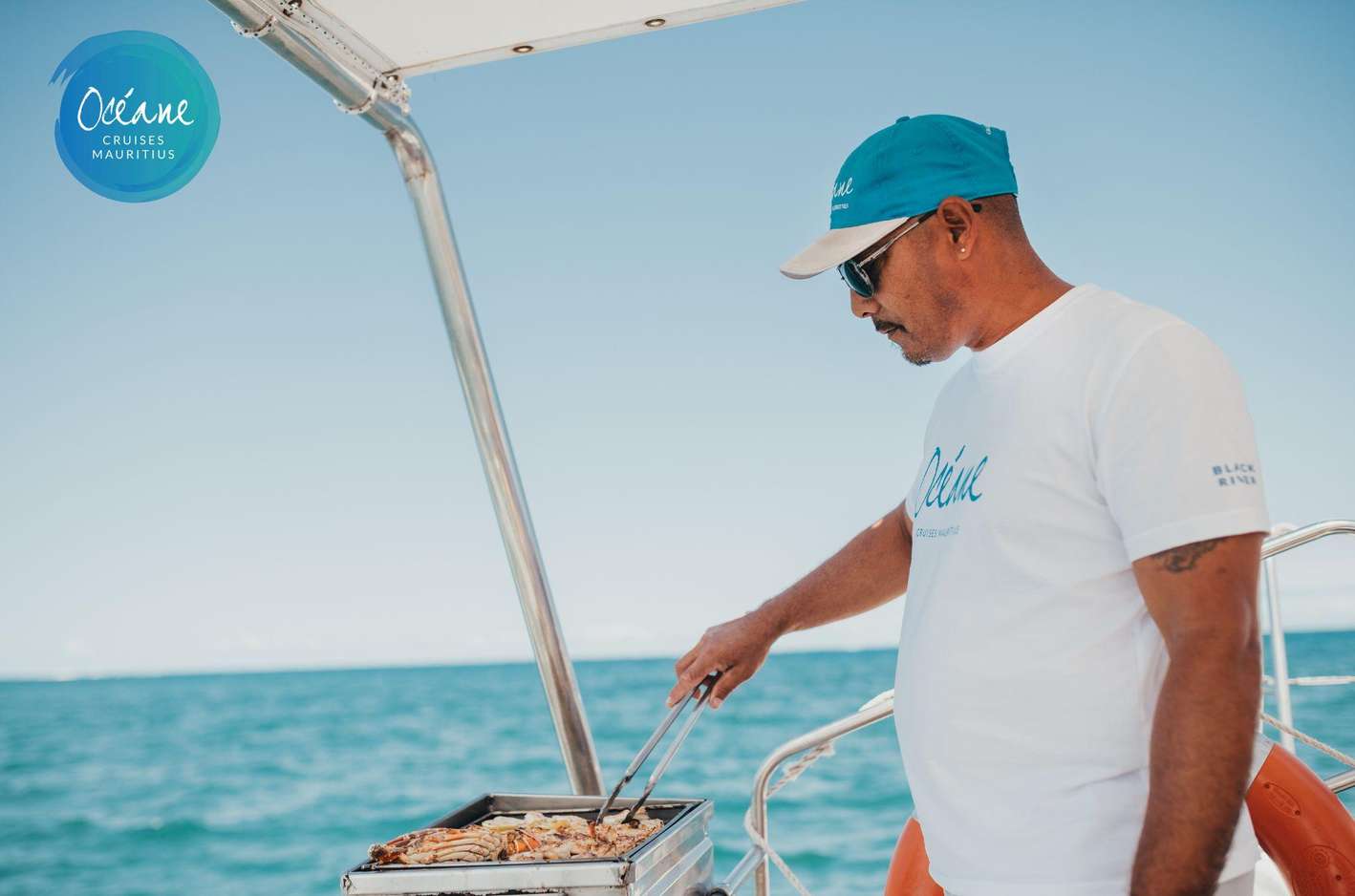
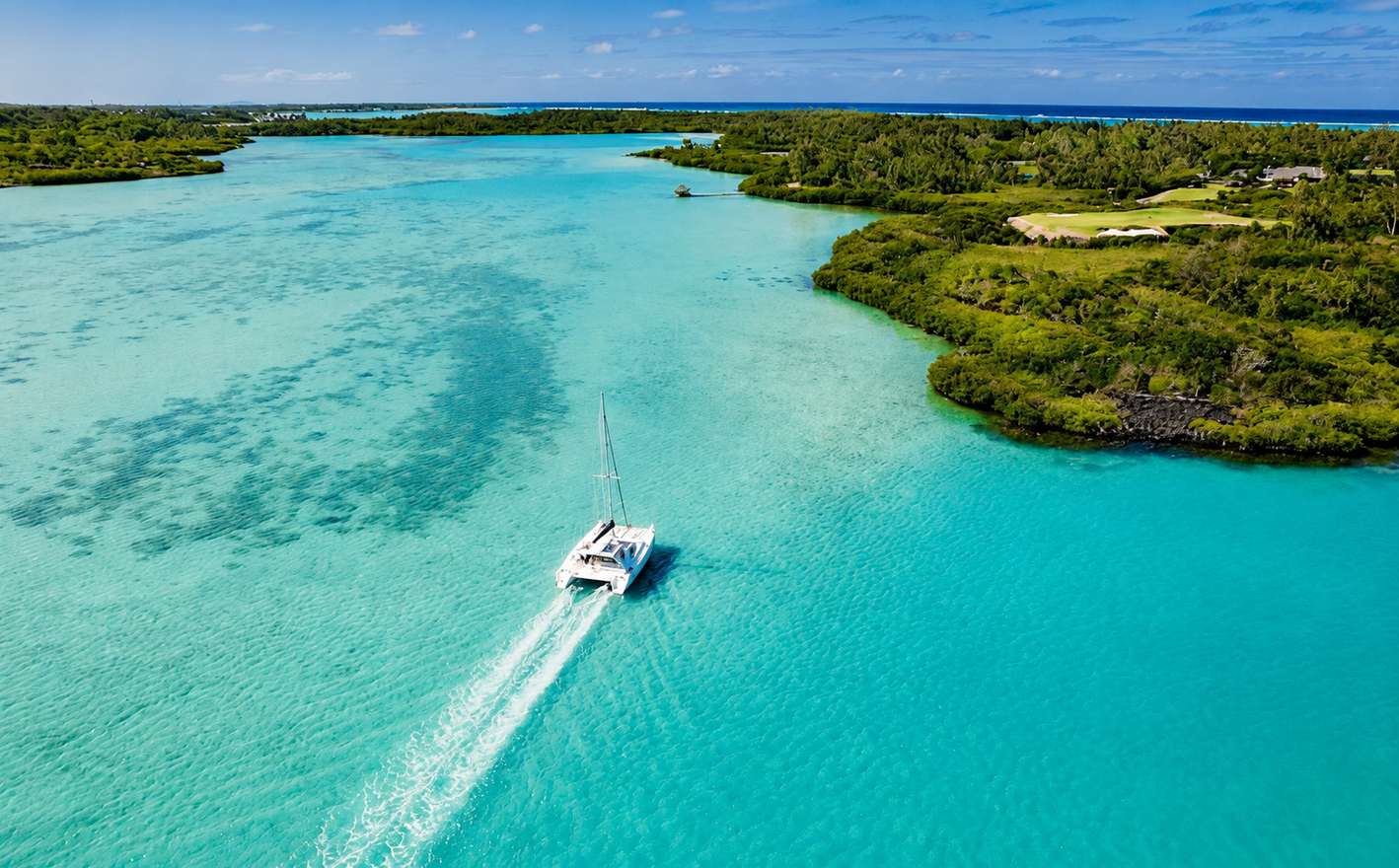
For most first-timers this is the day to book: a wide catamaran sails the sheltered east lagoon, stops for a snorkel, runs up the Grand River South East to the waterfall, and serves barbecue lunch with drinks on deck. Free time on Ile aux Cerfs runs about an hour to ninety minutes after lunch.
The wide twin hulls keep the ride steady even in wind, since the route stays inside the protected lagoon nearly all day. One operator collects guests at the major east coast resorts, Palmar included, so the day starts at your lobby and the crossing takes 45 to 60 minutes.
6 hours · ★ 5.0 (11)Île aux Cerfs: Private Catamaran Cruise with Gourmet LunchFrom $1,133 /group 7 hours · ★ 4.8 (869)Ile aux Cerfs Catamaran Cruise with BBQ Lunch & SnorkelingFrom $68 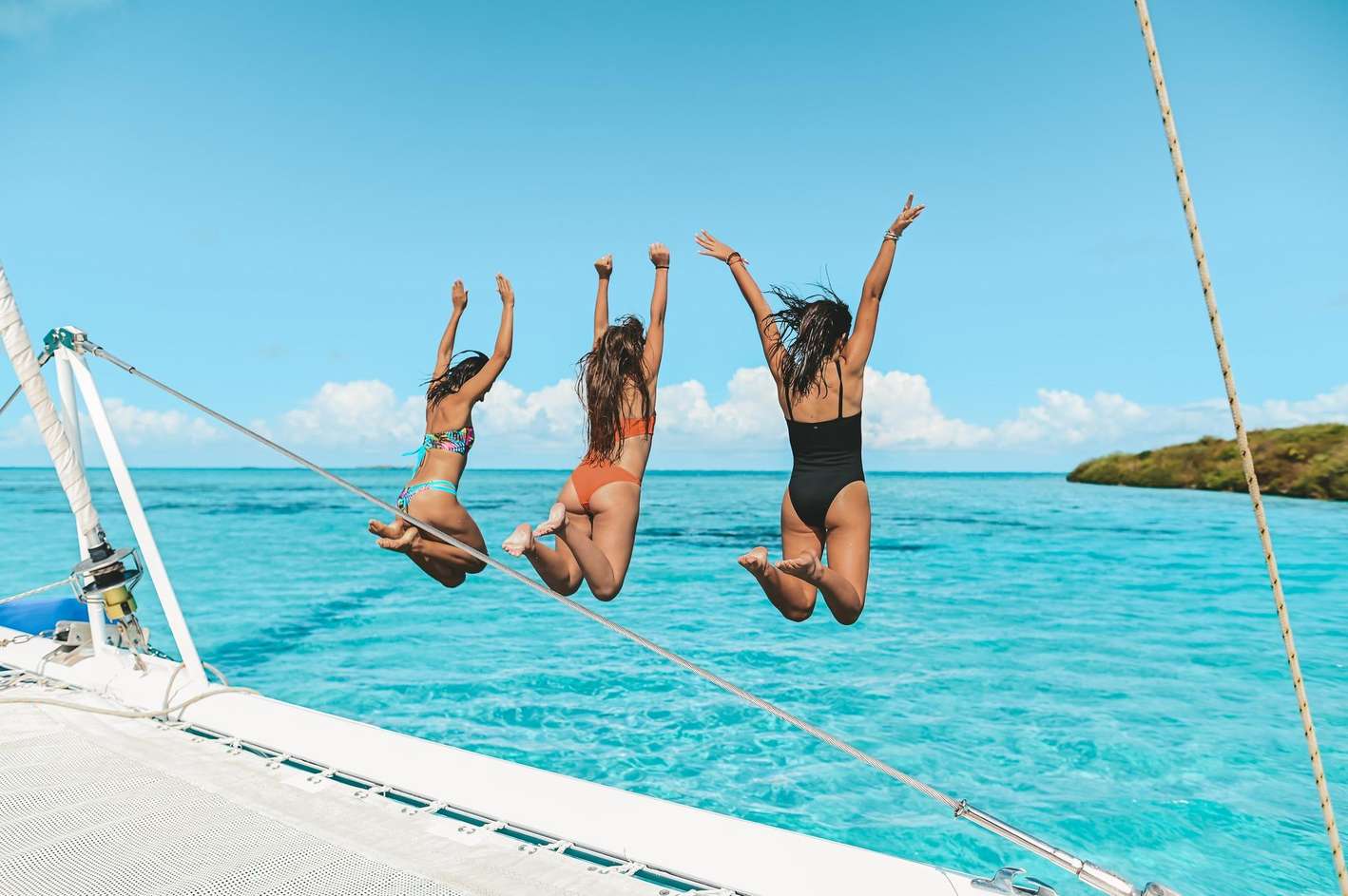 7 - 8 hours · ★ 4.7 (453)Mauritius: Ile aux Cerfs Catamaran, Waterfall & BBQ LunchFrom $62
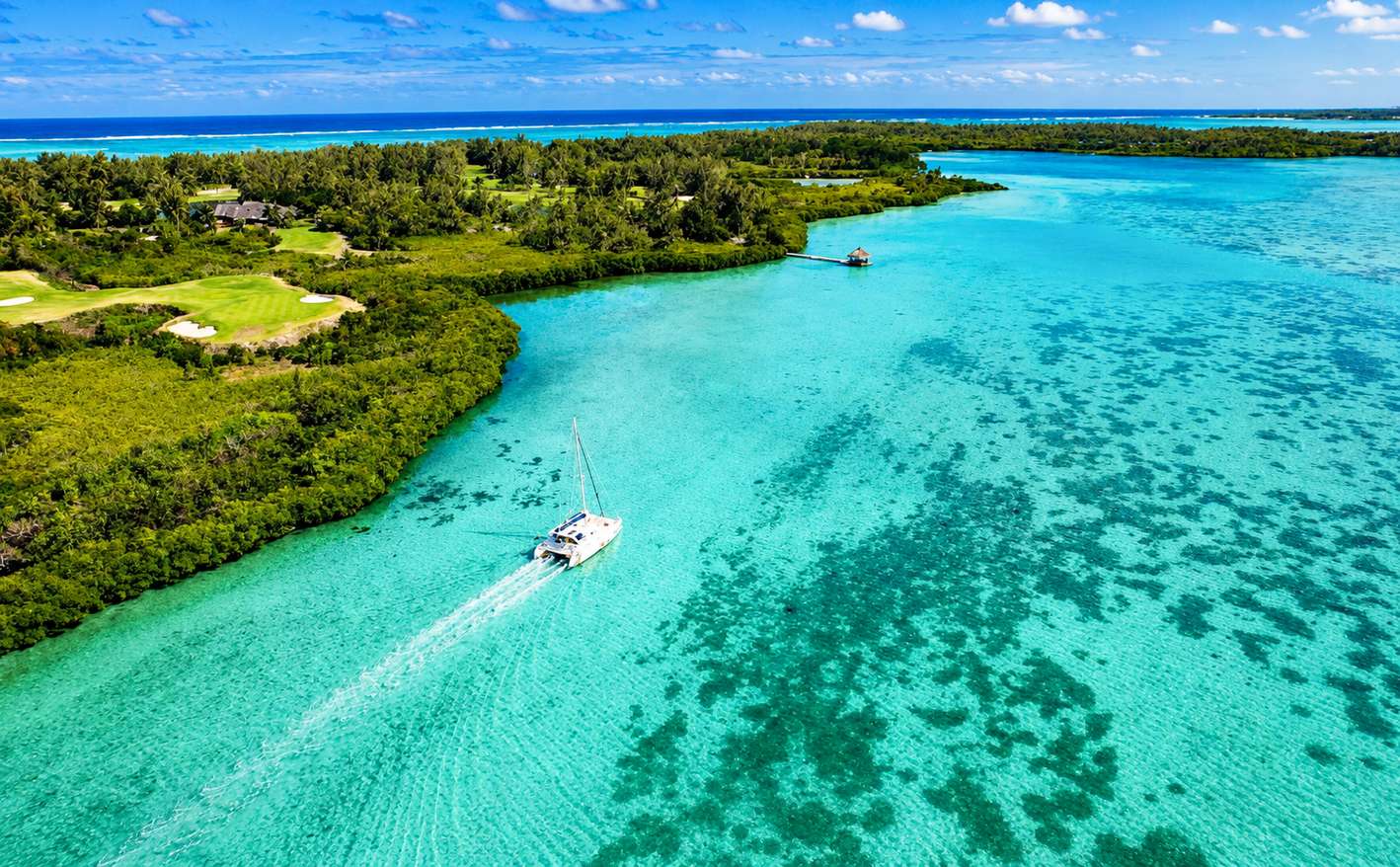 7 hours · ★ 4.6 (104)Mauritius: Ile aux Cerfs Catamaran Cruise, Waterfalls & BBQFrom $84
Speedboats cross in a quarter of the time and reach what catamarans cannot
A speedboat crosses the Trou d'Eau Douce lagoon to Ile aux Cerfs in 10 to 15 minutes, against 45 to 60 for a catamaran, which buys you most of an hour extra on the sand.
The small boat also runs up the river channel to the base of the Grand River South East waterfall, where the big cats have to anchor out.
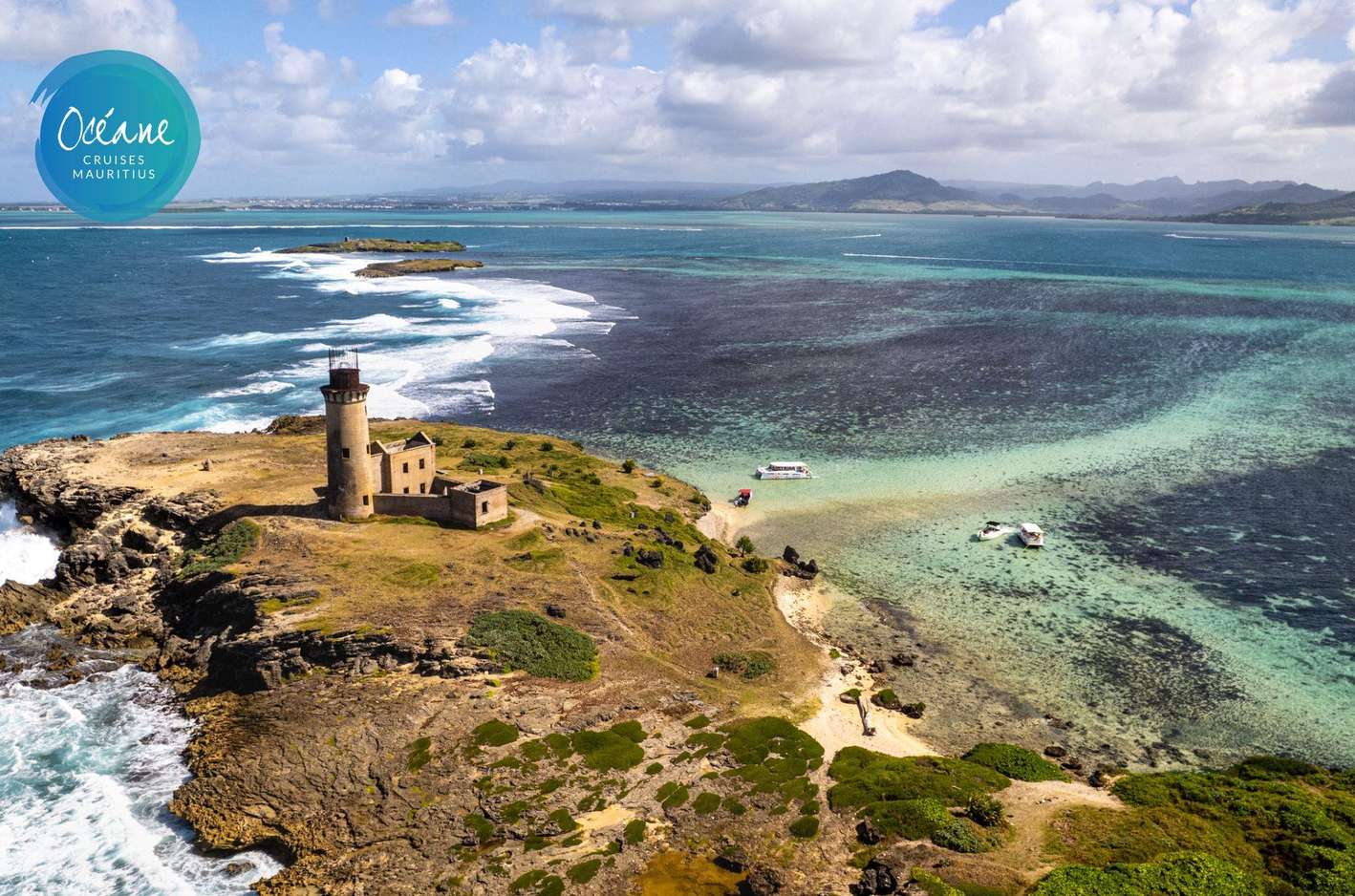
The five-island routes add the old lighthouse island and the battle site of Grand Port. The ride is bumpier than a catamaran, especially in trade wind season, and east coast speedboat trips do not take pregnant women.
6 hours · ★ 5.0 (3)Private Island-Hopping Cruise: 5 Islands, Waterfall & LunchFrom $738 /group 6 - 7 hours · ★ 4.7 (1,451)Trou d'Eau Douce: 5-Island Adventure with BBQ & SnorkelingFrom $95 9 hours · ★ 4.3 (188)5 Islands Speedboat with Snorkeling, Sea Turtles, Lunch & DrinksFrom $95 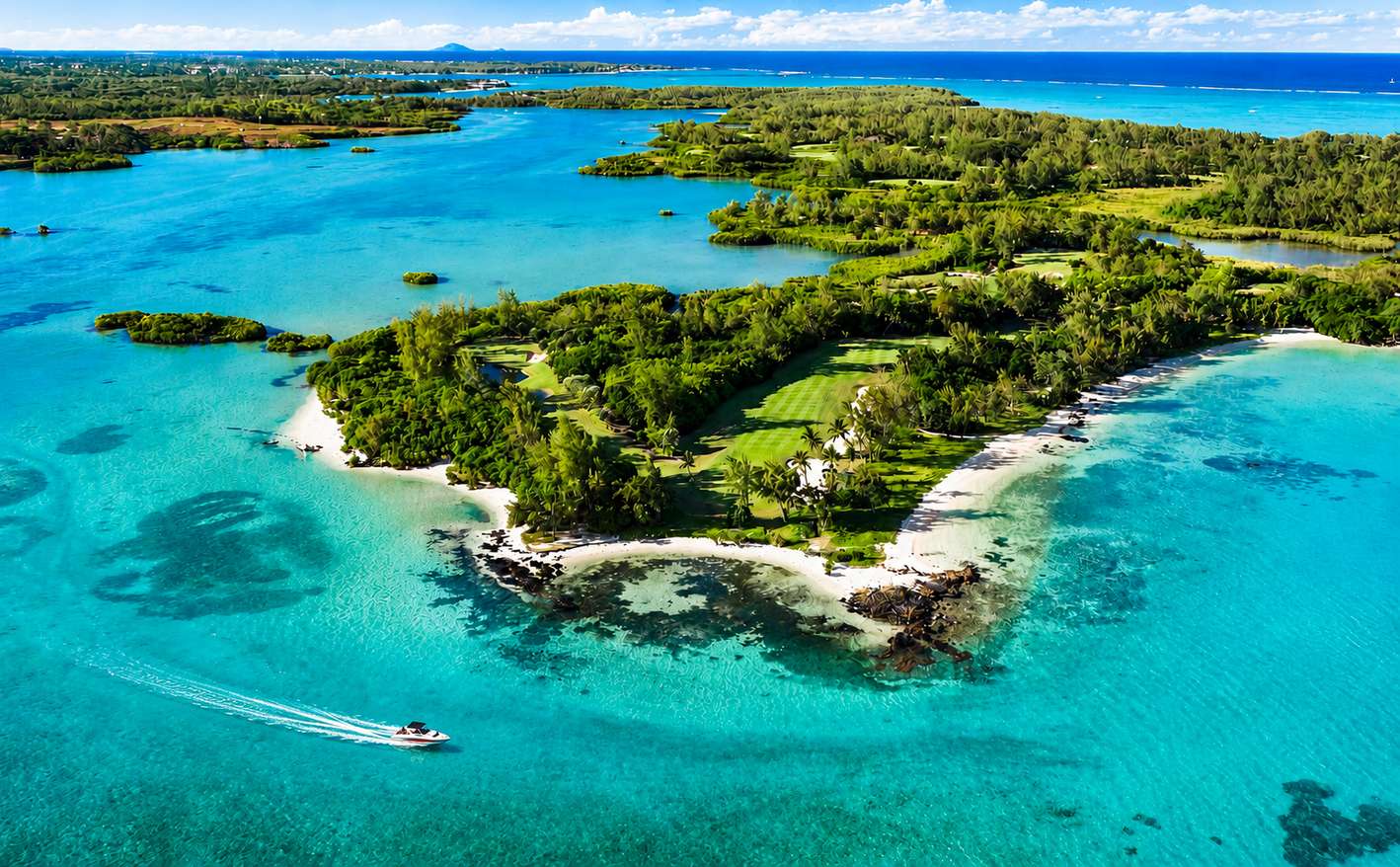 7 hours · ★ 4.3 (237)Mauritius: 5 Islands Speedboat Lagoon Experience with BBQFrom $74
Your own boat, your own timetable, and the beaches before the crowds
Crowds pack the main beaches of Ile aux Cerfs between about 10:30 am and 3:30 pm. A private charter slips that window: your skipper lands you before the ferries, waits while you swim a quiet reef, and moves when you say so.
Choose a private catamaran with a gourmet lunch for a slow sailing day, or a private island-hopping boat that reaches the sandbanks and the waterfall basin. Both leave from Trou d'Eau Douce, a few minutes south of Palmar, and the itineraries bend to your group.
southern end of palmar beats belle mare's coral
The water in front of your Palmar resort is calm and swimmable, and the richest coral lies a few minutes south by boat. From the hotel sand to an Ile aux Cerfs catamaran with pickup at your lobby, the whole day gets sorted here.
The reef line sheltering Palmar's lagoon sits about 800 meters from the shoreline, with sandy walk-in shallows about 250 meters wide in front of the beach.
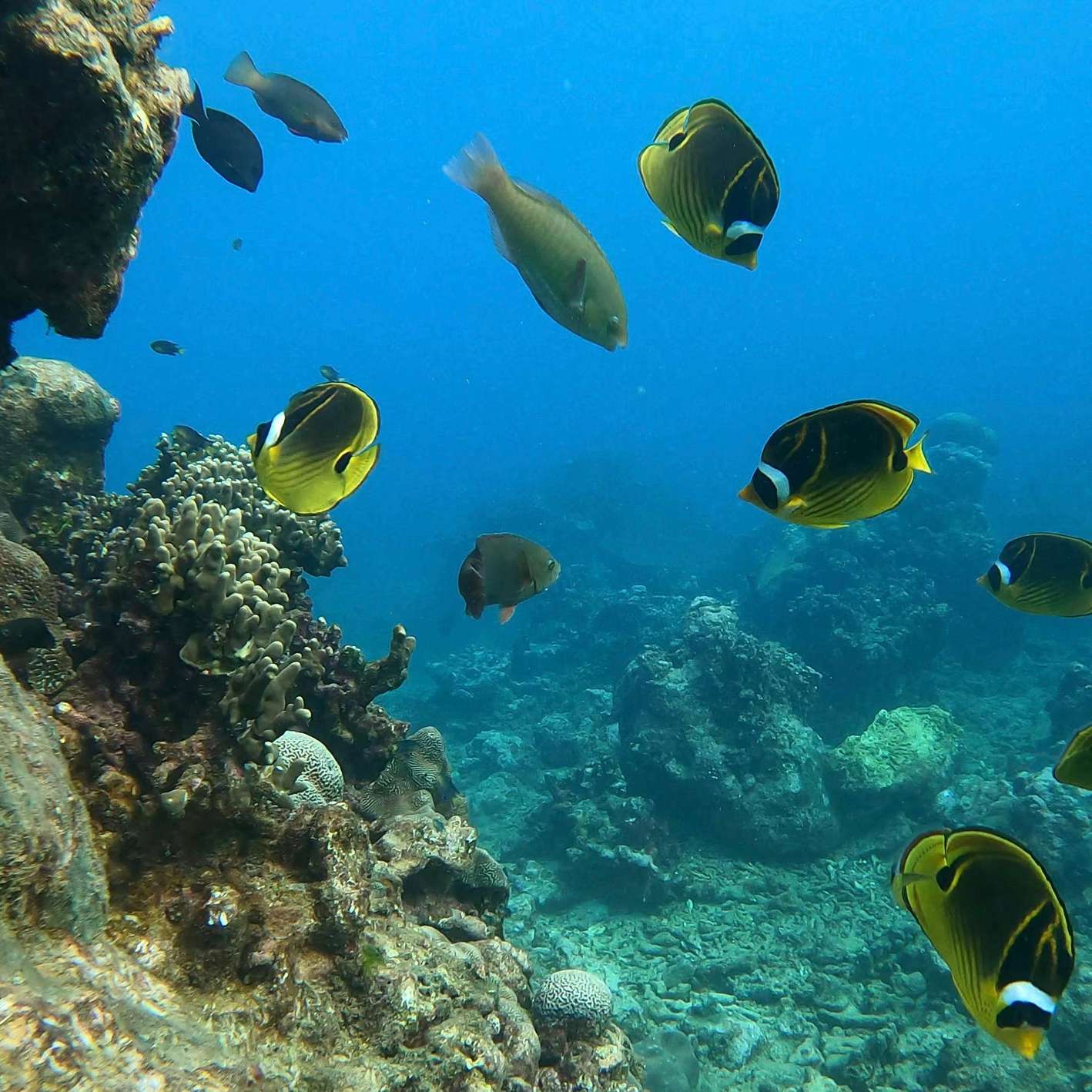
Walk-in snorkeling shows Moorish idols, butterflyfish and groupers, and the richest coral sits at the quieter southern end of the beach.
June to September brings trade winds and almost no calm-sea days on the east coast; October, November and April are the calmest months.
Boats leave from Trou d'Eau Douce, 3 to 12 minutes south of the Palmar resorts, and tours pick you up at your own lobby.
Book the Ile aux Cerfs catamaran with the transfer option: boarding is 9 am at the jetty, and everything from lunch to snorkel gear is on board.
Plan your Palmar snorkeling for the morning, when the water is calmest and clearest, and save boat trips for the sheltered lagoon routes. If wind ruins the water, move to the west or northwest coast for the day instead.
Pale coral sand, a line of casuarinas, and a wide, flat lagoon. Stand in front of SALT or Veranda Palmar in the morning and the water looks almost empty, and that first impression fools people.
Two figures sketch the swim ahead: the reef line that shelters the lagoon sits about 800 meters from the shoreline, and the sandy shallows in front of the beach run roughly 250 meters wide.
The first counts the full swim out to the coral, the second just the walk-in water, so a 250-meter wade still leaves open lagoon ahead. Everything between the sand and that far reef line stays calm and shallow.
The fish life does not sit straight ahead of the main resort beaches. It gathers along the small rocky points in the lagoon, and the southern end of the beach holds richer, less disturbed coral than the busier stretches to the north. Fewer people swim there, and it shows underwater.
For scale: the Trou d'Eau Douce jetty sits just south of the resort strip, and the catamaran routes to Ile aux Cerfs start from there. Your two snorkeling worlds sit within a few minutes of each other, one from the sand and one from a boat.
The reef line sits roughly 800 m out, so the shallow sand in front reads as empty
Snorkel the small rocky outcrops inside the lagoon for blennies and juvenile reef fish
Richer, less disturbed coral than the stretches farther north, simply because fewer people go there
So on your first swim, look past the empty-looking sand straight out and aim for the rocky points, or head south along the beach before getting wet.
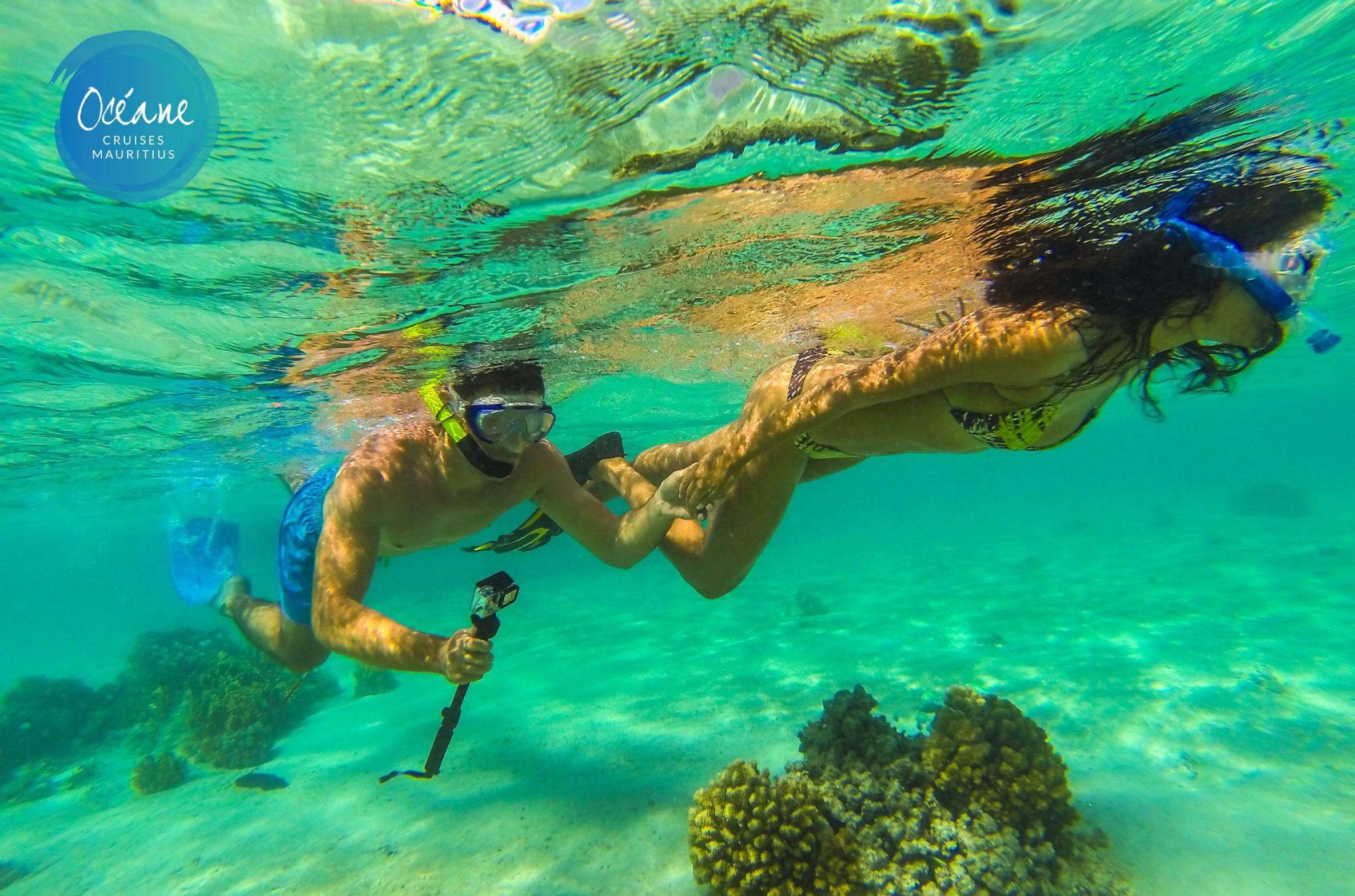
Walk in early and the entry is sand, with scattered coral patches under your fins. Watch your step in the shallows: burrowing, long-spined and collector sea urchins live there. Small tropical fish hover over the seagrass beds, and near the rocks at low tide the show starts.
Swim along the rocky points and you meet blennies and juveniles of all kinds. Across the lagoon, regulars count Moorish idols, sixbar wrasse, several types of butterflyfish and honeycomb groupers.
One oddity to know: dusky farmerfish are everywhere and can behave aggressively when you drift into their territory. They are defending their patch of sand. Keep moving.
Timing decides the day. Early morning brings the greatest variety of fish, before winds pick up and other swimmers stir the shallows. By mid-morning the water in front of the resorts has been walked through, and the quiet species have backed off.
Set your expectations honestly. This is fish-rich lagoon snorkeling over sand and scattered coral; the dense coral gardens of Blue Bay sit farther south and need a boat.
Much of the sand in front of resort strips island-wide is broken rubble, so for living coral formations and deeper water, a short boat ride earns its keep, and Palmar sits next to one of the best departure points in Mauritius.
The east coast trade winds are the one thing that can spoil this trip, so plan around them. From June through August, and stretching into September, southeast trades blow straight onto this coast.
Calm-sea days drop close to zero, waves outside the reef run above two meters, and the lagoon turns choppy and stirred. The reef still blocks the ocean swell, so visibility over sand and scattered coral often stays clear, but swimming from shore gets uncomfortable on exposed stretches.
The sweet months are October, November and April, when roughly seven or eight days in ten bring calm seas. December holds up well too. In the windy season, morning departures give you the calmest and clearest window before the wind builds.
If you have not fixed your hotel yet, the same winds make the sheltered west and northwest coasts the flat-water winners in winter. The coast-by-coast comparison at which coast wins the calm-water contest settles that choice before you book anything.
October: 5 out of 5 for how busy it gets. Tours are very busy as trade winds subside and calmer lagoon waters bring much better snorkeling visibility.
Tap a month to read it.
December: calm sea on 45% of days. Tours are quite busy with warm summer water and the year's highest share of calm sea days at 45%.
Tap a month to read it.
June: waves up to 2.3 m on an average day. Winter trade winds peak and calm sea days fall to zero, creating choppy, murky water during the year's quietest tour month.
Tap a month to read it.
February: 2 windy days. Tours see quieter crowds during peak cyclone season, with frequent rain and occasional strong swells disrupting the lagoon.
Tap a month to read it.
Put your own dates against those months and the trade-off appears: a June stay makes lagoon swimming from shore a lottery, while a boat day inside the Ile aux Cerfs lagoon stays sheltered nearly the whole time.
The lagoon floor at low tide is the first thing your fins meet, and it is not all sand. Scattered coral fragments and three kinds of sea urchins, burrowing, long-spined and collector, hide in the shallows along the shore.
Water shoes are the cheap insurance here. Their spines snap off in skin and burn for days. Stonefish camouflage themselves on sand and rock and carry venomous dorsal spines, so they are the more serious hazard; shuffle rather than step in murky shallows.
Keep clear of the live stuff too. Fire coral stings and blisters, stony corals scrape deep, and lionfish and striped eel catfish carry venomous spines of their own. The traveler rule that saves feet: never stand on or step over coral formations in the shallows, even to adjust a mask.
Then there is the outer reef itself. The passes and channels where water flows between the lagoon and the open ocean run strong currents that can carry a swimmer out to sea, and crossing the outer barrier reef on your own means breaking surf and urchins.
The outer reef is boat territory. Inside the lagoon, away from the passes, you can roam unguided with confidence.
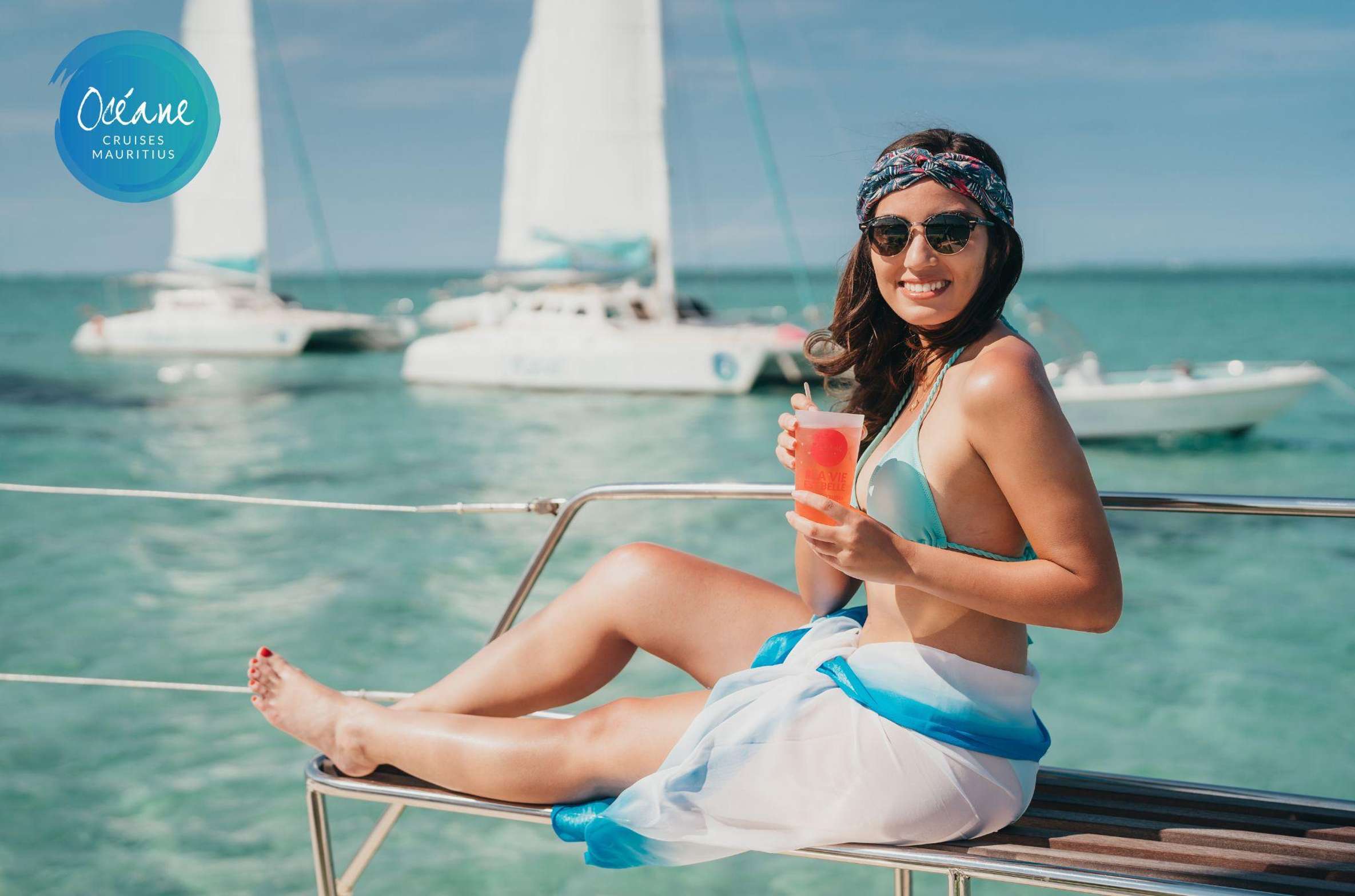
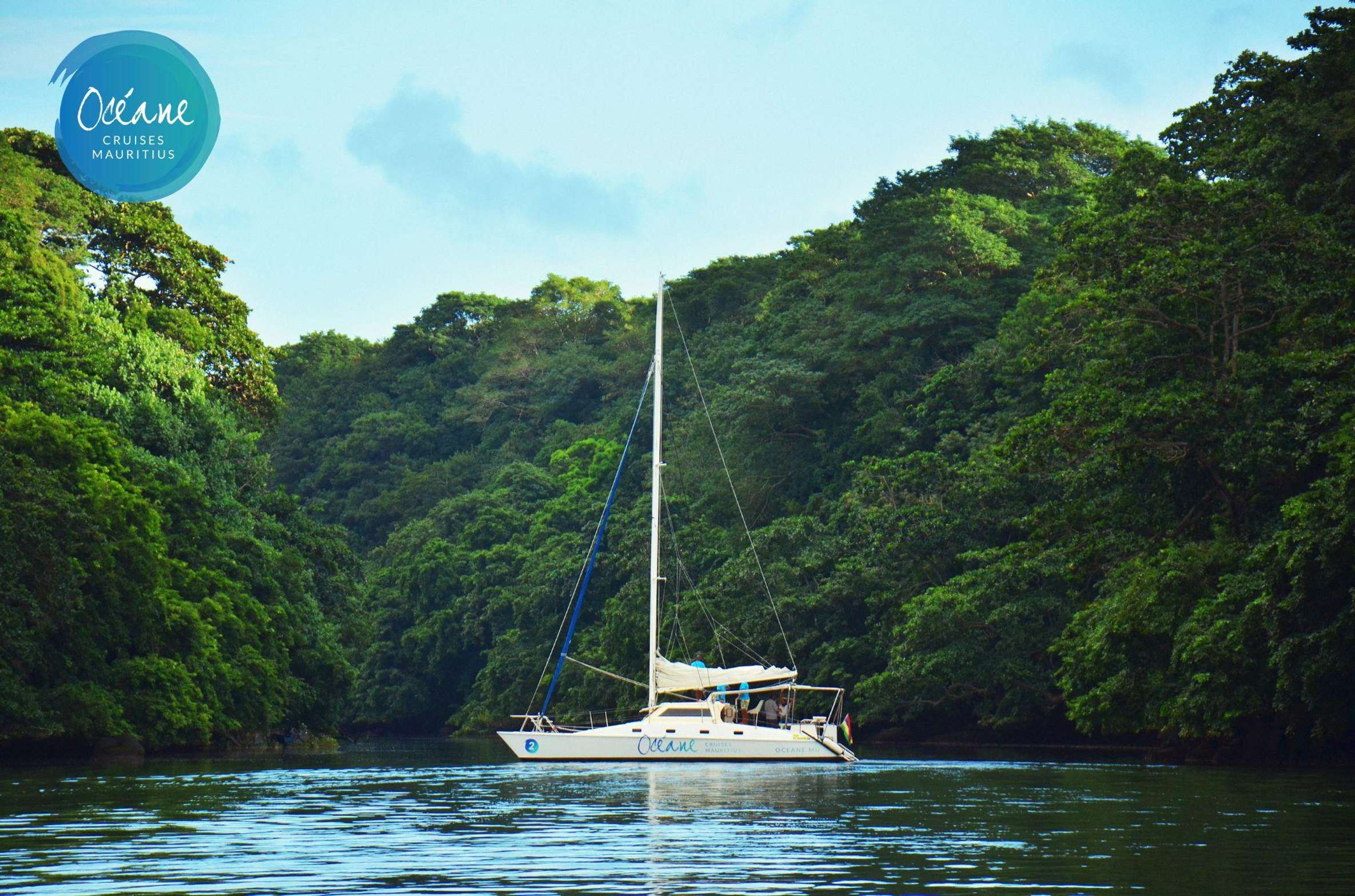
This is the part that removes the early-morning taxi headache, and it works more simply than most people expect. When you book the Ile aux Cerfs Catamaran Cruise with BBQ Lunch & Snorkeling, you give the operator your hotel name and room number, and exact morning pickup times arrive in advance.
The minibus collects you at the lobby itself, at resorts along the strip including SALT of Palmar, Veranda Palmar and C Mauritius.
The drive south along the B59 to the Trou d'Eau Douce jetty takes 3 to 12 minutes, depending on where along the coast you stay. At the jetty, boarding for the east coast catamarans runs from 9 am, with departure around 9:30 am.
Leave earlier and you beat the day-catamaran crowds to Ile aux Cerfs; the boats that depart between 8:30 and 8:45 am arrive before everyone else disembarks.
One booking note worth knowing: the tour's own rule puts alcohol after the snorkeling stop, and the crew can cancel the snorkel if drinks come first. The transfer also means nobody has to drive after the unlimited onboard drinks.
Not on a tour pickup? The jetty sits roughly 4.5 to 5.6 km south of the Palmar resorts along the coastal road. A taxi or rental car covers it in 7 to 8 minutes.
Local bus route 55 or 55B towards Central Flacq runs every 20 to 30 minutes from 6:15 am until 5:30 pm and takes 9 to 14 minutes, so an independent dawn start is entirely doable.
Boats leave from the small village jetty on the Trou d'Eau Douce waterfront, or from the beach near the Mauritian flag at the Debarcader. Public parking sits about 60 meters from the meeting point, opposite the Green Island Restaurant, and fills early in high season. Arrive by 8:45 am to be safe.
If you rent a car for the week, the run is short enough that a self-drive day works well; just remember the return leg after a full day in the sun. For most guests at the resort strip, though, the included pickup wins on every count except independence.
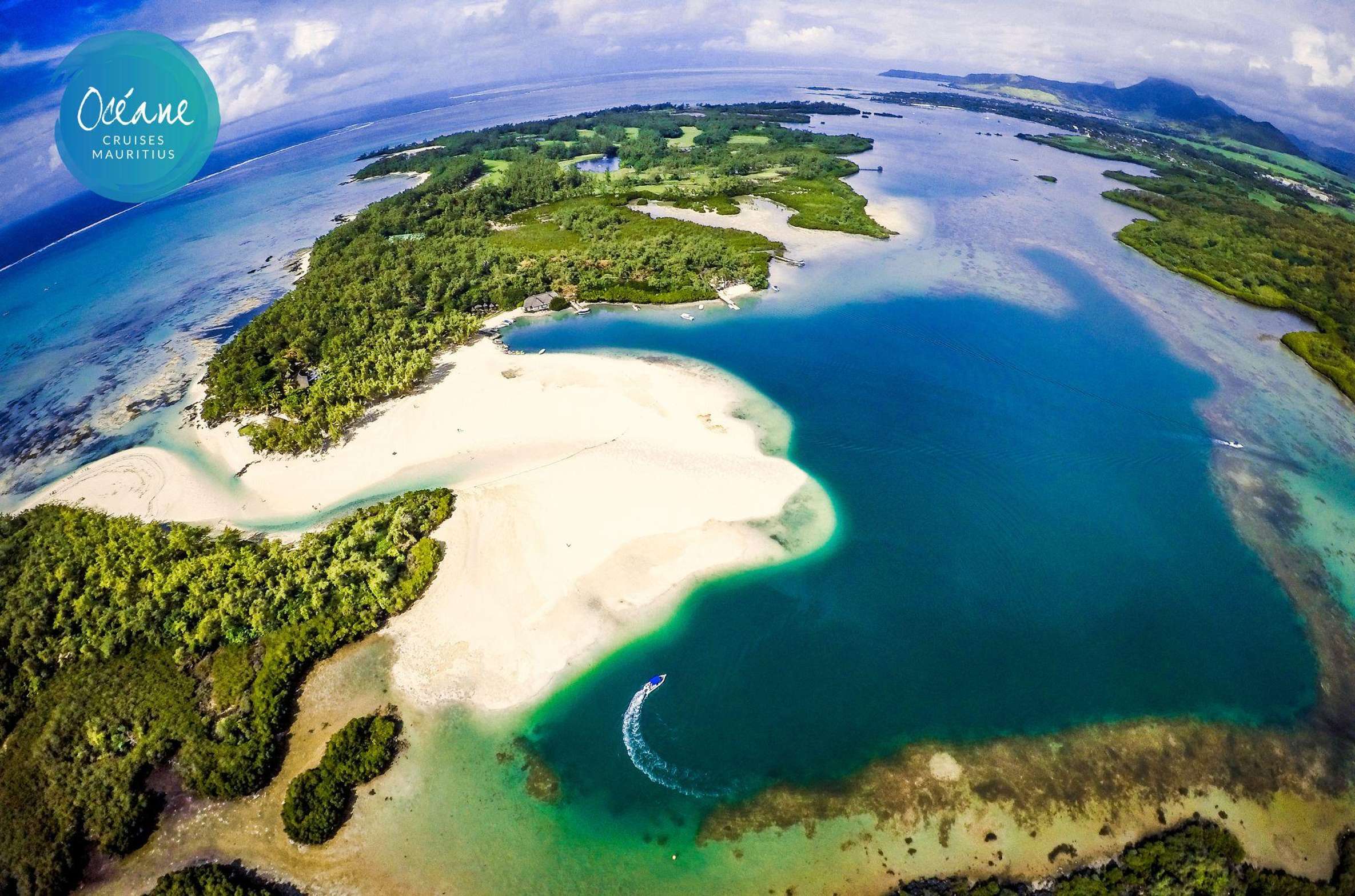
Staying in Palmar puts you minutes from the departure point for the cruise most first-time visitors end up calling the best day of their trip.
The Ile aux Cerfs route runs from Trou d'Eau Douce across a wide, sheltered lagoon, which is exactly why it stays reliable even when the trade winds pick up in August: the offshore reef keeps the water flat for nearly the whole day.
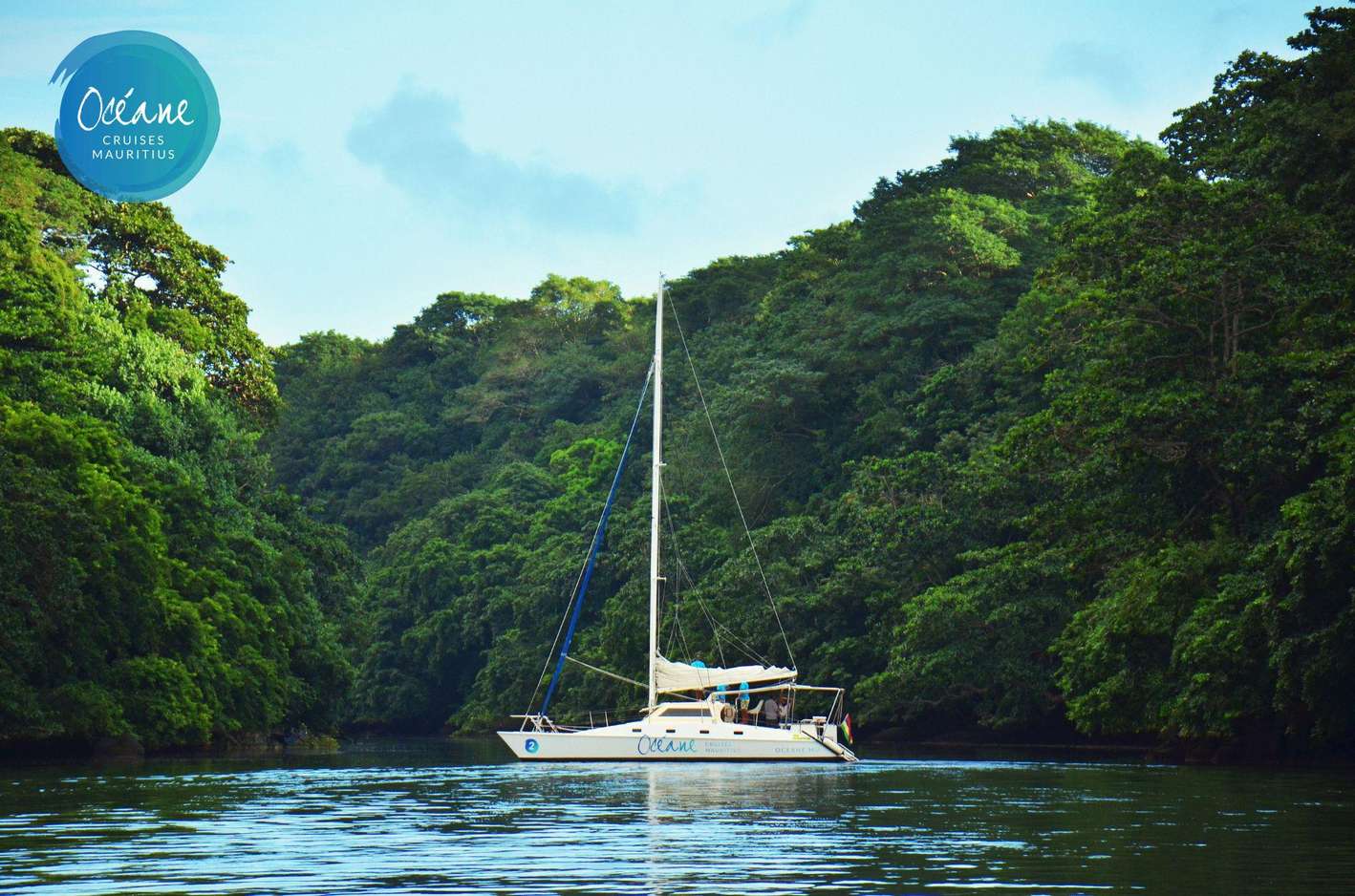
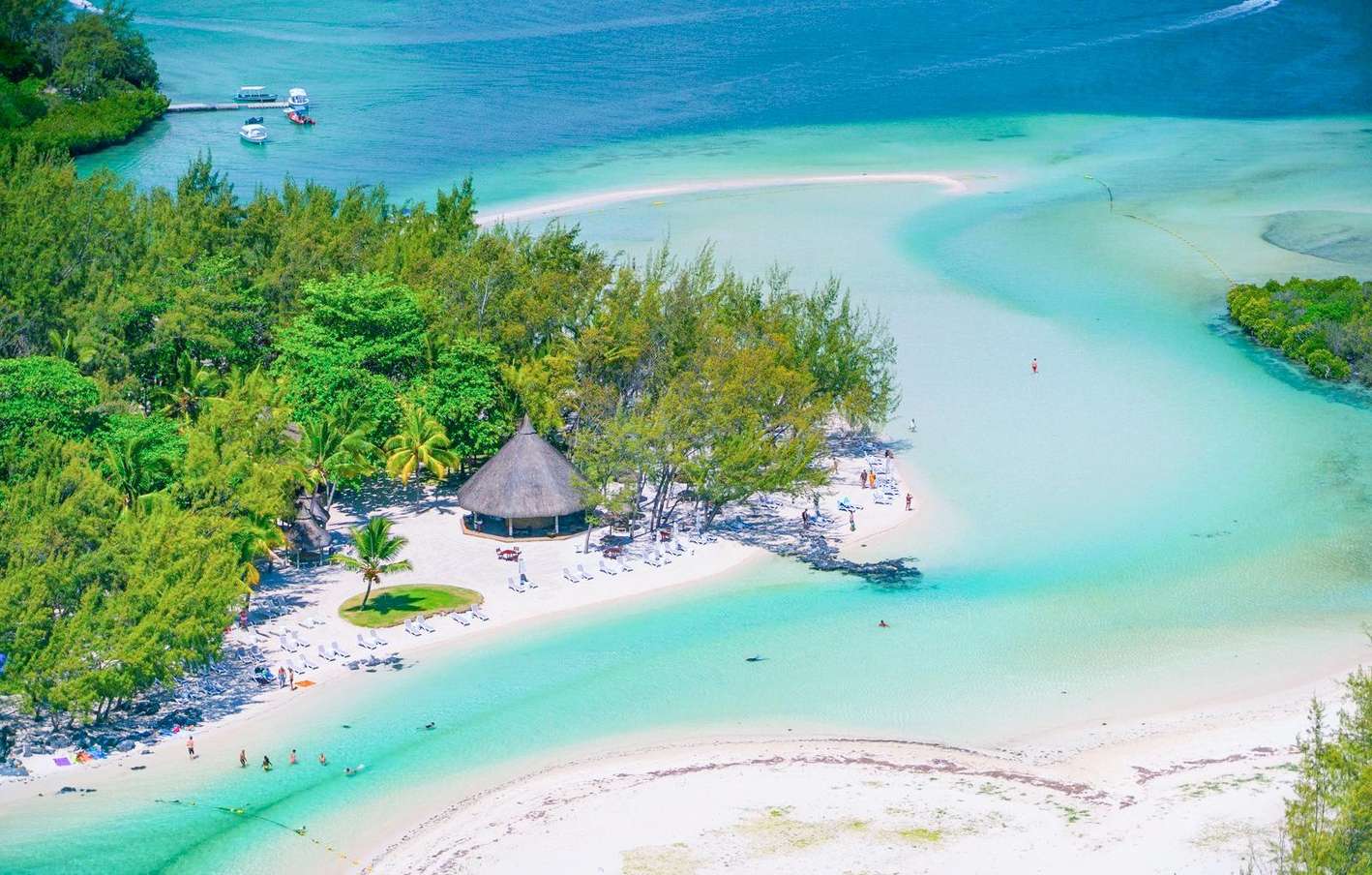
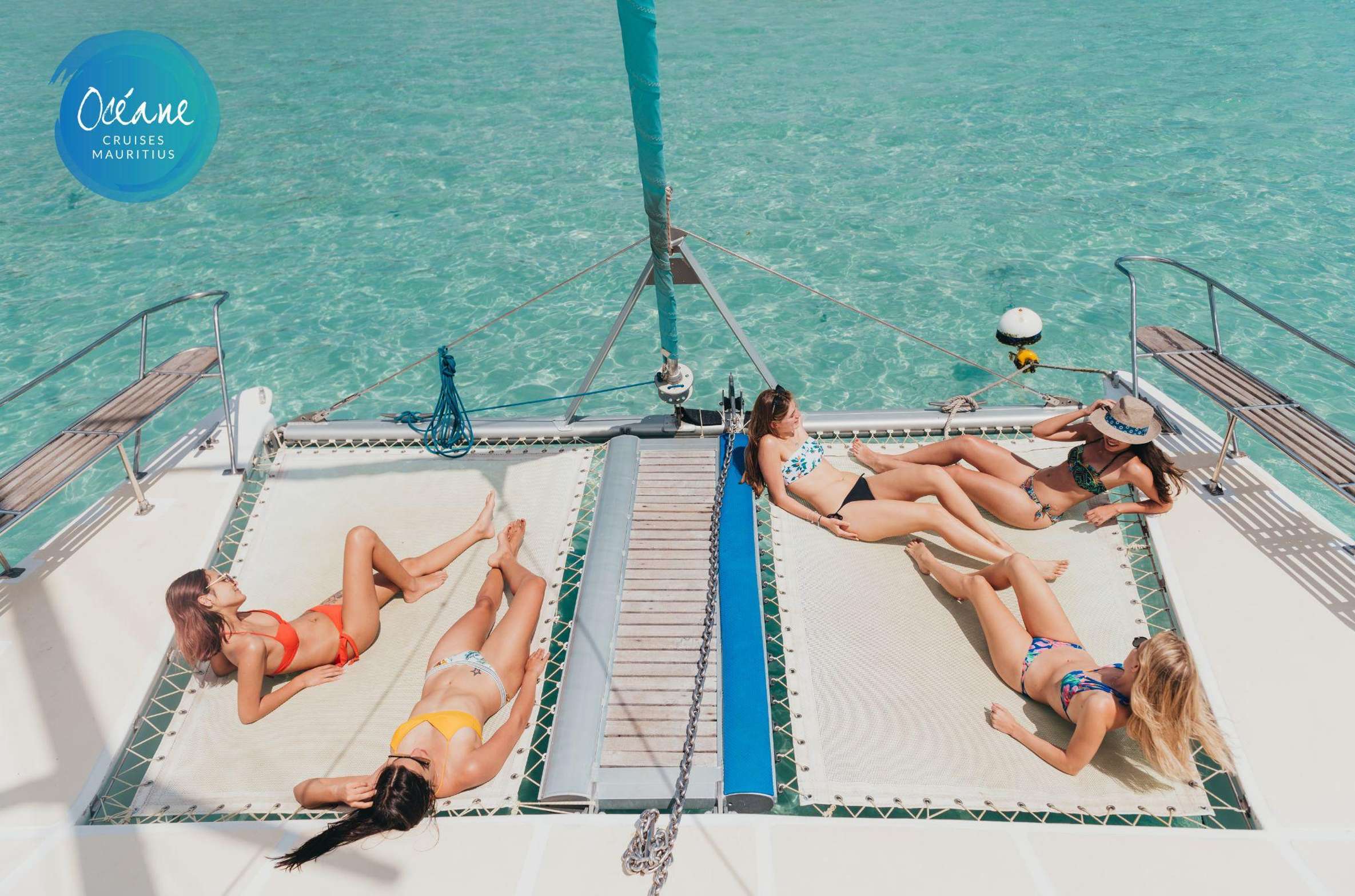
The shape of the day: board at 9 am, sail the turquoise lagoon, stop at the Grand River South East waterfall where the river meets the sea, with monkeys sometimes on the riverbanks, then a snorkeling stop over the reef, a freshly cooked BBQ lunch on deck with drinks, and free time on Ile aux Cerfs itself, whose long pale eastern beach is the most famous sand in Mauritius.
Catamaran or speedboat? The catamaran gives you shade, deck space and a steadier ride; a speedboat gets to the stops faster, ahead of the crowds. First full day on the water, the catamaran is the comfortable call.
| Check | Why it matters | Our pick |
|---|---|---|
| Departure point | A Trou d'Eau Douce start keeps transfer times short from a Palmar base | The lead tour departs here, 3 to 12 minutes from Palmar resorts |
| Transfer included | Doorstep pickup removes the early taxi run entirely | Selectable at booking, with pickup at SALT, Veranda Palmar and neighbors |
| Snorkel gear on board | Saves you carrying or renting masks and fins | Snorkeling equipment included in the price |
The Mauritius: Ile aux Cerfs Catamaran, Waterfall & BBQ Lunch covers all three: a 7-hour cruise with the waterfall visit, a snorkeling stop with equipment, and the onboard BBQ, with pickup options along the east coast.
Start with the gear question. Your Palmar resort almost certainly has a boathouse: beachfront properties here lend guests complimentary masks and fins and run guided lagoon outings, so walk-in snorkeling costs you nothing.
On the boat, most catamarans carry masks, snorkels and life jackets, but fin provision varies, and the shared masks on day boats run older and prone to leaking. Bring your own mask and fins for a fit that never fogs or floods.
For the day itself, wear your swimwear under your clothes before boarding. On top of that: a UV rash guard, high-SPF reef-safe sunscreen, a wide-brim hat with a chin strap and polarized sunglasses with a retainer strap.
Ocean spray and the odd shower find everyone on an open deck, so add a towel, a change of dry clothes and a light windbreaker for the afternoon crossings.
The one item people forget and miss hardest is a roll-top dry bag for phone and camera. And bring small-denomination rupees in cash: the beach stalls and souvenir vendors at the island stops take nothing else.
The lead tour covers the rest: BBQ lunch, unlimited drinks, and snorkeling equipment on board.
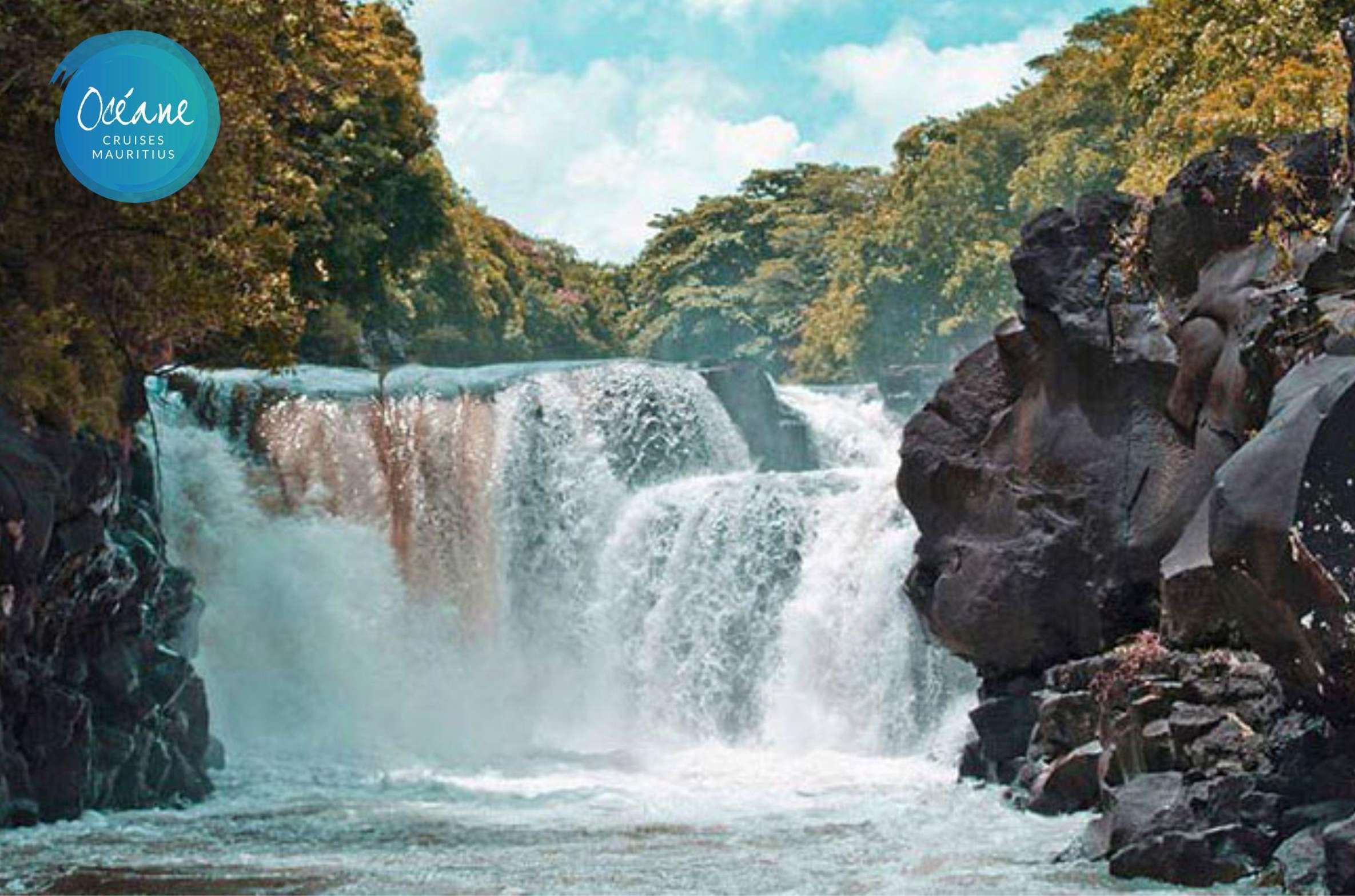
Some days the wind wins, and the plan is simple: stay out of the water that morning and move. When chop and swell make the lagoon unswimmable, head to the sheltered northwest coast, which holds Trou aux Biches with its flat water and grazing green turtles, plus Pereybere or Balaclava Marine Park nearby.
Flic en Flac on the west side keeps one of the calmest lagoons on the island, and south, Blue Bay holds the densest protected coral in Mauritius, best reached by glass-bottom boat between 7 and 9 am.
On the booking side, operators reschedule or cancel when conditions demand it, and captains adjust routes for safety without drama. Free cancellation up to 24 hours before means a windy week costs you nothing but a shuffle of dates.
February and March sit in cyclone season Tours legally suspend under cyclone warnings, and heavy rain clouds the lagoons with runoff, so a booked boat day can vanish Book flexible dates in that window Free cancellation up to 24 hours before means a washed-out day costs nothing
The rest of the year, a rough east coast morning usually clears by afternoon. Check the flags and the buoy line before you commit.
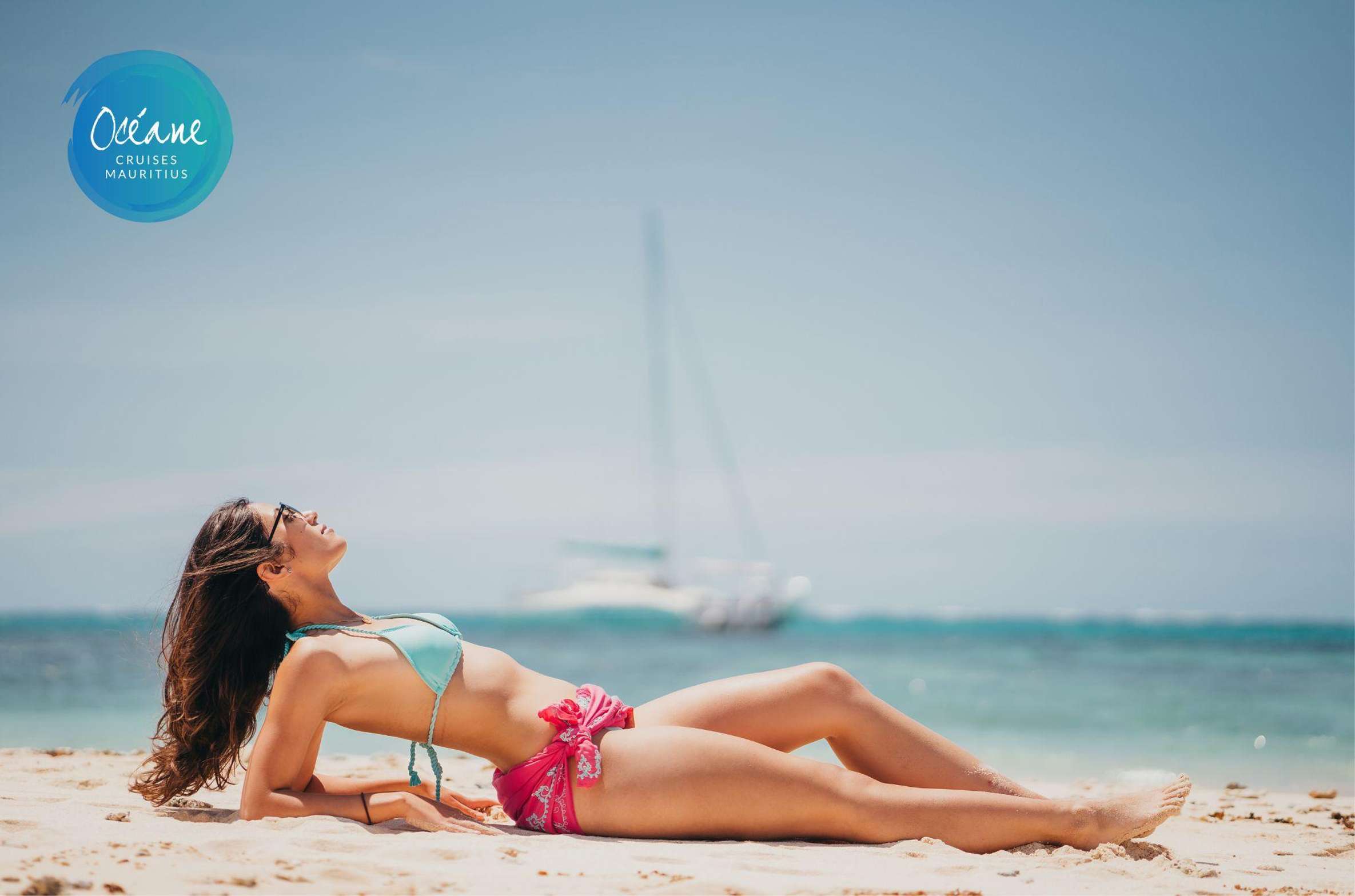
The east coast day carries more than snorkeling. The boat routes from Trou d'Eau Douce run down the coast and up the Grand River South East to the falls, and nearly every Ile aux Cerfs trip bundles the waterfall detour in, with wild monkeys sometimes hopping along the riverbanks.
On Ile aux Cerfs itself, every beach is public up to the high-water mark under Mauritian law, so walk, swim and picnic anywhere on the sand without paying a cent, and the restrooms and changing rooms are free too.
The extras cost money on the island: sun loungers and umbrellas rent on site, and watersports like parasailing run through third-party operators and are paid per activity.
Back home, the northern neighbour shares this coastline's character and its winter winds; the guide to snorkeling in Belle Mare covers the coral heads and the guarded reef pass just up the road. Between swims, the Palmar lagoon itself, casuarina shade and flat water, does most of the entertaining.
Palmar works both ways: honest walk-in snorkeling off your resort sand in the mornings, and one of Mauritius's best boat departure points a few minutes south. Book the Ile aux Cerfs catamaran with pickup, time your trip for October, November or April, and pack water shoes and your own mask.
palmar lagoon is barely 250 m wide to the reef
See where wild dolphins gather, how crews keep encounters respectful, and what a morning on the west coast looks like.

Get the rules for entering the water with dolphins, from the three-swimmer limit to the briefing you get on board.
Find out why Tamarin Bay draws the pods, and how a dawn departure from your side of the island fits a day trip west.
Combine dolphins with a whale search on one boat, and read what the season allows before you commit to the day.
Learn why the first boats out get calm water and quiet pods, and how early you need to reach the launch point.
Trade the shared deck for your own boat: private charters with a crew who adjust the route and pace to you.
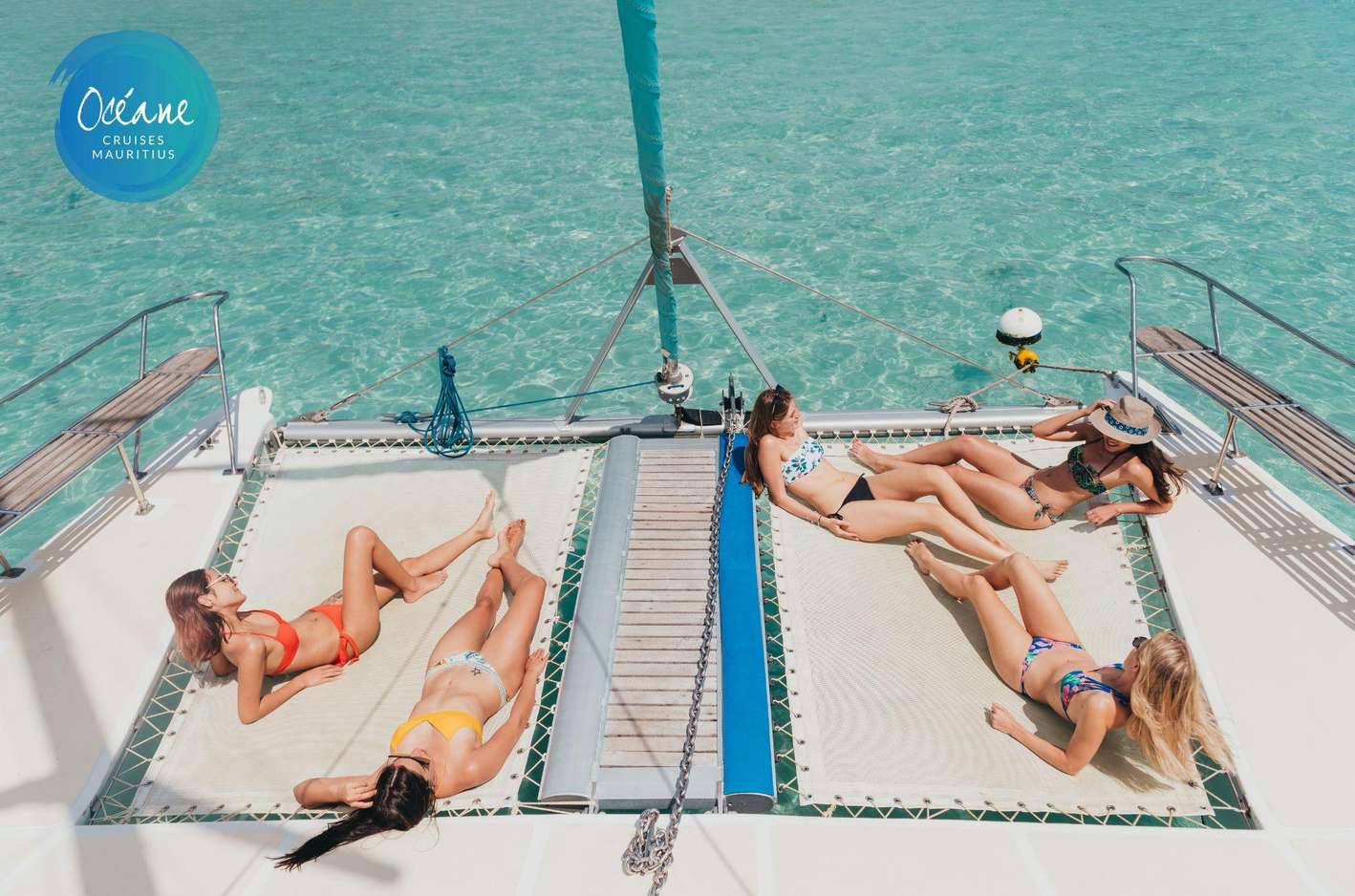
Sail a catamaran to reef stops with lunch and drinks included, and see which routes suit a first sailing day.

Compare full-day cruises by coast, boat and island route, and pick the one that matches the water you like.
early tide = clearest water
Quick answers to what visitors staying on this stretch of coast ask most.
 Quatre Cocos2026
Yes. Walk in from the sand and you pass over sandy bottoms with scattered corals, seagrass beds with small tropical fish, and rocky points where blennies and young reef fish gather. Moorish idols, butterflyfish, sixbar wrasse and honeycomb groupers all turn up across the lagoon.
Very. A barrier reef sits only about 250 meters offshore, and it holds the ocean swell back, so the lagoon stays shallow and calm. Go in early, before other swimmers stir up the water, for the best fish sightings.
They are a good idea. The shallow floor holds scattered coral fragments and sea urchins, including burrowing, long-spined and collector urchins, so sturdy water shoes protect your feet on the way in.
The beachfront resorts along Palmar hand out free masks and fins from their boathouses, and some run guided lagoon outings for guests. If you are on the public beach for the day, bring your own gear, since rentals there are limited. Boat tours supply equipment on board.
You give the operator your hotel name and room number, and they send your exact morning pickup time in advance. The van collects you at your resort lobby and drives a few minutes south along the B59 to the jetty in Trou d'Eau Douce.
Very close. Trou d'Eau Douce, where the catamarans and speedboats leave for Ile aux Cerfs and the Grand River South East waterfall, sits just south of Palmar. From a Palmar resort, the ride to the jetty takes roughly 3 to 12 minutes.
The southern end of Palmar beach has richer, less disturbed coral than comparable sections in Belle Mare, simply because fewer people swim there. Guided snorkeling in the Palmar lagoon is also noticeably more relaxed.
Stay out of the water when wind or swell chops up the coast, and consider a morning trip by car to the sheltered northwest or west coast instead. Trou aux Biches, Pereybere, Balaclava Marine Park and Flic en Flac all stay calmer when the southeast trades blow.
The seas settle most in the transition months of October, November and April, when calm days are frequent and the water runs clear. From June to August the southeast trade winds blow hardest, so morning sessions give you the flattest water.
It works well. You get a calm, shallow lagoon on your doorstep, less crowded coral than the busier stretches farther north, and a short ride to the east coast boat routes. The west and north coasts are easier for casual snorkeling, while the east keeps wilder reefs.
pickup from salt of palmar and veranda palmar
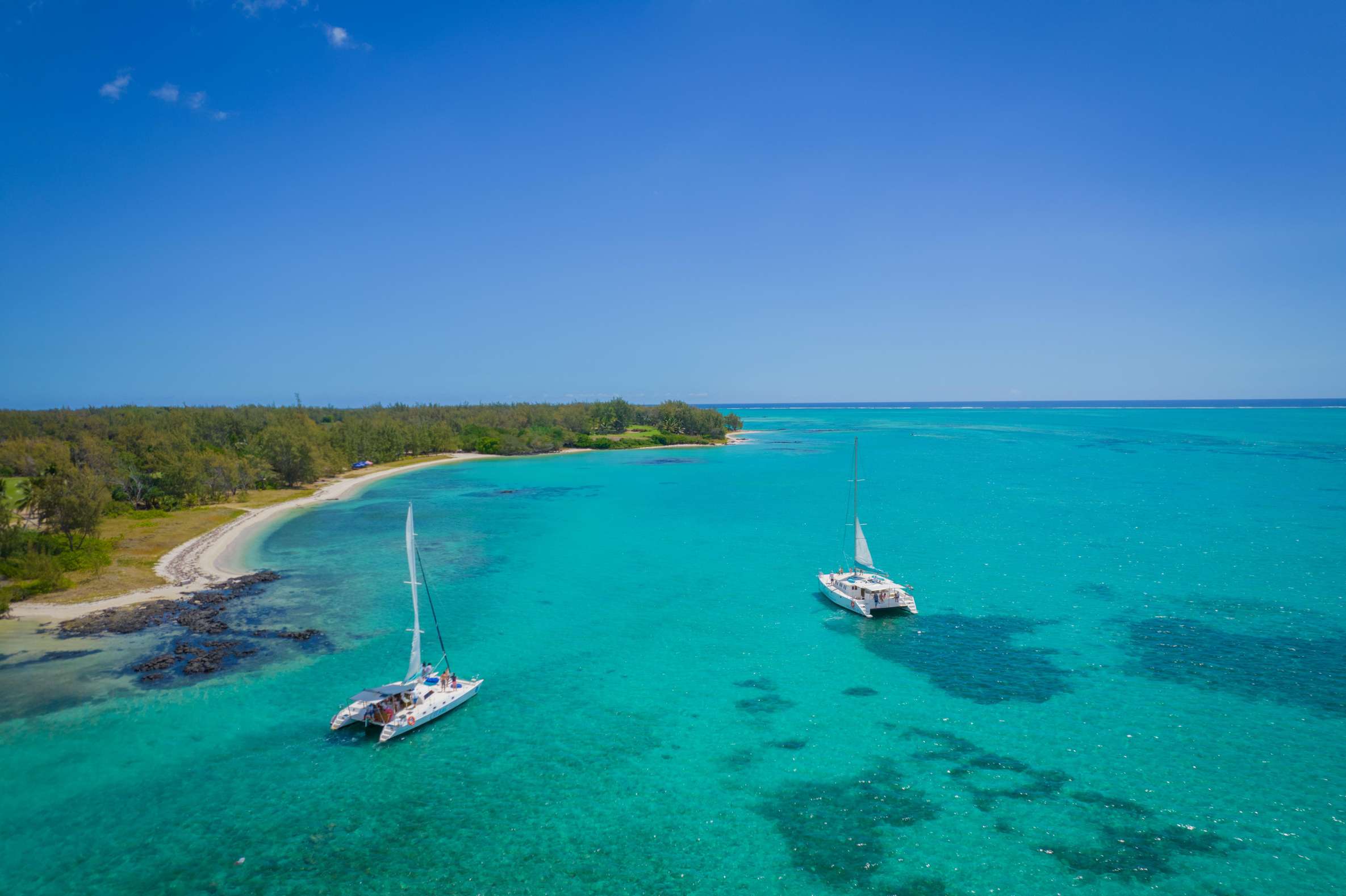
Sail from Trou d'Eau Douce, snorkel at Eau Bleu, visit the GRSE waterfall and eat a BBQ lunch on board, with pickup at your Palmar resort and free cancellation up to 24 hours before.
