
8 hours·English, French
5.0(2)
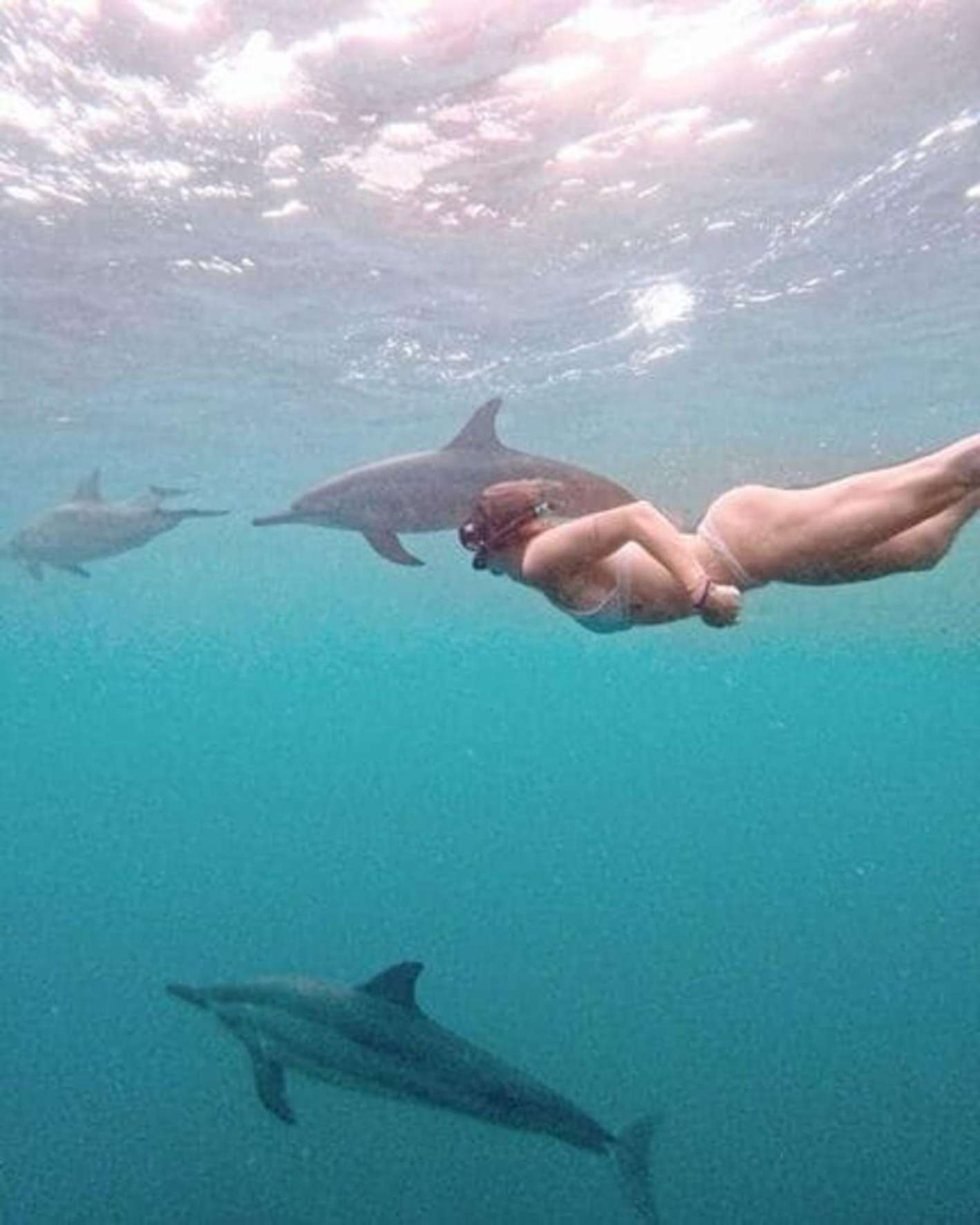
Private Dolphins, Sea Turtles & Île aux Bénitiers Tour
Free cancellationPrivate speedboat trip with experienced skipperDolphin watching and swimming opportunity
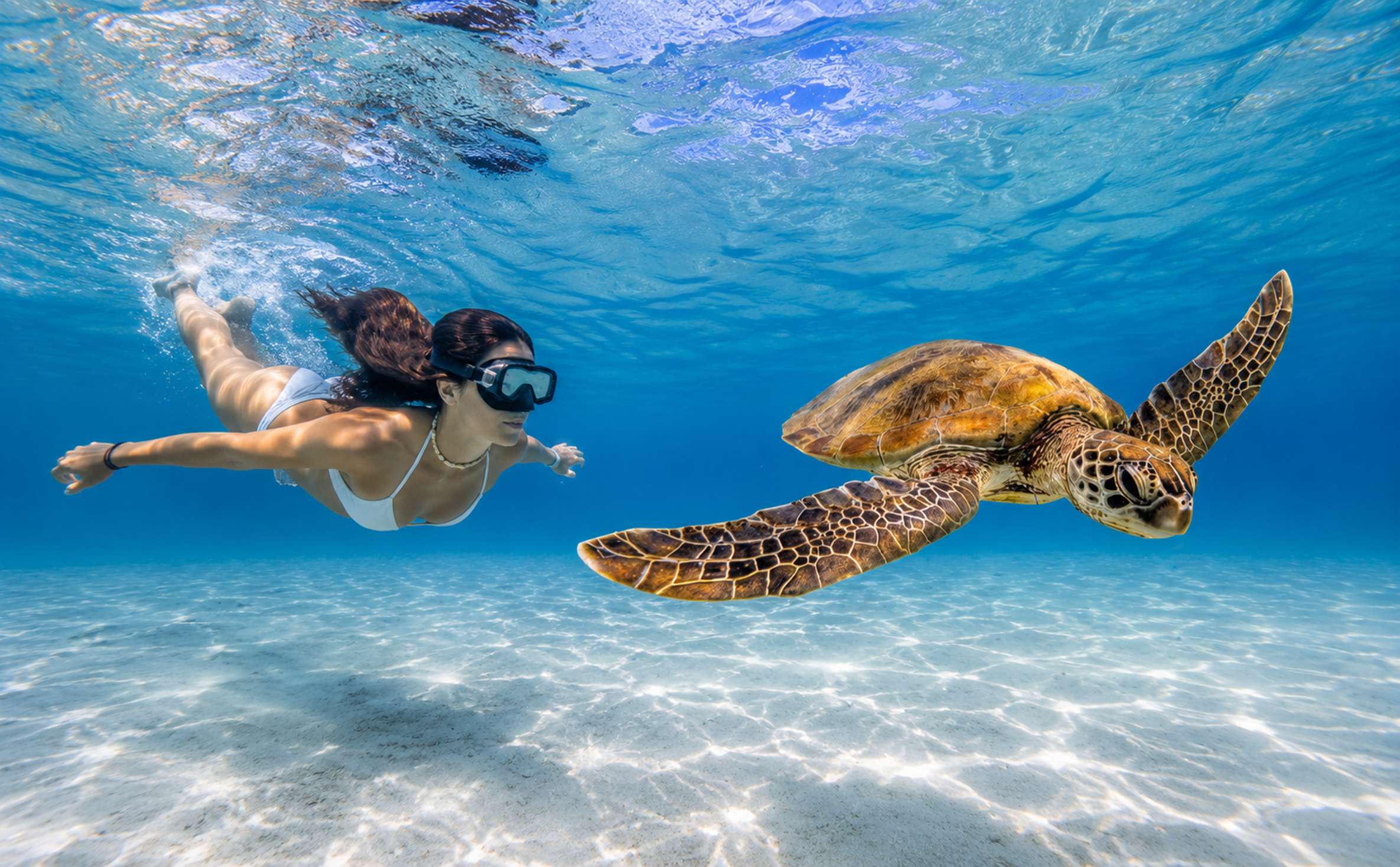
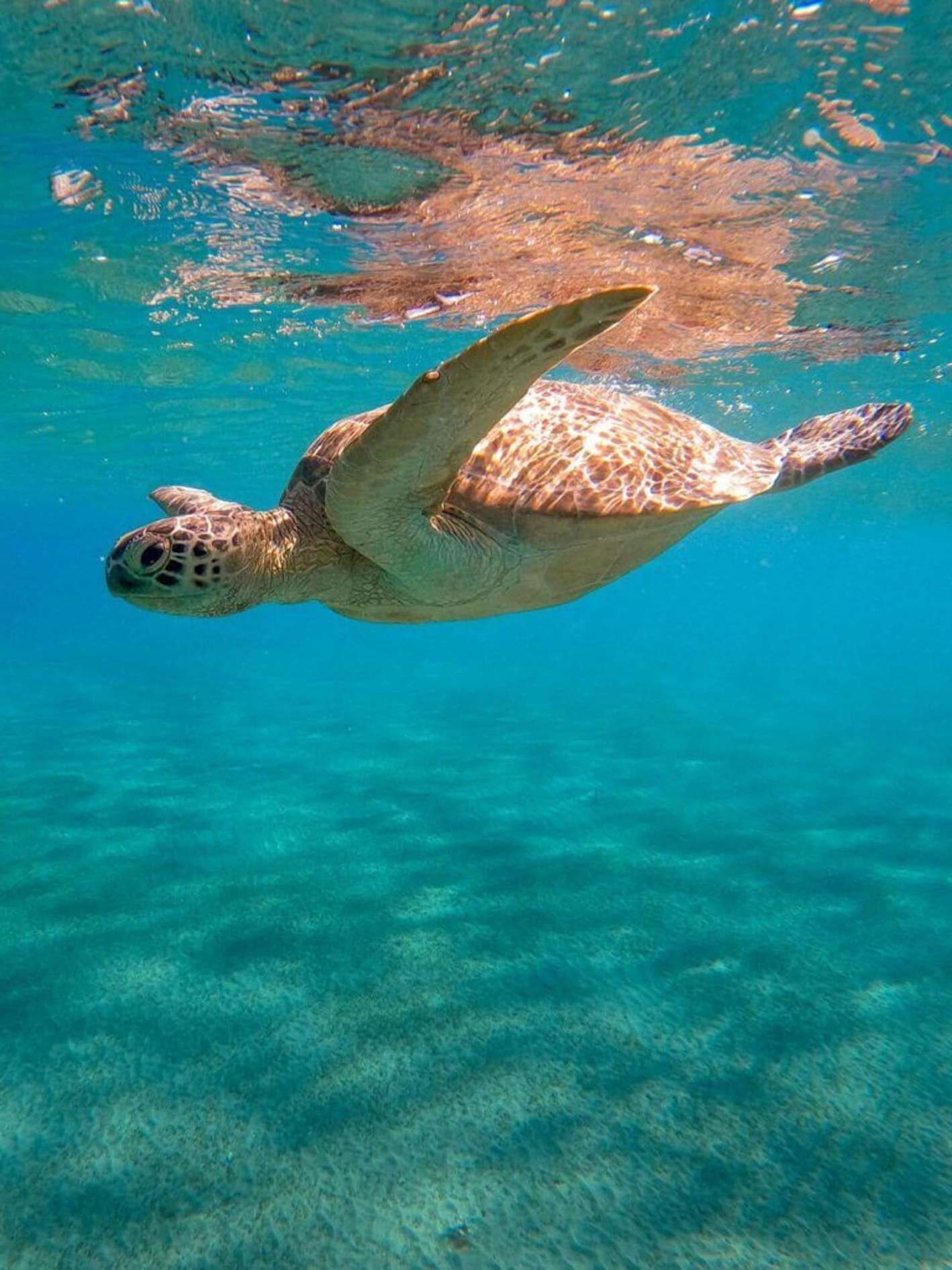
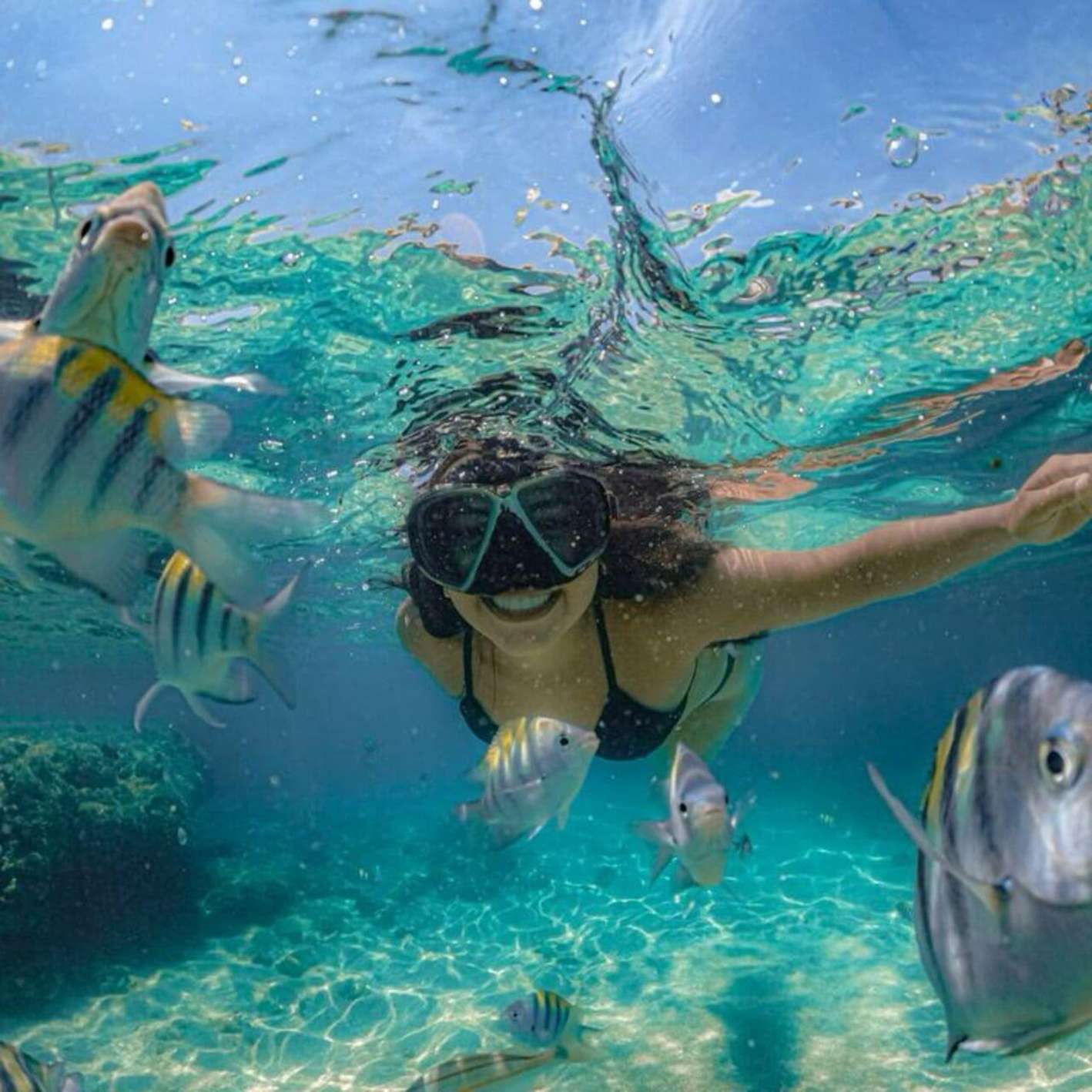
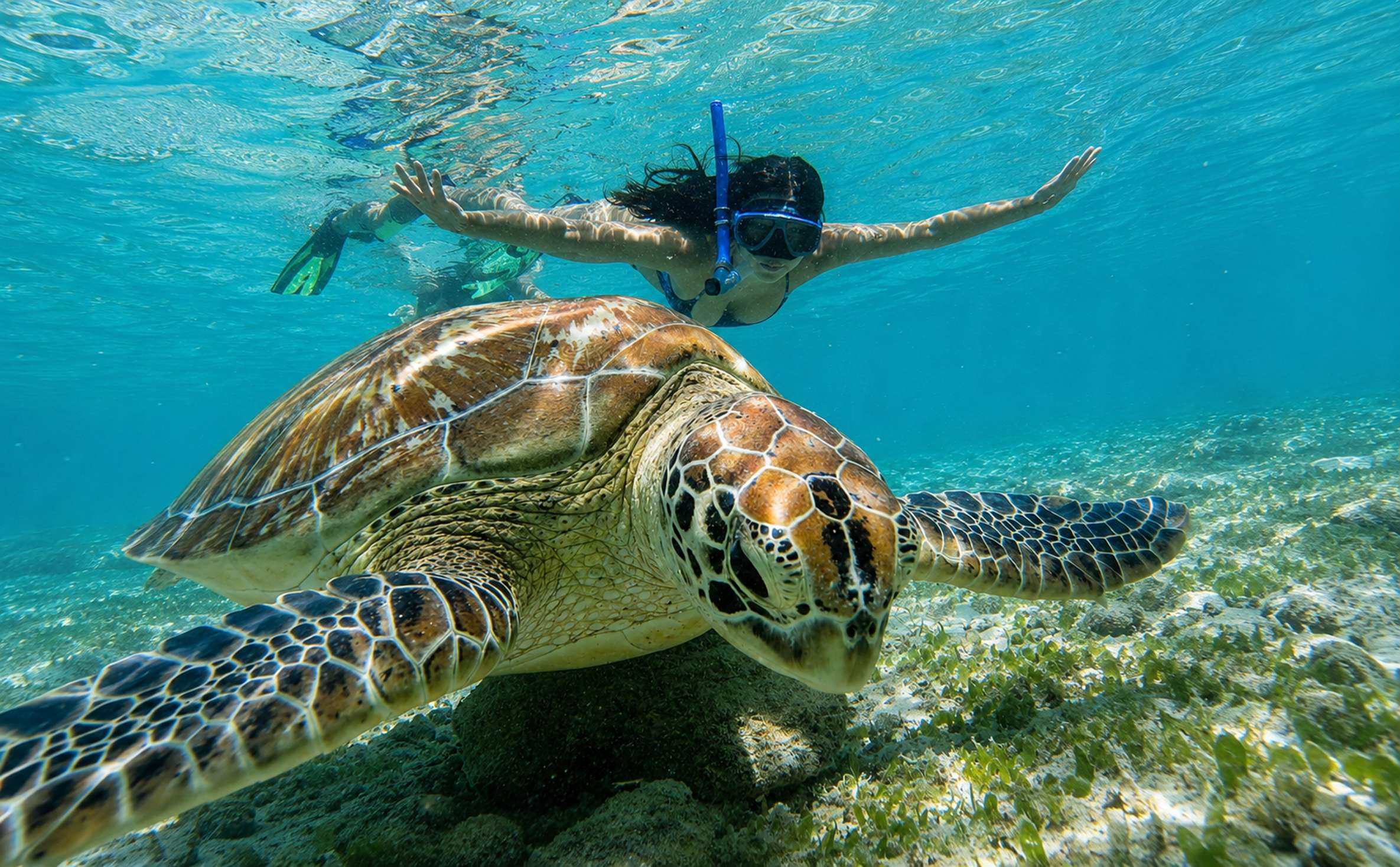
Swim alongside wild sea turtles in Mauritius. Local skippers know the seagrass lagoons off Pereybere and Trou aux Biches where green turtles graze, so you drop in at the right spot on calm mornings. Pick a boat tour, get your briefing, and get in the water.
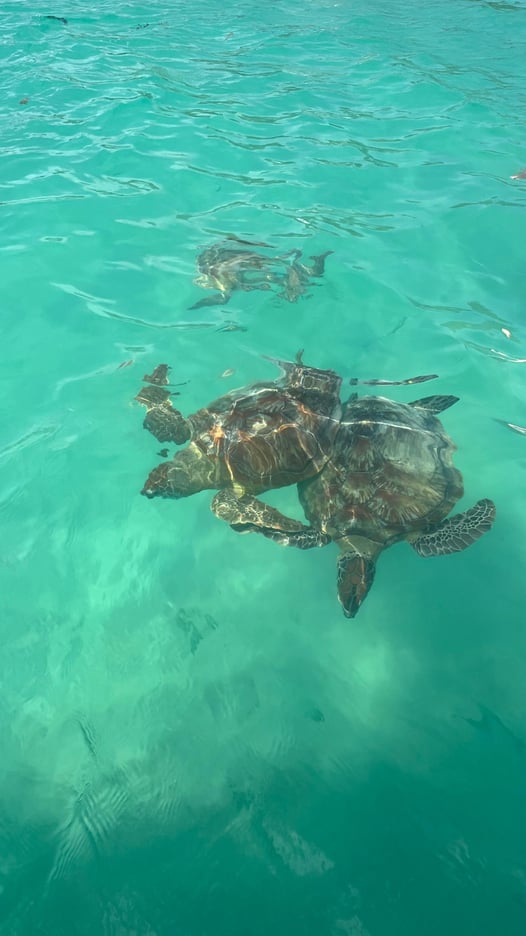
"Our goal was seeing turtles, and we did! Spent a good while swimming alongside them in a gorgeous sea. The guy on the boat with us treated us wonderfully."
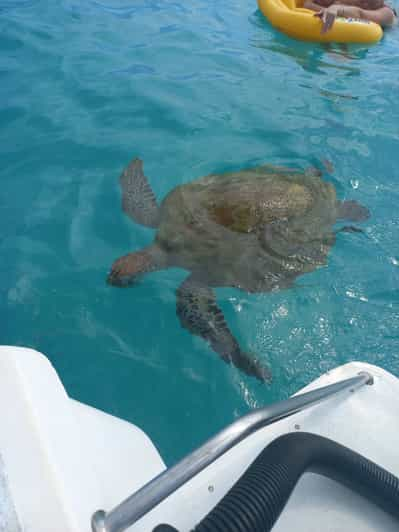
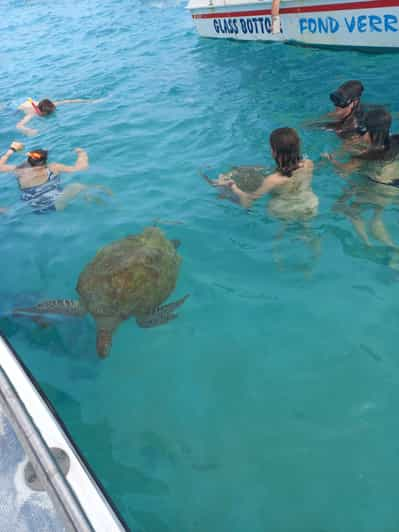
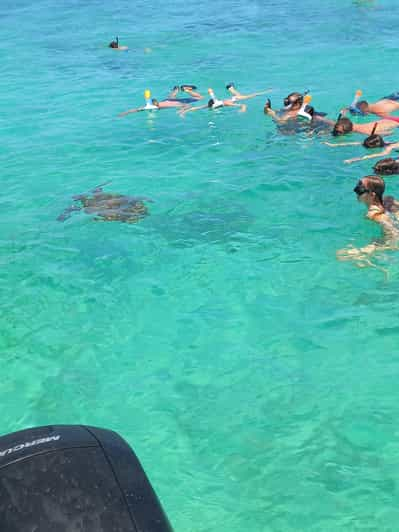
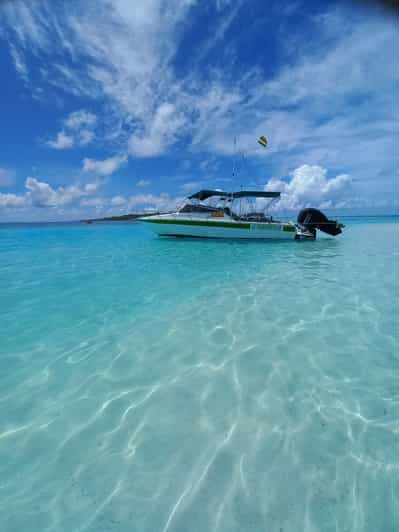
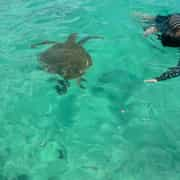
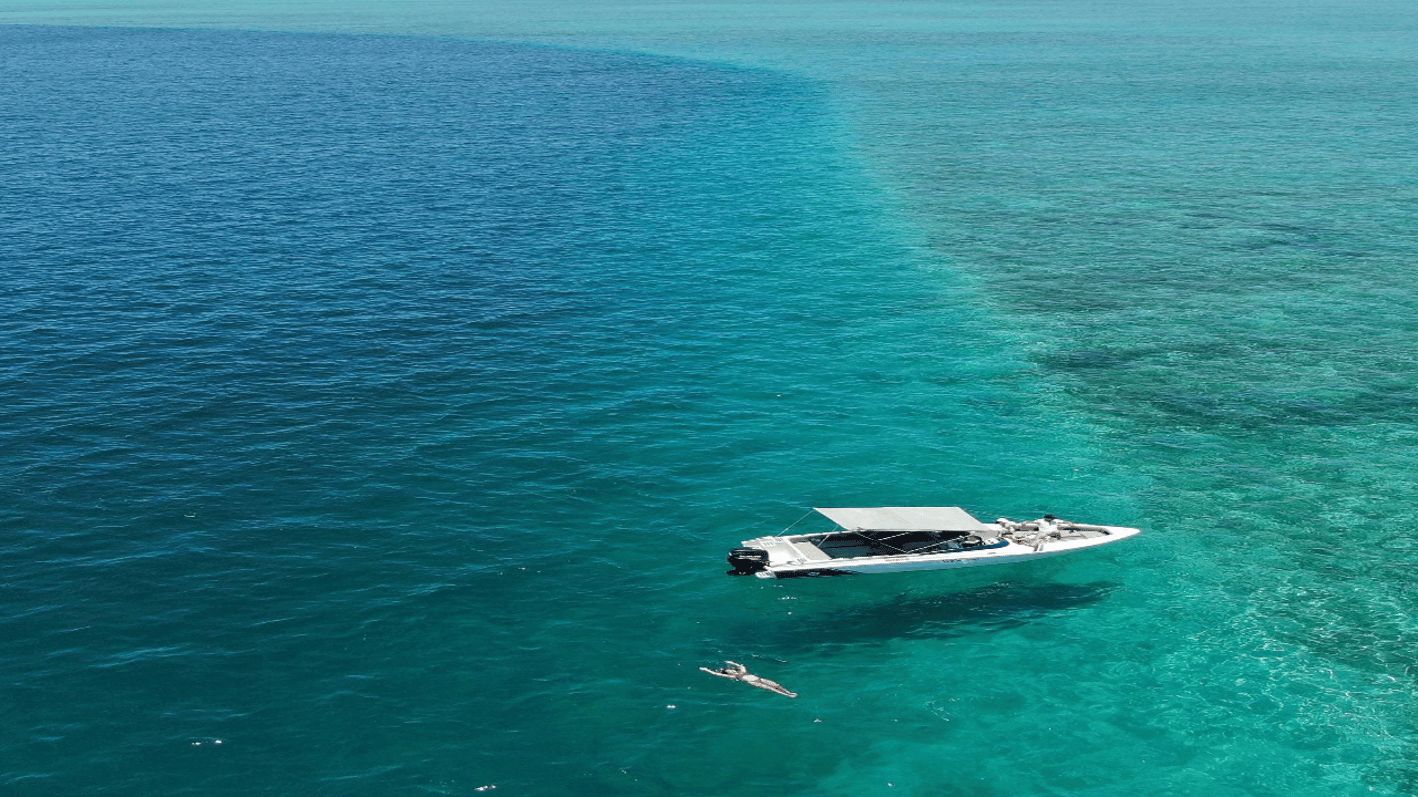
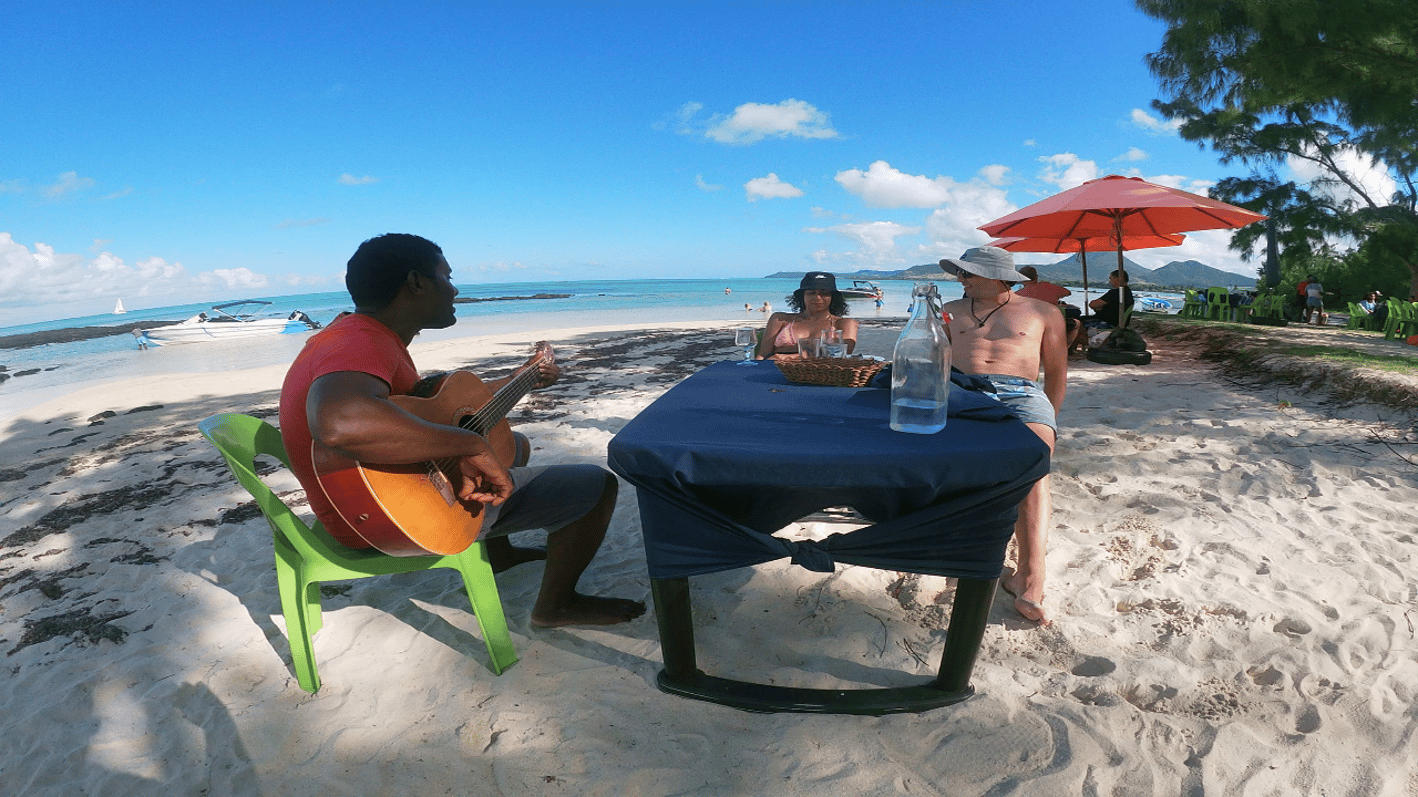
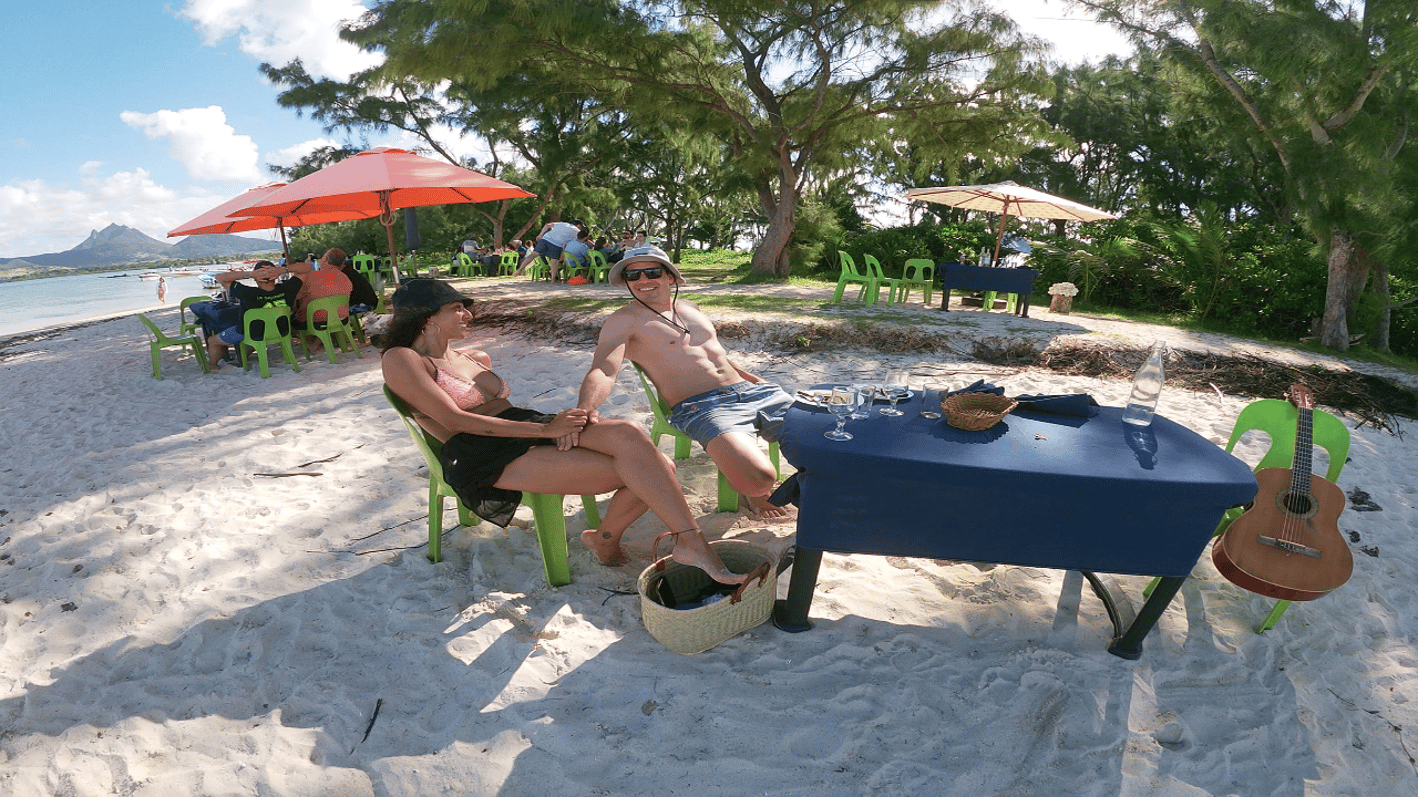
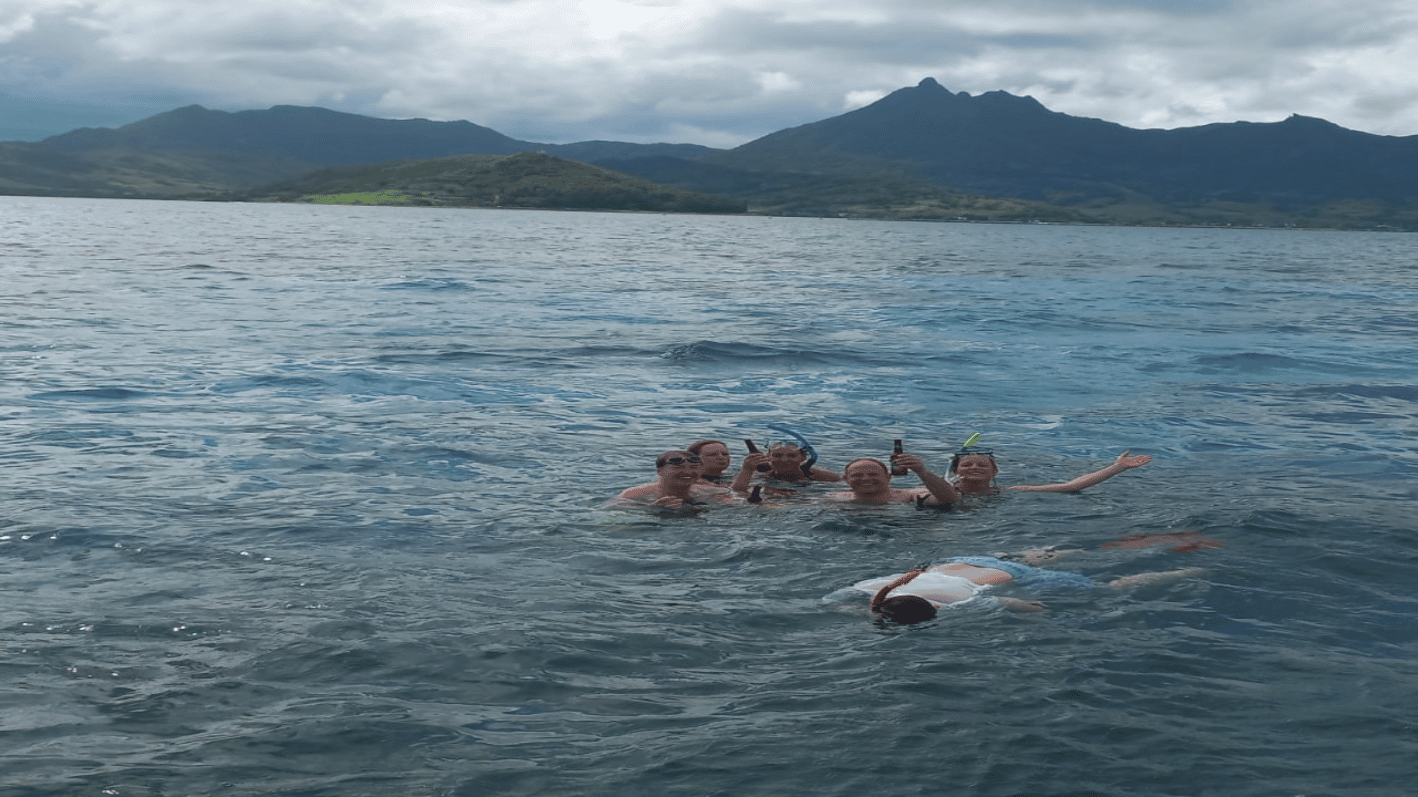
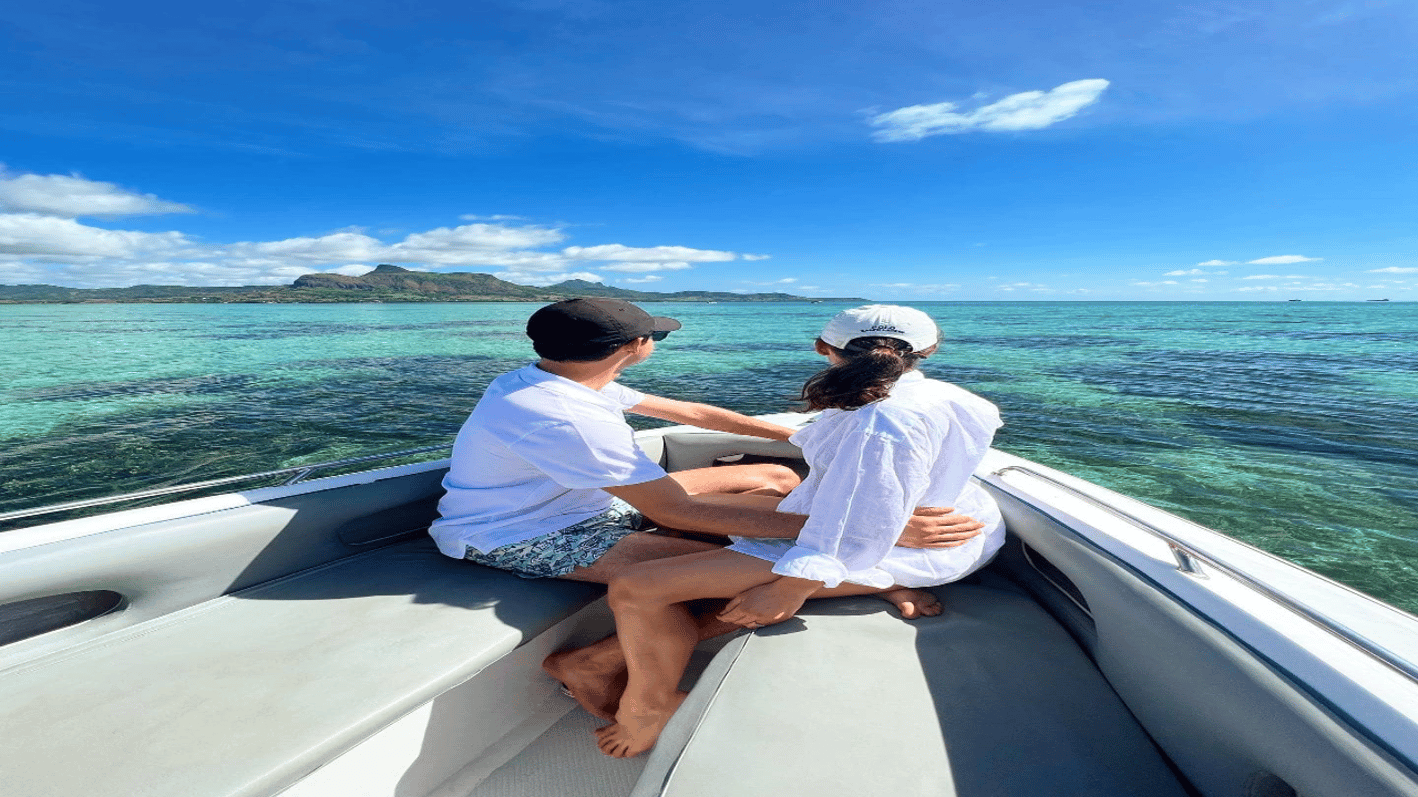
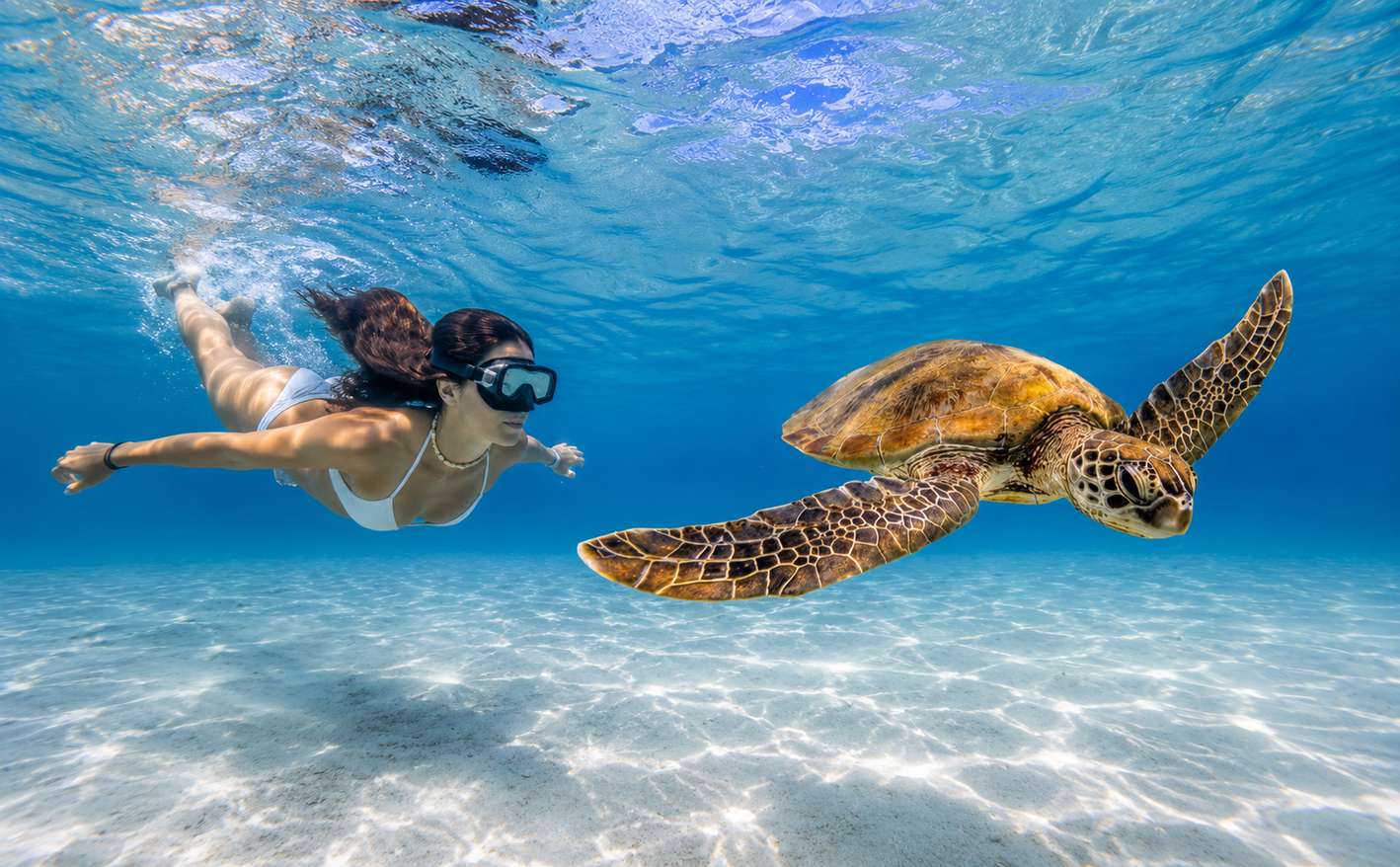
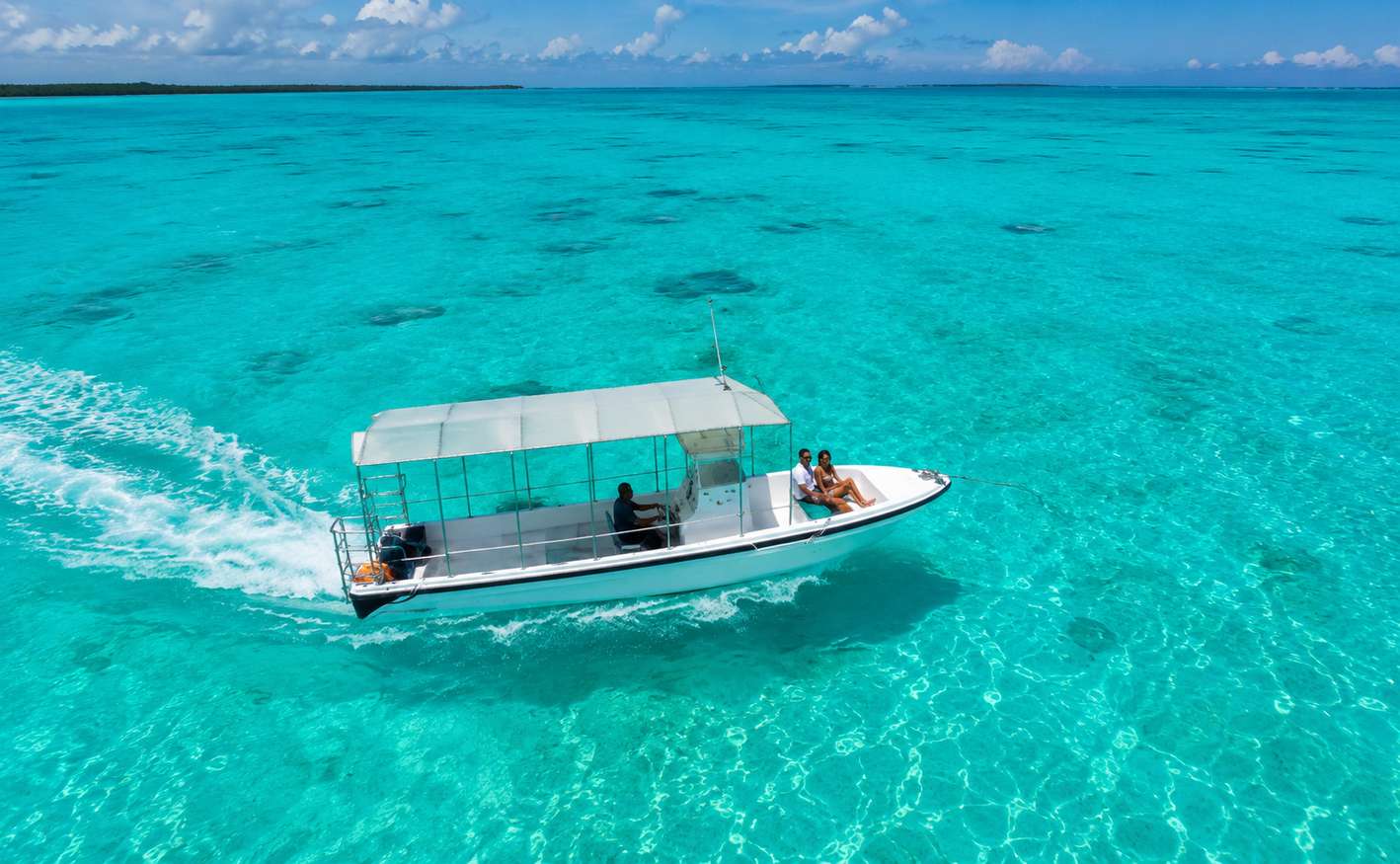
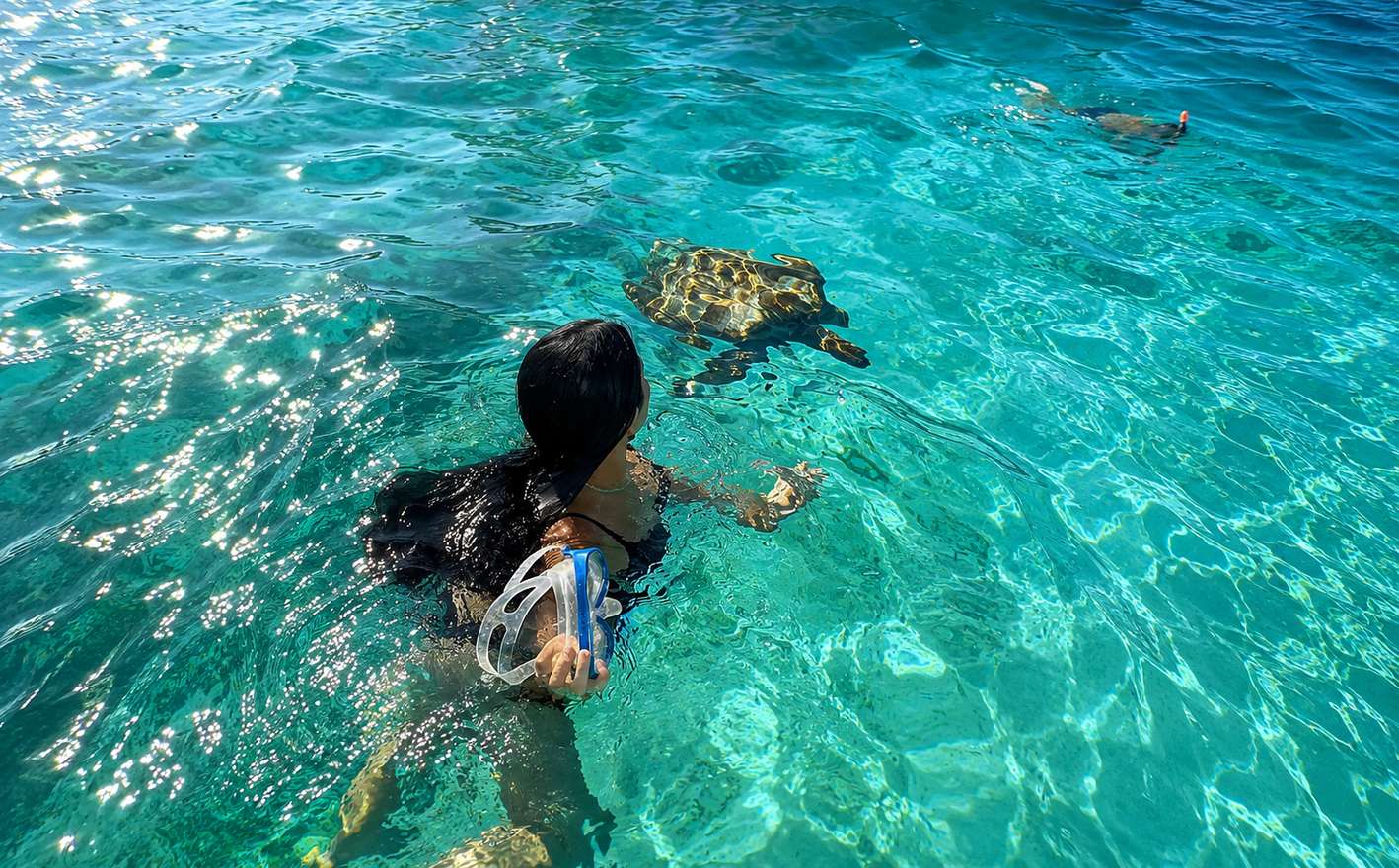
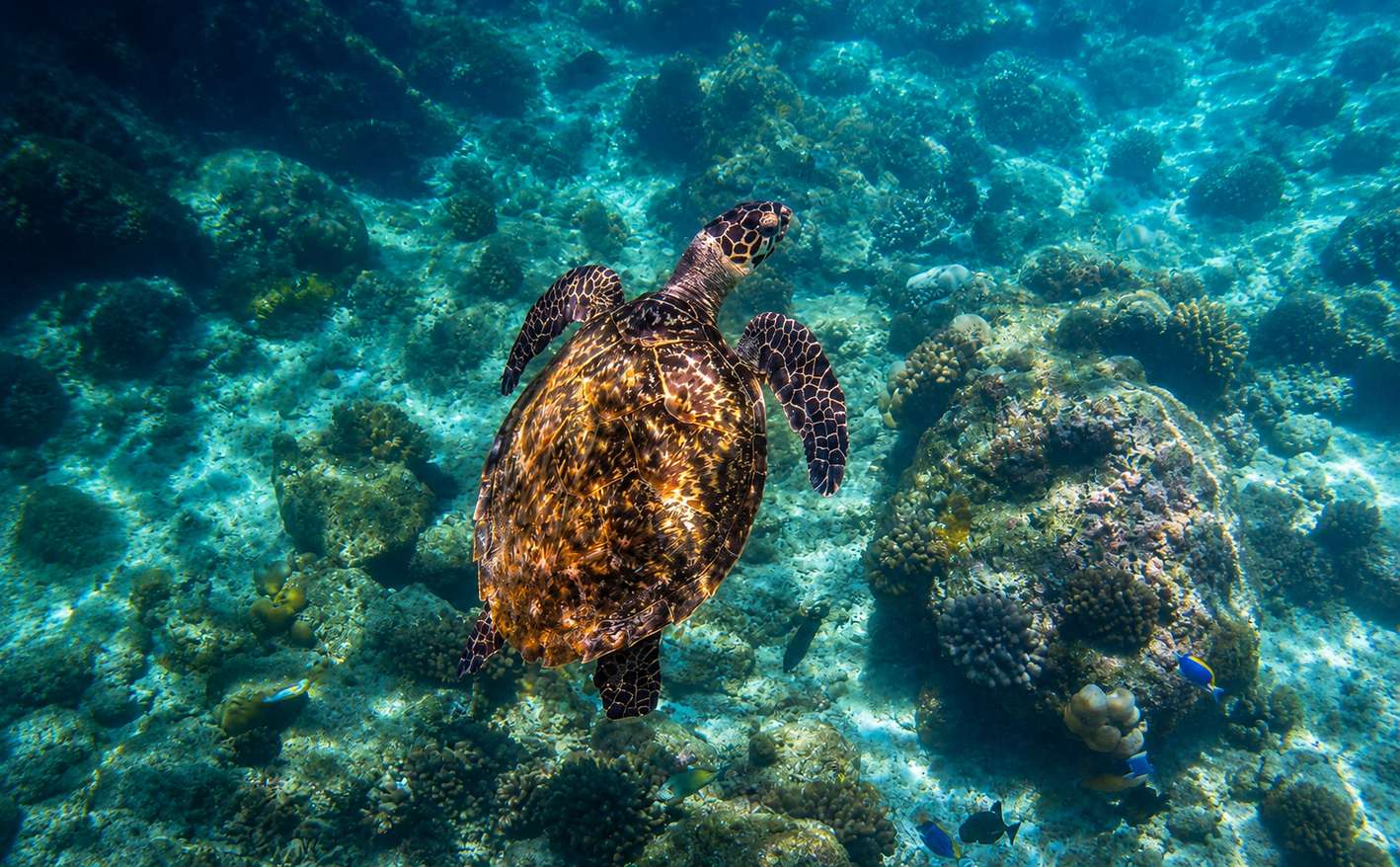
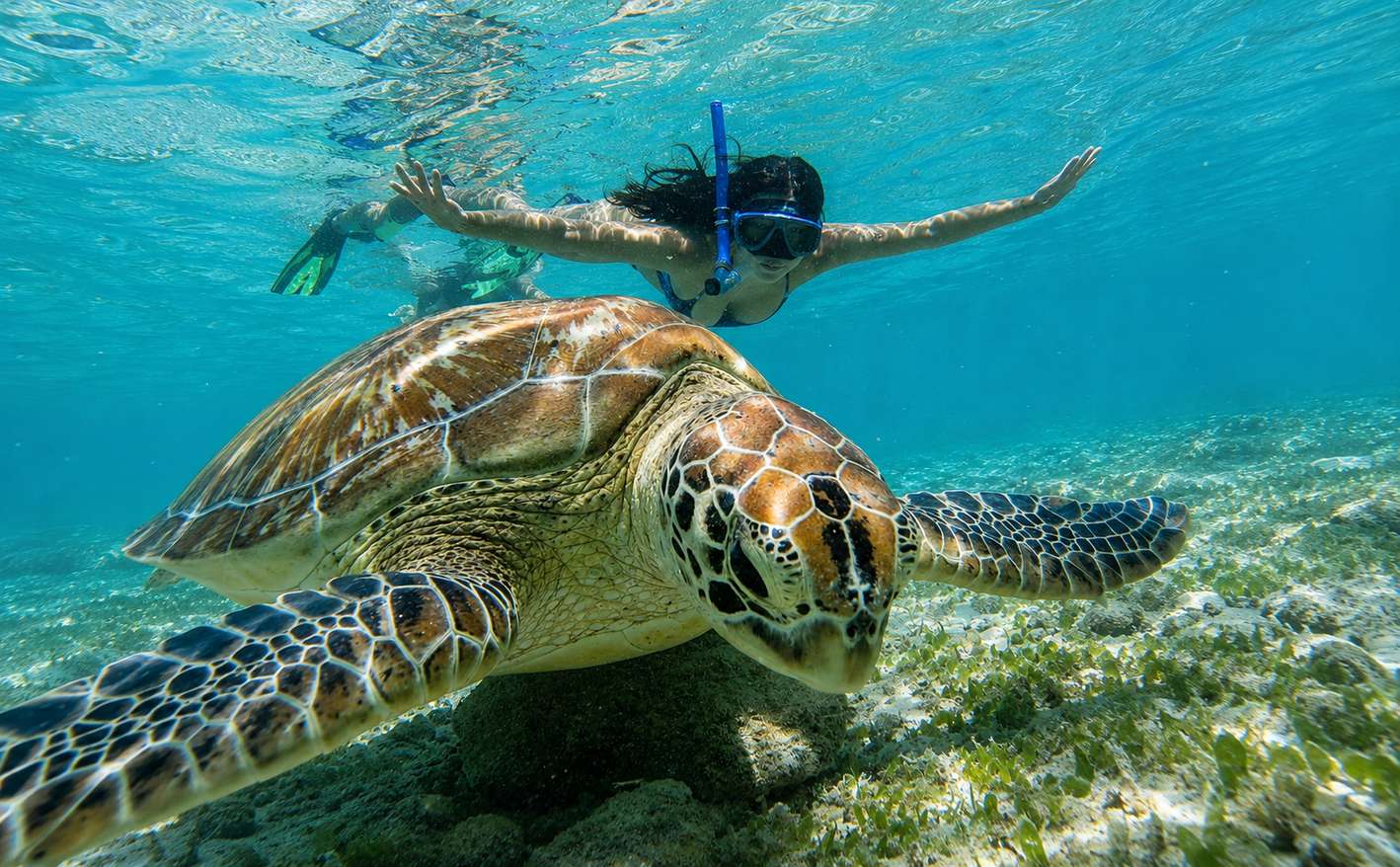
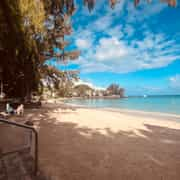
Green turtles graze seagrass behind coral bommies at the North Reef, and you can walk in from the sand.
Read the guideWalk straight into a sheltered bay where green turtles appear over sandy patches, though no visit can promise one.
Read the guide
A protected reserve with giant brain corals, shallow clear water, and resident green and hawksbill turtles.
Read the guide
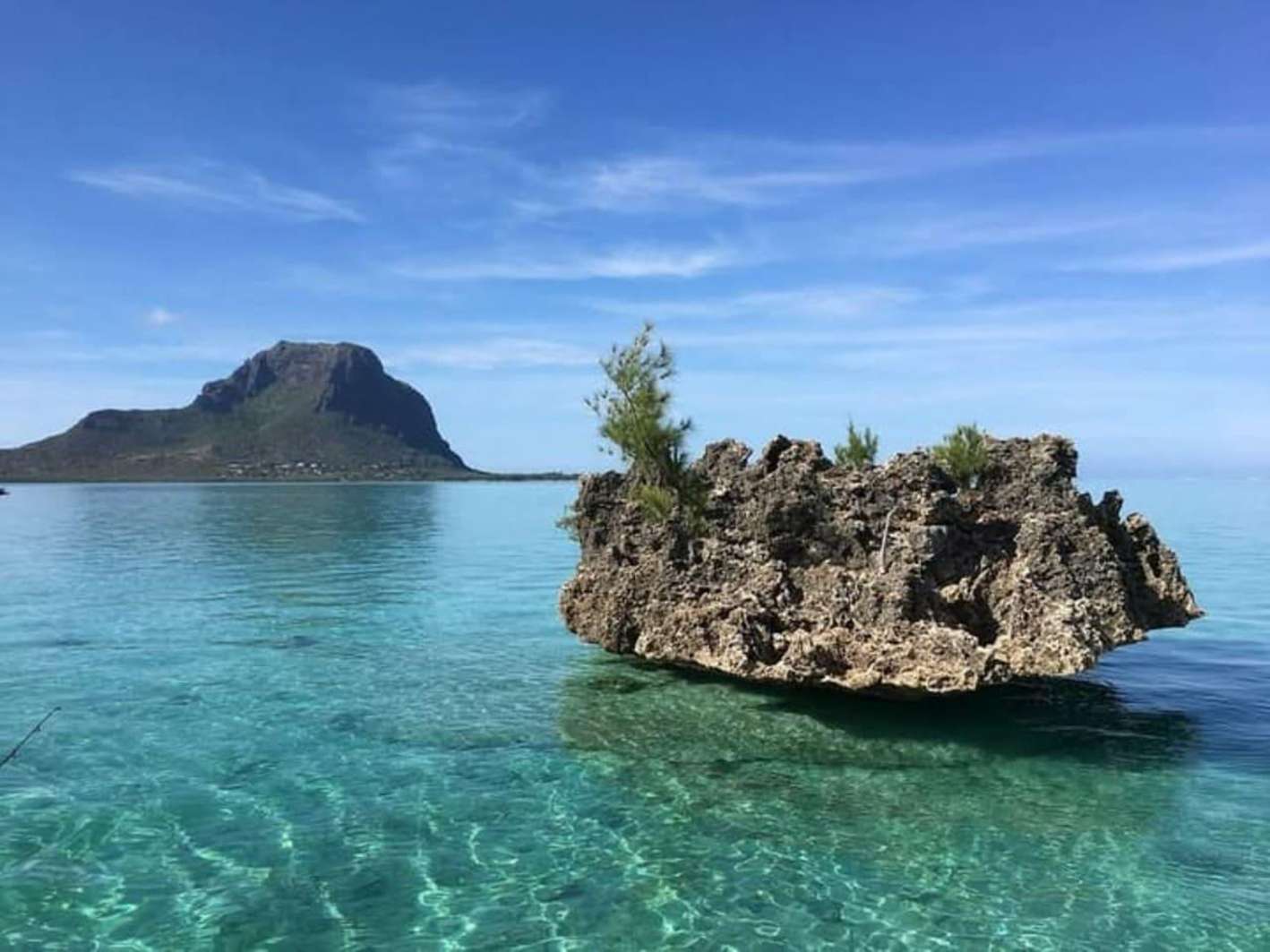
Shallow reef water under the mountain, reached by boat to Crystal Rock and the calm inner lagoon.
Read the guide
Trade winds decide the day: the west and north stay calm while the east and south take the wind.
Read the guide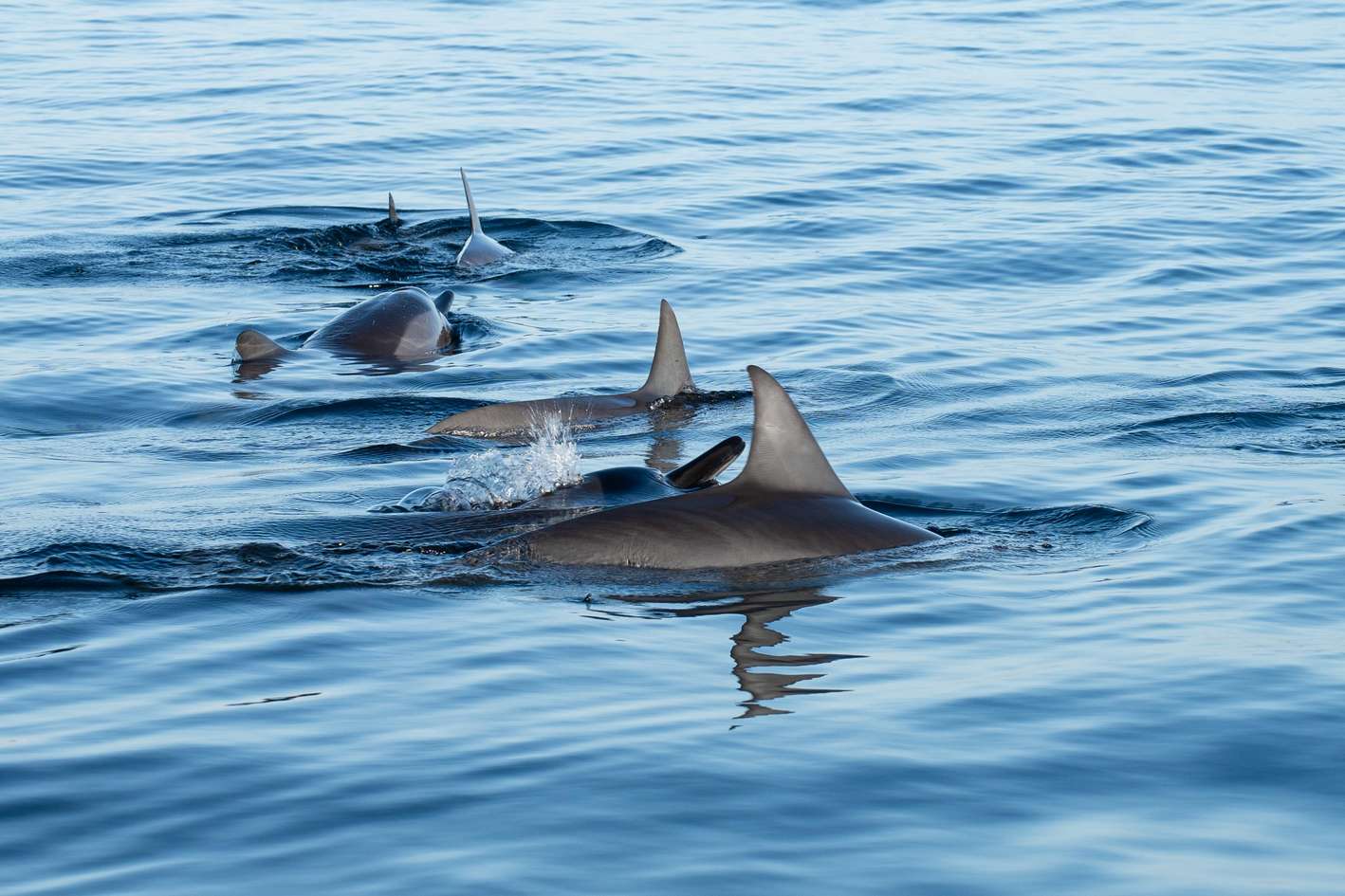
A flat, family-friendly lagoon with coral off the temple, and boats leaving the beach for turtles and dolphins.
Read the guideTurtles feed 50 to 100 metres from shore, with dedicated boat trips leaving the same beach.
Read the guide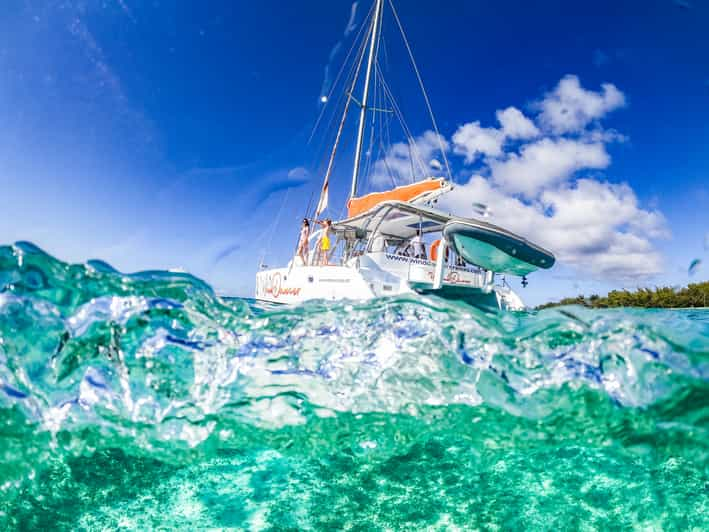
The lively northern base where turtle snorkeling boats and island catamarans leave straight from the beach.
Read the guide
An open, swell-prone bay where the day's reward is dolphins, with reef snorkeling by boat.
Read the guide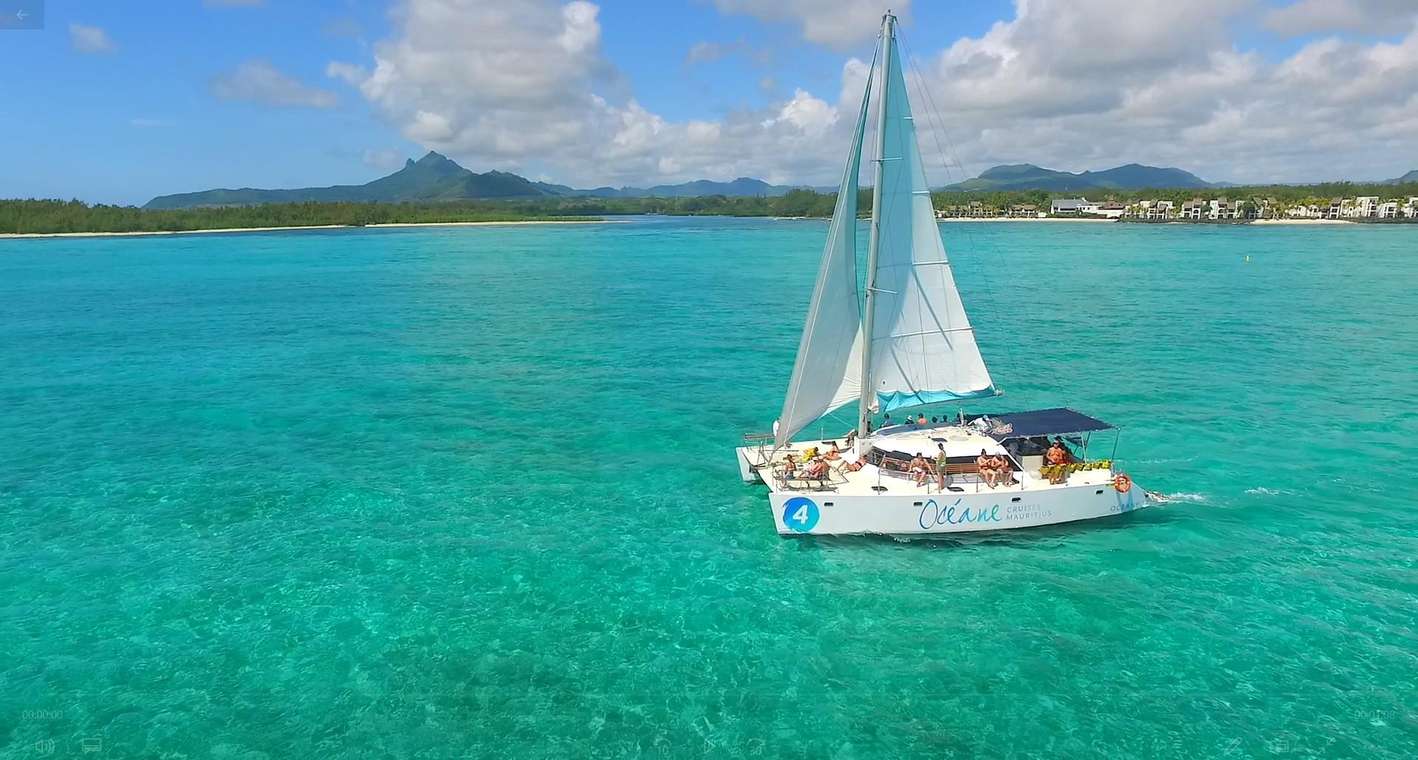
Calm sandy shallows for beginners, with the live reef 500 metres out where currents demand a boat.
Read the guide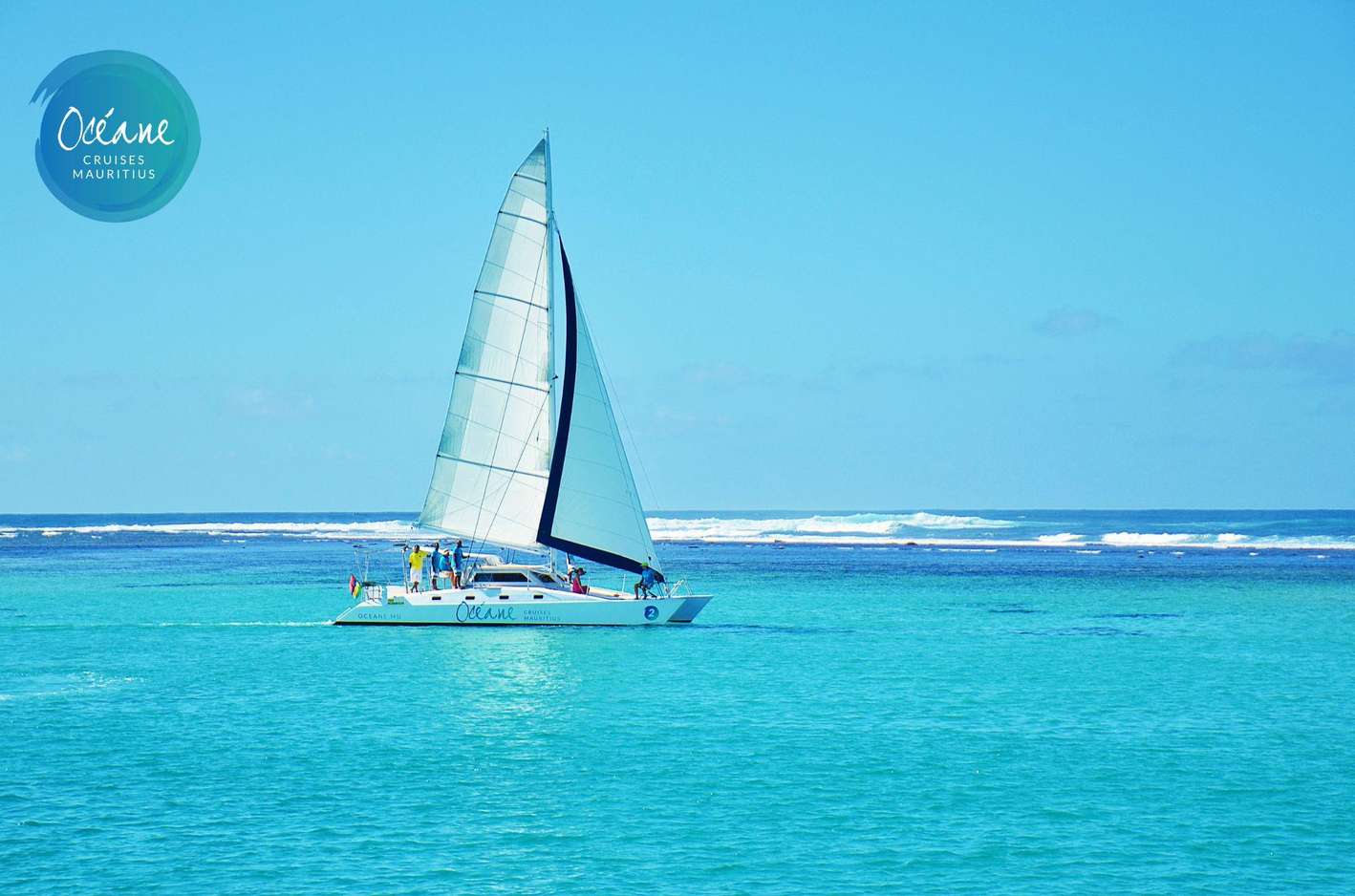
Step off your resort beach into a sandy lagoon with small fish and urchins underfoot.
Read the guideResort beaches with live reef a few strokes out, and green turtles grazing seagrass now and then.
Read the guide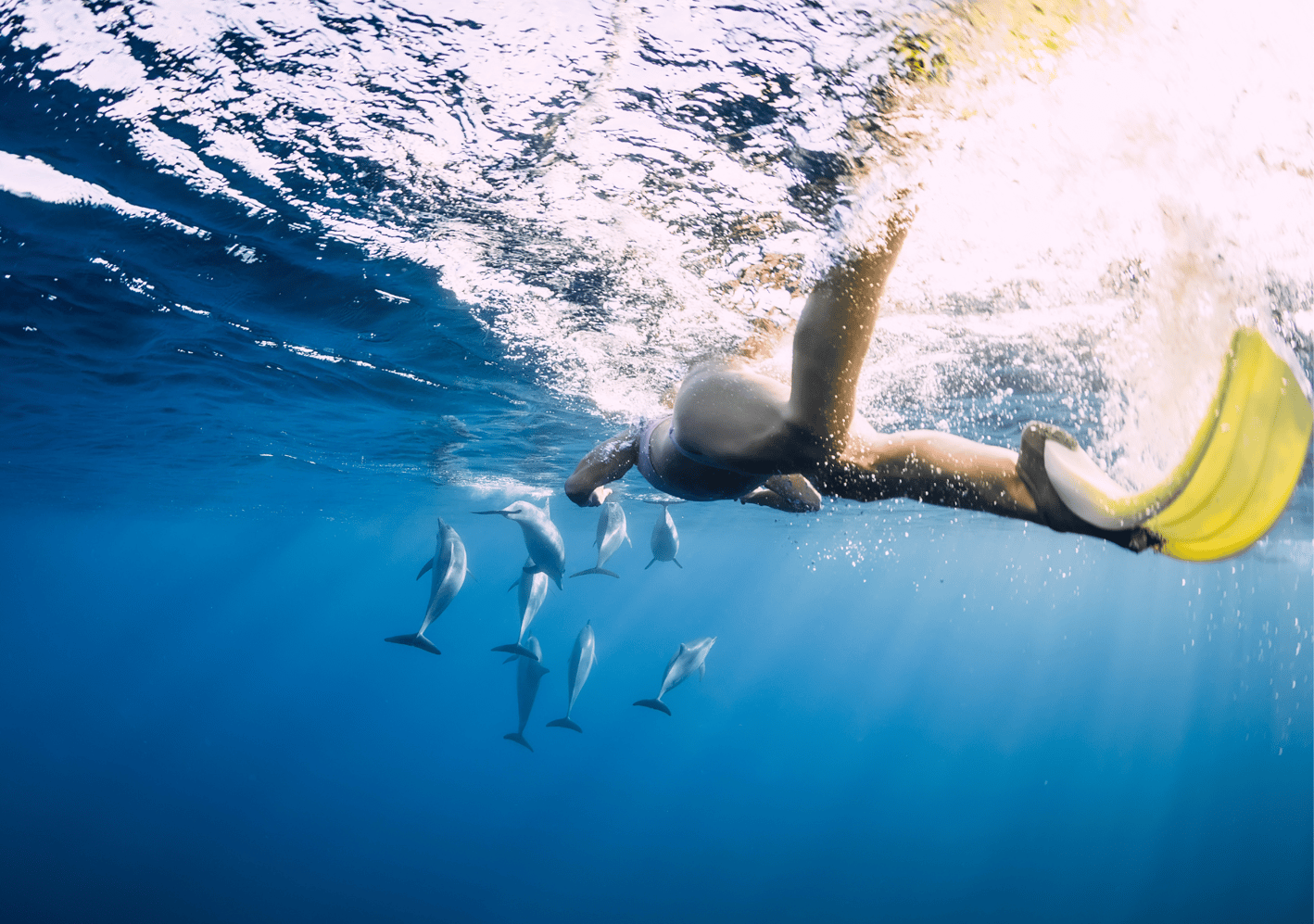
A quiet southern base with calm days and currents that keep beginners close to the yellow buoys.
Read the guide
The underwater waterfall shows itself only from a seaplane or helicopter, while the lagoon below holds real reefs.
Read the guide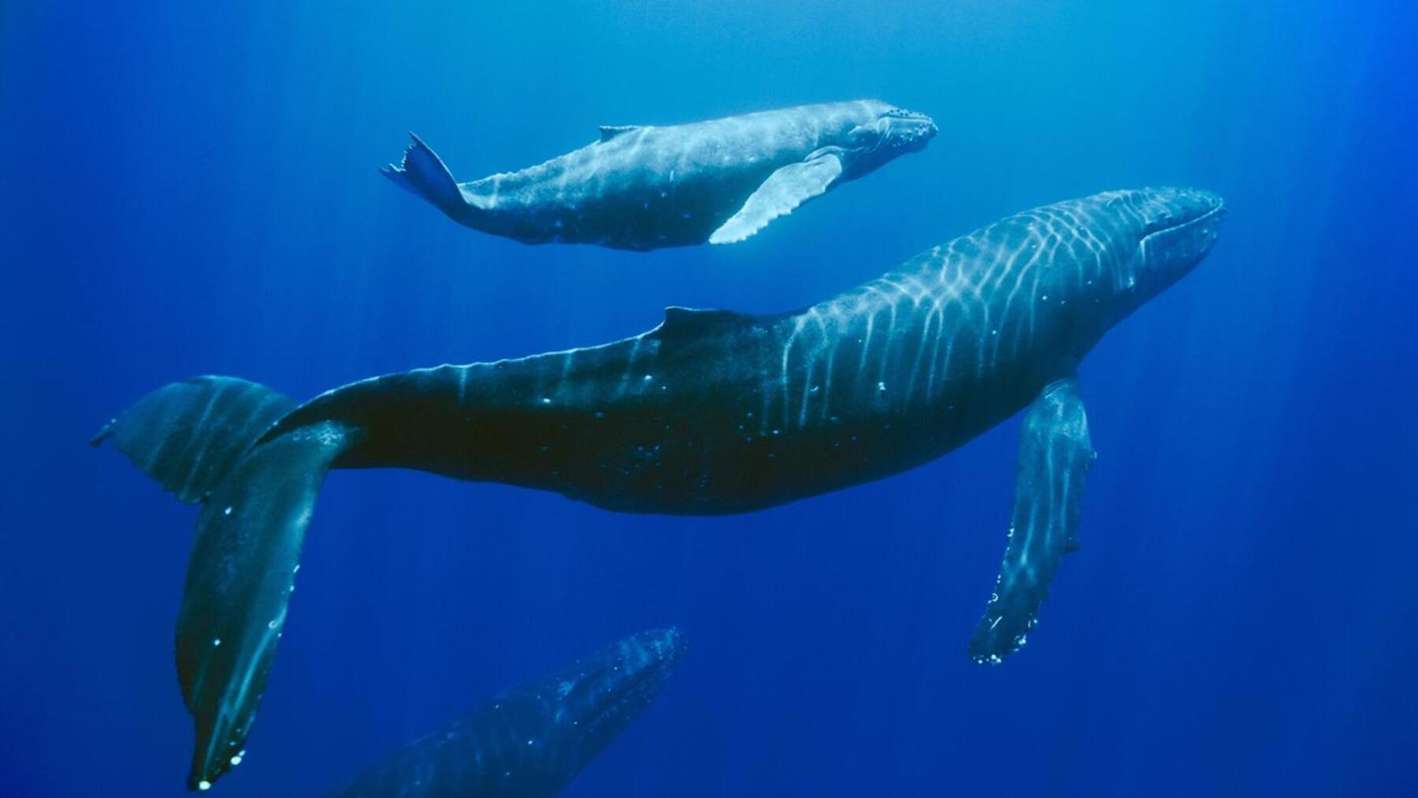
Sperm whales live off the west coast all year, and the law keeps you on the boat to watch them.
Read the guide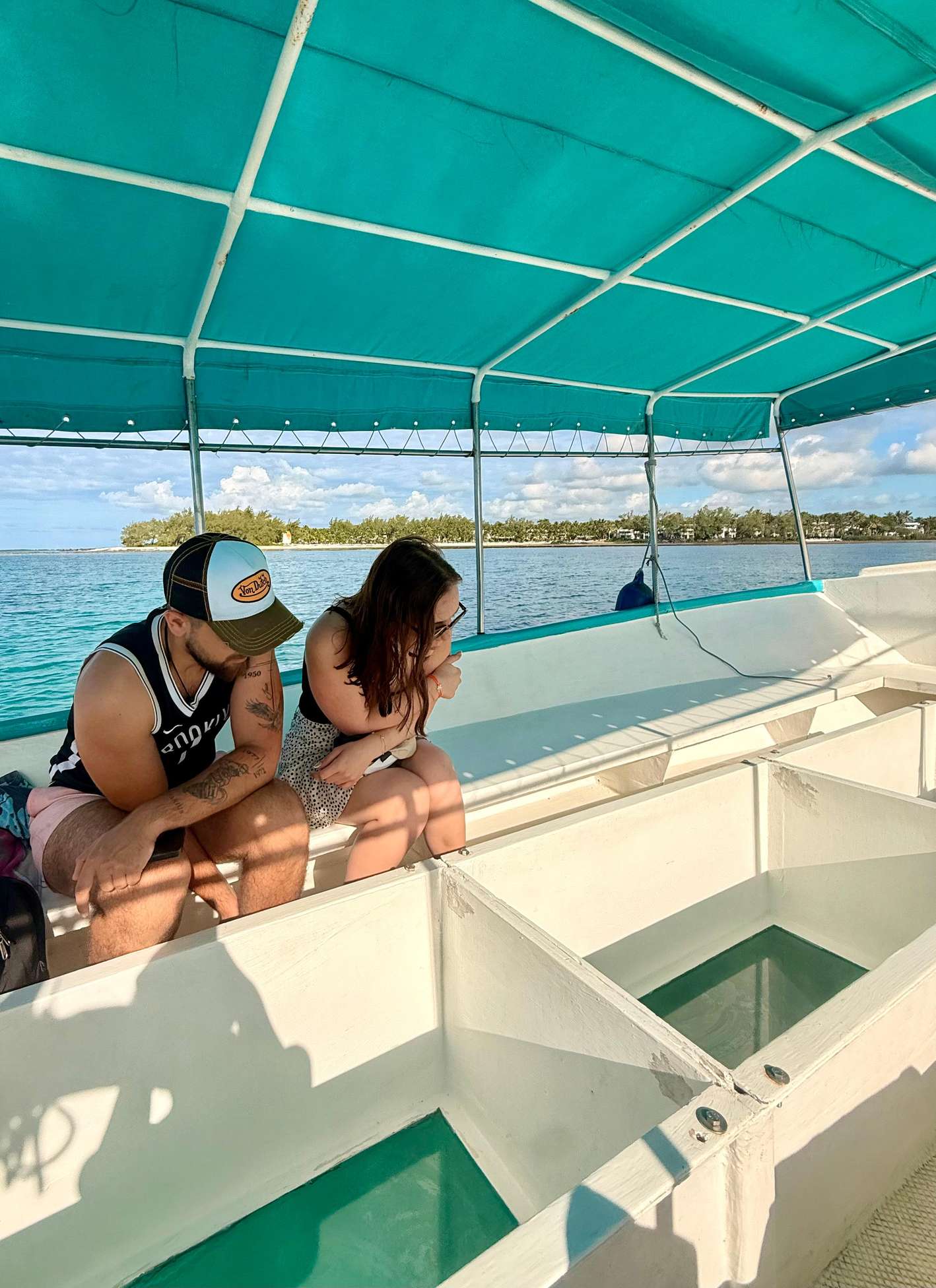
October to December combines calm seas, warming water and the year's best visibility.
Read the guide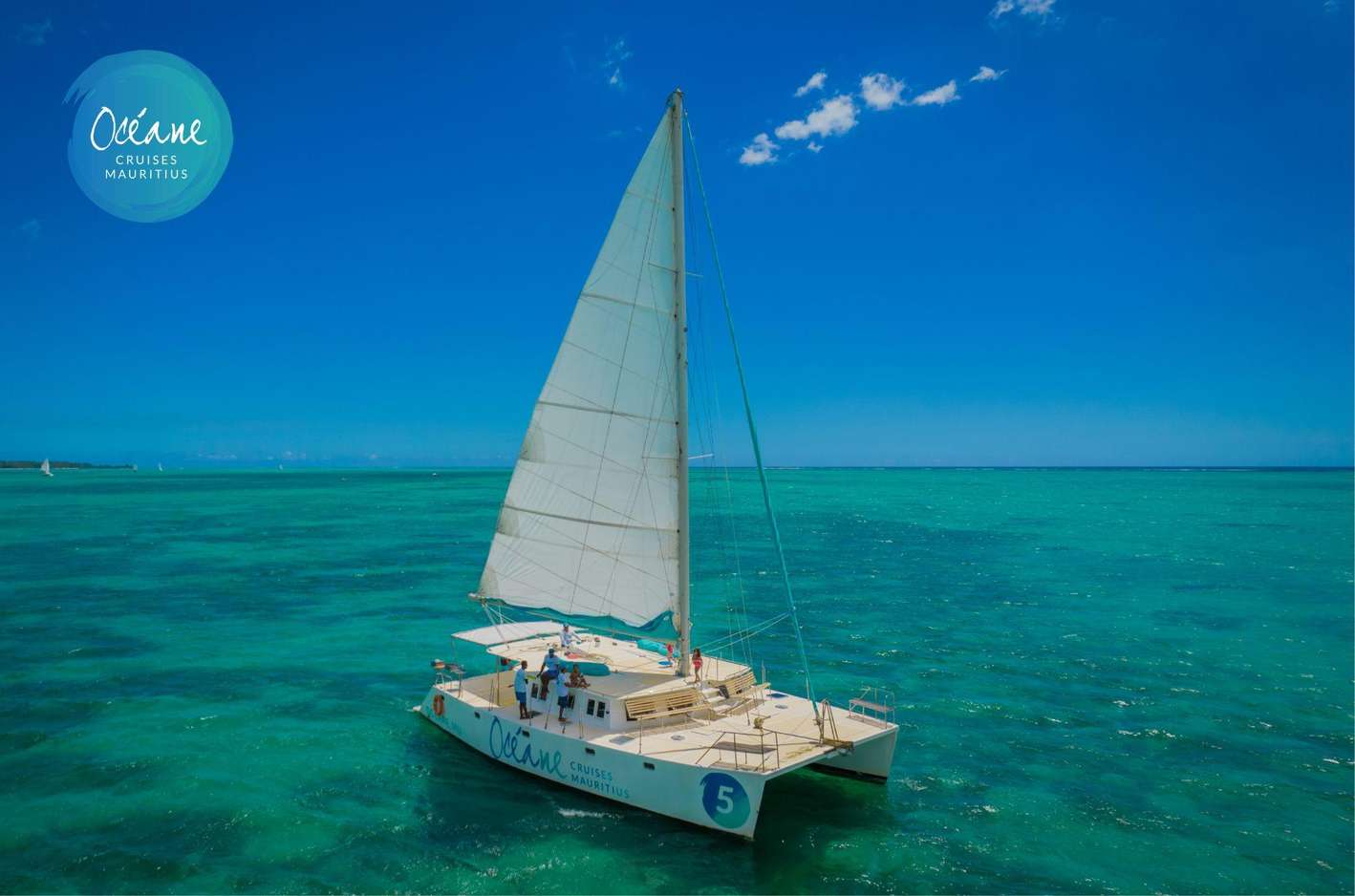
A spacious catamaran sails the sheltered east lagoon to Île aux Cerfs with a barbecue lunch onboard.
Read the guide
A speedboat crosses to Île aux Cerfs in 10 to 15 minutes, adding beach time and extra sights.
Read the guide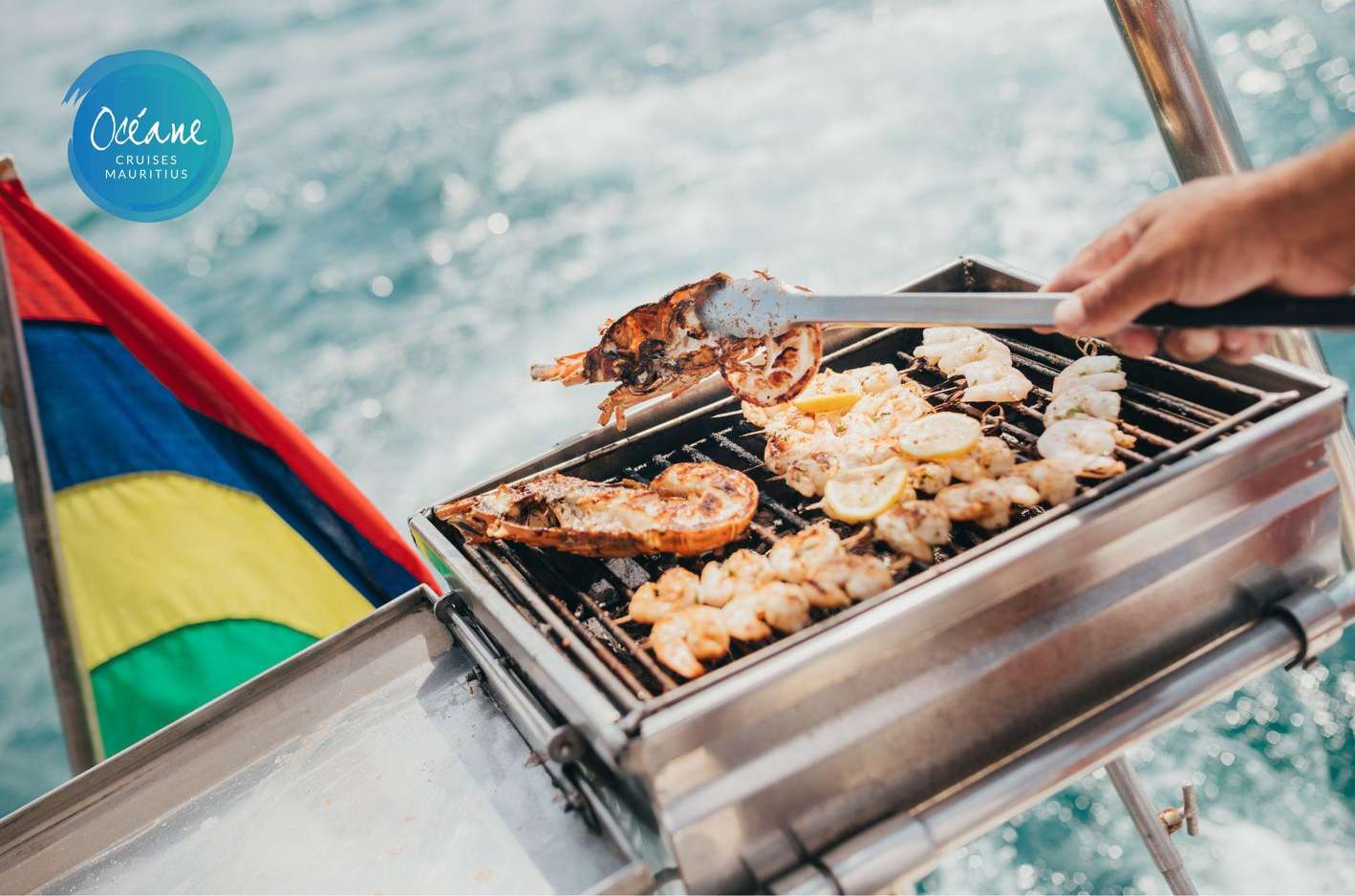
A private charter lands you on Île aux Cerfs before the ferries arrive at 10:30 and lets you set the day.
Read the guideTurtles gather where seagrass grows and boats stay away, so the coast you choose decides how often you see one.
Green turtles grazing seagrass in a flat, sheltered lagoon
Green turtles graze on seagrass behind coral bommies at Trou aux Biches North Reef, and you can enter the water on foot straight from the beach. The lagoon sits on the leeward northwest coast, flat on 80 to 98 percent of days, with windy days never exceeding three in any month.
Go before 9 am, when the water is clearest and the boats have yet to stir the sand. The shallow lagoon rarely tops two metres deep, so fins are optional.
The outer reef, a short boat ride out, holds the best turtle chances and richer coral, and it is one for confident swimmers in excellent sea conditions.
The bay named by Dutch sailors, calm and walk-in, sightings occasional
Seventeenth-century Dutch sailors renamed this bay Turtle Bay because of the animals they found in its water. Today it is an exceptionally sheltered northwest bay with walk-in beach access, and the shallow, calm lagoon suits children and families well.
Green turtles are likely over the deeper sandy patches in the middle of the cove, yet they do not appear on every visit, so treat any encounter as a lucky morning.
Keep away from the reef passes, where currents can pull. Reef health is recovering since the park's establishment, and the densest coral at the southern beach sits to the right of the wooden jetty.
The island's densest coral garden, with turtles feeding on the seagrass
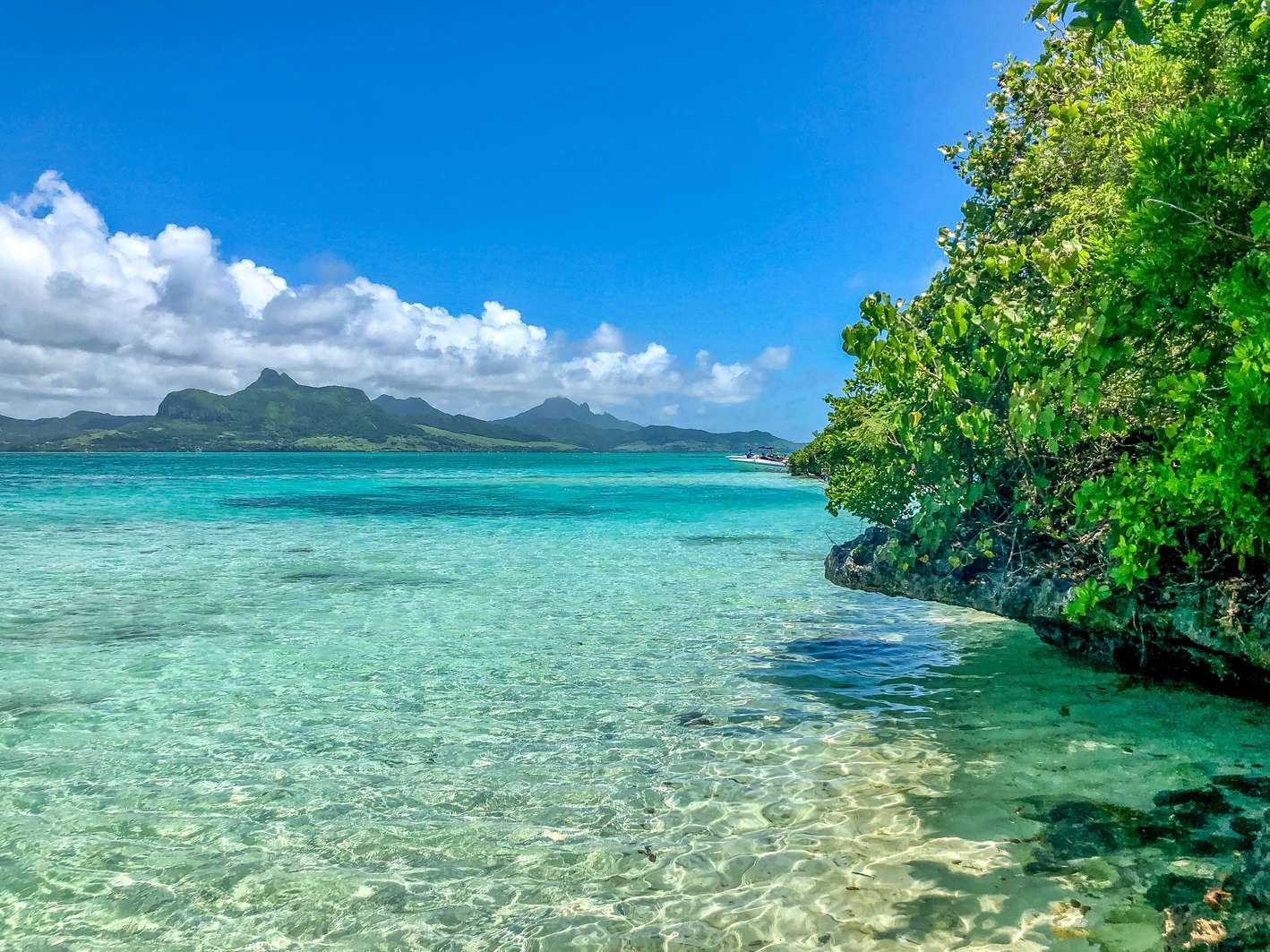
Blue Bay holds the densest coral of any snorkeling spot on Mauritius, protected as a reserve since 1985. Brain corals here span up to six or seven metres, and one measures 5.5 metres across, among the largest in the Indian Ocean. Green sea turtles and hawksbills feed on the seagrass beds inside the sheltered lagoon.
The park starts about 100 metres offshore, and the richest coral gardens sit further out in deeper water, so the best viewing comes by boat. Glass-bottom tours let children and non-swimmers watch through the floor panels, and on good days visibility runs to many metres. Touching or chasing turtles is prohibited here by law.
3 hours · ★ 5.0 (4)Blue Bay: Lagoon, Snorkeling, and Creole LunchFrom $87 2 hours · ★ 4.6 (17)Blue Bay Marine Park: Guided Snorkeling with Video Souvenirs and SnackFrom $58 4 hours · ★ 4.5 (306)Blue Bay: Half-Day Snorkeling Trip with Creole Picnic LunchFrom $67 1 hour · ★ 4.4 (155)Blue Bay Marine Park - 1-hour Snorkeling ExcursionFrom $28 Snorkeling under Le Morne Brabant, with dolphins and Crystal Rock nearby
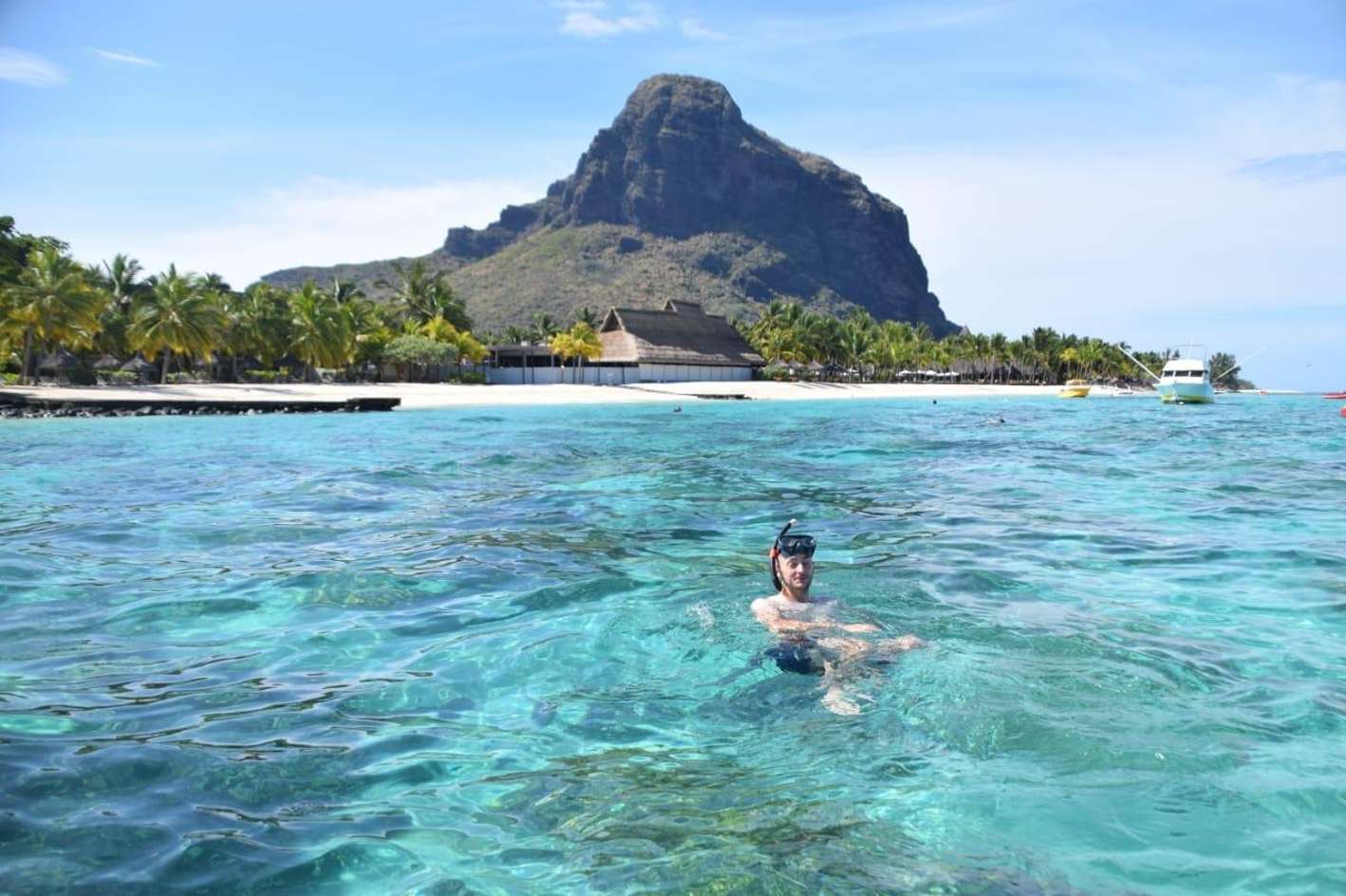
Le Morne gives you a snorkel with the mountain rising behind the water, which few spots on the island can match. The inner reef about two kilometres off Île aux Bénitiers is a popular stop, and Crystal Rock sits hip-deep over sand, with reef fish at a coral field nearby.
Mind the tide here. When the lagoon drains through the narrow pass at One Eye, the current runs too strong to paddle against, so reach the outer reef by boat and keep clear of kitesurf launch zones. Early to mid-morning brings the calmest water and the fewest boats.
7 hours · ★ 5.0 (5)Private Île aux Bénitiers Boat: Dolphin Snorkeling & LobsterFrom $738 /group 7 hours · ★ 5.0 (1)Mauritius: Private Whale Watching & Bénitiers BBQFrom $1,025 /group  2 hours · ★ 4.9 (151)Mauritius Le Morne: Wild Dolphin Watching & SwimmingFrom $331 /group
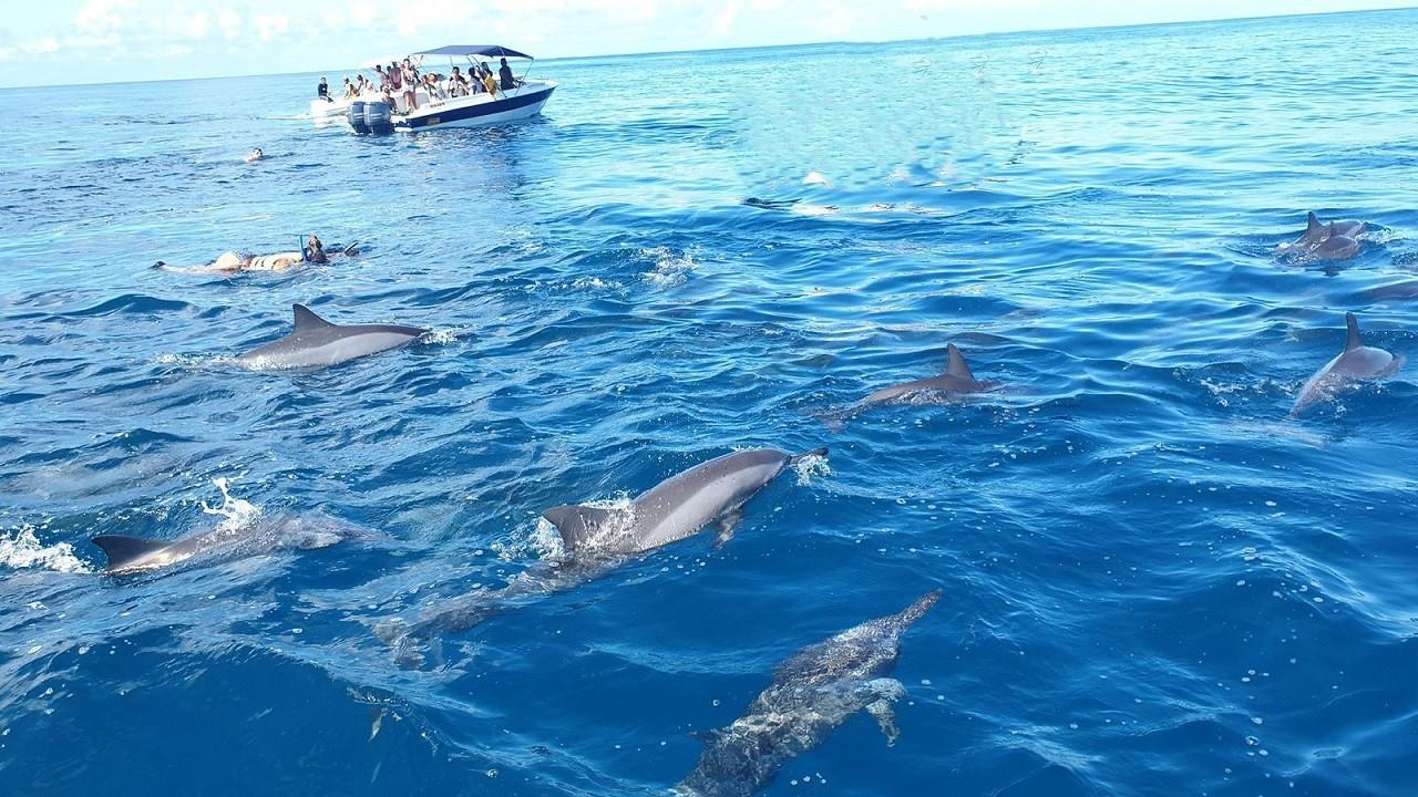 6.5 hours · ★ 4.3 (318)Black River: Swim with Dolphins Speed Boat Tour with lunchFrom $69
Which coast holds the calm water and the clearest reefs
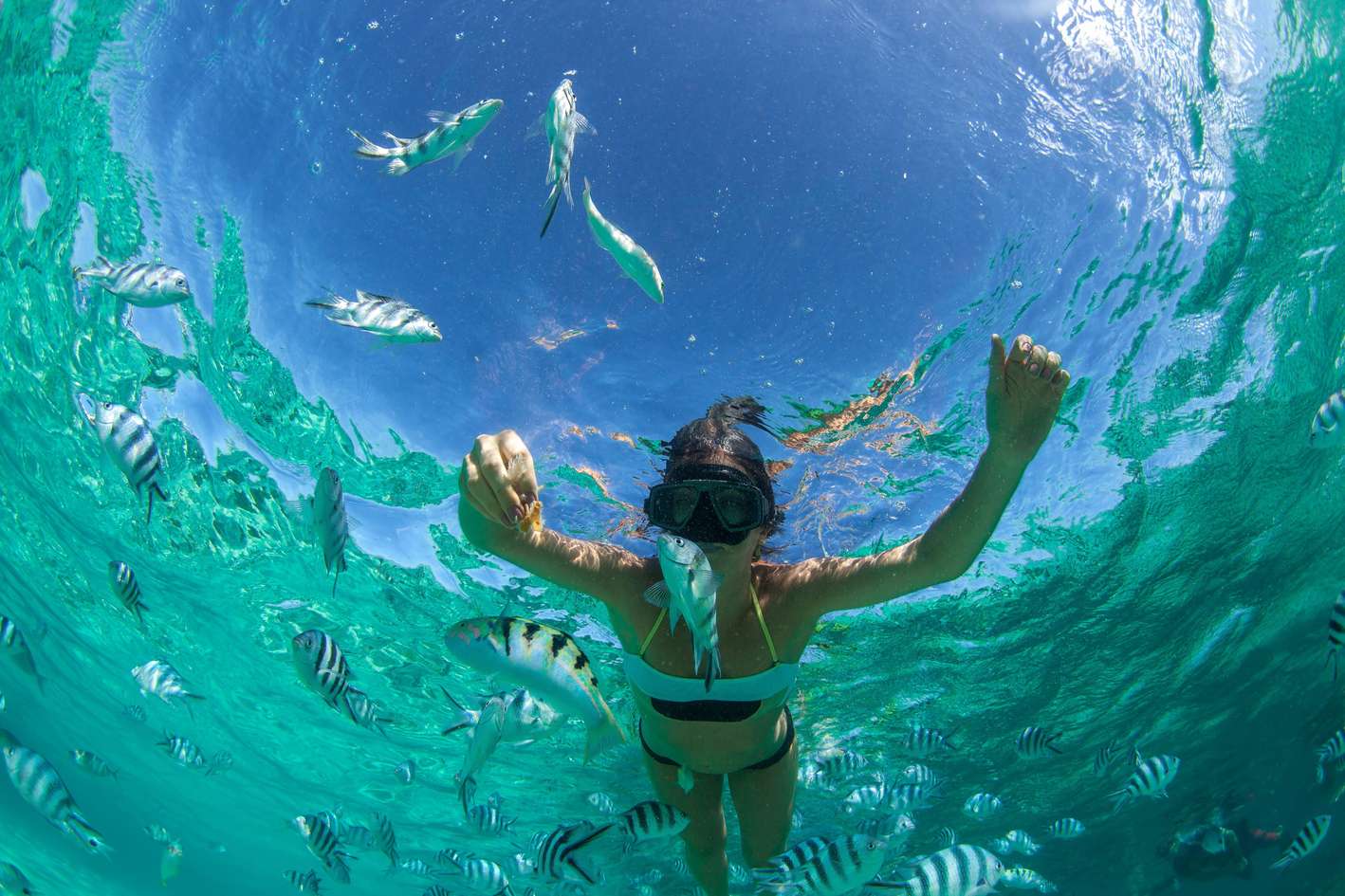
Mauritius is ringed by reef, but the coasts behave differently. From May to September the southeast trade winds chop up the east coast lagoons, where calm-sea days can drop to nearly none, while the island's high ground shelters the west and southwest around Tamarin, Black River and Flic en Flac.
That single fact should steer your base. A sheltered west-coast lagoon gives you flat water most mornings, an east-coast resort gives you wind and murk in winter. The page lays out each coast's coral, sea conditions and marine highlights so you can match the beach to the month you travel.
3 hours · ★ 5.0 (4)Blue Bay: Lagoon, Snorkeling, and Creole LunchFrom $87 7 hours · ★ 4.8 (869)Ile aux Cerfs Catamaran Cruise with BBQ Lunch & SnorkelingFrom $68 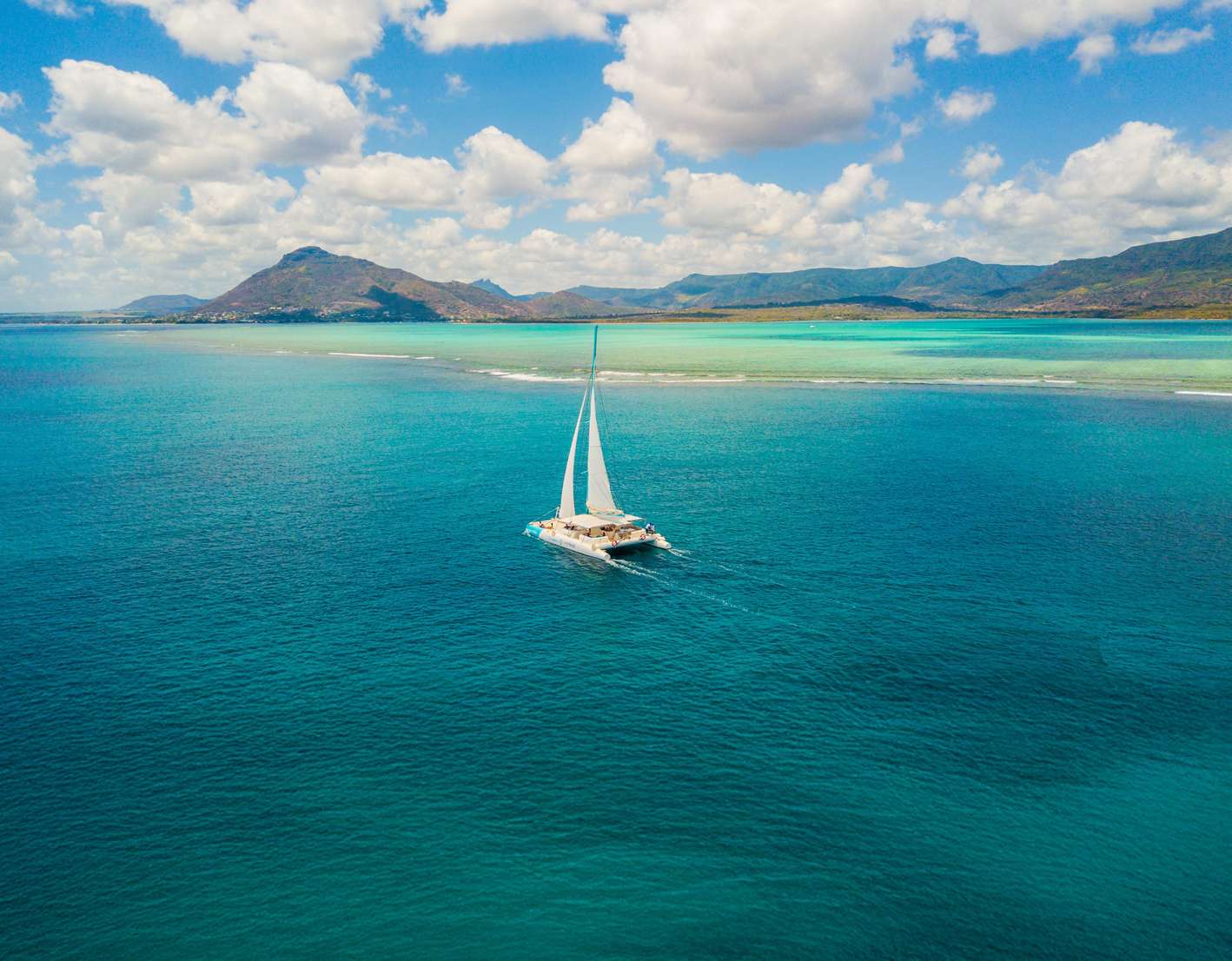 6 hours · ★ 4.7 (363)Mauritius: Catamaran Cruise - Dolphin Watching, BBQ & DrinksFrom $87 2 hours · ★ 4.7 (39)Mauritius: Snorkeling with turtles Le Transporteur speedboatFrom $375 /group
One of the calmest lagoons on the island, coral heads within reach
Flic en Flac keeps one of the calmest lagoons in Mauritius, shallow, clear and protected by its barrier reef, which makes it among the safest places to swim on the island. Coral and marine life start directly opposite the Hindu temple on the beach, no boat needed, and denser formations lie about 200 metres out.
Sea turtles are better reached by boat, and dolphin and turtle trips depart straight from the beachfront, so you skip the taxi ride south to Tamarin. Go between 6 and 9 am for the clearest water, and stay away from the boat channel and reef pass, where currents run.
8 hours · ★ 5.0 (2)Private Dolphins, Sea Turtles & Île aux Bénitiers TourFrom $850 /group 7 hours · ★ 5.0 (1)Mauritius: Private Whale Watching & Bénitiers BBQFrom $1,025 /group 2 hours · ★ 4.7 (28)Flic en Flac: Private Sunrise Dolphin Watching Boat TourFrom $309 /group 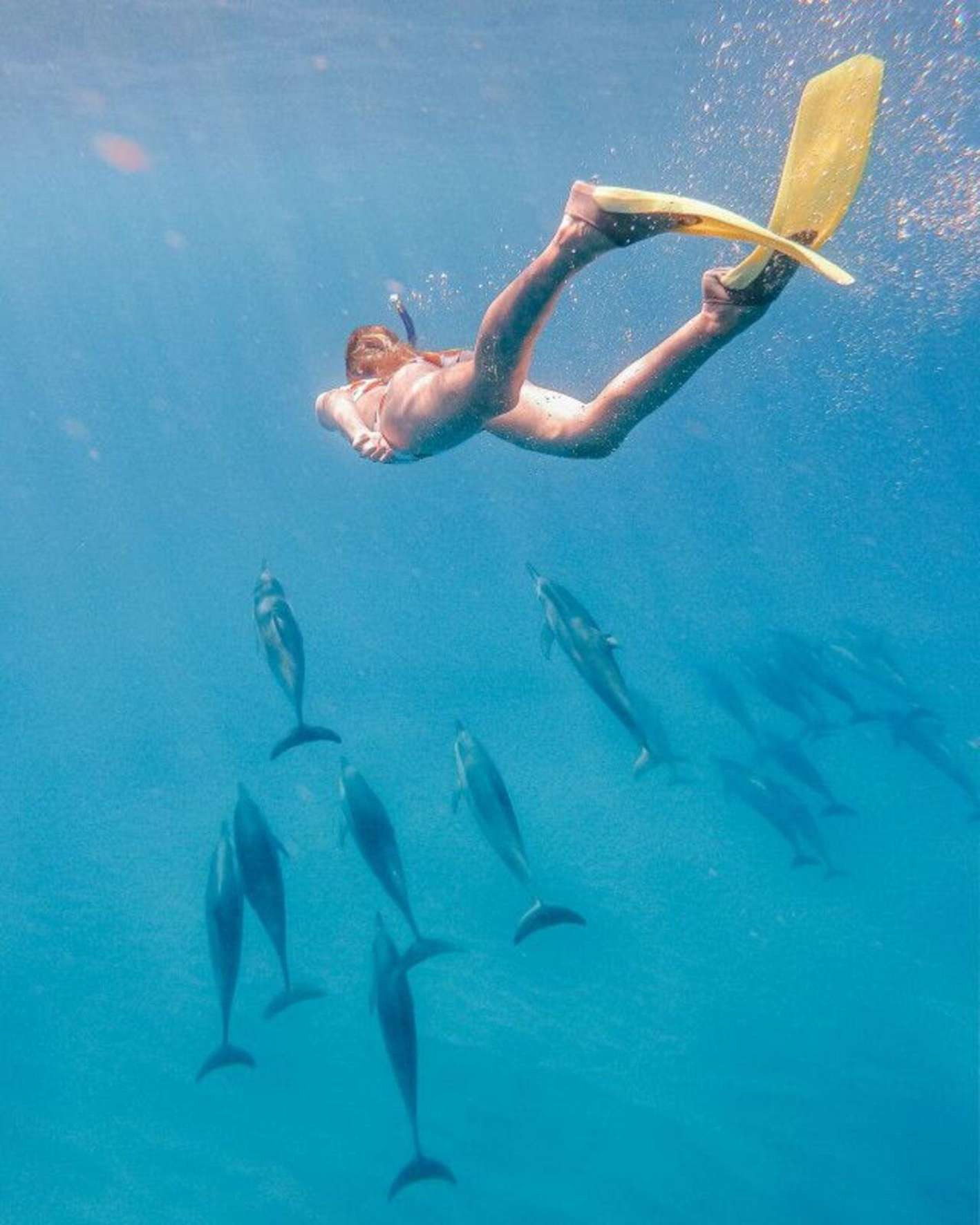 2 hoursMauritius: Private Dolphin Watching and Snorkeling TourFrom $441 /group
The island's best odds of meeting a turtle, straight off the sand
Pereybere is considered the top spot on Mauritius for encounters with sea turtles, with both green and hawksbills visiting near the shore. You can meet them in the lagoon 50 to 100 metres out by swimming from the beach, and the main feeding areas sit roughly 300 to 350 metres offshore toward the barrier.
Stay inside the buoyed swimming zone, where motorboats are banned, and keep clear of the red-buoyed boat channels outside it, since tidal currents run there and near the reef.
A coral reef with varied fish sits just beyond the swimming area, best reached along the rocky eastern edge. The 1.5-hour turtle boat trip leaves from this same beach if you would rather let a skipper do the navigating.
The launch town for turtle speedboats and northern island trips
Grand Bay's inner harbor is busy with moorings, so the good snorkeling lives outside it, and the town works best as a launch pad. A private turtle-snorkeling speedboat departs from the beach and runs out to the Trou aux Biches lagoon, one of the island's known turtle grounds, in a two-hour morning or late-morning session.
The same beach also sends catamarans and speedboats to the northern islands, where turtle sightings around Coin de Mire are occasional rather than promised.
If you are prone to seasickness, the open channel toward Gabriel Island rolls most between May and August. Life jackets sit on board, and operators hand them out on request from the skipper.
Dolphin bay with open water, reefs offshore and Crystal Rock beyond
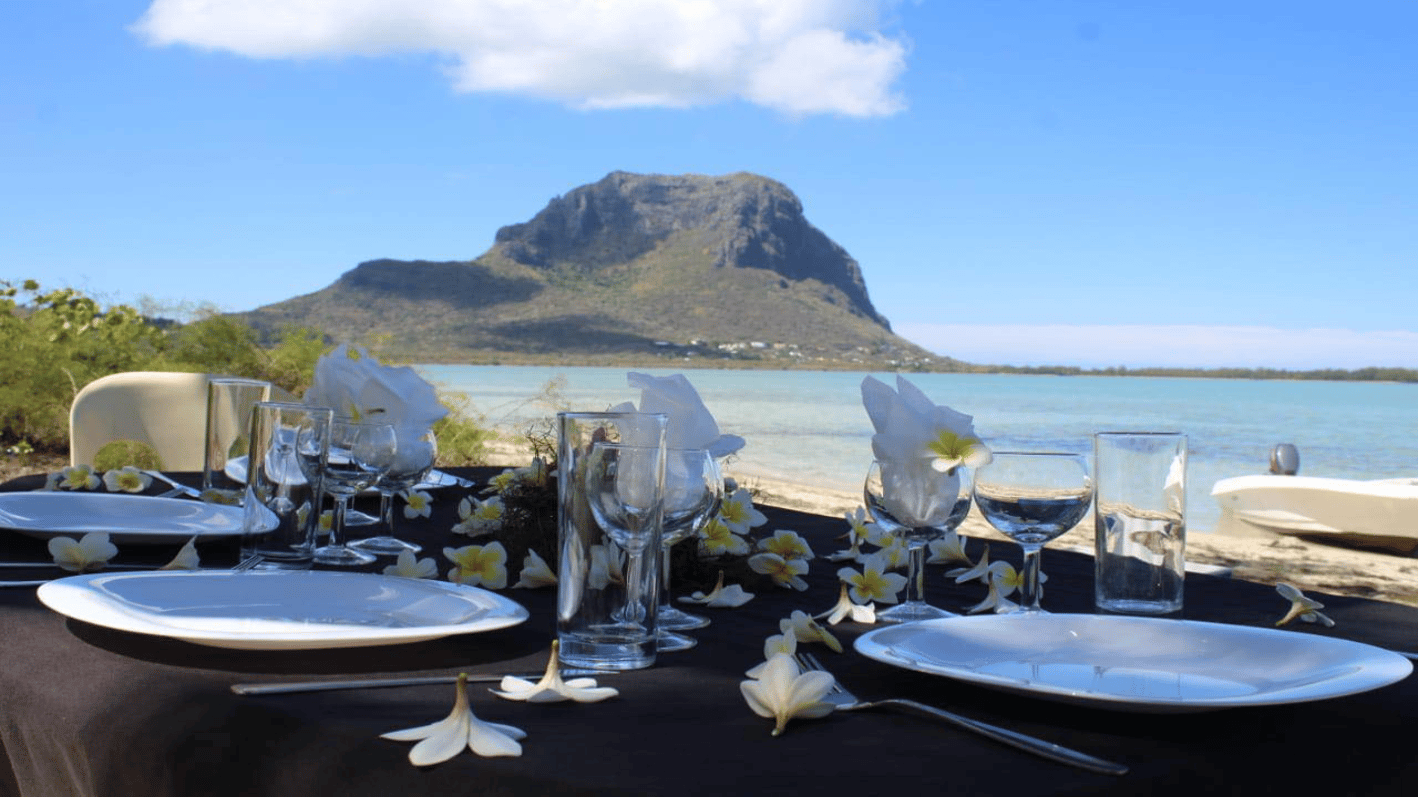
Tamarin Bay faces the open ocean, and its reef is open too, so swells and surf reach the shore where a sheltered lagoon would block them. The Beach Authority classifies it as a hazardous bathing area, and currents form where the river mouth and the reef opening meet the sea.
Dolphins are the reason boats leave this bay at dawn, and reef snorkeling happens on the trips that continue to Crystal Rock and Île aux Bénitiers, where the water turns calm and waist-deep.
Harmless reef sharks occasionally appear outside the bay, and dangerous attacks are practically non-existent there. Swim with a crew rather than on your own, and let the skipper time your entries.
7 hours · ★ 5.0 (5)Private Île aux Bénitiers Boat: Dolphin Snorkeling & LobsterFrom $738 /group 6 hours · ★ 4.7 (363)Mauritius: Catamaran Cruise - Dolphin Watching, BBQ & DrinksFrom $87 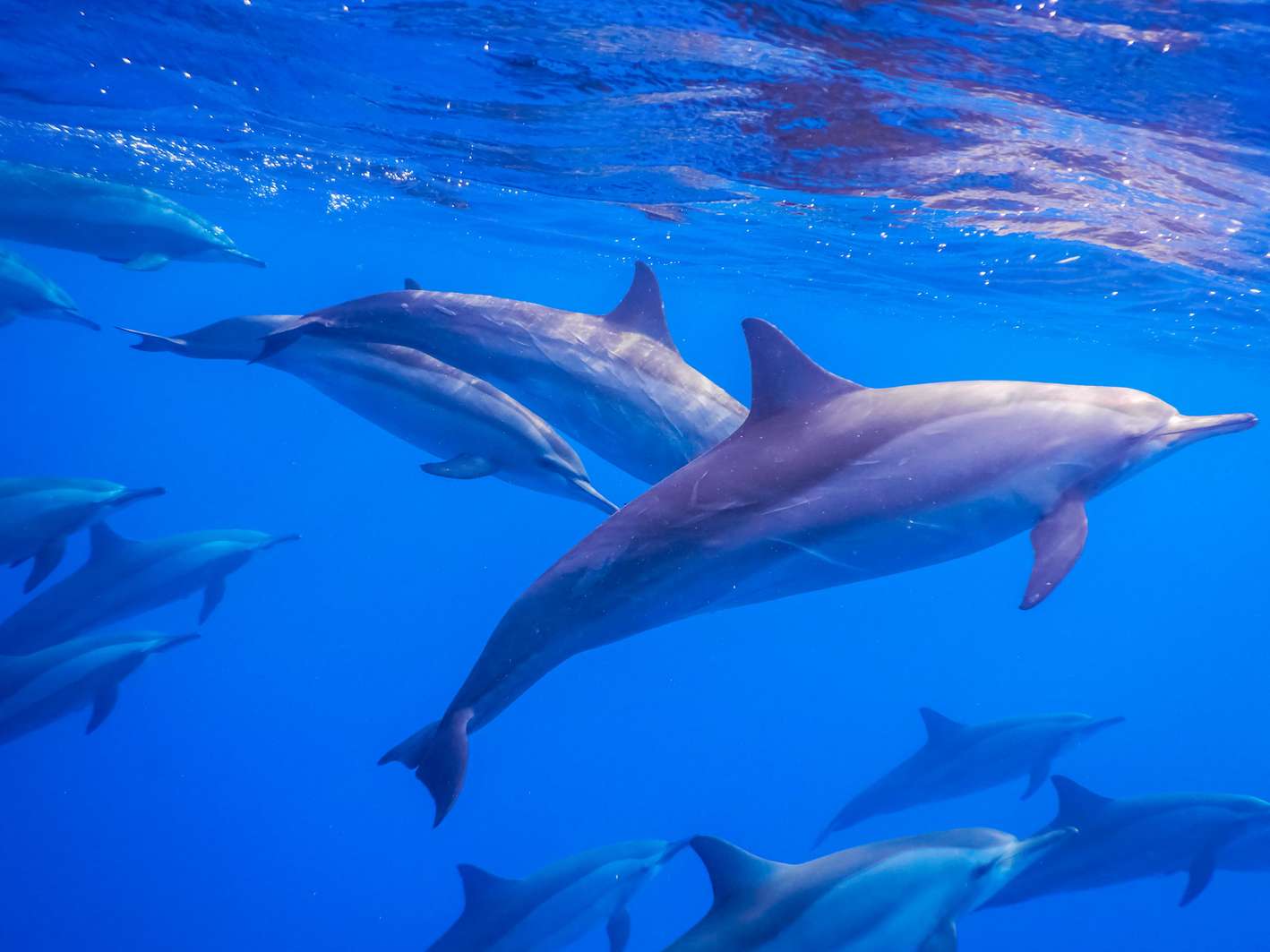 2 - 6 hours · ★ 4.7 (237)Dolphin Watching with Hotel Pickup (Mauritius)From $61 /group
 4 hours · ★ 4.4 (35)Dolphins & Whales: Private Snorkeling TourFrom $528 /group
A wide sandy lagoon with a reef pass best reached by boat
Belle Mare's protected lagoon holds flat, calm water with minimal current, and scattered coral heads inside it host butterflyfish, damselfish and the odd octopus or small moray eel. This is beginner water, plain and sandy in the shallows.
The live coral reef sits about 500 metres from the beach, and swimming out to it is a poor idea: currents near the passes can pull, and boats and jet skis cross the lagoon.
Local guides and fishermen run boat transport to the reef instead. In the June to September trade winds the east coast chops up badly, so go in the morning or pick a sheltered coast in winter.
A sandy hotel lagoon, best early, windiest from June to August
Palmar gives you a wide, calm lagoon barely 250 metres across to the barrier reef, protected by that distant offshore reef. Walk in over sand and scattered coral, watch small tropical fish around the seagrass, and meet the urchins that hide in the shallows, so water shoes earn their place.
There is no turtle story here, and the fish are small and plentiful rather than dramatic.
From June to August the southeast trade winds make the lagoon choppy and murky, with calm-sea days dropping to nearly none, so morning is the time and winter the season to reconsider. Boat tours leave from Trou d'Eau Douce just south, with pickup at the resort lobby.
A protected bay with walk-in reefs and occasional green turtles
Balaclava's bay faces north, tucked away from the southeast trade winds, and its reef-protected lagoon stays calm enough for all swimmers year-round. At Kuilima Cove you walk in over ankle-deep sand, and a live reef waits a few strokes from shore, running 4 to 8 feet deep in places.
Green sea turtles are occasionally spotted grazing on seagrass here, so a sighting is a pleasant surprise rather than a plan. Stay clear of the reef passes and ski lanes, where currents pull and swimming is barred.
Coral species in the park are diverse and the reef is recovering, with rocky volcanic patches underfoot on some stretches of shoreline.
Quiet southern reefs reached by boat, with strong currents in the channels
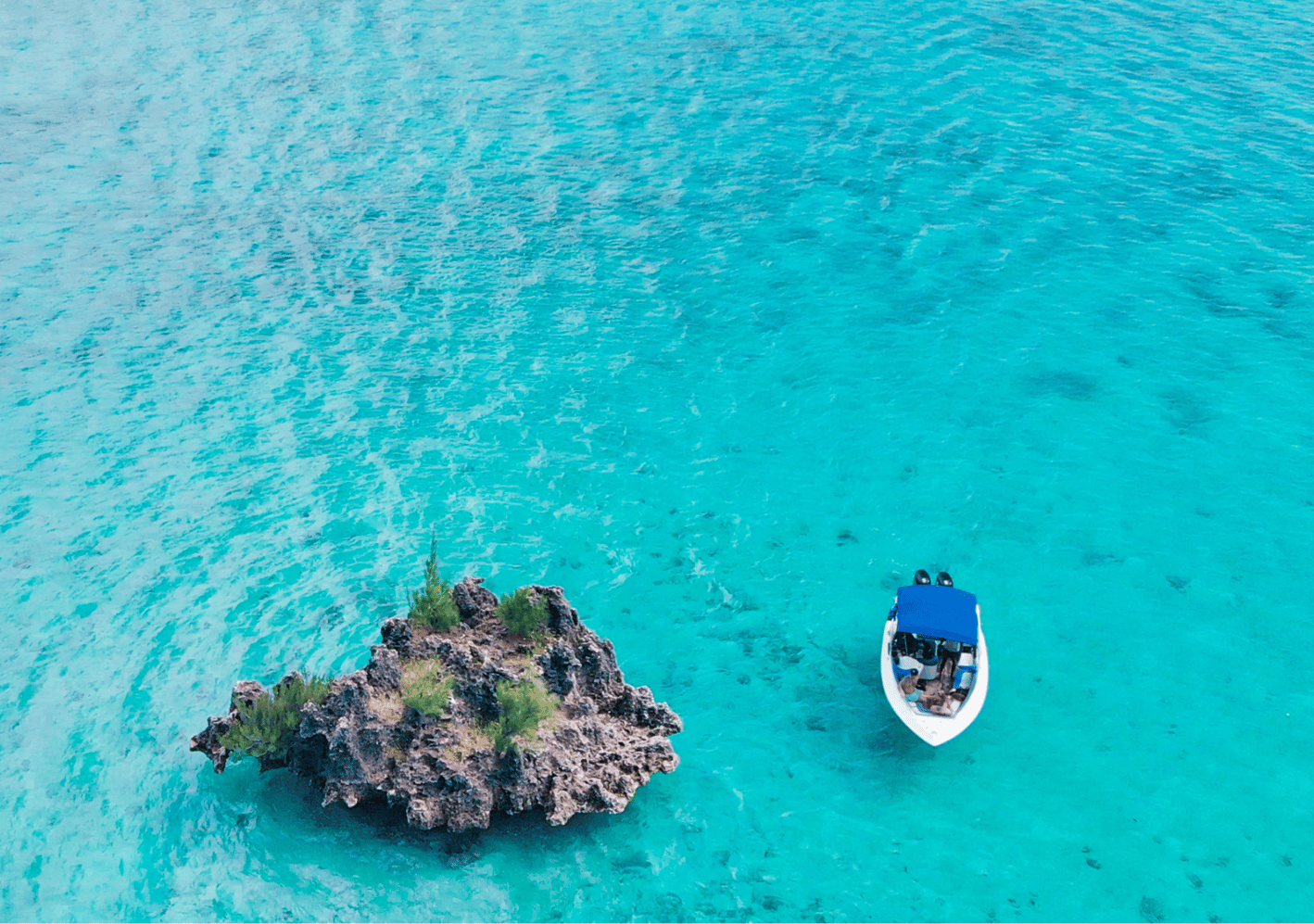
Bel Ombre suits travelers who want the south's quieter waters, where fewer operators run and reefs see fewer boats. Snorkeling straight off the beach works around the rocks and coral set in the sand on calm days, though at low tide the lagoon goes very shallow and space gets tight.
The channels here carry very strong currents, so stay inside the designated yellow swimming zones and never swim toward the reef or passes.
Local resort nautical centres arrange glass-bottom and snorkeling outings, and the west-coast turtle and dolphin boats launch about half an hour north with resort pickup arranged in advance. Mid to high tide gives the clearest water.
The famous cascade is an illusion seen from the air, with real reefs beside it
The underwater waterfall off Le Morne is an optical illusion made of sand washing off a shallow shelf into a deep canyon, and you see it only from the air, by seaplane, helicopter or ultralight. From a snorkel mask at sea level you will see none of it, because lateral visibility runs a few metres.
Swimming near the reef opening is the mistake to avoid: outgoing tide and breaking surf push strong seaward rip currents there.
The good news sits next door, since the Le Morne lagoon holds calm shallow reef and Crystal Rock, and boat trips cover them properly. Seaplane flights for the view itself leave from La Prairie beach.
Resident sperm whales year-round, watched from the boat only
Sperm whales stay off the west coast year-round because the seabed drops steeply to deep water close to shore, and humpbacks pass between June and October. A private speedboat from Flic en Flac or Le Morne searches for them in the open ocean, then often finishes with lagoon snorkeling and a stop at Crystal Rock.
Know the rule before you book: Mauritian law prohibits swimming, diving or snorkeling with whales, so the encounter happens from the boat, with vessels kept outside 100 metres.
If swimming with wildlife is what you want, dolphins and turtles fill that role on other trips. Calmest seas off the west coast come in the summer months.
Which month brings clear water, calm seas and warm temperatures
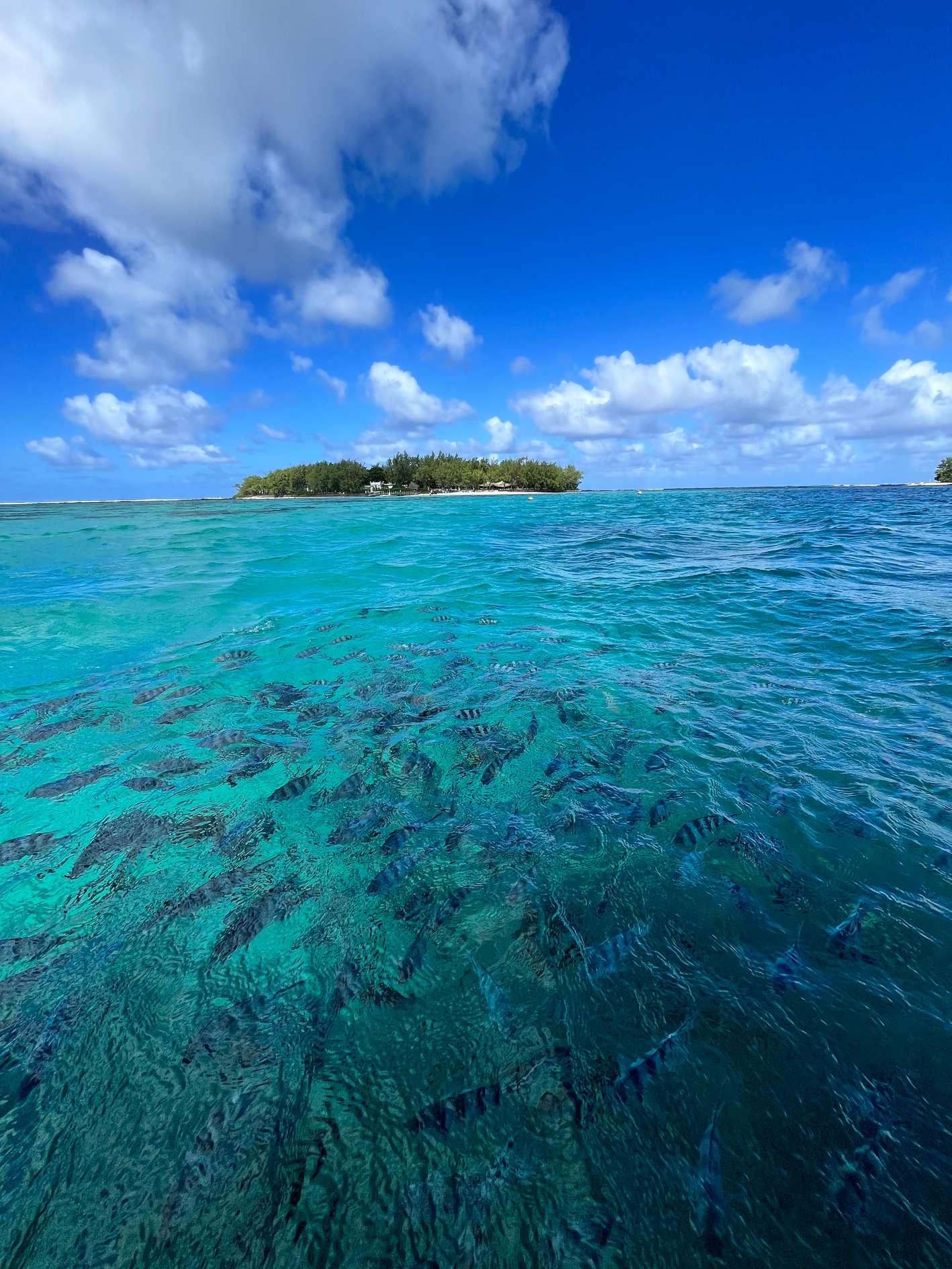
Timing decides half your snorkeling. October to December brings calm seas on 70 to 80 percent of days, water around 26 to 28 degrees and the year's clearest lagoons, and visibility peaks from May through November, reaching 20 to 30 metres in September and October.
Winter from June to August drops the water to about 23 to 25 degrees, a temperature a light wetsuit or rash vest handles, while trade winds roughen the eastern lagoons.
January to March brings the cyclone window, when passing storms suspend boat trips and rain clouds the coast for days. Pick your month first, then pick your coast around it.
The classic full-day sail with lunch, drinks and lagoon snorkeling
The Île aux Cerfs catamaran is the classic Mauritius day out: a wide, stable twin-hulled deck, a slow scenic sail through the sheltered east lagoon, a snorkeling stop, the Grand River South East waterfall by shuttle boat, and a barbecue lunch with drinks onboard.
You get about 1 to 1.5 hours of free beach time on the island itself.
The route stays inside the protected lagoon for nearly the whole trip, which keeps it smooth even in the winter winds. Turtles are not the aim here, so treat this as the easy day between your wildlife mornings. Vegetarian, vegan, halal and gluten-free lunches can be arranged with advance notice.
6 hours · ★ 5.0 (11)Île aux Cerfs: Private Catamaran Cruise with Gourmet LunchFrom $1,133 /group 7 hours · ★ 4.8 (869)Ile aux Cerfs Catamaran Cruise with BBQ Lunch & SnorkelingFrom $68 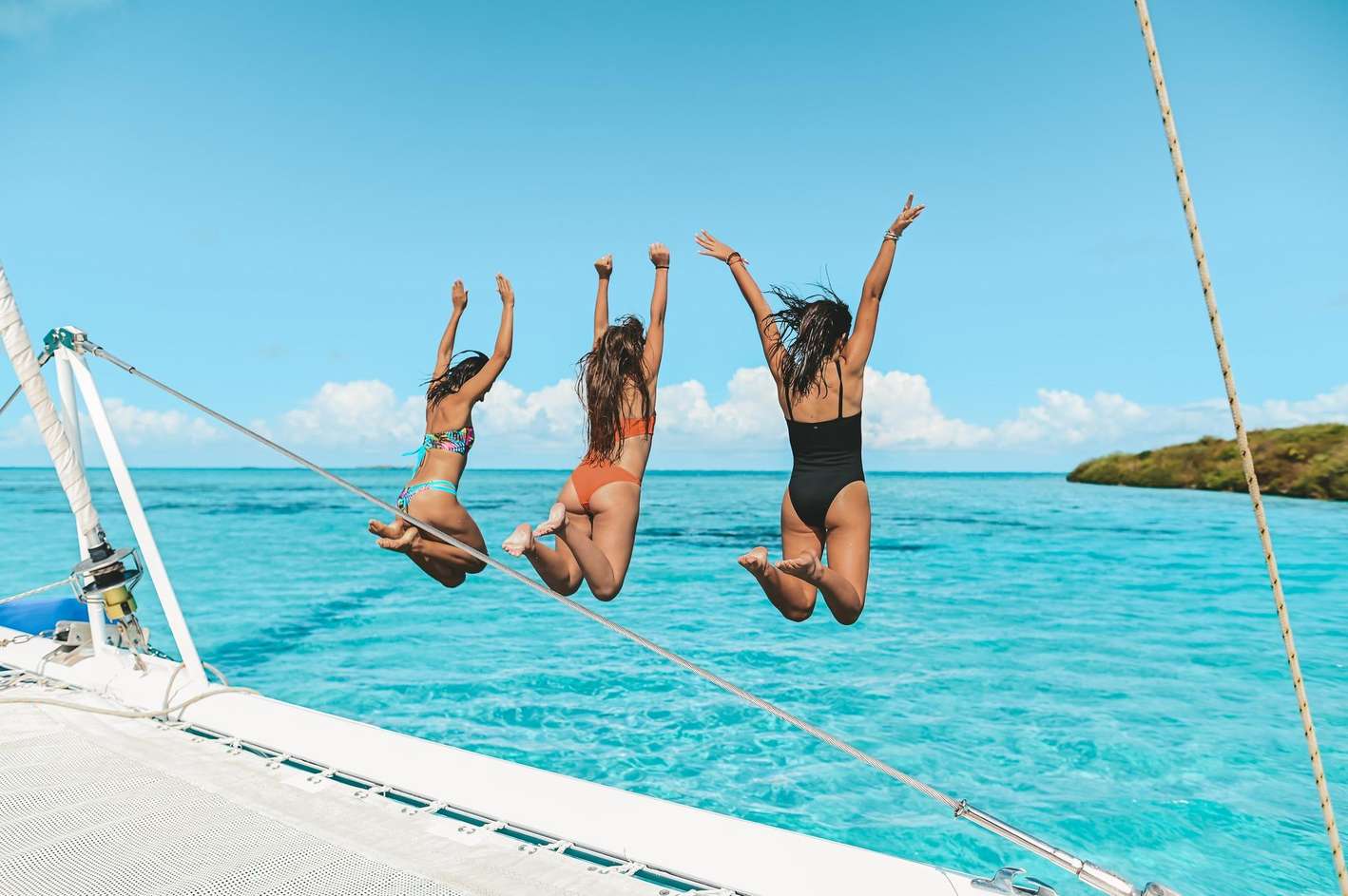 7 - 8 hours · ★ 4.7 (453)Mauritius: Ile aux Cerfs Catamaran, Waterfall & BBQ LunchFrom $62
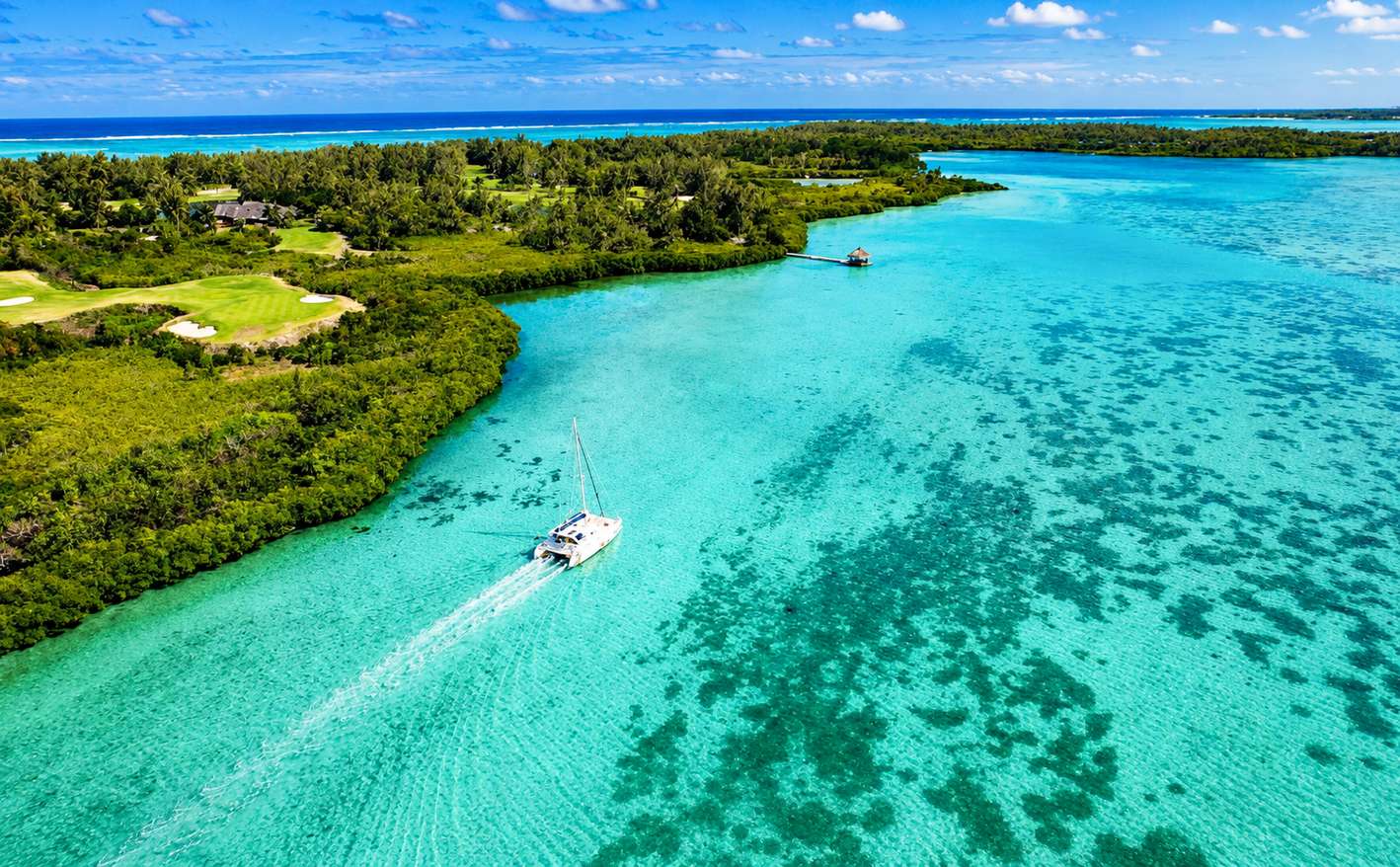 7 hours · ★ 4.6 (104)Mauritius: Ile aux Cerfs Catamaran Cruise, Waterfalls & BBQFrom $84
A fast crossing that buys you extra island time and more stops
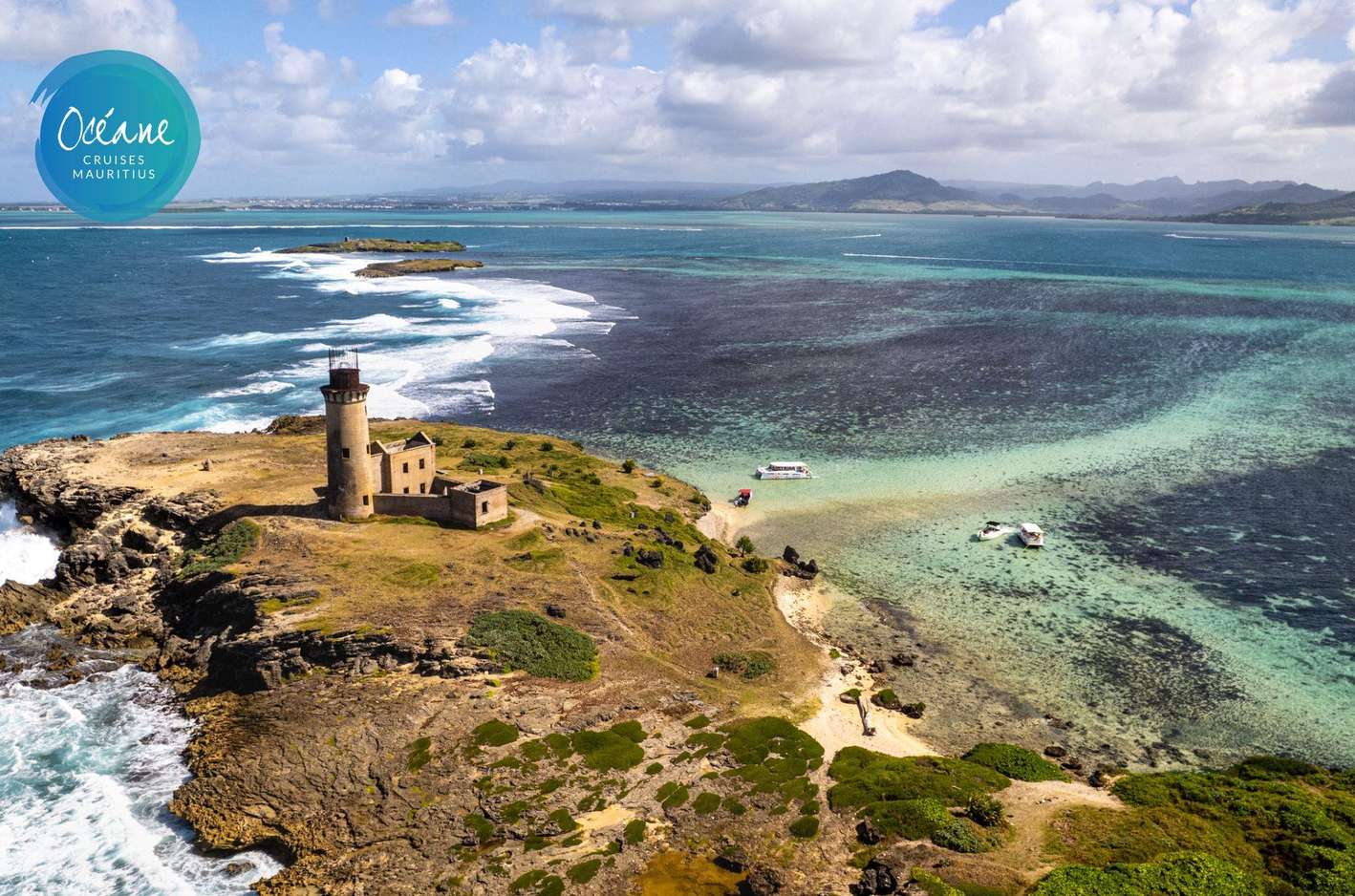
A speedboat crosses the Trou d'Eau Douce lagoon to Île aux Cerfs in 10 to 15 minutes, where a catamaran takes 45 to 60.
That saves roughly half an hour each way, and the time goes back to you as beach time or as extra stops: the Grand River South East waterfall, which catamarans cannot reach, plus historic islands along the southeast coast.
The ride is livelier than a catamaran's, bumpiest during the winter trade winds when east-coast swells build. Shared speedboats carry far fewer passengers than the big day catamarans, and a shallow draft lets them nose into river channels and quiet sandbanks. Pregnant travelers should pick a catamaran day instead.
6 hours · ★ 5.0 (3)Private Island-Hopping Cruise: 5 Islands, Waterfall & LunchFrom $738 /group 6 - 7 hours · ★ 4.7 (1,451)Trou d'Eau Douce: 5-Island Adventure with BBQ & SnorkelingFrom $95 9 hours · ★ 4.3 (188)5 Islands Speedboat with Snorkeling, Sea Turtles, Lunch & DrinksFrom $95 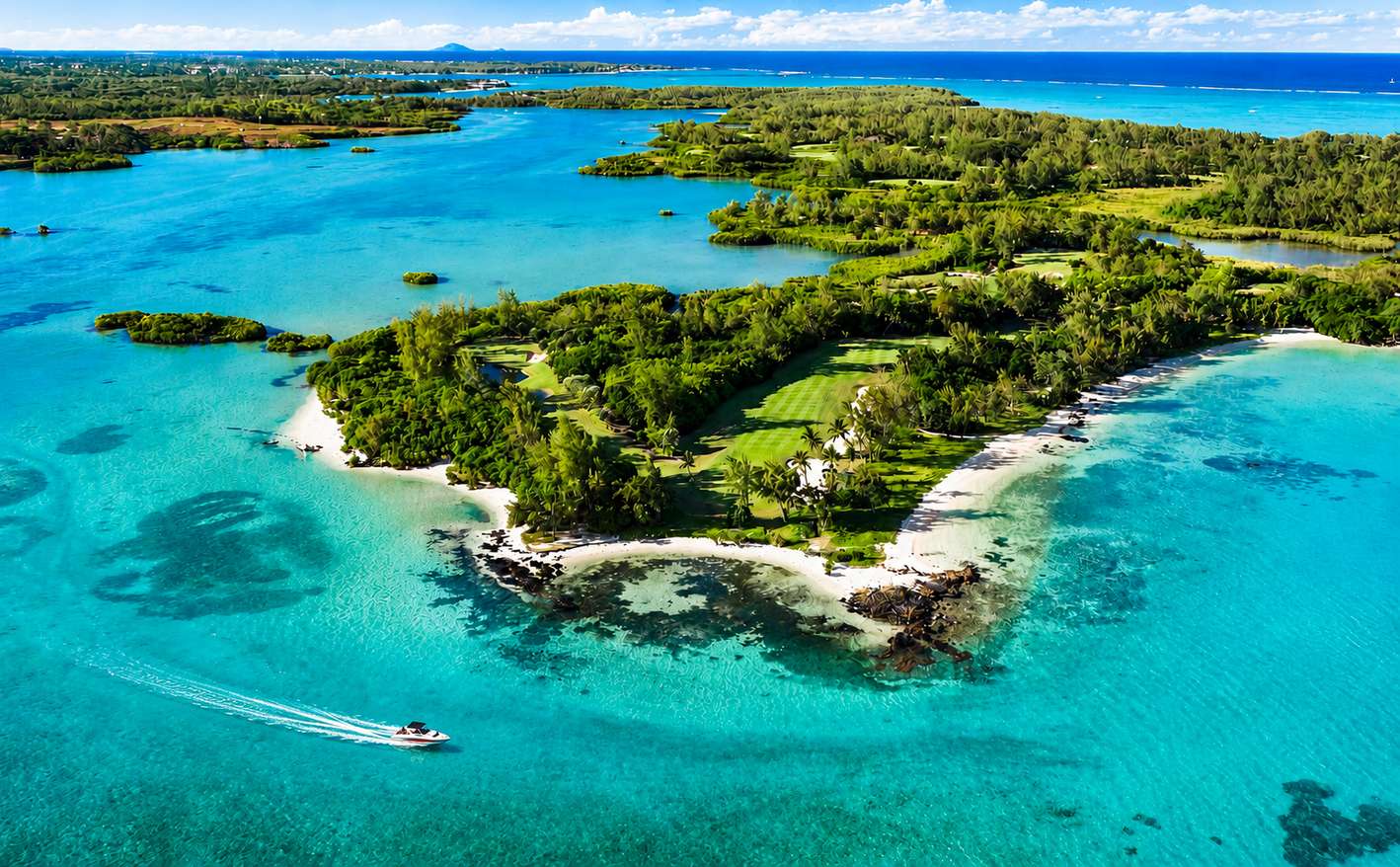 7 hours · ★ 4.3 (237)Mauritius: 5 Islands Speedboat Lagoon Experience with BBQFrom $74
Your own boat, your own timetable, beaches before the crowds land
Crowds pack the main beaches of Île aux Cerfs between 11 am and 3 pm, and the northern shore starts filling from 10:30 as the day boats converge. A private charter beats that clock: your skipper lands you early, waits out the midday surge and returns after the tour groups clear off after 3:30.
You choose the stops, and a smaller boat reaches the waterfall basin and quiet sandbanks that a big catamaran cannot. Snorkeling happens at your own pace rather than on the crew's whistle.
Under Mauritian law every beach here stays public up to the high-water mark, so a charter buys you quiet timing, and a private lease buys nobody exclusivity.
pereybere departures 9:30 am and 11:20 am
Wild green turtles graze the seagrass flats of Mauritius before 9 am, and the law lets you watch them only from a distance. Which lagoon to pick, when to get in and what to book: the turtle's own morning tells you, chapter by chapter.
Pereybere gives the best turtle odds on the island, with Trou aux Biches and Blue Bay close behind.
Mauritian law bans swimming with, touching or feeding sea turtles; what you do is enter the water nearby and watch them graze.
Trou aux Biches North Reef and Turtle Bay need no boat; the richest coral at Blue Bay sits beyond a 100-metre swim or a boat ride.
The window that decides your day runs 7 am to 10 am on an incoming tide, before wind and boats stir the sand.
October, November and April calm nearly every coast; February and March carry cyclone risk that can cancel boats outright.
Book a turtle snorkeling trip that keeps a respectful distance and never pursue, feed or touch an animal; if a turtle swims near you, stay calm and still and let it pass.
A turtle surfaces for breath maybe ten metres from your mask, holds it a moment, and drops back to the seagrass. That is the moment the whole island sells, and it happens in five reliable places.
Pereybere ranks highest for turtle encounters, with green turtles and hawksbills passing close to shore. Trou aux Biches offers reliable green turtle grazing in a flat northern lagoon, and Blue Bay Marine Park keeps a resident population over its seagrass beds.
Turtle Bay at Balaclava delivers sightings that are likely and never promised, Coin de Mire only occasional.
| Turtle sighting reliability | Water depth and safety | Shore or boat access | Crowds and boat traffic | Best time of day | |
|---|---|---|---|---|---|
| Trou aux Biches | Reliable green turtle grazing | Shallow lagoon, under 2 m | Walk in from beach | Boats arrive after morning | Before 9 am |
| Turtle Bay | Likely, not guaranteed | Calm, sheltered shallow bay | Free walk-in beach entry | Boat traffic to watch | Early morning, high tide |
| Blue Bay | Resident turtle population | Calm clear sheltered lagoon | Shore for shallows, boat beyond | Marked swim zones, traffic lanes | 7 to 10 am |
| Le Morne | Recognized turtle location | Rip currents at reef passes | Walk-in at north beach | Catamarans crowd late morning | Early to mid-morning |
| Coin de Mire | Occasional, not guaranteed | 12-40 m, too deep | Boat trip mandatory | Crowds arrive with catamarans | Before catamaran crowds |
Weigh them on four things: how sure you are of a sighting, how deep and busy the water is, whether you need a boat, and when to go.
Two or three of these will fit your base and your swimming confidence. Pointe aux Piments, just past Turtle Bay, is another northwest option people who go often call one of the most reliable on the island.
One habit worth copying from regulars: wild turtles are furtive and quick to sink away, so patience and a quiet approach matter more than the spot itself.
Here is the line the law draws, and it changes how you book. Under the Fisheries Act 2023, swimming with a sea turtle as a recreational activity is illegal in Mauritian waters, as is touching, chasing, harassing or feeding one.
The penalty runs to a fine of up to 25 million rupees and as much as two years in prison, and it applies to visitors and operators alike.
What a turtle day actually is: you enter the water near grazing animals and watch from a respectful distance, without following, grabbing or cutting in front of them. No law fixes a distance in metres, so the judgment is yours: keep enough space that the turtle never changes its behaviour because of you.
The conduct rules are few and plain. Never touch, never feed, and ease off the flipper kicks when you drift close, because aggressive kicking stresses them. On boat trips, touching any marine life is barred by the crew's own rules.
The Fisheries Act 2023 makes swimming with sea turtles, and any excursion selling it, illegal in Mauritius, with fines up to 25 million rupees and up to two years imprisonment. Book tours framed as snorkeling near turtles and observing them at a distance, and follow the crew's no-touch briefing.
Recalibrate the dream this way and the encounter still lands: a green turtle feeding on seagrass, unbothered by your presence, is the memory you take home.
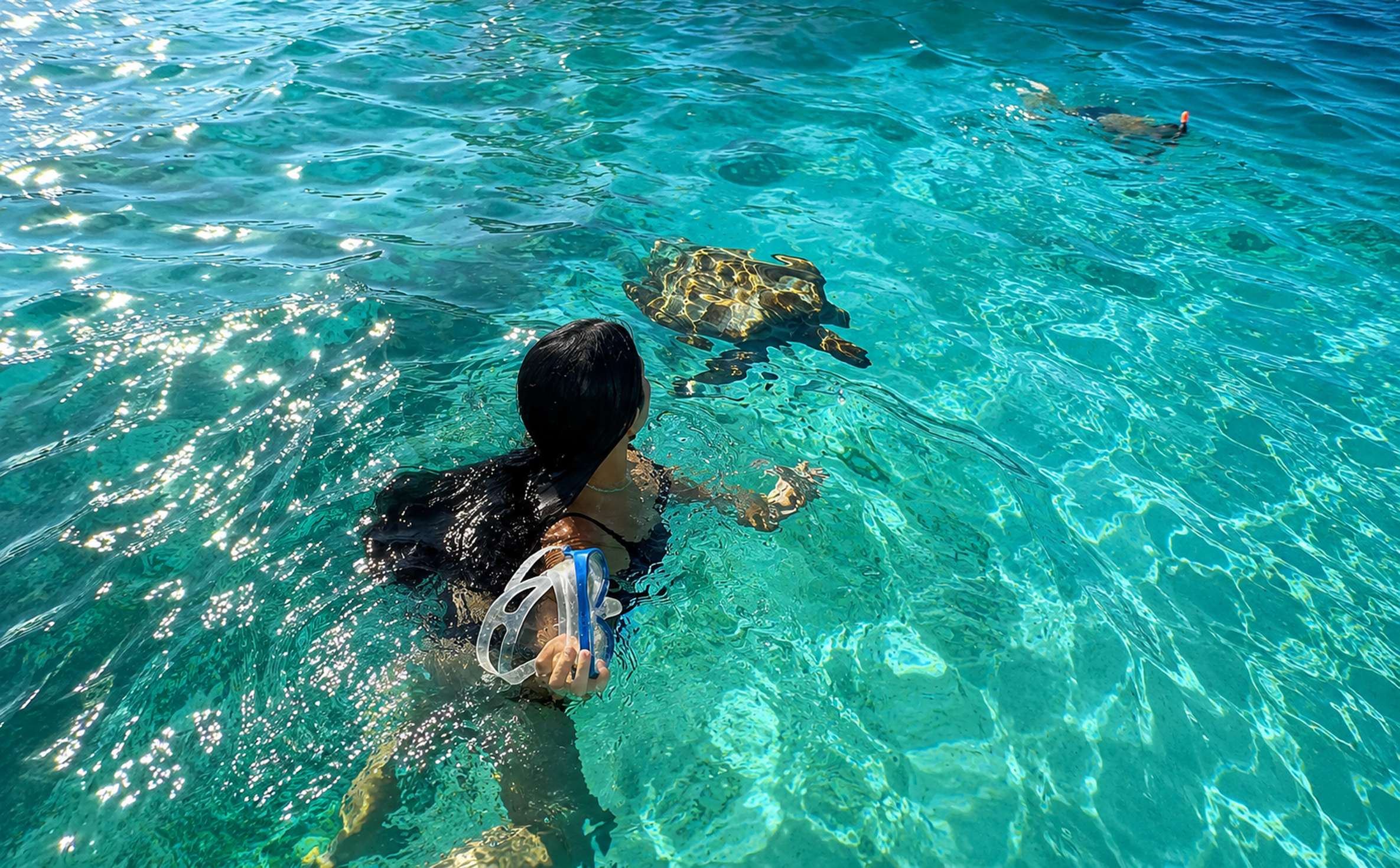
The first real choice needs no booking at all. At Trou aux Biches North Reef, green turtles graze seagrass behind coral bommies along the lagoon edge, and a turtle spot sits only tens of metres from the sand.
You walk in. Early risers at Mon Choisy do the same in shallows close to shore, with sightings reported between 7 am and 7:30 am before anyone else arrives.
Turtle Bay also opens straight off the beach for free, with green turtles likely over the deeper sandy patches in the middle of the cove, though they skip visits as often as they keep them.
At Blue Bay the shallows start about 100 metres offshore, swimmable from the beach by confident snorkelers, while the best coral gardens sit further out and belong to boat trips.
Shore entries cost nothing and reward the punctual. Boat runs pay for a skipper who knows the feeding grounds and puts you over them without the swim.
Shore entries cost nothing and reach grazing green turtles without a tour booking.
Beat both the crowds and the paid trips by simply being early.
If you would rather let a captain do the finding, one tour operator runs a private two-hour turtle speedboat out of Grand Baie public beach to the Trou aux Biches lagoon, with snorkeling gear, snacks and soft drinks aboard.
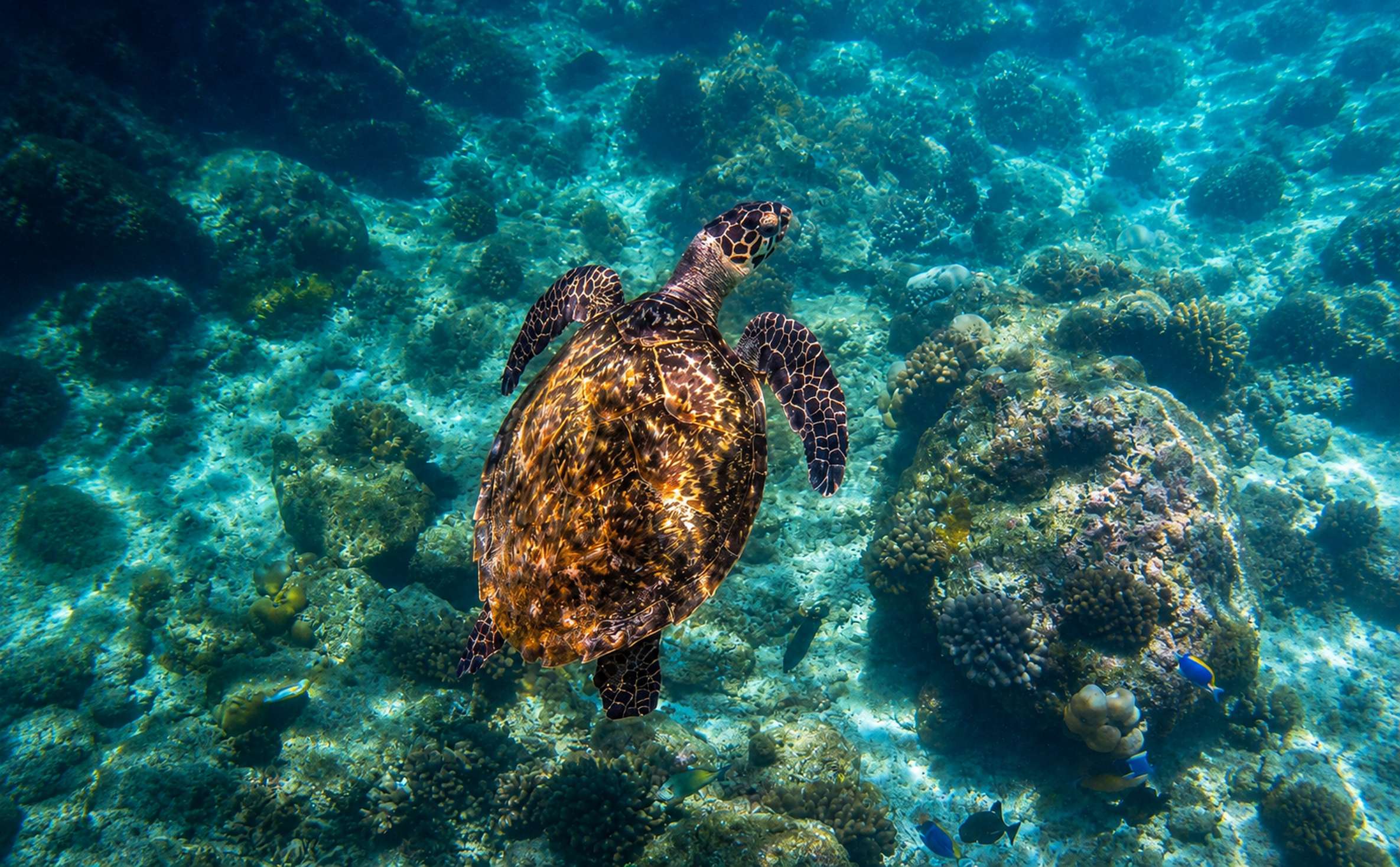
Depth decides who belongs where. The Trou aux Biches lagoon rarely tops two metres, so you can stand, rest and snorkel without fins if you like.
Blue Bay's inner coral gardens run five to six metres, an easy depth for floating over but a real swim from the beach. Turtle Bay's coral begins steps from the shore and the richer gardens lie a moderate 100 to 150 metres out.
Coin de Mire is another matter: its wall drops from 12 to 40 metres, too deep to snorkel, and currents there can be moderate to strong.
Currents are the thing to respect. Reef passes and channels carry some of the strongest outward flows on the island, and at Le Morne the lagoon drains through the narrow One Eye pass on a falling tide with a current too strong to paddle against.
Swim to the outer reef at Trou aux Biches only in excellent conditions with local knowledge, and stay clear of boat channels and the passes at Turtle Bay.
Match the spot to your honest swimming level and the day takes care of itself.
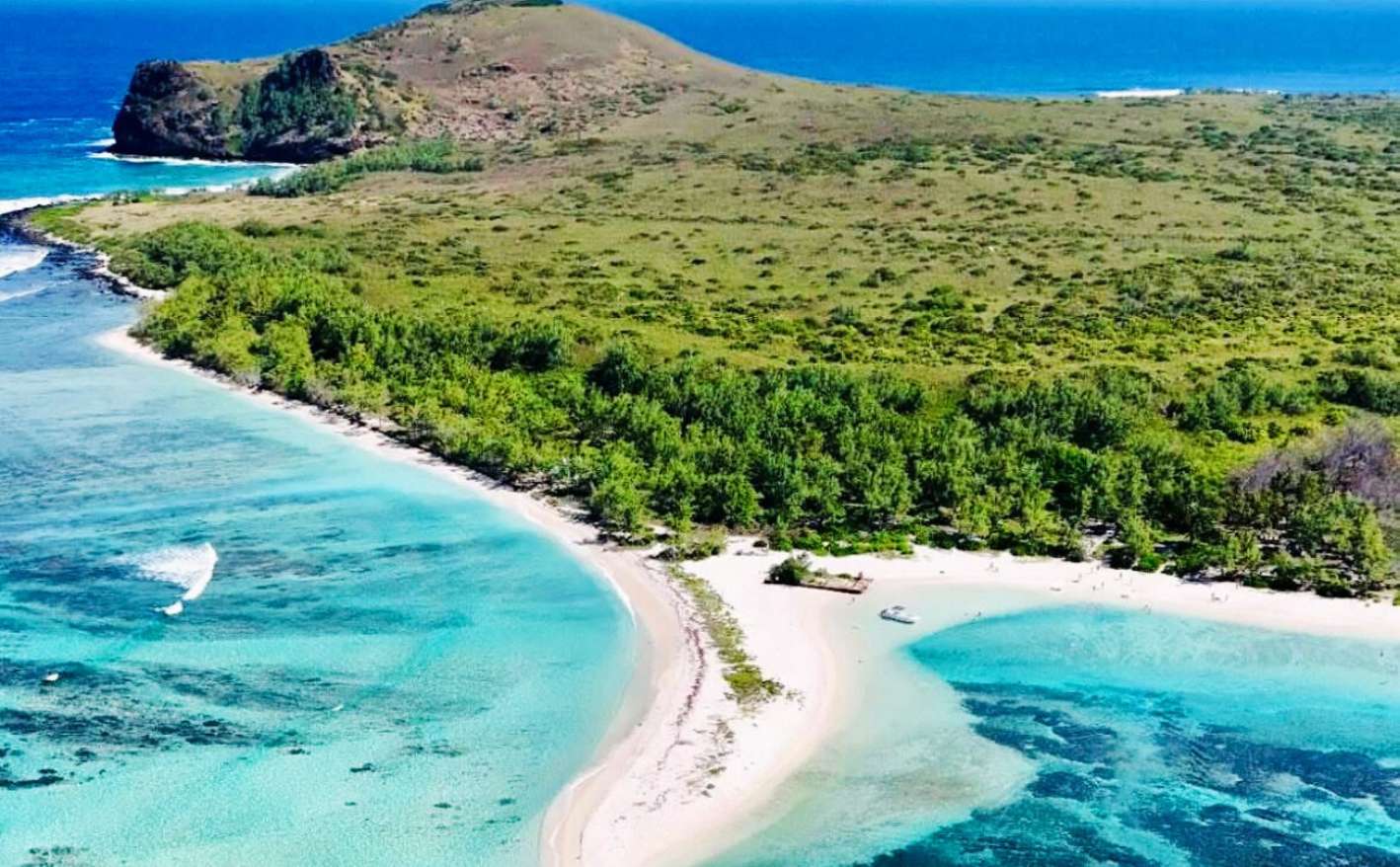
The dramatic island off Cap Malheureux tempts every turtle hunter, so settle the odds before you book. Sightings around Coin de Mire and the northern islands stay occasional, with green turtles the species you are likelier to meet and hawksbills rarer over the outer reefs.
The crossing is short. A speedboat reaches the island in 10 to 15 minutes from Cap Malheureux or Bain Boeuf, and around half an hour from Grand Baie. You cannot get there any other way; a boat from Grand Baie is mandatory, and boats from Pereybere reach the shallow waters of Confetti Bay.
So call it what it is: a scenery day with a chance of turtles attached. The island views and the snorkeling carry the trip, and the shallow bays give you fish and coral without any promise of a shell in sight.
If turtles are the whole point of your day, give the morning to Pereybere, Trou aux Biches or Blue Bay, and save the north for a day with no agenda.
When the north does call, the speedboat tour "Mauritius: Explore 3 Northern Islands by Speedboat with BBQ" covers Îlot Gabriel, Île Plate and Coin de Mire in 6.5 hours with three snorkeling stops at three different spots and lunch included.
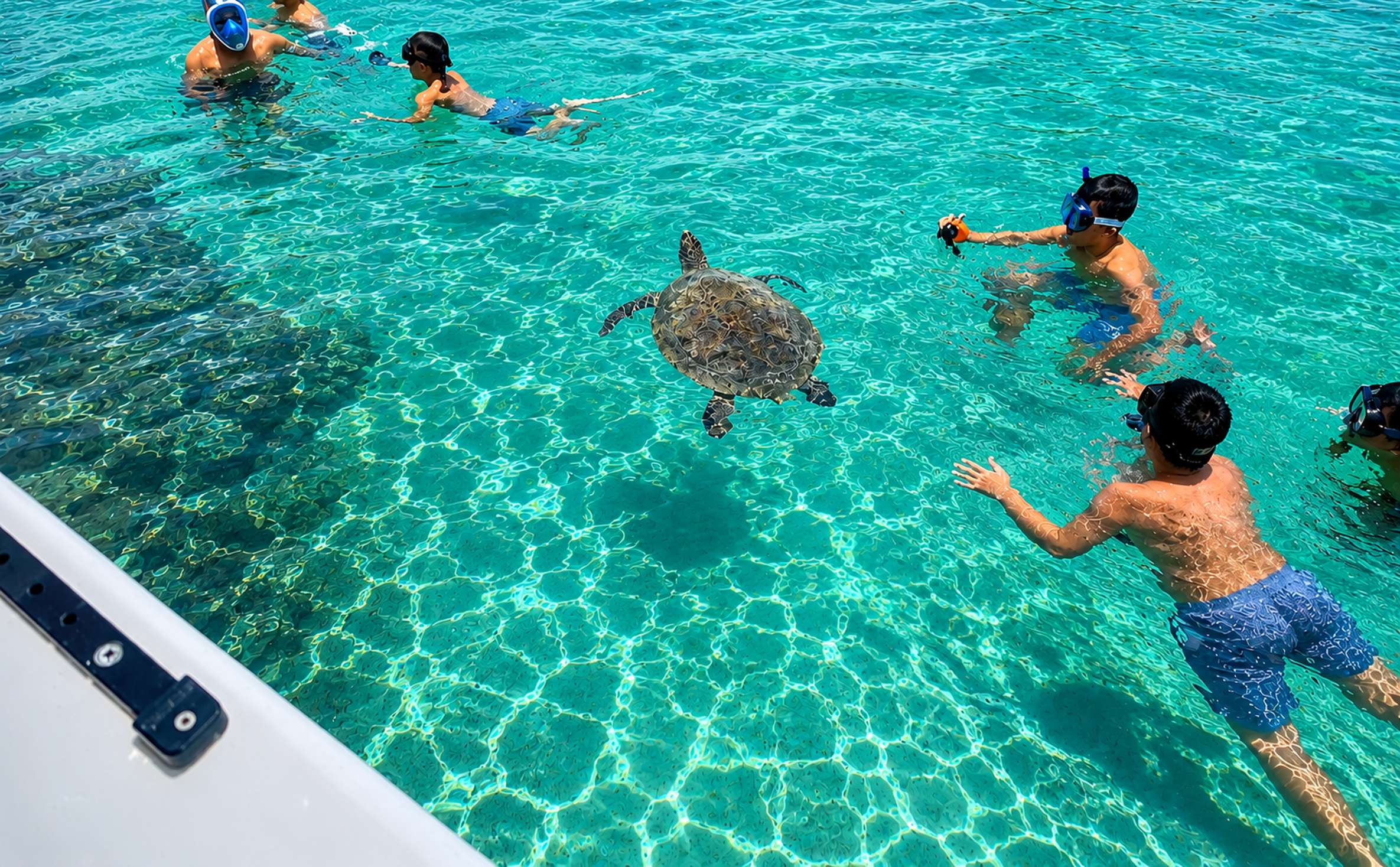
Set the alarm and everything else follows. Turtle feeding conditions and underwater visibility peak between 7 am and 10 am on an incoming mid-tide to high tide.
The water sits glassy and sheltered before coastal winds rise and before boats and swimmers stir up the sandy lagoon, and the rising tide floods the shallow seagrass flats with enough depth to glide over coral without scraping it.
The same window holds everywhere. At Trou aux Biches, mornings before 9 am give the clearest water of the day. Blue Bay lagoon stays smooth and clear from 7 am to 10 am, then winds and currents cloud it toward midday. Turtle Bay is calmest early, before day-trip boats arrive mid-morning.
Glassy water and no crowds give the clearest visibility before boat traffic arrives.
Bright sun illuminates the reef, though lagoon boat traffic gradually increases.
Rising winds and heavier boat traffic stir sediment and crowd turtle feeding flats.
Patience is the other half of the formula. Wild turtles are skittish and quick to sink away, so pick times with minimal boat traffic and fewer swimmers, and give the reef a quiet ten minutes before expecting anything.
People who go often also rate sunny days around 10 am, when the light reaches the seagrass and makes a grazing turtle easy to spot against the bottom.
The turtle boat from Pereybere runs departures at 9:30 am and 11:20 am; the earlier slot puts you in the water closer to the peak.
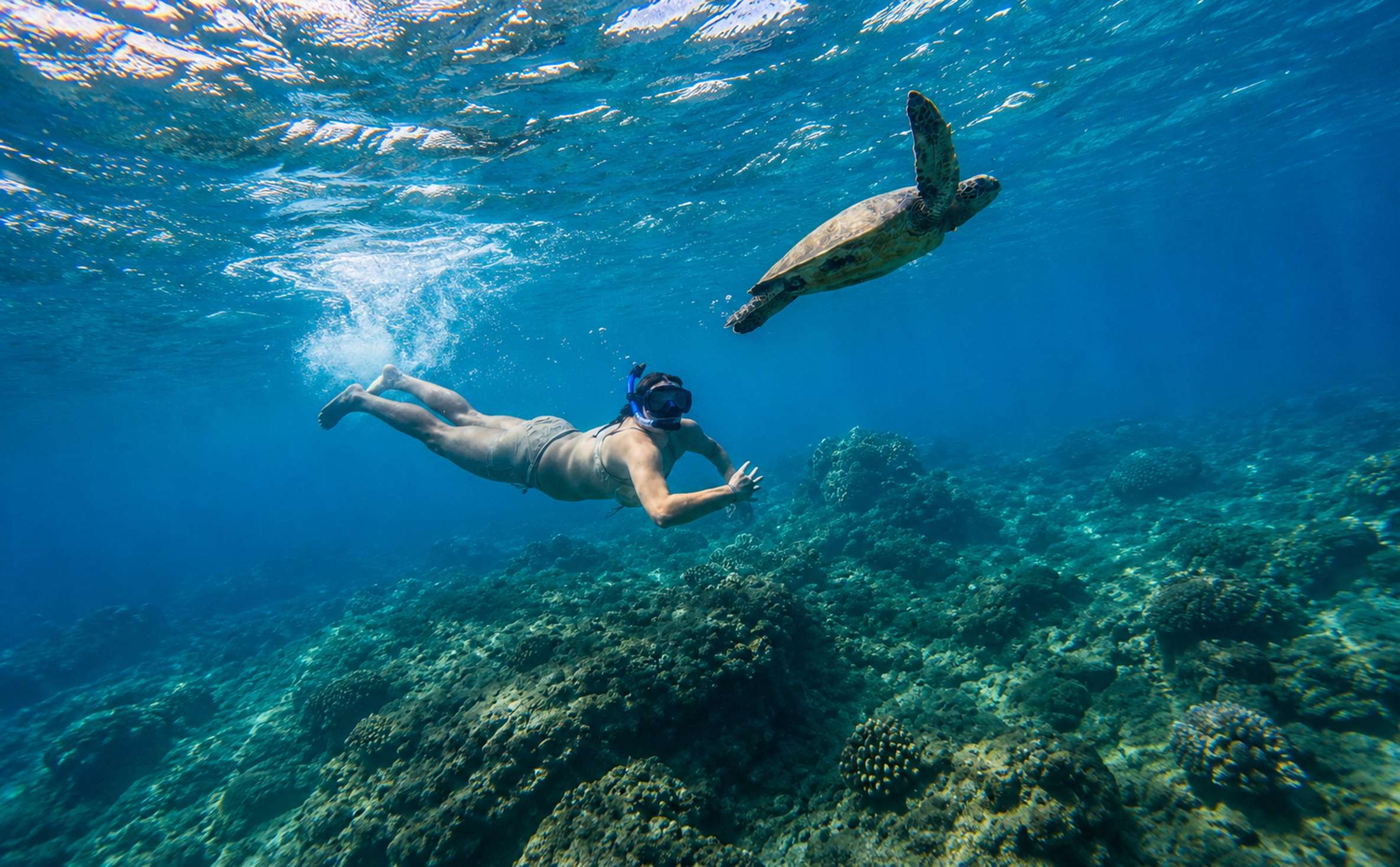
The calendar splits the island in two. In October, November and April, sea conditions reach 70 to 80 percent calm days and every coast behaves.
From May to September the southeast trade winds hammer the east and south, dropping calm-water days to around half or worse, while the central mountains shelter the west and northwest, which stay at their clearest exactly then.
That single fact should steer both your base and your booking. An east-coast plan in July means chop and stirred sediment; the same week on the northwest lagoons gives you the year's best visibility for turtle snorkeling, especially in the morning.
November: 5 out of 5 for how busy it gets. One of the best months for clear, calm water across the island, with 80% calm seas and rising tour crowds.
Tap a month to read it.
December: typical sea turtles seen 29 times. Calm seas peak at 87% with low waves, though afternoon rains increase as the summer wet season sets in.
Tap a month to read it.
December: calm sea on 87% of days. Calm seas peak at 87% with low waves, though afternoon rains increase as the summer wet season sets in.
Tap a month to read it.
August: waves up to 1.6 m on an average day. Winter trade winds peak with average 1.6-meter waves, making sheltered western turtle spots the best choice.
Tap a month to read it.
May: 2.6 windy days. The start of the winter trade winds brings drier weather and clear visibility to sheltered western bays.
Tap a month to read it.
Read the turtle column against the calm column and a pattern shows: December's 29 sightings ride on 87 percent calm days, which is why the summer holiday months deliver so well. The zero for May comes with the year's windiest run, and the northwest picks up the slack from July onward.
One caveat on the months either side of the summer: February and March sit in the cyclone window and are the wettest of the year, with heavy rain clouding the lagoons and cyclone warnings legally suspending boat tours. A skipper can cancel for rough water, so build slack into any boat day then.
Winter water cools too. From June to September the sea drops to the low twenties Celsius, noticeably fresh on long snorkels, which is what a rash vest is for.
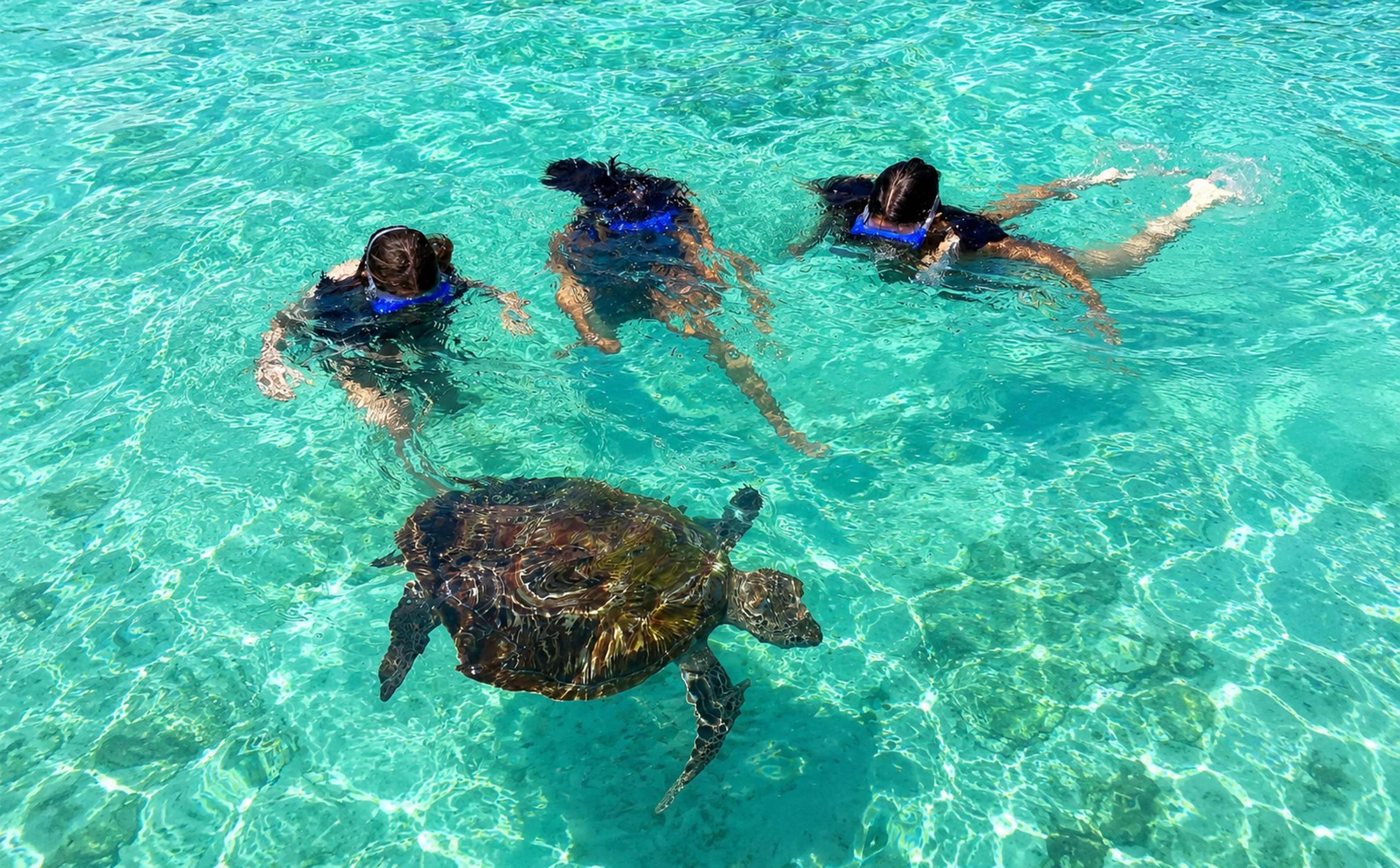
Each boat gives you a different kind of turtle morning. A speedboat moves fastest, so it reaches the feeding grounds before the shared catamarans do, trading deck space for time in the water.
A catamaran is the steady platform, wide and stable with shaded lounging, built around relaxed stops. A glass-bottom boat asks nothing of non-swimmers, who watch through the floor panel, though getting in the water always beats looking through glass.
What separates a good encounter from a crowded one is the crew's conduct. Ethical operators hold back, keep their distance and drop only a couple of swimmers at a time, which is exactly what the law's buffering rules around marine life require.
Anyone on a craft outside the lagoon wears a flotation device, and non-swimmers and young children can join turtle trips and stay aboard; one turtle boat trip suits all ages with non-swimmers advised to remain on the boat.
| Check | Why it matters | Our pick |
|---|---|---|
| No-touch briefing | A crew that briefs you on conduct keeps the encounter legal and the turtles calm. | The featured trips brief before departure and bar touching marine life. |
| Small swimmer groups | Fewer people in the water means unhurried sightings and less stress on the animals. | The private La Gaulette charter runs for your group only. |
| Skipper who knows the grounds | Local captains know where turtles feed, so you stop searching and start watching. | Departures from Pereybere and Grand Baie target known feeding areas. |
For the fullest version of the day, the private speedboat tour "Private Dolphin-Turtle Snorkel, Crystal Rock, Benitiers Lunch" out of La Gaulette spends 6.5 hours combining turtle and dolphin snorkeling, a Crystal Rock stop and a beach barbecue on Île aux Bénitiers.
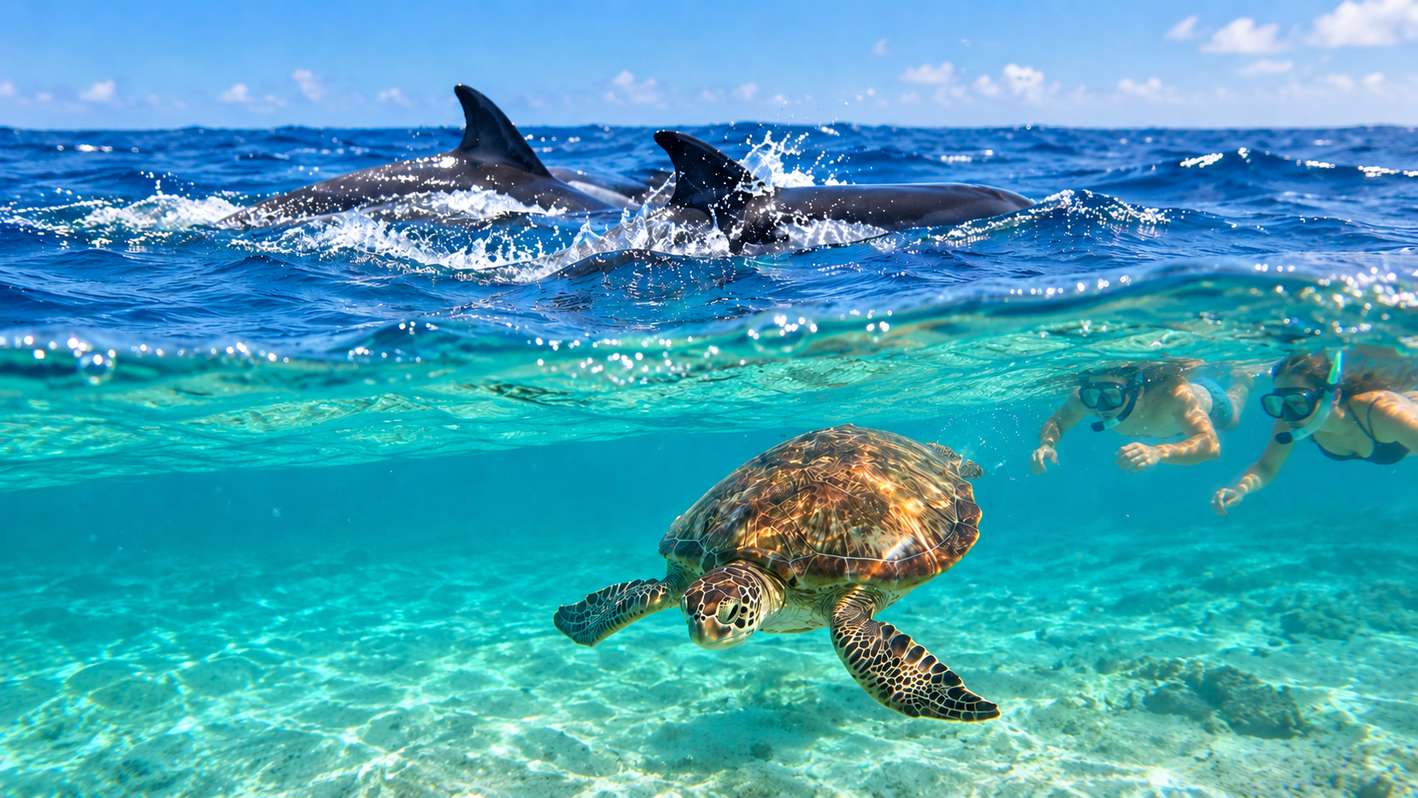
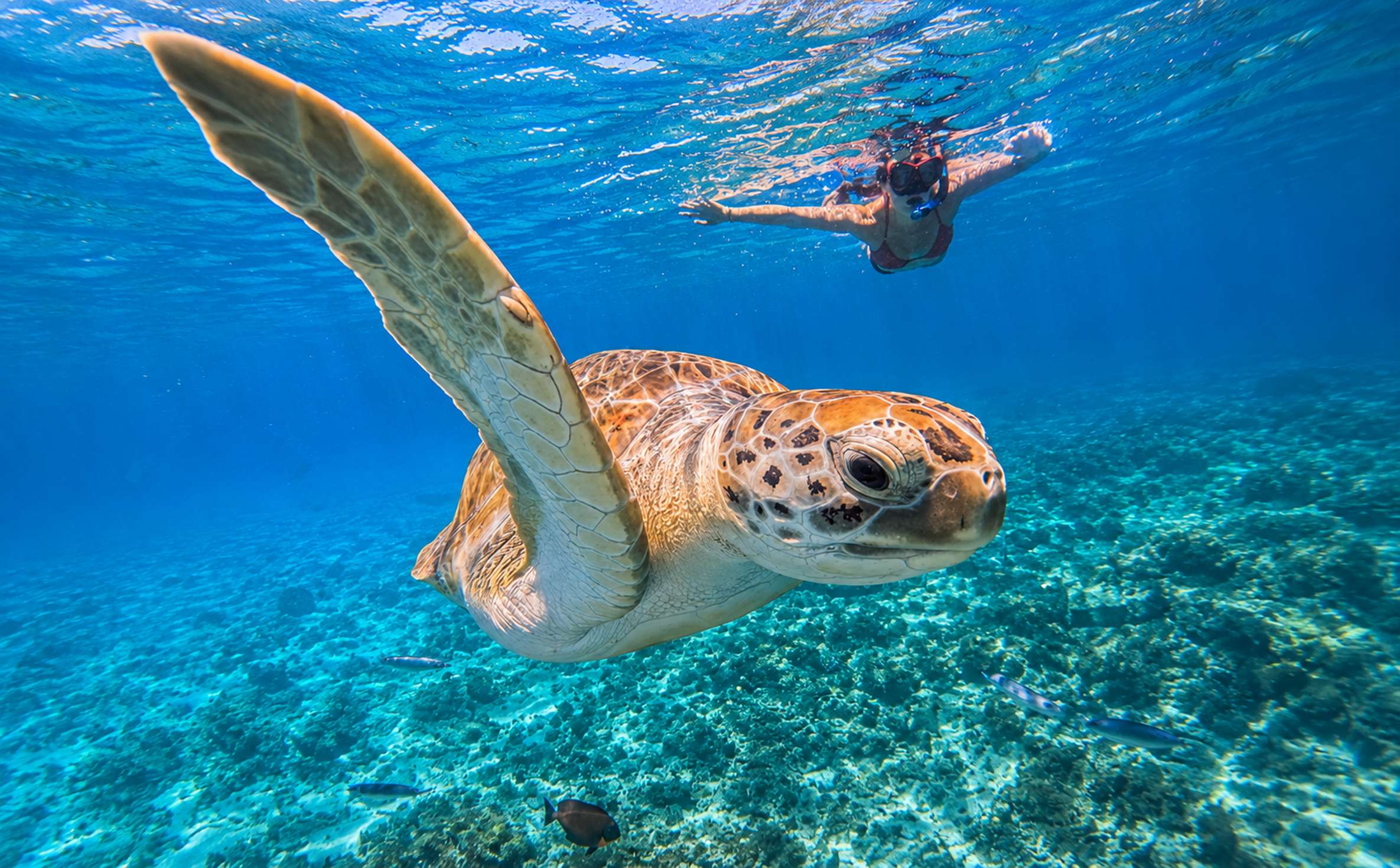
Forum threads tangle two different animals, so untangle them before you plan. The giant Aldabra tortoises you may have seen in photos live in managed reserves and parks on land, brought over from Seychelles to stand in for Mauritius's extinct native giants.
You walk among them, and for a taste of that on the southeast coast, a guided eco-tour to Île aux Aigrettes off Pointe d'Esny shows them along with the island's native flora.
Sea turtles are the opposite in every way: green turtles and hawksbills are wild marine animals living in the lagoons, with no pen, no enclosure and no guaranteed sighting. You meet them by entering their water quietly and watching, and the law restricts you to exactly that.
Touching, chasing and feeding sea turtles are illegal in Mauritius; you watch from a distance, always.
Tortoises are land animals you visit in parks; sea turtles are wild marine animals in the lagoons.
Only odds differ by location, and even at the best spots a sighting is never promised.
With the two animals sorted, the rest of the planning falls into place around the sea turtle you came for.
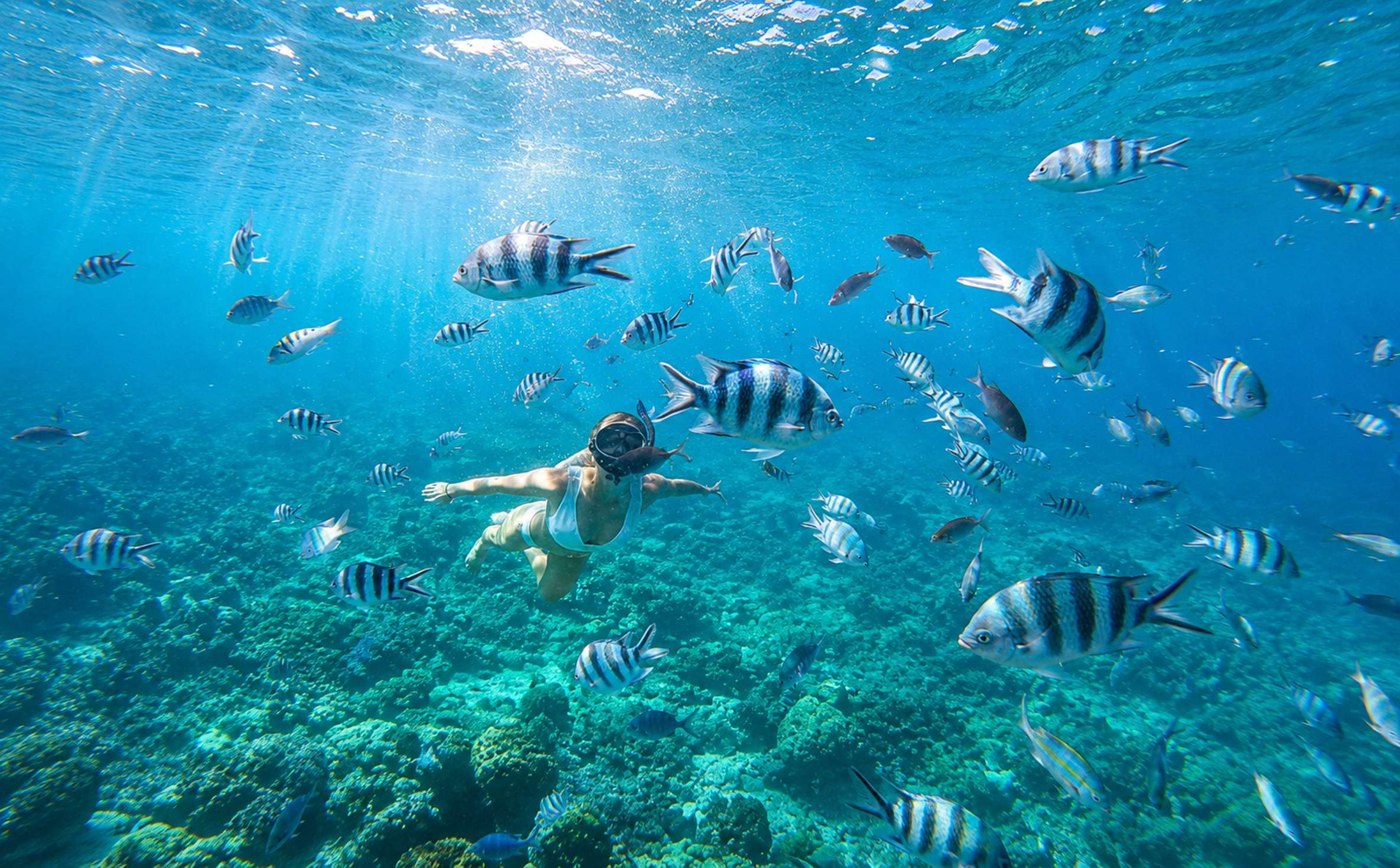
The seabed under a turtle lagoon carries more risk than the turtles ever will. Stonefish lie camouflaged on sand, rocks and coral, and their dorsal spines deliver venom that causes intense pain.
Sea urchins hide in rocky patches, their long brittle spines breaking off in skin, and fire coral stings and blisters on contact. Lionfish and striped eel catfish carry venomous spines too, so give anything you cannot name a wide berth.
Water movement matters as much as wildlife. Never cross to the outer barrier reef on your own: breaking surf and sharp urchins guard the way, and the passes and channels between lagoon and open ocean run currents strong enough to carry a snorkeler to sea.
The marked zones exist for a reason. Yellow floats and buoys line the designated swimming areas at public beaches, motorised craft must keep outside them, and inside a marine park you may swim only within the marked zone, never in the traffic lanes.
Entering the water along Turtle Bay beach calls for reef shoes because of sharp submerged coral, loose rocks, urchins and stonefish among the rubble.
One more from people who know the water: if box jellyfish are reported, stay out until they clear, because their stings are dangerous.
Boats here supply the basics and leave the rest to you. Masks, snorkels and life jackets come on board almost everywhere, but fins are hit or miss: some boats carry them, some do not, and sizes run short.
Loaner masks are typically older models prone to fogging and leaking, so bring your own mask and snorkel for a snug, watertight fit, and your own fins if you plan to swim out toward the reef.
Forget the wetsuit debate for winter. From June to September the water sits in the low twenties Celsius, warm enough to skip a full suit, though a rash guard earns its place for long floats and for the 15 to 25 km/h trades you feel once back on deck.
A thin shorty is optional in the coolest months.
Round out the kit for the day itself: swimwear worn under your clothes before boarding, a towel, high-SPF reef-safe sunscreen, a wide-brim hat with a chin strap and polarized sunglasses with a retainer strap.
A roll-top dry bag keeps phones and electronics safe from spray on open decks, and a light windbreaker handles the breezy afternoon run home. Bring small notes in rupees for island stalls where trips stop.
A turtle morning ends before lunch, and both coasts give the afternoon somewhere to go. Finish at Blue Bay and walk the beach to Pointe d'Esny in 20 to 30 minutes, then carry on to the Mahébourg waterfront for lagoon views and mountain scenery.
Eat where the locals eat: Coin Casse Croute serves traditional Mauritian dishes in Mahébourg, Le Bazilic cooks Creole food with local ingredients, and The Boathouse and the Bamboo in Pointe d'Esny cover beachside lunches and woodfire pizzas.
On the west, a Le Morne turtle-and-dolphin morning leaves the whole afternoon: the mountain itself, the quiet sands at La Preneuse, or Black River Gorges National Park twenty minutes inland for a walk under native forest.
However you slice it, book the earliest departure you can, confirm the meeting point the night before, and let the afternoon look after itself. The turtle you watched grazing before 9 am will carry the rest of the day without any help.
Mauritius delivers genuine wild turtle encounters if you aim at the right coast, the right morning and the right expectations. Go for Pereybere, Trou aux Biches or Blue Bay in October, November or April, or the sheltered northwest any winter month, with a 7 am to 10 am entry on an incoming tide.
Book a trip built around observing turtles at a respectful distance, as the law requires, because the encounter is better for it.
turtles graze the seagrass flats before 9 am
Dolphins gather in the same western bays as turtles; this page explains how licensed crews keep encounters respectful.

If you want to swim in the water with wild dolphins, this page covers the encounter rules and the skills you need.
Tamarin Bay is the best-known dolphin habitat on the island; this page covers morning trips and what to expect.
Whales pass the west coast in season; this page shows how one tour can combine dolphins and whales in a day.
Early departures reach dolphin pods before the boat traffic builds; this page explains why the sunrise slot wins.
A private charter keeps your turtle and reef stops to yourselves; this page compares exclusive boat options.
Prefer a day under sail? This page covers catamaran cruises that add guided snorkeling stops to the route.

Full-day catamaran trips pair lagoon sailing with island beaches; this page sorts the routes and lunch stops.
green turtles graze at trou aux biches north reef, no boat needed
Short answers to what travelers ask before they book a turtle day.
 Grand Baie2026
Yes for watching, no for chasing. You can observe wild sea turtles in the water, but the Fisheries Act 2023 prohibits swimming with a marine turtle as a recreational activity, and touching, feeding, or harassing them is illegal. Keep a respectful distance and let the turtles graze.
Pereybere has the highest chance of an encounter, and Trou aux Biches, Blue Bay Marine Park, and Turtle Bay at Balaclava are all reliable. Green turtles are the species you most often see, with hawksbills appearing less often.
Sometimes. Turtles appear directly from the shore at Blue Bay and at Trou aux Biches North Reef, where green turtles graze on seagrass just off the beach. Sightings are never guaranteed, so a boat trip with a skipper who knows the feeding spots gives you much better odds.
Early morning. Between 7 am and 10 am on an incoming tide, the lagoons are calm and glassy, and turtles feed over the shallow seagrass flats before wind and boat traffic stir up the sand. On Mon Choisy's shallows, sightings happen right after 7 am.
October, November, and April bring the calmest seas overall. From May to September, trade winds rough up the east and south coasts, but they leave the sheltered west and northwest at their clearest underwater visibility, especially in the morning.
No. The lagoons where turtles feed are shallow and sheltered, and life jackets are provided on boat trips. On turtle excursions, non-swimmers are advised to stay on the boat, where many vessels still let you watch the reef through the hull.
Mauritian law sets no specific distance in meters, but the conduct rules are firm: never touch, chase, feed, or surround a turtle, and avoid kicking hard with your flippers near one. Let it come to you and stay parallel to it in the water.
The giant Aldabra tortoises you may meet in reserves on land are a different animal entirely. The sea turtles in Mauritius' lagoons are wild green and hawksbill turtles that live and feed in the ocean. You can watch the sea turtles from a distance; you cannot swim with them on purpose.
Not strictly. From June to September the water sits around 22°C to 24°C, which stays comfortable. A rash guard or light shorty wetsuit helps on long swims and against the wind once you climb back on the boat.
Towels and sunscreen are your responsibility, as boats supply masks, snorkels, and life jackets but rarely towels. Bring reef-safe sunscreen, a hat, and water shoes for wading ashore. If you want a mask that fits well and never leaks, bring your own.
morning departures at 9:30 am and 11:20 am
Snorkel and swim alongside sea turtles in their natural habitat on a 1.5-hour boat trip from Pereybere Beach, with free cancellation up to 24 hours in advance.
